The look of it
Ordet is a Danish film of 1955, adapted from Kaj Munk’s 1932 play and directed by Carl Theodor Dreyer. It attempts to stage a theological question — the reality of divine intervention in ordinary life — not as allegory or abstraction but as domestic fact. The setting is a farming family in rural Jutland; the crisis is the death and apparent resurrection of Inger, wife to Mikkel and daughter-in-law to Morten Borgen. Dreyer strips away exposition, psychology, and narrative propulsion. There are no flashbacks, no voiceover, no music underscoring emotion. Instead, he builds the film around silence, duration, and spatial precision: long takes, minimal camera movement, sparse dialogue, and a visual grammar rooted in frontal composition and shallow depth. The intention is neither to persuade nor to interrogate belief, but to hold open a space where miracle might be encountered as event rather than symbol — where the Word is not spoken, but arrives. This is not a film about faith as doctrine, but about its physical weight in a room, its breath in a throat, its absence in a still body. (148 words)
The weight of light
The story follows three brothers in a Lutheran household fractured by divergent responses to scripture: Mikkel’s quiet orthodoxy, Johannes’s declared divinity, and Anders’s pragmatic courtship. The plot resolves in two acts — Inger’s fatal childbirth and her return to life — with no intervening cause or explanation. Performances are restrained, deliberate, and physically exact: actors count steps, rehearse gestures for hours, and speak lines shaped by dialect coaching. Henning Bendtsen’s cinematography uses up to twenty lights per setup, sculpting light like paint to define psychological space — not illuminating faces but carving volume from shadow. Edith Schlüssel’s editing sustains shots for minutes, with only 114 cuts across 126 minutes; half occur in the first and last scenes. Poul Schierbeck’s score is absent during the central drama, returning only at the very end. Dreyer blocked movement around lighting, not vice versa; costumes were chosen by him personally; even the kitchen props were reduced to fifteen essential items. Every decision was made on the day of shooting, without pre-planning. The method is ascetic, not expressive — a discipline of subtraction that treats form as theological necessity. (159 words)
The length of a pause
What lands is the unbearable tension between the mundane and the transcendent — how a birthing bed, a wooden floor, a closed door can become the threshold of revelation. The final resurrection sequence works not because it convinces, but because it refuses to explain: Inger rises without fanfare, walks unsteadily, speaks plainly, and is embraced without commentary. That restraint makes it feel less like fantasy and more like a rupture in the film’s own logic — a moment where duration, silence, and frontal framing coalesce into something irreversible. The opening sequence — a slow pan across winter fields, then a static shot of a horse-drawn cart approaching — establishes this gravity before a single word is spoken. Birgitte Federspiel’s performance as Inger carries both physical vulnerability and quiet authority; her real pregnancy grounds the birth scene in lived consequence. Henrik Malberg’s Morten radiates patriarchal weariness without caricature. The film’s austerity never feels abstracted: every object, every pause, every glance has been weighed and placed. It does not invite empathy so much as demand attention — and that attention is repaid in accumulated weight, not emotional release. (152 words)
The space between brothers
What does not land is the middle stretch — the extended dialogue between Johannes and Mikkel in the barn, and the protracted exchanges among the brothers before Inger’s collapse. These scenes rely on theological nuance that the film pointedly refuses to explicate, leaving viewers without anchor in either character motivation or doctrinal context. Johannes’s madness is presented as conviction, not breakdown, but the script gives little to distinguish his certainty from delusion beyond repetition and posture. The pacing, already slow, risks stasis here: seven-minute takes do not always accrue meaning — sometimes they simply wait. Some viewers will find the refusal of psychological causality alienating rather than rigorous; others may read the minimalism as emotional withholding rather than discipline. Dreyer’s insistence on a single take per day, while admirable as process, occasionally yields performances that feel rehearsed into stillness rather than lived. The film’s rigour does not forgive all opacity: when gesture and silence are the sole carriers of meaning, ambiguity can harden into obscurity. Not everyone will accept that the absence of explanation is itself an answer. (154 words)
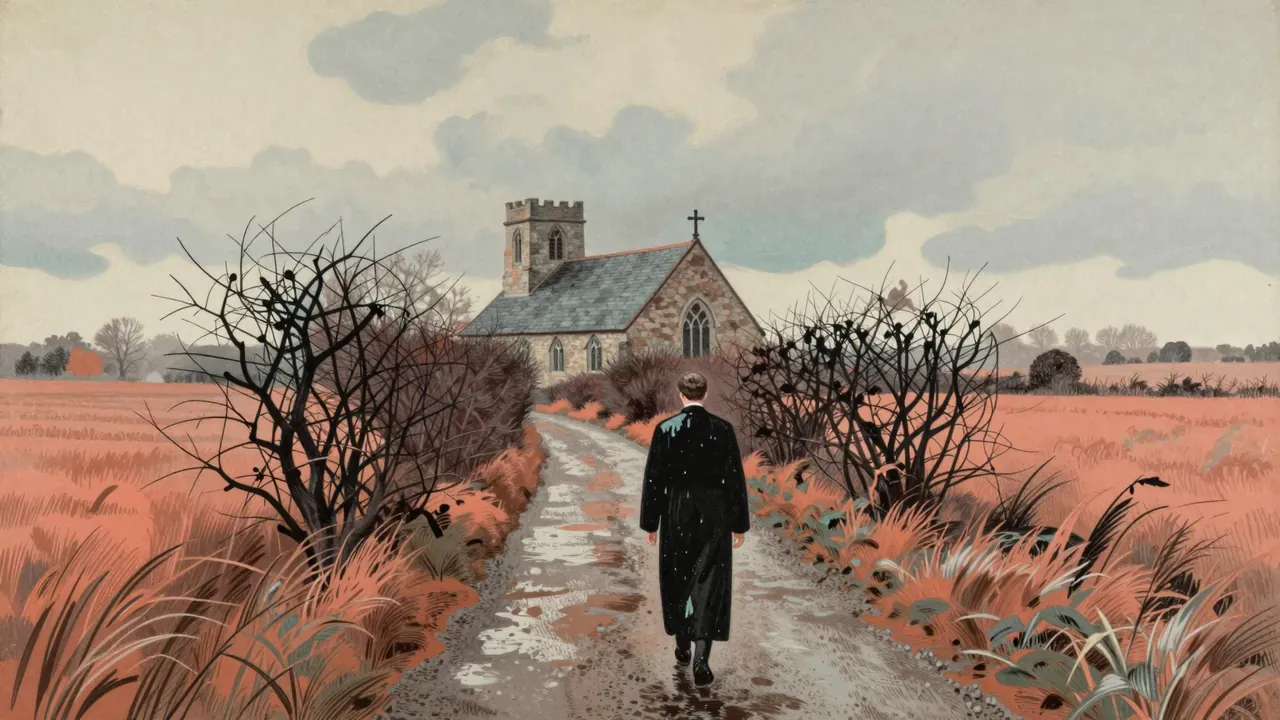
The road to Vedersø
The themes that matter are not faith versus doubt, but presence versus absence — of breath, of light, of speech, of time. Ordet treats resurrection not as eschatology but as phenomenology: what changes when a body moves again? What shifts in the air when a door opens after being closed for hours? The film’s Christianity is embedded in domestic ritual — washing, milking, mending — not liturgy. It asks what holiness looks like when stripped of ornament, authority, or proof. The cross glimpsed twice on the road — marking the site of Kaj Munk’s assassination — anchors the spiritual question in historical violence, yet the film never names it. This is a theology of immanence: God is not elsewhere, but in the grain of wood, the fall of light on a wall, the hesitation before a word. The title ‘The Word’ refers not to scripture alone, but to utterance as act — to speech that creates, commands, or calls back. When Inger says ‘I am alive’, it is not confession but declaration: the Word made flesh, then made audible again. The film’s power lies in its refusal to separate the sacred from the sensory. (150 words)
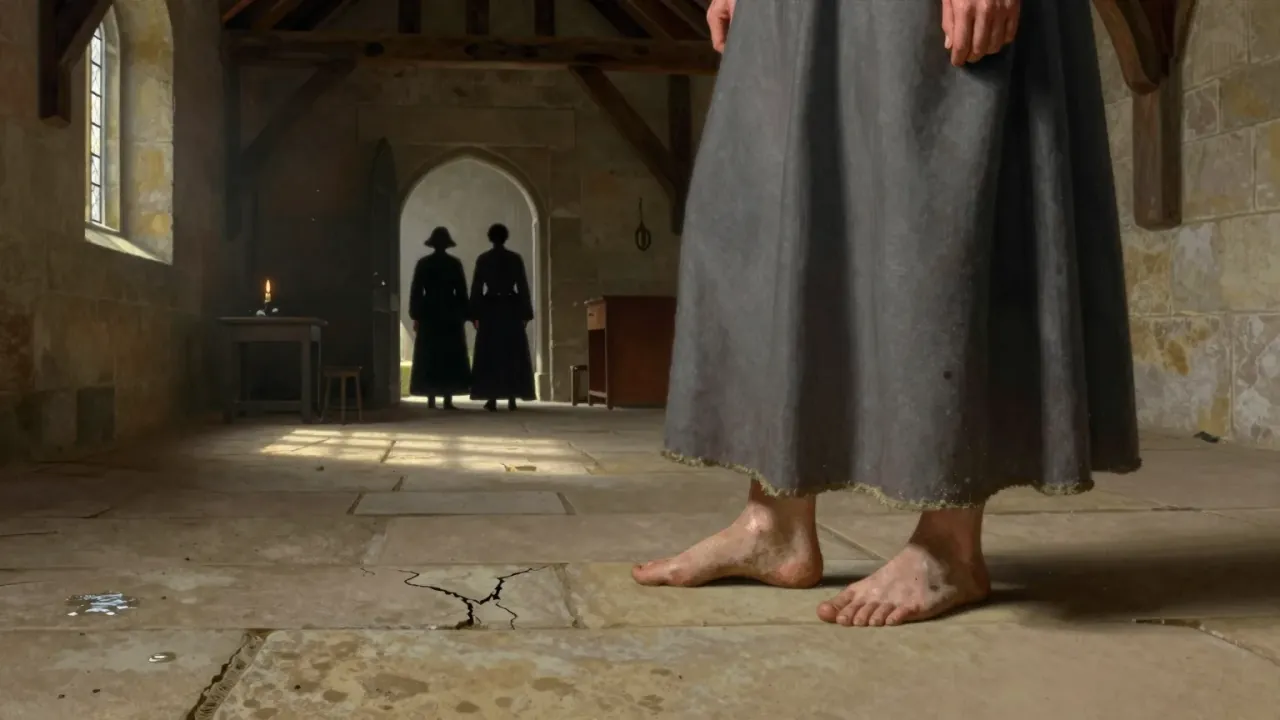
The moment she stands
This film is for viewers who value duration over momentum, silence over exposition, and precision over persuasion. It rewards patience, familiarity with mid-century European art cinema, and tolerance for unresolved theological ambiguity. It is not for those who require narrative propulsion, psychological exposition, or emotional catharsis within conventional arcs. Those who find minimalism reductive — who read stillness as emptiness — will likely disengage early. Viewers expecting a ‘religious film’ as moral instruction or devotional aid will be confounded: Ordet offers no comfort, no doctrine, no resolution beyond one woman standing up. Its demands are formal and philosophical, not thematic. A viewer who values craft as content — who watches to see how light falls, how a frame holds space, how a cut alters time — will find it indispensable. But someone seeking story, character growth, or accessible metaphor should look elsewhere. The film assumes its audience is willing to sit with uncertainty, not resolve it. (151 words)
The silence after
Yes, it is worth your evening — if you are prepared to give it your full, undivided attention for 126 minutes without expectation of reward on familiar terms. It is not entertainment, nor is it illustration. It is an encounter: with time slowed, with silence amplified, with the human body as vessel for the inexplicable. Its value lies not in what it says, but in how relentlessly it insists on the materiality of belief — in wood, wool, breath, and light. Those who dismiss it as cold or austere miss how deeply tactile it is: the roughness of a coat, the warmth of a stove, the weight of a newborn. It is not for casual viewing, nor for background consumption. It requires surrender to its rhythm — and that surrender is repaid not in feeling, but in recalibration. If you have seen it before and found it distant, try again with headphones, in darkness, and without interruption. The verdict would change only if the film were shorter, louder, or more explanatory — and then it would no longer be Ordet. (150 words)