The shape of a choice
Pariah is a coming-of-age drama about a Black teenage lesbian in Brooklyn negotiating identity, family and safety. It expands Dee Rees’s 2007 short of the same name into a feature that centres Alike’s quiet, deliberate self-formation—not as crisis or revelation but as accumulation: of glances held too long, clothes chosen with care, poems drafted in notebooks, silences measured for their weight. The film does not seek to universalise her experience; it anchors itself in specificity—Fort Greene brownstones, church pews, basement clubs, the particular cadence of Black Brooklyn speech—and treats Alike’s sexuality not as a plot device but as one dimension of her interior life, coexisting with her relationship to language, faith, sisterhood and parental expectation. Its ambition is structural as much as emotional: to build a narrative where queerness is neither hidden nor foregrounded as spectacle, but simply present, like breath or light.
The look of it
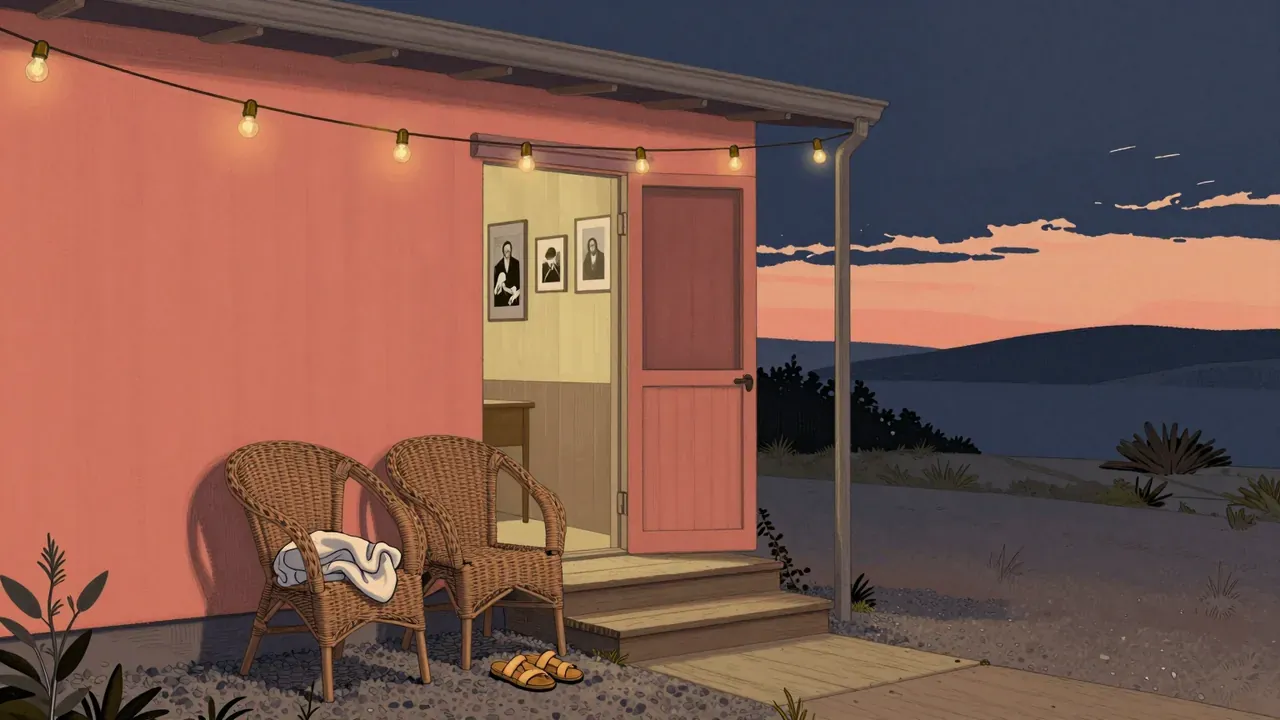
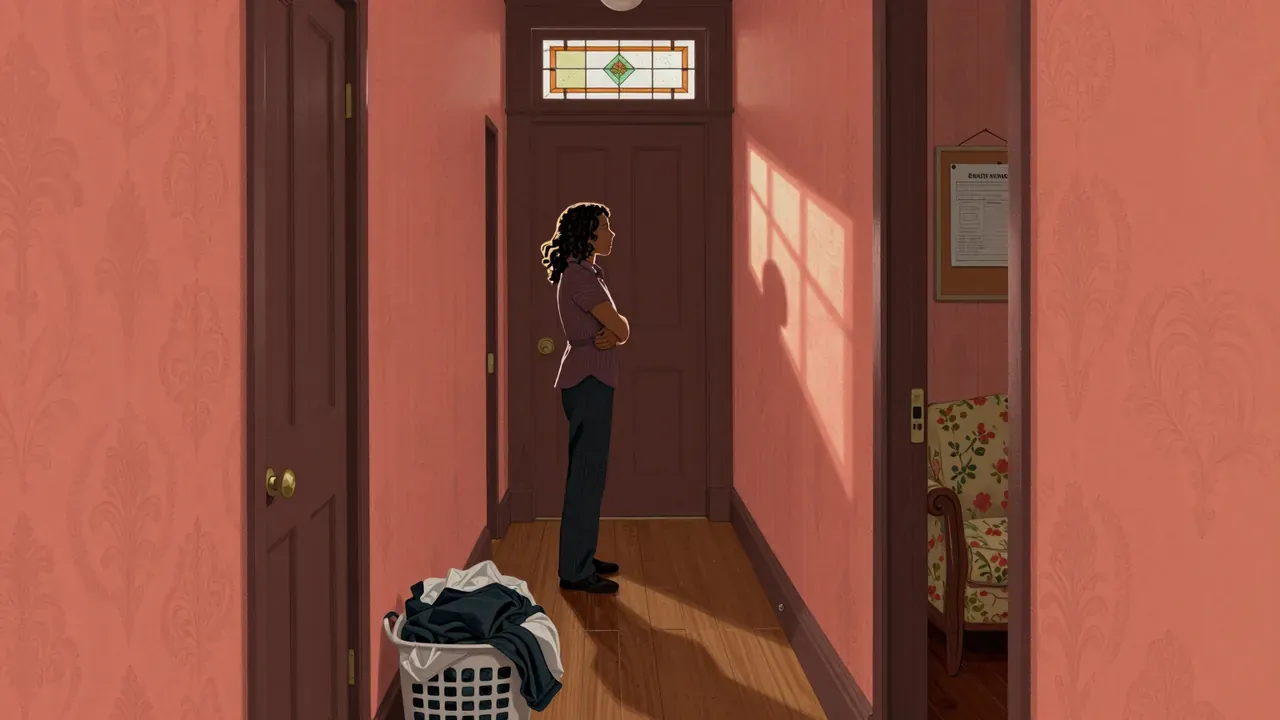
The story unfolds in restrained, unhurried episodes, avoiding melodramatic escalation even at its most charged moments. Adepero Oduye’s performance holds the film together: she conveys Alike’s watchfulness, intelligence and unspoken grief through posture, pauses and the way she folds her arms across her chest—not as defensiveness but as containment. Bradford Young’s cinematography avoids both grit and gloss: interiors are lit with the soft, uneven warmth of incandescent bulbs, exteriors retain the muted tones of late-winter Brooklyn, and close-ups linger without intrusion. Rees’s script gives each adult character psychological plausibility—Audrey’s fear is rooted in theology and social precarity, Arthur’s passivity in professional exhaustion and generational distance—not caricature. Editing is precise but unobtrusive; no scene overruns, no line overstated. The score, sparse and ambient, never cues emotion but underscores atmosphere: the hum beneath conversation, the silence after a door closes.
What stays with you
What lands is the film’s fidelity to emotional truth over narrative convenience. Alike’s decision to leave home feels earned because the film spends time showing how little space she occupies in her own house—not just physically, but linguistically and affectively. Her poem at the end does not resolve the rupture but names it: ‘I’m not running. I’m choosing.’ That line works because the film has already shown us the cost of that choice in hours of withheld breath, in the way Alike folds laundry while listening to her parents argue, in the way she rehearses words in the mirror before speaking them aloud. Kim Wayans’ Audrey registers as terrifying not because she shouts constantly, but because her rage arrives in sudden, brittle shifts—from forced cheer to icy dismissal to physical violence—mirroring how homophobia operates in many Black Christian households: not as ideology alone, but as trauma passed down, misrecognised as love. The final image of Alike on the bus, reading her own words, lands because every prior frame has built her voice as something hard-won, not given.
Where it holds back
What does not land is the handling of Bina. Her contradiction—affectionate intimacy followed by immediate disavowal—is psychologically plausible, but the film gives her no interiority beyond that pivot, no history, no visible conflict. She remains a function: the mirror Alike holds up to see herself more clearly, then shatters. Similarly, Laura’s arc flattens in the second half; her hurt at being sidelined reads as reactive rather than rooted in deeper stakes, and her reconciliation with Alike arrives without sufficient groundwork. The father’s apology also lacks texture: Charles Parnell plays Arthur with weary decency, but the script offers him no real reckoning—no admission of complicity, no change in behaviour, only vague promises. These omissions do not undermine the film’s power, but they limit its scope. A viewer attuned to intergenerational repair or queer solidarity beyond the dyad may find those threads underdeveloped—not because they are absent, but because the film chooses to keep its focus tightly bound to Alike’s solitary, necessary act of self-definition.
What it carries quietly
The themes that matter are not identity in the abstract, but identity as practice: how it is worn, spoken, written, refused, revised. Pariah treats gender expression as material fact—the weight of baggy jeans, the friction of male underwear, the discomfort of a dress forced on by a mother who believes femininity is protection. It treats religion not as dogma but as inherited architecture: the hymns, the expectations, the unspoken rules about who belongs where. It treats family not as sanctuary but as contested ground—where love and harm occupy the same room, often the same gesture. Class is present but unspoken: Arthur’s police work, Audrey’s church leadership, the Fort Greene setting—all signal a Black middle-class reality rarely depicted with this level of quiet realism. And the film insists on adolescence as labour: the exhausting vigilance of code-switching, the mental accounting of what to reveal and when, the constant translation between self and world. None of these themes are resolved; they are held, examined, named—and that holding is the film’s moral centre.
Who it meets, and who it passes by
This film is for viewers who value precision over propulsion, who find resonance in stillness and weight in restraint. It is for teenagers navigating self-definition, for adults remembering what it cost to speak their name aloud, for anyone who has ever had to choose between belonging and being seen. It is not for those who require narrative payoff, clear antagonists or cathartic confrontation—there is no grand reconciliation, no triumphant return, no villainous conversion. Some Black viewers may find the church setting overly familiar or under-interrogated; some queer viewers may wish for more community beyond Laura and the club scenes. The film assumes familiarity with certain cultural signifiers—Black church etiquette, Brooklyn geography, the unspoken grammar of butch presentation—and does not pause to explain them. That assumption is not exclusionary but respectful: it presumes its audience knows these things, or is willing to sit with not knowing, without demand for translation.
The weight of an evening
Yes, it is worth your evening—not because it entertains, but because it attends. Its eighty-six minutes move with the pace of lived time: slow enough to notice how light falls on a hallway wall, how a hand hesitates before touching another, how silence thickens before a sentence breaks it. It rewards attention, not passive consumption. Someone who prefers tightly plotted narratives or overt stylistic flourishes may find it understated to the point of opacity; someone expecting uplift or resolution will be disappointed. But if you value films that treat marginality not as deficit but as vantage point—if you trust a director who trusts her protagonist’s inner life more than her plot—then Pariah repays every minute. Its power lies in what it refuses: exposition, explanation, redemption arcs, easy answers. It asks only that you witness, and in witnessing, recognise the quiet courage of choosing oneself, again and again, in plain sight.