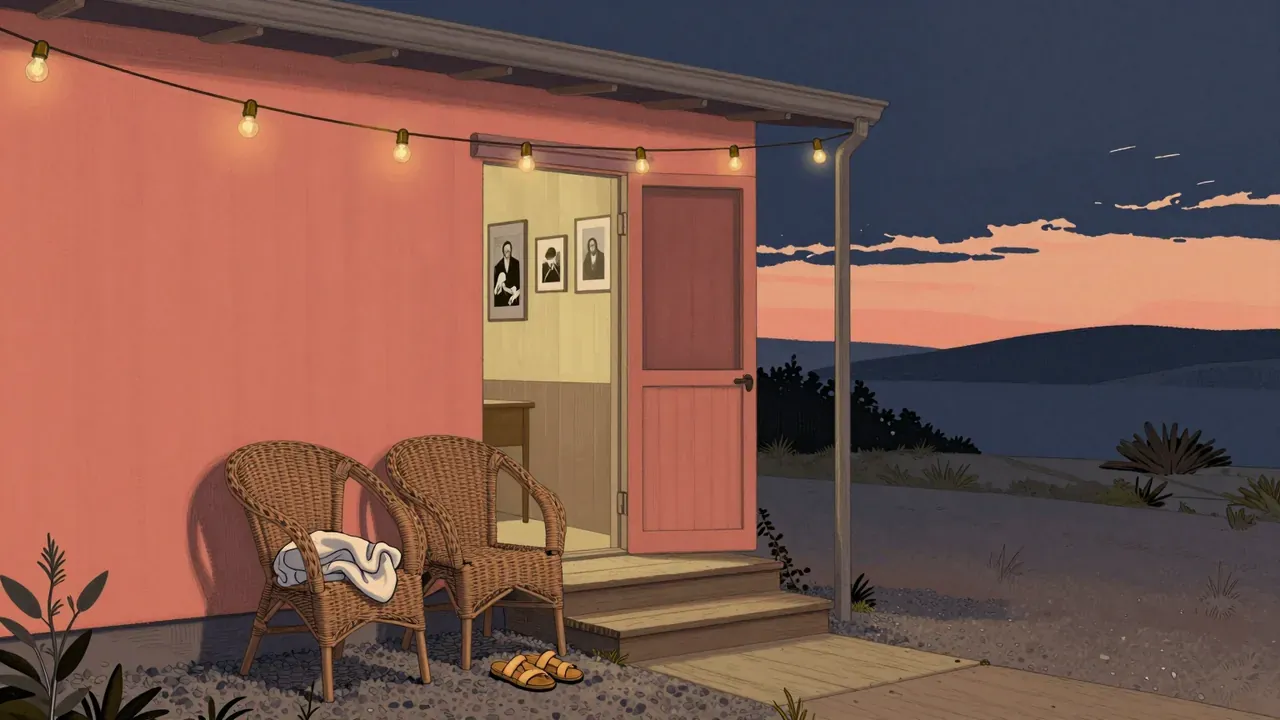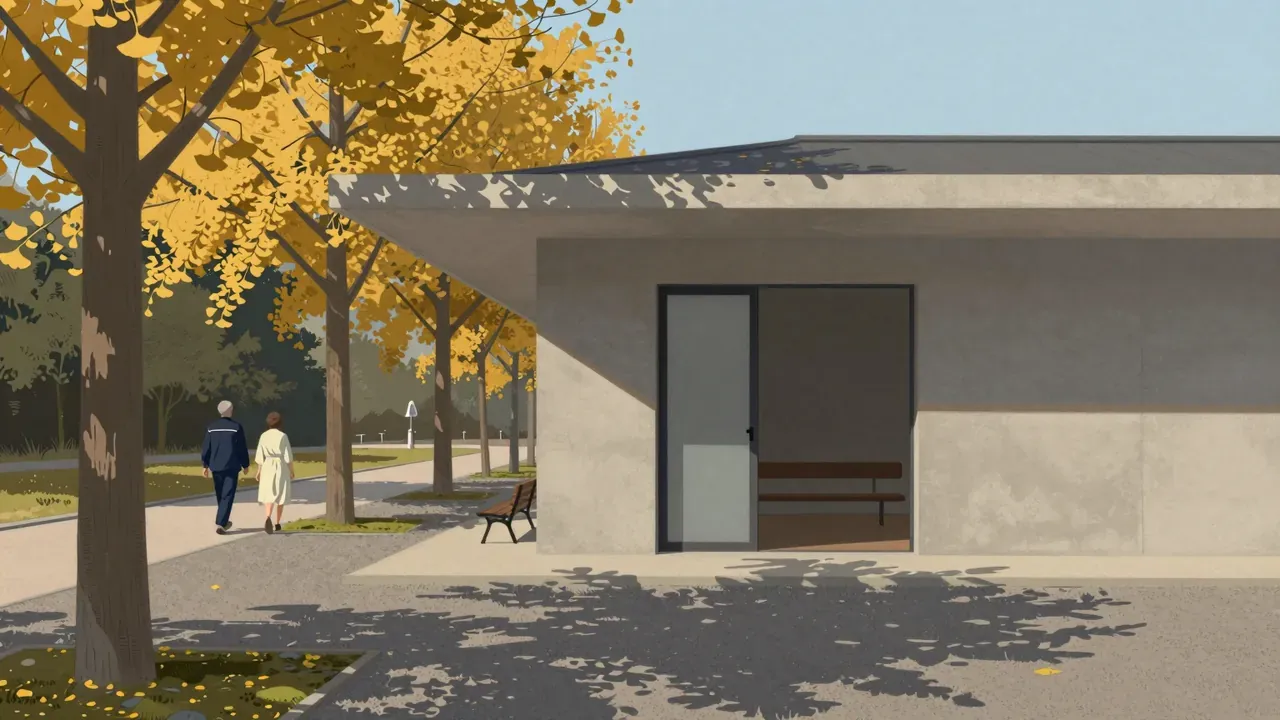
The look of it
Perfect Days is a Japanese-language drama set in Tokyo, directed by Wim Wenders and co-written with Takuma Takasaki. It follows Hirayama, a public toilet cleaner employed by The Tokyo Toilet project — a real civic initiative commissioning architect-designed facilities across Shibuya. The film does not seek to explain why Hirayama chose this work, nor does it dramatise crisis or redemption as convention demands. Instead, it observes his daily rhythm — dawn starts, methodical cleaning, cassette tapes played in his van, tree photographs developed at a local lab, quiet meals under foliage — as a sustained act of attention. Its ambition is structural and ethical: to hold stillness without sentiment, repetition without monotony, and dignity without exposition. It draws on Yasujirō Ozu’s compositional restraint — the 4:3 frame, fixed camera positions, deliberate pacing — not as pastiche but as discipline. The film treats urban infrastructure, domestic routine and personal ritual with equal gravity, refusing hierarchy between a cleaned urinal and a sunlit branch. It asks the viewer to recalibrate time, to notice what accumulates when nothing ‘happens’.
The weight of a routine
The story unfolds through accumulation, not incident: Hirayama’s days repeat with minor variations — a late assistant, a returned cassette, an unexpected niece, a stranger’s confession by the riverbank. Kōji Yakusho carries the film with near-silent precision; his face registers shifts in light, fatigue, memory, and unspoken grief without relying on dialogue. Franz Lustig’s cinematography uses natural light and shallow depth of field to soften edges without romanticising; interiors are neither gloomy nor sterile, but lived-in and legible. Toni Froschhammer’s editing sustains duration — shots hold long enough for breath, but never so long that attention frays. The sound design privileges ambient city hum, cassette hiss, and Nina Simone’s voice as emotional punctuation rather than underscore. Music functions diegetically and structurally: each tape is chosen deliberately, its selection part of Hirayama’s morning ritual. The Tokyo Skytree appears repeatedly, not as symbol but as counterpoint — vertical, distant, indifferent — against the horizontal intimacy of trees, benches, and tiled floors. There is no score beyond what Hirayama plays; silence is calibrated, not empty.
What lingers
What lands is the integrity of the film’s gaze. Hirayama’s work is shown with tactile specificity: the way he scrubs grout, lines up tools, checks mirrors, wipes handles — all rendered without condescension or uplift. His love of trees is conveyed through composition, not exposition: frames linger on bark texture, dappled light, the weight of branches against sky. The black-and-white dream sequences — fleeting, grainy, unexplained — land because they feel earned, not decorative: they are the only moments where interiority breaches the surface, and their brevity makes them resonant. The relationship with Niko works because it avoids sentimentality; her presence disrupts routine but does not ‘change’ him — she simply shares space with him, bikes beside him, watches him photograph leaves. The final sequence, with Hirayama listening to ‘Feeling Good’ while driving, lands precisely because it resists catharsis: his expression holds sorrow, resolve, weariness, and something like peace, all at once, without resolution. The film trusts the audience to sit with contradiction, and that trust is repaid.
Where the frame narrows
What does not land is the framing of Takashi. His arc — from careless apprentice to abrupt departure — feels functional rather than felt. His motivations remain opaque, his dialogue often expositional, and his exit lacks emotional weight because the film has not invested in his interiority. Similarly, the subplot involving the restaurant proprietor and her ex-husband arrives late and risks overloading the film’s quiet architecture with a thematic echo it does not need. The man’s cancer revelation and plea to ‘look after her’ introduces a moral weight that sits uneasily alongside Hirayama’s own unspoken history — it gestures toward shared fragility but doesn’t integrate cleanly. The film’s resistance to explanation works for Hirayama, but not for every character; some supporting figures remain silhouettes rather than people. There is also a slight tonal inconsistency in the tic-tac-toe game — a charming motif that begins with gentle mystery but ends without payoff, leaving a faint sense of narrative loose thread rather than poetic ellipsis.
What it tends to
The themes that matter are rooted in attention, stewardship, and quiet continuity. The film treats cleaning not as menial labour but as custodianship — of space, of surfaces, of public dignity. Hirayama’s care for toilets mirrors his care for trees, cassettes, books, and film negatives: all are objects of preservation, requiring patience and respect. His routine is not escape but practice — a daily reaffirmation of presence amid erasure. The recurring motif of komorebi (sunlight through leaves) embodies this: it is transient, unrepeatable, and entirely ordinary — yet Hirayama stops for it, frames it, develops it. Ageing and memory appear obliquely: through Niko’s youth, Keiko’s strained reference to their father’s dementia, and Hirayama’s own unreadable past. But the film refuses trauma-as-explanation; his silence is not withholding, but fullness. The Tokyo Skytree stands not as alienation but as scale — a reminder that human rhythms persist beneath infrastructural grandeur. This is a film about how meaning accrues not in events, but in fidelity to small, repeated acts.
Who walks with it
This film is for viewers who value duration over plot, observation over exposition, and restraint over emphasis — those accustomed to Ozu, Kore-eda, or early Akerman. It rewards patience, comfort with silence, and willingness to read emotion in posture and light. It is not for viewers who require narrative propulsion, psychological exposition, or clear cause-and-effect. Those expecting a conventional character study with backstory revelations or emotional climaxes will find it withholding. Some may read its stillness as passivity, its minimalism as emptiness — particularly viewers accustomed to faster editing, denser dialogue, or explicit thematic signposting. A viewer who finds the first twenty minutes slow may not adjust; the film does not accelerate to meet expectation. Its pace is its argument. That said, its accessibility is broader than it first appears: the clarity of its images, the warmth of Yakusho’s performance, and the tangible tactility of its world offer entry points even for less habitual arthouse viewers — provided they arrive willing to settle into its rhythm rather than wait for it to shift.
What it gives back
Yes, it is worth your evening — not as diversion, but as recalibration. It asks ninety minutes of attention and gives back a sharpened awareness of texture, light, and quiet intention. Its value lies in how it reshapes perception: after watching, a bus stop, a tiled floor, or afternoon light through a window may register with new weight. It is not ‘entertaining’ in the conventional sense, but it is deeply sustaining — like a walk taken slowly, with eyes open. Those who dislike films that refuse to name their meanings outright may find it frustrating; others will find its refusal a relief. It does not demand interpretation, only presence. Its power accumulates in retrospect: the more you carry its images — the van’s dashboard, the pattern of tiles, the curve of a branch — the more its quiet insistence on care and continuity takes hold. It earns its length by making time feel both expansive and exact.