The weight of fog
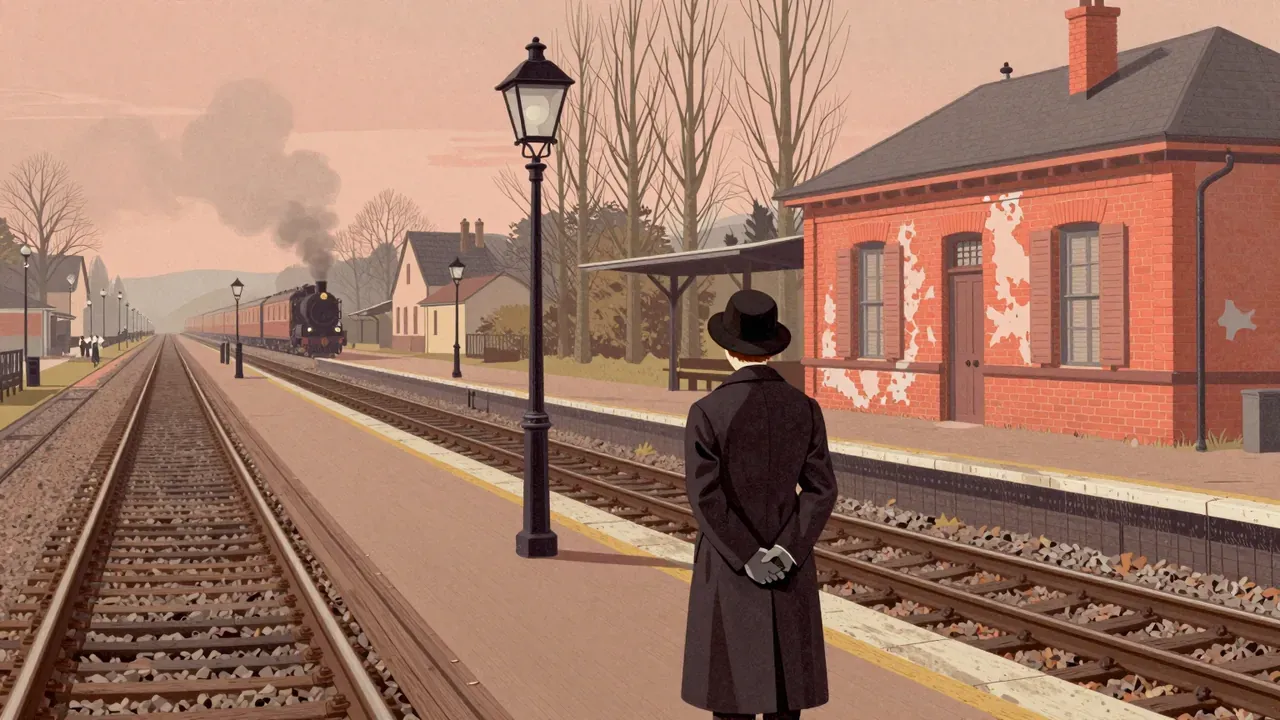
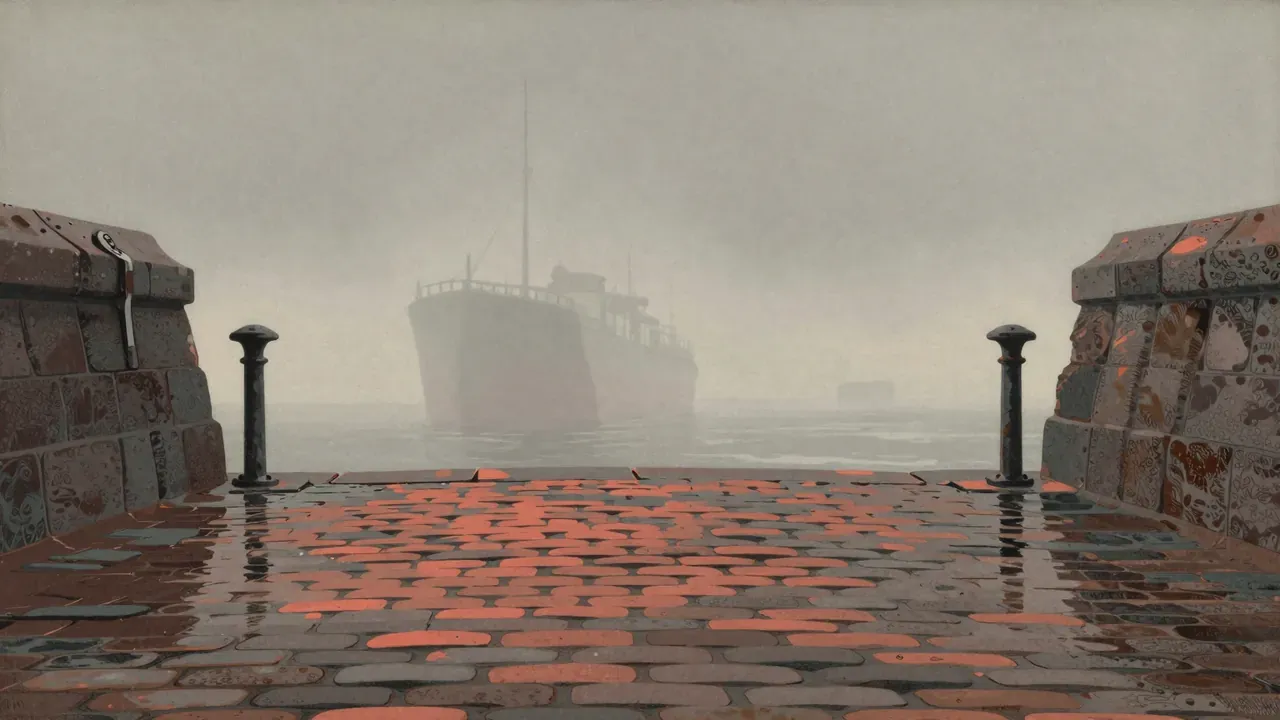
Port of Shadows is a French drama from 1938 that sets out to render fatalism as atmosphere: not as philosophical argument, but as weather, light, and gesture. It belongs to the movement known as poetic realism — a term that names neither a doctrine nor a school, but a convergence of literary sensibility, studio craft, and social observation in late-1930s France. The film does not seek to explain its characters’ choices so much as to locate them within a world already thick with consequence: fog on the docks of Le Havre, damp cobblestones, low ceilings, cigarette smoke held too long. Its ambition is structural and tonal — to make inevitability feel physical, not abstract; to let moral ambiguity settle like mist, not argue it. It adapts Pierre Mac Orlan’s novel not as source material to be rendered faithfully, but as scaffolding for a mood, one in which desire and duty are equally doomed, and where every act of kindness carries the weight of an unspoken sentence. This is not realism that documents; it is realism that condenses.
The language of gesture
The story moves with quiet, deliberate pressure: Jean, a deserter, arrives in Le Havre and meets Nelly, a seventeen-year-old fleeing her godfather Zabel. Their brief intimacy unfolds against interruptions — Zabel’s possessive watchfulness, Lucien’s thuggish persistence, the ever-present threat of exposure or arrest. Jean Gabin plays Jean with minimal inflection, his face half-shadowed, his gestures economical: a slap, a pause before lighting a cigarette, a hand resting on a damp wall. Michèle Morgan’s Nelly is less reactive than receptive — her stillness registers as agency, not passivity. Michel Simon’s Zabel avoids caricature through vocal texture and timing; Pierre Brasseur’s Lucien is all nervous posture and sudden violence. Eugen Schüfftan’s cinematography keeps interiors dim and exteriors veiled, using deep focus not for clarity but for entanglement — figures recede into doorways, faces emerge from gloom. Maurice Jaubert’s score is sparse, often absent, letting silence and street noise carry weight. René Le Hénaff’s editing avoids emphasis; cuts land without flourish, as if time itself resists acceleration.
The consistency of grey
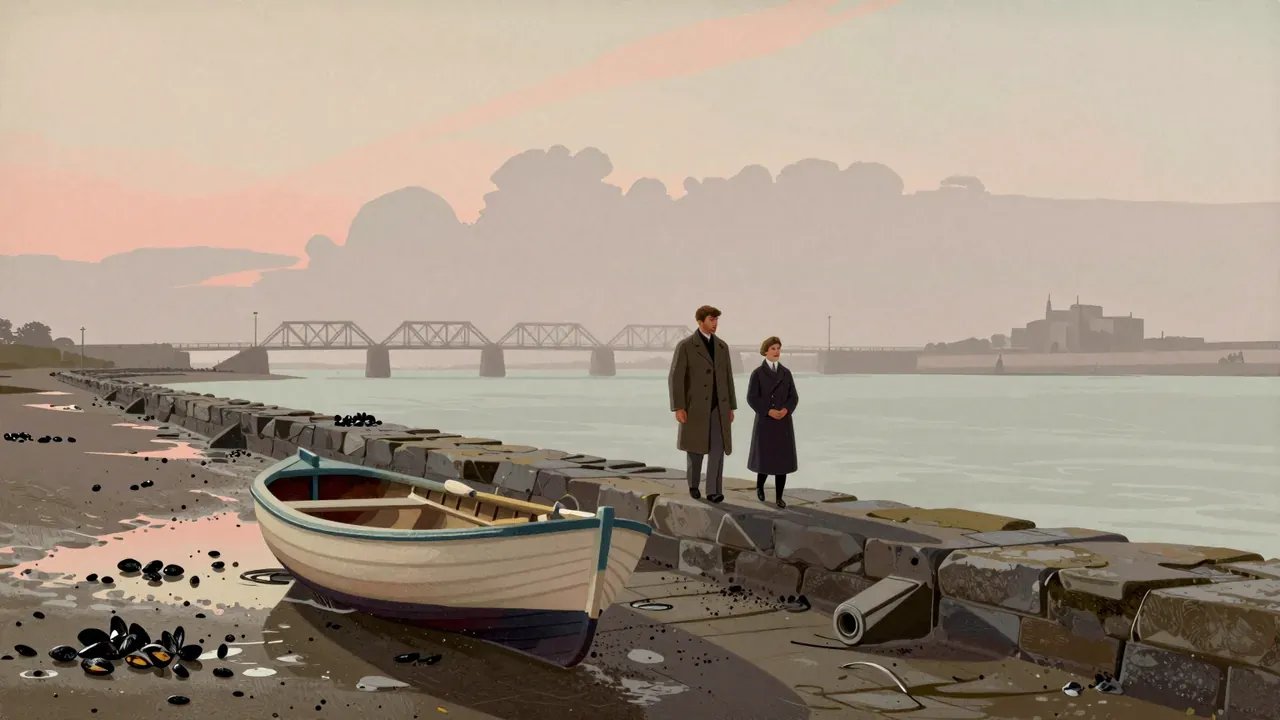
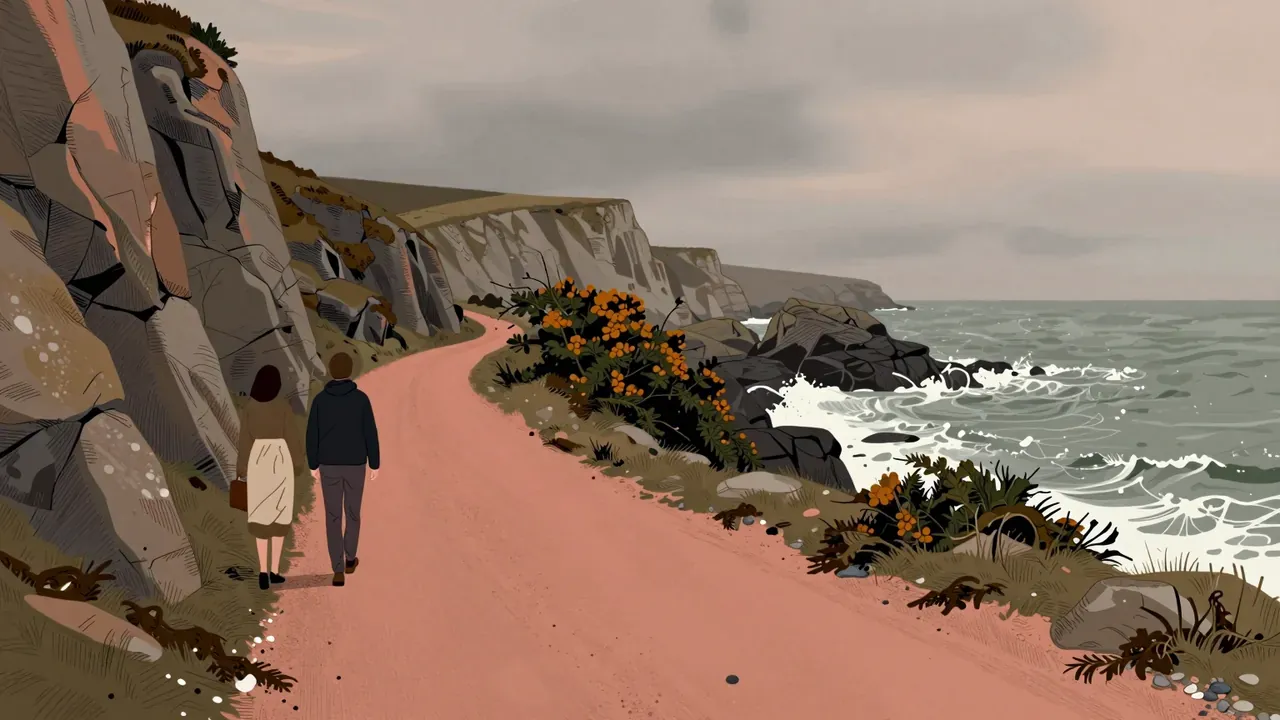
What lands most securely is the film’s consistency of tone — a sustained low register of longing and resignation that never breaks into melodrama or irony. The dockside setting feels lived-in, not symbolic: wet stone, peeling paint, the smell implied by steam and stale wine. Jean and Nelly’s scenes together gain power from their scarcity and restraint — a shared cigarette, a walk along a misted road, a single kiss framed by rain-streaked glass. The fatalism does not feel imposed but earned: each decision narrows the path, not through plot contrivance but through the cumulative weight of gesture and glance. Even minor roles — Panama the cynical taxi driver, Quart Vittel the barman who says little but sees everything — contribute to a world where no one is incidental, only underlit. The film’s refusal to moralise gives its tragedy gravity: Jean dies not because he is flawed, but because the conditions for survival and love are mutually exclusive in this place, at this time. That coherence holds the viewer not through suspense, but through recognition.
What is left unsaid
What does not land is any sense of political urgency beyond its immediate moral frame. Though contemporary critics accused it of pessimism about the French state, the film makes no explicit reference to institutions, policy, or national crisis — its critique is atmospheric, not analytical. This is not a flaw in itself, but it means the film offers no purchase for viewers seeking historical context or ideological argument. Likewise, the character of Nelly, while central, remains defined largely by others’ desires for or over her: her agency emerges in reaction — blackmailing Zabel, choosing Jean — but her interior life stays opaque, a limitation of Prévert’s script rather than Morgan’s performance. The pacing, deliberate by design, may also resist modern attention rhythms: there are no narrative shortcuts, no exposition dumps, no clarifying flashbacks. Scenes linger without payoff, not as ambiguity but as refusal — a choice that rewards patience but offers no concession to impatience. Some will read this as austerity; others, as evasion.
The architecture of feeling
The themes that matter are not stated but sedimented: the impossibility of escape without complicity, the way love contracts under pressure rather than expands, the quiet violence of respectability. Class is present not as dialogue but as texture — the difference between Zabel’s cluttered apartment and the bare room Jean rents, between Lucien’s cheap suit and Jean’s ill-fitting civilian coat. Time is treated as non-linear: memory intrudes without warning, past actions recur as echoes — Maurice’s absence haunts the present like a shadow cast backward. The port is both literal and metaphoric: a threshold where arrival and departure are indistinguishable, where identity dissolves in fog and re-forms in silhouette. There is no redemption arc, no lesson learned — only the slow, irreversible narrowing of possibility. What endures is not hope or despair, but the weight of choice made in full knowledge of its cost. This is not nihilism; it is gravity given human form.
The terms of engagement
This film is for viewers who value mood over momentum, who find resonance in restraint, and who accept that some stories conclude not with resolution but with the quiet settling of dust. It suits those familiar with interwar European cinema or willing to meet it on its own terms — not as precursor to film noir, but as a fully realised expression of its moment. It is not for viewers who require narrative propulsion, psychological exposition, or moral clarity. Those who expect characters to articulate their motives, or who need closure to feel satisfied, will find it withholding. Those who associate ‘drama’ with heightened confrontation or emotional catharsis may mistake its stillness for emptiness. A change in verdict would follow a shift in expectation: if watched not as a story to be followed but as a space to inhabit, its power becomes legible. It asks for attention, not allegiance.
The afterimage
Yes, it is worth your evening — provided you set aside the idea of ‘entertainment’ as diversion. Its ninety-one minutes unfold with the pace of dusk falling: gradual, inevitable, unrepeatable. It repays close viewing not with revelations but with accumulations — a detail noticed on second watch, a line of dialogue that shifts meaning when heard again. It is not ‘accessible’ in the sense of easy entry, but it is generous in its integrity: every shot, every pause, every silence serves the same vision. Those who dismiss it as slow or bleak miss how precisely it calibrates sorrow and beauty — how a shaft of light across wet cobbles can feel like mercy. It is not for everyone, but for those it reaches, it stays. To watch it is not to consume, but to witness — and that distinction matters more than any score or award.