filmbriefs
Highest rated

All briefs

2035 briefs · 26452 min · 1–96 on page 1 of 22
13:00

12 Angry Men

Sidney Lumet · 1957

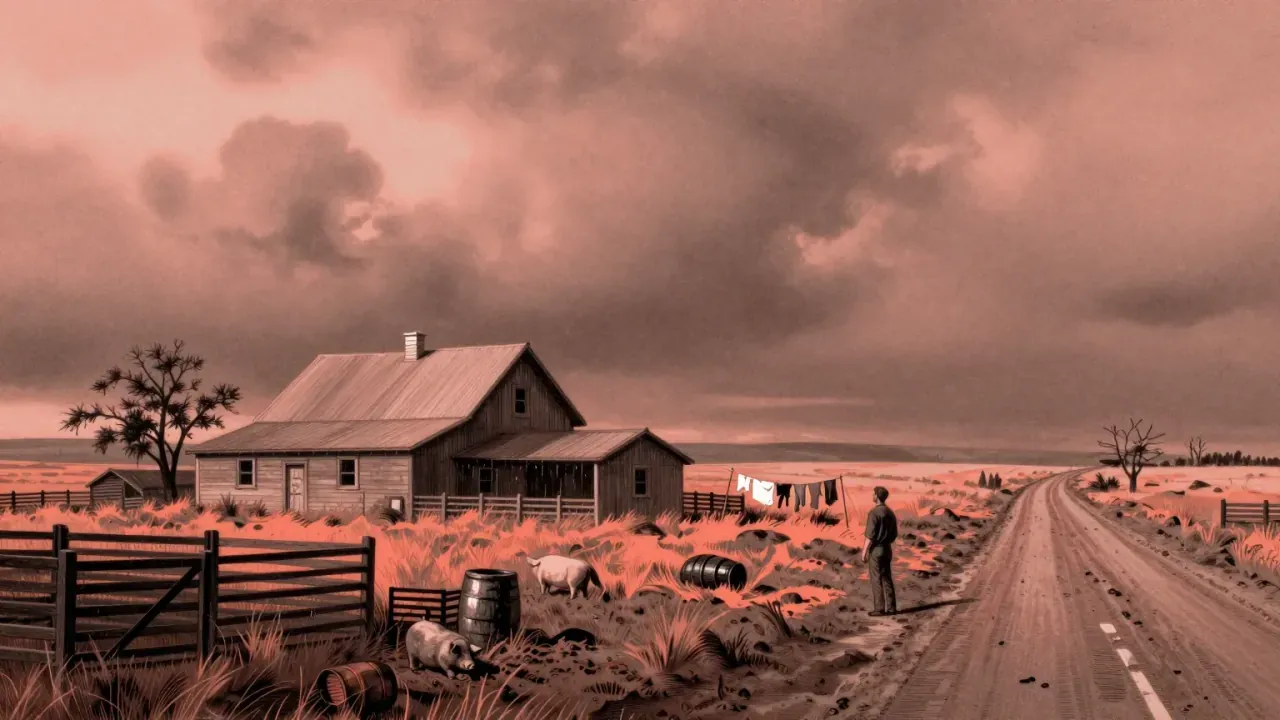
Sidney Lumet's first feature takes Reginald Rose's 1954 teleplay and confines it almost entirely to a jury room, where eleven men ready to convict a teenager of murder are worked, one by one, toward doubt. Shot in three weeks on a budget of $340,000, it turns a single set into an escalating study of temper, prejudice and procedure, carried by an ensemble led by Henry Fonda, who also produced.
13:00

Alien

Ridley Scott · 1979

A commercial towing crew, woken early by what they believe is a distress signal, boards a derelict ship and returns with something that starts killing them one by one. Ridley Scott's first science-fiction film builds the genre's most enduring monster movie almost entirely out of dread, sound design and H.R. Giger's biomechanical creature, on a budget that a science-fiction boom had only just made possible.

13:00

Aliens

James Cameron · 1986

James Cameron's 1986 sequel to Alien sends Sigourney Weaver's Ripley back to the colonised moon where the first creature was found, this time with a unit of Colonial Marines whose confidence collapses fast once the aliens appear. Greenlit only after Brandywine settled a profit-sharing lawsuit with Fox, and made after two separate standoffs over Weaver's return, the film swept effects and sound awards, earned Weaver a rare Best Actress nomination for a science-fiction role, and returned more than seven times its 18.5 million dollar budget.

13:00

Apocalypse Now

Francis Ford Coppola · 1979

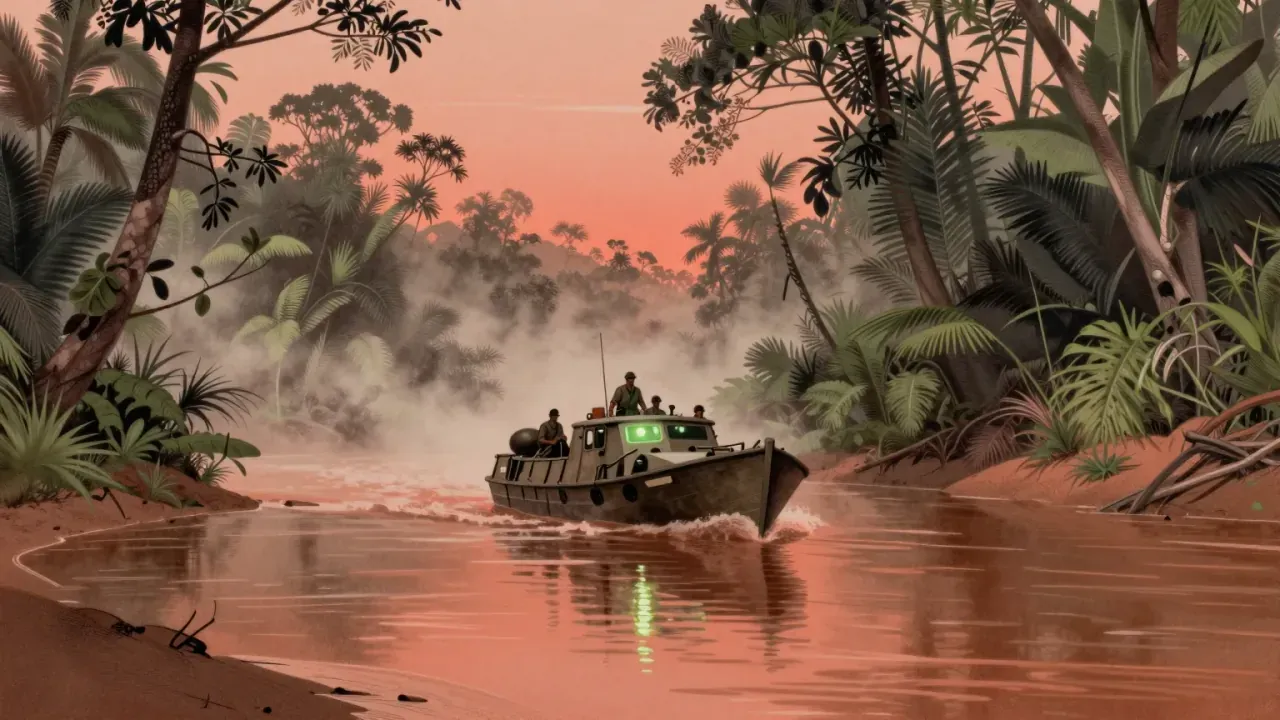
Francis Ford Coppola's 1979 film relocates Joseph Conrad's Heart of Darkness to the Vietnam War, sending Captain Willard up a river into Cambodia to assassinate Colonel Kurtz, a decorated officer who has gone rogue and established himself as a warlord among a private army. Shot by Vittorio Storaro on a production in the Philippines that ran a year over schedule, battered by a typhoon, a leading actor's heart attack and an unprepared, overweight Marlon Brando, it premiered unfinished at Cannes to win the Palme d'Or, and later took home Oscars for cinematography and sound on a budget of $31.5 million against an $83.5 million return.

13:00

Blade Runner

Ridley Scott · 1982

Ridley Scott's 1982 science fiction film, adapted from Philip K. Dick's novel, sends former police officer Rick Deckard after a group of fugitive synthetic humans, or replicants, hiding in a decaying future Los Angeles. Shot by Jordan Cronenweth with a score by Vangelis, it underperformed on release and split critics over its pacing, only to be reissued in seven different versions and become one of the defining works of neo-noir and cyberpunk cinema.

13:00

Chinatown

Roman Polanski · 1974

Chinatown sends Jack Nicholson's private investigator into a municipal water scandal modelled on the early-twentieth-century disputes that built Los Angeles, opposite Faye Dunaway and John Huston. Robert Towne's script won the film's only Oscar from eleven nominations, but the ending that gives the film its reputation was Polanski's, forced through over the writer's objections, and it is worth knowing which parts of the film are whose before deciding what the story is actually arguing.

13:00

City of God

Fernando Meirelles, Kátia Lund · 2002

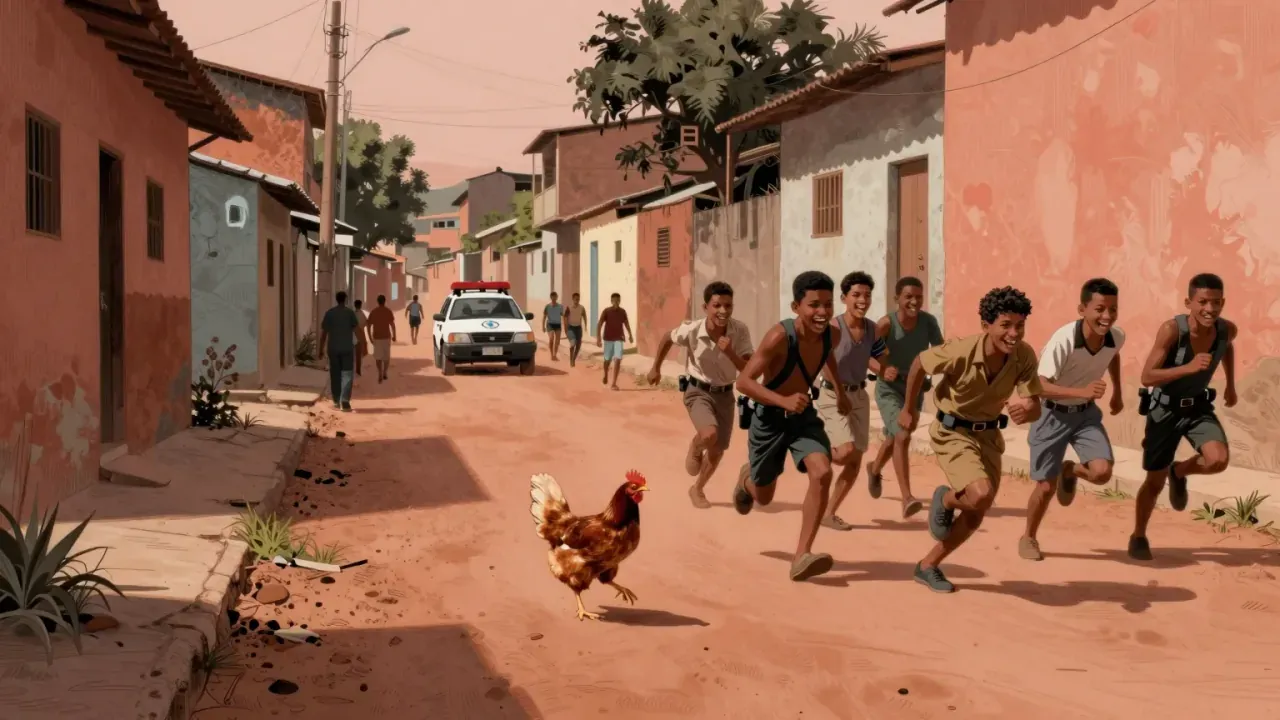
Told through the eyes of Rocket, a boy who wants to be a photographer rather than a criminal, City of God traces two decades of gang warfare in a Rio de Janeiro housing project through the rise of the ruthless drug lord Li'l Zé. Directed by Fernando Meirelles and Kátia Lund and cast almost entirely with residents of real favelas trained in an improvisation workshop, the 2002 film adapts Paulo Lins's novel and earned four Academy Award nominations.

13:00

Come and See

Elem Klimov · 1985

Elem Klimov's 1985 account of the Nazi destruction of Belarusian villages follows a teenage partisan recruit, played by Aleksei Kravchenko, through a descent that the director shot in sequence and largely with non-actors. Built from survivor testimony and a Belarusian novel, and delayed for years by Soviet censors who found the script too raw, it remains one of the starkest war films made anywhere.

13:00

Dr. Strangelove

Stanley Kubrick · 1964

Stanley Kubrick's 1964 black comedy, adapted from Peter George's thriller novel Red Alert, follows a rogue American general's order for a nuclear strike on the Soviet Union and the frantic, mostly useless efforts of the President, his aides and a visiting RAF officer, all three played by Peter Sellers, to call it back. Shot entirely at Shepperton Studios on Ken Adam's cavernous War Room set for $1.8 million, it grossed $9.4 million, won three BAFTAs, and is now ranked among the American Film Institute's greatest and funniest American films.

13:00

E.T. the Extra-Terrestrial

Steven Spielberg · 1982

Steven Spielberg's 1982 film, written by Melissa Mathison from a rejected Columbia Pictures script, follows a boy named Elliott who hides and befriends a stranded alien while government agents close in. Shot in sequence over four months on a $10.5 million budget, with a Carlo Rambaldi animatronic creature voiced by a chain-smoking retiree, it overtook Star Wars to become the highest-grossing film ever made and held that record for eleven years, until Spielberg's own Jurassic Park surpassed it.

13:00

Eternal Sunshine of the Spotless Mind

Michel Gondry · 2004

Jim Carrey and Kate Winslet play exes who each have their relationship erased from memory, in a film that plays their romance in reverse and ends with them choosing it again anyway.

13:00

Grave of the Fireflies

Isao Takahata · 1988

Isao Takahata's 1988 adaptation of Akiyuki Nosaka's semi-autobiographical story follows siblings Seita and Setsuko trying to survive the final months of the Pacific War after the firebombing of Kobe and their mother's death. Takahata's first film for Studio Ghibli, it opens by revealing Seita is already dead and builds the rest of its account around a specific, unheroic failure rather than a rescue.

13:00

In the Mood for Love

Wong Kar-wai · 2000

In 1962 Hong Kong, a newspaper editor and a secretary living next door to each other realise their spouses are having an affair, and grow close while insisting they will not repeat it. Wong Kar-wai shot for fifteen months without a finished script, switching cinematographers mid-production, and built the film around Maggie Cheung's cheongsams and Tony Leung's restraint rather than plot incident. It won Leung the Cannes best actor award and has since been ranked among the major works of Asian cinema.

13:00

Jaws

Steven Spielberg · 1975

Steven Spielberg's 1975 thriller sends police chief Martin Brody, a marine biologist and a professional shark hunter after a great white attacking swimmers off a New England resort town. Adapted from Peter Benchley's novel and shot on location at Martha's Vineyard, it went over budget and schedule when its mechanical sharks repeatedly failed, forcing Spielberg toward a suggestive, Hitchcock-influenced style built around John Williams's two-note theme. It became the highest-grossing film in history at the time and established the modern summer blockbuster model.

13:00

Jeanne Dielman, 23 quai du Commerce, 1080 Bruxelles

Chantal Akerman · 1975

Chantal Akerman's 1975 film spends 201 minutes tracking a widowed Brussels housewife, played by Delphine Seyrig, through the exact domestic routine that structures her days, including the afternoon clients she sees for money while her teenage son is at school. Shot by Babette Mangolte from a fixed, eye-level camera that never enters Jeanne's private space and rarely cuts within a task, it was made on a budget of $120,000 and has since been named, in one major critics' poll, the greatest film ever made, a status built almost entirely on how literally it commits to watching unglamorous, repeated labour.

13:00

Memories of Murder

Bong Joon-ho · 2003

Bong Joon-ho's 2003 film follows two mismatched detectives investigating a string of rapes and murders in a small South Korean town in the late 1980s, one relying on coerced confessions and superstition, the other on procedure imported from Seoul that proves no more effective. Loosely based on Korea's real, then-unsolved hunt for a serial killer later identified in 2019 as Lee Choon-jae, and shot on a $2.8 million budget with Song Kang-ho in the lead, the film built a cult following before becoming regarded internationally as one of the finest crime films of the century.

13:00

Mulholland Drive

David Lynch · 2001

Rejected by ABC as a television pilot, Mulholland Drive was rebuilt by David Lynch into a feature with new financing, new footage, and an ending that recontextualises everything before it. Naomi Watts's performance carries the film from bright optimism to something far darker, across a Los Angeles built out of borrowed names and unresolved threads.

13:00

No Country for Old Men

Ethan Coen, Joel Coen · 2007

No Country for Old Men follows a welder who finds two million dollars at a drug deal gone wrong, the hitman sent to retrieve it, and the ageing sheriff trailing both of them across 1980 West Texas. Joel and Ethan Coen adapt Cormac McCarthy's novel with unusual fidelity, keeping dialogue sparse and letting Roger Deakins's landscapes and Javier Bardem's performance as Anton Chigurh carry a story that deliberately withholds the confrontation genre habit expects.

13:00

Once Upon a Time in the West

Sergio Leone · 1968

Sergio Leone's 1968 Western, funded by Paramount specifically to secure Henry Fonda, casts the actor against type as a hired killer clearing land for the railroad while a harmonica-playing stranger, played by Charles Bronson, pursues him for reasons the film withholds until its final scenes. Composed with Ennio Morricone's score written and recorded before filming began, and shot across Spain, Utah and Cinecittà, the film ran 165 minutes in Europe to strong box office, but Paramount's 140-minute US cut flopped on release in 1969, a fate the film's reputation has long since reversed.

13:00

One Flew Over the Cuckoo's Nest

Miloš Forman · 1975

Miloš Forman's adaptation of Ken Kesey's novel puts Jack Nicholson's disruptive new patient against Louise Fletcher's controlled head nurse inside the Oregon State Hospital, an operating psychiatric facility used as the actual set. Made for $3 million after a development history stretching back to 1962, it became one of only three films to sweep the top five Academy Awards, and it still plays as a study of institutional control rather than a simple underdog story.

13:00

Pan's Labyrinth

Guillermo del Toro · 2006

In 1944 Spain, a girl named Ofelia arrives with her pregnant mother at the outpost of her new stepfather, a sadistic Francoist captain hunting republican guerrillas, and finds an ancient labyrinth where a faun sets her three tasks to prove she is the reincarnated princess of an underworld kingdom. Guillermo del Toro's 2006 film alternates between this fantasy and the household's real brutality, using practical creature effects on a modest budget to win three Academy Awards.

13:00

Parasite

Bong Joon-ho · 2019

Bong Joon-ho's 2019 film follows the Kim family, unemployed and living in a semi-basement flat, as they scheme their way one by one into staff jobs inside a wealthy household run by the oblivious Park family, until a discovery beneath the Parks' house upends both families' arrangements. Built from a stage idea Bong developed after his own experience tutoring a rich family's son, and shot on a purpose-built house designed around the Parks' fictional architect, the film became the first non-English-language film to win the Academy Award for Best Picture after also winning the Palme d'Or at Cannes.

13:00

Psycho

Alfred Hitchcock · 1960

Hitchcock financed Psycho himself after Paramount balked at the material, shooting it fast, cheap and in black and white with his television crew. Anthony Perkins's Norman Bates, Bernard Herrmann's string score and a mid-film murder that removes the film's ostensible heroine turned a low-budget genre picture into the template for the modern horror thriller.

13:00

Rashomon

Akira Kurosawa · 1950

Akira Kurosawa's 1950 film gathers a woodcutter, a priest and a passer-by under the ruined Rashomon gate during a rainstorm as the first two recount a trial testimony about a samurai's death in a forest, told in turn by a captured bandit, the samurai's wife, the dead man himself through a medium, and finally the woodcutter who found the body. Shot by Kazuo Miyagawa, who pointed a camera directly into sunlight through forest canopy for the first time in Japanese studio film, and made for around $140,000, it won the Golden Lion at Venice and an honorary Academy Award, introducing much of the West to Japanese cinema in the process.

13:00

Rear Window

Alfred Hitchcock · 1954

Confined almost entirely to one apartment and the courtyard it overlooks, Rear Window turns a photographer's boredom into a murder investigation conducted through binoculars. Built on a single elaborate Paramount set, it is Hitchcock at his most tightly engineered, with James Stewart watching and Grace Kelly eventually doing the one thing he cannot: crossing the courtyard himself.

13:00

Seven Samurai

Akira Kurosawa · 1954

Akira Kurosawa's 1954 film follows a poor farming village that recruits seven masterless samurai, offering only food and shelter, to defend it against a bandit gang planning to return once the barley ripens. Shot by Asakazu Nakai across a punishing production that ran well over schedule, scored by Fumio Hayasaka and led by Toshiro Mifune and Takashi Shimura, the film ran to 207 minutes and cost 210 million yen, a large outlay for the period, before shaping the template that countless action and heist films have followed since.

13:00

Spider-Man: Into the Spider-Verse

Peter Ramsey, Rodney Rothman, Bob Persichetti · 2018

After a radioactive spider bite and Peter Parker's death at the hands of Kingpin, Brooklyn teenager Miles Morales is thrown together with five other Spider-People pulled in from parallel universes to stop a machine that threatens to destroy them all. Phil Lord and Christopher Miller's screenplay, directed by Bob Persichetti, Peter Ramsey and Rodney Rothman, pairs a six-Spider-Man ensemble with a hand-drawn comic-book visual technique built specifically to make computer animation look like it was inked and printed.

13:00

Spirited Away

Hayao Miyazaki · 2001

Spirited Away follows ten-year-old Chihiro, whose parents are turned into pigs after wandering into a spirit world, as she takes a job in the witch Yubaba's bathhouse to survive and undo the curse. Hayao Miyazaki wrote and directed the film for Studio Ghibli after designing it specifically for the young daughters of family friends, and it became the highest-grossing film in Japanese history at the time, winning the Golden Bear and the Academy Award for Best Animated Feature.

13:00

Star Wars: Episode IV – A New Hope

George Lucas · 1977

George Lucas's 1977 space opera sends farm boy Luke Skywalker into a rebellion against the Galactic Empire after he acquires stolen plans for a planet-destroying superweapon, teaming with smuggler Han Solo, Princess Leia and Jedi master Obi-Wan Kenobi. Made for $11 million after multiple studios turned the project down, it became a surprise blockbuster, grossing $775 million across its releases, winning six Academy Awards, and establishing the modern template for franchise filmmaking.

13:00

Star Wars: Episode V – The Empire Strikes Back

Irvin Kershner · 1980

Irvin Kershner's 1980 sequel sends the Rebel Alliance into retreat as the Galactic Empire hunts them down, splitting Luke Skywalker's training under Jedi master Yoda from Han Solo and Princess Leia's flight from Darth Vader's forces. Written by Leigh Brackett and Lawrence Kasdan from George Lucas's story outline, it went well over its original $8 million budget to a reported $30.5 million, became the year's highest-grossing film, and is now widely regarded as the strongest entry in the Star Wars series.

13:00

Taxi Driver

Martin Scorsese · 1976

Martin Scorsese's 1976 film follows Travis Bickle, an insomniac Vietnam veteran driving a New York taxi through the city's worst hours, as his isolation and contempt for the people around him build toward an act of violence aimed first at a political candidate and then at the pimp controlling a twelve-year-old sex worker he has taken an interest in. Written by Paul Schrader, shot with a jittery, restless camera, and scored by Bernard Herrmann in the days before his death, the film was made for $1.9 million and returned over $117 million, winning the Palme d'Or and later becoming entangled in real-world controversy after inspiring an actual assassination attempt.

13:00

The 400 Blows

François Truffaut · 1959

François Truffaut's 1959 debut follows Antoine Doinel, a twelve-year-old in Paris who lies, skips school and steals rather than be caught in either his parents' indifference or his teacher's contempt. Shot with Jean-Pierre Léaud in the role he would return to four more times, it became a founding film of the French New Wave and ends on one of cinema's most quoted images: a boy running toward the sea, then held there, mid-stride, looking back at the camera.

13:00

The Battle of Algiers

Gillo Pontecorvo · 1966

Gillo Pontecorvo's 1966 film reconstructs the Algerian independence struggle against French rule between 1954 and 1957, following FLN fighter Ali La Pointe and the French colonel sent to break the resistance through mass arrest and torture. Cast almost entirely with non-professionals, many of whom had lived through the real events, and shot in a black-and-white newsreel style, the film won the Golden Lion at Venice and was banned in France for years for the discomfort of its subject.

13:00

The Godfather

Francis Ford Coppola · 1972

Francis Ford Coppola's 1972 adaptation of Mario Puzo's novel follows the Corleone family as the youngest son, Michael, is pulled from war-hero outsider into the head of an organised-crime dynasty. Shot by Gordon Willis in interiors so underlit that faces disappear into shadow, scored by Nino Rota, and built on an ensemble led by Marlon Brando and Al Pacino, it cost Paramount $7 million and returned over $268 million, and swept that year's Best Picture, Best Actor and Best Adapted Screenplay Oscars.

13:00

The Godfather Part II

Francis Ford Coppola · 1974

Francis Ford Coppola's 1974 sequel cuts between young Vito Corleone's immigrant rise in early-twentieth-century New York, played by Robert De Niro, and Michael Corleone's ruthless consolidation of the family's power a generation later, played again by Al Pacino. Gordon Willis returns as cinematographer and Nino Rota as composer, on a budget of $13 million against a $48 million take, and the film won six Oscars including Best Picture and Best Director, an unusual feat for a sequel.

13:00

The Incredibles

Brad Bird · 2004

The Incredibles follows a superhero family forced into hiding by government mandate, focusing on a father stuck in a soul-crushing insurance job until a secret assignment pulls him back into hero work and endangers his family. Written and directed solely by Brad Bird for Pixar, with an all-human cast the studio had never animated before, the film grossed $631 million against a $92 million budget and won two competitive Academy Awards plus the first Hugo Award given to an entirely animated film.

13:00

The Searchers

John Ford · 1956

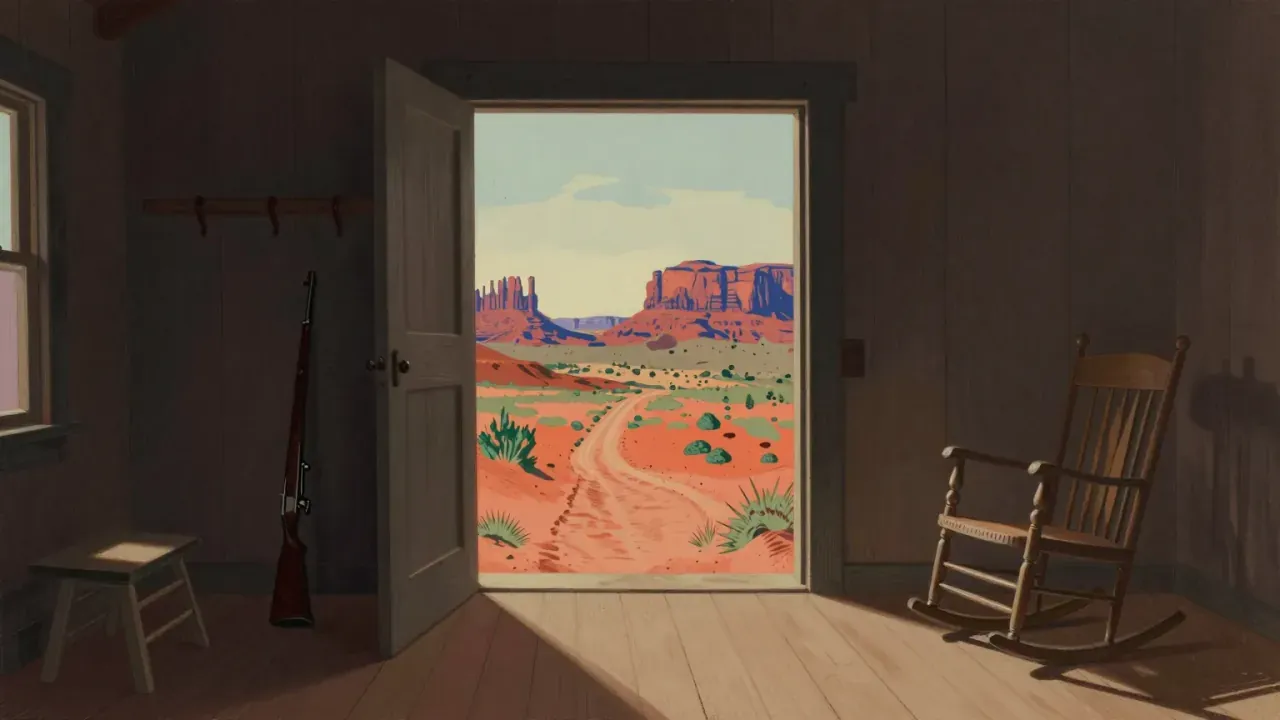
John Ford's 1956 western follows Ethan Edwards, a Confederate veteran played by John Wayne, across years of searching Monument Valley for a niece abducted in a Comanche raid, adapted from Alan Le May's novel and shot in VistaVision and Technicolor, its reputation built on Winton Hoch's photography and an ending that leaves its hero permanently outside the door.

13:00

The Silence of the Lambs

Jonathan Demme · 1991

Jonathan Demme's 1991 thriller sends FBI trainee Clarice Starling to interview imprisoned psychiatrist and cannibal Hannibal Lecter for insight into a serial killer skinning his victims. Adapted by Ted Tally from Thomas Harris's novel and shot by Tak Fujimoto, it swept the Academy Awards' top five categories, a feat achieved by only three films, and remains the only horror film to win Best Picture.

13:00

The Tale of the Princess Kaguya

Isao Takahata · 2013

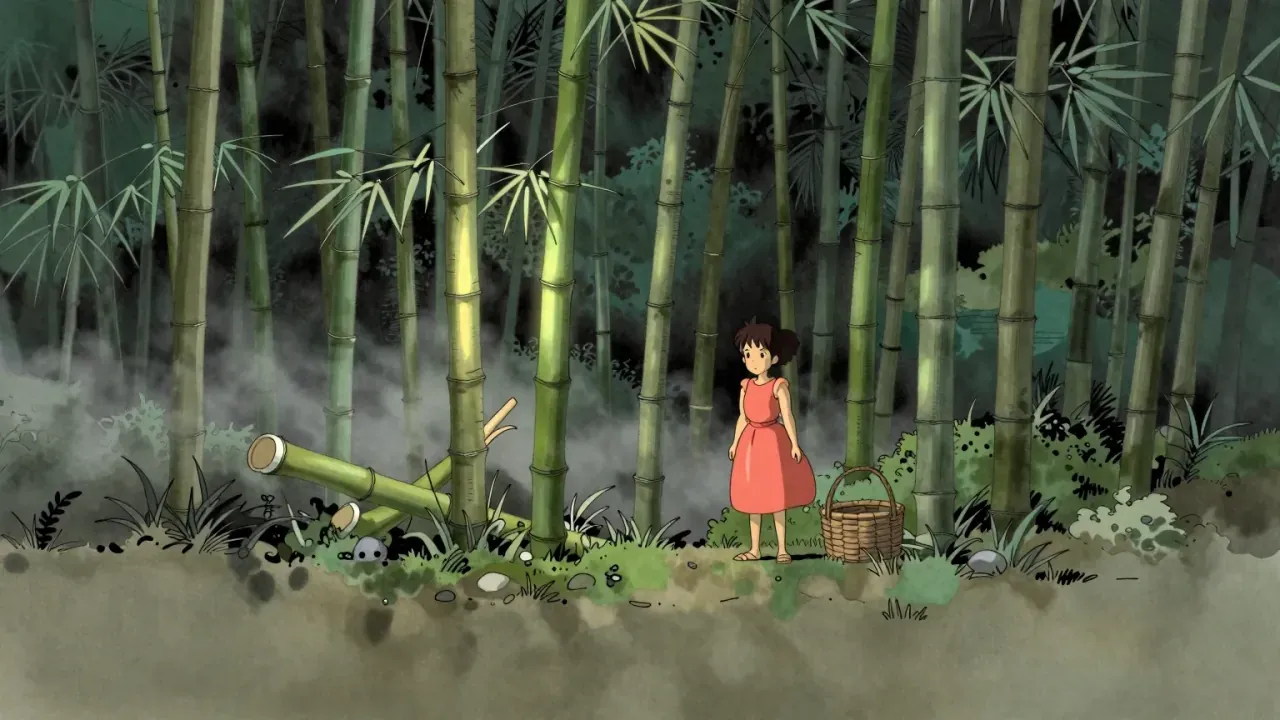
A girl born from a bamboo stalk is raised by a poor cutter who, on discovering gold nearby, drags her into a nobility she never wanted. Isao Takahata's 2013 adaptation of a tenth-century Japanese tale uses loose, watercolour-like animation to match its heroine's resistance to being made presentable.

13:00

There Will Be Blood

Paul Thomas Anderson · 2007

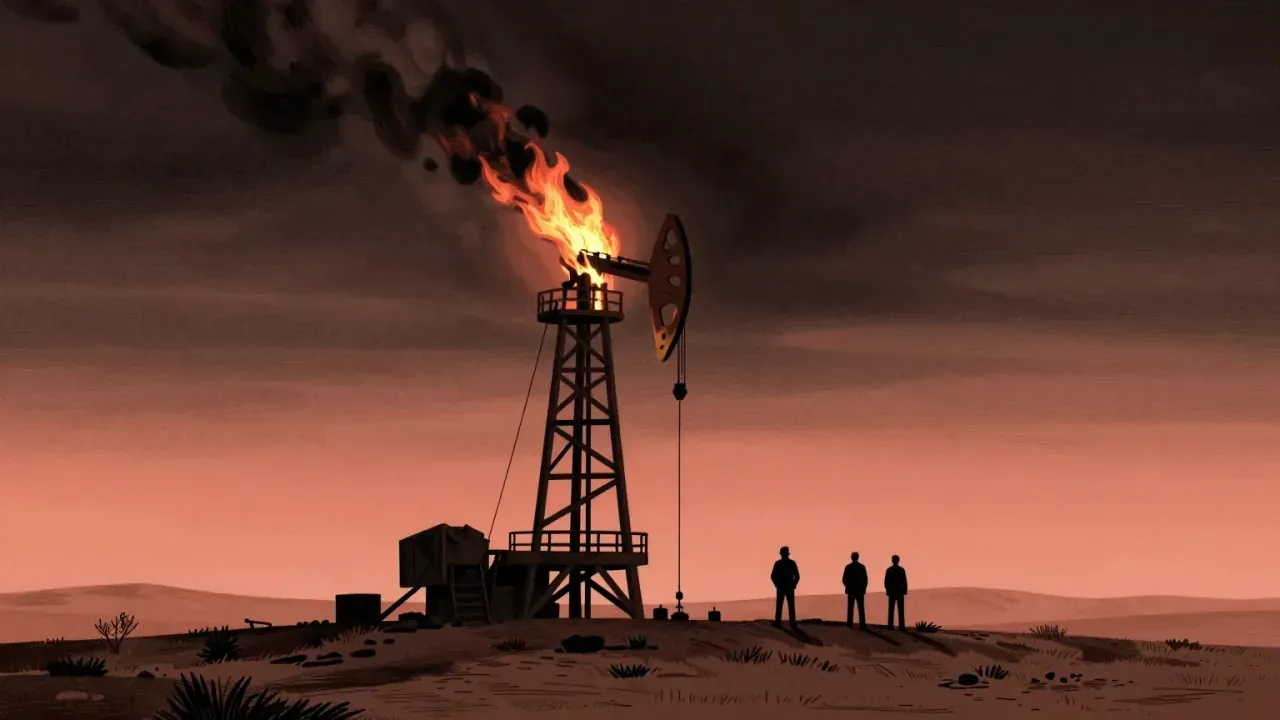
There Will Be Blood follows Daniel Plainview, a silver miner turned oilman, across roughly three decades of the Californian oil boom, loosely adapting Upton Sinclair's novel Oil! Daniel Day-Lewis plays Plainview opposite Paul Dano's preacher Eli Sunday, with Jonny Greenwood's score and Robert Elswit's cinematography setting a tone closer to horror than period drama. Anderson's screenplay narrows Sinclair's sprawling novel to its first chapters and lets one man's ambition curdle into something closer to a diagnosis than a character study.

13:00

Tokyo Story

Yasujirō Ozu · 1953

Yasujiro Ozu's 1953 film follows Shukichi and Tomi Hirayama as they leave their coastal town to visit their grown children in Tokyo, only to find themselves parcelled off to a spa resort by sons and daughters too occupied with their own lives to spend much time with them. Shot by Yuharu Atsuta almost entirely from a low, static camera position, with no score credited on the sheet and a cast led by Chishu Ryu and Setsuko Hara, it has since drawn some of the highest aggregate critical scores of any film on record, sitting at 100 percent on Rotten Tomatoes and Metacritic alike.

13:00

Toy Story

John Lasseter · 1995

Toy Story follows Woody, a cowboy doll who becomes territorial once space ranger toy Buzz Lightyear replaces him as a boy's favourite. John Lasseter directed the first entirely computer-animated feature and the first film produced by the newly founded Pixar, working from a script substantially rewritten after Disney rejected early story reels as too flat. Made on a $30 million budget under a deal that gave Disney full ownership of the characters, the film earned $373.6 million and became the first animated feature nominated for the Academy Award for Best Original Screenplay.

13:00

Toy Story 3

Lee Unkrich · 2010

Andy leaves for college and his toys are accidentally donated to a daycare centre ruled by a resentful stuffed bear. Lee Unkrich's 2010 conclusion to the Toy Story trilogy pushes the franchise's premise, toys who fear abandonment, to its most literal extreme.

13:00

Unforgiven

Clint Eastwood · 1992

Directed by and starring Clint Eastwood, Unforgiven follows a widowed farmer and reformed killer pulled back into one last bounty job, made on a $14.4 million budget that returned over $101 million and won four Academy Awards including Best Picture, with Gene Hackman's affable, brutal sheriff as its centre of gravity.

13:00

Up

Pete Docter, Bob Peterson · 2009

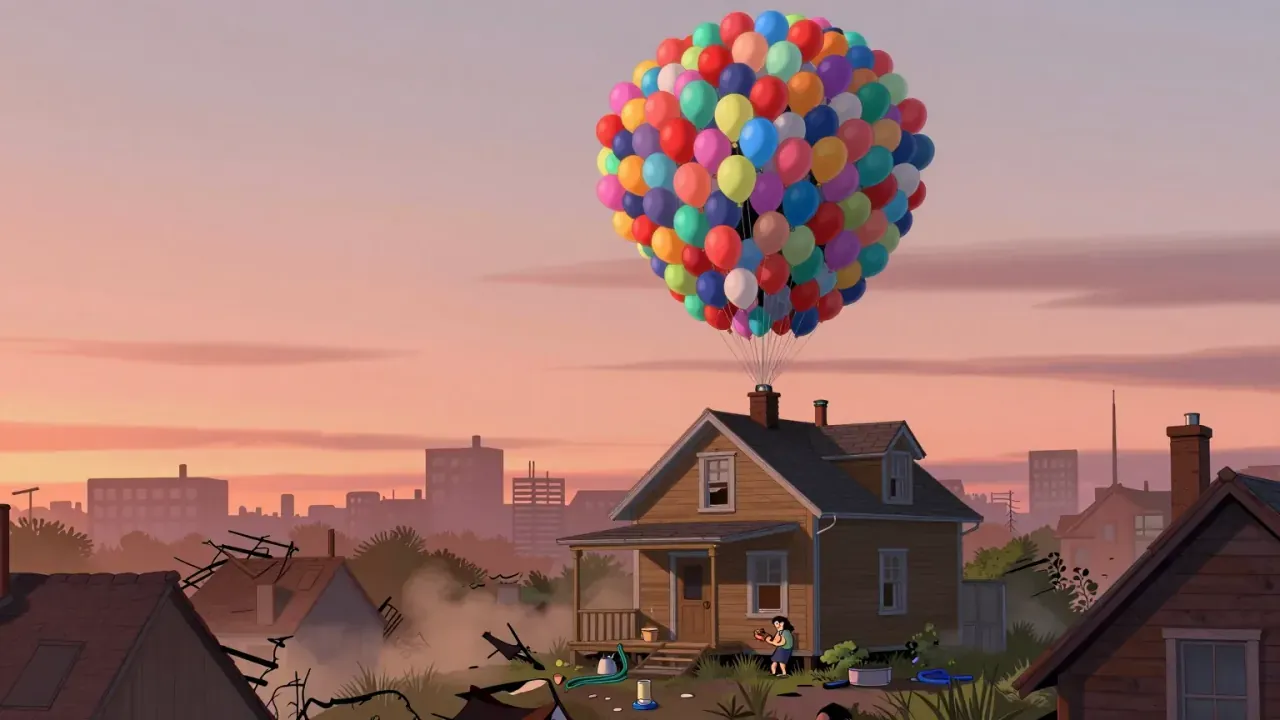
A widower ties thousands of balloons to his house and flies to South America to fulfil a promise made decades earlier, only to find an uninvited child stowaway waiting on his porch. Pete Docter's 2009 film pairs one of animation's most quoted opening sequences with an adventure plot that keeps circling back to grief.

13:00

Vertigo

Alfred Hitchcock · 1958

Alfred Hitchcock's 1958 film follows Scottie Ferguson, a retired police detective with a crippling fear of heights, hired to trail a friend's wife who believes she is possessed by a dead ancestor. What begins as surveillance turns into obsession, and after a death he could not prevent, Scottie tries to remake a second woman into the image of the first. Shot by Robert Burks with a spiralling title-sequence effect and scored by Bernard Herrmann, it earned back roughly three times its $2.5 million budget on release and has since climbed steadily in critical standing, unseating Citizen Kane at the top of one long-running critics' poll.

13:00

3:10 to Yuma

Delmer Daves · 1957

Delmer Daves’ 1957 Western 3:10 to Yuma adapts Elmore Leonard’s taut short story into a study of obligation under pressure. Rancher Dan Evans agrees to escort outlaw Ben Wade to the 3:10 train for Yuma, facing ambush, betrayal, and his own wavering resolve. Shot by Charles Lawton Jr. with sun-bleached realism and scored sparingly by George Duning, the film builds suspense through pacing, performance, and moral granularity — not spectacle. It was preserved by the Library of Congress in 2012 for its cultural and aesthetic significance.

13:00

3 Women

Robert Altman · 1977

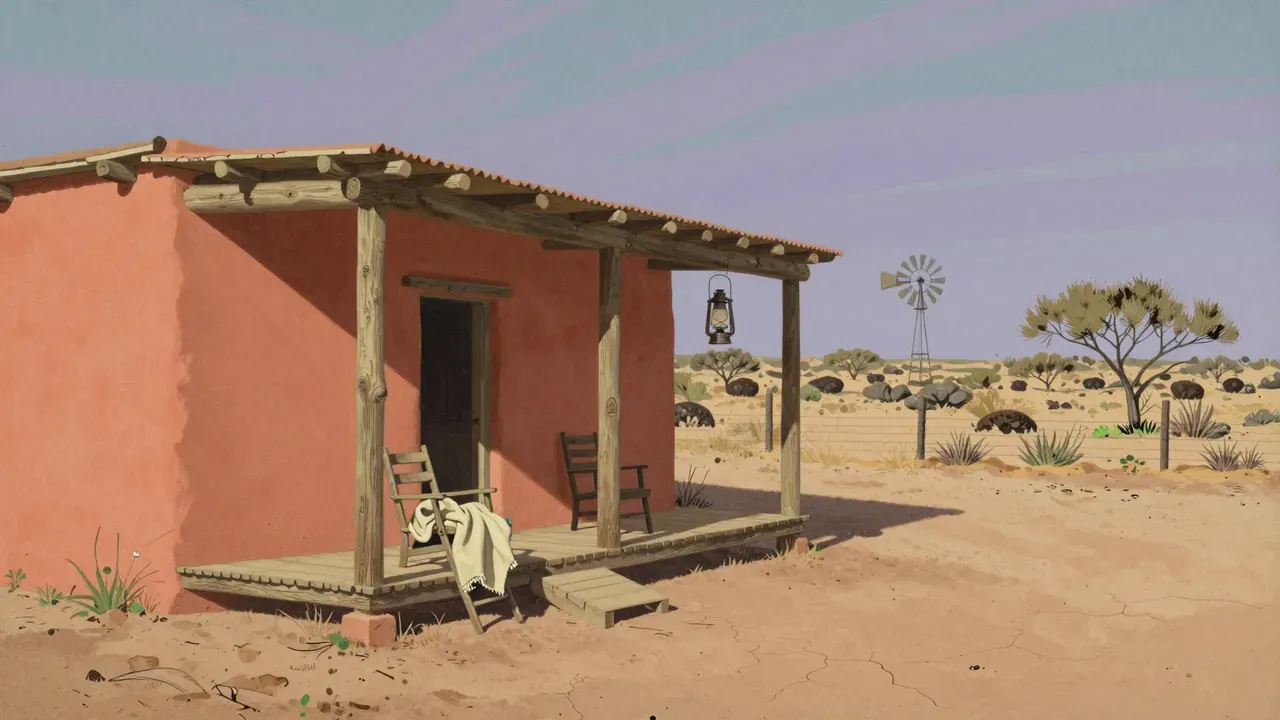
Robert Altman’s 1977 film 3 Women follows the uncanny merging of identities among a timid young woman, her garrulous roommate and a silent, pregnant artist in a sun-scorched California town. Built from a dream and shot with deliberate, unhurried precision, it uses repetition, reflection and improvisation to explore how selves are borrowed, performed and abandoned.

13:00

4 Months, 3 Weeks and 2 Days

Cristian Mungiu · 2007

Set in Communist Romania in 1987, 4 Months, 3 Weeks and 2 Days follows two university students as they arrange an illegal abortion under Decree 770. Directed by Cristian Mungiu and shot by Oleg Mutu in long, unbroken takes, it avoids exposition, music and close-ups to render the physical and moral weight of the act with unsentimental precision. The film won the Palme d'Or at Cannes in 2007 and remains a benchmark of Romanian New Wave austerity.

13:00

45 Years

Andrew Haigh · 2015

A retired Norfolk couple prepare for their 45th wedding anniversary when news arrives that the body of Geoff’s long-dead lover has emerged from a Swiss glacier. Over six days, Kate observes his growing distance, uncovers buried evidence of Katya’s pregnancy, and begins to question the foundations of their marriage — not through confrontation, but through quiet, accumulating realisations. Directed by Andrew Haigh and adapted from David Constantine’s short story, the film relies on Charlotte Rampling and Tom Courtenay’s restrained performances, Lol Crawley’s naturalistic cinematography, and a script that trusts silence over exposition.

13:00

49th Parallel

Michael Powell · 1941

49th Parallel (1941), directed by Michael Powell and written by Emeric Pressburger, follows six German sailors stranded in Canada after their U-boat is destroyed. As they attempt to cross into neutral America, each encounter — with Inuit hunters, Hutterite farmers, a bohemian writer, and a disillusioned soldier — exposes the limits of Nazi ideology. Shot across Canada and at Denham Studios, with music by Ralph Vaughan Williams and editing by David Lean, it is a morally precise, formally restrained war drama that argues through confrontation, not combat.

13:00

A Canterbury Tale

Michael Powell, Emeric Pressburger · 1944

A Canterbury Tale (1944) follows three strangers — a Land Girl, a British soldier and an American GI — who converge in a Kent village during WWII and investigate a local 'glue man' mystery. Directed by Powell and Pressburger, it uses Chaucer’s pilgrimage framework to explore English identity, wartime community and the weight of place, all filmed on location amid real bomb sites and rural villages. Its power lies in restraint: in Erwin Hillier’s understated cinematography, in performances that avoid theatrics, and in a story that values observation over explanation.

13:00

A Clockwork Orange

Stanley Kubrick · 1971

Stanley Kubrick’s 1971 adaptation of Anthony Burgess’s novel follows Alex DeLarge, a charismatic teenage delinquent subjected to state-mandated aversion therapy. Stylised, unsettling, and formally exacting, it interrogates free will, coercion, and the aestheticisation of power through John Alcott’s cinematography, Wendy Carlos’s electronic score, and Malcolm McDowell’s indelible performance.

13:00

A Day in the Country

Jean Renoir · 1946

Jean Renoir’s 1946 featurette, shot in 1936 and adapted from Maupassant, captures a summer day in 1860 when a Paris shopkeeper’s daughter is briefly drawn from her world by a riverbank encounter. Forty minutes long, it relies on atmosphere, restraint, and precise visual storytelling rather than exposition or resolution. Claude Renoir’s cinematography, Joseph Kosma’s score, and Marguerite Renoir’s editing sustain a mood of quiet inevitability. Though some structural choices feel tentative, its emotional accuracy and formal discipline make it a benchmark of poetic realism.

13:00

A Dedicated Life

Kazuo Hara · 1994

Kazuo Hara’s 1994 documentary follows Japanese writer Mitsuharu Inoue during his final four years with terminal cancer. Filmed in real time, it interweaves public appearances, private moments, interviews with peers and former students, and re-enactments of Inoue’s childhood — some later challenged by relatives. The film avoids narration or score, trusting juxtaposition and duration to build a portrait defined by contradiction, not coherence.

13:00

A Face in the Crowd

Elia Kazan · 1957

Elia Kazan’s 1957 drama follows Larry 'Lonesome' Rhodes, a charismatic drifter turned national TV star, whose rise and fall exposes the collusion between media, advertising and politics in shaping public belief. Andy Griffith’s debut performance anchors a tightly structured critique of persuasion as infrastructure, not personality.

13:00

A Hard Day's Night

Richard Lester · 1964

Richard Lester’s 1964 musical comedy captures the Beatles during Beatlemania’s peak, using a fictional 36-hour sprint to concert performance as scaffolding for their music, wit, and chemistry. Shot in black-and-white with vérité energy, it prioritises rhythm over narrative, performance over psychology, and spontaneity over polish. Though thin on character depth and social critique, its influence on music video and ensemble comedy remains profound. It remains watchable not as nostalgia, but as a masterclass in tonal discipline.

13:00

A History of Violence

David Cronenberg · 2005

David Cronenberg’s 2005 crime thriller adapts a graphic novel into a precise, unsentimental study of identity, memory, and embodied violence. Viggo Mortensen plays Tom Stall, a small-town diner owner whose past as hitman Joey Cusack resurfaces after he kills two robbers. The film tracks the unraveling of his family life and his return to Philadelphia, where violence proves inescapable — not as choice, but as somatic fact. Shot by Peter Suschitzky and scored by Howard Shore, it favours stillness over spectacle and implication over exposition.

13:00

A Long Goodbye

Kira Muratova · 1971

Kira Muratova’s 1971 Soviet drama observes the quiet unraveling of a mother-son relationship as eighteen-year-old Sasha prepares to move to Siberia. Shot by Gennadi Karyuk and starring Zinaida Sharko and Oleg Vladimirsky, it avoids exposition and climax in favour of behavioural realism: glances held too long, letters intercepted and unopened, conversations that circle but never land. Shelved until 1987, it remains a study in asymmetry — of care, of memory, of time — where emotional weight gathers in silence, routine, and the physical effort of staying present.

13:00

A Night to Remember

Roy Ward Baker · 1958

A 1958 British drama reconstructing the sinking of the RMS Titanic with procedural fidelity, based on Walter Lord’s 1955 book and informed by survivor testimony. Directed by Roy Ward Baker and produced by William MacQuitty, it avoids sentimentality in favour of chronological precision, using authentic sets, restrained performances and Geoffrey Unsworth’s understated cinematography to trace the collapse of routine, hierarchy and certainty.

13:00

À Nos Amours

Maurice Pialat · 1983

Maurice Pialat’s 1983 drama follows sixteen-year-old Suzanne (Sandrine Bonnaire) as she navigates sexual experience, family fracture and emotional drift in early-1980s Paris. Shot with observational restraint by Jacques Loiseleux and written by Pialat and Arlette Langmann, it avoids exposition, score-driven emotion or narrative resolution, holding Suzanne’s contradictions — her hunger for connection and her inability to sustain it — without judgment or explanation.

13:00

À Nous la Liberté

René Clair · 1931

René Clair’s 1931 À Nous la Liberté follows two convicts — one who becomes a tramp, the other a phonograph magnate — and their reunion in a factory whose assembly line echoes the prison they fled. With Georges Auric’s music supplying much of the diegetic sound, and Georges Périnal’s cinematography framing both institutions as variations on the same geometry, the film stages a precise, unsentimental satire of mechanisation, class and the illusion of upward mobility. It is formally inventive, politically light-footed, and built on recurrence rather than revelation.

13:00

À propos de Nice

Jean Vigo · 1930

Jean Vigo’s 1930 debut À propos de Nice is a 25-minute silent documentary shot in Nice by Boris Kaufman and edited by Vigo. It juxtaposes images of bourgeois leisure — casinos, promenades, motor races — with scenes of working-class life — laundry, street play, factory labour — to expose social fracture without commentary. Structured as a visual essay, it avoids travelogue conventions and relies on rhythmic editing, low-angle framing, and stark contrasts to make its case. Though abstracted and deliberately unspecific, its formal rigour and polemical clarity remain potent.

13:00

A Special Day

Ettore Scola · 1977

Set in Rome on 4 May 1938 — the day Hitler visits Mussolini — A Special Day confines itself to a single apartment building where a housewife and a dismissed gay radio broadcaster spend an afternoon together. Directed by Ettore Scola and starring Sophia Loren and Marcello Mastroianni, it uses muted colour, deep focus, and restrained performances to explore gender, sexuality, and quiet dissent under fascism.

13:00

A Tale of Springtime

Éric Rohmer · 1990

Éric Rohmer’s 1990 film follows Jeanne, a philosophy teacher, as she navigates a weekend at a country house orchestrated by her student Natacha. Through precise dialogue, restrained performances, and unhurried pacing, the film charts Jeanne’s gradual realisation that she is being slotted into an existing relational pattern—and her decision to step out of it. Shot by Luc Pagès and scored sparingly with Beethoven, it is the first of Rohmer’s ‘Tales of the Four Seasons’.

13:00

A Tale of Winter

Éric Rohmer · 1992

Éric Rohmer’s 1992 film follows Félicie, a Parisian hairdresser raising her daughter alone, as she navigates two unsatisfying relationships while holding onto the memory of a summer romance. Five years after losing contact with Charles, she sees him by chance on a New Year’s Eve bus — a reunion made possible not by fate, but by her unwavering, quiet fidelity to possibility. Shot by Luc Pagès and written and directed by Rohmer, it is the second in his ‘Tales of the Four Seasons’ series.

13:00

A Taste of Honey

Tony Richardson · 1961

Tony Richardson and Shelagh Delaney’s 1961 adaptation of her own play follows Jo, a teenage girl in Salford, as she navigates abandonment, pregnancy, and makeshift kinship amid post-war austerity. Shot on location in Manchester and Blackpool, with Walter Lassally’s naturalistic cinematography and Rita Tushingham’s breakthrough performance, it is a cornerstone of British kitchen-sink realism — unsentimental, formally restrained, and politically precise in its depiction of class, race, and sexuality.

13:00

Accattone

Pier Paolo Pasolini · 1961

Pasolini’s 1961 debut follows Accattone, a Roman pimp adrift in the borgate, as he slides from exploitation to theft to death. Shot in stark black-and-white with non-professional actors and scored to Bach, it treats poverty not as condition to be solved but as reality to be held in view — unflinching, unexplained, and utterly devoid of sentiment.

13:00

Ace in the Hole

Billy Wilder · 1951

Billy Wilder’s 1951 drama follows a disgraced reporter who manipulates a cave rescue into a week-long media circus in rural New Mexico. With Kirk Douglas as the ruthlessly pragmatic Chuck Tatum, the film charts the incremental erosion of ethics across journalism, law enforcement, and community—treating truth as a negotiable resource rather than a principle. Shot by Charles Lang and edited by Arthur P. Schmidt, it remains stark, unsentimental, and structurally rigorous.

13:00

Adoption

Márta Mészáros · 1975

Márta Mészáros’s 1975 drama follows Kata, a 42-year-old Hungarian factory worker, as she forms a bond with a teenage girl at a children’s home and pursues adoption. Shot with documentary restraint and performed with quiet intensity, it examines reproductive choice, institutional care, and the unremarked labour of kinship — all without sentimentality or resolution.

13:00

Affirmations

Marlon Riggs · 1990

Marlon Riggs’s 1990 ten-minute short Affirmations places Black gay men visibly within Harlem’s African American Freedom Day parade, intercutting Reginald T. Jackson’s quiet recollection of intimacy with footage of protest, portraiture and public speech. Using minimal craft and maximal assertion, it treats queerness not as deviation from Black tradition but as its living, contested continuation.

13:00

After Hours

Martin Scorsese · 1985

Martin Scorsese’s 1985 black comedy follows office worker Paul Hackett through a single, increasingly surreal night in SoHo. Stranded without money, misunderstood at every turn, and hunted by neighbours, he careens from one absurd crisis to the next — until the plaster hardens, the van doors fly open, and he crashes, barefoot and broken, into his office at dawn. Michael Ballhaus’s tight cinematography, Thelma Schoonmaker’s razor-sharp editing, and Howard Shore’s nervy score sustain a tone of escalating, inescapable farce.

13:00

After Life

Hirokazu Koreeda · 1998

After Life (1998) is Hirokazu Koreeda’s gently speculative film set in a way station between life and death, where the newly deceased must choose one memory to carry into eternity. Shot on grainy 16 mm and 8 mm film, it blends scripted scenes with real interviews, treating memory not as fixed truth but as subjective, evolving reconstruction. With understated performances and deliberate pacing, it explores how identity forms through fragments — a dress, a breeze, a letter — and how meaning accrues in quiet, relational moments rather than grand events.

13:00

After the Rehearsal

Ingmar Bergman · 1984

After the Rehearsal is a 1984 Swedish television film written and directed by Ingmar Bergman, shot by Sven Nykvist and starring Erland Josephson, Ingrid Thulin, and Lena Olin. Set entirely in a theatre rehearsal room, it traces a charged encounter between a veteran director and his lead actress — a meeting that triggers memories of her late mother, also his former lover and star. Drawing on Strindberg’s A Dream Play, it uses doubling, repetition, and minimal staging to explore inheritance, memory, and the blurred line between performance and lived experience.

13:00

Alexander Nevsky

Sergei Eisenstein, Dmitri Vasilyev · 1938

Alexander Nevsky (1938) is a Soviet historical drama directed by Sergei Eisenstein and Dmitri Vasilyev, depicting Prince Alexander’s defeat of the Teutonic Knights in 1242. Shot by Eduard Tisse and scored by Sergei Prokofiev, it uses stylised performances, rigorous montage, and a landmark battle sequence to advance a socialist realist vision of collective defence and principled leadership. Though shaped by Stalin-era constraints — including censorship and allegorical framing — its formal control and thematic cohesion remain potent. It is less a period piece than a functional artefact: history made operational.

13:00

Ali: Fear Eats the Soul

Rainer Werner Fassbinder · 1974

Rainer Werner Fassbinder’s 1974 drama follows a 60-year-old German widow and a Moroccan migrant worker whose marriage exposes the everyday machinery of racism and class prejudice in postwar West Germany. Shot in under two weeks, it uses Sirkian melodrama not for irony but precision — compressing social critique into intimate gesture, silence, and repeated, unadorned images. Brigitte Mira and El Hedi ben Salem perform with restrained gravity, while Jürgen Jürges’ cinematography and Thea Eymèsz’s editing sustain a tone of quiet, accumulating pressure. The film ends not with resolution but with commitment: two hands held in a hospital corridor, after everything else has been worn away.

13:00

All About Eve

Joseph L. Mankiewicz · 1950

All About Eve (1950) follows ageing Broadway star Margo Channing as she takes in devoted fan Eve Harrington, only to find her career, relationships, and sense of self quietly displaced. Written and directed by Joseph L. Mankiewicz, it unfolds through layered narration, razor-sharp dialogue, and restrained performances — especially Bette Davis as Margo and Anne Baxter as Eve. Shot in black-and-white by Milton Krasner, edited by Barbara McLean, and scored by Alfred Newman, it is a precise, unsentimental study of power, performance, and professional inheritance.
13:00

All About My Mother

Pedro Almodóvar · 1999

Pedro Almodóvar’s 1999 film follows a nurse who, after her son’s death, seeks his transgender parent in Barcelona and becomes entwined with a community of women and men navigating illness, faith, performance, and motherhood. Shot in Spanish, it uses saturated colour, theatrical reference, and deliberate narrative coincidence to affirm care across difference — not as ideal but as daily, embodied practice.
13:00

All of Us Strangers

Andrew Haigh · 2023

Andrew Haigh’s All of Us Strangers follows a lonely screenwriter who reconnects with his deceased parents and begins a relationship with a mysterious neighbour. Set in contemporary London and rooted in the emotional textures of 1980s Britain, the film uses fantasy not as escape but as a means to examine unresolved grief, queer identity, and the quiet violence of familial silence. With restrained performances, precise cinematography, and a carefully curated soundtrack, it builds its power through stillness and repetition rather than revelation.

13:00

All That Breathes

Shaunak Sen · 2022

All That Breathes follows brothers Mohammad Saud and Nadeem Shehzad as they treat injured black kites in a makeshift clinic in Delhi. Shot over several years with minimal intervention, the film observes their daily labour — cleaning wounds, administering medicine, releasing recovered birds — against the backdrop of a city thick with pollution and political tension. It avoids exposition, relying instead on texture, repetition, and sound to convey interdependence: between species, faith and pragmatism, decay and devotion.

13:00

All That Heaven Allows

Douglas Sirk · 1955

Douglas Sirk’s 1955 Universal Pictures drama stars Jane Wyman as a widow whose romance with her younger arborist (Rock Hudson) provokes quiet but relentless social censure. Shot in saturated Technicolor by Russell Metty, the film uses meticulous composition, restrained performance, and classical music not for atmosphere but as precise tools to expose how class, age, and gender norms operate in domestic space. Though its final act leans on contrivance, its sustained attention to the material grammar of conformity remains sharply relevant.

13:00

All That Jazz

Bob Fosse · 1979

Bob Fosse’s 1979 semi-autobiographical musical follows Joe Gideon—a director and editor burning himself out across Broadway and Hollywood—as his body fails. Using dance, dream logic, and clinical realism, it maps the collision of creative obsession and physical collapse. Roy Scheider stars; Giuseppe Rotunno shoots; Alan Heim edits; Ralph Burns scores. It won four Oscars and the Palme d’Or, and remains a benchmark for formal audacity in American cinema.

13:00

All the Beauty and the Bloodshed

Laura Poitras · 2022

Laura Poitras’s 2022 documentary follows photographer and activist Nan Goldin across five decades — from her early portraits of New York’s queer and AIDS-affected communities to her founding of P.A.I.N. and protests against the Sackler family’s role in the opioid crisis. Built almost entirely from Goldin’s own archive and recent footage of museum demonstrations, the film frames art-making and political action as inseparable practices of truth-telling.

13:00

All We Imagine as Light

Payal Kapadia · 2024

Payal Kapadia’s 2024 drama follows three women — nurses Prabha and Anu, and cook Parvaty — as they move between Mumbai’s chawls and Ratnagiri’s coast. Shot with restrained naturalism by Ranabir Das and edited with unhurried precision by Clément Pinteaux, it builds emotional resonance through duration, texture, and unspoken connection rather than plot. Premiering at Cannes, where it won the Grand Prix, it is a study in care, displacement, and the quiet dignity of ordinary endurance.

13:00

Alphaville

Jean-Luc Godard · 1965

Jean-Luc Godard’s 1965 Alphaville transplants American detective Lemmy Caution into a nameless, near-future city ruled by Alpha 60, a sentient computer that bans emotion, poetry, and questioning. Shot on real Paris locations with no futuristic props, it merges film noir and dystopian satire to interrogate language, control, and the persistence of feeling. Eddie Constantine and Anna Karina star; Raoul Coutard shot it, Agnès Guillemot edited it, Paul Misraki scored it. It won the Golden Bear at Berlin in 1965.

13:00

American Dream

Barbara Kopple · 1990

Barbara Kopple’s 1990 documentary follows the 1985–86 Hormel strike in Austin, Minnesota, where unionised meatpackers resisted wage cuts and benefit reductions. Shot over months with intimate access, it centres on the human toll — financial, emotional, communal — rather than offering political analysis. Co-directed by Cathy Caplan, Thomas Haneke, and Lawrence Silk, and scored by Michael Small, it won the Academy Award and Sundance Grand Jury Prize for Best Documentary.

13:00

American Utopia

Spike Lee · 2020

Spike Lee’s American Utopia films David Byrne’s Broadway concert as a sustained act of collective presence: twelve performers, wireless instruments, no sets, choreographed movement, and spoken interludes on connection and civic life. Shot by Ellen Kuras with formal rigour, it avoids spectacle in favour of clarity, repetition, and physical continuity — less a celebration than a rehearsal of unity.

13:00

Amores perros

Alejandro González Iñárritu · 2000

Alejandro González Iñárritu’s 2000 debut is a tripartite Mexican drama linked by a single car crash. Three stories — a teenager in dogfighting, a model recovering from injury, and a hitman estranged from his daughter — unfold across Mexico City’s social strata. Rodrigo Prieto’s unadorned cinematography and Iñárritu’s tight editing sustain a tone of controlled urgency. The film treats dogs not as symbols but as narrative counterpoints, and its themes — fractured masculinity, economic precarity, moral inertia — emerge through action, not exposition. It won the BAFTA for Best Film Not in the English Language and remains a touchstone of early-2000s arthouse cinema.

13:00

An Actor's Revenge

Kon Ichikawa · 1963

Kon Ichikawa’s 1963 film follows Yukinojō Nakamura, an onnagata kabuki actor who returns to Edo to enact revenge on the men who caused his parents’ suicide. Kazuo Hasegawa plays both Yukinojō and the thief Yamitarō, anchoring a film defined by theatrical composition, restrained music by Yasushi Akutagawa, and Musei Tokugawa’s wry benshi narration. It is less a story of justice than a study in performance as survival, gender as labour, and vengeance as repetition — all rendered with formal control and deliberate emotional distance.

13:00

An Angel at My Table

Jane Campion · 1990

Jane Campion’s 1990 film adapts Janet Frame’s three autobiographies into a restrained, chronologically grounded portrait of a New Zealand writer whose voice was nearly erased by misdiagnosis and institutionalisation. Kerry Fox leads a layered performance across Frame’s life stages, supported by Stuart Dryburgh’s muted cinematography and Veronika Jenet’s unhurried editing. It avoids biopic cliché, focusing instead on the quiet labour of self-reclamation through language.

13:00

An Autumn Afternoon

Yasujirō Ozu · 1962

Yasujirō Ozu’s 1962 An Autumn Afternoon follows widower Shūhei Hirayama as he arranges his daughter Michiko’s marriage — not as a triumph of paternal love, but as an act of belated self-reckoning. Set in Tokyo, the film moves through school reunions, bar visits and domestic routines, using precise framing, muted colour and deliberate pacing to trace how time, duty and silence shape family life. With Chishū Ryū, Shima Iwashita and Mariko Okada, it is a restrained, deeply humane portrait of ageing, obligation and the quiet cost of staying put.

13:00

An Unmarried Woman

Paul Mazursky · 1978

Erica Benton’s marriage ends abruptly when her husband leaves for another woman. Over the next months in Manhattan, she navigates divorce, dating, motherhood and self-redefinition without grand declarations or easy answers. Directed by Paul Mazursky and anchored by Jill Clayburgh’s precise, unsentimental performance, the film observes the quiet recalibration of identity with patience and psychological fidelity.

13:00

Anatomy of a Fall

Justine Triet · 2023

Anatomy of a Fall is a 2023 French legal thriller directed by Justine Triet, following a German writer accused of murdering her French husband. Structured around a meticulously rendered courtroom trial and fragmented flashbacks to their isolated mountain home, the film interrogates how truth is assembled — and undone — through translation, testimony and institutional procedure. Sandra Hüller delivers a tightly controlled performance amid a restrained, linguistically precise production.

13:00

Anatomy of a Murder

Otto Preminger · 1959

Otto Preminger’s 1959 Anatomy of a Murder is a rigorously procedural crime drama set in Michigan’s Upper Peninsula. James Stewart plays a small-town lawyer defending an army lieutenant accused of murder, using an 'irresistible impulse' insanity plea. Shot on location with documentary restraint, it prioritises legal mechanics over psychology, and evidentiary tension over emotional payoff. Sam Leavitt’s cinematography and Duke Ellington’s score support, never dominate, its deliberate pace. Though acclaimed for authenticity, it resists moral framing — leaving viewers with the structure of doubt, not the comfort of verdict.

13:00

Anora

Sean Baker · 2024

Sean Baker’s Anora follows Mikey Madison as Ani Mikheeva, a Russian-American lap dancer in Brooklyn who impulsively marries the son of a Russian oligarch in Las Vegas — then faces the consequences when his family intervenes. Shot on 35 mm anamorphic film, the film grounds its high-stakes premise in precise, unsentimental observation of language, labour, and class. It won the Palme d'Or and five Academy Awards, including Best Picture and Best Actress.

13:00

Anthem

Marlon Riggs · 1991

Marlon Riggs’s 1991 eight-minute music video Anthem fuses poetry, hip-hop rhythm, and political iconography to assert Black gay identity as inseparable from African heritage and American citizenship. Featuring Essex Hemphill, Colin Robinson, and others, it overlays ACT UP slogans with Pan-African symbols, memorial candles with erotic intimacy, and spoken word with drum patterns — building a declarative, non-narrative montage that refuses assimilation and rejects erasure.