filmbriefs
Newest

All briefs

2035 briefs · 26452 min · 1–96 on page 1 of 22
13:00

20th Century Women

Mike Mills · 2016

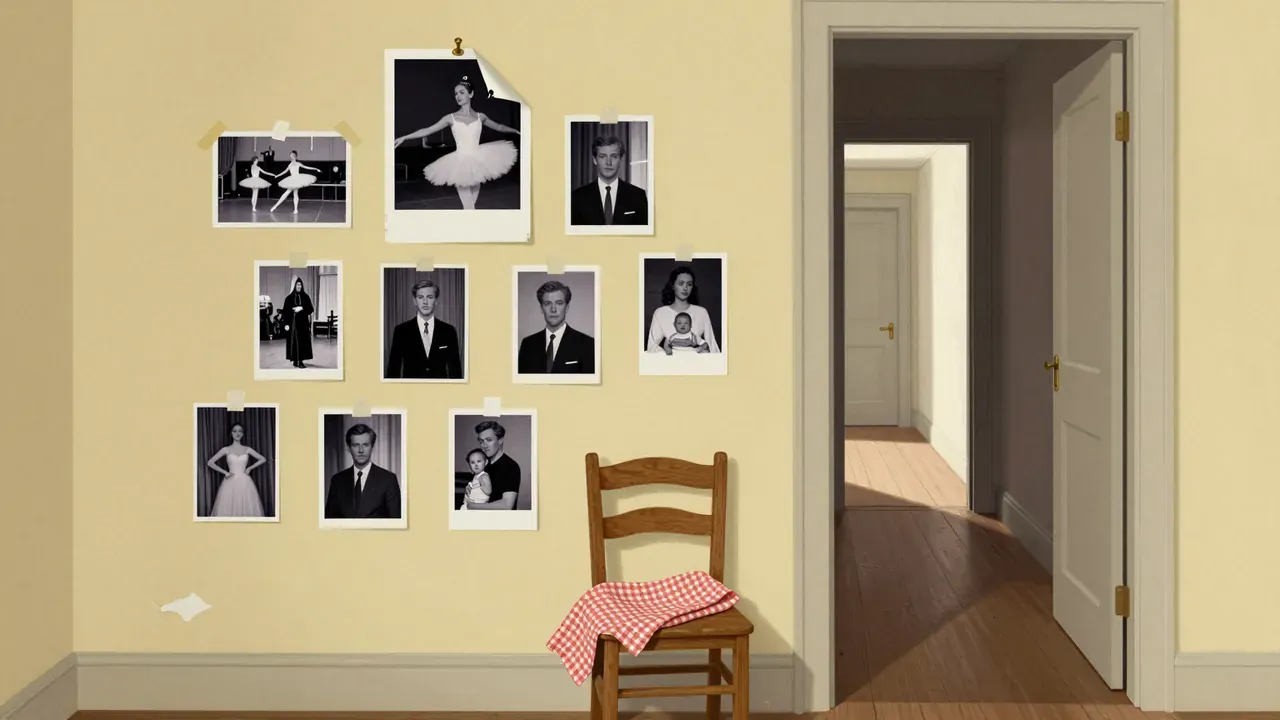
Set in 1979 Santa Barbara, Mike Mills’ 20th Century Women follows 15-year-old Jamie as his single mother Dorothea enlists two younger women — photographer Abbie and teenage friend Julie — to help raise him. Anchored by Annette Bening’s restrained performance, the film observes their overlapping lives with warmth and precision, treating feminism, illness, ageing and adolescence as lived conditions rather than themes. Shot by Sean Porter and edited by Leslie Jones, it moves at the pace of real conversation, building meaning through accumulation rather than climax.

13:00

24 Frames

Abbas Kiarostami · 2017

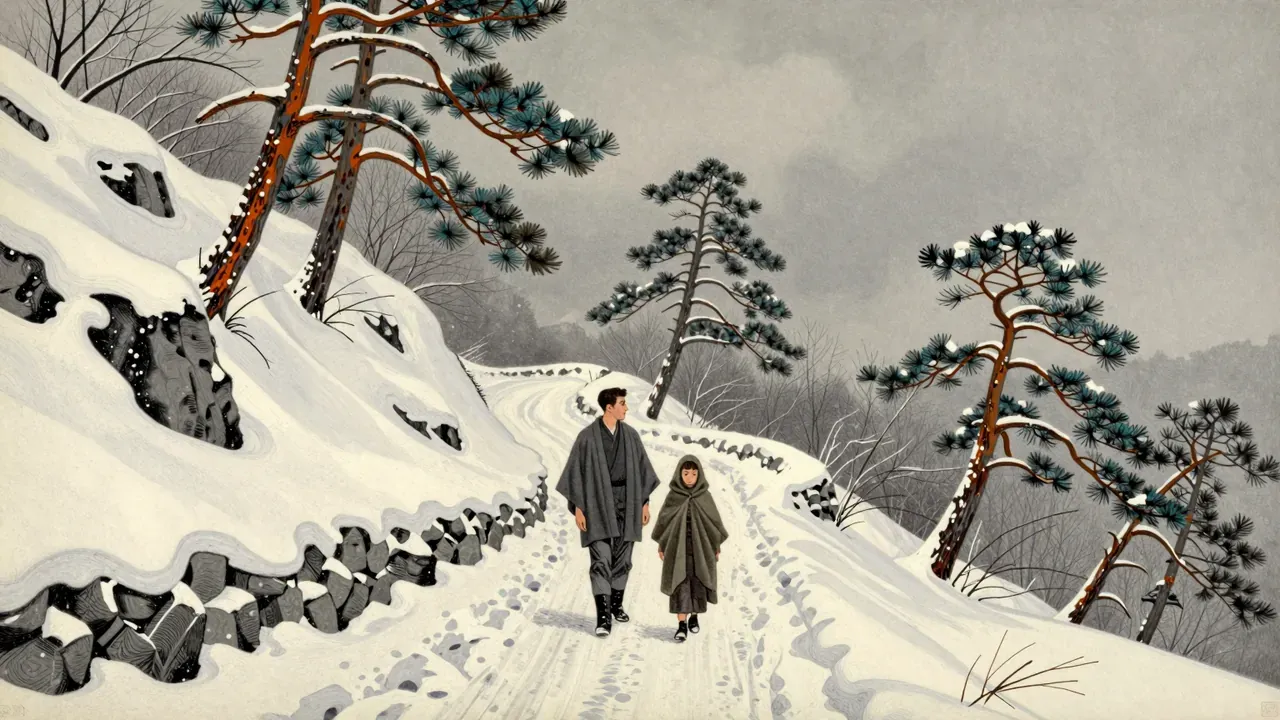
Abbas Kiarostami’s final film, 24 Frames, comprises twenty-four uncut, static shots — each ninety seconds long — observing nature, animals, and thresholds between interior and exterior. Beginning with animated movement superimposed on Bruegel’s Hunters in the Snow, it proceeds into real-world stillness, testing how much meaning resides in time, attention, and unmediated presence. Released posthumously at Cannes 2017, it is a rigorous, unsentimental essay on perception and impermanence.

13:00

3:10 to Yuma

Delmer Daves · 1957

Delmer Daves’ 1957 Western 3:10 to Yuma adapts Elmore Leonard’s taut short story into a study of obligation under pressure. Rancher Dan Evans agrees to escort outlaw Ben Wade to the 3:10 train for Yuma, facing ambush, betrayal, and his own wavering resolve. Shot by Charles Lawton Jr. with sun-bleached realism and scored sparingly by George Duning, the film builds suspense through pacing, performance, and moral granularity — not spectacle. It was preserved by the Library of Congress in 2012 for its cultural and aesthetic significance.

13:00

3 Women

Robert Altman · 1977

Robert Altman’s 1977 film 3 Women follows the uncanny merging of identities among a timid young woman, her garrulous roommate and a silent, pregnant artist in a sun-scorched California town. Built from a dream and shot with deliberate, unhurried precision, it uses repetition, reflection and improvisation to explore how selves are borrowed, performed and abandoned.

13:00

4 Months, 3 Weeks and 2 Days

Cristian Mungiu · 2007

Set in Communist Romania in 1987, 4 Months, 3 Weeks and 2 Days follows two university students as they arrange an illegal abortion under Decree 770. Directed by Cristian Mungiu and shot by Oleg Mutu in long, unbroken takes, it avoids exposition, music and close-ups to render the physical and moral weight of the act with unsentimental precision. The film won the Palme d'Or at Cannes in 2007 and remains a benchmark of Romanian New Wave austerity.

13:00

45 Years

Andrew Haigh · 2015

A retired Norfolk couple prepare for their 45th wedding anniversary when news arrives that the body of Geoff’s long-dead lover has emerged from a Swiss glacier. Over six days, Kate observes his growing distance, uncovers buried evidence of Katya’s pregnancy, and begins to question the foundations of their marriage — not through confrontation, but through quiet, accumulating realisations. Directed by Andrew Haigh and adapted from David Constantine’s short story, the film relies on Charlotte Rampling and Tom Courtenay’s restrained performances, Lol Crawley’s naturalistic cinematography, and a script that trusts silence over exposition.

13:00

49th Parallel

Michael Powell · 1941

49th Parallel (1941), directed by Michael Powell and written by Emeric Pressburger, follows six German sailors stranded in Canada after their U-boat is destroyed. As they attempt to cross into neutral America, each encounter — with Inuit hunters, Hutterite farmers, a bohemian writer, and a disillusioned soldier — exposes the limits of Nazi ideology. Shot across Canada and at Denham Studios, with music by Ralph Vaughan Williams and editing by David Lean, it is a morally precise, formally restrained war drama that argues through confrontation, not combat.

13:00

71 Fragments of a Chronology of Chance

Michael Haneke · 1994

Michael Haneke’s 1994 Austrian drama arranges thirty-seven fragmented scenes — intercuts of Viennese lives, real news footage, and black pauses — into a chronology that culminates in a bank shooting. Shot by Christian Berger and edited by Marie Homolkova, it avoids psychology and music, presenting migration, isolation, and mediated violence as systemic conditions rather than personal tragedies. Set in Vienna between October and December 1993, it forms the final part of Haneke’s early trilogy. Winner of the Sitges Film Festival’s Best Feature and Best Screenplay awards, and the Gold Hugo at Chicago.

13:00

A Brief History of Time

Errol Morris · 1991

Errol Morris’s 1991 documentary profiles Stephen Hawking not as a disembodied genius but as a man whose physical constraints and intellectual ambitions coexist in constant dialogue. Shot on studio sets with a score by Philip Glass, it weaves family testimony, scientific reflection, and quiet observation into a portrait where cosmology and biography are inseparable.

13:00

A Canterbury Tale

Michael Powell, Emeric Pressburger · 1944

A Canterbury Tale (1944) follows three strangers — a Land Girl, a British soldier and an American GI — who converge in a Kent village during WWII and investigate a local 'glue man' mystery. Directed by Powell and Pressburger, it uses Chaucer’s pilgrimage framework to explore English identity, wartime community and the weight of place, all filmed on location amid real bomb sites and rural villages. Its power lies in restraint: in Erwin Hillier’s understated cinematography, in performances that avoid theatrics, and in a story that values observation over explanation.

13:00

A Christmas Tale

Arnaud Desplechin · 2008

Arnaud Desplechin’s 2008 French drama follows the fractured Vuillard family as they reunite for Christmas after matriarch Junon is diagnosed with leukemia. Set over several wintry days in Roubaix, the film charts shifting alliances, buried resentments, and fragile intimacies among three adult siblings, their partners, children, and extended kin — all held in uneasy orbit by Junon’s iron will and Abel’s quiet endurance. With a dense script, naturalistic performances, and Éric Gautier’s muted cinematography, it treats family as a site of repetition, inheritance, and unspoken history.

13:00

A Clockwork Orange

Stanley Kubrick · 1971

Stanley Kubrick’s 1971 adaptation of Anthony Burgess’s novel follows Alex DeLarge, a charismatic teenage delinquent subjected to state-mandated aversion therapy. Stylised, unsettling, and formally exacting, it interrogates free will, coercion, and the aestheticisation of power through John Alcott’s cinematography, Wendy Carlos’s electronic score, and Malcolm McDowell’s indelible performance.

13:00

A Colt Is My Passport

Takashi Nomura · 1967

Takashi Nomura’s 1967 yakuza noir follows contract killer Shuji Kamimura as he navigates a collapsing web of yakuza betrayals after a botched hit. With precise, unhurried direction and Joe Shishido’s stoic performance, the film treats survival as a series of calibrated actions — installing a second brake, digging a ditch, building a bomb — rather than a psychological journey. Its power lies in functional coherence, not thematic elaboration.

13:00

A Confucian Confusion

Edward Yang · 1994

Edward Yang’s 1994 satirical comedy follows a web of young professionals in 1994 Taipei whose relationships, careers, and self-presentation are governed by unspoken codes of duty, face, and transactional loyalty. Over three days, misunderstandings accrue not from malice but from systemic pressure to perform coherence — whether in love, work, or art. With muted performances, flat lighting, and procedural pacing, it maps the quiet corrosion of authenticity under late-capitalist professionalism.

13:00

A Constant Forge

Charles Kiselyak · 2000

A two-hundred-minute documentary portrait of John Cassavetes, assembled from interviews and archival footage. It focuses on his working process — rehearsal, editing, directing — rather than biography or filmography. Featuring Ben Gazzara, Gena Rowlands, Peter Falk, Sean Penn and others, it treats filmmaking as embodied resistance, refusing summary or resolution.

13:00

A Day in the Country

Jean Renoir · 1946

Jean Renoir’s 1946 featurette, shot in 1936 and adapted from Maupassant, captures a summer day in 1860 when a Paris shopkeeper’s daughter is briefly drawn from her world by a riverbank encounter. Forty minutes long, it relies on atmosphere, restraint, and precise visual storytelling rather than exposition or resolution. Claude Renoir’s cinematography, Joseph Kosma’s score, and Marguerite Renoir’s editing sustain a mood of quiet inevitability. Though some structural choices feel tentative, its emotional accuracy and formal discipline make it a benchmark of poetic realism.

13:00

A Dedicated Life

Kazuo Hara · 1994

Kazuo Hara’s 1994 documentary follows Japanese writer Mitsuharu Inoue during his final four years with terminal cancer. Filmed in real time, it interweaves public appearances, private moments, interviews with peers and former students, and re-enactments of Inoue’s childhood — some later challenged by relatives. The film avoids narration or score, trusting juxtaposition and duration to build a portrait defined by contradiction, not coherence.

13:00

A Dry White Season

Euzhan Palcy · 1989

Euzhan Palcy’s 1989 drama follows a white South African teacher drawn into resistance after his Black gardener is tortured and killed by police in 1976 Soweto. Adapted from André Brink’s novel, it traces Ben Du Toit’s moral unraveling through courtrooms, classrooms and clandestine document-hiding — with Donald Sutherland, Marlon Brando and Janet Suzman. Shot in Zimbabwe and at Pinewood Studios, it is a trial film grounded in legal process, not polemic.

13:00

A Face in the Crowd

Elia Kazan · 1957

Elia Kazan’s 1957 drama follows Larry 'Lonesome' Rhodes, a charismatic drifter turned national TV star, whose rise and fall exposes the collusion between media, advertising and politics in shaping public belief. Andy Griffith’s debut performance anchors a tightly structured critique of persuasion as infrastructure, not personality.

13:00

A Generation

Andrzej Wajda · 1955

Andrzej Wajda’s 1955 debut A Generation follows two young men in Nazi-occupied Warsaw as they move from alienation to resistance within a communist underground cell. Shot on location in Wola with natural light and unvarnished performances, it grounds political commitment in workshop routines, shared silences, and the physical texture of daily survival. Though ideologically specific and formally austere, its power lies in its restraint — in what it shows, not what it tells.

13:00

A Hard Day's Night

Richard Lester · 1964

Richard Lester’s 1964 musical comedy captures the Beatles during Beatlemania’s peak, using a fictional 36-hour sprint to concert performance as scaffolding for their music, wit, and chemistry. Shot in black-and-white with vérité energy, it prioritises rhythm over narrative, performance over psychology, and spontaneity over polish. Though thin on character depth and social critique, its influence on music video and ensemble comedy remains profound. It remains watchable not as nostalgia, but as a masterclass in tonal discipline.

13:00

A History of Violence

David Cronenberg · 2005

David Cronenberg’s 2005 crime thriller adapts a graphic novel into a precise, unsentimental study of identity, memory, and embodied violence. Viggo Mortensen plays Tom Stall, a small-town diner owner whose past as hitman Joey Cusack resurfaces after he kills two robbers. The film tracks the unraveling of his family life and his return to Philadelphia, where violence proves inescapable — not as choice, but as somatic fact. Shot by Peter Suschitzky and scored by Howard Shore, it favours stillness over spectacle and implication over exposition.

13:00

A Lesson in Love

Ingmar Bergman · 1954

A Lesson in Love (1954) is Ingmar Bergman’s gently ironic study of a Stockholm marriage tested by professional pride, quiet restlessness, and a charming patient. Starring Eva Dahlbeck and Gunnar Björnstrand, it trades existential gravity for domestic nuance, using light comedy and unhurried observation to explore love as daily practice rather than grand declaration. Shot by Martin Bodin and scored by Dag Wirén, it remains a subtle, underseen pivot in Bergman’s career — modest in scope, exact in execution.

13:00

A Long Goodbye

Kira Muratova · 1971

Kira Muratova’s 1971 Soviet drama observes the quiet unraveling of a mother-son relationship as eighteen-year-old Sasha prepares to move to Siberia. Shot by Gennadi Karyuk and starring Zinaida Sharko and Oleg Vladimirsky, it avoids exposition and climax in favour of behavioural realism: glances held too long, letters intercepted and unopened, conversations that circle but never land. Shelved until 1987, it remains a study in asymmetry — of care, of memory, of time — where emotional weight gathers in silence, routine, and the physical effort of staying present.

13:00

A Man and a Woman

Claude Lelouch · 1966

Claude Lelouch’s 1966 French romantic drama follows a widow and widower whose tentative bond forms across train platforms, rainy drives, and seaside walks. Shot on mixed film stocks with Francis Lai’s iconic score, it privileges mood and gesture over plot, tracing love not as catharsis but as quiet, embodied recurrence.

13:00

A Married Couple

Allan King · 1969

Allan King’s 1969 Canadian documentary observes Billy and Antoinette Edwards in their Toronto home for ten weeks, with no script, no direction during filming, and no narration. Shot by Richard Leiterman and edited by King, it presents marital life as unvarnished duration — arguments, tenderness, boredom, and silence unfolding without commentary. Though controversial on release for its explicitness and perceived voyeurism, it endures as a landmark of cinema vérité, testing whether sustained observation can reveal truths about intimacy that fiction and journalism obscure.

13:00

A Master Builder

Jonathan Demme · 2013

Jonathan Demme’s 2013 film A Master Builder adapts Ibsen’s play into a tightly contained, single-set drama starring Wallace Shawn as the ageing architect Halvard Solness. With Declan Quinn’s restrained cinematography and Tim Squyres’ unhurried editing, it foregrounds language, pause and presence over action or spectacle. Julie Hagerty and Lisa Joyce deliver precise, understated performances that deepen the film’s study of memory, guilt and the slow collapse of authority. Though its formal austerity divides opinion, it remains a rare and committed act of textual fidelity — demanding, quiet, and morally unblinking.

13:00

A Night to Remember

Roy Ward Baker · 1958

A 1958 British drama reconstructing the sinking of the RMS Titanic with procedural fidelity, based on Walter Lord’s 1955 book and informed by survivor testimony. Directed by Roy Ward Baker and produced by William MacQuitty, it avoids sentimentality in favour of chronological precision, using authentic sets, restrained performances and Geoffrey Unsworth’s understated cinematography to trace the collapse of routine, hierarchy and certainty.

13:00

À Nos Amours

Maurice Pialat · 1983

Maurice Pialat’s 1983 drama follows sixteen-year-old Suzanne (Sandrine Bonnaire) as she navigates sexual experience, family fracture and emotional drift in early-1980s Paris. Shot with observational restraint by Jacques Loiseleux and written by Pialat and Arlette Langmann, it avoids exposition, score-driven emotion or narrative resolution, holding Suzanne’s contradictions — her hunger for connection and her inability to sustain it — without judgment or explanation.

13:00

À Nous la Liberté

René Clair · 1931

René Clair’s 1931 À Nous la Liberté follows two convicts — one who becomes a tramp, the other a phonograph magnate — and their reunion in a factory whose assembly line echoes the prison they fled. With Georges Auric’s music supplying much of the diegetic sound, and Georges Périnal’s cinematography framing both institutions as variations on the same geometry, the film stages a precise, unsentimental satire of mechanisation, class and the illusion of upward mobility. It is formally inventive, politically light-footed, and built on recurrence rather than revelation.

13:00

A Poem Is A Naked Person

Les Blank · 1974

Les Blank’s 1974 documentary A Poem Is a Naked Person spent forty years unreleased, emerging only after his death. Shot over two years at Leon Russell’s Oklahoma studio, it avoids biography in favour of immersive texture: rehearsals, murals painted in drained pools, lakeside light, and unscripted encounters. Its power lies in sustained attention, not exposition — a film that treats music, place, and personality as inseparable elements of a single, breathing world.

13:00

À propos de Nice

Jean Vigo · 1930

Jean Vigo’s 1930 debut À propos de Nice is a 25-minute silent documentary shot in Nice by Boris Kaufman and edited by Vigo. It juxtaposes images of bourgeois leisure — casinos, promenades, motor races — with scenes of working-class life — laundry, street play, factory labour — to expose social fracture without commentary. Structured as a visual essay, it avoids travelogue conventions and relies on rhythmic editing, low-angle framing, and stark contrasts to make its case. Though abstracted and deliberately unspecific, its formal rigour and polemical clarity remain potent.

13:00

A Report on the Party and the Guests

Jan Němec · 1966

A group of picnickers are intercepted in the woods and directed to a celebration, where arbitrary rules govern their conduct. When one guest disappears, the party mobilises to retrieve him — not out of concern, but to preserve the integrity of the event. Made by Jan Němec at Barrandov Studios, the film uses stark visual discipline and behavioural minimalism to trace how authority takes root in shared compliance.

13:00

A Room in Town

Jacques Demy · 1982

Jacques Demy’s 1982 sung-through musical, set during the 1955 Nantes shipyard strike, follows a young striker torn between two women as political tension escalates. Every line is sung to Michel Colombier’s austere score; Jean Penzer’s cinematography is precise and unflashy. Though less buoyant than The Umbrellas of Cherbourg, it pursues a graver, more politically explicit vision of musical storytelling — one where melody carries ideology, and tragedy arrives in perfect time.

13:00

A Safe Place

Henry Jaglom · 1971

Henry Jaglom’s 1971 drama follows Noah, a young woman drifting between present loneliness and childhood memory in New York City. Starring Tuesday Weld, Orson Welles, and Jack Nicholson, it uses fragmented editing, recurring motifs, and nostalgic music to evoke mental fragility without diagnosis. Culled from fifty hours of footage, it is a formally ambitious but divisive experiment in psychological portraiture — intimate, unresolved, and demanding of its viewer.

13:00

A Ship Bound for India

Ingmar Bergman · 1947

A Ship Bound for India (1947) is Ingmar Bergman’s third feature and first original screenplay, co-written with Martin Söderhjelm. Set in a Swedish port town, it follows Johannes, who returns after seven years at sea and dreams of his teenage years under his domineering, blind-bound father. Built around a single extended flashback, the film charts Johannes’s slow assertion of self amid familial cruelty, unrequited love, and physical stigma — all rendered with stark, unhurried realism and no stylistic flourish.

13:00

A Special Day

Ettore Scola · 1977

Set in Rome on 4 May 1938 — the day Hitler visits Mussolini — A Special Day confines itself to a single apartment building where a housewife and a dismissed gay radio broadcaster spend an afternoon together. Directed by Ettore Scola and starring Sophia Loren and Marcello Mastroianni, it uses muted colour, deep focus, and restrained performances to explore gender, sexuality, and quiet dissent under fascism.

13:00

A Story of Floating Weeds

Yasujirō Ozu · 1934

A Story of Floating Weeds (1934) is Yasujirō Ozu’s silent drama about an ageing kabuki actor who revisits a provincial town to see the son he abandoned years earlier. With minimal intertitles and a restrained visual style, the film traces quiet tensions between duty and desire, permanence and transience, across a travelling troupe and a rooted family. Shot by Hideo Shigehara and edited by him, it relies on composition, rhythm, and understated performance rather than exposition or climax.
13:00

A Summer's Tale

Éric Rohmer · 1996

Éric Rohmer’s 1996 comedy-drama follows mathematics graduate Gaspard over three weeks in the Breton seaside town of Dinard, as he navigates hesitant affections for three women — Margot, Léna and Solène — without ever resolving between them. Shot with quiet precision by Diane Baratier and edited to sustain long takes and unhurried dialogue, the film treats romantic uncertainty not as failure but as sustained, everyday practice. Its power lies in its fidelity to duration, silence and the moral weight of small, unremarkable choices.
13:00

A Tale of Springtime

Éric Rohmer · 1990

Éric Rohmer’s 1990 film follows Jeanne, a philosophy teacher, as she navigates a weekend at a country house orchestrated by her student Natacha. Through precise dialogue, restrained performances, and unhurried pacing, the film charts Jeanne’s gradual realisation that she is being slotted into an existing relational pattern—and her decision to step out of it. Shot by Luc Pagès and scored sparingly with Beethoven, it is the first of Rohmer’s ‘Tales of the Four Seasons’.

13:00

A Tale of Winter

Éric Rohmer · 1992

Éric Rohmer’s 1992 film follows Félicie, a Parisian hairdresser raising her daughter alone, as she navigates two unsatisfying relationships while holding onto the memory of a summer romance. Five years after losing contact with Charles, she sees him by chance on a New Year’s Eve bus — a reunion made possible not by fate, but by her unwavering, quiet fidelity to possibility. Shot by Luc Pagès and written and directed by Rohmer, it is the second in his ‘Tales of the Four Seasons’ series.

13:00

A Taste of Honey

Tony Richardson · 1961

Tony Richardson and Shelagh Delaney’s 1961 adaptation of her own play follows Jo, a teenage girl in Salford, as she navigates abandonment, pregnancy, and makeshift kinship amid post-war austerity. Shot on location in Manchester and Blackpool, with Walter Lassally’s naturalistic cinematography and Rita Tushingham’s breakthrough performance, it is a cornerstone of British kitchen-sink realism — unsentimental, formally restrained, and politically precise in its depiction of class, race, and sexuality.

13:00

A Wedding Suit

Abbas Kiarostami · 1976

A Wedding Suit (1976) is Abbas Kiarostami’s 54-minute comedy made for Iran’s Institute for the Intellectual Development of Children and Young Adults. A woman orders a suit for her son to wear to a wedding; her tailor’s apprentice and two friends secretly try it on overnight. Structured around quiet observation and precise, unhurried staging, the film finds humour and humanity in small-scale decisions, material detail, and the unspoken rhythms of adolescent collaboration. It contains no score, minimal dialogue, and no overt commentary — its concerns are procedural, spatial, and tactile.

13:00

A Woman Is a Woman

Jean-Luc Godard · 1961

Jean-Luc Godard’s 1961 colour debut is a self-aware, formally restless romantic comedy starring Anna Karina as Angéla, an exotic dancer determined to have a child. Shot in Paris by Raoul Coutard and scored by Michel Legrand, it uses musical interludes, abrupt edits, and stylised dialogue to interrogate genre conventions, gender roles, and the language of desire — all without relinquishing its wit or warmth.

13:00

A Woman of Paris

Charlie Chaplin, A. Edward Sutherland · 1923

A Woman of Paris (1923) is Charlie Chaplin’s sole silent drama without the Tramp, starring Edna Purviance as Marie St. Clair — a woman whose life unravels not through vice, but through miscommunication, social constraint, and quiet consequence. Directed with surgical restraint, it uses décor, editing, and understated performance to trace fate as environment rather than destiny. Though its contemporary reception was mixed and its lead performance uneven, its influence on narrative realism endures.

13:00

A Woman's Face

Gustaf Molander · 1938

A disfigured Swedish woman, Anna Holm, joins a blackmail ring out of social exile. After a botched break-in, she is taken in by a plastic surgeon who repairs her face — not to make her beautiful, but to restore her ability to move unseen in the world. As she assumes a new identity to infiltrate a wealthy family, she begins to protect the very child she was meant to kill. Gustaf Molander’s 1938 drama traces moral change not through epiphany but through repeated, quiet choices — about care, labour, and who gets to belong.

13:00

About Dry Grasses

Nuri Bilge Ceylan · 2023

Nuri Bilge Ceylan’s About Dry Grasses follows a disillusioned Istanbul teacher stationed in eastern Anatolia after he and a colleague face student accusations. Shot in Erzurum and Adıyaman by Kürşat Üresin and Cehavir Şahin, the film unfolds across winter in long takes and muted tones, anchored by Merve Dizdar’s Cannes-winning performance. Co-written by Ceylan, Ebru Ceylan and Akın Aksu, it resists narrative resolution in favour of sustained atmosphere, probing education, geography and epistemic limits without recourse to exposition or catharsis.

13:00

Accattone

Pier Paolo Pasolini · 1961

Pasolini’s 1961 debut follows Accattone, a Roman pimp adrift in the borgate, as he slides from exploitation to theft to death. Shot in stark black-and-white with non-professional actors and scored to Bach, it treats poverty not as condition to be solved but as reality to be held in view — unflinching, unexplained, and utterly devoid of sentiment.

13:00

Ace in the Hole

Billy Wilder · 1951

Billy Wilder’s 1951 drama follows a disgraced reporter who manipulates a cave rescue into a week-long media circus in rural New Mexico. With Kirk Douglas as the ruthlessly pragmatic Chuck Tatum, the film charts the incremental erosion of ethics across journalism, law enforcement, and community—treating truth as a negotiable resource rather than a principle. Shot by Charles Lang and edited by Arthur P. Schmidt, it remains stark, unsentimental, and structurally rigorous.

13:00

Ådalen 31

Bo Widerberg · 1969

Bo Widerberg’s 1969 Swedish drama Ådalen 31 reconstructs the 1931 Ådalen shootings through the daily life of the working-class Andersson family. Anchored by Peter Schildt and Roland Hedlund, it traces springtime tensions between strikers and strikebreakers in northern Sweden, culminating in a military massacre that kills five. Shot by Jörgen Persson with deliberate restraint, it avoids polemic in favour of tactile realism — fishing, jazz, French lessons, abortion, grief — making ideology legible through habit, not speech. It won the Cannes Grand Prix and remains a landmark of socially engaged arthouse cinema.

13:00

Adoption

Márta Mészáros · 1975

Márta Mészáros’s 1975 drama follows Kata, a 42-year-old Hungarian factory worker, as she forms a bond with a teenage girl at a children’s home and pursues adoption. Shot with documentary restraint and performed with quiet intensity, it examines reproductive choice, institutional care, and the unremarked labour of kinship — all without sentimentality or resolution.

13:00

Adventures of Zatoichi

Kimiyoshi Yasuda · 1964

The ninth Zatoichi film finds the blind masseur stepping into a town gripped by bureaucratic corruption and quiet desperation. He does not seek conflict but cannot avoid it — and when he draws his sword, it is never to win, but to weigh. With Shintarō Katsu at peak control and Kimiyoshi Yasuda framing each scene like a scroll painting, Adventures of Zatoichi is a study in restraint: in violence, in revelation, in what a man owes the world when no one is watching.

13:00

Affirmations

Marlon Riggs · 1990

Marlon Riggs’s 1990 ten-minute short Affirmations places Black gay men visibly within Harlem’s African American Freedom Day parade, intercutting Reginald T. Jackson’s quiet recollection of intimacy with footage of protest, portraiture and public speech. Using minimal craft and maximal assertion, it treats queerness not as deviation from Black tradition but as its living, contested continuation.

13:00

Afire

Christian Petzold · 2023

Christian Petzold’s Afire follows a brittle young writer whose self-absorption fractures under the pressure of shared space, honest criticism, and an approaching forest fire. Set in a Baltic holiday home, the film traces his slow disorientation as relationships shift and catastrophe interrupts narrative control. With restrained performances and unadorned craft, it asks how people begin to see clearly only after their stories stop holding.

13:00

After Hours

Martin Scorsese · 1985

Martin Scorsese’s 1985 black comedy follows office worker Paul Hackett through a single, increasingly surreal night in SoHo. Stranded without money, misunderstood at every turn, and hunted by neighbours, he careens from one absurd crisis to the next — until the plaster hardens, the van doors fly open, and he crashes, barefoot and broken, into his office at dawn. Michael Ballhaus’s tight cinematography, Thelma Schoonmaker’s razor-sharp editing, and Howard Shore’s nervy score sustain a tone of escalating, inescapable farce.

13:00

After Life

Hirokazu Koreeda · 1998

After Life (1998) is Hirokazu Koreeda’s gently speculative film set in a way station between life and death, where the newly deceased must choose one memory to carry into eternity. Shot on grainy 16 mm and 8 mm film, it blends scripted scenes with real interviews, treating memory not as fixed truth but as subjective, evolving reconstruction. With understated performances and deliberate pacing, it explores how identity forms through fragments — a dress, a breeze, a letter — and how meaning accrues in quiet, relational moments rather than grand events.

13:00

After the Rehearsal

Ingmar Bergman · 1984

After the Rehearsal is a 1984 Swedish television film written and directed by Ingmar Bergman, shot by Sven Nykvist and starring Erland Josephson, Ingrid Thulin, and Lena Olin. Set entirely in a theatre rehearsal room, it traces a charged encounter between a veteran director and his lead actress — a meeting that triggers memories of her late mother, also his former lover and star. Drawing on Strindberg’s A Dream Play, it uses doubling, repetition, and minimal staging to explore inheritance, memory, and the blurred line between performance and lived experience.

13:00

Alambrista!

Robert Milton Young · 1977

Alambrista! (1977), written and directed by Robert Milton Young, follows Roberto, a Mexican farmer who crosses into the US to find work. Shot on location with non-professional actors, it observes his journey with minimal dialogue, no exposition, and sustained attention to physical detail. The film avoids drama, psychology and commentary, instead building meaning through repetition, duration and quiet encounters. Inducted into the National Film Registry in 2023, it remains a rigorous, unsentimental portrait of endurance.

13:00

Alex Wheatle

Steve McQueen · 2020

Steve McQueen’s Alex Wheatle (2020) follows the British novelist from institutional childhood through Brixton’s sound-system culture to imprisonment after the 1981 uprising, where he discovers literature. Starring Sheyi Cole and shot by Shabier Kirchner, it is the fourth film in the Small Axe anthology — a focused, atmospheric biographical drama that prioritises sensory detail and quiet transformation over exposition or historical sweep.

13:00

Alexander Nevsky

Sergei Eisenstein, Dmitri Vasilyev · 1938

Alexander Nevsky (1938) is a Soviet historical drama directed by Sergei Eisenstein and Dmitri Vasilyev, depicting Prince Alexander’s defeat of the Teutonic Knights in 1242. Shot by Eduard Tisse and scored by Sergei Prokofiev, it uses stylised performances, rigorous montage, and a landmark battle sequence to advance a socialist realist vision of collective defence and principled leadership. Though shaped by Stalin-era constraints — including censorship and allegorical framing — its formal control and thematic cohesion remain potent. It is less a period piece than a functional artefact: history made operational.

13:00

Ali: Fear Eats the Soul

Rainer Werner Fassbinder · 1974

Rainer Werner Fassbinder’s 1974 drama follows a 60-year-old German widow and a Moroccan migrant worker whose marriage exposes the everyday machinery of racism and class prejudice in postwar West Germany. Shot in under two weeks, it uses Sirkian melodrama not for irony but precision — compressing social critique into intimate gesture, silence, and repeated, unadorned images. Brigitte Mira and El Hedi ben Salem perform with restrained gravity, while Jürgen Jürges’ cinematography and Thea Eymèsz’s editing sustain a tone of quiet, accumulating pressure. The film ends not with resolution but with commitment: two hands held in a hospital corridor, after everything else has been worn away.

13:00

Alice Doesn't Live Here Anymore

Martin Scorsese · 1974

Martin Scorsese’s 1974 film follows widow Alice Hyatt as she travels with her son from New Mexico to California, detouring through Arizona. Working first as a lounge singer, then a diner waitress, she navigates grief, economic precarity, and tentative new relationships. Ellen Burstyn won an Academy Award for her layered, unsentimental performance. The film avoids easy resolutions, favouring psychological fidelity and quiet observation over plot mechanics or stylistic flourish.

13:00

Alice in the Cities

Wim Wenders · 1974

Wim Wenders’ 1974 road film follows a stalled writer and a nine-year-old girl as they search across Germany for her estranged grandmother. Shot in black-and-white 16 mm by Robby Müller, it favours duration over exposition, silence over speech, and observation over explanation. Its power lies in restraint: in the weight of a glance, the rhythm of a bus ride, the quiet persistence of mutual attention.

13:00

All About Eve

Joseph L. Mankiewicz · 1950

All About Eve (1950) follows ageing Broadway star Margo Channing as she takes in devoted fan Eve Harrington, only to find her career, relationships, and sense of self quietly displaced. Written and directed by Joseph L. Mankiewicz, it unfolds through layered narration, razor-sharp dialogue, and restrained performances — especially Bette Davis as Margo and Anne Baxter as Eve. Shot in black-and-white by Milton Krasner, edited by Barbara McLean, and scored by Alfred Newman, it is a precise, unsentimental study of power, performance, and professional inheritance.

13:00

All About My Mother

Pedro Almodóvar · 1999

Pedro Almodóvar’s 1999 film follows a nurse who, after her son’s death, seeks his transgender parent in Barcelona and becomes entwined with a community of women and men navigating illness, faith, performance, and motherhood. Shot in Spanish, it uses saturated colour, theatrical reference, and deliberate narrative coincidence to affirm care across difference — not as ideal but as daily, embodied practice.

13:00

All Night Long

Basil Dearden · 1962

Basil Dearden’s All Night Long transposes Shakespeare’s Othello to a single night at a Thames-side jazz party, starring Patrick McGoohan as a scheming drummer, Paul Harris as a bandleader, and Marti Stevens as his wife. With contributions from Dave Brubeck, Charles Mingus and John Dankworth, the film treats jazz not as ornament but as narrative grammar — its rhythms, improvisations and silences shaping character and consequence. Shot in black and white by Edward Scaife, written by blacklisted screenwriter Paul Jarrico, it is a study in mediation, mistrust and the cost of control.

13:00

All of Us Strangers

Andrew Haigh · 2023

Andrew Haigh’s All of Us Strangers follows a lonely screenwriter who reconnects with his deceased parents and begins a relationship with a mysterious neighbour. Set in contemporary London and rooted in the emotional textures of 1980s Britain, the film uses fantasy not as escape but as a means to examine unresolved grief, queer identity, and the quiet violence of familial silence. With restrained performances, precise cinematography, and a carefully curated soundtrack, it builds its power through stillness and repetition rather than revelation.

13:00

All That Breathes

Shaunak Sen · 2022

All That Breathes follows brothers Mohammad Saud and Nadeem Shehzad as they treat injured black kites in a makeshift clinic in Delhi. Shot over several years with minimal intervention, the film observes their daily labour — cleaning wounds, administering medicine, releasing recovered birds — against the backdrop of a city thick with pollution and political tension. It avoids exposition, relying instead on texture, repetition, and sound to convey interdependence: between species, faith and pragmatism, decay and devotion.

13:00

All That Heaven Allows

Douglas Sirk · 1955

Douglas Sirk’s 1955 Universal Pictures drama stars Jane Wyman as a widow whose romance with her younger arborist (Rock Hudson) provokes quiet but relentless social censure. Shot in saturated Technicolor by Russell Metty, the film uses meticulous composition, restrained performance, and classical music not for atmosphere but as precise tools to expose how class, age, and gender norms operate in domestic space. Though its final act leans on contrivance, its sustained attention to the material grammar of conformity remains sharply relevant.

13:00

All That Jazz

Bob Fosse · 1979

Bob Fosse’s 1979 semi-autobiographical musical follows Joe Gideon—a director and editor burning himself out across Broadway and Hollywood—as his body fails. Using dance, dream logic, and clinical realism, it maps the collision of creative obsession and physical collapse. Roy Scheider stars; Giuseppe Rotunno shoots; Alan Heim edits; Ralph Burns scores. It won four Oscars and the Palme d’Or, and remains a benchmark for formal audacity in American cinema.

13:00

All the Beauty and the Bloodshed

Laura Poitras · 2022

Laura Poitras’s 2022 documentary follows photographer and activist Nan Goldin across five decades — from her early portraits of New York’s queer and AIDS-affected communities to her founding of P.A.I.N. and protests against the Sackler family’s role in the opioid crisis. Built almost entirely from Goldin’s own archive and recent footage of museum demonstrations, the film frames art-making and political action as inseparable practices of truth-telling.

13:00

All These Women

Ingmar Bergman · 1964

Ingmar Bergman’s 1964 comedy All These Women is a stylised, colour-saturated parody of artistic biography and authorial myth-making. Set over four days at a summer villa, it follows a biographer unable to meet his subject — a cellist surrounded by lovers, each performing a version of devotion. With Sven Nykvist’s precise cinematography and Erik Nordgren’s waltz-and-dissonance score, the film sustains a tone of elegant, unrelenting artifice. It is among Bergman’s few comedies, and his first in colour — a formal departure that underscores its thematic preoccupation with surface, performance, and the unreliability of memory.

13:00

All We Imagine as Light

Payal Kapadia · 2024

Payal Kapadia’s 2024 drama follows three women — nurses Prabha and Anu, and cook Parvaty — as they move between Mumbai’s chawls and Ratnagiri’s coast. Shot with restrained naturalism by Ranabir Das and edited with unhurried precision by Clément Pinteaux, it builds emotional resonance through duration, texture, and unspoken connection rather than plot. Premiering at Cannes, where it won the Grand Prix, it is a study in care, displacement, and the quiet dignity of ordinary endurance.

13:00

Alphaville

Jean-Luc Godard · 1965

Jean-Luc Godard’s 1965 Alphaville transplants American detective Lemmy Caution into a nameless, near-future city ruled by Alpha 60, a sentient computer that bans emotion, poetry, and questioning. Shot on real Paris locations with no futuristic props, it merges film noir and dystopian satire to interrogate language, control, and the persistence of feeling. Eddie Constantine and Anna Karina star; Raoul Coutard shot it, Agnès Guillemot edited it, Paul Misraki scored it. It won the Golden Bear at Berlin in 1965.

13:00

Altered States

Ken Russell · 1980

Altered States (1980), directed by Ken Russell from Paddy Chayefsky’s novel, follows a scientist whose experiments with sensory deprivation and psychoactive drugs trigger a terrifying biological regression. Anchored by William Hurt’s debut performance and Dick Smith’s groundbreaking makeup effects, it merges psychological horror with surrealist science fiction. Though marked by creative conflict between writer and director, the film endures as a formally audacious, physically immersive inquiry into consciousness, identity, and the fragility of the human form.

13:00

American Dream

Barbara Kopple · 1990

Barbara Kopple’s 1990 documentary follows the 1985–86 Hormel strike in Austin, Minnesota, where unionised meatpackers resisted wage cuts and benefit reductions. Shot over months with intimate access, it centres on the human toll — financial, emotional, communal — rather than offering political analysis. Co-directed by Cathy Caplan, Thomas Haneke, and Lawrence Silk, and scored by Michael Small, it won the Academy Award and Sundance Grand Jury Prize for Best Documentary.

13:00

American Utopia

Spike Lee · 2020

Spike Lee’s American Utopia films David Byrne’s Broadway concert as a sustained act of collective presence: twelve performers, wireless instruments, no sets, choreographed movement, and spoken interludes on connection and civic life. Shot by Ellen Kuras with formal rigour, it avoids spectacle in favour of clarity, repetition, and physical continuity — less a celebration than a rehearsal of unity.

13:00

Amores perros

Alejandro González Iñárritu · 2000

Alejandro González Iñárritu’s 2000 debut is a tripartite Mexican drama linked by a single car crash. Three stories — a teenager in dogfighting, a model recovering from injury, and a hitman estranged from his daughter — unfold across Mexico City’s social strata. Rodrigo Prieto’s unadorned cinematography and Iñárritu’s tight editing sustain a tone of controlled urgency. The film treats dogs not as symbols but as narrative counterpoints, and its themes — fractured masculinity, economic precarity, moral inertia — emerge through action, not exposition. It won the BAFTA for Best Film Not in the English Language and remains a touchstone of early-2000s arthouse cinema.

13:00

An Actor's Revenge

Kon Ichikawa · 1963

Kon Ichikawa’s 1963 film follows Yukinojō Nakamura, an onnagata kabuki actor who returns to Edo to enact revenge on the men who caused his parents’ suicide. Kazuo Hasegawa plays both Yukinojō and the thief Yamitarō, anchoring a film defined by theatrical composition, restrained music by Yasushi Akutagawa, and Musei Tokugawa’s wry benshi narration. It is less a story of justice than a study in performance as survival, gender as labour, and vengeance as repetition — all rendered with formal control and deliberate emotional distance.

13:00

An Angel at My Table

Jane Campion · 1990

Jane Campion’s 1990 film adapts Janet Frame’s three autobiographies into a restrained, chronologically grounded portrait of a New Zealand writer whose voice was nearly erased by misdiagnosis and institutionalisation. Kerry Fox leads a layered performance across Frame’s life stages, supported by Stuart Dryburgh’s muted cinematography and Veronika Jenet’s unhurried editing. It avoids biopic cliché, focusing instead on the quiet labour of self-reclamation through language.

13:00

An Autumn Afternoon

Yasujirō Ozu · 1962

Yasujirō Ozu’s 1962 An Autumn Afternoon follows widower Shūhei Hirayama as he arranges his daughter Michiko’s marriage — not as a triumph of paternal love, but as an act of belated self-reckoning. Set in Tokyo, the film moves through school reunions, bar visits and domestic routines, using precise framing, muted colour and deliberate pacing to trace how time, duty and silence shape family life. With Chishū Ryū, Shima Iwashita and Mariko Okada, it is a restrained, deeply humane portrait of ageing, obligation and the quiet cost of staying put.

13:00

An Enemy of the People

Satyajit Ray · 1990

Satyajit Ray’s 1990 Bengali-language drama transposes Ibsen’s An Enemy of the People to a small Indian town whose economy depends on a temple’s ‘holy water’. When doctor Ashok Gupta (Soumitra Chatterjee) proves the water is contaminated, he is systematically silenced by municipal officials, journalists and religious authorities — all invested in maintaining the status quo. Shot with clinical precision and performed with restrained gravity, the film traces the erosion of professional integrity and communal trust. Though its resolution feels underprepared, its central inquiry — how facts are weighed against utility — remains urgently relevant.

13:00

An Unmarried Woman

Paul Mazursky · 1978

Erica Benton’s marriage ends abruptly when her husband leaves for another woman. Over the next months in Manhattan, she navigates divorce, dating, motherhood and self-redefinition without grand declarations or easy answers. Directed by Paul Mazursky and anchored by Jill Clayburgh’s precise, unsentimental performance, the film observes the quiet recalibration of identity with patience and psychological fidelity.

13:00

Anatomy of a Fall

Justine Triet · 2023

Anatomy of a Fall is a 2023 French legal thriller directed by Justine Triet, following a German writer accused of murdering her French husband. Structured around a meticulously rendered courtroom trial and fragmented flashbacks to their isolated mountain home, the film interrogates how truth is assembled — and undone — through translation, testimony and institutional procedure. Sandra Hüller delivers a tightly controlled performance amid a restrained, linguistically precise production.

13:00

Anatomy of a Murder

Otto Preminger · 1959

Otto Preminger’s 1959 Anatomy of a Murder is a rigorously procedural crime drama set in Michigan’s Upper Peninsula. James Stewart plays a small-town lawyer defending an army lieutenant accused of murder, using an 'irresistible impulse' insanity plea. Shot on location with documentary restraint, it prioritises legal mechanics over psychology, and evidentiary tension over emotional payoff. Sam Leavitt’s cinematography and Duke Ellington’s score support, never dominate, its deliberate pace. Though acclaimed for authenticity, it resists moral framing — leaving viewers with the structure of doubt, not the comfort of verdict.

13:00

And Everything Is Going Fine

Steven Soderbergh · 2010

Steven Soderbergh’s 2010 documentary And Everything Is Going Fine assembles archival monologues, interviews and home movies of Spalding Gray into a portrait built entirely from his own words and presence. Edited by Susan Littenberg and scored by Gray’s son Forrest, it avoids biography-by-explanation in favour of temporal layering and verbal recurrence. The film premiered at Slamdance in January 2010 and was released on Criterion Collection Blu-ray and DVD in 2012.

13:00

And God Created Woman

Roger Vadim · 1956

Roger Vadim’s 1956 debut stars Brigitte Bardot as Juliette, an orphaned teenager whose unselfconscious sensuality disrupts the social order of Saint-Tropez. Built around Bardot’s physical presence rather than psychological depth, it uses repetition, framing and coastal light to stage a quiet rebellion against convention. Though commercially explosive and culturally seismic — especially in its censored US release — it resists narrative resolution or moral commentary. Its power lies in what it enacted, not what it explained.

13:00

And the Pursuit of Happiness

Louis Malle · 1986

And the Pursuit of Happiness (1986) is a television documentary directed by Louis Malle for HBO’s America Undercover series. Shot in the mid-1980s, it profiles six immigrants — including General José R. Somoza, poet Derek Walcott, and physicist Franklin Chang-Díaz — as they navigate work, language, and belonging in the United States. Narrated by Malle, the film avoids commentary or advocacy, favouring sustained observation and unvarnished interview. Released on Independence Day 1986, it screened at Cannes in 1987 and won a Peabody Award in 1989.

13:00

And the Ship Sails On

Federico Fellini · 1983

Set aboard the luxury liner Gloria N. in July 1914, Federico Fellini’s And the Ship Sails On follows a funeral voyage to scatter the ashes of a legendary opera singer. Through journalist Orlando’s wry narration, the film assembles a gallery of caricatured aristocrats, artists, and dignitaries — all performing grief, status, and obsession aboard a vessel that doubles as a stage, museum, and mausoleum. Giuseppe Rotunno’s cinematography and Dante Ferretti’s sets sustain a lush, theatrical artifice, while Gianfranco Plenizio’s score underscores the film’s blend of grandeur and gentle absurdity. The voyage ends not with resolution but with sinking — literal and metaphorical — as the ship founders amid cannon fire and butterflies.

13:00

Androcles and the Lion

Chester Erskine, Nicholas Ray · 1952

RKO’s 1952 Androcles and the Lion adapts George Bernard Shaw’s 1912 play with strict fidelity to his text, casting Alan Young as a gentle Christian tailor who befriends a lion in the Roman wilderness. Directed by Chester Erskine and Nicholas Ray, it foregrounds verbal wit over visual spectacle, staging philosophical debate in studio-bound sets. Though reshoots added arena theatrics, the film’s strength remains its unflinching commitment to Shaw’s irony, pacifism, and bureaucratic satire—making it a rare, talkative anomaly in the sword-and-sandal cycle.

13:00

Anna's Meetings

Chantal Akerman · 1978

Chantal Akerman’s 1978 film follows Anne Silver, a Belgian filmmaker travelling across Western Europe to promote her work. She meets lovers, friends, family and strangers, but remains emotionally detached. Shot in restrained, observational style by Jean Penzer and edited by Francine Sandberg, the film builds its power through duration, repetition and unspoken tension — culminating in Anne alone, listening to unanswered messages. It is a study in autonomy, exhaustion and the quiet persistence of loneliness.

13:00

Anora

Sean Baker · 2024

Sean Baker’s Anora follows Mikey Madison as Ani Mikheeva, a Russian-American lap dancer in Brooklyn who impulsively marries the son of a Russian oligarch in Las Vegas — then faces the consequences when his family intervenes. Shot on 35 mm anamorphic film, the film grounds its high-stakes premise in precise, unsentimental observation of language, labour, and class. It won the Palme d'Or and five Academy Awards, including Best Picture and Best Actress.

13:00

Anselm

Wim Wenders · 2023

Wim Wenders’ 2023 documentary Anselm is a 3D portrait of German artist Anselm Kiefer, filmed over three years across Germany, France, and Italy. Eschewing biography and exposition, it renders Kiefer’s creative process — burning canvases, photographing ruins, building towers from rubble — through sustained, tactile 6K 3D imagery. Staged sequences with younger actors echo Kiefer’s life across decades, while poetry by Paul Celan and archival footage anchor the film in postwar German reckoning. The result is less a film about art than an attempt to make cinema behave like painting: slow, material, heavy with time.

13:00

Anthem

Marlon Riggs · 1991

Marlon Riggs’s 1991 eight-minute music video Anthem fuses poetry, hip-hop rhythm, and political iconography to assert Black gay identity as inseparable from African heritage and American citizenship. Featuring Essex Hemphill, Colin Robinson, and others, it overlays ACT UP slogans with Pan-African symbols, memorial candles with erotic intimacy, and spoken word with drum patterns — building a declarative, non-narrative montage that refuses assimilation and rejects erasure.

13:00

Antonio Gaudi

Hiroshi Teshigahara · 1984

Hiroshi Teshigahara’s 1984 documentary Antonio Gaudi is a wordless, immersive study of Antoni Gaudí’s architecture in Barcelona. Shot in Spanish but produced in Japan, it uses sustained camera movement, deliberate pacing, and Toru Takemitsu’s evocative score to foreground the physical presence of buildings like the Sagrada Família and Park Güell — avoiding biography, history, or explanation entirely.

13:00

Apart from You

Mikio Naruse · 1933

Mikio Naruse’s 1933 silent drama follows Kikue, an ageing geisha, her ashamed teenage son Yoshio, and Terugiku, a younger colleague who mediates between them. Set in Tokyo’s geisha districts and a coastal fishing village, the film traces shifting loyalties, familial duty, and the cost of survival in a rigid social order. With precise editing, understated performances, and a pragmatic view of its world, it avoids moralising in favour of sustained observation.