filmbriefs
Newest

All briefs

2035 briefs · 26452 min · 1729–1824 on page 19 of 22
13:00

Scenes from a Marriage

Ingmar Bergman · 1974

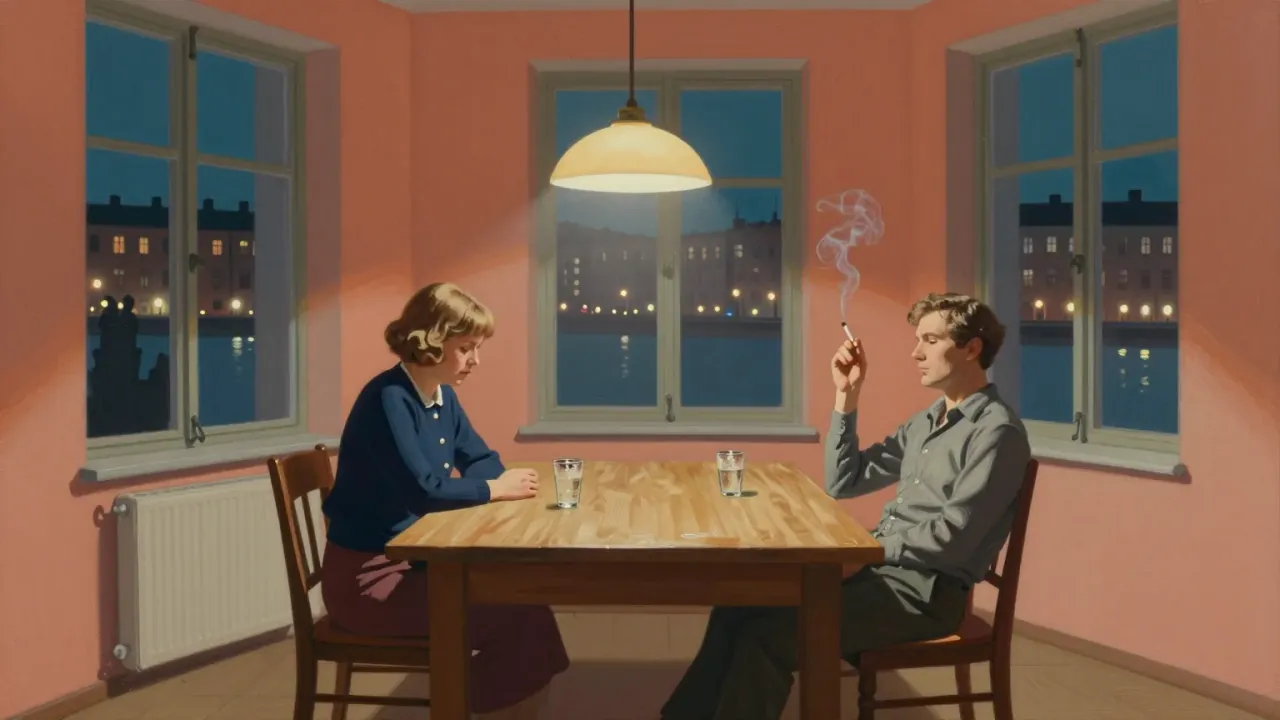
Ingmar Bergman’s 1974 Scenes from a Marriage follows a Swedish couple’s decade-long marital unraveling through six intimate, dialogue-driven episodes. Shot by Sven Nykvist and performed with unsparing naturalism by Liv Ullmann and Erland Josephson, it treats domestic life as a site of existential exposure — where love, resentment, and habit coexist without hierarchy. Its power lies in cumulative detail, not plot.
13:00

Senso

Luchino Visconti · 1954

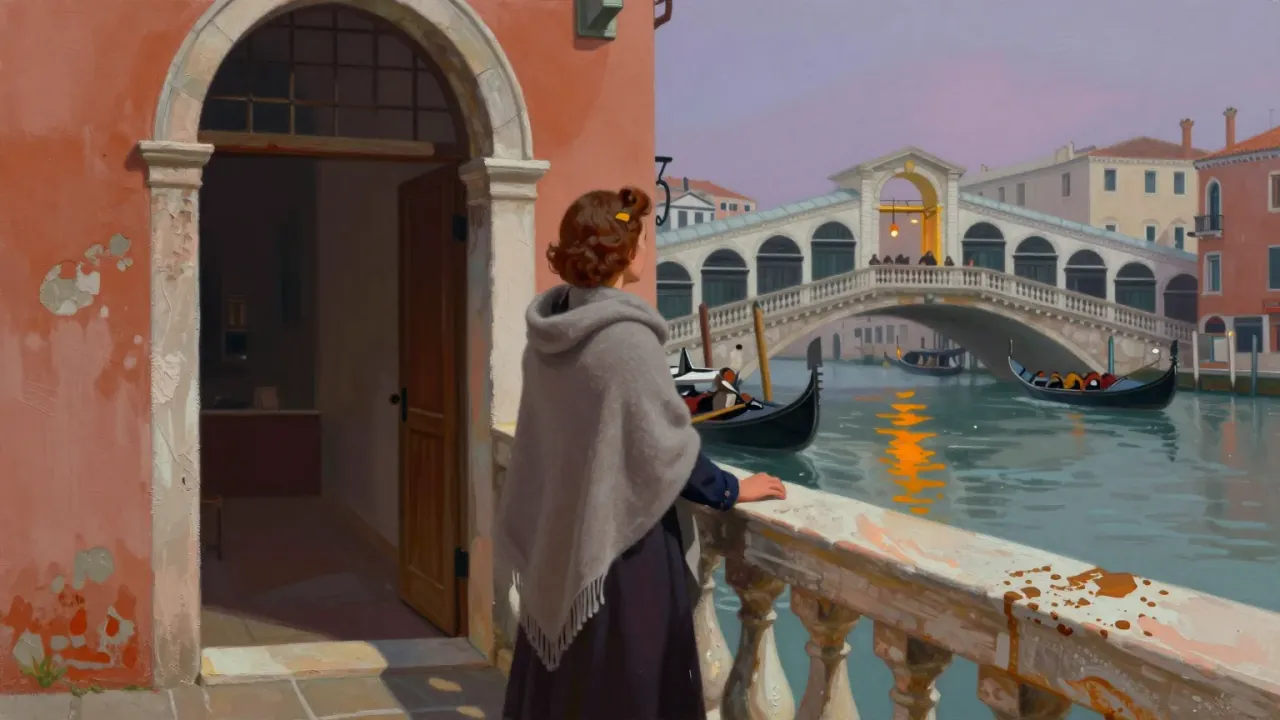
Luchino Visconti’s 1954 colour debut adapts Camillo Boito’s novella into a Venice-set melodrama about Countess Livia Serpieri’s ruinous affair with an Austrian officer during the 1866 war. Alida Valli’s restrained performance anchors a film whose painterly visuals, Bruckner-scored intensity, and structural rigour treat romantic obsession as a slow, irreversible erosion of moral and political clarity.

13:00

Sherlock, Jr.

Buster Keaton, Roscoe Arbuckle · 1924

A 1924 silent comedy starring Buster Keaton as a projectionist who dreams himself into the film he is screening. Directed by Keaton and Roscoe Arbuckle (under pseudonym), it uses in-camera tricks, exact camera positioning, and structural repetition to explore cinema’s grammar — not as metaphor, but as physical system. Its dream sequence remains a landmark of formal invention, prioritising spatial logic and editorial precision over character or emotion.

13:00

Sholay

Ramesh Sippy · 1975

A 1975 Hindi-language dacoit western directed by Ramesh Sippy, Sholay follows two outlaws hired to eliminate a ruthless bandit in a rural Indian village. Built on Salim-Javed’s tightly wound script, Dwarka Divecha’s stark cinematography, and R. D. Burman’s iconic score, it synthesises Spaghetti Western pacing, samurai film gravitas, and Indian folk idioms into a mythic, 204-minute epic. Its enduring power lies in formal discipline — in gesture, silence, and repetition — rather than psychological realism or moral ambiguity.

13:00

Shoot the Piano Player

François Truffaut · 1960

François Truffaut’s 1960 second feature adapts David Goodis’s Down There into a grainy, kinetic neo-noir starring Charles Aznavour as a pianist hiding from fame and grief. Shot on location in Paris and the Alps by Raoul Coutard, edited with jarring cuts and voice-over digressions, and scored by Georges Delerue, it balances burlesque gangsters with quiet despair. Its themes — anonymity, misrecognition, love as shelter — unfold through mood and gesture more than plot. Though narratively loose, its emotional logic holds firm.
13:00

Sleepy Hollow

Tim Burton · 1999

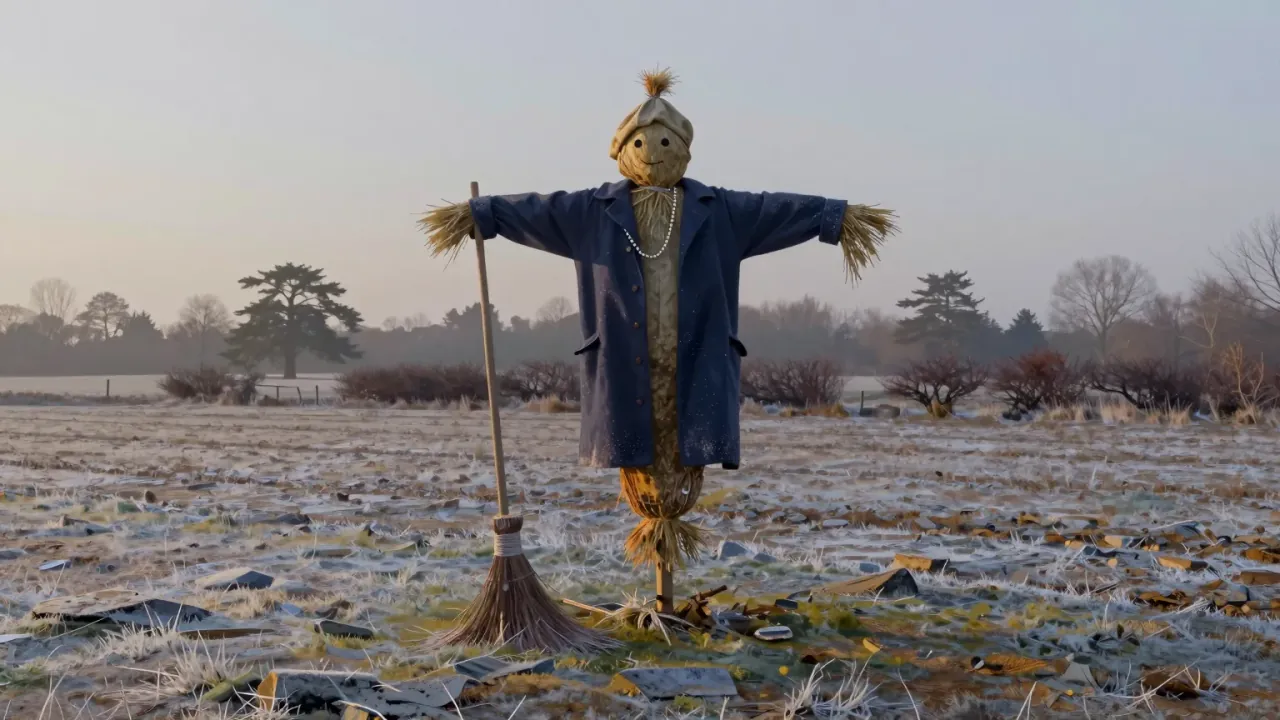
Tim Burton’s 1999 Sleepy Hollow reimagines Washington Irving’s tale as a painterly, studio-crafted horror fable. Johnny Depp plays Ichabod Crane, a forensic-minded constable investigating decapitations in an insular Hudson Valley village. With Emmanuel Lubezki’s moody cinematography, Rick Heinrichs’ Oscar-winning production design, and Danny Elfman’s brooding score, the film builds dread through saturated colour, deliberate artifice and tactile detail — not plot mechanics or psychological realism. Its strengths are visual and atmospheric; its weaknesses lie in structural looseness and underdeveloped relationships. It rewards patience with mood over momentum.

13:00

Something Wild

Jonathan Demme · 1986

Jonathan Demme’s 1986 film follows an uptight investment banker drawn into the chaotic orbit of a woman who shifts identities as easily as she shifts lanes. What begins as flirtation becomes a road trip, then a reckoning — with class, masculinity, and the quiet violence built into everyday American life. Anchored by Melanie Griffith’s layered performance and Jeff Daniels’ tightly wound transformation, it balances quirky charm with genuine unease, using genre not as container but as provocation.

13:00

Spencer

Pablo Larraín · 2021

A psychological portrait of Diana, Princess of Wales, over three days at Sandringham in 1991. Directed by Pablo Larraín and written by Steven Knight, it uses Claire Mathon’s Super 16mm cinematography, Jonny Greenwood’s dissonant score, and Kristen Stewart’s physically precise performance to render Diana’s existential crisis as sensory experience — not biography, but embodiment.
13:00

Stoker

Park Chan-wook · 2013

Park Chan-wook’s English-language debut is a Southern Gothic psychological thriller about an 18-year-old girl whose father’s death brings his enigmatic brother into her life. As buried family truths surface, her acute perception becomes both weapon and wound. Stylised cinematography, Clint Mansell’s score and restrained performances build a world where atmosphere carries more weight than exposition.
13:00

Storm over Asia

Vsevolod Pudovkin · 1928

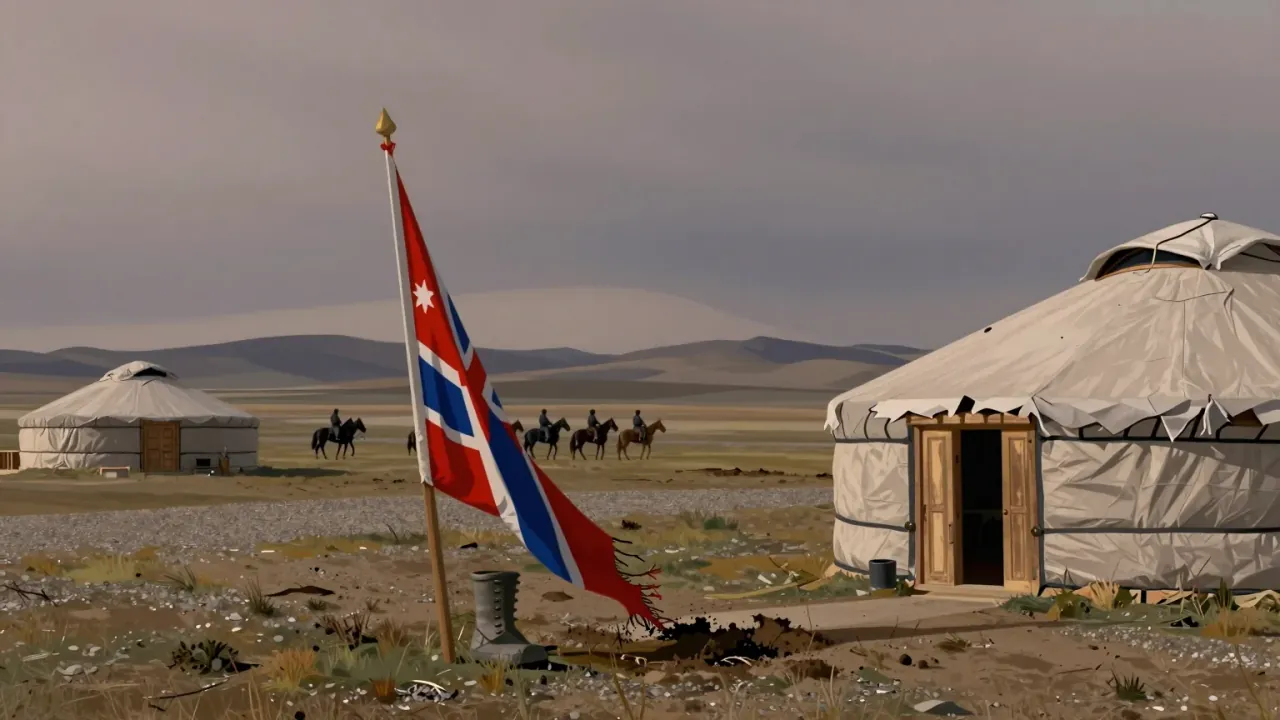
Storm over Asia (1928), directed by Vsevolod Pudovkin, is the final film of his revolutionary trilogy. Set in a fictionalised Mongolia under British occupation, it follows a Mongol trapper elevated to puppet ruler — then turned against his masters. Made by Mezhrabpom-Film with cinematography by Anatoli Golovnya, it uses real Cham dance footage and a tightly controlled visual style to argue that legitimacy is performative, and resistance begins when the performance is reclaimed.

13:00

Storytelling

Todd Solondz · 2001

Todd Solondz’s 2001 film Storytelling divides itself into two unrelated segments — 'Fiction' and 'Non-Fiction' — each dissecting how narrative power operates in education, documentary, and family life. With restrained performances, underlit interiors, and a refusal to resolve its ethical dilemmas, it sustains a low, persistent discomfort. Its value lies in structural rigour and thematic consistency, not emotional payoff.

13:00

Strange Days

Kathryn Bigelow · 1995

Kathryn Bigelow’s 1995 science fiction thriller, set in a gritty, near-future Los Angeles, follows a black-market dealer of recorded memories (SQUID) who uncovers a conspiracy tied to police violence, racial injustice, and sexual assault. Anchored by Ralph Fiennes and Angela Bassett, it merges noir structure with dystopian texture, using immersive point-of-view sequences and a brooding electronic score to explore surveillance, memory, and power. Though a box-office failure, its formal rigour and thematic prescience have earned it enduring critical reassessment.

13:00

Stray Dog

Akira Kurosawa · 1949

A young Tokyo detective loses his service pistol in a crowded trolley in the summer of 1949. With the help of a veteran colleague, he traces it through the city’s black markets, yakuza networks, and dance halls — not to deliver vengeance, but to understand how postwar desperation reshapes morality, authority, and the very idea of justice.

13:00

Strike

Sergei Eisenstein · 1925

Sergei Eisenstein’s 1925 debut is a Soviet silent propaganda film depicting a 1903 factory strike. Using rapid montage, symbolic cross-cutting (notably workers and slaughtered cattle), and stylised performances, it advances a Marxist analysis of labour, provocation and state violence. Shot by Eduard Tisse and edited by Eisenstein himself, it prioritises ideological clarity over psychological realism. Though initially confusing to audiences, it is now regarded as a foundational work of avant-garde cinema and a key text in film theory.

13:00

Summertime

David Lean · 1955

David Lean’s 1955 Summertime follows Katharine Hepburn as Jane Hudson, a lonely American secretary on her first solo trip to Venice, where she forms a tender, complicated bond with an Italian antiques dealer. Shot on location in Eastmancolor, the film leans on Hepburn’s understated performance, Jack Hildyard’s observant cinematography, and a script that prizes psychological realism over plot mechanics. Though constrained by 1950s censorship and occasional theatrical residue, it remains a quietly devastating study of longing, ageing, and the asymmetries of desire.

13:00

Sunrise

Yu Benzheng · 1985

Sunrise (1985), directed by Yu Benzheng, is a 149-minute Chinese drama set in post-Mao Shanghai. Starring Fang Shu and Wang Shihuai, it traces the slow erosion of a marriage under economic strain, with Wang Fuli playing a complicating presence. Written by Wan Fang and shot by Zhu Yongde, it won the Hundred Flowers Award for Best Picture and the Huabiao Award for Outstanding Film. It bears no relation to the 1927 American silent film of the same name.

13:00

Swades

Ashutosh Gowariker · 2004

A NASA engineer returns to rural India to find his childhood nanny and stays to build a micro-hydroelectric plant. Directed by Ashutosh Gowariker and starring Shah Rukh Khan, Swades (2004) is a deliberate, physically grounded Hindi drama that treats infrastructure, education, and caste not as themes but as daily practices — demanding patience, precision, and collective labour over rhetoric or revelation.

13:00

Sweeney Todd: The Demon Barber of Fleet Street

Tim Burton · 2007

Tim Burton’s 2007 adaptation of Sweeney Todd condenses Stephen Sondheim’s stage musical into a tightly wound Gothic drama. Starring Johnny Depp and Helena Bonham Carter, it follows a vengeful barber and his pie-making accomplice in a blood-soaked, desaturated Victorian London. With Dariusz Wolski’s cinematography, Dante Ferretti’s production design, and a ruthlessly edited score, it sustains a tone of operatic despair — prioritising psychological intensity over narrative breadth or musical spectacle.

13:00

Swimming to Cambodia

Jonathan Demme · 1987

Spalding Gray sits alone at a table and speaks for eighty-five minutes about filming The Killing Fields, the Khmer Rouge’s rise, and his own search for meaning amid atrocity. Directed by Jonathan Demme and scored by Laurie Anderson, it is a formally austere essay-film built on voice, silence, and the moral weight of first-person recollection—neither documentary nor drama, but something stricter and stranger.

13:00

Swing Time

George Stevens · 1936

A 1936 RKO musical starring Fred Astaire and Ginger Rogers, directed by George Stevens. Built around Jerome Kern’s Oscar-winning score and Hermes Pan’s choreography, it uses a slender plot — a dancer delaying his wedding — purely to stage five major dance numbers. Its strengths lie in rhythmic invention, spatial precision, and the emotional weight carried by movement alone. Its weaknesses include narrative thinness, underdeveloped supporting characters, and the unresolved presence of blackface in ‘Bojangles of Harlem’. Widely regarded as the peak of the Astaire–Rogers partnership, it remains a benchmark for musical film craft.

13:00

Synecdoche, New York

Charlie Kaufman · 2008

Charlie Kaufman’s 2008 directorial debut follows theatre director Caden Cotard as he constructs an ever-expanding, hyper-real stage production inside a Manhattan warehouse — a project that blurs life and art until neither remains distinct. Starring Philip Seymour Hoffman and featuring Catherine Keener, Samantha Morton, and Emily Watson, the film uses recursive structure, deliberate ambiguity, and physical decay to explore mortality, identity, and the exhausting persistence of self-making. Shot by Frederick Elmes and scored by Jon Brion, it premiered at Cannes and polarised critics — some calling it a masterpiece, others pretentious — but has since gained stature as a defining arthouse work of the 21st century.

13:00

Taste of Cherry

Abbas Kiarostami · 1997

Abbas Kiarostami’s 1997 Palme d’Or winner follows Badii, a Tehran man driving the city’s fringes in search of someone to bury him after he kills himself. With Homayoun Ershadi in a performance of near-total restraint, and Homayoun Payvar’s cinematography holding space without emphasis, the film builds meaning through repetition, silence, and landscape. Its power lies in what it omits — backstory, score, explanation — and in its radical final shift to documentary-style footage of the crew. It is arthouse cinema at its most disciplined: austere, ambiguous, and deeply humane.

13:00

Tender Mercies

Bruce Beresford · 1983

Tender Mercies (1983), directed by Bruce Beresford and written by Horton Foote, follows Mac Sledge — a washed-up country singer recovering from alcoholism — as he rebuilds a life with a young widow and her son in rural Texas. Robert Duvall’s Oscar-winning performance anchors a film defined by restraint: sparse dialogue, unvarnished performances, and a documentary-like gaze. It avoids melodrama, instead locating meaning in small, repeated acts of care — mowing the lawn, singing quietly, sharing meals. Shot on location in Waxahachie, Texas, with Russell Boyd’s naturalistic cinematography and George Dreyfus’s understated score, it is a study in endurance, presence, and the quiet persistence of mercy.

13:00

That Obscure Object of Desire

Luis Buñuel · 1977

Luis Buñuel’s 1977 swan song adapts Pierre Louÿs’s novel into a stark, absurdist study of erotic fixation. Fernando Rey plays Mathieu, a wealthy Frenchman obsessed with Conchita — portrayed interchangeably by Carole Bouquet and Ángela Molina. Framed as a train confession and punctuated by unexplained terrorist violence, the film refuses psychological coherence, using repetition, structural disjunction, and deadpan tone to embody desire as irrational, inescapable, and faintly ridiculous.

13:00

The 39 Steps

Alfred Hitchcock · 1935

Alfred Hitchcock’s 1935 adaptation of John Buchan’s novel is a foundational British spy thriller: Robert Donat plays Richard Hannay, a man falsely accused who flees across England and Scotland pursued by spies and police alike. Shot by Bernard Knowles and edited by Derek Twist, it relies on geography, rhythm and understated performance rather than exposition or spectacle. Though it departs significantly from the source, it established core Hitchcock tropes — the innocent man on the run, the MacGuffin, the public-space climax — and remains a masterclass in classical suspense construction.

13:00

The African Queen

John Huston · 1951

John Huston’s 1951 drama follows a Methodist missionary and a Canadian boat mechanic who convert a small steamboat into a torpedo vessel to attack a German gunboat in East Africa during the First World War. Shot partly on location in Uganda and the Belgian Congo, it stars Humphrey Bogart (who won Best Actor) and Katharine Hepburn. Its strength lies in restrained performances, Jack Cardiff’s unsentimental Technicolor, and a story that values incremental change over grand revelation — though its colonial framing remains structurally incomplete.

13:00

The Asphalt Jungle

John Huston · 1950

John Huston’s 1950 heist film follows a meticulously planned jewel robbery and its unraveling, centred on professionals whose expertise is undone by physiology, chance and debt. Shot by Harold Rosson and scored by Miklós Rózsa, it favours procedural realism over noir stylisation, grounding its characters in economic necessity rather than moral ambiguity. Though commercially modest and initially resisted by MGM, it endures as a benchmark of structural discipline in American crime cinema.

13:00

The Assassin

Hou Hsiao-Hsien · 2015

Hou Hsiao-Hsien’s 2015 wuxia film, set in the Tang dynasty, follows an assassin ordered to kill her cousin and former betrothed. Loosely based on a ninth-century story, it replaces genre conventions with austere composition, elliptical storytelling and profound stillness. Shot by Mark Lee Ping Bin and scored by Lim Giong, it won the Golden Horse Award for Best Feature Film and Best Director at Cannes.

13:00

The Band Wagon

Vincente Minnelli · 1953

Tony Hunter, a fading musical star, joins a Broadway show written by friends — only for its director to recast it as a pretentious Faust adaptation. Clashing with ballerina Gabrielle Gerard, he walks out, then returns to reshape the show as light entertainment. Directed by Vincente Minnelli, with songs by Schwartz and Dietz and choreography by Michael Kidd, the film treats musical theatre as a living, negotiable form — not a vehicle for stardom, but a site of collective recalibration.

13:00

The Big Heat

Fritz Lang · 1953

Fritz Lang’s 1953 crime film follows homicide detective Dave Bannion as he pursues the truth behind a fellow officer’s suicide, uncovering a web of police and syndicate collusion. After his wife is killed in a car bombing, Bannion operates outside the force, confronting mob enforcers and compromised officials. With stark cinematography, minimal score, and tightly wound performances — notably Gloria Grahame’s Debby Marsh and Lee Marvin’s Vince Stone — the film builds tension through repetition and consequence rather than exposition or psychology.

13:00

The Big Lebowski

Joel Coen, Ethan Coen · 1998

The Big Lebowski (1998) follows Jeffrey 'The Dude' Lebowski, a laid-back Los Angeles slacker drawn into a convoluted kidnapping plot after being mistaken for a millionaire with the same name. Directed by Joel and Ethan Coen, it leans into Raymond Chandler’s episodic structure while discarding his moral urgency. With Jeff Bridges, John Goodman, Julianne Moore, Steve Buscemi and John Turturro, and cinematography by Roger Deakins, it builds its world through precise dialogue, physical performance and sun-bleached Los Angeles atmospherics — less a crime story than a study in inertia, ritual and linguistic idiosyncrasy.

13:00

The Bling Ring

Sofia Coppola · 2013

Sofia Coppola’s 2013 film adapts the real-life Bling Ring burglaries into a coolly detached portrait of teenage identity formed through consumption. Shot in Los Angeles with Haris Savides and Christopher Blauvelt, it follows a group of affluent teens who use social media to locate and rob celebrity homes. Stylistically austere and morally ambiguous, it foregrounds surface over psychology, repetition over revelation. Though praised for its direction and cast, it drew criticism for omitting racial and class dimensions of the actual case.

13:00

The Bridge on the River Kwai

David Lean · 1957

David Lean’s 1957 war drama follows British POWs forced to build a railway bridge for their Japanese captors in Thailand. At its centre is Colonel Nicholson, whose obsession with discipline and engineering excellence leads him to collaborate with the enemy — not out of weakness, but conviction. With Alec Guinness, William Holden and Sessue Hayakawa, it is a tightly wound study of pride, obedience and the porous line between order and complicity.

13:00

The Cabinet of Dr. Caligari

Robert Wiene · 1920

A 1920 German silent film directed by Robert Wiene, written by Hans Janowitz and Carl Mayer, and designed by Hermann Warm, Walter Reimann and Walter Röhrig. It tells of a hypnotist and his somnambulist through a fractured frame story, using radically distorted sets, high-contrast lighting and stylised performance to argue against irrational authority. Made at Babelsberg Studio, it remains foundational to expressionist cinema, horror and arthouse film.

13:00

The Circle

Jafar Panahi · 2000

Jafar Panahi’s 2000 drama The Circle follows a chain of Iranian women navigating Tehran’s legal and social barriers in a single day. Shot in natural light with non-professional actors, it builds its critique through accumulation — not speeches or exposition, but repeated refusals: denied bus tickets, barred entrances, abandoned children, unanswered phone calls. The narrative circles back to its opening scene, underscoring systemic continuity over individual resolution. Banned in Iran and awarded the Golden Lion at Venice, it treats gender not as identity but as administrative condition.

13:00

The City of Lost Children

Jean-Pierre Jeunet, Marc Caro · 1995

Jean-Pierre Jeunet and Marc Caro’s 1995 science fiction film constructs a decaying, steampunk-adjacent port city where dreams are harvested, children kidnapped, and bodies augmented. Ron Perlman plays a strongman searching for his abducted brother, aided by a resourceful orphan and a salvaged scientist. Its power lies in tactile worldbuilding — costume, lighting, set design — rather than plot mechanics. Though critically admired for its visual imagination, its narrative opacity divides viewers. It is arthouse science fiction that prioritises atmosphere over explanation.

13:00

The Cranes Are Flying

Mikhail Kalatozov · 1957

Released in 1957 by Mosfilm, Mikhail Kalatozov’s The Cranes Are Flying follows Veronika, a young Moscow woman whose life fractures after the Nazi invasion. Her lover Boris goes to war, her parents die in an air raid, and she is pressured into marriage with his predatory cousin Mark. Through trauma, silence, and small acts of remembrance—the squirrel toy, Boris’s hidden note—the film charts her slow, unheroic return to life. It won the Palme d’Or in 1958 and remains a landmark of Soviet cinematic humanism.

13:00

The Death of Louis XIV

Albert Serra · 2016

Albert Serra’s 2016 film follows Louis XIV’s final weeks in 1715, filmed in austere, candlelit interiors with Jean-Pierre Léaud in a physically exacting, unembellished performance. Shot in fifteen days at Château de Hautefort, it avoids exposition, psychology, or political context, focusing instead on the slow, unvarnished mechanics of decline: diagnosis, ritual, silence, and the quiet erosion of agency. Critics praised its restraint and Léaud’s performance, though its deliberate pace divides audiences.

13:00

The Deep Blue Sea

Terence Davies · 2011

Terence Davies’ 2011 adaptation of Terence Rattigan’s play follows Hester Collyer over one day in her London flat, tracing her affair with a former RAF pilot against the quiet certainty of her marriage to a High Court judge. Rachel Weisz anchors a restrained, visually exacting film about love as destabilisation, not salvation.

13:00

The Discreet Charm of the Bourgeoisie

Luis Buñuel · 1972

Luis Buñuel’s 1972 surrealist comedy follows a group of French bourgeois and a South American ambassador as they repeatedly fail to share a meal. Structured around five thwarted gatherings and four interwoven dreams, the film uses repetition, deadpan performance, and seamless shifts between reality and fantasy to dissect ritual, class, and the quiet violence of politeness. Shot by Edmond Richard and edited by Hélène Plemiannikov, it won the 1973 Academy Award for Best International Feature Film.

13:00

The Double Life of Véronique

Krzysztof Kieślowski · 1991

Krzysztof Kieślowski’s 1991 metaphysical portrait follows two women—Weronika in Poland and Véronique in France—who share a face, a voice, and an unexplained emotional tether. Shot by Sławomir Idziak with diffused, saturated light and scored by Zbigniew Preisner under the fictional name Van den Budenmayer, it builds meaning through recurrence, texture, and silence rather than exposition. Irène Jacob gives a performance of extraordinary subtlety, registering shifts in feeling before thought catches up. The film refuses to explain its central mystery, treating doubleness not as plot device but as perceptual condition.

13:00

The Element of Crime

Lars von Trier · 1984

Lars von Trier’s 1984 debut is a neo-noir experiment shot almost entirely in sodium-vapour light, following a detective who replicates a serial killer’s movements to solve a case — only to absorb his compulsions. With its decaying European cityscapes, repetitive motifs, and hypnotic pacing, the film frames investigation as psychological possession rather than rational deduction.

13:00

The End of St. Petersburg

Vsevolod Pudovkin, Mikhail Doller · 1927

The End of St. Petersburg (1927), directed by Vsevolod Pudovkin and Mikhail Doller, traces a peasant boy’s journey from rural innocence to revolutionary clarity across four years of upheaval in pre-Soviet Russia. Shot in stark, rhythmic montage by Anatoli Golovnya and edited by Oleksandr Dovzhenko, it avoids individual psychology in favour of systemic analysis — linking factory exploitation, imperial war, and bread riots to the fall of Tsarism and rise of the Bolsheviks. Commissioned for the October Revolution’s tenth anniversary, it is a didactic, formally rigorous work of political cinema.

13:00

The Europeans

James Ivory · 1979

James Ivory’s 1979 film adapts Henry James’s 1878 novel about European siblings arriving in 1850s New England, where their charm unsettles their puritanical American cousins. Shot on location in Massachusetts and New Hampshire, it relies on understated performances, natural light, and period detail to evoke cultural friction without melodrama. Though modest in scale, it launched Merchant Ivory’s celebrated run of literary period dramas.

13:00

The Face Reader

Han Jae-rim · 2013

Set in 15th-century Joseon, The Face Reader follows Nae-gyeong, a master of gwansang, who uses facial analysis to navigate court intrigue after being drawn from seclusion into royal service. When King Munjong dies, he must choose between loyalty to the late monarch and survival under the usurping Grand Prince Suyang. Anchored by Song Kang-ho’s restrained performance and Han Jae-rim’s deliberate direction, the film treats physiognomy as psychological method rather than mysticism — though its final act falters under the weight of historical inevitability.

13:00

The Fifth Element

Luc Besson · 1997

Luc Besson’s 1997 science-fiction film is a French-produced, English-language spectacle built on maximalist design, constructed language, and daylight-driven futurism. Starring Bruce Willis, Milla Jovovich, and Gary Oldman, it follows a taxi driver and a resurrected super-being racing to save Earth using four mystical stones. Shot in London and Mauritania, it won BAFTA and César awards for visual effects, cinematography, direction, and production design. Though divisive in its emotional restraint and mythic opacity, it remains a landmark of tactile, stylised worldbuilding.

13:00

The General

Buster Keaton, Clyde Bruckman · 1926

Buster Keaton’s 1926 film The General is a romantic comedy-war film set during the American Civil War, co-directed with Clyde Bruckman. Starring Keaton as a Southern railroad engineer, it follows his pursuit of a stolen locomotive and his estranged sweetheart across Oregon landscapes shot with period-accurate trains and practical stunts. Though poorly received on release, it is now widely regarded as a landmark of cinematic craft — precise, physically coherent, and emotionally restrained.

13:00

The Gold Rush

Charlie Chaplin · 1925

Charlie Chaplin’s 1925 silent feature The Gold Rush transplants his Little Tramp into the Klondike Gold Rush, using starvation, cold, and isolation as structural principles rather than setting. Its most enduring sequences — shoe-eating, roll-dancing, cabin-on-a-cliff — succeed through unwavering tonal control and physical precision. While the romantic second half lacks the psychological density of the survival sections, the film remains a masterclass in expressive economy: every frame, gesture, and pause serves its dual commitment to laughter and pathos.

13:00

The Golem

Paul Wegener, Henrik Galeen · 1915

The Golem (1915) is a partially lost German silent film co-directed by Paul Wegener and Henrik Galeen, adapting Jewish folklore into a proto-horror narrative about a clay creature reawakened in modern times. With only fragments surviving — held by Deutsche Kinemathek — its story, performances, and themes remain partly speculative. It establishes the golem as autonomous yet unstable, but lacks the psychological or visual cohesion of later Weimar horror. Its value lies in lineage, not completeness.

13:00

The Great Dictator

Charlie Chaplin · 1940

Charlie Chaplin’s 1940 The Great Dictator is his first full sound film and a bold, early condemnation of Hitler, Mussolini and fascism. Playing both a ruthless dictator and a persecuted Jewish barber, Chaplin uses physical comedy, musical irony and direct address to expose authoritarian spectacle and affirm human dignity. Though structurally uneven and limited by its era’s conventions, it remains historically vital and morally unflinching.

13:00

The Great Ziegfeld

Robert Z. Leonard · 1936

The Great Ziegfeld (1936) is MGM’s lavish biographical musical about Florenz Ziegfeld Jr., starring William Powell, Luise Rainer and Myrna Loy. Directed by Robert Z. Leonard and produced by Hunt Stromberg, it prioritises spectacle over accuracy — staging extravagant musical numbers, deploying hundreds of costumers and technicians, and constructing monumental sets like the 100-ton ‘Melody’ staircase. Though factually loose and dramatically thin, its unwavering commitment to scale, craft and ceremonial grandeur makes it a defining artefact of studio-era ambition.

13:00

The Green Knight

David Lowery · 2021

David Lowery’s The Green Knight reimagines the 14th-century poem as a visually dense, deliberately paced speculative fiction film. Dev Patel stars as Gawain, whose year-long journey to keep a supernatural bargain unfolds through ritualised encounters, practical effects, and a refusal of narrative resolution. Shot in Ireland with hand-painted sets and wood-grain prosthetics, it privileges texture over exposition and ambiguity over catharsis.

13:00

The Handmaiden

Park Chan-wook · 2016

Park Chan-wook’s 2016 adaptation of Sarah Waters’s Fingersmith relocates the Victorian con plot to 1930s Japanese-occupied Korea, where a handmaiden and a secluded heiress navigate deception, trauma, and liberation across three interlocking narrative sections. Shot by Chung Chung-Hoon and scored by Jo Yeong-wook, it uses meticulous craft to explore literacy as coercion, intimacy as resistance, and colonial complicity as inherited architecture.

13:00

The Hurt Locker

Kathryn Bigelow · 2008

Kathryn Bigelow’s 2008 war thriller follows a U.S. Army bomb disposal team in Iraq, using procedural fidelity and sensory intensity to convey the physical and psychological toll of sustained combat. Written by Mark Boal from embedded experience, it prioritises immediacy over explanation, with Barry Ackroyd’s cinematography and Chris Innis’s editing sustaining relentless, close-quarters tension. Though acclaimed for its craft and awarded six Oscars including Best Picture and Best Director, its narrow focus has drawn criticism from veterans for omitting political and cultural dimensions of the conflict.

13:00

The Killers

Robert Siodmak · 1946

Robert Siodmak’s 1946 crime film expands Hemingway’s terse short story into a layered noir investigation, anchored by Burt Lancaster’s debut performance and Elwood Bredell’s atmospheric cinematography. It traces an insurance investigator’s dogged reconstruction of a doomed ex-boxer’s final years, using flashbacks to expose how betrayal, loyalty, and fatalism accumulate like sediment. Though structurally ambitious, its commitment to mood over momentum makes it demanding—and deeply rewarding—for viewers attuned to tone, texture, and the quiet gravity of inevitability.

13:00

The Killing

Stanley Kubrick · 1956

Stanley Kubrick’s 1956 heist film follows Johnny Clay’s meticulously planned racetrack robbery, told in fractured chronology and executed with clinical precision. Built on Jim Thompson’s dialogue and Lionel White’s novel, it privileges structure over psychology, showing how small, unscripted human actions — a drunken appearance, a dropped horseshoe, a burst suitcase — derail even the most rigorous plan. With Sterling Hayden, Marie Windsor, and Elisha Cook Jr., it delivers lean, unsentimental noir grounded in craft, not catharsis.

13:00

The Lady from Shanghai

Orson Welles · 1947

Orson Welles’s 1947 noir, shot on location in San Francisco and Acapulco, uses a tangled murder plot to interrogate perception, law, and performance. Though heavily cut by Columbia Pictures, its surviving fragments—including the legendary hall-of-mirrors finale—retain a stark, unsettling power rooted in visual and ethical ambiguity.

13:00

The Last Boy Scout

Tony Scott · 1991

Tony Scott’s 1991 crime film, written by Shane Black, pairs a disgraced ex-Secret Service agent and a sacked quarterback in a Los Angeles soaked in neon and cynicism. Built on rapid-fire dialogue, saturated visuals and a conspiracy that stays deliberately hazy, it prioritises rhythm and voice over narrative rigour. Its cult status rests on stylistic confidence, not structural soundness.

13:00

The Leopard

Luchino Visconti · 1963

Luchino Visconti’s 1963 adaptation of Tomasi di Lampedusa’s novel follows Sicilian Prince Don Fabrizio Corbera as he observes — without intervening — the slow displacement of aristocracy by a rising bourgeoisie during the Italian unification of 1860. Starring Burt Lancaster, Claudia Cardinale, and Alain Delon, it is a visually sumptuous, deliberately paced drama whose power resides in accumulation, restraint, and the physical texture of decay.

13:00

The Lighthouse

Robert Eggers · 2019

Robert Eggers’ 2019 black-and-white horror follows two lighthouse keepers—Willem Dafoe and Robert Pattinson—stranded together in isolation, their relationship fracturing under storm, duty, and buried desire. Shot in a near-square 1.19:1 aspect ratio on 35 mm film with custom optical filters, it uses period-accurate dialect, oppressive sound design, and unrelenting close-ups to render descent as sensory inevitability. Its themes orbit masculinity, hierarchy, myth, and the sea as unconscious force.

13:00

The Lodger: A Story of the London Fog

Alfred Hitchcock · 1927

Alfred Hitchcock’s 1927 silent thriller *The Lodger* follows a London family renting a room to a mysterious man amid a string of blonde-victim murders. Using expressionist lighting, inventive camera angles, and minimal intertitles, it constructs suspense through space, sound (implied), and collective anxiety — establishing Hitchcock’s lifelong preoccupations with guilt, perception, and mob logic.

13:00

The Lord of the Rings: The Fellowship of the Ring

Peter Jackson · 2001

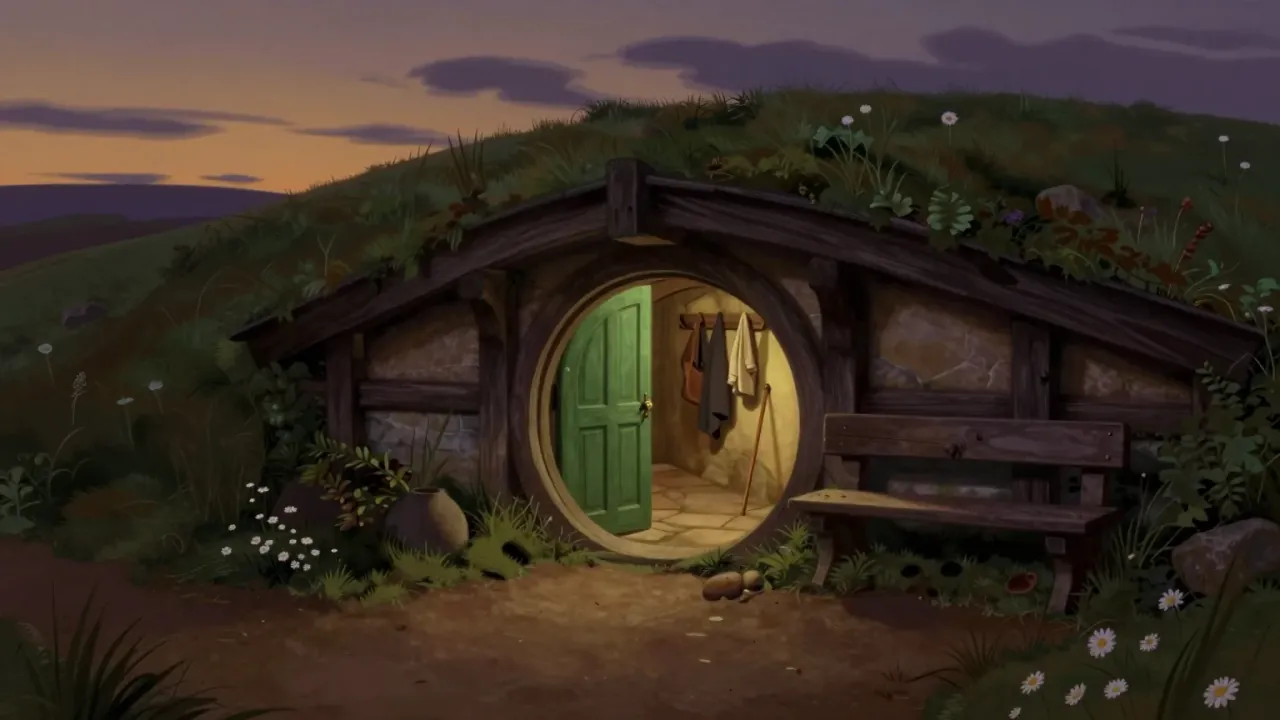
Peter Jackson’s 2001 adaptation of Tolkien’s first volume establishes Middle-earth as a lived-in world, anchored by Andrew Lesnie’s grounded cinematography, Howard Shore’s leitmotif-driven score and performances that privilege quiet resolve over grand pronouncement. At 178 minutes, it balances epic scope with intimate moral stakes — Frodo’s burden, Sam’s loyalty, Arwen’s choice — treating myth not as allegory but as lived consequence. Though some narrative compressions blunt psychological nuance, its thematic coherence and craft cohesion make it a benchmark for fantasy filmmaking.

13:00

The Maltese Falcon

John Huston · 1941

John Huston’s 1941 debut adapts Dashiell Hammett’s novel with surgical fidelity: low-key lighting, unadorned dialogue, and performances that treat deception as craft. Humphrey Bogart’s Sam Spade operates by self-imposed rules, not ethics, and the pursuit of a jewel-encrusted falcon reveals not desire but the architecture of betrayal. Made for $300,000 on the Warner Bros. lot, it endures not as myth but as method — a blueprint for how to build tension without spectacle, and meaning without explanation.

13:00

The Man Who Wasn't There

Joel Coen · 2001

Set in 1949 California, The Man Who Wasn’t There follows barber Ed Crane as he stumbles into crime, not from greed or passion, but from a quiet, accumulating sense of irrelevance. Shot in black-and-white by Roger Deakins and narrated with detached precision by Billy Bob Thornton, the film reworks noir conventions into an existential parable about postwar uncertainty, determinism, and the illusion of control. Its themes — drawn from Camus, Heisenberg, and James M. Cain — land through restraint, not exposition.

13:00

The Man Who Would Be King

John Huston · 1975

John Huston’s 1975 film adapts Kipling’s novella into a morally austere, visually grounded account of two British ex-soldiers who impersonate gods in Kafiristan. Michael Caine and Sean Connery anchor a story about ritual, sovereignty, and the material conditions of belief — shot in Morocco and France, scored by Maurice Jarre, and edited with deliberate restraint. It avoids moralising, instead tracing the slow, logical erosion of a lie until only consequence remains.

13:00

The Master

Paul Thomas Anderson · 2012

Paul Thomas Anderson’s 2012 drama follows Freddie Quell, a volatile WWII veteran, as he falls under the influence of Lancaster Dodd, leader of a fledgling philosophical movement. Shot almost entirely on 65 mm film, it relies on Joaquin Phoenix and Philip Seymour Hoffman’s physically precise performances, Jonny Greenwood’s jagged score, and a structure that favours ambiguity over exposition. Set in 1945–46, it explores post-war dislocation, the seduction of certainty, and the limits of personal transformation — without offering diagnosis, satire or resolution.

13:00

The Matrix

Lilly Wachowski · 1999

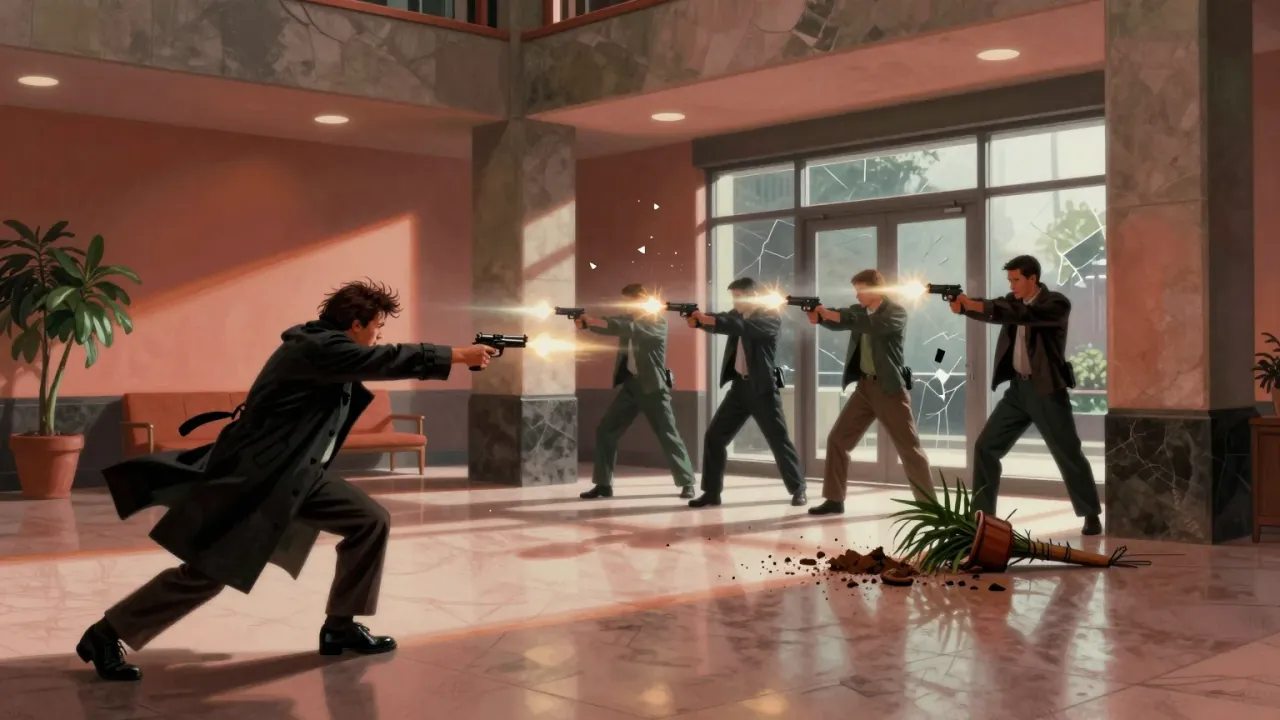
The Matrix is a 1999 science-fiction thriller directed by Lilly Wachowski, starring Keanu Reeves as Neo, a computer hacker who discovers reality is a machine-generated simulation. Guided by Morpheus (Laurence Fishburne) and Trinity (Carrie-Anne Moss), he joins a rebellion against sentient machines. Built on rigorous martial arts choreography, innovative visual effects including 'bullet time', and a green-tinged visual grammar, the film treats perception as infrastructure and freedom as embodied practice. It won four Academy Awards, including Best Visual Effects and Best Film Editing, and remains culturally resonant for its fusion of philosophy, action, and formal invention.

13:00

The Mirror

Andrei Tarkovsky · 1975

Andrei Tarkovsky’s 1975 film The Mirror is a non-linear, autobiographical essay in image and sound. Shot by Georgy Rerberg and scored by Eduard Artemyev, it weaves childhood recollection, wartime newsreel, poetic voiceover, and maternal presence into a single, flowing meditation on time, inheritance, and perception. Margarita Terekhova plays dual roles; Oleg Yankovsky appears only in voiceover. With around 200 shots across 108 minutes, its rhythm is durational, not dramatic. Released under constraint by Mosfilm, it polarised Soviet critics before becoming widely regarded as Tarkovsky’s most intimate work.

13:00

The Northman

Robert Eggers · 2022

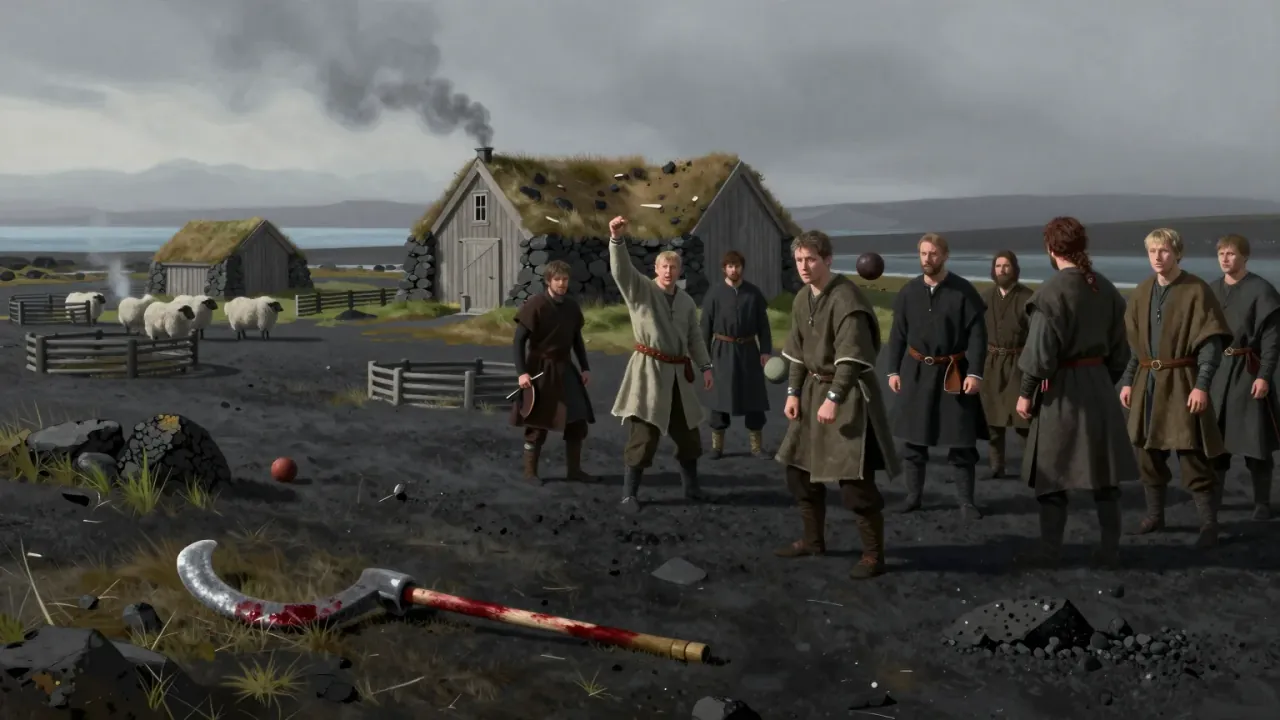
Robert Eggers’ The Northman adapts the Amleth legend into a stark, sensory-driven saga of fate and vengeance. Shot across Iceland and Northern Ireland, it follows Alexander Skarsgård’s Amleth as he fulfils a childhood oath to kill his uncle, played by Claes Bang. With Jarin Blaschke’s austere cinematography and Vessel’s drone-heavy score, the film prioritises ritual over psychology and texture over exposition. Though critically praised, it underperformed commercially and divides audiences on its emotional austerity.

13:00

The Passionate Friends

David Lean · 1949

David Lean’s 1949 adaptation of H. G. Wells’s novel follows Mary Justin, a woman caught between her husband Howard and her former lover Steven, as memory and present collide during a Swiss hotel stay. Anchored by Ann Todd’s restrained performance and Guy Green’s understated cinematography, it examines autonomy, loyalty, and the quiet erosion of self in bourgeois romance — not through drama, but through accumulation of small, unspoken truths.

13:00

The Piano

Jane Campion · 1993

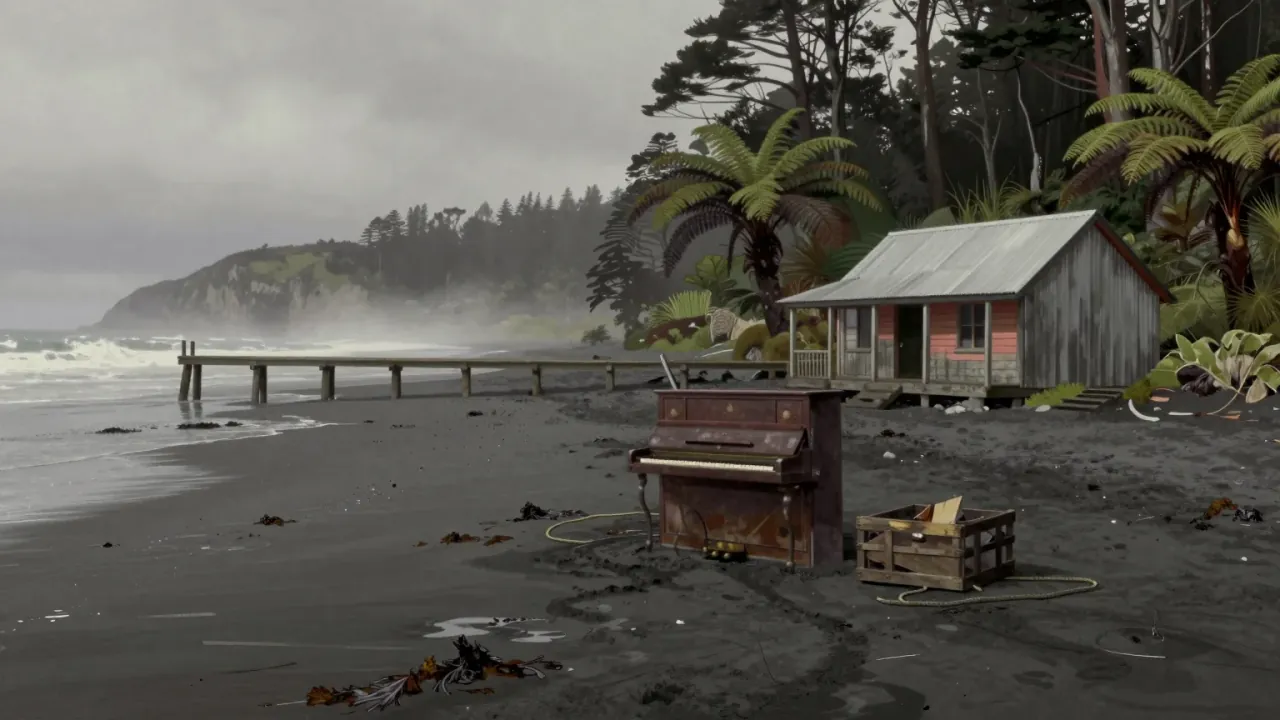
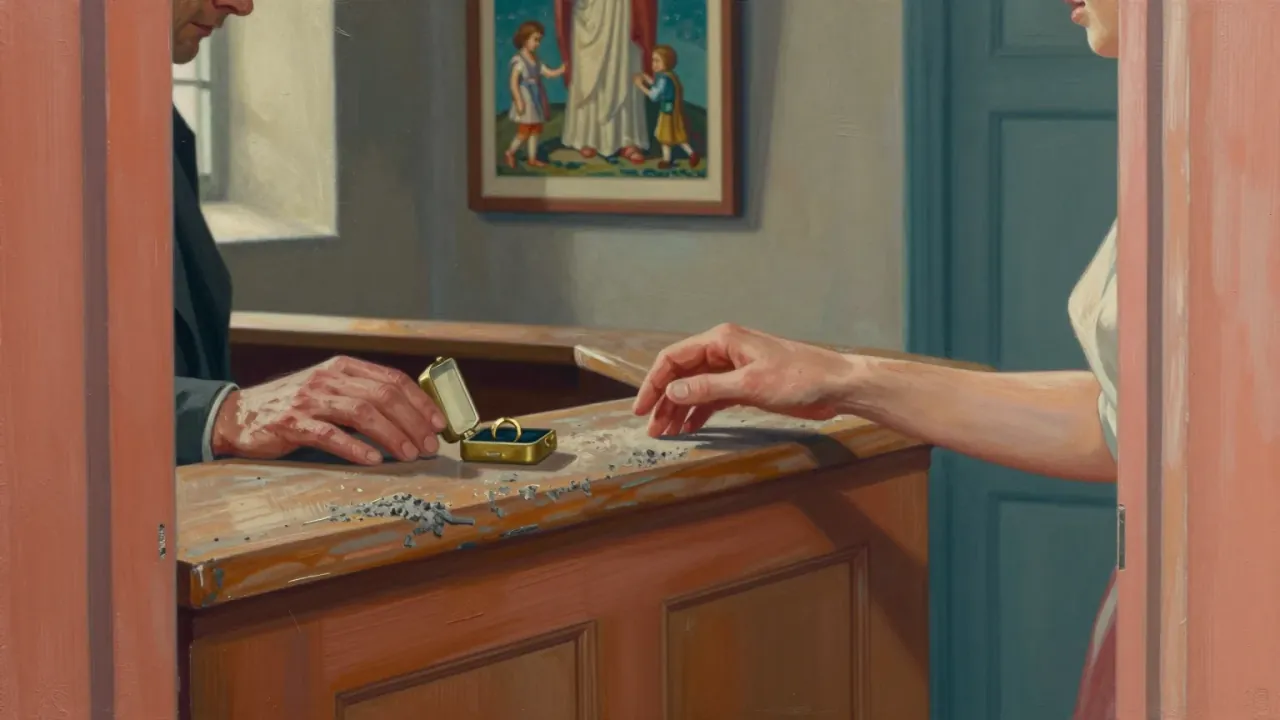
Jane Campion’s 1993 drama follows Ada McGrath, a mute Scottish woman who travels to colonial New Zealand for an arranged marriage, carrying only her daughter and a piano. When her instrument is abandoned on the beach, she negotiates its return with a neighbouring settler — a transaction that unravels into desire, betrayal, violence, and self-reclamation. Anchored by Holly Hunter’s physically exacting performance and Michael Nyman’s insistent score, the film renders interiority through gesture, sound, and resistance rather than speech.

13:00

The Power of the Dog

Jane Campion · 2021

Jane Campion’s 2021 adaptation of Thomas Savage’s novel is a slow-burning psychological drama set on a 1925 Montana ranch. Benedict Cumberbatch plays Phil Burbank, a rancher whose contempt for his brother’s new wife and her son masks deeper anxieties about masculinity, inheritance, and control. Shot by Ari Wegner in New Zealand, scored by Jonny Greenwood, and edited by Peter Sciberras, the film trades Western spectacle for interior tension — building dread through restraint, composition, and performance. It premiered at Venice, won Best Director there and at the Oscars, and received widespread critical acclaim for its formal discipline and thematic rigour.

13:00

The Remains of the Day

James Ivory · 1993

James Ivory’s 1993 adaptation of Kazuo Ishiguro’s novel follows Anthony Hopkins’ butler Stevens on a 1958 road trip to revisit his former housekeeper, Emma Thompson’s Miss Kenton. Interwoven flashbacks reveal their years serving Lord Darlington — a man whose misguided appeasement of Nazism corrodes both his reputation and Stevens’ sense of self. With muted cinematography, sparse music, and performances rooted in restraint, the film renders emotional life as gesture, memory as omission, and class as embodied discipline.

13:00

The Sound Barrier

David Lean · 1952

David Lean’s 1952 aviation drama follows a British aircraft magnate, his daughter, and two test pilots as they confront the physical and human limits of early jet flight. Written by Terence Rattigan and shot by Jack Hildyard, it balances procedural realism with restrained emotion, using sound, silence, and composition to convey the weight of progress. Though historically imprecise and structurally austere, its power lies in its unwavering focus on consequence over spectacle.

13:00

The Sound of Music

Robert Wise · 1965

Robert Wise’s 1965 musical adapts the Broadway hit into a 174-minute cinematic fable set in Salzburg: Julie Andrews as Maria, Christopher Plummer as Captain von Trapp, and their family’s flight from Nazi annexation. Shot on location with Ted McCord’s naturalistic cinematography and Richard Rodgers’ integrated score, it prioritises emotional continuity over psychological ambiguity. While its political simplification and runtime demand patience, its craft, sincerity, and structural confidence make it a durable artefact of mid-century humanism — not as history, but as enduring emotional syntax.

13:00

The State of Things

Wim Wenders · 1982

Wim Wenders’ 1982 Golden Lion winner follows a film crew stranded in Portugal when funding and film stock run out. Director Friedrich Munro travels to Los Angeles to find his missing producer, navigating a landscape of mobile homes, unpaid debts, and suspended creativity. Shot across Portugal and California with a mix of black-and-white and colour, and featuring cameos from Fuller, Corman and Kramer, it is a self-aware, deliberately unhurried meditation on the material conditions of filmmaking—and the quiet endurance required when nothing moves forward.

13:00

The Story of Qiu Ju

Zhang Yimou · 1992

Set in rural Shaanxi in 1992, Zhang Yimou’s The Story of Qiu Ju follows a pregnant peasant woman’s dogged pursuit of a simple apology from the village headman who injured her husband. Shot with documentary restraint and anchored by Gong Li’s understated performance, the film charts her passage through layers of China’s evolving legal bureaucracy — not as satire or protest, but as a precise, unsentimental study of how institutions absorb, deflect, and ultimately misinterpret human need.

13:00

The Terrorizers

Edward Yang · 1986

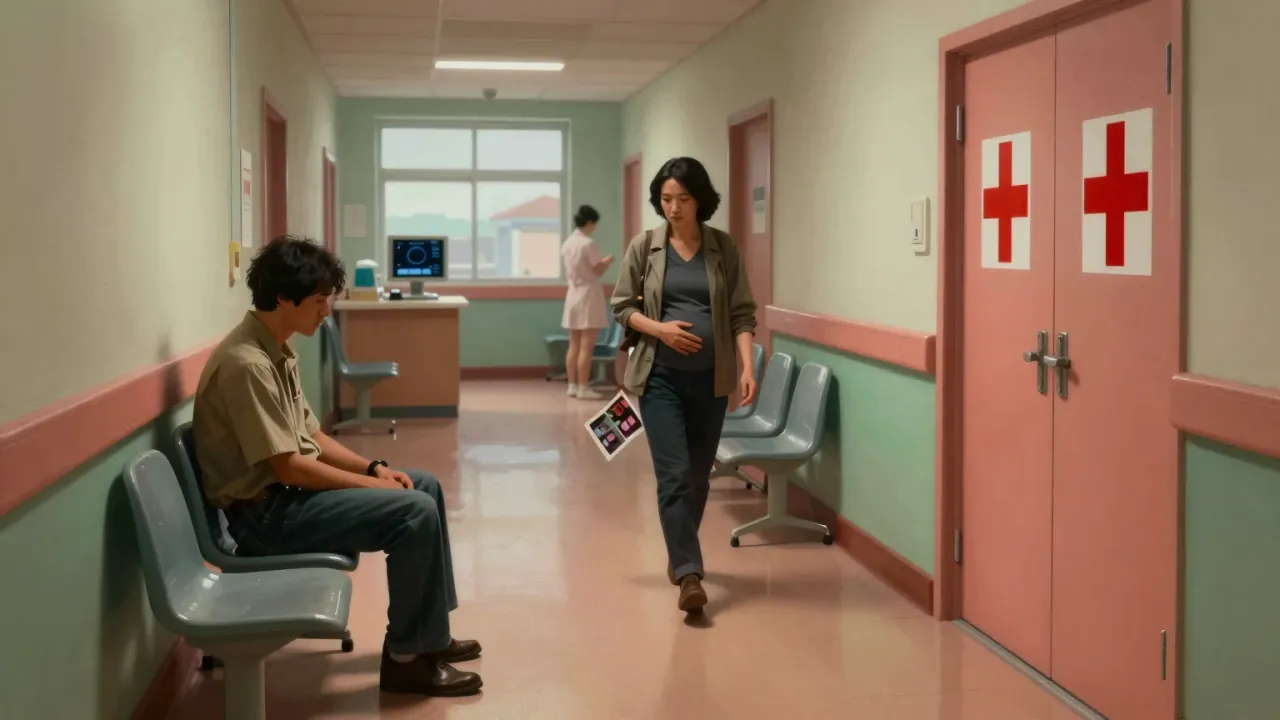
A 1986 Taiwanese drama by Edward Yang, The Terrorizers traces intersecting lives in Taipei — a depressed novelist, a photographer obsessed with a stranger, a hospital worker unraveling professionally and personally — bound by miscommunication, mediated images, and unspoken grief. Its structure resists resolution, favouring spatial and temporal disorientation over narrative closure.

13:00

The Thin Man

W. S. Van Dyke, Lesley Selander · 1934

The Thin Man (1934) is a Metro-Goldwyn-Mayer comedy-mystery starring William Powell and Myrna Loy as Nick and Nora Charles, a witty, well-heeled couple who stumble into a murder investigation during a Christmas trip to New York. Based on Dashiell Hammett’s novel and directed by W.S. Van Dyke, the film prioritises their effortless rapport over plot intricacy, using the detective framework to sustain banter, charm, and domestic ease. James Wong Howe’s cinematography and Van Dyke’s spontaneous direction reinforce its light, confident tone.

13:00

The Third Man

Carol Reed · 1949

Set in ruined, four-zone Vienna, Carol Reed’s 1949 noir follows an American writer searching for his vanished friend, only to uncover layers of betrayal, black-market complicity, and compromised ideals. Shot on location with stark, expressionist-influenced cinematography by Robert Krasker and scored entirely on zither by Anton Karas, it sustains a mood of exhausted ambiguity. Its power lies in what it withholds: explanation, catharsis, closure.

13:00

The Treasure of the Sierra Madre

John Huston · 1948

John Huston’s 1948 adaptation of B. Traven’s novel follows two American drifters and an ageing prospector searching for gold in the Mexican wilderness. As the find is made, trust fractures, language fails, and morality simplifies to survival. With restrained cinematography by Ted McCord, sparse scoring by Max Steiner, and performances anchored by Humphrey Bogart and Walter Huston, the film traces the slow, unsentimental collapse of shared reality under pressure. Shot on location in Mexico and California, it remains a benchmark of psychological realism — austere, exacting, and unyielding.

13:00

The Umbrellas of Cherbourg

Jacques Demy · 1964

Jacques Demy’s 1964 film tells the story of Geneviève and Guy, young lovers in Cherbourg separated by war and circumstance. Every line is sung to Michel Legrand’s continuous score; Jean Rabier’s cinematography uses saturated, deliberate colour; and the narrative unfolds across five years with formal rigour and emotional restraint. It won the Palme d’Or and remains a landmark of musical and arthouse cinema.

13:00

The Virgin Spring

Ingmar Bergman · 1960

Ingmar Bergman’s 1960 drama, adapted by Ulla Isaksson from a medieval Swedish ballad, follows a Christian landowner whose daughter is raped and murdered by three herdsmen. After they unknowingly seek shelter at his home, he kills them at dawn. At the site of her death, a spring emerges. Shot by Sven Nykvist in austere natural light, the film explores guilt, vengeance, and the silence of God — not as abstract ideas, but as physical, inescapable facts.

13:00

The Virgin Suicides

Sofia Coppola · 1999

Sofia Coppola’s 1999 debut adapts Jeffrey Eugenides’ novel into a hushed, amber-toned portrait of five teenage sisters in 1970s Detroit, observed from afar by neighbourhood boys. Shot by Edward Lachman and scored by Air, it builds mood through stillness, soft focus, and restrained performance — especially Kirsten Dunst’s Lux — avoiding psychology, exposition, or catharsis. Its power lies in what it withholds.

13:00

The Wailing

Na Hong-jin · 2016

Na Hong-jin’s 2016 Korean mystery-horror follows a rural policeman investigating inexplicable violence in his village. As explanations multiply — shamanic curse, demonic possession, epidemic, colonial panic — none cohere, and conviction becomes indistinguishable from delusion. With deliberate pacing, restrained performances, and Hong Kyung-pyo’s naturalistic cinematography, the film sustains dread through ambiguity rather than revelation. Its power lies in how thoroughly it models the exhaustion and danger of not knowing — and how easily certainty replaces it.

13:00

The Wedding Banquet

Ang Lee · 1993

Ang Lee’s 1993 film follows a gay Taiwanese man in Manhattan who marries a mainland Chinese woman to satisfy his parents and secure her US residency. When his parents arrive for the wedding banquet, the deception deepens — and so do the bonds between the three adults. Shot on location in New York with bilingual dialogue and understated performances, it balances comedy and pathos without resorting to caricature or easy resolution.

13:00

The Wizard of Oz

Victor Fleming, King Vidor · 1939

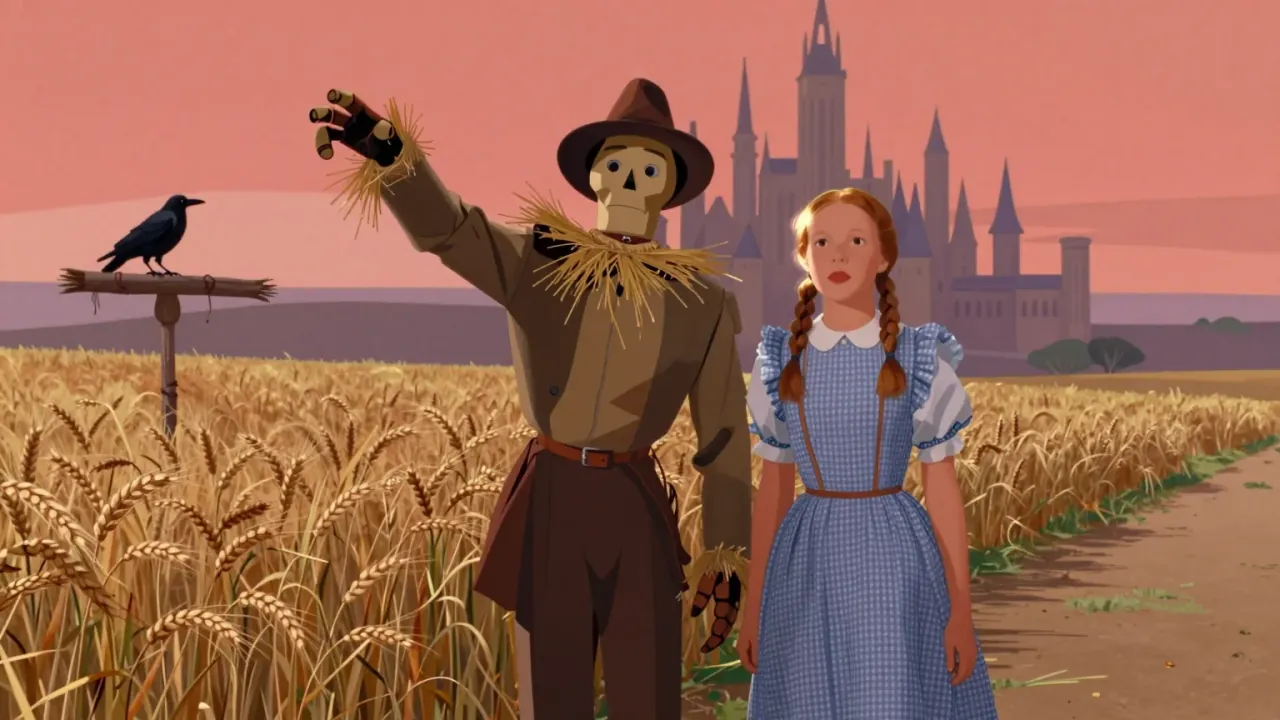
The Wizard of Oz (1939) is a Metro-Goldwyn-Mayer musical fantasy directed primarily by Victor Fleming, adapted from L. Frank Baum’s novel. Starring Judy Garland, it follows Dorothy’s journey from Kansas to Oz and back, using three-strip Technicolor, integrated song, and character-driven performance to explore competence, belonging, and self-recognition. Though framed as a dream, its power lies in the consistency of its emotional logic and the precision of its craft — from Harold Rosson’s cinematography to Harold Arlen’s score. It remains culturally central not as myth but as a sustained demonstration of how form and feeling can be made inseparable.

13:00

The Young Girls of Rochefort

Jacques Demy · 1967

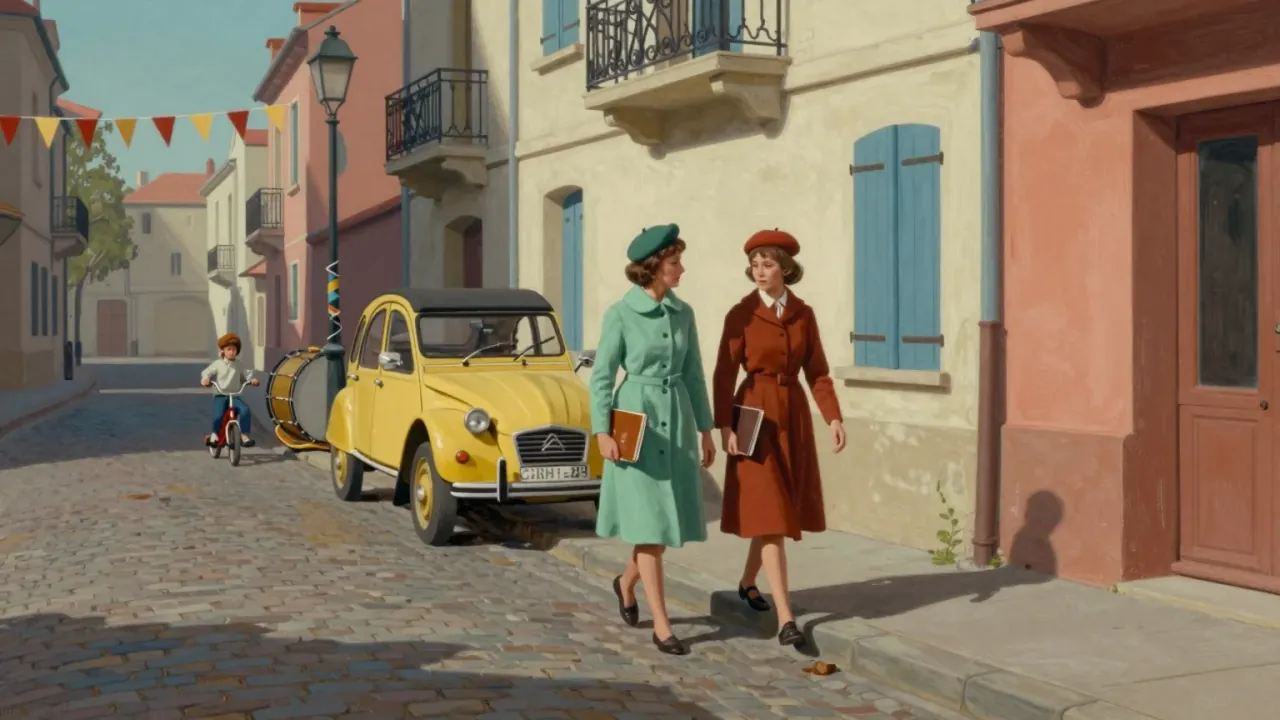
Jacques Demy’s 1967 musical follows twin sisters in the French port town of Rochefort over three days as a fair arrives, lovers circle, and artistic ambitions converge. With Ghislain Cloquet’s luminous cinematography and Michel Legrand’s intricate score, it builds emotion through repetition, colour, and quiet intention rather than plot turns — a formally rigorous, emotionally resonant portrait of longing held in balance.

13:00

They Live by Night

Nicholas Ray · 1948

Nicholas Ray’s 1948 debut follows a young convict and a service-station attendant who marry and flee across Depression-era America. Shot with quiet intensity by George E. Diskant and performed with understated gravity by Farley Granger and Cathy O'Donnell, it treats love and lawlessness as inseparable states — not as rebellion, but as the only possible response to a world that denies them personhood.

13:00

Thief

Michael Mann · 1981

Michael Mann’s 1981 debut follows Frank, a meticulous safecracker released from Joliet, as he builds a legitimate front, pursues a relationship with Jessie, and accepts one last job for a Chicago Outfit boss — only to discover that autonomy, like a safe, can be opened from the outside. Shot on location in Chicago and LA, with Tangerine Dream’s electronic score and Donald E. Thorin’s precise, low-light cinematography, it treats criminality as vocation and freedom as illusion.

13:00

Thirst

Park Chan-wook · 2009

Park Chan-wook’s 2009 Thirst reworks Zola’s Thérèse Raquin as a Korean Catholic vampire tragedy. Song Kang-ho plays a priest turned vampire after a failed virus experiment; his descent into bloodlust entangles him with Kim Ok-vin’s restless, trapped wife. Shot by Chung Chung-Hoon and scored by Jo Yeong-wook, it trades gothic tropes for moral gravity and domestic claustrophobia. It won the Jury Prize at Cannes and the Best Actress award at Sitges.

13:00

This Is Not a Film

Jafar Panahi, Mojtaba Mirtahmasb · 2011

Made under house arrest while awaiting the outcome of an appeal against a six-year prison sentence and twenty-year filmmaking ban, Jafar Panahi’s This Is Not a Film documents a single day in his Tehran apartment. Shot partly on iPhone and co-directed with Mojtaba Mirtahmasb, it blends self-portrait, legal testimony, and meta-cinematic reflection — all without scripted scenes or permitted production. It is a documentary of constraint that asserts continuity of vision, not protest of circumstance.

13:00

Thor: Ragnarok

Taika Waititi · 2017

Thor: Ragnarok (2017), directed by Taika Waititi, is the third Thor film in the Marvel Cinematic Universe. It follows Thor’s exile to the alien planet Sakaar, his gladiatorial duel with the Hulk, and his return to Asgard to stop Hela’s conquest. With vibrant cinematography by Javier Aguirresarobe, a synth-driven score by Mark Mothersbaugh, and performances led by Chris Hemsworth, Cate Blanchett, and Tessa Thompson, the film prioritises wit, pace, and visual invention over mythic solemnity. It grossed $854 million worldwide and received praise for its direction and energy, though some critics found its themes underdeveloped and its finale visually overwhelming.

13:00

Through a Glass Darkly

Ingmar Bergman · 1961

Ingmar Bergman’s 1961 chamber drama follows a family over twenty-four hours on a remote Swedish island, centring on Karin, a young woman recently released from psychiatric care. Harriet Andersson delivers a physically precise performance as her grip on reality frays, observed by her husband (Max von Sydow), novelist father (Gunnar Björnstrand), and teenage brother (Lars Passgård). Shot by Sven Nykvist with stark naturalism and scored with Bach’s cello suites, the film explores faith, exploitation, and the asymmetry of care—though its stated philosophy feels tacked on, its emotional precision remains unmatched.

13:00

Top Gun: Maverick

Joseph Kosinski · 2022

Top Gun: Maverick is a 2022 action film directed by Joseph Kosinski, starring Tom Cruise as Pete 'Maverick' Mitchell, now a test pilot tasked with training a new generation of naval aviators for a high-risk mission. Built around real-flight cinematography, disciplined editing, and a tightly structured narrative, it prioritises physical storytelling and emotional legibility over thematic ambiguity. It earned widespread critical praise, five major awards including an Oscar for Best Sound, and $1.44bn at the global box office.

13:00

Umberto D.

Vittorio De Sica · 1952

A retired Roman civil servant struggles to keep his room, his dignity, and his dog in post-war Italy. Directed by Vittorio De Sica and written by Cesare Zavattini, this 1952 neorealist drama uses non-professional actors, restrained cinematography, and a tightly focused narrative to depict ageing, dependency, and quiet endurance without sentiment or solution.