The shape of memory
Night Games is a Swedish psychological drama from 1966 that attempts to trace the formation of adult neurosis through fragmented, non-linear memory. It centres on Jan, a man returning to his childhood home with his fiancée, whose present-day unease triggers vivid recollections of adolescence under the care of emotionally volatile parents and a detached great-aunt. The film’s ambition lies in its structural risk: it refuses chronological coherence, instead layering past and present as overlapping sensory impressions — a child’s overhearing of adult conversation, the texture of wallpaper, the sound of a mother reading aloud while her son masturbates nearby. It does not seek explanation but exposure: of taboo desire, parental failure, and the violence of unprocessed grief. Mai Zetterling and David Hughes’ script treats memory not as narrative but as physiological residue — sticky, illogical, morally ambiguous. The film is not interested in redemption or resolution. Its project is diagnostic, not therapeutic; forensic, not forgiving. It asks the viewer to sit with discomfort without offering catharsis, let alone comfort. That intention is clear, consistent, and uncompromising across its 105 minutes. (158 words)
The look of it
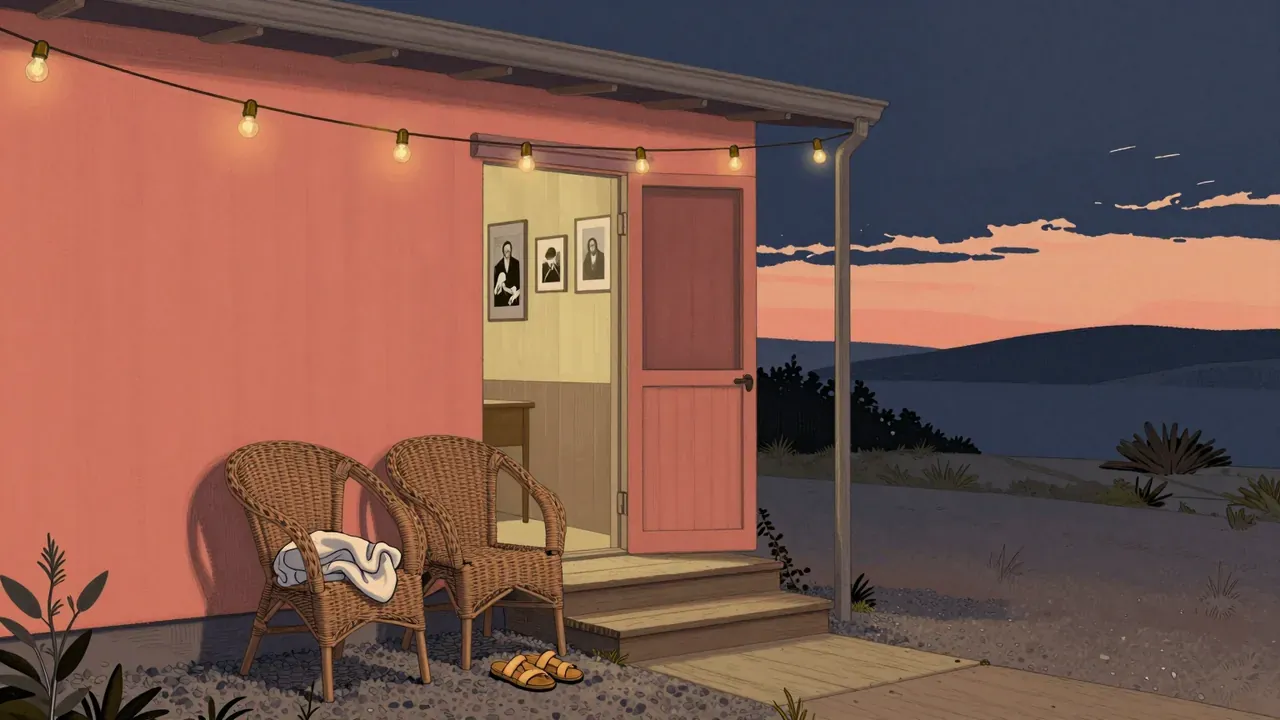
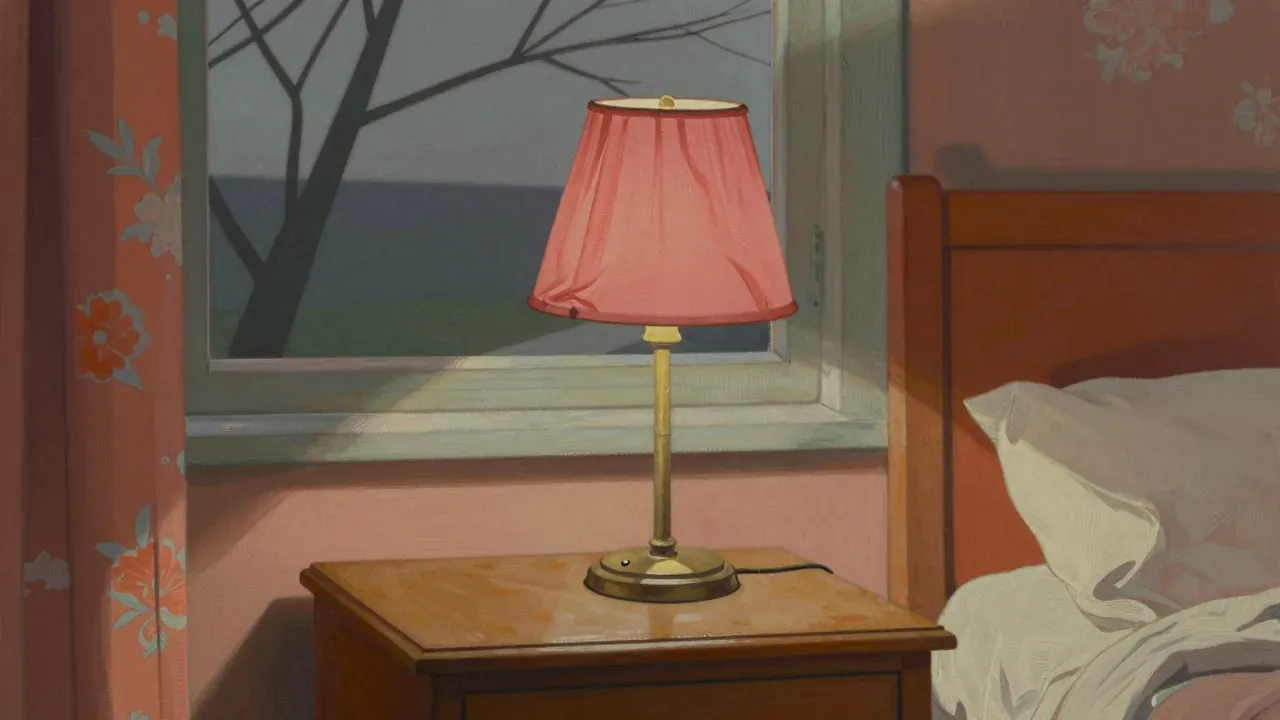
The story unfolds through juxtaposition rather than progression: adult Jan’s stiff silences mirror boy Jan’s mute observation; his fiancée Mariana’s growing distance echoes the mother Irene’s emotional withdrawal. Ingrid Thulin’s performance as Irene is calibrated in micro-gestures — a tilt of the head, a pause before laughter — that suggest both charisma and vacancy. Jörgen Lindström, aged twelve, conveys precocious unease without affectation; his stillness reads as absorption, not passivity. Rune Ericson’s cinematography avoids expressionist distortion, keeping interiors lit with naturalistic restraint — windows admit flat northern light, lamps cast shallow pools, shadows remain soft-edged and untheatrical. Georg Riedel and Jan Johansson’s score uses piano and brushed percussion to underscore tension without melodrama; silence is often longer and more charged than music. Paul Davies’ editing sustains disorientation without confusion: cuts between ages are signalled by costume and posture, not dissolves or voiceover. The craft serves the subject without embellishment — no flourish distracts from the slow accumulation of psychological detail. (159 words)
What sticks
What lands is the cumulative weight of domestic unease. The scene in which young Jan watches his mother give birth at home — her body arching on a sofa mid-party, guests murmuring in the next room — achieves horror not through shock but through tonal fidelity: the camera holds, the sound design muffles dialogue, the blood is muted, the stillborn child wrapped in plain cloth. Similarly effective is the recurring motif of bedtime stories read aloud while Jan masturbates — the contrast between maternal voice and private act is rendered without irony or judgment, making it more unsettling. The film’s refusal to moralise allows its most disturbing material to register as lived experience rather than provocation. Thulin’s Irene remains legible as both seductive and negligent, never reduced to archetype. The production design — worn furniture, floral wallpaper, unremarkable rooms — grounds the psychosexual material in tangible reality. This anchoring in the ordinary makes the interior life feel urgent and real, not abstract or clinical. The film earns its discomfort because it earns its specificity. (157 words)
Where it slips
What does not land is the framing device: adult Jan’s present-day storyline lacks the density or ambiguity of the flashbacks. His strained relationship with Mariana feels schematic, a functional conduit for memory rather than a fully realised dynamic. Keve Hjelm performs this role with quiet competence, but the script gives him little beyond reactive glances and withdrawn posture — he remains an aperture, not a character. The great-aunt Astrid, played by Naima Wifstrand, is underwritten: her strangeness is asserted but not dramatised, her presence more symbolic than active. Some transitions between time periods rely too heavily on visual repetition — a repeated gesture or object — which begins to feel like scaffolding rather than structure. The film’s resistance to exposition also risks opacity: viewers unfamiliar with mid-century Swedish bourgeois norms may miss the social critique embedded in Irene’s refusal of medical care or Bruno’s performative masculinity. And while the film avoids sensationalism, its unrelenting focus on psychic injury can flatten emotional range — moments of tenderness or dark humour are scarce, leaving the tone monochromatic over its full length. (159 words)
What it’s really about
The themes that matter are inheritance, not of property but of affect — how desire, neglect, and shame circulate across generations without consent. The film treats childhood not as innocence but as acute perception without context: Jan sees everything but understands nothing, and that gap becomes the site of lifelong disturbance. It interrogates motherhood as performance and peril — Irene’s allure is inseparable from her instability, her love from her self-absorption. The film also explores memory as somatic archive: trauma lives in posture, in vocal pitch, in the way a hand hovers near the mouth. There is no Freudian decoding here — no analyst, no confession, no ‘aha’ moment — only the persistent return of sensation. Sexuality is presented as ambient, not climactic: it permeates the air of the house, colours every interaction, yet remains unspoken, unacted upon beyond the boy’s solitary act. The film’s quietest theme is class: the family’s comfortable home, their parties, their access to culture, all serve to heighten the brutality of their emotional poverty. Privilege does not insulate from damage; it merely disguises it. (158 words)
Who it’s for
This film is for viewers who value psychological precision over narrative momentum, and who accept that some films diagnose rather than resolve. It suits those familiar with 1960s European art cinema — particularly the work of Bergman or Dreyer — and who do not require moral clarity or emotional release. It is not for viewers seeking plot-driven engagement, accessible character arcs, or tonal variety. Those who find prolonged immersion in unresolved tension exhausting will likely disengage before the final reel. Some critics have dismissed it as self-indulgent; others argue its restraint prevents exploitation. A viewer who values thematic rigour but dislikes formal austerity might find it alienating — the lack of musical punctuation, the refusal of close-ups at key moments, the deliberate pacing. It would not serve as an introduction to Zetterling’s work, nor to Swedish cinema of the period. Its value is cumulative and conditional: it rewards attention but offers no guarantees. (159 words)
Is it worth your time?
Yes, it is worth your evening — provided you arrive prepared for its terms. It is not entertainment in the conventional sense, but it is rigorously made, psychologically coherent, and formally controlled. Its power lies in what it withholds: no explanation, no absolution, no stylistic flourish to soften the blow. You leave with questions, not answers — about how memory functions, how desire forms, how families transmit damage without speaking it. Those who expect catharsis or closure may feel short-changed; those who trust ambiguity as a mode of truth will find it richly sustained. It is not for casual viewing, nor for background consumption. But for ninety minutes of focused attention, it repays with uncommon honesty. Its 1966 date matters: it arrives before therapy became cultural shorthand, before trauma was a genre. That historical positioning gives it a rare kind of urgency — not dated, but anchored. (159 words)