The premise as provocation
Orlando, My Political Biography is a French documentary that reworks Virginia Woolf’s 1928 novel Orlando: A Biography as a collective political act. Paul B. Preciado does not illustrate the book; he invites 26 trans and non-binary participants—aged eight to seventy—to each embody Orlando, staging their own transitions in dialogue with Woolf’s gender-shifting protagonist. The film treats the novel not as source material but as a scaffold for testimony, reenactment, and speculative world-building. It seeks to displace the singular biographical voice with multiplicity, to replace literary metaphor with lived condition, and to argue that gender transition is inseparable from legal, medical, pharmaceutical, and familial power structures. Preciado frames this not as representation but as rehearsal: a way of rehearsing existence under hostile conditions. The casting process itself becomes part of the film’s method, foregrounding selection, visibility, and vulnerability as political choices. It is neither a literary adaptation nor a conventional portrait of trans life, but a hybrid form that insists biography is always already political—and always already plural. (158 words)
The look of it
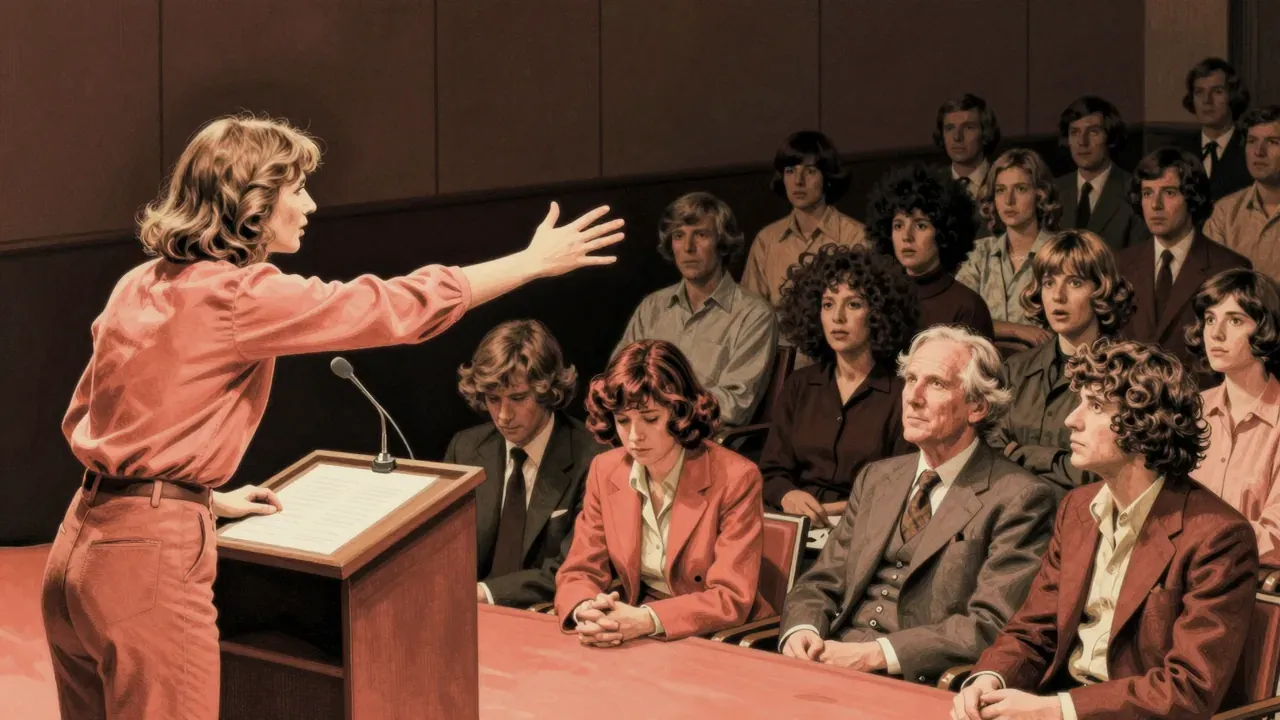
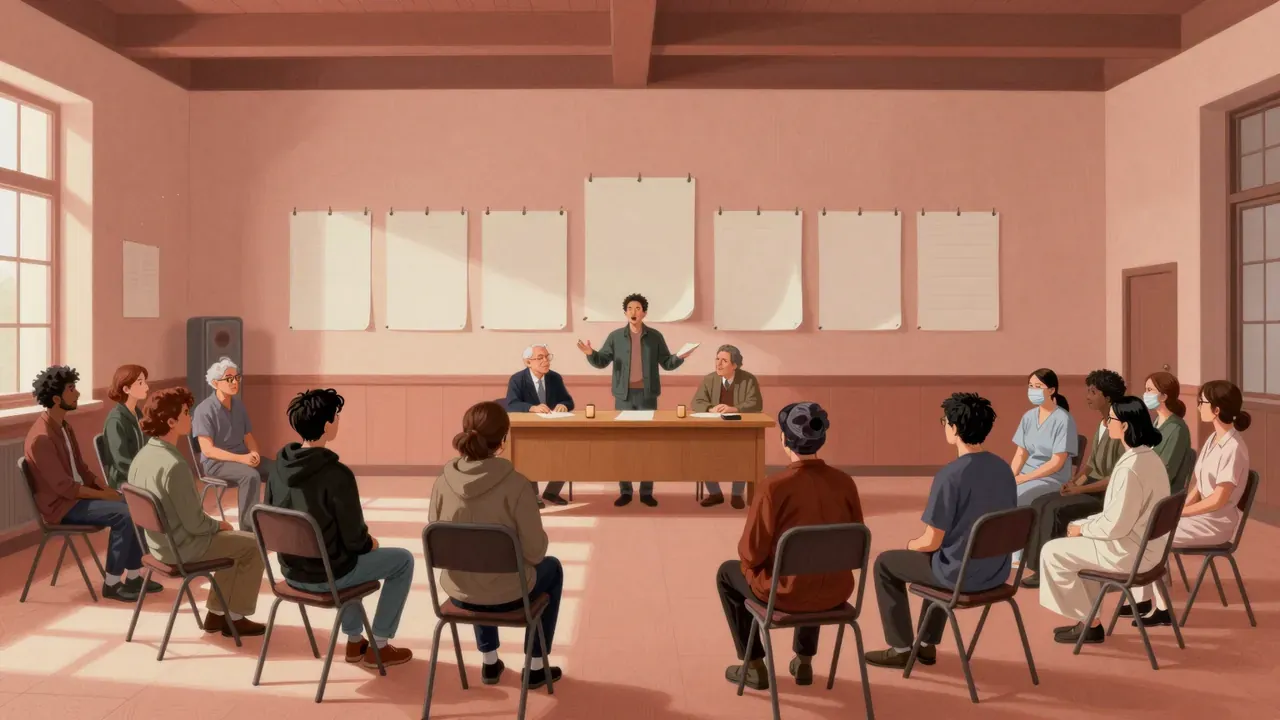
The film unfolds through three interwoven registers: direct address, staged scenes, and archival or found footage. Victor Zébo’s cinematography favours medium shots and shallow focus, keeping faces and gestures legible without over-stylising; interiors are lit with domestic naturalism, exteriors with unvarnished daylight. Yotam Ben-David’s editing avoids linear chronology, cutting between childhood memories, hormone therapy consultations, courtroom simulations, and mythic tableaux—Tristana Gray Martyr as Goddess of Hormones, Miss Drinks as Goddess of Insurrection—without explanation or transition. Performances are deliberately uneven: some participants speak with quiet precision, others gesture broadly or break into song; Preciado appears both as narrator and participant, his own body one among many Orlandos. There is no voice-over exposition; context arrives through title cards, handwritten text, or brief intertitles quoting Woolf or contemporary law. The craft resists polish: costumes are assembled, not designed; sets are sparse or borrowed; sound mixes diegetic noise with layered voiceover. This roughness is structural, not incidental—it mirrors the provisional, contested nature of identity formation under institutional constraint. (159 words)
The rhythm of testimony
What lands is the cumulative weight of specificity. When an eight-year-old speaks of being misgendered at school, or a seventy-year-old describes navigating retirement paperwork after transition, the film grounds abstraction in bureaucratic and bodily detail. The decision to cast across generations—rather than selecting a ‘representative’ cohort—produces unexpected resonances: a child’s fluency with pronouns next to an elder’s cautious relearning of self-naming. The goddess sequences work not as allegory but as ritual interruption: they name forces that shape transition—pharmaceutical control, state surveillance, queer joy—as tangible presences. Preciado’s refusal to separate personal narrative from structural analysis means every anecdote carries policy weight: a story about a clinic’s waiting room becomes a critique of medical gatekeeping; a description of family estrangement doubles as commentary on kinship law. The film’s rhythm—slow, repetitive, occasionally abrupt—mimics the exhaustion and persistence of daily resistance. It avoids uplift, yet sustains gravity without solemnity. The final sequence, where multiple Orlandos walk through a sunlit forest path, lands not as resolution but as shared orientation: a direction, not a destination. (157 words)
Where the staging holds
What does not land is the film’s reliance on theatrical framing for conceptual weight. Some staged scenes—particularly courtroom simulations and mythic tableaux—feel conceptually clear but dramatically inert, their symbolism too literal to generate surprise or ambiguity. The repetition of certain motifs—Orlando walking, Orlando writing, Orlando facing a mirror—accumulates meaning but risks monotony when sustained across extended passages. The absence of contextualising narration leaves gaps that may frustrate viewers unfamiliar with French trans healthcare policy or the history of psychiatric classification; the film assumes a baseline of political literacy it does not supply. Its rejection of traditional documentary exposition means moments of historical reference—such as references to the DSM or French civil code—arrive without anchoring, demanding prior knowledge rather than building it. The casting of Pierre et Gilles as doctors, while visually striking, adds little beyond decorative irony; their presence feels like citation rather than contribution. And though the film’s commitment to non-professional performance is ethically coherent, it occasionally sacrifices clarity: overlapping voices in group scenes blur individual testimony, turning plurality into murk. These are not flaws of intent, but of calibration—moments where intellectual rigour outpaces affective reach. (159 words)
The infrastructure of identity
The themes that matter are not gender per se, but the infrastructure of gender: how law codifies bodies, how medicine regulates access, how language assigns legitimacy, how capital shapes care. The film treats transition as a site where colonial logic, pharmaceutical monopoly, psychiatric authority and familial expectation converge—not as abstract forces, but as documents, prescriptions, court rulings, and voicemails. It insists that ‘male’ and ‘female’ are fictions only insofar as all political categories are fictions: functional, enforced, mutable. Race and class appear not as add-ons but as constitutive—Naëlle Dariya’s account of migration and documentation, Vanasay Khamphommala’s reflections on diasporic identity, intersect with gender without being subsumed by it. Poetry matters here not as ornament but as survival strategy: Woolf’s prose becomes a vessel for otherwise unspeakable experience, just as Preciado’s staging becomes a way to rehearse autonomy. The film’s central proposition—that transition is inseparable from insurrection—is not rhetorical. It locates rebellion in hormone regimens, in name changes, in refusing diagnosis, in choosing who witnesses your becoming. This is not identity politics as branding, but as embodied, collective, ongoing labour. (158 words)
Who it meets halfway
This film is for viewers who approach documentary as argument, not illustration—who expect films to demand engagement with structure, not just subject. It suits those familiar with feminist and trans theory, or willing to meet its references halfway. It is for people who value slowness as rigour, repetition as emphasis, fragmentation as fidelity to lived complexity. It is not for viewers seeking narrative resolution, biographical closure, or explanatory clarity. Those who require chronological scaffolding, voice-of-God narration, or psychological portraiture will find it withholding. It is also not for audiences who conflate accessibility with simplification: the film refuses to translate its political grammar into neutral terms. A viewer who expects trans stories to serve as empathy training, rather than as claims on power, will be unsettled by its refusal to comfort. That discomfort is deliberate. The film would change its verdict if it offered more scaffolding for its legal and medical references—or if it relaxed its formal discipline to allow greater emotional variance—but doing so would compromise its core thesis: that form must follow function, and function here is resistance. (159 words)
What remains after the credits
Yes, it is worth your evening—not as diversion, but as recalibration. It asks ninety-eight minutes of attention not to consume a story but to inhabit a methodology: how to think collectively, how to cite without repeating, how to stage what cannot yet be legislated. Its value lies in its refusal to resolve, its insistence on holding contradiction—joy and exhaustion, myth and bureaucracy, poetry and prescription—in the same frame. It rewards patience, not passive viewing. Those who watch for craft will notice Zébo’s restrained lighting, Ben-David’s rhythmic cuts, the deliberate flatness of certain compositions. Those who watch for ideas will find Woolf reactivated, not archived. It is not ‘entertaining’ in the conventional sense, but it is galvanising: it leaves space for thought, not just reaction. A viewer who leaves unchanged has not watched closely enough. The film’s success is not in persuasion but in precision—and its precision is exacting. To call it ‘important’ would be to reduce it to utility; it is better described as necessary: a document of how political imagination takes shape, one body, one voice, one Orlando at a time. (158 words)