filmbriefs
Newest

All briefs

2035 briefs · 26452 min · 673–768 on page 8 of 22
13:00

Madonna of the Seven Moons

Arthur Crabtree, Roland Pertwee, Margery Lawrence · 1945

Madonna of the Seven Moons (1945) is a Gainsborough Pictures drama starring Phyllis Calvert as Maddalena Labardi, a woman whose childhood trauma manifests as a second personality. Set across three decades in Italy, it uses stark visual contrasts, controlled performances, and a tightly wound script to enact — not explain — dissociation. Jack E. Cox’s cinematography and Hans May’s score reinforce its rhythmic, ceremonial structure. Though dated in its psychology and reductive in its portrayal of marginal figures, it remains a lucid, self-contained example of British studio melodrama at its most assured.
13:00

Mafioso

Alberto Lattuada · 1962

A Sicilian factory manager returns home to Sicily with his northern wife, only to be quietly recruited by the local don to carry out a hit in New York. He completes the task and resumes his life in Milan as if nothing happened. Directed by Alberto Lattuada in 1962, Mafioso uses deadpan realism and structural irony to examine complicity, continuity, and the banality of organised power.

13:00

Magellan

Lav Diaz · 2025

Lav Diaz’s *Magellan* is a 156-minute Portuguese-language historical epic filmed in the Philippines, Portugal and Spain. It follows Ferdinand Magellan’s expedition not as triumph but as narrative construction, proposing that Datu Lapu-Lapu was a myth invented by Rajah Humabon to resist conversion and consolidate authority. Starring Gael García Bernal and Hazel Orencio, the film uses tableau vivant cinematography, minimal dialogue and rigorous historical research to interrogate how power shapes memory. It premiered at Cannes 2025 and was selected as the Philippines’ Oscar submission.

13:00

Magnificent Obsession

Douglas Sirk · 1954

Douglas Sirk’s 1954 Magnificent Obsession follows a reckless playboy who, after inadvertently causing a doctor’s death, dedicates himself to healing and love as atonement. With Jane Wyman and Rock Hudson, it renders ethical transformation through gesture, silence, and recurring visual motifs — water, light, thresholds — rather than exposition or psychology. Its power lies in structural rigour, not realism.

13:00

Mahanagar

Satyajit Ray · 1963

Satyajit Ray’s 1963 Bengali drama Mahanagar follows Arati, a Calcutta housewife who becomes a door-to-door saleswoman to support her extended family. As her earnings reshape domestic authority and challenge patriarchal norms, the film traces the subtle, irreversible recalibration of dignity, dependence and decision-making — not through polemic, but through gesture, silence and economic fact.

13:00

Mahjong

Edward Yang · 1996

Edward Yang’s 1996 Mahjong is a Taipei-set ensemble comedy about a drifting youth gang, a French woman searching for an interior designer, and a soothsayer whose predictions come true only because others act on them. Conducted almost entirely in English, it treats crime, romance, and superstition as interchangeable social scripts — less a satire of greed than a demonstration of how greed, once ambient, ceases to be legible as motive.

13:00

Maidstone

Norman Mailer · 1970

Norman Mailer’s 1970 independent film Maidstone stars him as a narcissistic filmmaker-politician shooting a brothel drama on his East Hampton estate. Shot over five days with no script, handheld cameras, and improvised performances — including a real, bloody fight with Rip Torn — it attempts a radical critique of media, power and ego. Its ambition is structural: to make authority visible by dismantling control. But its execution exposes the limits of that vision — especially in its treatment of women and race. Though obscure for decades, it remains a singular, uncomfortable artefact of late-1960s American cultural crisis.

13:00

Maîtresse

Barbet Schroeder · 1975

Barbet Schroeder’s 1975 French film Maîtresse follows Olivier, a young man drawn into the life of Ariane, a professional dominatrix. Shot by Néstor Almendros with clinical precision and performed with deliberate reserve by Gérard Depardieu and Bulle Ogier, it treats BDSM not as spectacle but as vocation — a world of appointments, plumbing repairs, bank deposits, and unspoken dependencies. Its power lies in restraint: no moral framing, no psychological exposition, no tonal escalation. Controversial on release for its unsimulated acts and unflinching gaze, it remains a singular exercise in cinematic neutrality.

13:00

Major Barbara

Gabriel Pascal · 1941

Gabriel Pascal’s 1941 adaptation of George Bernard Shaw’s Major Barbara is a rigorously faithful, studio-bound rendering of the 1905 play. Starring Wendy Hiller and Robert Morley, it stages a moral contest between Salvation Army idealism and industrial pragmatism, filmed in London during The Blitz. Ronald Neame’s cinematography and William Walton’s score serve the text, not the image. It is talk-driven, structurally intact, and intellectually uncompromising — a rare case where fidelity is both method and meaning.

13:00

Make Way for Tomorrow

Leo McCarey · 1937

Make Way for Tomorrow (1937), directed by Leo McCarey, follows Barkley and Lucy Cooper, an elderly couple forced to separate after losing their home. With no room for both in any of their children’s houses, they spend their final days together wandering the city before boarding trains to different states. Shot in restrained, unadorned style, it avoids sentimentality while building unbearable emotional pressure through quiet observation and unwavering performances.

13:00

Mala Noche

Gus Van Sant · 1985

Gus Van Sant’s 1985 debut, shot in black-and-white 16 mm in Portland, follows Walt, a gay shop clerk, as he pursues an unreciprocated relationship with two young Mexican men. Built on asymmetry — of age, language, money, and immigration status — the film avoids exposition and resolution, favouring quiet observation and emotional restraint. Its power lies in what it withholds: explanation, translation, catharsis.

13:00

Malcolm X

Spike Lee · 1992

Spike Lee’s 1992 Malcolm X follows Denzel Washington’s portrayal of the civil rights leader across three decades — from street hustler to Nation of Islam minister to international human rights advocate. Built from Alex Haley’s Autobiography and shaped by Lee’s structural rigour, the film refuses simplification, holding contradiction without resolution. Ernest Dickerson’s cinematography, Terence Blanchard’s score, and Barry Alexander Brown’s editing sustain its 201-minute arc with discipline. It is less a tribute than a reckoning: dense, demanding, and deliberately unhurried.

13:00

Mamma Roma

Pier Paolo Pasolini · 1962

Pier Paolo Pasolini’s 1962 drama follows Anna Magnani as a former sex worker striving to secure a respectable future for her teenage son in Rome. When her past resurfaces, their fragile new life unravels. Shot on location near the Appian Way with non-professional actors and a stark, frontal visual style, the film merges neorealist texture with baroque moral gravity. Its power lies in its refusal of catharsis or explanation — grief, shame, and social immobility settle like dust, unshaken.

13:00

Man Bites Dog

Rémy Belvaux, Benoît Poelvoorde, André Bonzel · 1992

Man Bites Dog (1992) is a Belgian black-and-white mockumentary in which filmmakers follow a charismatic serial killer, recording his crimes and monologues. Directed, written and performed by Rémy Belvaux, André Bonzel and Benoît Poelvoorde, it uses fly-on-the-wall conventions to trace the crew’s descent from observers to accomplices. Shot on 16 mm with no score, it refuses catharsis or explanation, instead exposing how documentary aesthetics naturalise atrocity. It won the Sitges Best Feature award and faced bans in multiple countries for its unflinching depiction of sexual and physical violence.

13:00

Man Is Not a Bird

Dušan Makavejev · 1965

Dušan Makavejev’s 1965 debut follows two parallel lives in industrial Yugoslavia: an engineer’s brief affair with a hairdresser, and a miner’s string of domestic and legal mishaps. Shot with unadorned realism by Tomislav Pinter and scored sparingly by Petar Bergamo, the film treats both stories with equal, unsentimental attention. Its power lies in restraint — in glances, silences, and the quiet friction between expectation and desire — not in plot or polemic.

13:00

Man Push Cart

Ramin Bahrani · 2005

Man Push Cart (2005) is a spare, observant American drama about Ahmad, a Pakistani immigrant who sells coffee and bagels from a pushcart in Midtown Manhattan. Directed and written by Ramin Bahrani, it follows a week in his life — marked by physical labour, quiet encounters, and unspoken grief — using natural light, non-professional acting, and minimal music. It avoids exposition, melodrama, and resolution, favouring duration and detail as tools of empathy.

13:00

Mandabi

Ousmane Sembène · 1968

Ousmane Sembène’s 1968 Wolof-language debut follows Ibrahima Dieng, an illiterate Dakar resident, as he attempts to collect a money order from his nephew in Paris. Blocked at every turn by identity requirements, administrative fees, and familial obligations, he sinks deeper into debt — culminating in theft by a relative. Shot with documentary restraint and rooted in Senegalese social reality, Mandabi is a foundational work of African cinema that treats bureaucracy as violence and language as power.

13:00

Manon des Sources

Claude Berri · 1986

A 1986 French drama, directed by Claude Berri and adapted from Marcel Pagnol’s novel, concluding the story begun in Jean de Florette. Set in rural Provence ten years later, it follows Manon Cadoret as she uncovers the truth behind her father’s death and orchestrates a slow, water-based reckoning against those who ruined him. Starring Yves Montand, Daniel Auteuil, and Emmanuelle Béart, it is a formally restrained, morally exacting film about inheritance, silence, and the physical reality of justice.

13:00

Marius

Alexander Korda · 1931

Marius (1931), directed by Alexander Korda from Marcel Pagnol’s play, is the first film of the Marseille Trilogy. Set in a waterfront bar in pre-war Marseille, it traces Marius’s conflict between love for Fanny and longing for the sea. With restrained performances, naturalistic lighting by Theodore J. Pahle, and dialogue rooted in subtext, it prioritises emotional authenticity over plot mechanics. Though structurally dependent on coincidence, its power lies in specificity: gesture, silence, and the quiet gravity of ordinary choice.

13:00

Marketa Lazarová

František Vláčil · 1967

Marketa Lazarová (1967), directed by František Vláčil, is a Czechoslovak arthouse drama adapted from Vladislav Vančura’s novel. Set in early 13th-century Bohemia, it follows the collision of two warring clans amid the violent rise of Christian authority. Shot in stark black-and-white by Beda Batka over 548 days in freezing conditions, its 162-minute runtime sustains an immersive, tactile world built on repetition, silence, and fractured chronology — not exposition. Zdeněk Liška’s dissonant score and Theodor Pištěk’s austere costumes reinforce its refusal of narrative ease. Though critically revered — voted the greatest Czech film in 1998 — it demands patience and rewards it with unparalleled sensory gravity.

13:00

Marriage Story

Noah Baumbach · 2019

Marriage Story follows a New York theatre director and his actress wife as their amicable separation hardens into a bi-coastal custody battle. Written and directed by Noah Baumbach, it stars Adam Driver and Scarlett Johansson, with Laura Dern winning an Oscar for her turn as a formidable divorce lawyer. Shot by Robbie Ryan and edited by Jennifer Lame, it avoids melodrama in favour of procedural realism and emotional granularity — tracking how love endures as habit, memory, and quiet gesture long after the legal terms are settled.

13:00

Masculin Féminin

Jean-Luc Godard · 1966

Jean-Luc Godard’s 1966 Masculin Féminin follows Paul—a young idealist navigating love, work, and politics in Paris—as a loose sequence of interviews, encounters, and interruptions. Shot in black-and-white with natural light and minimal crew, it treats youth culture as a field of study, not a story. Its structure mimics opinion polling: questions posed, answers recorded, conclusions withheld. Starring Jean-Pierre Léaud, Chantal Goya, Marlène Jobert, and Catherine-Isabelle Duport, it remains one of Godard’s most formally rigorous and thematically restless works.

13:00

Matewan

John Sayles · 1987

John Sayles’s 1987 drama reconstructs the 1920 Matewan coal strike in West Virginia with forensic attention to economic detail, regional speech, and collective agency. Shot on location with Haskell Wexler’s naturalistic cinematography and Mason Daring’s period-accurate score, it follows union organiser Joe Kenehan as he navigates racial division, corporate espionage, and escalating violence — culminating in the historic Battle of Matewan. The film avoids hero worship, instead distributing moral weight across miners, widows, preachers, and lawmen. Though critically lauded and preserved in the National Film Registry, its deliberate pace and structural complexity make it demanding but rewarding viewing.

13:00

Mauvais sang

Leos Carax · 1986

Leos Carax’s 1986 film sets a near-future Paris where a mysterious illness kills those who have sex without emotional connection. A teenage boy is drawn into a heist for a forbidden serum, falling for his employer’s lover and confronting the cost of feeling—or refusing to. Stylised, sombre and physically intense, it privileges mood, gesture and musical counterpoint over exposition or worldbuilding.

13:00

Mayerling

Anatole Litvak · 1936

Anatole Litvak’s 1936 Mayerling is a French historical drama starring Charles Boyer and Danielle Darrieux, adapted from Claude Anet’s novel Idyll’s End. Set in late-19th-century Vienna, it traces Crown Prince Rudolf’s estrangement from duty and his fatal relationship with Baroness Marie Vetsera. Shot in restrained, underlit interiors by Armand Thirard and scored by Honegger, Jaubert and Tchaikovsky, the film avoids melodrama in favour of cumulative emotional weight. Though criticised in 1936 for its muted politics and ambiguous ending, its coherence, precision and formal discipline make it a distinctive artefact of interwar European arthouse cinema.

13:00

McCabe & Mrs. Miller

Robert Altman · 1971

Robert Altman’s 1971 film follows a gambler and a madam building a brothel in a rain-lashed Pacific Northwest boomtown—only to face absorption by corporate interests. Shot in British Columbia with Vilmos Zsigmond’s muted cinematography and scored with Leonard Cohen’s songs, it rejects Western conventions in favour of ambient realism, overlapping sound, and structural patience. Its power lies in accumulation, not climax.

13:00

Me and You and Everyone We Know

Miranda July · 2005

Miranda July’s 2005 debut follows a shoe salesman and a performance artist navigating loneliness, miscommunication, and tentative connection in suburban Los Angeles. Shot with quiet precision and performed with deliberate restraint, it builds meaning through accumulated detail rather than plot turns. Its romance is structural, not sentimental; its comedy arises from behavioural accuracy, not punchlines.

13:00

Mean Streets

Martin Scorsese · 1973

Martin Scorsese’s 1973 breakthrough follows Charlie, a young Italian-American in New York’s Little Italy, torn between Catholic guilt, Mafia duty, and loyalty to his self-destructive friend Johnny Boy. Shot on a $500,000 budget with documentary grit and improvised intensity, it features defining early performances by Harvey Keitel and Robert De Niro. Its moral density, urban texture, and formal daring marked the arrival of a major American filmmaker — and reshaped decades of screen storytelling.

13:00

Meantime

Mike Leigh · 1983

Mike Leigh’s 1983 Meantime observes four days in an East London working-class family amid rising unemployment and social fragmentation. With Tim Roth, Phil Daniels, Gary Oldman, and Pam Ferris, it uses rigorous rehearsal-based performance and unadorned cinematography to render austerity as atmosphere, not argument — a precise, unsentimental study of endurance in the early Thatcher years.

13:00

Medea

Pier Paolo Pasolini · 1969

Pier Paolo Pasolini’s 1969 Medea stars Maria Callas in her sole film role, adapting Euripides’ play as an anthropological re-enactment rather than a psychological drama. Shot across Turkey, Syria, and Italy, it uses distinct colour schemes, non-Western music, and ritual pacing to embody three civilisations — Colchis, Iolcus, and Corinth — as competing cosmologies. Callas’s Medea is a force of nature, her infanticide a final assertion of sovereignty over meaning in a world that has abandoned her epistemology.

13:00

Medicine for Melancholy

Barry Jenkins · 2008

Barry Jenkins’ 2008 debut follows Micah and Jo, two Black San Franciscans, over one day of conversation, wandering, and quiet confrontation. Shot in desaturated tones by James Laxton and edited by Nat Sanders, it uses minimal narrative scaffolding to explore identity, gentrification, and the unspoken tensions of interracial dating and cultural assimilation in a city where Black residents make up just seven percent of the population.

13:00

Medium Cool

Haskell Wexler · 1969

Haskell Wexler’s 1969 film merges scripted drama with documentary footage shot during the 1968 Democratic National Convention riots in Chicago. It follows a television cameraman who begins to question his role in recording — rather than intervening in — social crisis. Shot in cinéma vérité style, with minimal artifice and deliberate genre blurring, it interrogates media complicity, surveillance, and the ethics of observation. Though its romance and character arcs remain deliberately thin, its formal rigour and historical immediacy give it enduring force.

13:00

Meghe Dhaka Tara

Ritwik Ghatak · 1960

Ritwik Ghatak’s 1960 Bengali drama Meghe Dhaka Tara follows Nita, a young refugee woman in Calcutta whose relentless self-sacrifice sustains her displaced family until her body gives way. Shot in muted tones by Dinen Gupta, scored by Jyotirindra Moitra, and anchored by Supriya Devi’s restrained performance, it frames Partition not as history but as lived syntax — one that assigns value, defers futures, and naturalises extraction. Its power lies in accumulation, not climax.

13:00

Memories of Underdevelopment

Tomás Gutiérrez Alea · 1968

Tomás Gutiérrez Alea’s 1968 drama follows Sergio, a Havana intellectual who stays behind after the Revolution while his family flees. Narrated by Sergio himself, the film interweaves his relationships, memories, and political observations with documentary footage from the era. Shot economically and with formal rigour, it presents alienation not as existential angst but as the quiet persistence of privilege amid upheaval.

13:00

Memory for Max, Claire, Ida and Company

Allan King · 2005

Memory for Max, Claire, Ida and Company (2005) is a Canadian documentary by Allan King observing residents with dementia at Toronto’s Baycrest Health Sciences. Eschewing narration, interviews, or medical context, it relies on sustained observation, ambient sound, and unhurried editing to portray daily life with quiet rigour. The film premiered at TIFF 2005, was broadcast by TVOntario, and shortlisted for multiple Gemini Awards. It functions less as advocacy or education than as an ethical act of attention — one that asks viewers to recalibrate how they perceive continuity, agency, and personhood when memory changes shape.

13:00

Menace II Society

Allen Hughes, Albert Hughes · 1993

Menace II Society follows Caine Lawson through adolescence in Watts, Los Angeles, as he moves from witness to participant in cycles of violence, grief, and survival. Directed by Allen and Albert Hughes in their debut, it avoids moral framing, instead tracing how environment, inheritance, and constrained choice shape a life. With Tyrin Turner, Larenz Tate, and Jada Pinkett Smith, and shot by Lisa Rinzler, it builds tension through restraint — in performance, editing, and score — culminating in a conclusion that feels inevitable, not sensational.

13:00

Merrily We Go to Hell

Dorothy Arzner · 1932

Dorothy Arzner’s 1932 Paramount drama follows a Chicago reporter’s descent into alcoholism and infidelity, and his wife’s measured, devastating response. Fredric March and Sylvia Sidney anchor a tightly paced narrative where every glance and pause carries weight, and the title’s irony is sustained to the final frame.

13:00

Metropolitan

Whit Stillman · 1990

Whit Stillman’s 1990 debut follows a Princeton student who stumbles into Manhattan’s debutante circuit and joins a tight-knit group of Upper East Side socialites. Set against the backdrop of late-night conversations in a borrowed apartment, the film traces shifting allegiances, unspoken tensions, and quiet reckonings with privilege, inheritance, and the uncertain future of a fading elite. Shot on a $210,000 budget, it relies on precise dialogue, understated performances, and a muted visual palette to evoke a world suspended between eras — neither nostalgic nor dismissive, but attentively, tenderly aware.

13:00

Midnight

Mitchell Leisen · 1939

Midnight (1939), directed by Mitchell Leisen and written by Charles Brackett and Billy Wilder, follows American showgirl Eve Peabody as she impersonates a baroness in Paris to escape poverty — only to become entangled in a wealthy couple’s marital crisis. Anchored by Claudette Colbert’s precise physical comedy and Charles Lang’s softly lit cinematography, the film balances screwball energy with studio-era sophistication. Though its final act retreats from its sharpest ideas into convention, its craftsmanship, timing, and thematic clarity make it a durable, pleasurable artefact of Golden Age Hollywood.

13:00

Midnight Cowboy

John Schlesinger · 1969

Midnight Cowboy follows Joe Buck, a Texan who arrives in New York dressed as a cowboy to become a male prostitute, and Ratso Rizzo, a sickly con man who becomes his reluctant partner in survival. Set against the grimy, unglamorous backdrop of late-1960s Manhattan, the film charts their slow descent into mutual dependence, not friendship. With restrained performances, unsentimental cinematography, and a script that trusts silence over exposition, it renders marginality as lived reality rather than social commentary. It won Best Picture despite its X rating — the only film to do so — and remains a benchmark of American dramatic realism.

13:00

Mikey and Nicky

Elaine May · 1976

Elaine May’s 1976 film follows two Philadelphia men—a desperate mob associate and his loyal friend—over one fractured night. Built around John Cassavetes and Peter Falk’s physically exacting performances, it uses repetition, silence, and unvarnished realism to trace the erosion of intimacy under pressure. Shot over 110 nights and edited for nearly two years, it resists genre expectations to focus on gesture, memory, and the labour of sustaining a relationship neither man fully understands.

13:00

Mildred Pierce

Michael Curtiz · 1945

Mildred Pierce (1945) is a Warner Bros. drama directed by Michael Curtiz, starring Joan Crawford as a divorced mother who builds a restaurant empire only to be undone by her daughter’s ambition and cruelty. Adapted from James M. Cain’s novel but reshaped as a murder-tinged thriller to satisfy censorship rules, it foregrounds Crawford’s restrained, physically precise performance and Ernest Haller’s atmospheric cinematography. Though structurally conventional and morally rigid, its focus on labour, class, and maternal exhaustion gives it enduring resonance.

13:00

Minding the Gap

Bing Liu · 2018

Minding the Gap is a 2018 documentary by Bing Liu, filmed over twelve years in Rockford, Illinois. It follows Liu and two friends—Keire Johnson and Zack Mulligan—as they navigate adulthood amid economic hardship, domestic violence, and racial inequality. Shot and edited by Liu, the film uses skateboarding as both connective tissue and quiet counterpoint to deeper struggles with fatherhood, accountability, and survival. It premiered at Sundance, won the Special Jury Prize for Breakthrough Filmmaking, and was nominated for an Academy Award for Best Documentary Feature.

13:00

Ministry of Fear

Fritz Lang · 1944

Fritz Lang’s 1944 Ministry of Fear adapts Graham Greene’s novel into a tightly paced spy thriller set in Blitz-era London. Ray Milland plays Stephen Neale, a man recently released from a mental asylum who stumbles into a Nazi espionage ring masquerading as a charitable organisation. The film prioritises procedural suspense and period texture over the novel’s deep psychological guilt, delivering a lean, atmospheric, studio-era noir anchored in tangible wartime detail.

13:00

Miracle in Milan

Vittorio De Sica · 1951

Vittorio De Sica’s 1951 Miracle in Milan blends post-war Italian neo-realism with gentle fantasy. Set on a Milanese wasteland, it follows Totò — raised by a woman who finds him in a cabbage patch — as he helps build a self-governing shantytown, only to confront eviction by industrialists. When magic intervenes, it does so not to erase hardship but to affirm the dignity already present in mutual aid, shared labour and unguarded joy.

13:00

Misericordia

Alain Guiraudie · 2024

Alain Guiraudie’s Misericordia is a 2024 French arthouse crime drama set in rural Aveyron, where a man’s impulsive killing unravels into a web of quiet complicity, false alibis and unspoken bargains. Shot by Claire Mathon and starring Jacques Develay, Catherine Frot and Félix Kysyl, it treats violence, desire and concealment with unblinking restraint — no score, no close-ups, no moral punctuation. Premiered at Cannes, it won the Louis Delluc Prize and drew acclaim for its tonal control and understated dread.

13:00

Miss Julie

Alf Sjöberg · 1951

Alf Sjöberg’s 1951 Swedish adaptation of Strindberg’s Miss Julie stars Anita Björk and Ulf Palme in a tightly wound, single-night drama set on a noble estate during Midsummer’s Eve. Retaining the play’s psychological rigour and class critique, the film uses restrained cinematography, precise performances, and minimal music to trace Julie’s collapse under intersecting pressures of birth, gender, and desire. It won the Grand Prix at Cannes and remains a benchmark of naturalist cinema.

13:00

Missing

Costa-Gavras · 1982

Costa-Gavras’s 1982 film follows an American businessman and his daughter-in-law as they search for a journalist missing after the 1973 Chilean coup. Shot in Mexico and performed largely in Spanish, it traces their confrontation with U.S. diplomatic obstruction and their slow realisation of systemic complicity. Jack Lemmon and Sissy Spacek anchor a restrained, procedural portrait of grief and accountability.

13:00

Mississippi Masala

Mira Nair · 1991

Mississippi Masala (1991), directed by Mira Nair and written by Sooni Taraporevala, follows Mina, a Ugandan Indian woman raised in exile in rural Mississippi, as she begins a relationship with African-American carpet cleaner Demetrius Williams. The film traces the collision of inherited trauma, cultural expectation, and personal desire, moving between Greenwood, Biloxi, and Kampala. It avoids moral simplification, grounding its exploration of race, memory, and belonging in specific places and quiet, accumulative moments.

13:00

Mister Johnson

Bruce Beresford · 1990

Bruce Beresford’s 1990 drama adapts Joyce Cary’s 1939 novel, following Maynard Eziashi’s Mister Johnson — a Nigerian clerk in 1929 colonial Nigeria who fervently adopts English manners, language, and bureaucracy in pursuit of status and belonging. Shot on location in Toro, Nigeria, the film observes his gradual unraveling as loyalty to colonial ideals clashes with material reality, kinship obligations, and administrative scrutiny. With restrained craft and a career-launching performance, it avoids easy moral binaries, instead tracing the quiet, logical collapse of a worldview built on mimicry.

13:00

Moment to Moment

Robert Downey Sr. · 1975

Robert Downey Sr.’s 1975 comedy Moment to Moment is an 85-minute exercise in narrative abstinence: deadpan performances, uninflected dialogue, and Jack Nitzsche’s sparse score coalesce into a dry, unblinking portrait of routine and disconnection. It offers no plot, no punchlines, no character arcs — only sustained tonal restraint. Its value lies in its consistency, not its insight.

13:00

Mon Oncle

Jacques Tati · 1958

Jacques Tati’s Mon Oncle (1958) is a colour comedy set in postwar France, contrasting the sterile geometry of a modernist villa with the worn textures of an old Paris neighbourhood. Starring Tati as the amiable, unmoored Monsieur Hulot, the film uses choreographed movement, precise sound design and architectural detail — not dialogue — to explore how design, automation and consumerism reshape human behaviour and relationships.

13:00

Mon oncle Antoine

Claude Jutra · 1971

Set on Christmas Eve 1949 in rural Quebec, Mon oncle Antoine follows fifteen-year-old Benoît as he works at his aunt and uncle’s general store and funeral parlour. Through a single day of errands, encounters and quiet betrayals, the film traces the quiet collapse of a conservative, clerical society on the cusp of the Quiet Revolution. Directed by Claude Jutra with Michel Brault’s naturalistic cinematography, it avoids exposition and symbolism alike, trusting observation and restraint to convey moral and historical weight.

13:00

Mona Lisa

Neil Jordan · 1986

Neil Jordan’s 1986 Mona Lisa follows ex-convict George (Bob Hoskins) as he becomes driver and reluctant protector to high-end call girl Simone (Cathy Tyson) in a rain-laced London underworld. Built on glances, silences, and unspoken class codes rather than plot turns, it’s a neo-noir that privileges psychological texture over thriller mechanics — elevated by Hoskins’ career-defining performance, undermined by its structural dependence on a male perspective that limits Simone’s interiority.

13:00

Monsieur Klein

Joseph Losey · 1976

Set in occupied Paris in 1942, Monsieur Klein follows art dealer Robert Klein as he is mistaken for a Jewish namesake and drawn into a vortex of suspicion, paperwork, and erasure. Directed by Joseph Losey and starring Alain Delon, it uses Kafkaesque structure and austere craft to explore identity as a fragile, administratively conferred status — culminating not in revelation, but in the Vel' d'Hiv Roundup and deportation to Auschwitz.

13:00

Monsieur Verdoux

Charlie Chaplin · 1947

Monsieur Verdoux (1947) is Charlie Chaplin’s black comedy drama about a former bank clerk who marries and murders wealthy widows to support his family — and to mirror the systemic violence of capitalism and war. Directed, written, and starred in by Chaplin — with Orson Welles credited for the original idea — it abandons his iconic Tramp persona for surgical moral provocation. Shot in flat, unadorned style by Roland Totheroh and Curt Courant, scored by Chaplin, and structured around economic cause and effect, it was controversial on release for its dark tone and political indictment. Though a box-office failure at the time, it is now regarded as a landmark of arthouse crime cinema.

13:00

Monsoon Wedding

Mira Nair · 2001

Set over four days in Delhi, Monsoon Wedding follows the Verma family as they prepare for their daughter Aditi’s arranged marriage. Amidst the chaos of planning, buried tensions surface — financial strain, generational rifts, unspoken abuse, and quiet acts of love. Directed by Mira Nair and written by Sabrina Dhawan, the film balances Bollywood energy with arthouse restraint, using ensemble storytelling, naturalistic performances, and layered sound design to explore how family, tradition, and healing operate in real time.

13:00

Monte Carlo

Ernst Lubitsch · 1930

Ernst Lubitsch’s 1930 Monte Carlo stars Jeanette MacDonald and Jack Buchanan in a romantic musical comedy set in the French Riviera. A countess flees her arranged marriage and checks into a luxury hotel with little money; a count disguises himself as a hairdresser to win her affection. Built around the hit song 'Beyond the Blue Horizon' and a self-referential opera sequence, the film prioritises tonal control, musical integration, and elegant artifice over psychological realism or social critique.

13:00

Monterey Pop

D. A. Pennebaker · 1968

D. A. Pennebaker’s 1968 documentary captures select performances from the 1967 Monterey Pop Festival with minimal intervention: no narration, no crowd shots, no chronological fidelity. Shot on 16mm and mixed from live eight-track recordings, it presents Otis Redding, Ravi Shankar, Jimi Hendrix, The Who, and others as autonomous musical events — valued for physical presence, duration, and sonic fidelity rather than cultural symbolism. Its power lies in restraint, not revelation.

13:00

Monty Python’s Life of Brian

Terry Jones · 1979

Monty Python’s Life of Brian (1979) is a British comedy directed by Terry Jones, written by the full Python troupe, and produced by HandMade Films after EMI withdrew funding. Set in Roman Judea, it follows Brian Cohen, mistaken for the Messiah despite having no interest in prophecy or power. The film targets institutional rigidity, sectarian infighting, and the absurdity of uncritical belief — not faith itself. Shot in Tunisia, edited tightly by Julian Doyle, and scored with solemn restraint by Geoffrey Burgon, it remains a benchmark of structural satire: dry, disciplined, and deeply unsentimental.

13:00

Moonage Daydream

Brett Morgen · 2022

Moonage Daydream is a 140-minute documentary about David Bowie, directed and edited by Brett Morgen from five million items in Bowie’s personal archive. It uses montage, remixed music, and unreleased footage to construct a non-linear, sensory portrait — avoiding biography in favour of immersion. Premiered at Cannes in 2022, it won a Grierson Award and was shortlisted for an Oscar. It is structured as a series of associative chapters, emphasising Bowie’s intellectual and aesthetic preoccupations over career milestones.

13:00

Moonrise

Frank Borzage · 1948

Frank Borzage’s 1948 Moonrise adapts Theodore Strauss’s novel about Danny Hawkins, a man haunted by his father’s execution for murder. After killing a bully in self-defence, Danny wrestles with inherited shame before choosing surrender over evasion. Shot by John L. Russell with restrained noir-inflected lighting and scored sparsely by William Lava, it’s a psychologically dense, atmospherically precise drama about moral continuity, not catharsis.

13:00

Moonrise Kingdom

Wes Anderson · 2012

Set on a fictional New England island in 1965, Moonrise Kingdom follows twelve-year-olds Sam and Suzy as they flee their respective constraints — a scout camp and a fractured home — to build a temporary life on an isolated beach. Adults mobilise in response: scouts, police, parents, social workers. Wes Anderson and Roman Coppola shape the story as a self-contained emotional system, where visual symmetry, period detail, and musical counterpoint replace conventional narrative drive. Robert Yeoman’s Super 16mm cinematography, Alexandre Desplat’s score, and performances by Jared Gilman, Kara Hayward, Edward Norton, Bill Murray, and Frances McDormand sustain a tone both tender and exacting.

13:00

Moonstruck

Norman Jewison · 1987

A Brooklyn widow engaged to a man who leaves for Sicily accepts his estranged brother’s invitation to the opera — and finds herself drawn into a love that upends family loyalties, generational habits, and her own understanding of mourning. Directed by Norman Jewison from John Patrick Shanley’s Oscar-winning script, it treats romance as a force as elemental as gravity, staged with operatic precision and performed with unwavering sincerity.

13:00

Morning for the Osone Family

Keisuke Kinoshita · 1946

Made in January 1946 and directed by Keisuke Kinoshita, Morning for the Osone Family observes a single day in a Tokyo household recovering from war. Haruko Sugimura and Eitarō Ozawa play mother and son navigating scarcity, silence, and subtle shifts in duty and expectation. Shot with quiet precision and no score, the film finds gravity in routine: preparing meals, folding clothes, sharing tea. It offers no grand statements, only sustained attention to how people hold space for each other when the world outside has fractured. A key early work of postwar Japanese realism.
13:00

Morocco

Josef von Sternberg · 1930

Josef von Sternberg’s 1930 romantic drama stars Marlene Dietrich as a disillusioned cabaret singer who follows Gary Cooper’s legionnaire into the desert — not as a conclusion, but as a gesture. Filmed entirely in California, it uses light, costume, and composition to construct desire as defiance. Though stripped of its source novel’s grittier elements, it endures for its visual authority and psychological economy.

13:00

Mothra vs. Godzilla

Ishirō Honda · 1964

Mothra vs. Godzilla is a 1964 Toho production directed by Ishirō Honda, pitting the two iconic kaiju in a story where human greed unleashes destruction, and sacred duty restores balance. With practical effects by Eiji Tsuburaya and music by Akira Ifukube, it balances mythic gravity and genre mechanics in 89 tightly composed minutes.

13:00

Mouchette

Robert Bresson · 1967

Robert Bresson’s 1967 adaptation of Georges Bernanos’s novel follows a teenage girl’s silent, unrelenting attrition in a rural French village. Using non-professional actors, sparse dialogue, and Ghislain Cloquet’s restrained cinematography, the film renders suffering as routine, not event — culminating in a final act of physical surrender that feels less like despair than exhaustion made visible.

13:00

Mr. Freedom

William Klein · 1969

William Klein’s 1969 Mr. Freedom is a French-made English-language satirical comedy starring Albert Augier as a US vigilante sent to France to combat communism — and to enforce a ‘white wall of freedom’. With Delphine Seyrig, Donald Pleasence, and Daniel Cohn-Bendit, it deploys inflatable villains, supermarket embassies, and nuclear brinkmanship to dissect Cold War rhetoric, white nationalism, and the theatricality of power. Pierre Lhomme shot it; Michel Colombier scored it. It is abrasive, uncompromising, and deliberately exhausting — less a story than a sustained political provocation.

13:00

Mr. Thank You

Hiroshi Shimizu · 1936

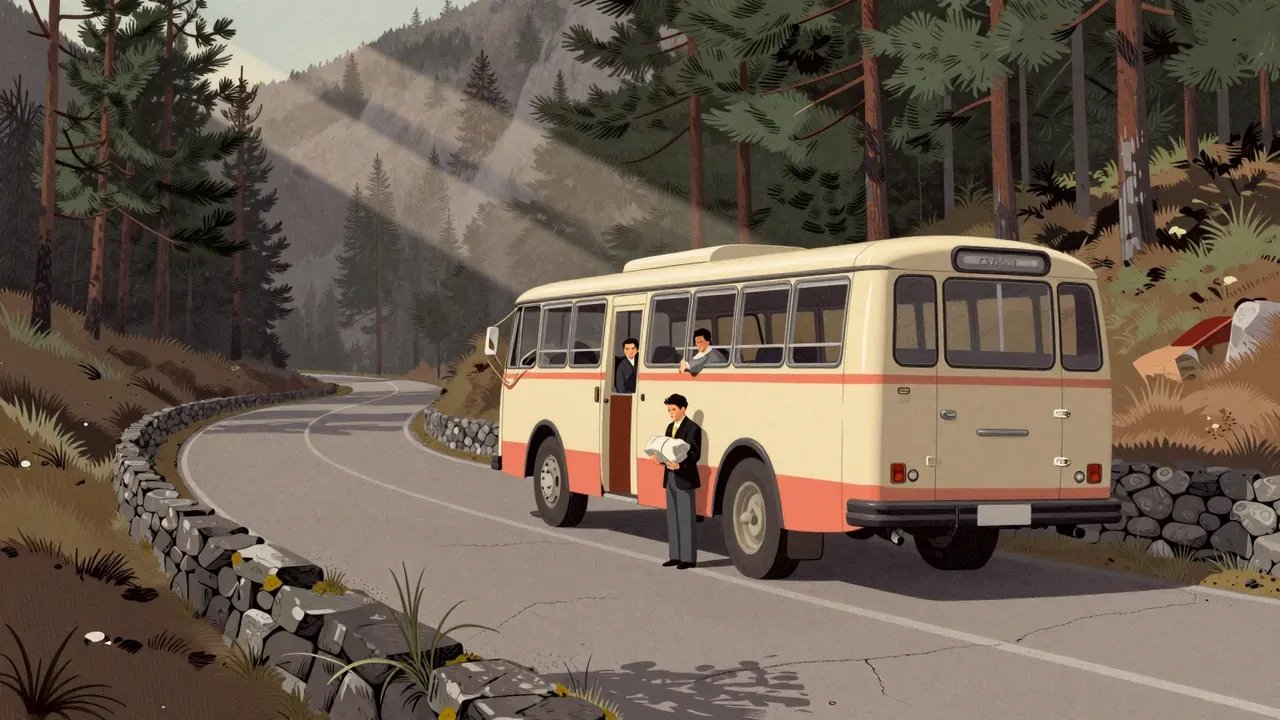
Hiroshi Shimizu’s 1936 film follows a bus driver nicknamed Mr. Thank You on a journey from rural Izu to Tokyo. Along the way, passengers reveal fragments of their lives — a mother preparing to sell her daughter, a Korean woman arranging her father’s funeral, migrants returning from the city. Shot on location with restrained performances and unadorned cinematography by Isamu Aoki, the film observes poverty, mobility, and quiet endurance without moralising or resolving. Based on a Yasunari Kawabata short story, it expands the source into a broader, though uneven, social portrait.

13:00

Mudbound

Dee Rees · 2017

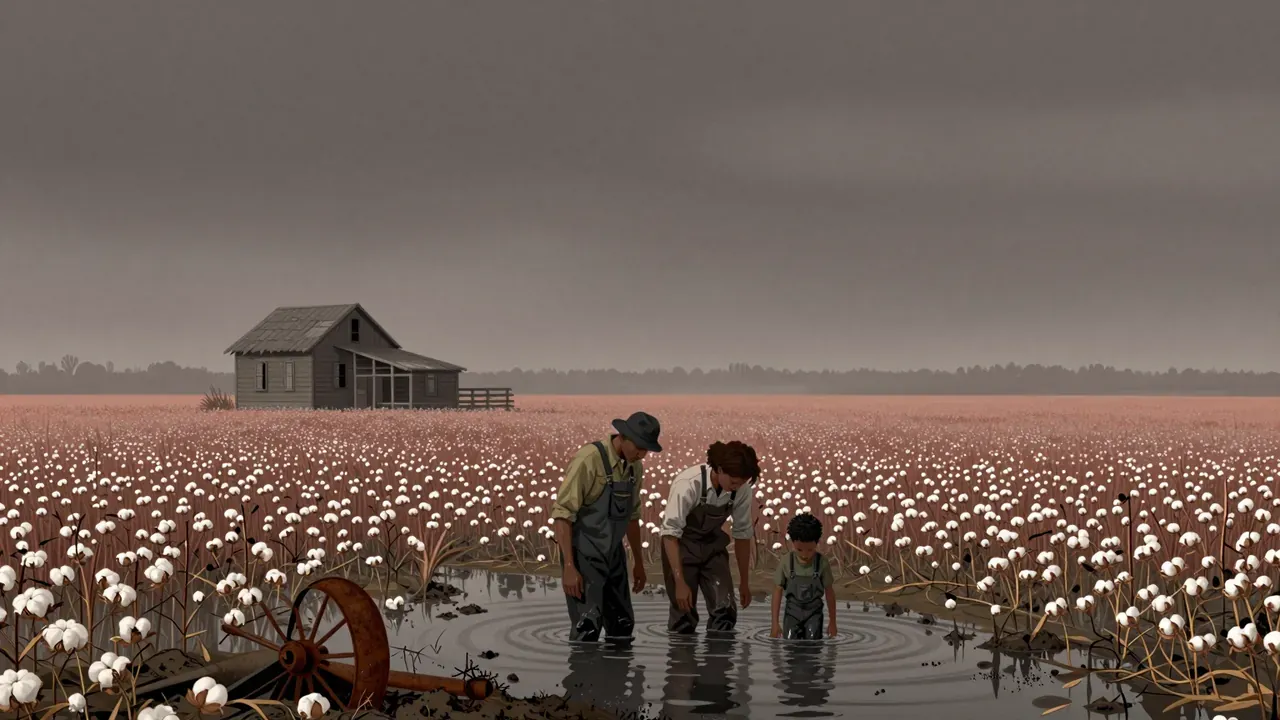
Mudbound is a 2017 historical drama directed by Dee Rees, adapted from Hillary Jordan’s novel. Set in post-war rural Mississippi, it follows two families — white landowners and Black tenant farmers — whose lives intersect amid poverty, racism and shared war trauma. With Rachel Morrison’s grounded cinematography and restrained performances, it renders systemic injustice as environmental fact rather than moral allegory.

13:00

Multiple Maniacs

John Waters · 1970

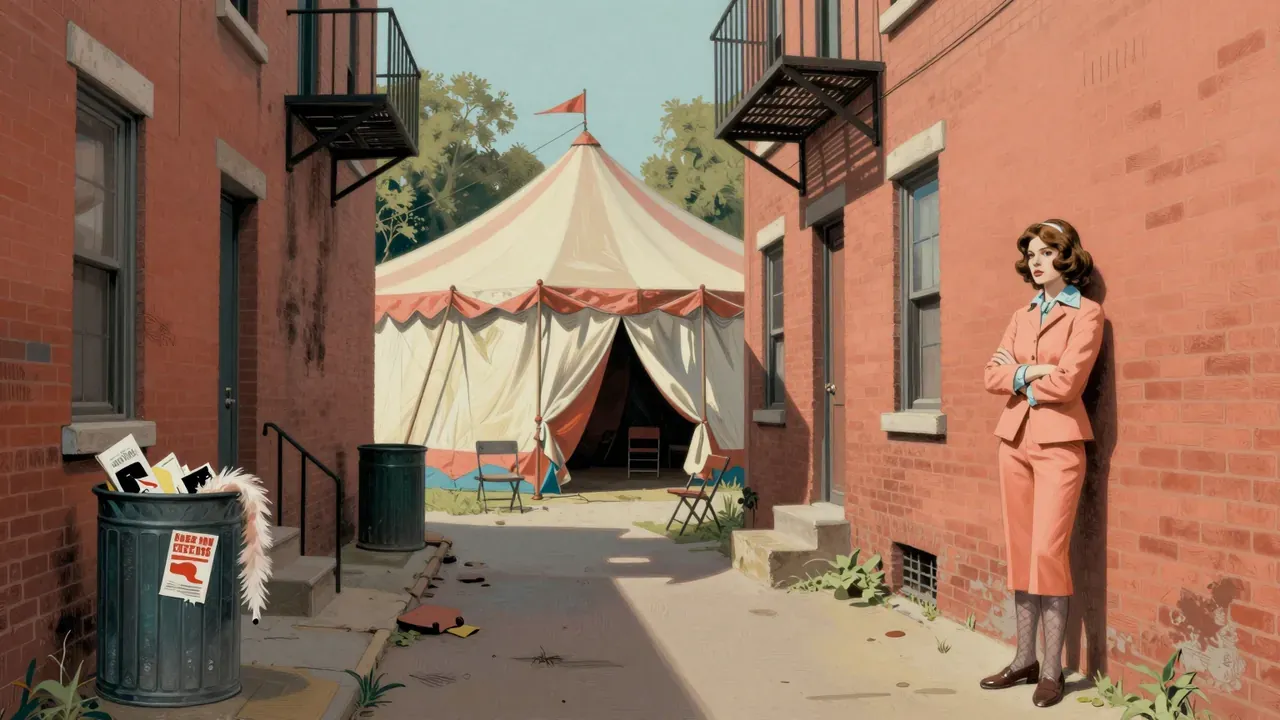
Multiple Maniacs (1970), written and directed by John Waters, is a black-and-white 16mm comedy starring Divine and the Dreamland troupe. Set in Baltimore, it follows a perverse carnival’s descent into violence and surreal retribution. Shot, edited, and scored by Waters himself, it rejects narrative logic and technical polish in favour of sustained provocation. Its themes include the performativity of morality, the politics of disgust, and the aesthetics of marginality. Though rated 100% on Rotten Tomatoes, its value lies not in consensus but in its uncompromising coherence as a polemic in film form.

13:00

Muna Moto

Jean-Pierre Dikongué Pipa · 1975

A 1975 Cameroonian drama by Jean-Pierre Dikongué Pipa, set in a rural community where Ngando’s love for Ndomé is undone by the unyielding requirement of dowry payment. When she bears his child, the village arranges her marriage to his uncle — a man who can fulfil the custom. Ngando’s final act is to take his daughter on the day of the feast. Shot in French with minimal music or camera movement, the film observes ritual, silence, and social consequence without explanation or judgement.

13:00

Mural Murals

Agnès Varda · 1982

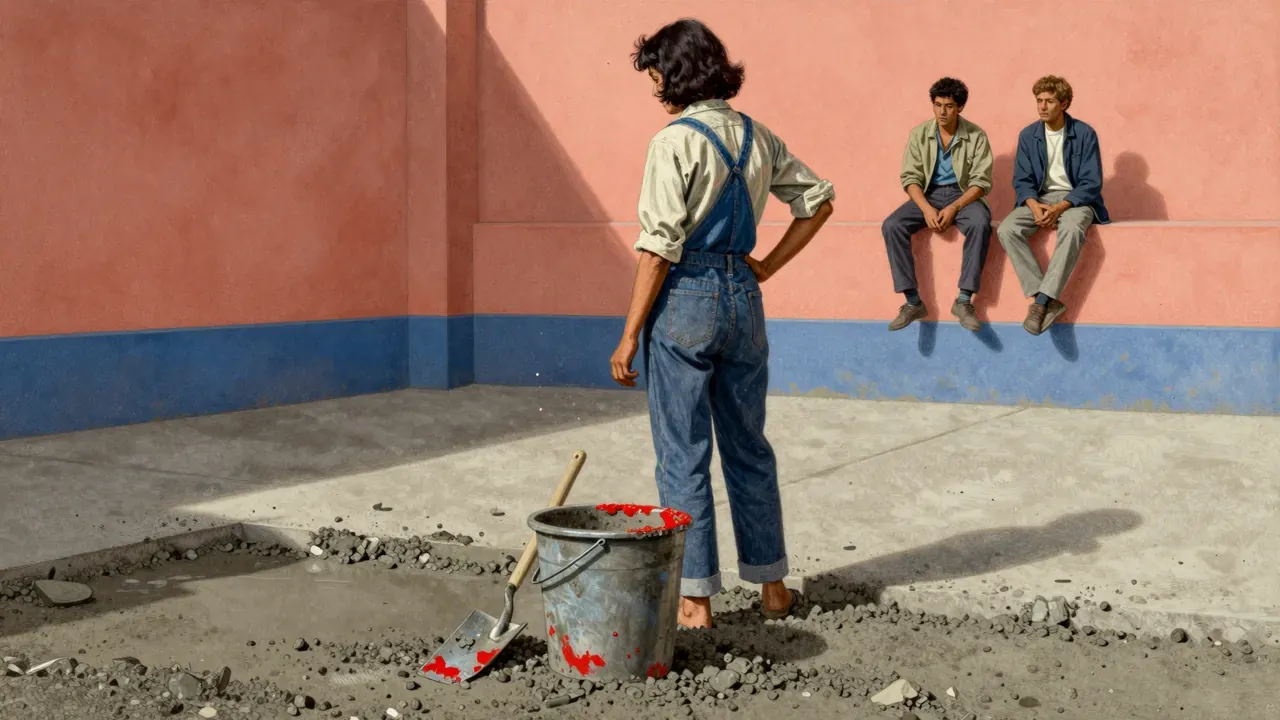
Agnès Varda’s 1981 documentary Mur Murs observes the painted walls of Los Angeles, focusing on Chicano-led muralism in working-class neighbourhoods. Shot on location with minimal intervention, it pairs static images of murals with layered narration and interviews, treating walls as sites of communal memory and political expression. The film avoids exposition, instead trusting texture, duration, and specificity to convey meaning.

13:00

Muriel

Alain Resnais · 1963

Alain Resnais’s 1963 film Muriel follows a widow, her traumatised stepson, and two visitors over fifteen fragmented days in Boulogne-sur-Mer. Shot in static colour with rigorous editing and sparse dialogue, it explores memory, guilt, and the unspoken legacy of the Algerian War — not through exposition, but through architectural detail, temporal disjunction, and withheld emotion.

13:00

Murmur of the Heart

Louis Malle · 1971

Louis Malle’s 1971 coming-of-age film follows 14-year-old Laurent Chevalier in 1954 Dijon, navigating adolescence, jazz, and a complex bond with his Italian-born mother Clara. Set against bourgeois domesticity and post-war France, it centres on a single ambiguous night between them—not as climax, but as a quiet, unexplained convergence of affection and vulnerability. Shot by Ricardo Aronovich and edited by Suzanne Baron, it favours naturalism over exposition, humour over judgement, and atmosphere over argument.

13:00

My Beautiful Laundrette

Stephen Frears · 1985

Stephen Frears’ 1985 film, written by Hanif Kureishi, follows Omar — a British-Pakistani man in South London — as he renews a laundrette with Johnny, his childhood friend and lover. Set against Thatcher-era austerity and community tensions, it balances romance, entrepreneurship, and intergenerational conflict with understated craft and unforced specificity. Shot on 16 mm, it was expanded from a Channel 4 commission into an international success.

13:00

My Brilliant Career

Gillian Armstrong · 1979

Gillian Armstrong’s 1979 debut adapts Miles Franklin’s 1901 novel into a restrained, luminous portrait of Sybylla Melvyn, a headstrong Australian teenager who chooses writing over marriage in 1897. Judy Davis stars in her first leading role, supported by Sam Neill and Wendy Hughes. Shot in the Monaro region by Donald McAlpine, with a Schumann-inflected score by Nathan Waks, it won five AACTA Awards and helped define the Australian New Wave. Its enduring power lies in its unwavering commitment to Sybylla’s autonomy — intellectual, emotional, and vocational.

13:00

My Crasy Life

Jean-Pierre Gorin · 1992

Jean-Pierre Gorin’s 1992 UK documentary My Crasy Life observes working-class teenagers in post-industrial Britain through a restrained, essayistic lens. Eschewing narration, score, and exposition, it builds meaning through fragmented interviews, ambient sound, and sustained, unvarnished observation. Its focus is not on circumstance alone but on how language, silence, and gesture reveal the slow erosion — and quiet persistence — of selfhood under structural pressure.

13:00

My Darling Clementine

John Ford · 1946

John Ford’s 1946 Western My Darling Clementine reshapes the O.K. Corral legend into a solemn, visually restrained parable about civic order. Henry Fonda’s Wyatt Earp is less a man than a principle — calm, enduring, taciturn — and the film’s power lies in its long takes, muted palette, and refusal to explain. Though heavily edited by the studio and loosely based on fact, it endures as a masterclass in cinematic gravitas: not a story about violence, but about what remains after it.

13:00

My Dinner with Andre

Louis Malle · 1981

My Dinner with Andre (1981) is a 111-minute filmed dialogue between Wallace Shawn and Andre Gregory, playing fictionalised versions of themselves over dinner in a Manhattan restaurant. Directed by Louis Malle, it unfolds as a single, sustained exchange about theatre, mysticism, fear, and everyday life — with no subplot, no visual digression, and no resolution beyond mutual understanding. Shot in Richmond, Virginia, and edited for rhythmic continuity rather than emphasis, it relies entirely on performance, writing, and acoustic intimacy. Its reputation rests on its formal rigour and philosophical candour.

13:00

My Life as a Dog

Lasse Hallström · 1985

Set in rural Sweden in 1958–59, My Life as a Dog follows twelve-year-old Ingemar, dispatched to live with relatives while his mother battles illness. Observing small-town life with unsentimental clarity, he navigates eccentric neighbours, nascent friendship, and accumulating loss. The film avoids exposition and catharsis, trusting repetition, silence, and precise detail to convey emotional truth. Its power lies in restraint: in what is withheld, what lingers off-screen, and how deeply ordinary moments can hold extraordinary weight.

13:00

My Life to Live

Jean-Luc Godard · 1962

Jean-Luc Godard’s 1962 My Life to Live follows Nana, a 22-year-old Parisian who abandons her son and husband to pursue acting, then drifts into prostitution. Structured in twelve titled episodes, it uses intertitles, jump cuts, and stark cinematography by Raoul Coutard to examine visibility, labour, and language. Anna Karina’s performance anchors its formal rigour. Shot in four weeks for $40,000, it won the Grand Jury Prize at Venice and remains a cornerstone of French New Wave arthouse cinema.

13:00

My Lucky Stars

Sammo Hung · 1985

My Lucky Stars (1985) is a Hong Kong action comedy directed by Sammo Hung, starring Hung, Jackie Chan, Yuen Biao, Eric Tsang, Stanley Fung, Richard Ng, Charlie Chin, and Sibelle Hu. Built around the 'Five Lucky Stars' troupe, it follows their reluctant deployment to Tokyo to rescue a kidnapped officer from a yakuza group operating beneath an amusement park. Though Jackie Chan’s role is brief, the film showcases tightly coordinated group choreography, broad but precise comic timing, and inventive use of Fuji-Q Highland’s architecture. It prioritises physical logic over narrative coherence and communal rhythm over individual arc.

13:00

My Man Godfrey

Gregory La Cava · 1936

My Man Godfrey (1936), directed by Gregory La Cava, follows a homeless man hired as butler by a Manhattan socialite during the Great Depression. William Powell and Carole Lombard anchor a sharp, fast-paced romantic comedy that skewers wealth while relying on inherited status to resolve its tensions. Ted Tetzlaff’s cinematography and tight editing sustain its screwball energy, though the finale retreats from its earlier bite. Critically lauded then and now, it remains a masterclass in studio-era comic construction — elegant, economical, and knowingly incomplete.

13:00

My Night at Maud's

Éric Rohmer · 1969

Set over Christmas in Clermont-Ferrand, Éric Rohmer’s 1969 film follows a Catholic engineer as he navigates conversations about faith, desire, and choice with three other single people. Built around Pascal’s wager and shot in natural light by Néstor Almendros, it privileges dialogue, hesitation, and quiet observation over plot or resolution. Its moral architecture rests on what is said, unsaid, deferred — and how it is said.
13:00

My Own Private Idaho

Gus Van Sant · 1991

Gus Van Sant’s 1991 arthouse drama follows two young male hustlers — Mike, who suffers narcoleptic blackouts, and Scott, the mayor’s son — as they travel from Portland to Idaho and Rome in search of Mike’s absent mother. Loosely modelled on Shakespeare’s Henry IV plays, it blends documentary realism with poetic fragmentation, anchored by River Phoenix’s understated performance and Eric Alan Edwards’ naturalistic cinematography. Though uneven in execution, its cultural impact and formal daring have secured its place as a landmark of new queer cinema.
13:00

My Winnipeg

Guy Maddin · 2007

Guy Maddin’s My Winnipeg (2007) is a self-narrated ‘docu-fantasia’ that uses staged re-enactments, archival fragments and invented history to explore his lifelong entanglement with his hometown. Framed as an attempt to ‘film his way out’, the film treats Winnipeg as a psychic landscape — where sleepwalking is epidemic, rivers run double beneath the streets, and demolition sites hold sacred residue. It is less about the city’s facts than its emotional architecture.

13:00

Mysterious Object at Noon

Apichatpong Weerasethakul · 2000

Mysterious Object at Noon (2000) is Apichatpong Weerasethakul’s debut feature: an unscripted, 16mm Thai documentary that travels the country using the exquisite corpse game. Strangers contribute lines to a shared story; actors then enact fragments of it. Shot by Sayombhu Mukdeeprom and edited by Apichatpong and Mingmongkol Sonakul, it privileges listening, texture and drift over narrative or exposition.

13:00

Mystery Train

Jim Jarmusch · 1989

Mystery Train is Jim Jarmusch’s 1989 triptych set over one night in Memphis, following a Japanese couple, an Italian widow, and a disoriented Englishman as they navigate the city’s margins. Shot in controlled colour by Robby Müller and scored sparsely by John Lurie, it treats narrative as variation rather than progression. Though critically acclaimed and formally assured, its third segment falters under schematic weight. It rewards patient attention with cumulative texture, not plot resolution.

13:00

Naked

Mike Leigh · 1993

Mike Leigh’s 1993 drama follows Johnny, a fugitive intellectual played by David Thewlis, over two days in London. Moving between borrowed flats, night-shift jobs, and street corners, he dominates conversations with erudite cruelty while his own life unravels. Shot by Dick Pope and edited by Jon Gregory, the film uses Leigh’s signature improvisational method to build raw, unsentimental performances. It is a study in alienation, masculinity, and moral exhaustion — stark, unrelenting, and formally precise.

13:00

Naked Childhood

Maurice Pialat · 1968

Maurice Pialat’s 1968 debut Naked Childhood follows ten-year-old François as he moves between foster families in working-class France. Shot with unadorned naturalism by Claude Beausoleil and written by Pialat and Arlette Langmann, the film avoids psychology, politics, and exposition — observing instead the quiet contradictions of a child shaped by abandonment and care alike.

13:00

Naked Lunch

David Cronenberg · 1991

David Cronenberg’s 1991 film Naked Lunch reimagines William S. Burroughs’s 1959 novel not as narrative but as psychological architecture. Starring Peter Weller as writer William Lee, it traces a descent into hallucination following the accidental death of his wife—a descent rendered through literalised surrealism, tactile special effects, and Howard Shore’s layered score. Shot in Toronto with deliberate visual austerity, the film treats addiction, authorship, and language as interlocking systems of compulsion and control. Though commercially unsuccessful and structurally demanding, it endures as a rigorous, self-contained exploration of how trauma reshapes perception—and how perception, in turn, writes itself into being.

13:00

Nanny

Nikyatu Jusu · 2022

Nanny (2022), Nikyatu Jusu’s feature debut, follows Aisha, a Senegalese nanny in New York, as she navigates wage theft, racialised labour, and the anguish of separation from her son back home. Blending psychological realism with folk-horror inflection, the film renders her unraveling through drowning dreams, waking visions, and quiet ruptures in domestic routine. Anna Diop’s restrained, physically precise performance anchors Rina Yang’s muted cinematography and a soundscape built on absence. Winner of Sundance’s U.S. Dramatic Grand Jury Prize, it is a formally controlled, thematically rich exploration of migration, care, and inherited resilience.

13:00

Naqoyqatsi

Godfrey Reggio · 2002

Naqoyqatsi (2002), the final film in Godfrey Reggio’s Qatsi trilogy, uses digitally manipulated archive footage and Philip Glass’s cello-led score to argue that modern life operates under a regime of ‘civilized violence’: abstraction, competition, and technological acceleration displacing embodied reality. Edited by Jon Kane and produced by Reggio, it abandons the observational style of its predecessors for a collage of stock, surveillance, and CGI imagery. Its reception was divided — critics called it the trilogy’s weakest — yet its formal rigour and thematic persistence make it a singular, unsettling document of early-digital consciousness.

13:00

Nashville

Robert Altman · 1975

Robert Altman’s 1975 ensemble film follows twenty-four characters in the Nashville music industry over five days, culminating in a political rally and an unexplained assassination. Built from Joan Tewkesbury’s ethnographically grounded script and shot on location with overlapping dialogue and diegetic music, it treats fame, race, and populism as systems rather than subjects — observing more than judging, accumulating more than resolving.