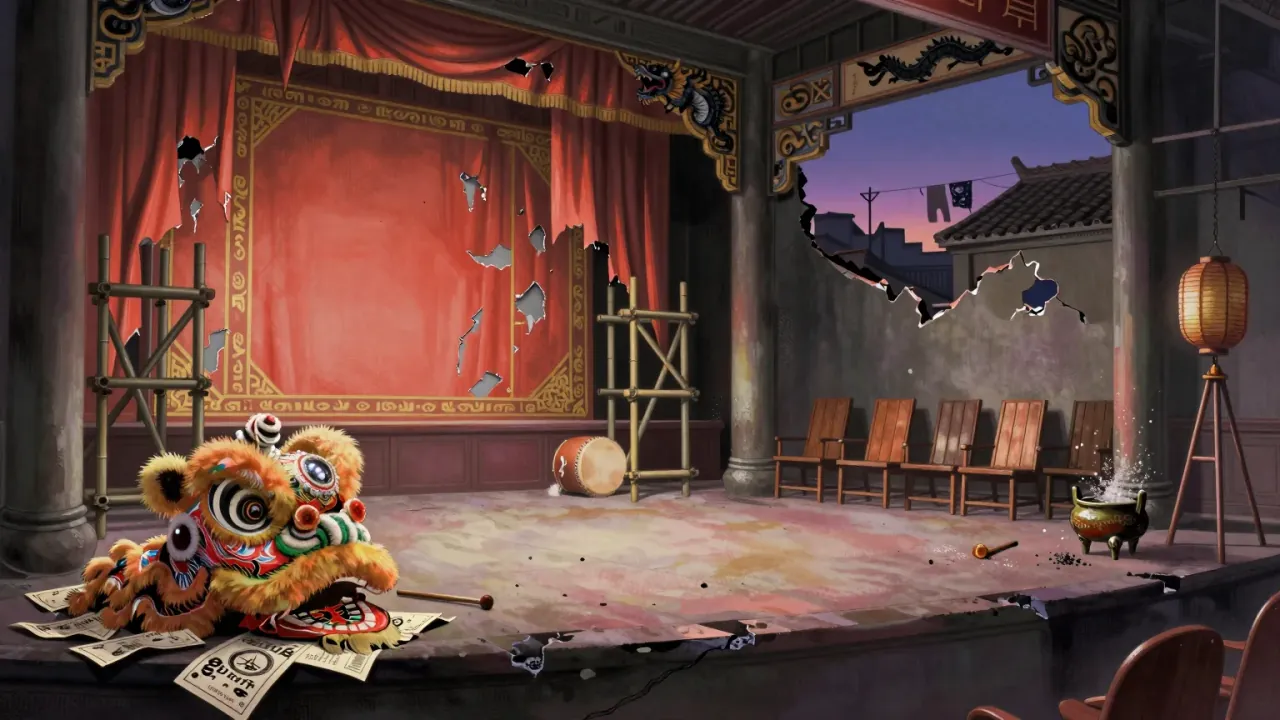
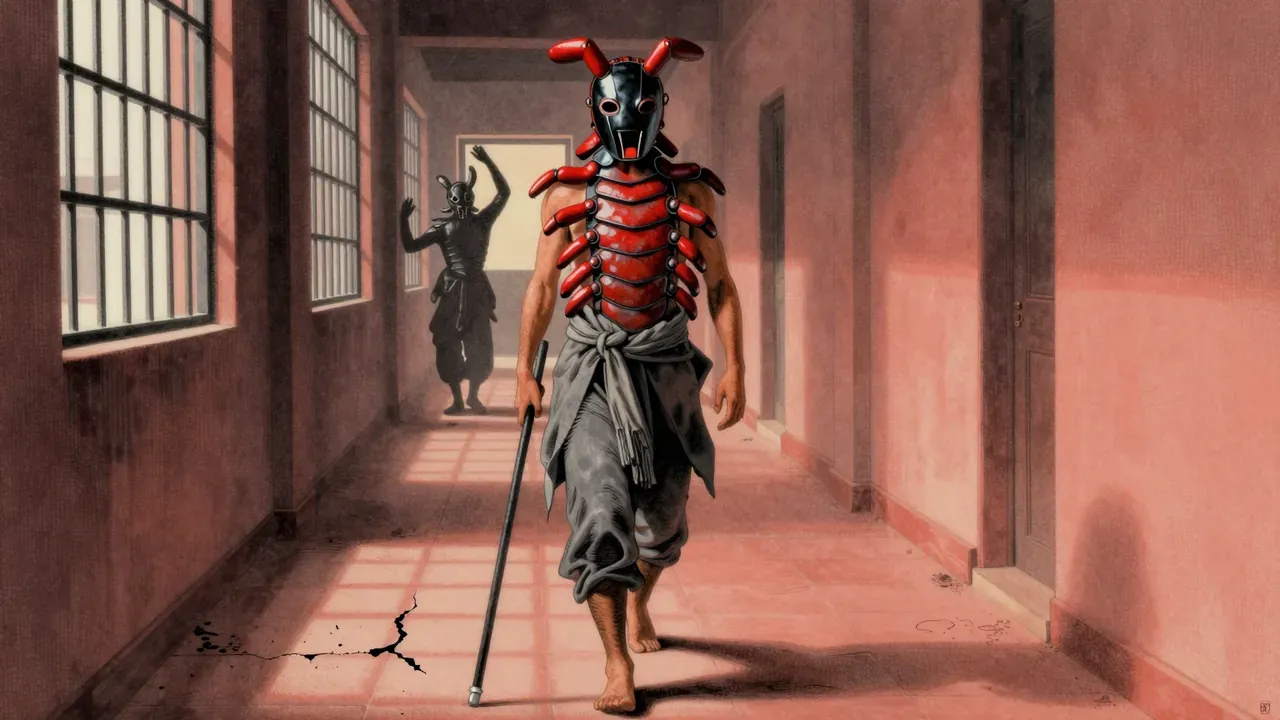
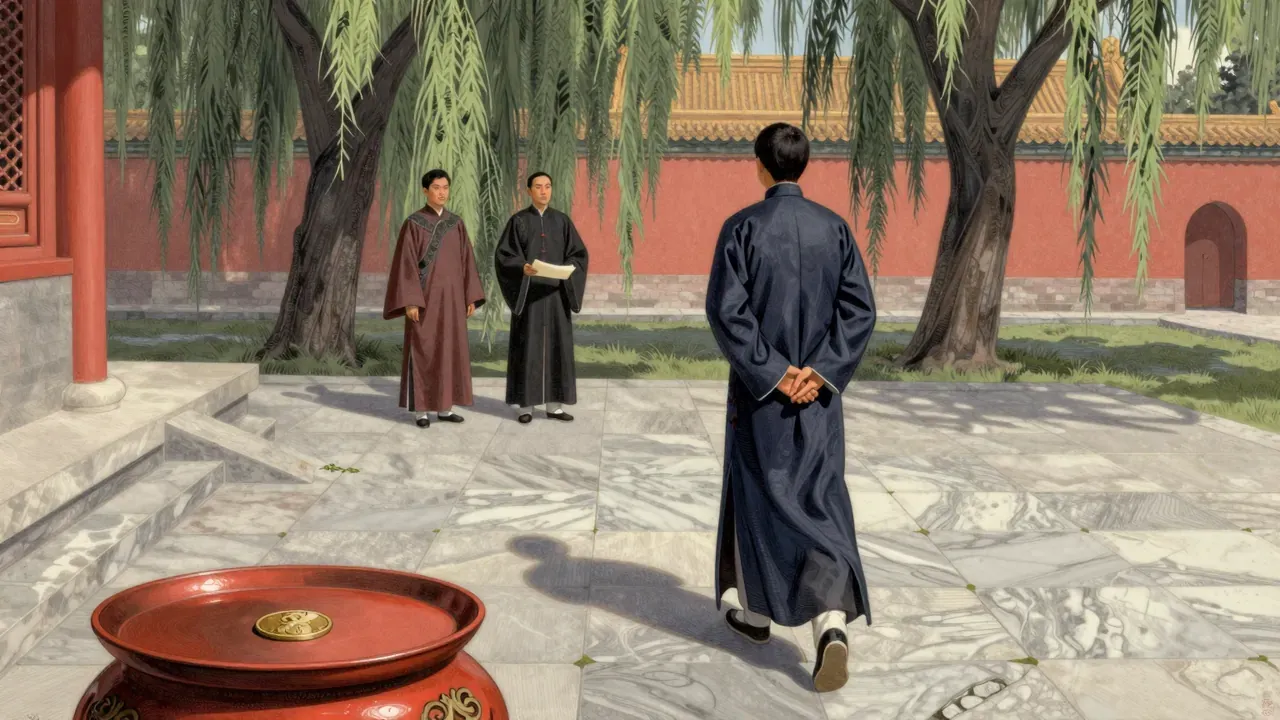
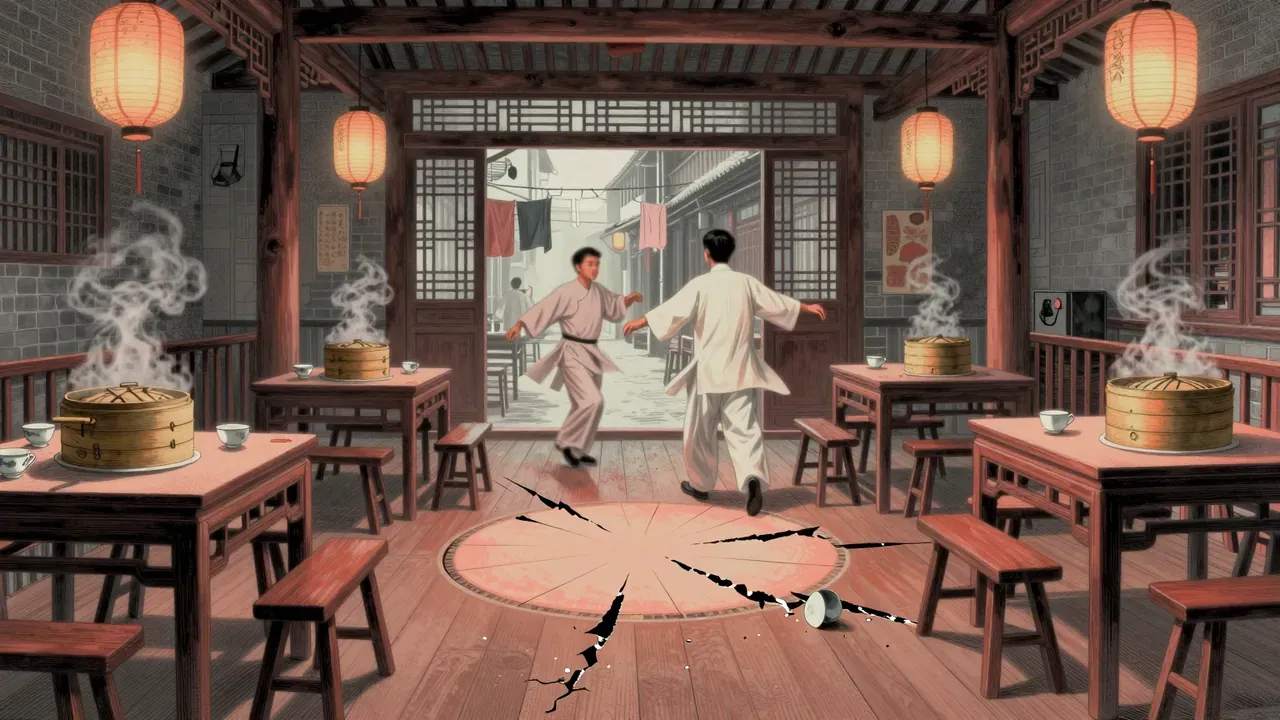
The setting is 1895
Once Upon a Time in China II is a Hong Kong action film set in 1895 Canton, continuing the Wong Fei-hung series with Jet Li as the physician-martial artist caught between Qing authority, xenophobic violence, and nascent republican idealism. It is trying to do three things at once: stage historically grounded martial spectacle, anchor that spectacle in moral and political tension, and sustain a serial narrative without recap — though the Taiwanese VHS version contradicts this last aim by adding seven minutes of exposition from the first film. Tsui Hark directs, writes and produces, framing the film not as folklore but as contested modernity: acupuncture lectures interrupted by flaming arrows, British consulates breached by Qing soldiers disguised as cultists, revolutionaries hiding inside diplomatic immunity. The film’s ambition is structural as much as thematic — it treats the wuxia form as infrastructure for history, not escape from it. Its fidelity is to period texture, not accuracy: railway travel, photographic equipment, and Tongwen Guan schools appear because they existed, not because they are dramatised with documentary restraint. Word count: 148.
The look of it
The story moves through escalating civic ruptures — seminar, siege, consulate, sect base — each demanding a different kind of physical response: crowd dispersal, corridor defence, rooftop evasion, temple infiltration. Jet Li’s Wong Fei-hung fights with calibrated restraint, his staff work precise and economical; Donnie Yen’s Nap-lan Yun-seut counters with coiled aggression, his cloth-staff fight climaxing in a brutal, close-quarters stranglehold broken only by a splintered bamboo edge. Arthur Wong’s cinematography keeps interiors dim but legible, favouring medium shots over rapid cuts during combat, letting choreography breathe. Marco Mak’s editing sustains momentum without sacrificing geography: we always know where the children are, where the book is hidden, where the flag design is concealed. Richard Yuen Cheuk-Fan’s score uses traditional instrumentation but avoids pastiche, its motifs recurring like incantations rather than cues. Yuen Woo-ping’s martial arts choreography privileges weight and consequence — limbs tire, stances shift under pressure, impacts register in posture, not just sound. Word count: 156.
What lands
What lands is the film’s refusal to let action exist outside consequence. When Wong defeats Priest Gao, it is not with a flourish but through misdirection and accident — the statue’s finger piercing armour — a moment that undercuts myth-making even as it fulfils it. The final fight with Nap-lan does not resolve ideology but bodies: one man dies choking on cloth, the other escapes with a bloodied neck and a scrap of fabric. The Blue Sky with a White Sun flag appears not as triumph but as transmission — passed hand to hand at dawn, unhoisted, uncelebrated. Rosamund Kwan’s 13th Aunt is neither damsel nor foil; she photographs the White Lotus Sect before being rescued, then shelters children when refused entry to an inn, her agency persistent but unremarked. Max Mok’s Leung Foon grows not through mastery but through witnessing: he carries Lu’s cloth not because he understands its meaning, but because he was told to. These choices land because they are sustained — no character arcs pivot on revelation, only on accumulated obligation. Word count: 152.
What does not
What does not land is the film’s handling of the White Lotus Sect as a monolithic threat. Their motivations remain opaque beyond ‘xenophobia’, their members interchangeable, their theology absent. They serve plot function — disruption, siege, spectacle — but never ideological counterweight. The British consul’s murder is narratively efficient but morally flattened: his death registers as procedural obstruction, not loss. David Chiang and Yen Shi-Kwan appear in minor official roles without dimension, their presence functional rather than expressive. The treaty protests in the streets are background noise, not context — we hear chants but learn nothing of the demonstrators’ composition or demands. Even Sun Wen’s revolutionary cell feels schematic: Lu Haodong dies to protect a list, not an idea; his final instruction concerns cloth, not cause. The film assumes historical literacy it does not supply, and offers no internal logic for why Nap-lan chooses deception over direct arrest — it is plot necessity dressed as cunning. Word count: 150.
The material of resistance
The themes that matter are sovereignty, translation, and the materiality of resistance. Sovereignty is contested across jurisdictions: Qing mandate, British extraterritoriality, sect autonomy, revolutionary secrecy — none hold cleanly. Translation is literal (Sun Wen interpreting acupuncture) and symbolic (Lu’s flag design rendered on cloth, not paper or banner), stressing mediation over proclamation. Resistance is tactile: the cloth staff, the bamboo splinter, the photograph, the wrapped book — all objects that must be handled, carried, torn, burned. The film treats ideology as something that circulates in fragments, not declarations: the flag appears only as a sketch, the revolution only as names on a page, the treaty only as shouted slogans. Even Wong’s medical practice is framed as embodied knowledge — needles placed by touch, not doctrine. There is no grand speech about reform; conviction is shown in who Wong chooses to protect, and in what Leung chooses to carry after everyone else has fallen. Word count: 154.
Who it is for
It is for viewers who value action as syntax, not punctuation — those who watch fight scenes for how they advance relationships, not just how fast they move. It rewards attention to costume detail, spatial continuity, and the quiet weight of decisions made off-screen. It is not for viewers who require moral clarity, psychological exposition, or resolution that aligns with national myth. Those who expect Wong Fei-hung to embody Confucian virtue untroubled by complicity will find his silence at the consulate’s breach discomfiting. Those who read colonial history as binary will struggle with the film’s refusal to cast Britain or the Qing as sole antagonist. A viewer who prefers character-driven intimacy over civic scale may find the ensemble thin — the film’s emotional centre is collective duty, not individual longing. Word count: 147.
Is it worth your evening
Yes, it is worth your evening — not as escapism, but as calibration. Its 108 minutes offer a rare balance: martial precision anchored in historical texture, political stakes that resist simplification, and craft that serves both. It does not flatter the viewer with easy answers, but it honours their attention with consistency of tone and purpose. Those who find its pacing unhurried may prefer the tighter rhythm of Iron Monkey or the more personal stakes of The Story of Qiu Ju — but that is a difference of emphasis, not deficiency. The film’s power lies in its restraint: no scene overstays, no theme is underlined, no victory is uncosted. To call it ‘entertaining’ would miss its gravity; to call it ‘didactic’ would ignore its physical joy. It earns its time by refusing to waste a single frame. Word count: 149.