filmbriefs
Newest

All briefs

2035 briefs · 26452 min · 1345–1440 on page 15 of 22
13:00

Town Bloody Hall

D. A. Pennebaker · 1979

Town Bloody Hall documents a volatile 1971 New York panel featuring Norman Mailer and feminist thinkers Germaine Greer, Jill Johnston, Diana Trilling and Jacqueline Ceballos. Filmed by D. A. Pennebaker and edited with minimal intervention, it preserves the debate’s rhythms, interruptions and ideological fractures without commentary or context. Released in 1979, it stands as a stark, unvarnished artefact of second-wave feminism’s internal and external confrontations.
13:00

Traffic

Steven Soderbergh · 2000

Steven Soderbergh’s 2000 crime drama Traffic traces the US drug trade across four interwoven storylines — political, enforcement, consumer, and supplier — using distinct colour grading, multilingual dialogue (including unsubtitled English and fully subtitled Spanish), and a procedural rhythm. Written by Stephen Gaghan and shot by Soderbergh under a pseudonym, it won four Academy Awards including Best Director and Best Supporting Actor for Benicio del Toro. Its ambition lies in structural coherence, not emotional resolution.

13:00

Trainspotting

Danny Boyle · 1996

Danny Boyle’s 1996 adaptation of Irvine Welsh’s novel follows Mark Renton and his friends through heroin use, betrayal and brief escapes in economically depressed Edinburgh. Written by John Hodge and shot by Brian Tufano, it uses rapid editing, saturated colour and Scottish vernacular to forge a visceral, morally unmoored portrait of youth under pressure. Though its ending strains against its own logic, its formal rigour and performative precision hold up — not as nostalgia, but as a sustained act of stylistic honesty.

13:00

Trances

Ahmed El Maanouni · 1981

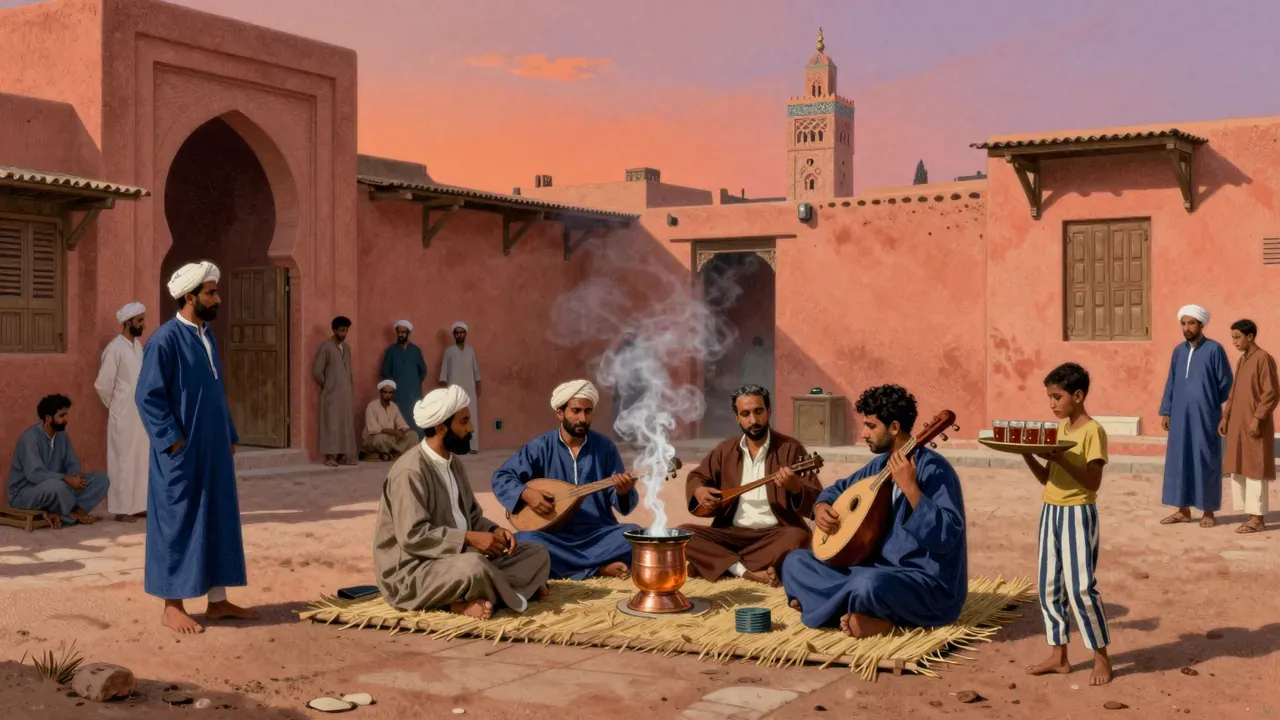
Trances (1981) is Ahmed El Maanouni’s docufiction portrait of Moroccan band Nass El Ghiwane, filmed in Morocco during live performances, interviews, and everyday moments. Blending contemporary footage with silent colonial-era archival clips, it foregrounds voice, rhythm, and communal presence over narrative or exposition. Restored in 2007 and distributed by Criterion, it remains a singular work of musical and cultural testimony.

13:00

Triangle of Sadness

Ruben Östlund · 2022

Ruben Östlund’s Triangle of Sadness is a three-act satirical drama following a male model, his influencer girlfriend, and a group of ultra-wealthy cruise passengers who survive a shipwreck only to confront a brutal inversion of social order on a remote island. Shot by Fredrik Wenzel and edited by Mikel Cee Karlsson and Östlund, it uses duration, repetition, and clinical observation to dissect capitalism’s reliance on invisible labour and arbitrary status. Winner of the 2022 Palme d’Or and eight European Film Awards, it asks what remains when beauty, money, and language all fail as currencies.

13:00

Tribute to the Teachers

Abbas Kiarostami · 1977

Tribute to the Teachers (1977) is a Persian-language drama written and directed by Abbas Kiarostami for Iran’s Institute for the Intellectual Development of Children and Young Adults. No plot details, cast list, or production credits beyond director and writer are publicly verifiable. It belongs to Kiarostami’s early institutional period, preceding his international breakthroughs. Without access to the film itself—or even a reliable synopsis—it remains a factual placeholder: a title attached to a date, a name, and a genre. Its significance lies in chronology and context, not in circulation or reception.

13:00

Trouble in Paradise

Ernst Lubitsch · 1932

Ernst Lubitsch’s 1932 romantic comedy follows a gentleman thief and a lady pickpocket who con a perfume magnate — only to find themselves entangled in genuine feeling. With Herbert Marshall, Miriam Hopkins, and Kay Francis, it sustains a tone of poised, knowing irony, using Art Deco design, precise editing, and understated performance to explore class, consent, and value as performance. Made before strict enforcement of the Production Code, it relies on implication over exposition and rewards attention to gesture, timing, and spatial relationships.

13:00

True Stories

David Byrne · 1986

David Byrne’s 1986 musical film True Stories unfolds in the fictional town of Virgil, Texas, as a nameless visitor observes residents preparing for a sesquicentennial ‘Celebration of Specialness’. Built from vignettes rather than plot, it features John Goodman, Spalding Gray, Swoosie Kurtz and others performing stylised, sincere portraits of small-town life, scored largely by Talking Heads. Edward Lachman’s flat, frontal cinematography and Byrne’s deliberate pacing create a tone both surreal and tender — less mockery than meticulous documentation of how people build meaning from thin air.

13:00

Tunes of Glory

Ronald Neame · 1960

Set in a Highland regimental barracks in January 1948, Tunes of Glory follows the fraught handover of command from battle-hardened Lieutenant-Colonel Jock Sinclair to Oxford-educated Colonel Basil Barrow. As Barrow enforces peacetime discipline, Sinclair’s authority unravels, exposing fault lines of class, trauma, and institutional loyalty. Directed by Ronald Neame from James Kennaway’s novel, the film relies on restrained performances, tightly controlled cinematography, and Malcolm Arnold’s austere pipe-led score to build psychological pressure without melodrama.

13:00

Twenty-Four Eyes

Keisuke Kinoshita · 1954

Keisuke Kinoshita’s Twenty-Four Eyes (1954) follows teacher Hisako Ōishi across twenty years on Shōdoshima island, from her arrival in 1928 to the postwar return to teaching in 1946. Using her twelve pupils as anchors, the film charts the erosion and renewal of communal life under militarism, poverty and loss. Hideko Takamine’s restrained performance, the unvarnished Shochiku photography and the episodic, season-bound structure build a portrait of endurance rooted in daily acts of care — not grand statements, but shared meals, remembered songs and a bicycle given back.

13:00

Twin Peaks: Fire Walk with Me

David Lynch · 1992

David Lynch’s 1992 prequel to Twin Peaks focuses on Laura Palmer’s final days, stripping away the TV series’ whimsy to confront trauma, abuse, and institutional failure with unflinching rigour. Sheryl Lee’s performance anchors a film defined by dissonant sound, claustrophobic framing, and narrative austerity. Though polarising on release, it has been re-evaluated as a major work of psychological horror and arthouse cinema.

13:00

Two Days, One Night

Jean-Pierre Dardenne, Luc Dardenne · 2014

Two Days, One Night follows Sandra, a Belgian factory worker returning from medical leave for depression, as she spends a weekend visiting sixteen colleagues to persuade them to reverse their vote against her reinstatement — a vote linked to a €1,000 bonus. Shot in Seraing with rigorous naturalism, the Dardenne brothers anchor ethical questions in physical detail: bus tickets, kitchen tables, rain-slicked pavements. Marion Cotillard’s performance avoids exposition, locating dignity in hesitation, fatigue, and quiet persistence. The film won the European Film Award for Best Actress and was Belgium’s Oscar submission.

13:00

Two Girls on the Street

André de Toth · 1939

Two Girls on the Street (1939) follows two young women — a violinist and a bricklayer — as they navigate work, friendship, and love in Budapest after leaving their village. Directed by André de Toth in his first feature, it adapts a stage play with unshowy craft, grounding its comedy in occupational detail and urban texture. Restored by Cinémathèque de Bologne and released by Criterion in 2022, it rewards attention to the ordinary: how people move, speak, build, and play in a city on the cusp of change.

13:00

Two-Lane Blacktop

Monte Hellman · 1971

Monte Hellman’s 1971 road film follows unnamed racers — Driver, Mechanic, Girl and GTO — across the American Southwest in a stripped-down, near-silent contest with no clear stakes and no resolution. Shot on location over eight weeks, edited by Hellman and photographed by John Bailey, it treats motion, machinery and landscape as primary subjects, not backdrops. Its rigour is formal and philosophical: no backstory, no score, no names, no climax. Over time, it has been reassessed not as a commercial misfire but as a defining work of New Hollywood minimalism.

13:00

Two Monks

Juan Bustillo Oro · 1934

Two Monks (1934) is a Mexican expressionist drama set in a Gothic monastery, where two monks — one dying, one newly arrived — confront a shared past through contradictory flashbacks. Directed by Juan Bustillo Oro and shot by Agustín Jiménez, it uses stark black-and-white cinematography and claustrophobic production design to explore memory, guilt, and the impossibility of objective truth. Its structural innovation — presenting two mutually exclusive accounts of a fatal love triangle — predates Rashomon by sixteen years. Though austere and demanding, it remains a landmark of early Latin American modernist cinema.

13:00

Two Prosecutors

Sergei Loznitsa · 2025

Sergei Loznitsa’s Two Prosecutors follows a young Soviet prosecutor in 1937 as he attempts to investigate the wrongful imprisonment of an Old Bolshevik during the Great Purge. Shot in a 1905 Riga prison and anchored by Aleksandr Kuznetsov’s restrained performance, the film unfolds with procedural exactness, refusing catharsis or moral simplification. Its power lies in accumulation: of silence, delay, and the quiet absorption of dissent into state machinery.

13:00

Two Solutions for One Problem

Abbas Kiarostami · 1975

Abbas Kiarostami’s 1975 short Two Solutions for One Problem presents two parallel resolutions to a minor conflict between two Iranian schoolboys over a torn exercise book. Filmed in static, natural light with no music or narration, it isolates choice as a visible, repeatable act — not a moral pronouncement, but a behavioural fact.

13:00

Ugetsu

Kenji Mizoguchi · 1953

Kenji Mizoguchi’s 1953 Ugetsu adapts two Edo-period ghost tales into a quiet, devastating portrait of war’s domestic toll. Set in 16th-century Japan, it follows a potter who abandons his wife for wealth and prestige, only to be ensnared by a spirit, while his brother-in-law pursues samurai status at his wife’s expense. Shot by Kazuo Miyagawa in low light and fluid crane movements, with a sparse, harp-accented score by Fumio Hayasaka, the film treats the supernatural not as spectacle but as consequence — a formal and thematic extension of loss. It won the Silver Lion at Venice and remains a benchmark of Japanese arthouse cinema.

13:00

Un carnet de bal

Julien Duvivier · 1937

Un carnet de bal (1937), directed by Julien Duvivier, follows Christine, a recently widowed woman who revisits the men who signed her debut ball dance card twenty years earlier. Through a series of vignettes, the film traces how youthful promise dissolved into varied, often diminished, adult lives—without judgement or hierarchy. Shot in France with Philippe Agostini’s restrained cinematography and Maurice Jaubert’s subtle score, it prioritises observation over exposition, stillness over motion, and moral neutrality over moralising. Its power lies in cumulative effect, not plot, and its endurance rests on its refusal to simplify time, regret, or human consequence.

13:00

Uncle Janco

Agnès Varda · 1967

Agnès Varda’s 1967 documentary Uncle Janco observes Romanian-born sculptor Marcel Janco in his Paris studio over 22 minutes. With no narration, no interviews, and no contextual framing, the film rests on sustained observation: Janco’s speech, his handling of materials, and the quiet rhythm of his daily practice. It is a study in presence, not biography — a work that values tactile knowledge and embodied memory over exposition or historical positioning.

13:00

Uncut Gems

Benny Safdie, Josh Safdie · 2019

A 2019 crime thriller set in New York’s Diamond District, Uncut Gems follows Howard Ratner, a jeweller and compulsive gambler, over a few chaotic days in 2012. When a rare Ethiopian opal arrives at his store, he leverages it across multiple high-stakes bets while evading loan sharks and managing fractured personal relationships. Directed by Benny and Josh Safdie, the film uses aggressive editing, claustrophobic cinematography, and a pulsing electronic score to simulate the physiology of addiction. Adam Sandler delivers a career-defining performance as a man whose intelligence and energy are indistinguishable from his self-destruction.

13:00

Under the Roofs of Paris

René Clair · 1930

René Clair’s 1930 French sound debut is a formally inventive romance set in a stylised Paris tenement. Built around street singer Albert Préjean and Romanian immigrant Pola Illéry, it uses song, silence and stylised sound design not to replicate reality but to explore proximity, precariousness and the quiet dignity of ordinary life. Shot by Georges Périnal and designed by Lazare Meerson, it balances warmth and melancholy without sentimentality — a foundational work of poetic realism and a sustained argument for cinema’s autonomy from theatre.

13:00

Under the Volcano

John Huston, Danny Huston · 1984

John Huston’s 1984 adaptation of Malcolm Lowry’s novel follows one Day of the Dead in 1938, as British consul Geoffrey Firmin — played by Albert Finney — unravels across the streets and cantinas of Quauhnahuac. Shot in sequence with Gabriel Figueroa’s restrained cinematography and Alex North’s brooding score, it commits fully to the novel’s psychological density and temporal claustrophobia. The film’s strength lies in its unflinching portrayal of addiction as embodied decay, not moral failure.

13:00

Underworld

Josef von Sternberg · 1927

A 1927 Paramount silent directed by Josef von Sternberg, Underworld stars George Bancroft, Clive Brook and Evelyn Brent in a tightly wound crime story about patronage, betrayal and inescapable consequence. Based on a Ben Hecht story and shot by Bert Glennon, it established visual and thematic templates for the gangster genre — not through realism, but through mythic compression, deliberate pacing and a stark, shadowed aesthetic. It won the first Academy Award for Best Story.

13:00

Unfaithfully Yours

Preston Sturges · 1948

Preston Sturges’ 1948 comedy follows Sir Alfred de Carter, a world-renowned conductor who, suspecting his wife of infidelity, imagines three elaborate responses — murder, magnanimous forgiveness, and Russian roulette — each triggered by a piece of classical music he conducts in concert. Back home, his attempts to enact any of them unravel in farcical detail. With Rex Harrison, Linda Darnell and Alfred Newman, it is a formally inventive, musically anchored satire of ego, creativity and self-deception.

13:00

Unholy Desire

Shohei Imamura · 1964

Shohei Imamura’s 1964 drama follows Sadako, a woman excluded from her common-law husband’s family register, who endures rape, coercion, and bureaucratic erasure before filing a civil suit to claim legal recognition. Shot by Shinsaku Himeda and scored by Toshiro Mayuzumi, the film observes survival as daily practice — quiet, persistent, and rooted in material reality rather than moral arc.

13:00

Vagabond

Agnès Varda · 1985

Agnès Varda’s 1985 film follows Mona Bergeron, a young woman who dies alone in a French vineyard ditch. Through fragmented flashbacks and interviews with those who briefly crossed her path, the film traces her final winter of wandering — hitchhiking, sleeping rough, doing odd jobs — without explaining her motives or offering redemption. Shot in austere natural light across southern France, it refuses psychological exposition or narrative resolution, insisting instead on the physical reality of her decline and the limits of others’ understanding.

13:00

Valerie and Her Week of Wonders

Jaromil Jireš · 1970

Valerie and Her Week of Wonders (1970) is a 73-minute Czechoslovak surrealist fantasy directed by Jaromil Jireš, adapted from Vítězslav Nezval’s novel. Set in a dreamlike Renaissance town, it follows thirteen-year-old Valerie through a week of shifting identities, masked authorities, and uncanny transformations. Shot on location in Slavonice and at Barrandov Studios, with cinematography by Jan Čuřík and music by Luboš Fišer, it blends Gothic horror, eroticism and folklore without exposition or resolution. Its power lies in sustained atmosphere, precise design and the unblinking presence of its young lead.

13:00

Valley of the Dolls

Mark Robson · 1967

Valley of the Dolls (1967), directed by Mark Robson, adapts Jacqueline Susann’s novel into a glossy, emotionally heightened drama about three women whose careers in entertainment unravel amid barbiturate dependency. Starring Barbara Parkins, Patty Duke, and Sharon Tate, with Susan Hayward as the formidable Helen Lawson, it uses tight close-ups, emphatic scoring, and location shooting to anchor its melodrama in a specific cultural moment — the twilight of the studio system. Though critically divided and formally uneven, it endures as a revealing artefact of how mid-century Hollywood represented female ambition, exhaustion, and systemic collapse.

13:00

Vanya on 42nd Street

Louis Malle · 1994

Louis Malle’s final film documents Andre Gregory’s long-term workshop on Chekhov’s Uncle Vanya, shot in the derelict New Amsterdam Theatre with Wallace Shawn, Julianne Moore, and others. It preserves the rhythms of rehearsal — interruption, repetition, uncertainty — rather than staging a polished performance. Declan Quinn’s restrained cinematography and Joshua Redman’s sparse saxophone score support a film that values duration, silence, and the physical reality of a decaying space over narrative propulsion or dramatic resolution.

13:00

Varda by Agnès

Agnès Varda · 2019

Varda by Agnès is Agnès Varda’s last film: a self-directed documentary in which, at eighty-nine, she reflects on her six-decade career in photography and film. Seated, speaking directly to camera, she watches excerpts from her own work and comments on them with characteristic clarity, wit and warmth. Structured around the words inspiration, creation and sharing, it is less a historical account than an act of sustained authorial presence — intimate, unhurried, materially attentive. Edited by Varda herself, it privileges texture, recurrence and silence over exposition or argument.

13:00

Variety Lights

Federico Fellini, Alberto Lattuada · 1950

Federico Fellini and Alberto Lattuada’s 1950 debut follows a struggling vaudeville troupe as ambition fractures loyalty and routine masks exhaustion. Shot on location and at Rome’s Scalera Studios, it stars Peppino De Filippo, Carla Del Poggio and Giulietta Masina, and charts the quiet economics of attention, ageing and reinvention — without flourish, without judgement, and without resolution.

13:00

Vengeance Is Mine

Shohei Imamura · 1979

Shohei Imamura’s 1979 film adapts Ryūzō Saki’s account of serial killer Akira Nishiguchi, renaming him Iwao Enokizu. Through fragmented flashbacks, it traces his crimes, deceptions and flight across post-war Japan, centring Ken Ogata’s restrained, physically precise performance. Shot by Shinsaku Himeda with unadorned naturalism and scored sparingly by Shinichiro Ikebe, the film avoids psychology and moral framing, instead mapping how Enokizu moves unchallenged through institutions — family, church, law, sex work — until his capture and execution. Its final image — ashes suspended mid-air — closes without resolution, leaving the viewer with the weight of unprocessed consequence.

13:00

Vermiglio

Maura Delpero · 2024

Set in a remote Italian alpine village in late winter 1944, Vermiglio follows Lucia, a teenage girl whose secret relationship with a Sicilian deserter upends her family and community. Directed by Maura Delpero and shot by Mikhail Krichman, the film observes tradition, Catholic ritual, and female labour with unsentimental precision — avoiding exposition, score-led emotion, or psychological shorthand. Its power lies in accumulation: in gestures, textures, and the weight of unspoken consequence.

13:00

Vernon, Florida

Errol Morris · 1981

Errol Morris’s 1981 documentary Vernon, Florida profiles residents of a small Florida town through unadorned, static interviews. Abandoning an earlier plan to investigate insurance-related limb loss, Morris instead captures everyday speech — on pigeons, dentures, mousetraps and heaven — with clinical stillness and no narration, music or context. Its power lies in duration, neutrality and the quiet dignity of unmediated presence.

13:00

Veronika Voss

Rainer Werner Fassbinder · 1982

Rainer Werner Fassbinder’s 1982 black-and-white drama follows Veronika Voss, a faded UFA film star in 1955 Munich, as she unravels under morphine addiction and the control of a corrupt neurologist. Loosely based on actress Sybille Schmitz, the film uses stark monochrome cinematography, sparse scoring, and Rosel Zech’s tightly controlled performance to dissect how institutions discard compromised women while preserving their image. It is the final film released in Fassbinder’s lifetime and the last of his BRD Trilogy.

13:00

Victim

Basil Dearden · 1961

Victim (1961), directed by Basil Dearden and written by Janet Green, is a British drama centred on a married barrister drawn into confronting a blackmail ring targeting gay men. Made before decriminalisation in England and Wales, it was the first UK film to name homosexuality explicitly and argue, through restrained craft and deliberate pacing, that the law itself enabled abuse. Starring Dirk Bogarde and Sylvia Syms, it trades spectacle for structural clarity — using cinematography, performance, and script to expose how statutes manufacture vulnerability.

13:00

Víctimas del Pecado

Emilio Fernández · 1951

Emilio Fernández’s 1951 Víctimas del Pecado stars Ninón Sevilla as Violeta, a Cuban dancer who adopts an abandoned infant in Mexico City’s red-light district. Set in Churubusco Studios, the film blends mambo numbers by Pérez Prado and Pedro Vargas with a tightly wound melodrama of love, betrayal, and imprisonment. Gabriel Figueroa’s cinematography carves space into zones of glamour, austerity, and quiet domesticity. Though structurally uneven and reliant on genre convention, its physical expressiveness, moral clarity, and studio craft make it a defining work of post-war Mexican cinema.

13:00

Videodrome

David Cronenberg · 1983

David Cronenberg’s 1983 body horror film follows a Toronto TV executive who discovers a mysterious broadcast signal that induces violent hallucinations and physical mutations. Shot in Toronto with a $6m budget, it uses practical effects, analog video textures, and Howard Shore’s synth score to construct a world where media literally rewires the body. Though a box-office failure, it has endured as a cult touchstone for its fusion of psychosexual theory and visceral craft.
13:00

Violence at Noon

Nagisa Ōshima · 1966

Violence at Noon (1966), directed by Nagisa Ōshima, follows Shino, a housemaid who survives a rape-murder only to confront the perpetrator — Eisuke — years later, alongside his wife Kura, a former schoolteacher who married him knowing his crimes. Through fractured flashbacks and over two thousand single shots, the film traces how violence reverberates across time, memory, and social silence. It refuses psychological explanation or legal closure, instead insisting on the entanglement of survival, testimony, and complicity in a rigidly hierarchical postwar Japan.

13:00

Visions of Eight

Claude Lelouch, Miloš Forman, Kon Ichikawa, Yuri Ozerov · 1973

Visions of Eight (1973) is a documentary composed of eight segments directed by international filmmakers, each interpreting a different aspect of the 1972 Munich Olympics. Commissioned by David L. Wolper, it prioritises stylistic divergence over narrative unity — from Penn’s slow-motion pole vault to Lelouch’s focus on defeat. Though awarded Best Documentary at the 1974 Golden Globes, its treatment of the Munich massacre remains fragmented and indirect. Available via Criterion, it functions best as a formal experiment in perspective, not as historical record.

13:00

Vive le Tour

Louis Malle · 1962

Louis Malle’s 1962 documentary Vive le Tour observes the 1962 Tour de France with clinical intimacy: mechanics adjusting bikes roadside, riders eating cold sandwiches, journalists shouting questions, medical staff administering injections. Shot on location by Malle alongside Ghislain Cloquet and Jacques Ertaud, and narrated by cyclist Jean Bobet, it avoids heroics and exposition in favour of accumulated detail — food, fatigue, doping, injury — treated as routine elements of a vast, mobile operation. Georges Delerue’s restrained score underscores transitions, not emotions. At 18 minutes, it is brief but densely observed, offering no answers, only a clear-eyed look at endurance as collective, unglamorous work.

13:00

W.R.: Mysteries of the Organism

Dušan Makavejev · 1971

Dušan Makavejev’s 1971 W.R.: Mysteries of the Organism intercuts documentary, satire and archival footage to test Wilhelm Reich’s theories of sexual energy and social control. Shot in Serbia and New York, it links Yugoslav socialism, Soviet propaganda and American counterculture through montage — not narrative — arguing that repression of the body sustains repression of the state. Banned in Yugoslavia for 16 years, it remains a rigorous, unsettling demonstration of how ideology lives in the nerves, not just the mind.

13:00

Walk Cheerfully

Yasujirō Ozu · 1930

Yasujirō Ozu’s 1930 silent film Walk Cheerfully follows a young man’s fall into petty crime and tentative return to social life in interwar Tokyo. With restrained performances, frontal compositions, and a deliberate, unhurried pace, it builds meaning through repetition, posture, and spatial arrangement rather than exposition or drama. Shot by Hideo Shigehara and written by Hiroshi Shimizu and Tadao Ikeda, it reflects Shochiku’s ‘new tendency’ realism — attentive to class, work, and urban routine, but resistant to moral simplification or emotional display.

13:00

Walkabout

Nicolas Roeg · 1971

Walkabout (1971), directed by Nicolas Roeg, follows a teenage girl and her younger brother after their father’s suicide in the Australian desert. They meet an Aboriginal boy who helps them survive, but communication remains partial and understanding elusive. Shot by Roeg himself, edited by Antony Gibbs, and scored by John Barry, the film uses stark imagery, elliptical structure, and near-silence to explore mutability, colonial distance, and the limits of language. Its power lies in what it withholds — names, motives, explanations — making it a landmark of arthouse cinema and a persistent subject of ethical debate.

13:00

Walker

Alex Cox · 1987

Alex Cox’s 1987 film Walker tells the story of American mercenary William Walker’s 1855–57 invasion of Nicaragua—but reframes it through deliberate, jarring anachronisms (helicopters, Diet Coke, modern rifles) to draw direct parallels with US policy during the Contra War. Starring Ed Harris and scored by Joe Strummer, it was shot in Granada with Sandinista cooperation and edited in situ. Uncompromising in its politics and formal rigour, it rejects historical realism in favour of structural critique.

13:00

WALL-E

Andrew Stanton · 2008

WALL-E is a 2008 Pixar animated science-fiction romance set in a depopulated future, following a waste-collecting robot who discovers love and purpose after encountering an exploratory probe. Directed by Andrew Stanton, it uses minimal dialogue, expressive sound design, and layered visual storytelling to explore ecological neglect, automation, and human atrophy. Its first act unfolds on a ruined Earth; its second aboard the sterile starship Axiom; its third in the fragile, hopeful return to ground. It won the Academy Award for Best Animated Feature and was added to the US National Film Registry in 2021.

13:00

Walpurgis Night

Gustaf Edgren · 1935

A 1935 Swedish drama set over one Walpurgis Night in Stockholm, Walpurgis Night observes a civil servant’s household as long-held tensions surface amid guests, family, and fading light. Directed by Gustaf Edgren and written by Oscar Rydqvist, it features early performances by Ingrid Bergman and Victor Sjöström, with restrained craft across cinematography, editing, and performance. Its strength lies in behavioural nuance and temporal precision; its weakness, occasional narrative vagueness and underdeveloped subplots.

13:00

Wanda

Barbara Loden · 1970

Barbara Loden’s 1970 debut is a stark, 16mm portrait of Wanda Goronski, a woman adrift in Pennsylvania’s coal country, who drifts into a criminal’s orbit without resistance or revelation. Made for $115,000 with a crew of four, it avoids psychology, music, and narrative payoff—choosing instead sustained observation, improvised dialogue, and unvarnished locations. Its power lies in what it refuses: explanation, judgement, uplift. Restored and preserved by the Library of Congress, it remains a landmark of American arthouse realism.
13:00

War and Peace

Sergei Bondarchuk · 1965

Sergei Bondarchuk’s War and Peace (1965–67) is a four-part, 432-minute adaptation of Tolstoy’s novel, produced by Mosfilm with unprecedented state support. Shot on Soviet 70mm stock, it deploys over ten thousand soldiers as extras, authentic period artefacts, and vast battlefield choreography to realise Tolstoy’s world—not his ideas. While lauded for its monumental realism and awarded the 1969 Oscar for Best International Feature, it streamlines the novel’s philosophical arguments and relies on physical presence over psychological nuance. Its value lies in endurance, not explication.

13:00

Warrendale

Allan King · 1967

Allan King’s 1967 documentary observes life at the Warrendale Children’s Centre in Ontario, where emotionally disturbed children lived under intensive care. Shot in cinéma vérité style with no narration, interviews or score, it relies on sustained, unfiltered observation. The film provoked controversy for its raw depiction of outbursts and interventions, and was banned by CBC for profanity. It won top honours at Cannes and the Canadian Film Awards, and remains a landmark of observational documentary — demanding, uncompromising, and ethically precise.

13:00

Watermelon Man

Melvin Van Peebles · 1970

A 1970 Columbia Pictures satire directed by Melvin Van Peebles, in which a bigoted white insurance salesman wakes up black and confronts the immediate, unvarnished consequences of racialised systems — housing, work, medicine, marriage. Written by Herman Raucher and starring Godfrey Cambridge, it uses allegory, not realism, to dissect liberal complicity and structural exclusion. Its power lies in its restraint, its refusal to explain, and its unwavering focus on consequence over cause.

13:00

Way of the Dragon

Bruce Lee · 1972

Bruce Lee’s 1972 directorial debut Way of the Dragon is a Hong Kong–produced action film set in Rome, built around extended, uncut fight sequences — most famously the Colosseum duel with Chuck Norris. Written and co-produced by Lee, it follows a martial artist who defends a Chinese restaurant from local gangsters. Economical in plot and restrained in performance, it prioritises physical clarity over psychological exposition. Though its emotional scaffolding is thin and its character arcs minimal, its formal control and choreographic authority remain unmatched in Lee’s filmography.

13:00

Werckmeister Harmonies

Béla Tarr, Ágnes Hranitzky · 2000

Werckmeister Harmonies is a 2000 Hungarian arthouse drama directed by Béla Tarr and Ágnes Hranitzky, adapted from László Krasznahorkai’s novel. Shot in black-and-white across thirty-nine long takes, it follows János Valuska and his uncle György Eszter in a desolate winter town unsettled by a sinister circus and its rotting whale. The film explores entropy, failed idealism and mob psychology through atmosphere and duration rather than exposition or narrative drive.

13:00

West Indies

Med Hondo · 1979

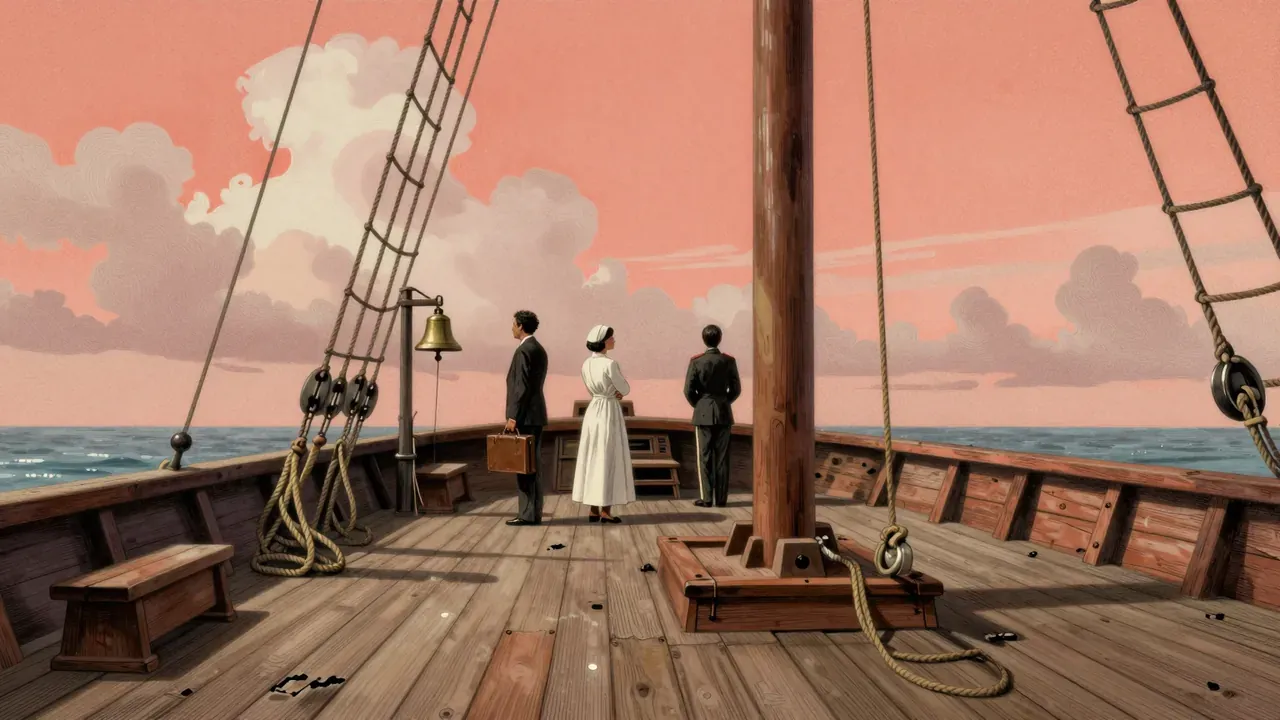
Med Hondo’s West Indies (1979) is a French-language arthouse drama filmed in Mauritania. Adapted from Daniel Boukman’s play Les négriers, it stages the transatlantic slave trade aboard a ship that doubles as theatre, using song, satire, and Brechtian technique to expose the administrative, theological, and linguistic scaffolding of French imperialism. Starring Fernand Berset, Roland Bertin, Gérard Bloncourt, Toto Bissainthe, and Hélène Vincent, it rejects historical realism in favour of forensic allegory.

13:00

Westfront 1918

Georg Wilhelm Pabst · 1930

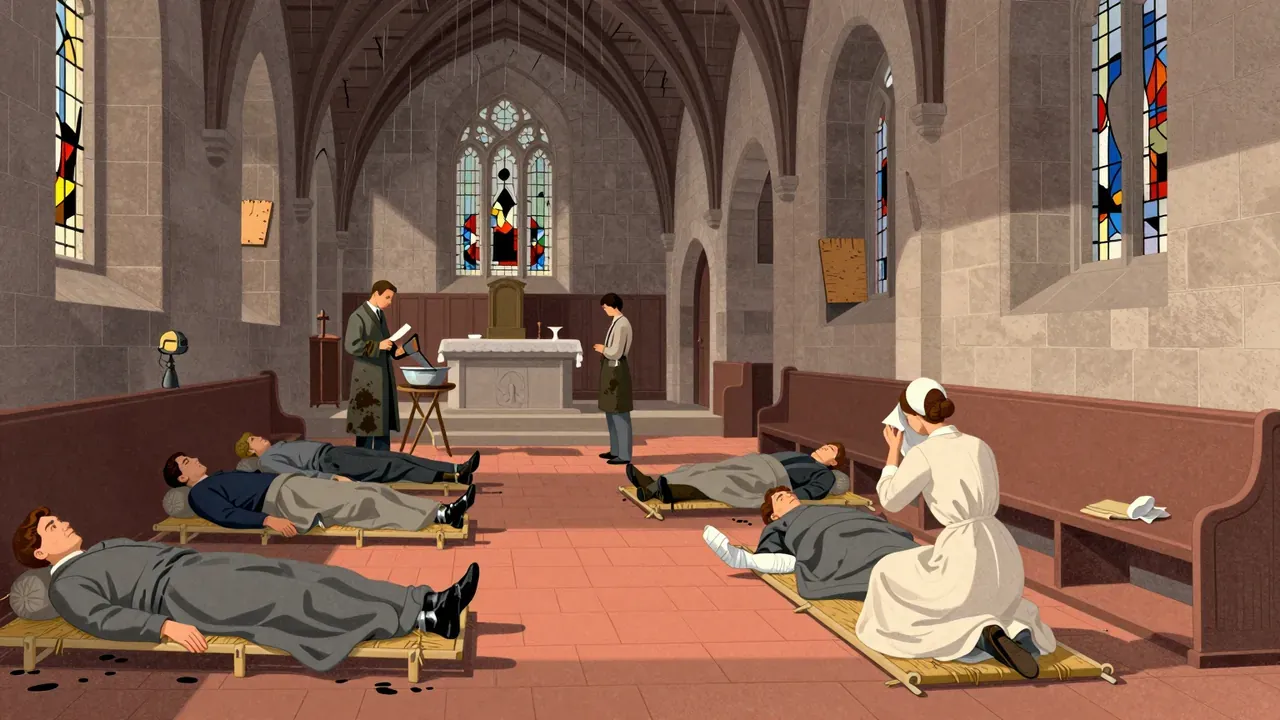
Georg Wilhelm Pabst’s 1930 German sound film Westfront 1918 follows four infantrymen on the Western Front in the final months of the First World War. Shot with documentary restraint and pioneering live trench audio, it depicts war as cumulative exhaustion rather than heroic action. Its power lies in physical detail — mud, collapsed trenches, field hospitals in ruined churches — not plot or character revelation. Banned by the Nazis as 'cowardly defeatism', it remains a key work of Weimar realism.

13:00

When We Were Kings

Leon Gast · 1996

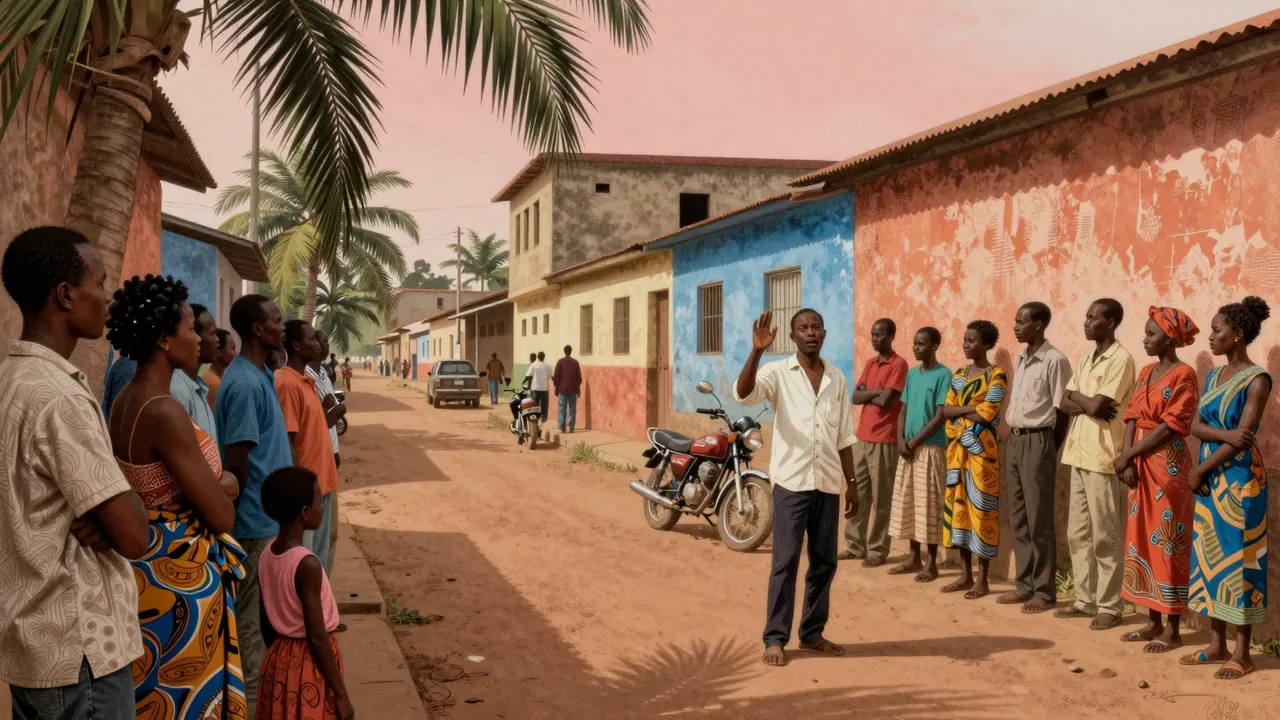
When We Were Kings (1996) is a documentary about the 1974 'Rumble in the Jungle' fight between Muhammad Ali and George Foreman in Kinshasa, Zaire. Directed by Leon Gast and edited over twenty-two years, it combines 1974 archival footage — of the fight, the Zaire 74 music festival, and Ali’s interactions with locals — with 1990s interviews by Norman Mailer, Spike Lee, George Plimpton and others. The film treats the event as a convergence of sport, race, postcolonial politics and personal reinvention, centring Ali’s agency and rhetorical power. It won the 1997 Academy Award for Best Documentary Feature.

13:00

Where is the Friend's Home?

Abbas Kiarostami · 1987

Abbas Kiarostami’s 1987 film follows eight-year-old Ahmad as he tries to return a classmate’s school notebook before the next day’s lesson, fearing expulsion. Set in rural Iran, it traces his walk between villages, his encounters with adults who fail to help, and his quiet determination to complete both boys’ homework when he cannot find the house. Shot in natural light with non-professional actors, it is a study in attention, obligation, and the unremarkable weight of small promises.

13:00

White Dog

Samuel Fuller · 1982

Samuel Fuller’s 1982 drama follows a white actress who adopts a stray dog trained to attack Black people on sight. When a Black trainer attempts to recondition it, the film becomes a stark, unsentimental inquiry into whether racism is a treatable reflex or an irreversible imprint. Shot in 45 days with clinical precision, it avoids moralising, opting instead for procedural realism—its power lies in what it refuses to show, explain, or resolve.

13:00

White Mane

Albert Lamorisse · 1953

White Mane (1953) is a 47-minute French short directed by Albert Lamorisse, filmed on location in the Camargue marshes. It follows a boy’s wordless pursuit of a wild white stallion, using minimal narration, natural light, and real landscapes to build a fable about endurance, reciprocity, and the limits of human control. Not a conventional children’s story, it resists explanation, favouring atmosphere and physical presence over plot or psychology.

13:00

White Material

Claire Denis · 2009

Claire Denis’s 2009 drama follows Maria Vial, a French coffee farmer in an unnamed African country, as she refuses to evacuate her failing plantation amid civil war. Anchored by Isabelle Huppert’s tightly coiled performance and Yves Cape’s humid, unvarnished cinematography, the film traces the slow, logical collapse of agency, inheritance, and meaning — not as tragedy, but as process. It avoids exposition, moral framing, and historical specificity, focusing instead on the material weight of objects, the silence between warnings, and the quiet violence of persistence.

13:00

White Nights

Luchino Visconti · 1957

Luchino Visconti’s 1957 adaptation of Dostoevsky’s ‘White Nights’ transposes the short story’s introspective melancholy into a meticulously controlled studio production. Set over three winter nights in a recreated Livorno, it follows Mario’s growing attachment to Natalia, who waits nightly for a lover who may never return. With Maria Schell, Marcello Mastroianni and Jean Marais, and cinematography by Giuseppe Rotunno, the film sustains a tone of quiet inevitability—rejecting catharsis in favour of emotional precision.

13:00

Who Are You, Polly Maggoo?

William Klein · 1966

William Klein’s 1966 French film is a satirical mockumentary following Polly Maggoo, an American model pursued by a television crew in Paris. Using fragmented editing, stylised photography, and deadpan performance, it dissects how media constructs identity through repetition, framing, and erasure — never resolving who Polly is, because the system it critiques has no use for her answer.

13:00

Wild 90

Norman Mailer · 1968

Norman Mailer’s Wild 90 (1968) is a black-and-white, 16mm experimental film shot over four nights in a Lower Manhattan apartment. Mailer, Mickey Knox, and Buzz Farbar improvise as gangster avatars, armed with props and liquor, their dialogue unscripted and heavily profane. D. A. Pennebaker’s cinematography is direct and unadorned; a technical flaw left a quarter of the soundtrack muffled — a choice Mailer preserved. Edited from 150 minutes to 90, the film rejects narrative, polish, and coherence in favour of raw, durational performance. Critically panned on release, it stands as a singular, abrasive document of Mailer’s cinematic ambition — less a story than a test of attention.

13:00

Wild at Heart

David Lynch · 1990

David Lynch’s 1990 Palme d’Or winner adapts Barry Gifford’s novel into a hyper-stylised Southern Gothic crime film starring Nicolas Cage and Laura Dern as a couple fleeing violence across the American South. Anchored by Elvis obsession, Wizard of Oz motifs and Angelo Badalamenti’s score, it trades psychological realism for emotional extremity — landing some sequences with unforgettable force, while others rely too heavily on shock. Its value lies in its unwavering commitment to a singular, dissonant vision.

13:00

Wildlife

Paul Dano · 2018

Paul Dano’s 2018 directorial debut Wildlife adapts Richard Ford’s novel into a precisely observed drama set in 1960s Montana. When Jerry loses his job, his wife Jeannette begins an affair with a local businessman, and their teenage son Joe bears quiet witness. With understated performances from Carey Mulligan, Jake Gyllenhaal and Ed Oxenbould, and Diego García’s muted cinematography, the film charts the slow, unspectacular unravelling of a marriage — and the ways children absorb adult failure as grammar, not event.

13:00

Winchester '73

Anthony Mann · 1950

Winchester ’73 (1950), directed by Anthony Mann and starring James Stewart, follows the turbulent passage of a prized Winchester 1873 rifle through seven owners across the American frontier. Structured as a chain of cause and effect rather than a linear quest, it foregrounds economy of form, psychological restraint, and moral ambiguity over myth or spectacle. Though groundbreaking in its use of the 'object-as-plot-engine' and influential on later genre filmmaking, its depiction of Indigenous characters remains reductive and its secondary roles underdeveloped. It rewards attentive, unsentimental viewing.

13:00

Wings

Larisa Shepitko · 1966

Larisa Shepitko’s 1966 debut Wings follows Nadezhda Petrukhina, a former WWII fighter pilot now working as a trade-school principal in the Soviet Union. Haunted by memories of combat and lost love, she struggles to connect with her adopted daughter, her students, and her own sense of purpose. Shot in black and white by Igor Slabnevich, with a restrained performance by Maya Bulgakova, the film traces the quiet erosion of identity when public myth outlives private meaning.

13:00

Wise Blood

John Huston · 1979

John Huston’s 1979 film Wise Blood adapts Flannery O’Connor’s 1952 novel with formal precision and moral gravity. Brad Dourif stars as Hazel Motes, a war veteran who founds an atheistic church only to spiral into self-annihilation. Shot in Georgia with Gerry Fisher’s subdued cinematography and Alex North’s sparse score, the film sustains a tone of grave absurdity, refusing psychological explanation or redemptive closure. Its power lies in its fidelity to O’Connor’s vision: belief and unbelief as equally binding, the body as theological text, and the American South as a landscape saturated with inherited conviction.

13:00

Withnail and I

Bruce Robinson · 1987

Withnail and I (1987) is a British black comedy written and directed by Bruce Robinson, following two unemployed actors — Withnail (Richard E. Grant) and Marwood (Paul McGann) — as they spend a disastrous weekend in a remote Lake District cottage owned by Withnail’s eccentric uncle Monty (Richard Griffiths). Shot on location in Cumbria and Hertfordshire, it uses precise dialogue, naturalistic cinematography and period-accurate music to chart a mood of late-1960s drift, addiction and fragile male friendship. Though now regarded as a cult classic, it resists easy classification: it is neither farce nor tragedy, but a tightly observed, linguistically rich study of stasis.

13:00

Woman of the Year

George Stevens · 1942

Woman of the Year (1942), directed by George Stevens, pairs Spencer Tracy and Katharine Hepburn for the first time in a romantic comedy about a globe-trotting political columnist and a down-to-earth sportswriter whose marriage strains under mismatched expectations. Written by Ring Lardner Jr. and Michael Kanin, with uncredited revisions by John Lee Mahin, the film balances sparkling dialogue and precise performances against a structurally compromised ending. It won the Academy Award for Best Original Screenplay and was added to the National Film Registry in 1999.
13:00

Women in Love

Ken Russell · 1969

Ken Russell’s 1969 Women in Love adapts D. H. Lawrence’s novel with fidelity to its psychological and philosophical core. Starring Glenda Jackson, Alan Bates, Oliver Reed, and Jennie Linden, it charts two sisters’ contrasting paths through love, intellect, and selfhood in post-war England and Switzerland. Billy Williams’s naturalistic cinematography and Georges Delerue’s restrained score support performances that prioritise presence over exposition. Though structurally uneven and occasionally opaque in its secondary arcs, the film remains a rare example of cinema treating ideas as visceral, not illustrative.

13:00

Women of the Night

Kenji Mizoguchi · 1948

Kenji Mizoguchi’s Women of the Night (1948) follows three women in post-war Osaka as each enters prostitution under distinct but converging pressures: infant mortality, syphilis, police raids, and familial rejection. Shot on location with Kinuyo Tanaka in a restrained, physically grounded performance, it avoids melodrama in favour of structural clarity — showing how poverty, gendered law, and institutional neglect produce outcomes with clinical precision. Though some characters remain schematic and its pacing resists modern expectations, its rigour and historical immediacy make it a vital, unsentimental reckoning with survival.

13:00

Women on the Verge of a Nervous Breakdown

Pedro Almodóvar · 1988

Pedro Almodóvar’s 1988 black comedy follows Pepa, a voice actress abandoned by her lover, as she navigates a day of escalating chaos in her Madrid apartment. With Carmen Maura at its centre, the film uses saturated colour, rapid editing, and tightly coiled farce to explore female agency, communication failure, and emotional extremity as rational response — not breakdown.

13:00

Wooden Crosses

Raymond Bernard · 1932

Wooden Crosses (1932), directed by Raymond Bernard, adapts Roland Dorgelès’s novel into a stark, unsentimental chronicle of French infantry life on the Western Front. Shot on location over real trenches, with veterans among its cast and meticulous sound design recreating battlefield acoustics, it follows a squad’s slow disintegration across rotations, patrols, and casualties. There are no heroes, no speeches, no score — only the weight of equipment, the texture of mud, and the quiet placement of wooden crosses. Its power lies in accumulation, not climax.

13:00

Working Girls

Lizzie Borden · 1986

Lizzie Borden’s 1986 drama Working Girls observes a single day in a Manhattan brothel, centring Molly — a Yale graduate working to support herself and her girlfriend — alongside colleagues Dawn, Gina and madam Lucy. Shot with documentary restraint by Judy Irola, it avoids moralising, instead attending to the rhythms of paid labour: bookings, client negotiations, shared space, racial bias in clientele, and the quiet cost of emotional management. It won Sundance’s Special Jury Recognition and was later restored by The Criterion Collection.

13:00

World on a Wire

Rainer Werner Fassbinder · 1973

Rainer Werner Fassbinder’s 1973 two-part television serial adapts Daniel F. Galouye’s Simulacron-3 as a cool, methodical inquiry into perception, memory, and institutional control. Set in a near-future West Germany indistinguishable from the present, it follows cyberneticist Fred Stiller as he uncovers layers of simulation — not as spectacle, but as bureaucratic fact. Shot on 16mm by Michael Ballhaus, scored sparsely by Gottfried Hüngsberg, and performed with deliberate restraint, it sustains a quiet, recursive unease across 210 minutes. Its power lies in accumulation, not climax: names disappear, people vanish, logic folds — all without fanfare.

13:00

Written on the Wind

Douglas Sirk · 1956

Written on the Wind (1956), directed by Douglas Sirk for Universal Pictures, is a Southern Gothic melodrama tracing the disintegration of a Texas oil dynasty. Kyle Hadley’s infertility, his sister Marylee’s obsessive desire, and Lucy Moore’s quiet resilience collide in a world where wealth functions as toxin and dignity as performance. Russell Metty’s cinematography, Dorothy Malone’s Oscar-winning turn, and Robert Wilder’s source novel anchor a film that prioritises symbolic coherence over psychological realism.

13:00

Wrong Move

Wim Wenders · 1975

Wrong Move (1975), directed by Wim Wenders and written with Peter Handke, follows Wilhelm Meister’s journey across West Germany as he attempts to become a writer. Shot by Robby Müller with stark, painterly compositions, the film reframes Goethe’s Bildungsroman as a critique of Romantic self-making. Its sparse dialogue, detached performances, and refusal of catharsis make it the most philosophically dense and emotionally austere entry in Wenders’ Road Movie trilogy.

13:00

Xala

Ousmane Sembène · 1975

Ousmane Sembène’s 1975 satire follows El Hadji, a Senegalese businessman whose sudden impotence coincides with his appointment to the Chamber of Commerce and his third marriage. As his business unravels and his authority crumbles, the affliction proves allegorical: a diagnosis of moral and political failure in post-independence Senegal. Stylised, unsentimental and precisely constructed, the film uses folk logic and social ritual to indict elite complicity, not individual weakness.

13:00

Y tu mamá también

Alfonso Cuarón · 2001

Set in 1999 Mexico, Y tu mamá también follows two teenage boys and a woman in her late twenties on a road trip to a mythical beach. Narrated with clinical detachment, the film observes their shifting alliances, sexual awakenings, and quiet confrontations with mortality and class — all shot in handheld, naturalistic style. It is a coming-of-age story that refuses to sentimentalise youth or simplify its contradictions.
13:00

Yojimbo

Akira Kurosawa · 1961

Akira Kurosawa’s 1961 jidaigeki follows a nameless rōnin who manipulates two warring yakuza factions into mutual ruin. Starring Toshirō Mifune, it uses stark composition, rhythmic editing and Masaru Sato’s jaunty, dissonant score to deliver a dry, structural satire of authority and competence. Made for Toho, it was Japan’s fourth-highest-grossing film of 1961 and later inspired Sergio Leone’s A Fistful of Dollars.

13:00

You Can Count on Me

Kenneth Lonergan · 2000

Kenneth Lonergan’s 2000 debut follows Sammy, a single mother and bank officer in the Catskills, as her drifting younger brother Terry arrives after years of silence. Their reunion exposes old fractures and fragile affections, played out in quiet rooms, rain-slicked streets, and the unremarkable routines of small-town life. With Laura Linney and Mark Ruffalo delivering restrained, deeply observed performances, the film builds meaning through accumulation rather than incident—honouring the weight of what goes unsaid.

13:00

Young Mr. Lincoln

John Ford · 1939

John Ford’s 1939 biographical drama follows a young Abraham Lincoln — played by Henry Fonda — from New Salem store clerk to Springfield lawyer, centring on a murder trial where logic and moral clarity defeat mob rule and false testimony. Shot in measured, shadowed compositions by Bert Glennon and Arthur Charles Miller, with a restrained score by Alfred Newman, the film builds Lincoln’s authority through gesture, silence and procedural rigour rather than speechifying or psychology. Though romantic subplots feel underdeveloped and historical compression sacrifices nuance, its ethical architecture and Fonda’s defining performance hold firm across eighty-five years.

13:00

Young Törless

Volker Schlöndorff · 1966

Volker Schlöndorff’s 1966 debut adapts Robert Musil’s novel into a stark, unsentimental study of moral passivity at an Austro-Hungarian military academy. Mathieu Carrière plays Thomas Törless, a boy who observes the sadistic abuse of a classmate without intervening — not out of malice, but intellectual detachment. Franz Rath’s flat, unadorned cinematography and Hans Werner Henze’s austere string score reinforce the film’s clinical tone. It is a work of precision, not persuasion: less concerned with condemning cruelty than with mapping how systems allow it to persist through silence, delegation and routine.

13:00

Youth of the Beast

Seijun Suzuki · 1963

Seijun Suzuki’s 1963 Nikkatsu crime film follows a disgraced detective infiltrating rival yakuza clans, but its real subject is the expressive potential of the genre’s surfaces: saturated colour, abrupt editing, and architectonic framing. It sacrifices psychological realism for formal rigour, treating loyalty, identity, and truth as tactical variables rather than moral absolutes. A pivotal work in Suzuki’s development, it rewards attention to craft over narrative closure.

13:00

Yoyo

Pierre Étaix · 1965

Pierre Étaix’s 1965 comedy Yoyo follows a French millionaire’s fall from wealth into circus life, and his son’s parallel rise from clown to film star. Structured as a series of precisely timed visual gags and period tableaux, it uses physical comedy to explore inheritance, class, and performance across the 1920s to the 1960s. Shot by Jean Boffety with restrained elegance, it favours rhythm over exposition and texture over psychology.

13:00

Z

Costa-Gavras · 1969

A 1969 French-Algerian political thriller directed by Costa-Gavras, Z dramatises the assassination of a left-wing Greek politician and the subsequent judicial cover-up. Built from real events and adapted from Vassilis Vassilikos’s novel, it follows a magistrate’s methodical investigation as institutional resistance mounts. Shot by Raoul Coutard and scored by Mikis Theodorakis, it won the Academy Award for Best International Feature Film and Best Film Editing. Its epilogue traces the collapse of democracy into military dictatorship — and the banning of the letter 'Z' itself.

13:00

Zatoichi and the Chess Expert

Kenji Misumi · 1965

The twelfth Zatoichi film follows the blind masseur as he travels with a shogi master, a grieving aunt, and her injured niece. Suspicion mounts as murders occur, each clue pointing toward the master—yet Zatoichi delays judgment, reading intent through games and gesture rather than proof. Directed by Kenji Misumi with austere control, it is a study in withheld certainty, where every pause and every move matters more than the final strike.

13:00

Zatoichi and the Chest of Gold

Kazuo Ikehiro · 1964

In Japan, 1964, Zatoichi travels to a drought-stricken village to pay respects at a grave — only to become entangled in the theft of 1,000 ryo raised for taxes. As corrupt officials, rogue samurai, and desperate bandits converge, he navigates a web of complicity without recourse to vengeance. Directed by Kazuo Ikehiro and shot by Kazuo Miyagawa, this sixth Zatoichi film marks a formal and ethical shift: quieter, more politically attentive, and anchored in the material reality of feudal obligation.

13:00

Zatoichi and the Doomed Man

Kazuo Mori · 1965

The eleventh Zatoichi film, released in 1965 and directed by Kazuo Mori, follows Shintarō Katsu’s blind masseur as he pledges to clear a wrongly jailed man’s name. Built on procedural restraint and moral economy, it delivers quiet intensity in its best moments but stumbles in narrative follow-through and character depth. Its strengths are cumulative, not climactic.

13:00

Zatoichi and the Fugitives

Kimiyoshi Yasuda · 1968

The eighteenth Zatoichi film finds Shintarō Katsu’s blind swordsman confronting a silk-weaving magnate who enforces debt bondage and shelters vicious fugitives. Directed by Kimiyoshi Yasuda with stark cinematography by Kazuo Miyagawa, it strips away mythic flourishes to focus on procedural cruelty and physical consequence — Zatoichi is wounded, outmatched, and morally unrelieved. The film’s rigour lies in its refusal to flinch, to explain, or to console.

13:00

Zatoichi and the One-Armed Swordsman

Kimiyoshi Yasuda · 1971

A Japanese–Hong Kong co-production starring Shintarō Katsu and Jimmy Wang Yu, this 1971 chambara-wuxia crossover stages a deliberate, unresolved encounter between two iconic swordsmen from separate cinematic traditions. Set in rural Japan, it follows Zatoichi and Wang Kang as they misread, clash, and briefly align against corrupt yakuza and a predatory priest — all without shared language or cultural framework. Its strength lies in physical storytelling and choreographic contrast; its limitation is its refusal to bridge the conceptual gap it so carefully constructs.
13:00

Zatoichi at Large

Kazuo Mori · 1972

The twenty-third Zatoichi film, released in 1972 under Toho after two decades with Daiei, follows the blind swordsman as he delivers a newborn to its kin after its mother’s death. Directed by Kazuo Mori and starring Shintarō Katsu and Rentarō Mikuni, it tightens narrative cause-and-effect but retains the series’ unadorned style and ritualised structure. While its central act of care gains quiet power, the climactic duel feels tacked-on, and thematic development remains incremental. It is a film of maintenance, not transformation.
13:00

Zatoichi Challenged

Kenji Misumi · 1967

The seventeenth Zatoichi film sees Shintarō Katsu’s blind swordsman escort a boy to his imprisoned father in Maebara, confronting corrupt officials, a yakuza boss, and finally his old friend Akazuka in a snowbound duel. Directed by Kenji Misumi with disciplined framing and Akira Ifukube’s sparse score, it sustains the series’ formal rigour while exposing the limits of its formula — rewarding deep familiarity more than first-time engagement.

13:00

Zatoichi Goes to the Fire Festival

Kenji Misumi · 1970

Zatoichi Goes to the Fire Festival (1970), directed by Kenji Misumi and starring Shintarō Katsu, is the twenty-first and Misumi’s final entry in the original Zatoichi series. Set in the late Edo period, it follows the blind swordsman as he confronts Yamikubo, a rival blind warlord who rules through fear and tribute. With cinematography by Kazuo Miyagawa and music by Akira Ifukube, the film uses the Fire Festival as both backdrop and moral crucible. It is a study in restraint — in performance, editing, and philosophy — closing a chapter not with spectacle but with accumulated weight.