The look of it
No Bears is a self-reflexive drama in which Jafar Panahi plays a version of himself directing a film remotely from a remote Iranian village near the Turkey border. The film sets up a dual narrative: one layer follows Panahi’s logistical and ethical entanglement with villagers over a rumour that he photographed a forbidden couple; the other tracks his livestreamed supervision of a docudrama about an Iranian couple seeking forged passports to flee the country. Neither plot is fully resolved, and neither is meant to be. The film’s intention is not to deliver resolution but to hold two forms of constraint — state censorship and communal superstition — in parallel, without hierarchy or simplification. It treats both as systems of control that shape behaviour through fear, rumour, and enforced silence. Panahi does not position himself as outsider or saviour; he is embedded, compromised, and ultimately powerless in both spheres. The film refuses allegory while operating entirely through implication: its form is its argument.
The shape of the story
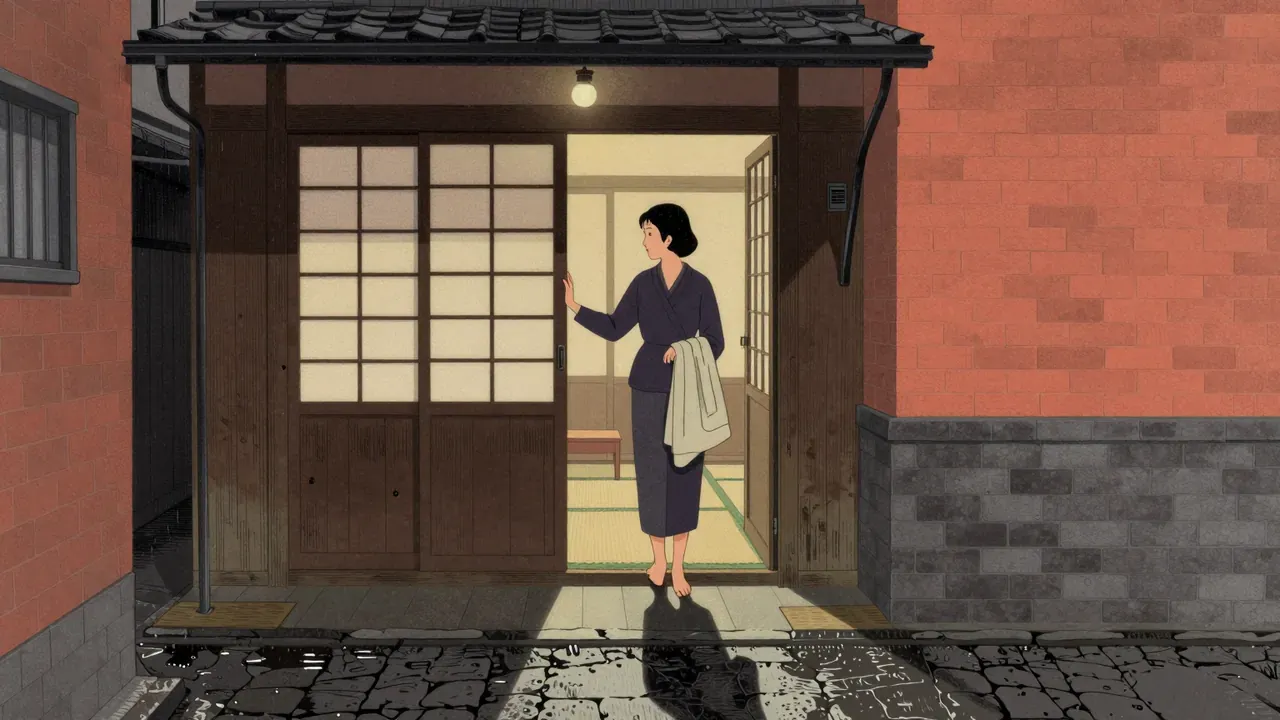
The story unfolds in long, unbroken takes, often shot from fixed positions inside rooms or on village paths, with minimal score and natural sound. Panahi’s performance is restrained, almost inert — he listens more than he speaks, reacts more than he initiates. Supporting actors, many non-professionals, avoid theatricality: their gestures are small, their pauses weighted by hesitation rather than timing. Gordon Willis is not involved; the cinematographer is Amin Jafari, who keeps exterior light flat and interiors dim, using available sources — ceiling bulbs, window spill — without diffusion or correction. Editing by Saeed Karamati avoids cross-cutting between the two narratives; instead, it alternates them in blocks, letting each accumulate its own rhythm and unease. Sound design privileges diegetic texture: wind, distant livestock, keyboard clicks, muffled arguments through walls. There is no music until the final frame, when a single piano note lingers — not scored, but recorded live on set during the last take, then left unedited.
What holds
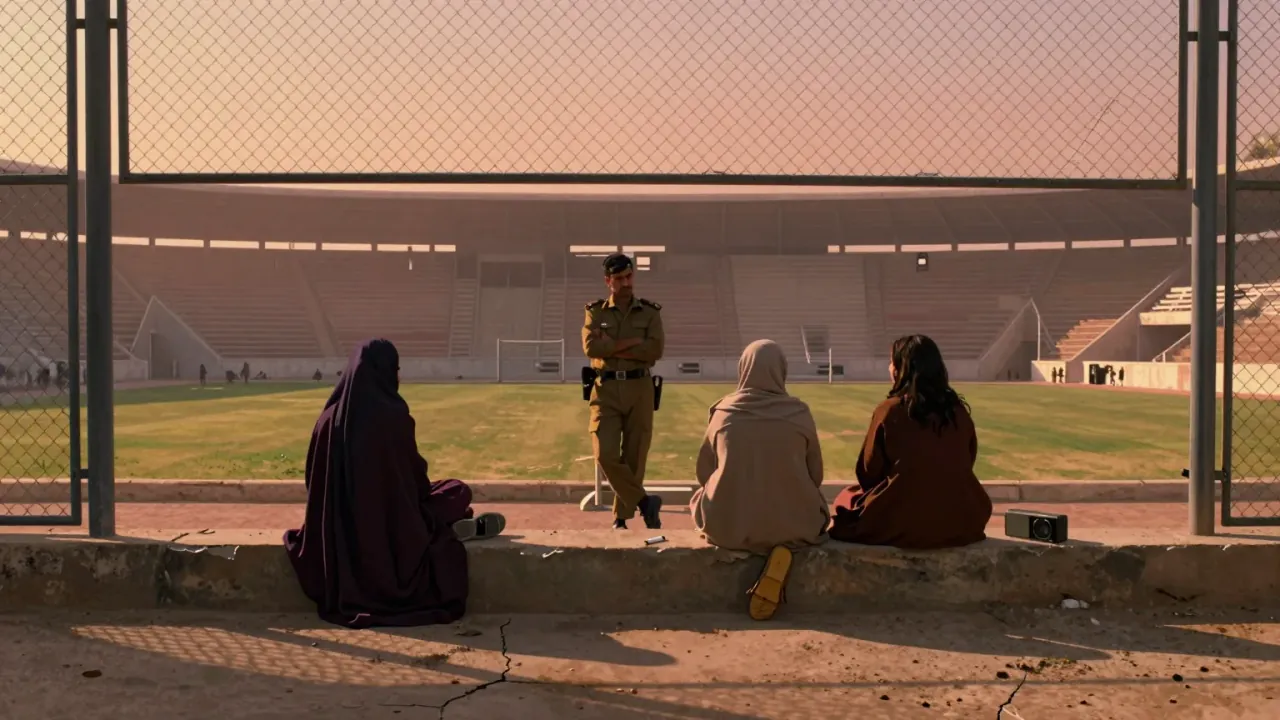
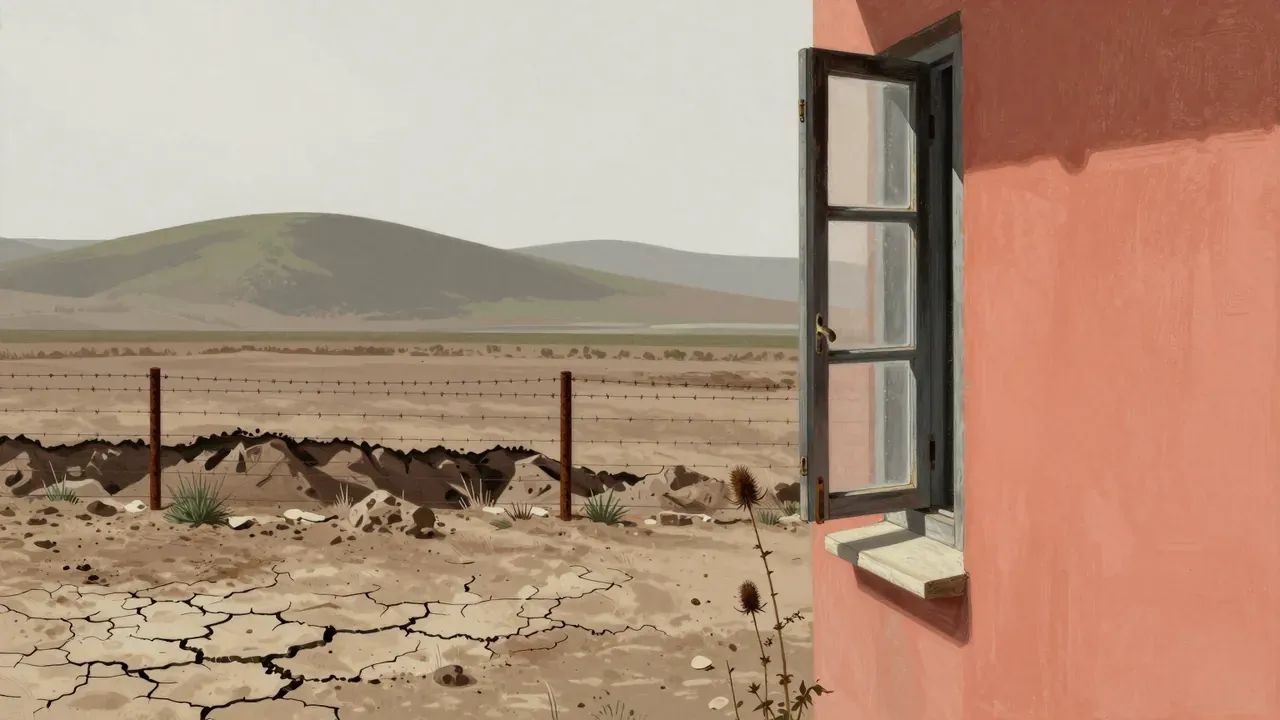
What lands is the cumulative pressure of unspoken rules — how they settle into posture, into silences, into the way people look away before answering. The scene where Panahi shows villagers his camera’s memory card, then hands over the card itself, carries real physical weight: the gesture is both proof and surrender, and the villagers’ continued doubt feels less like irrationality than a rational response to a world where evidence is routinely invalidated. The film’s refusal to resolve the photo dispute — or Zara’s fate — avoids moral neatness without collapsing into nihilism. Instead, it insists that some consequences are irreversible and some questions have no answerable form. The border is never crossed on screen, yet its presence is felt in every frame’s composition: horizon lines cut the image in half; doors open onto empty fields; windows frame distant hills that might be Turkey or might be nowhere. This spatial tension sustains the film’s quiet urgency.
What slips
What does not land is the structural doubling itself — the parallel between Panahi’s situation and Bakhtiar and Zara’s — when pushed too literally. The docudrama layer risks flattening into illustration rather than counterpoint: Bakhtiar’s lie about the passport, while thematically resonant, arrives late and is under-developed in motive and consequence, making Zara’s breakdown feel abrupt rather than inevitable. The film assumes familiarity with Panahi’s real-world arrest and ban, which may distance viewers unfamiliar with his history or Iran’s film licensing regime. Some exchanges — particularly the swearing-room confrontation — tip toward didacticism, where characters voice positions rather than inhabit them: Jacob’s anger reads as exposition, not eruption. The film’s commitment to ambiguity serves it well in atmosphere but occasionally undermines emotional continuity, especially in the final stretch, where deaths are reported off-screen with minimal reaction, leaving grief unanchored in performance or image.
The grammar of fear
The themes that matter are not freedom versus oppression, but the different grammars of coercion: bureaucratic, communal, technological, and self-imposed. The film treats superstition not as ignorance but as a functional social technology — the bear story functions like a law, regulating movement without requiring enforcement. Similarly, Panahi’s remote direction mirrors state surveillance: both depend on partial visibility, delayed feedback, and the assumption of guilt. The umbilical cord ritual is not exoticised; it is presented as a system with internal logic, just as Panahi’s filmmaking is a system with its own protocols and failures. The film also examines mediation itself: every image is filtered — through a laptop screen, a camera sensor, a rumour, a memory, a translation. Nothing is direct. Even Panahi’s presence is mediated: he is actor, director, subject, and absentee all at once. The film asks what truth looks like when every channel of transmission is compromised — not by malice alone, but by time, distance, language, and survival.
Who it is for
This film is for viewers who tolerate sustained ambiguity, who find tension in stillness, and who understand that a political film need not name names or stage rallies to register repression. It rewards attention to gesture, framing, and negative space — not plot mechanics. It is not for those who require narrative closure, clear moral positioning, or emotional catharsis. Viewers expecting a thriller about border crossing or a polemic against censorship will find its pace withholding and its structure elusive. Those who associate Iranian cinema solely with poetic realism or child protagonists may misread its dry, procedural tone. Its resistance to sentimentality means it offers no comfort — only precision. A viewer who values clarity over complexity, or who needs films to affirm rather than unsettle their assumptions about justice or agency, will leave frustrated. That frustration, however, is part of the film’s design — not a flaw in execution.
The weight of time
Yes, it is worth your evening — provided you watch it as a study in constraint, not as entertainment. Its 106 minutes unfold with the deliberation of a legal document or a village council meeting: nothing is rushed, nothing is wasted, and much is left unsaid. It demands patience not as a virtue but as a condition of engagement. Those who watch on phones or with interruptions will miss the accumulation of micro-tensions — the shift in a villager’s stance, the pause before a denial, the way light changes on a wall between scenes. It is not ‘difficult’ by accident; its difficulty is structural, built into the refusal to translate its terms for outside consumption. Someone who watches expecting momentum or revelation will feel short-changed. But someone willing to sit with its rhythms, to notice how silence thickens across scenes, will find it quietly devastating. Its value lies not in what it says, but in how thoroughly it enacts the conditions it describes.