What it is, and what it sets out to do
Night Train to Munich is a British spy thriller made in early 1940, released months after the outbreak of the Second World War. It sets out to entertain while dramatising the immediate threat of Nazi coercion across Europe — not as battlefield spectacle, but as personal abduction, surveillance and bureaucratic menace. The film adapts Gordon Wellesley’s short story ‘Report on a Fugitive’, though Sidney Gilliat and Frank Launder expanded it substantially, shifting focus from reportage to chase, disguise and moral improvisation. Its tone balances urgency with dry wit, treating espionage as both perilous and absurd — especially when filtered through English reserve and continental chaos. It does not aim for realism in the documentary sense, nor for psychological depth in its villains; instead, it builds momentum through tight plotting, spatial logic (train compartments, hotel corridors, mountain roads), and the friction between official roles and private motives. The studio is 20th Century Studios, the cinematographer Otto Kanturek, the composer Louis Levy: their work serves pace and clarity over atmosphere or flourish. This is a film built to hold attention, not to linger.
How it works
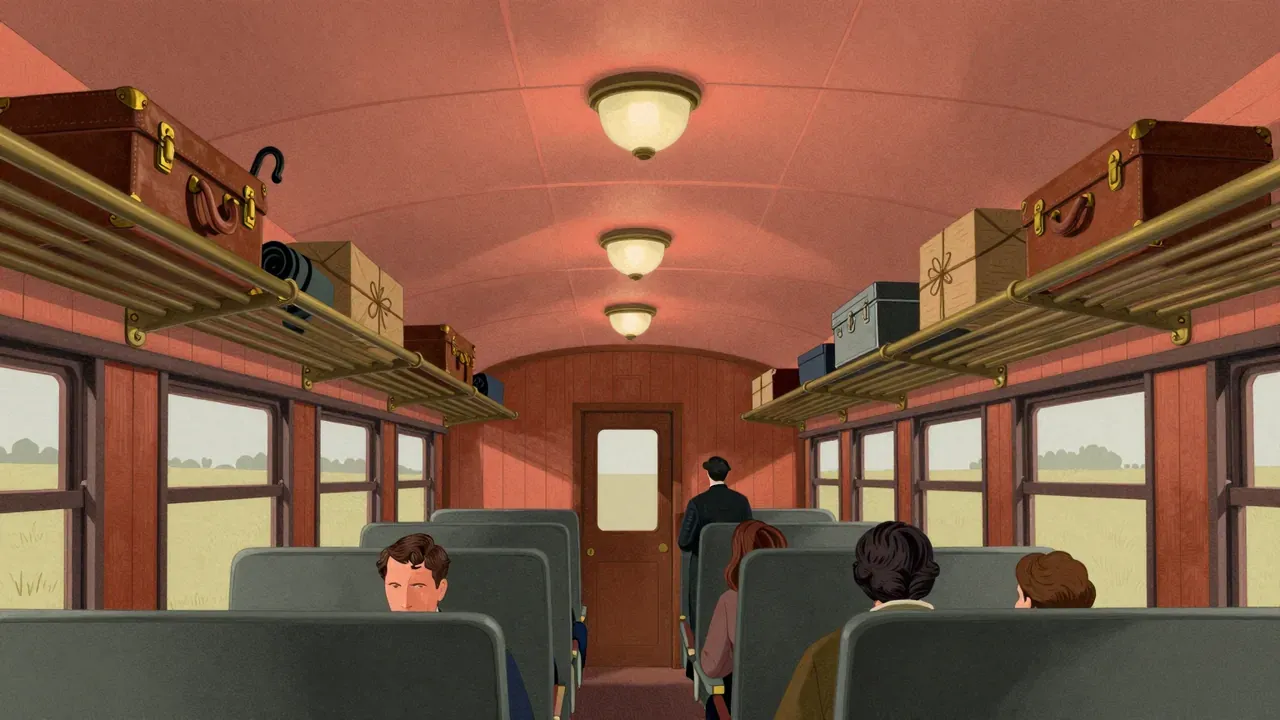
The story moves in clean, cause-and-effect steps: escape, pursuit, infiltration, reversal, flight. Rex Harrison plays Dickie Randall with a lightness that never tips into flippancy — his charm is tactical, his nerve calibrated. Margaret Lockwood’s Anna Bomasch is less reactive than in The Lady Vanishes; she argues, misleads, and endures without needing rescue as a default. Paul Henreid’s Karl Marsen is understated menace — no ranting, just quiet persistence and a glance that lingers too long. Basil Radford and Naunton Wayne reprise Charters and Caldicott not as comic relief but as functional witnesses: their cricket talk anchors the film in a recognisable England even as it hurtles through Berlin and the Bavarian Alps. Kanturek’s camerawork is unshowy but precise — tracking shots on the train, tight framing in the hotel room, low angles during the tramway climax. Editing by R.E. Dearing sustains rhythm without flash; Levy’s score underscores tension but rarely dictates it. The script’s strength lies in economy: every line advances plot or defines character, and no scene overstays its structural purpose.
What lands
What lands is the film’s sustained tonal control — its ability to treat Nazi threat seriously while refusing solemnity. The Gestapo are dangerous but not mythic; their authority is bureaucratic, their methods procedural. That makes Randall’s deceptions feel plausible: he wins not by superior force but by exploiting gaps in their assumptions — about class, accent, paperwork, even romantic convention. The train sequence works because its stakes are clear, its geography legible, and its interruptions grounded: a station guard halting the train, Charters overhearing a phone call, Caldicott slipping a warning. These are small human interventions in a machine of state violence. The final tramway chase lands not as spectacle but as logical culmination — a race where physics, timing and nerve decide the outcome. Even the embrace at the end feels earned, not sentimental: it follows a sequence of mutual risk, not narrative obligation. The film trusts its audience to follow cause and effect without exposition, and rewards that trust with coherence and momentum.
What does not
What does not land is the thinness of the Nazi antagonists beyond Marsen. Captain Prada and Admiral Hassinger exist only to be fooled; they have no motive beyond function, no texture beyond uniform. Their lack of dimension makes Randall’s deception feel less like cunning and more like inevitability — which dulls the suspense. The science-fiction edge of Bomasch’s armour-plate invention is never clarified or tested; it remains a MacGuffin with no technical weight or political consequence. Anna’s interrogation in the camp is mentioned but not shown, leaving her resilience unanchored in image or duration. The film also leans too heavily on Charters and Caldicott’s mannerisms — their repetition works once, less so the third time, and their presence in Berlin strains plausibility without satirical payoff. There is no attempt to locate the characters within Czechoslovakia’s real political fracture; Prague is a backdrop, not a context. The film avoids history’s complexity in favour of narrative efficiency, and that efficiency sometimes reads as evasion.
The themes that matter
The themes that matter are loyalty under duress, the instability of identity in wartime, and the quiet subversion of bureaucracy. Randall assumes a German officer’s name, rank and romantic history — not to impersonate evil, but to navigate it. His disguise is not moral compromise but operational necessity, and the film treats it as such, without irony or apology. Anna’s letter to Marsen — with its tell-tale postmark — is an act of calculated vulnerability, not naivety. The film questions what allegiance means when national borders dissolve and institutions turn predatory: Bomasch works for the Royal Navy, but his value is technological, not ideological; Marsen serves the Gestapo, but his method is persuasion, not brute force. Even the railway guard who halts the train does so out of habit, not heroism — a reminder that systems persist, and sometimes stall, regardless of war. The film’s moral centre is not righteousness but responsiveness: doing what works, within limits you cannot choose.
Who should watch it, and who should not
This film is for viewers who value plot architecture over psychological excavation, who enjoy wit that arises from situation rather than quip, and who find tension in precision — a correctly timed train stop, a misread rank insignia, a telegram sent to the wrong office. It suits those familiar with 1930s British studio craft, or those willing to meet its pacing on its own terms. It is not for viewers who require moral ambiguity in villains, historical specificity in setting, or emotional exposition in performance. Those who expect wartime films to foreground trauma, resistance networks or ideological debate will find Night Train to Munich too streamlined, too light on context. A viewer who values visual symbolism over spatial logic, or who needs villains with interiority, would likely judge it shallow. Its pleasures are structural and rhythmic, not symbolic or immersive — and that is a deliberate choice, not a failure.
Is it worth your evening
Yes, it is worth your evening — provided you approach it as a tightly wound mechanism, not a window onto history or psyche. At ninety-three minutes, it moves without pause, resolves cleanly, and leaves no loose ends. Its pleasures are cumulative: the satisfaction of a plan executed, the relief of a near-miss timed to the second, the dryness of a line delivered mid-crisis. It does not ask for empathy so much as engagement — with its logic, its tempo, its rules. Those who dislike films where protagonists succeed through competence rather than catharsis may find it emotionally distant. But its craftsmanship holds up: Kanturek’s framing, Dearing’s cuts, Gilliat and Launder’s dialogue all serve the same end — forward motion. It is not profound, but it is exact. And in a genre often bloated by exposition or inflated by style, exactness is rare, and worth the time.