The purpose of it
Original Cast Album: Company is a documentary film that records the studio session for the original Broadway cast recording of Stephen Sondheim’s 1970 musical. It makes no attempt to explain the plot, rehearse the show’s themes, or introduce characters beyond their names and roles. Its aim is narrower and more precise: to document the labour of translating live theatre into a fixed audio artefact. D. A. Pennebaker’s crew filmed over twenty hours across two days at Columbia Records’ 30th Street Studio, beginning Sunday 3 May — five days after the show opened on Broadway. The film does not frame itself as historical record or cultural commentary; it treats the session as a self-contained event, one governed by time, fatigue, technical constraint, and the unspoken pressure to produce something definitive in a single take. There is no voiceover, no interviews shot later, no explanatory titles. What appears on screen is what happened in the room, as it happened — or as much of it as the cameras captured.
The look of it
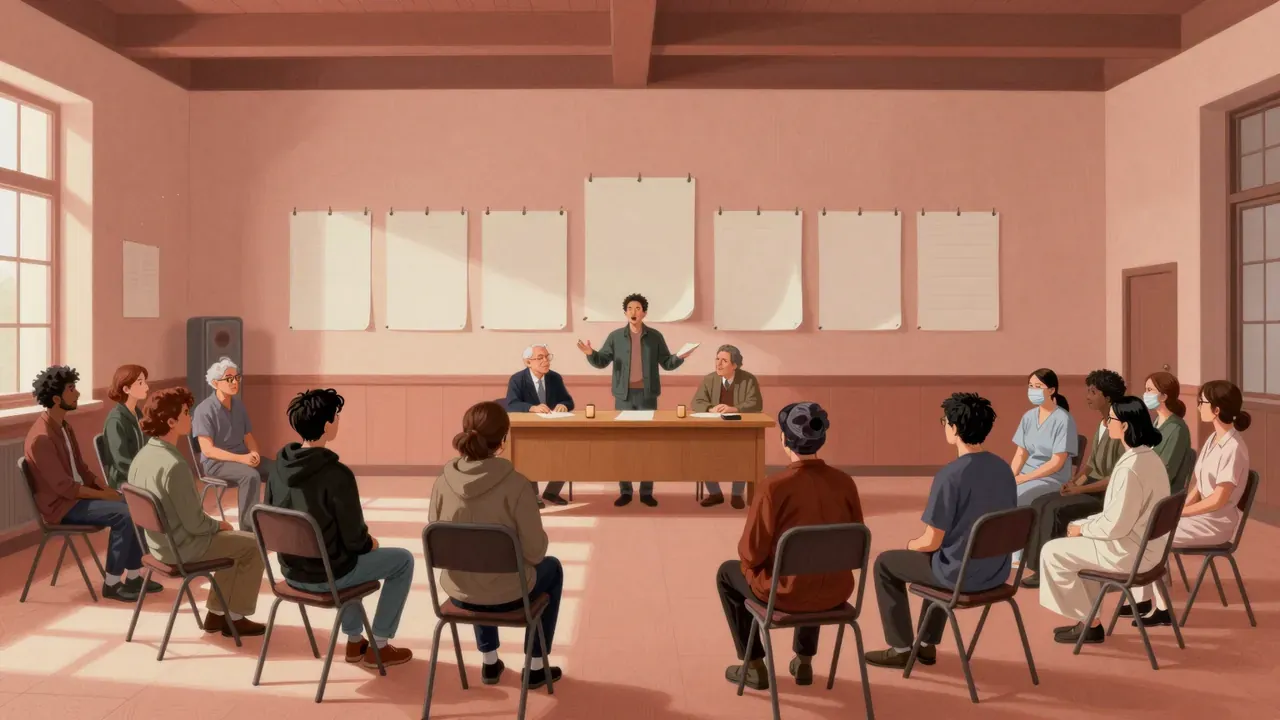
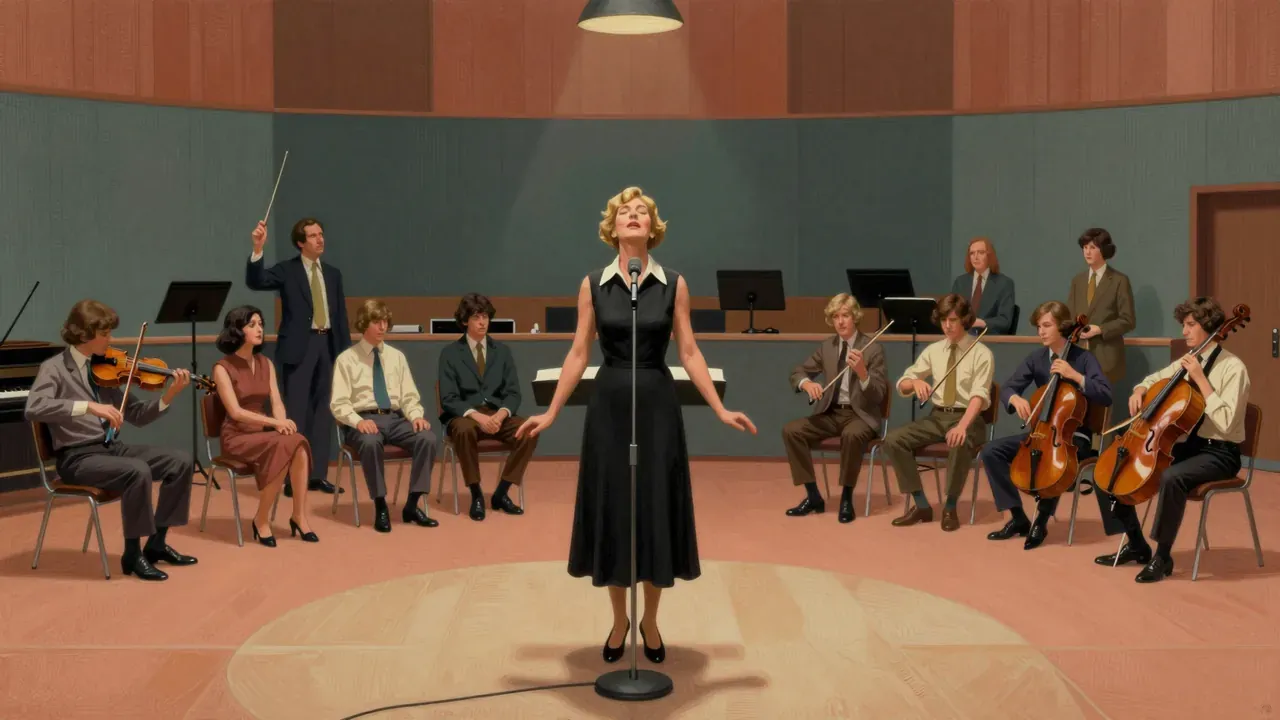
The film works through accumulation rather than narrative. It follows no protagonist but moves between performers, conductor Harold Hastings, producer Thomas Z. Shepard, and composer Stephen Sondheim as they navigate multiple takes of songs including ‘Getting Married Today’, ‘Being Alive’, and ‘Another Hundred People’. Four cameras operated simultaneously, capturing overlapping angles: close-ups of lips and hands, wide shots of the orchestra pit, medium frames of singers straining under studio lights. Gordon Willis was not involved; the cinematography is functional, grainy, and unvarnished — 16mm newsreel texture, lit by available studio lamps and fluorescent strips. Editing is sparse and chronological, with minimal cuts between takes. Performers appear as they are: Barbara Barrie adjusting her collar mid-take, Beth Howland’s voice cracking on a high note, Dean Jones repeating lines with quiet exhaustion. There is no score beyond the diegetic music; silence between takes is left intact, punctuated only by Shepard’s calm instructions or Sondheim’s murmured suggestions.
The weight of it
What lands most firmly is the physical toll of repetition. Elaine Stritch’s struggle with ‘The Ladies Who Lunch’ anchors the film not because it is dramatic in a theatrical sense, but because it is anatomical: her shoulders drop, her jaw tightens, her breath shortens, her pitch wobbles — all visible without commentary. The decision to stop the vocal track and record the orchestral backing separately feels earned, not contrived, because the film has spent hours showing how sound degrades before the ear notices. Similarly, the contrast between Stritch’s hollow-eyed midnight performance and her bright, fully made-up Wednesday matinee version — shown in the final minutes — lands with quiet authority. It is not a triumphal edit but a factual juxtaposition: the same person, same song, different conditions. The film also captures Sondheim’s working method with clarity: his attention to consonant placement, his patience with phrasing, his willingness to drop key or adjust tempo not for ease but for emotional truth. These moments do not need framing — they are legible in gesture and pause.
The silence around it
What does not land is any sense of broader context — and the film makes no claim to provide it, so this is not a failure of execution but of expectation. Viewers looking for insight into Company’s reception, its place in Sondheim’s development, or the mechanics of Broadway production will find none. There is no mention of the show’s mixed initial reviews, no reference to Dean Jones’s departure from the role shortly after opening, no explanation of why certain songs were prioritised or cut from the album. The sponsorship switch from Eastern Airlines to Chrysler appears nowhere on screen — nor does the fact that the film was originally conceived as a pilot for a series. The absence of background is deliberate, but it leaves some sequences opaque: why Stritch’s solo was scheduled so late, why Shepard’s intervention felt like a rupture, why the ensemble numbers were recorded first. Without those connective threads, the tension reads as procedural rather than human — a gap the film refuses to bridge, and rightly so, but one that narrows its accessibility to those already familiar with the show or its making.
The labour in it
The themes that matter are endurance, precision, and dignity in compromise. The film treats recording not as artifice but as craft — one requiring stamina, listening, and mutual trust among musicians, singers, and technicians. It shows how artistic decisions emerge from fatigue: when Stritch drops the key, it is not caprice but conservation; when Shepard stops the take, it is not dismissal but stewardship. The film also explores the asymmetry of labour: the orchestra plays the same passage dozens of times while singers wait, then sing the same phrase until their voices fray. There is no hierarchy asserted — just observation of who bears what weight, and when. Another theme is the fragility of presence: the camera watches Stritch cry in her dressing room, but only because Fritz Holt intervenes to stop the crew. That moment is not about exposure but about boundary — and the film honours that boundary even as it records its breach. These are not stated ideas but patterns built across hours of footage: the way time bends under pressure, how authority expresses itself in quiet speech, how professionalism looks when it is exhausted but unbroken.
The audience for it
This film is for people who watch musicians tune instruments, who read liner notes, who notice microphone placement in concert films, or who have sat through three takes of the same line in a rehearsal room. It is for students of musical theatre, recording engineers, or anyone curious about how collective art becomes fixed. It is not for viewers who require exposition, character arcs, or resolution — there is no before or after, only the middle stretched thin. Those expecting a portrait of Sondheim or Prince will be disappointed; neither speaks at length, and both remain figures in the periphery. Some critics have found the pacing glacial, and they are not wrong — the film asks for sustained attention to incremental change, not revelation. A viewer who dislikes longueurs, or who associates documentary with argument or advocacy, will feel adrift. But the film’s slowness is structural, not incidental: it mirrors the session itself. To reject it on those grounds is to reject the subject.
The time it takes
Yes, it is worth your evening — provided you approach it as an object of study rather than entertainment. Its ninety-minute duration matches the real-time rhythm of the session, and its rewards are cumulative: the deeper you settle into its pace, the more detail emerges — a raised eyebrow from Sondheim, a glance between Stritch and Shepard, the exact moment the strings catch a harmonic that wasn’t there before. It is not for someone seeking uplift or narrative closure, nor for those unwilling to sit with uncertainty and repetition. A viewer who prefers tightly edited, narratively driven documentaries — say, those of Errol Morris or Alex Gibney — may find it inert. But if you value fidelity over flourish, observation over interpretation, and the dignity of process over the glamour of result, then this film repays attention in full. Its value lies not in what it says, but in what it lets you witness — unmediated, unsped-up, unexplained.