The look of it
Paris Belongs to Us is Jacques Rivette’s first feature, a deliberately unresolved drama set in late-1950s Paris among a circle of young artists and intellectuals. It does not aim to tell a coherent mystery but to sustain an atmosphere of unmoored dread: the sense that something unseen is tightening around its characters’ lives. The film treats paranoia not as a symptom to be diagnosed but as a shared condition, ambient and structural, shaped by Cold War tensions, exile, artistic failure, and the weight of unspoken histories. Its ambition lies in evoking a collective mood rather than advancing plot; it builds tension through ellipsis, repetition, and withheld information, refusing closure on Juan’s death, Gérard’s fate, or the existence of any conspiracy. Rivette and co-writer Jean Gruault treat narrative as porous, allowing Shakespearean allusion, real-world political reference, and psychological fragmentation to coexist without hierarchy. This is not a puzzle to solve but a state to inhabit — one where language frays, motives blur, and causality dissolves into rumour and exhaustion. It is a film about how fear circulates when certainty vanishes.
The shape of the story
The story unfolds across cramped apartments, rehearsal rooms, and rain-slicked streets, held together less by incident than by accumulation: overheard phrases, glances held too long, sudden silences. Charles Bitsch’s cinematography avoids polish; his camera lingers at medium distance, often from doorways or behind furniture, reinforcing the characters’ sense of being watched or trapped. Performances are muted but precise — Betty Schneider’s Anne registers doubt and curiosity without exposition, François Maistre’s Pierre carries a quiet, unexplained weariness, and Daniel Crohem’s Philip speaks in looping, urgent cadences that feel less like madness than over-attunement. Editing by Denise de Casabianca favours duration over rhythm: scenes run long, pauses stretch, and transitions avoid emphasis. Philippe Arthuys’s score is sparse, mostly piano and strings used to underscore unease rather than signal it. There are no dramatic crescendos, only sustained low frequencies and sudden absences of sound. The craft works collectively to deny catharsis, treating suspense as a texture rather than a device.
The rooms it lives in
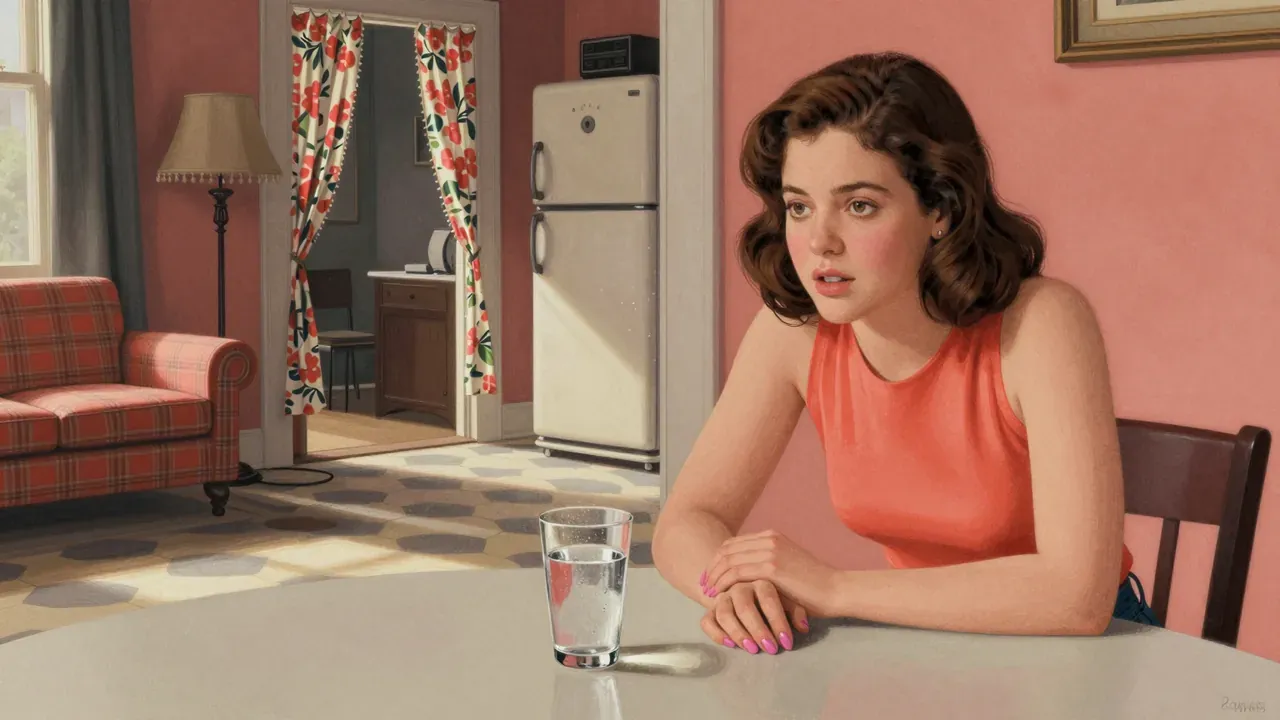
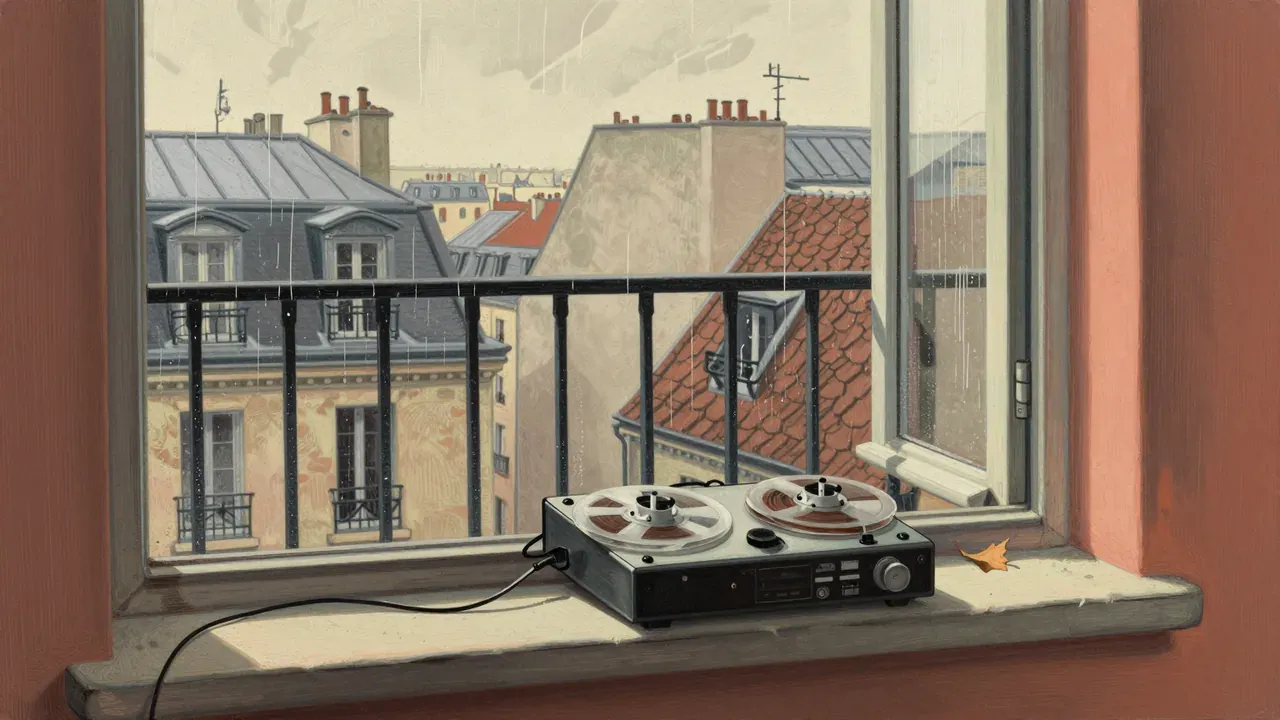
What lands is the film’s physicality — the damp chill of unheated rooms, the clutter of second-hand furniture, the way light falls across peeling wallpaper and typewritten pages. It captures a specific bohemian milieu with documentary fidelity: the exhaustion of unpaid rehearsals, the friction between idealism and rent, the intimacy of shared cigarettes and borrowed coats. The Shakespearean thread — Pericles rehearsed in fragments, lines quoted haltingly — lands not as literary ornament but as lived counterpoint: myth echoing contemporary dislocation. Rivette’s use of real locations (notably the Place des Vosges and narrow streets near the Seine) grounds the abstraction in tangible geography. The cameos — Chabrol, Demy, Rivette himself — do not distract because they are absorbed into the film’s fabric: minor presences in a world already thick with overlapping lives. Most successfully, the film sustains its central ambiguity. It never confirms whether the conspiracy exists, and that refusal feels earned, not evasive — the result of observing how fear spreads not through evidence but through contagion of tone and gesture.
The weight of the unknown
What does not land is the pacing for viewers expecting narrative propulsion. At 140 minutes, the film’s longueurs test patience without always justifying their length; some scenes linger past the point where stillness becomes atmosphere and tip into inertia. The dialogue, while carefully written, can feel hermetic — references to Francoist Spain, McCarthyism, or the Parisian avant-garde assume more context than the film supplies. Characters like Terry and Gérard remain emotionally opaque, not by design but through underwritten motivation: their actions register, but their inner logic stays distant. The film’s resistance to explanation occasionally reads as avoidance rather than rigour, particularly in the final act, where deaths occur off-screen and consequences dissolve into murmured speculation. Some performances — notably Jean-Claude Brialy’s Jean-Marc — feel underused, present but not integrated into the film’s nervous system. The lack of resolution works thematically, but it also denies emotional anchorage, leaving certain relationships feeling like sketches rather than portraits.
The air it breathes
The themes that matter are not those named outright — Cold War, exile, artistic labour — but how they interlock to produce a particular kind of modern anxiety. This is a film about the erosion of agency: characters speak of forces beyond their control, yet never name them precisely, because the threat is diffuse — institutional, historical, psychological, even metaphysical. It treats conspiracy not as a plot but as a grammar: a way of making sense when cause and effect no longer hold. The recurring motif of unfinished art — Juan’s missing recording, Gérard’s stalled production, Anne’s hesitant reading — points to creativity as both refuge and vulnerability. Existentialism here is not philosophical posturing but daily practice: choosing to rehearse, to translate, to stay in a room despite dread. The title, Paris nous appartient, is bitterly ironic — the city belongs to no one, least of all its inhabitants, who move through it like tenants in a building whose foundations are shifting. What matters most is how the film renders uncertainty not as absence but as a presence with weight, texture, and duration.
Who it asks to stay
This film is for viewers who value sustained mood over momentum, who find intellectual and emotional reward in ambiguity, and who are comfortable sitting with unresolved questions for two hours and twenty minutes. It suits those familiar with mid-century French intellectual culture or willing to engage with it on its own terms — not as backdrop but as lived reality. It is not for viewers who require clear character arcs, narrative payoff, or psychological exposition. Those who rely on genre signposts — thriller pacing, detective logic, or even conventional drama stakes — will likely find it withholding or inert. Critics who judged it ‘incomprehensible’ in 1961 were not wrong about its resistance to easy parsing; the film demands active, patient attention, not passive consumption. A viewer who values clarity above all, or who finds exhaustion aesthetically unrewarding, should not watch it — though such a viewer might revise that verdict after seeing Rivette’s later work, where similar strategies yield sharper formal returns.
Why it lasts
Yes, it is worth your evening — but only if you accept its terms. It repays attention not with answers but with accumulated resonance: the way a line of Shakespeare echoes differently on the third hearing, how a repeated street corner begins to feel charged with meaning, how silence between characters grows heavier each time it returns. Its value lies in its singularity — few films so thoroughly commit to sustaining a single, complex emotional key without modulation or relief. Those who find it frustrating are not mistaken; its difficulty is structural, not accidental. A shorter cut would weaken it, and a more explanatory script would betray its purpose. It is worth watching once, attentively, then setting aside — not because it exhausts itself, but because its power resides in its refusal to yield fully, even on repeat viewings. To ask whether it is ‘enjoyable’ misunderstands its aims; its worth lies in how thoroughly it occupies a space few other films dare enter.