A deliberate echo
Police Story 2 is a Hong Kong action film released in 1988, directed by and starring Jackie Chan, continuing the arc of his character Sergeant Chan Ka-kui. It attempts to sustain the physical logic and moral clarity of the first film while accommodating commercial expectations for escalation: more stunts, broader comedy, tighter pacing, and a higher-stakes threat. Unlike its predecessor, it leans less on procedural realism and more on set-piece choreography, with plot serving primarily as scaffolding for action sequences rather than psychological or institutional inquiry. The film assumes familiarity with the first instalment’s tone and stakes but does not require narrative continuity to follow its beats — Ka-kui’s demotion, May’s safety, the return of Chu Tao and John Ko all function as shorthand for audience alignment. Its ambition is not structural innovation or thematic expansion but calibrated repetition: the same man, same ethics, same body, placed under new mechanical pressures. It treats genre convention as infrastructure, not constraint — the police force, the shopping mall, the fireworks warehouse are all stages built for impact, not realism. Word count: 148
How it moves
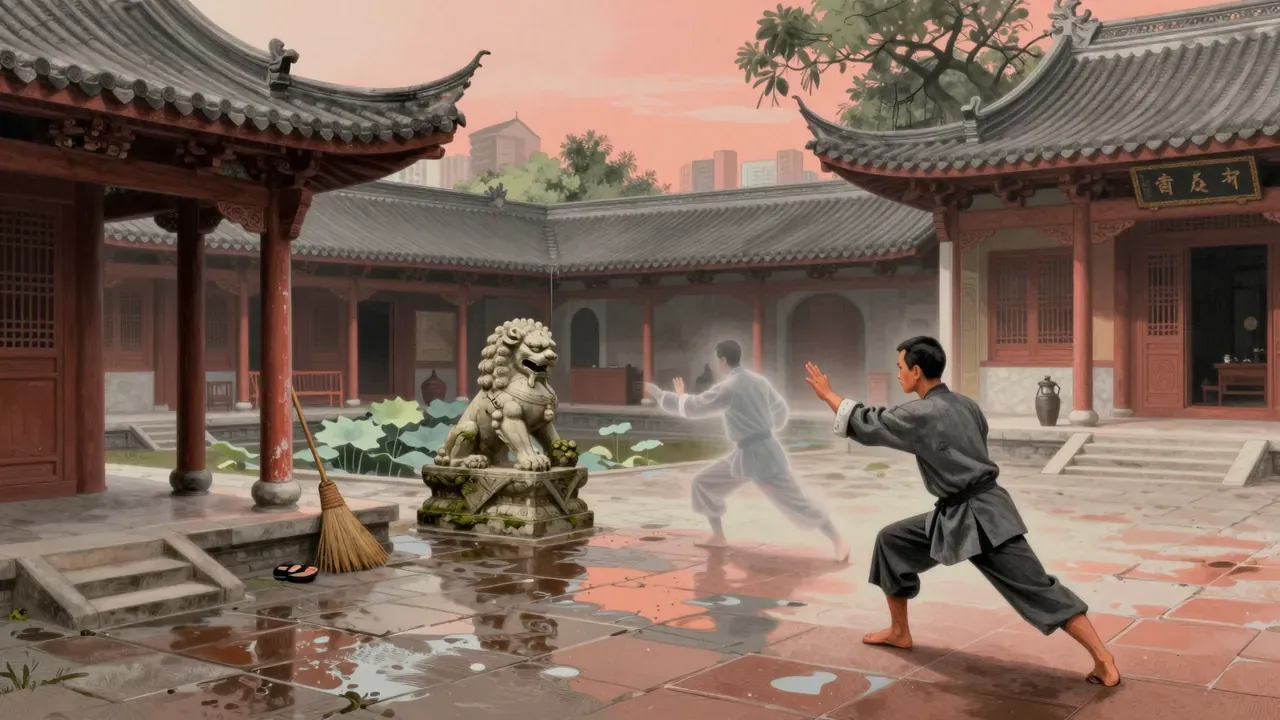
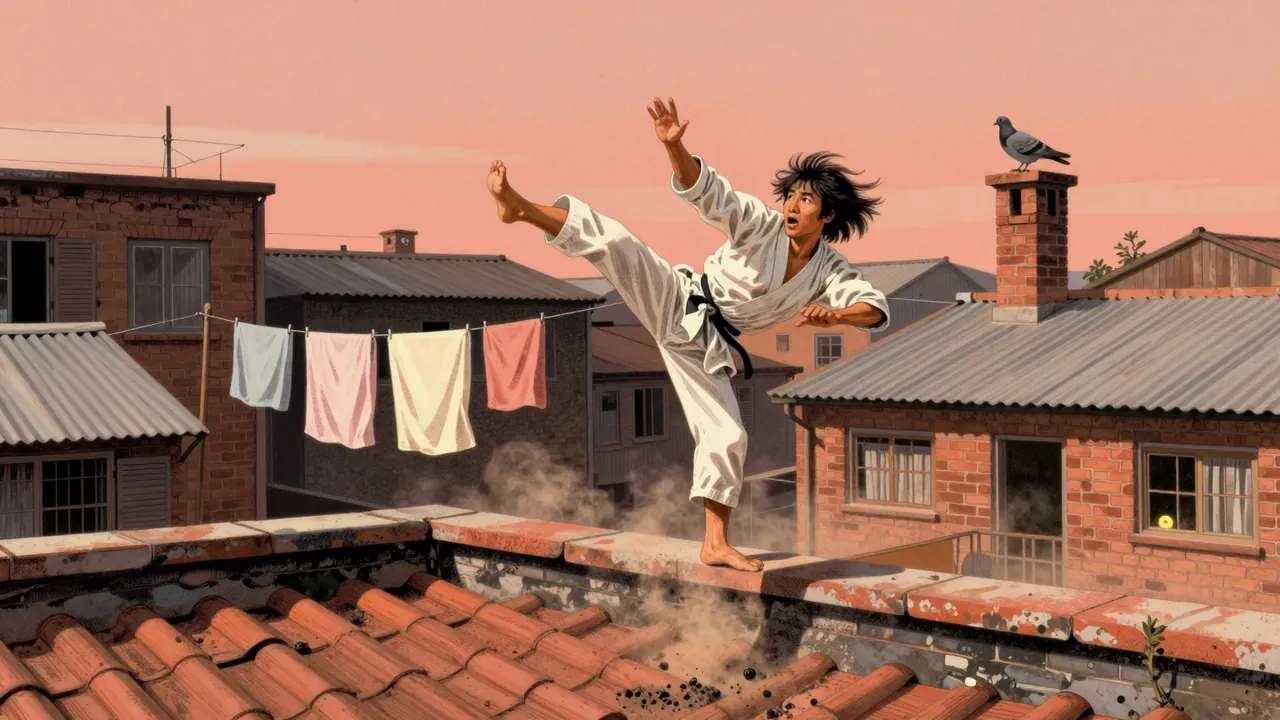
The story moves briskly through exposition, provocation, resignation, re-engagement, and climax, with minimal detours into character interiority. Jackie Chan’s performance remains grounded in physical specificity: his reactions are timed to breath and weight, not line readings. Maggie Cheung’s May is written with warmth but little agency beyond catalyst and hostage; Bill Tung’s Uncle Bill retains dry authority without elaboration. Edward Tang and Chan’s script tightens dialogue but sacrifices the first film’s quiet domestic texture — the travel agency scene, for instance, functions only as plot pivot, not emotional transition. J. Peter Robinson’s score is functional, underscoring without colouring; Gordon Willis did not shoot this film — the cinematography is by Arthur Wong, who keeps wide shots clean and stunt coverage uncluttered. Action choreography, which won the 1989 Hong Kong Film Award, is the film’s central craft: each sequence builds from a clear spatial premise — the mall evacuation, the deaf-mute’s bang-snap duel, the fireworks warehouse finale — and resolves through tactile cause and effect. Word count: 152
What holds true
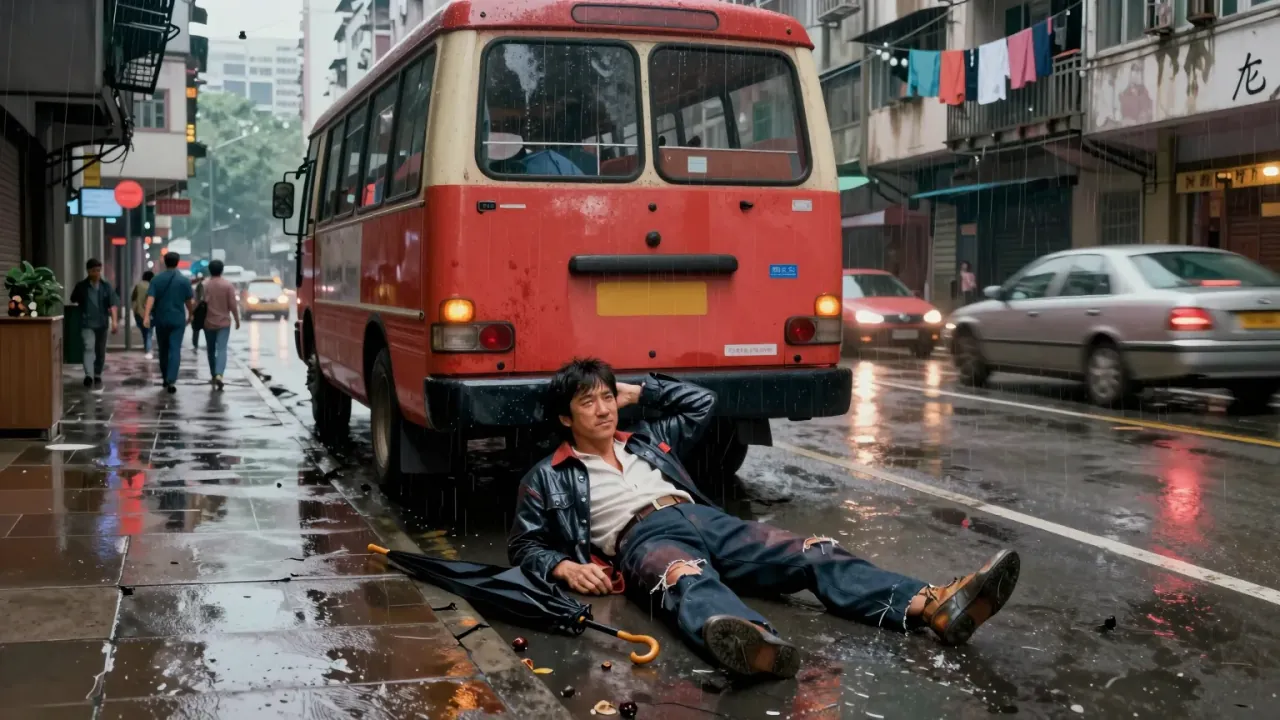
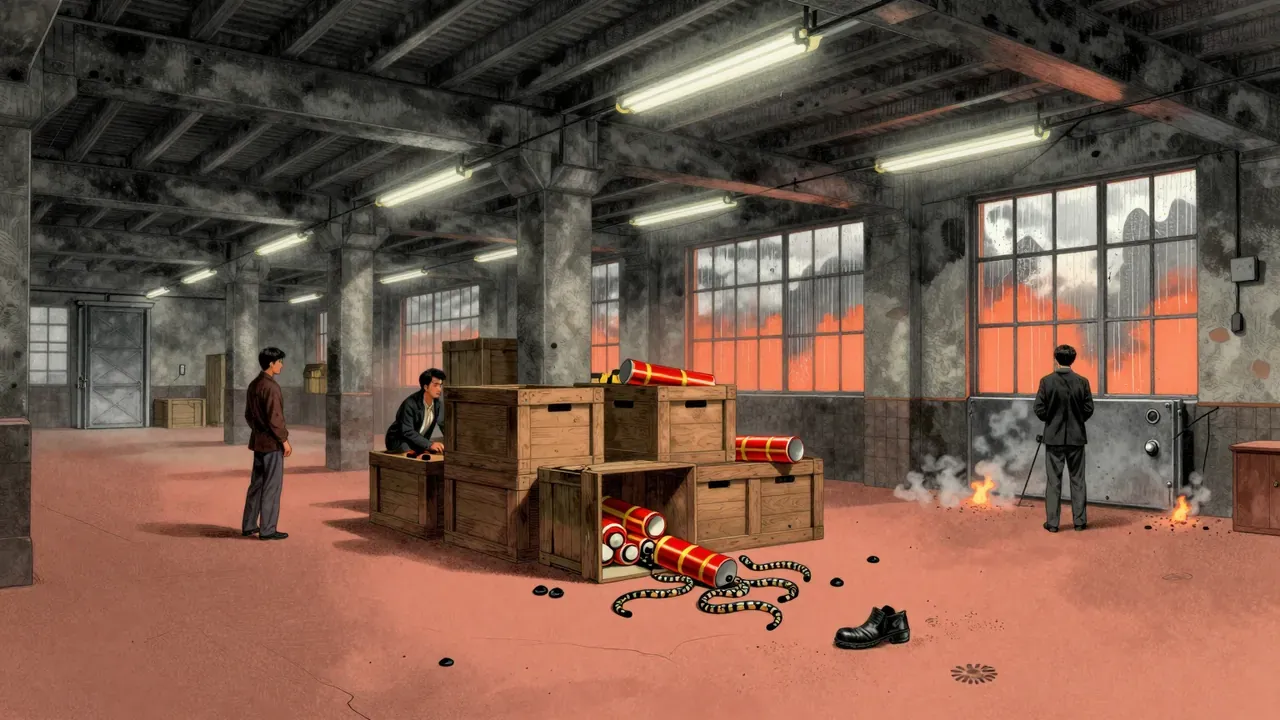
What lands is the precision of the stunt work and the coherence of its physical grammar. The mall explosion sequence works because the fire alarm decision is both impulsive and defensible, the evacuation feels urgent but not chaotic, and the blast itself is framed with architectural awareness — we see the ceiling collapse before the shockwave hits. The final warehouse fight lands because the fireworks are treated as environment, not decoration: their noise, light, and instability shape every movement, and Chan’s use of bang snaps against the deaf-mute is a rare moment where narrative logic and stunt logic converge. The comedy lands in timing, not gags — the travel agency clerk’s deadpan response to Ka-kui’s sudden reappearance, the way Bill Tung’s Inspector Wong sighs before handing over a file. Even the tonal shift from domestic ease to violent escalation feels earned by the film’s own rhythm: three minutes of quiet routine, then Chu Tao’s car pulls up. There is no irony in the staging, no winking at the audience — the film trusts its own momentum, and that trust is repaid in clarity. Word count: 150
Where the frame slips
What does not land is the attempt to treat the bomb plot as serious thriller material. The villains lack motive beyond spite, and their plan — simultaneous attacks on property company and police headquarters — collapses under even cursory scrutiny: no surveillance, no contingency, no operational discipline. The deaf-mute antagonist is visually striking but emotionally inert; his silence is never explored as perspective, only as tactical obstacle. The film’s attempt to deepen Ka-kui’s moral conflict — his resignation, his shame — is undercut by how quickly it is resolved: he is reinstated before the second act ends, and the ethical weight evaporates. The romance between Ka-kui and May exists only in setup and peril, never in reciprocity or shared history. The export cuts, particularly the 95-minute UK version, excise connective tissue so severely that character decisions appear arbitrary. Kim Newman’s observation holds: the film tones down destruction but not consequence, leaving action sequences unmoored from stakes that feel earned. Word count: 156
What it believes
The themes that matter are duty as reflex, not choice; professionalism as muscle memory; and public safety as collective improvisation. Ka-kui does not weigh options when the mall is threatened — he acts, then accepts responsibility. His reinstatement is not reward but reassignment: the system absorbs his breach because it needs his instincts more than its rules. The film treats policing not as bureaucracy but as embodied response — hence the emphasis on foot chases, hand-to-hand timing, and environmental reading. The recurring motif of hearing — the deaf-mute’s silence, the bang snaps’ sharp report, the muffled detonations inside the tunnel — frames perception as contested terrain, not passive reception. There is also a quiet theme of obsolescence: Chu Tao’s terminal illness, Raymond Li’s off-screen retirement, the fading presence of Peking opera training in Chan’s physical vocabulary — all suggest a world where old disciplines persist but no longer anchor institutions. These are not argued, but held in the frame: in the way Ka-kui pauses mid-chase to check a child’s safety, or how the camera stays low during the warehouse collapse, watching debris fall like rain. Word count: 152
Who it speaks to
This film is for viewers who value stunt choreography as narrative language, who watch action films for cause-and-effect clarity rather than psychological revelation, and who accept that Hong Kong studio filmmaking of this era prioritises rhythm over realism. It rewards attention to spatial logic, costume consistency across takes, and the subtle shifts in Chan’s posture between ‘off-duty’ and ‘in motion’. It is not for viewers who require sustained character development, morally ambiguous antagonists, or plot mechanics that withstand scrutiny. Those who found the first Police Story too loud or too literal may find this sequel’s compression alienating. Anyone expecting the melancholy texture of Project A or the social detail of City Hunter will be disappointed. The film’s pleasures are kinetic and cumulative, not episodic — skipping ahead or pausing breaks its pulse. Its ideal viewer watches it twice: once for the story, once for the wire rigging in the mall staircase shot. Word count: 150
What it gives you
Yes, it is worth your evening — provided you approach it as a masterclass in action sequencing, not as a character study or social document. Its 105-minute runtime passes without drag because every scene serves either escalation or release, and the stunts are filmed with such spatial honesty that they hold up decades later. Those who dismiss it as ‘just stunts’ misunderstand its discipline: the tunnel escape works because the filmmakers knew exactly how far radio signals travel, and the fireworks warehouse works because they mapped fuse burn rates against floor height. It is less essential than the first Police Story, but more refined in its craft priorities. Anyone who values editing that follows physics over emotion, or music that cues rhythm not mood, will find it satisfying. Those who demand thematic density or narrative surprise will leave unfulfilled — but that is not what this film promises. Word count: 149