What it is trying to do
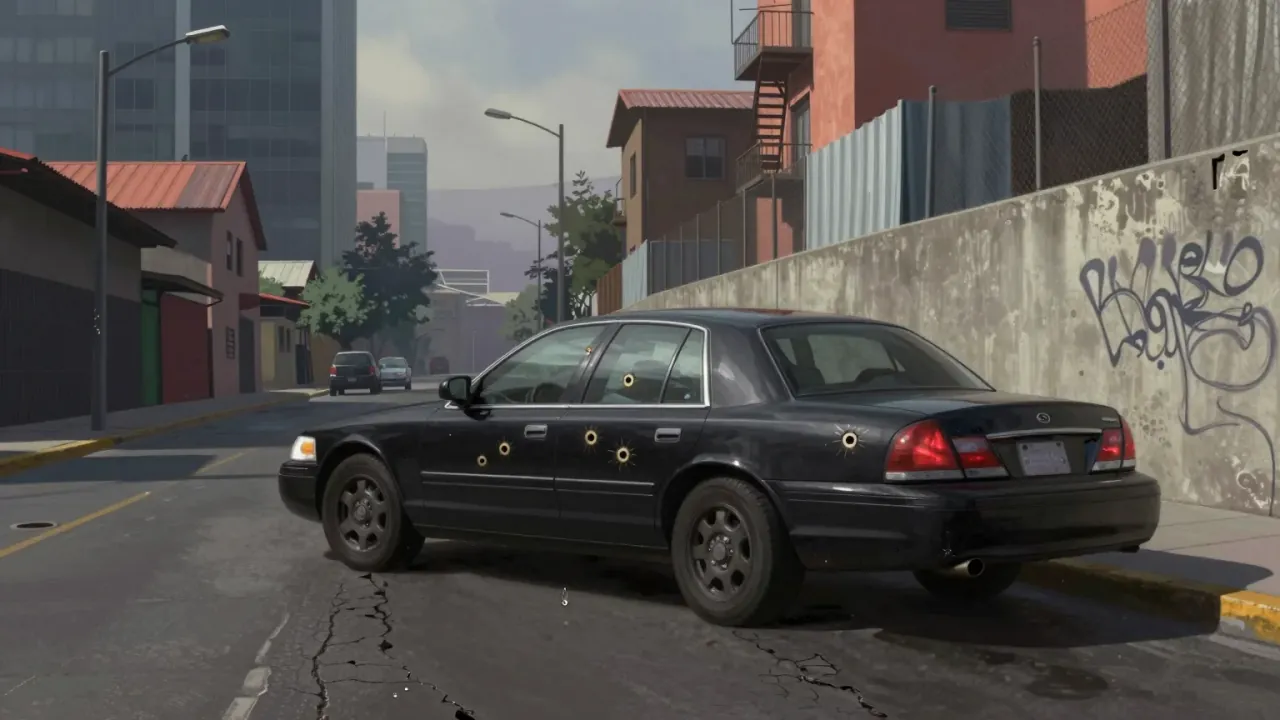
Pixote is a Brazilian crime film that sets out to show the systemic abandonment of children in São Paulo and Rio de Janeiro at the turn of the 1980s. It does not dramatise poverty as backdrop or metaphor; it treats institutional failure — in juvenile detention, policing, sex work, drug trade and informal labour — as the unbroken surface of daily life. The film adapts José Louzeiro’s non-fiction book A Infância dos Mortos, and its method follows that source: it avoids psychological exposition, moral framing or narrative uplift. Characters are named but rarely explained; motivations are implied through action, not dialogue. Babenco and Durán do not ask the audience to empathise on terms of shared humanity so much as to register the mechanics of exploitation — how a ten-year-old is recruited, trained, used and discarded across overlapping hierarchies of violence. The film’s ambition is documentary fidelity, not catharsis. It refuses to distinguish between perpetrator and victim where power flows along the same channels: prison guards, pimps, clients, cops and child criminals all operate within one indifferent economy. (158 words)
How it works
The story moves through episodes rather than arcs: arrest, reformatory abuse, escape, drift, petty crime, betrayal, collapse. There is no protagonist’s growth, only attrition. Fernando Ramos da Silva, cast as Pixote, performs with the uninflected stillness of someone who has already absorbed too much; his face registers neither shock nor defiance, only a low-grade vigilance. Marília Pêra, as Sueli, gives a performance rooted in physical exhaustion — her gestures are slow, her voice hoarse, her posture folded inward. Rodolfo Sánchez’s cinematography avoids stylisation: he uses available light, handheld movement only where necessary, and frames that keep characters small against urban backdrops — Viaduto Santa Ifigênia, Rio beaches, Ibirapuera Park. John Neschling’s score is sparse, mostly absent in early scenes, returning only as ambient dissonance during moments of rupture. The editing by Geraldo Sarno and Jô Soares maintains a flat temporal rhythm, refusing to accelerate or linger for emphasis. Dialogue is functional, untranslated in places, often overlapping or cut off — not to obscure meaning, but to replicate the texture of being unheard. (159 words)
What lands
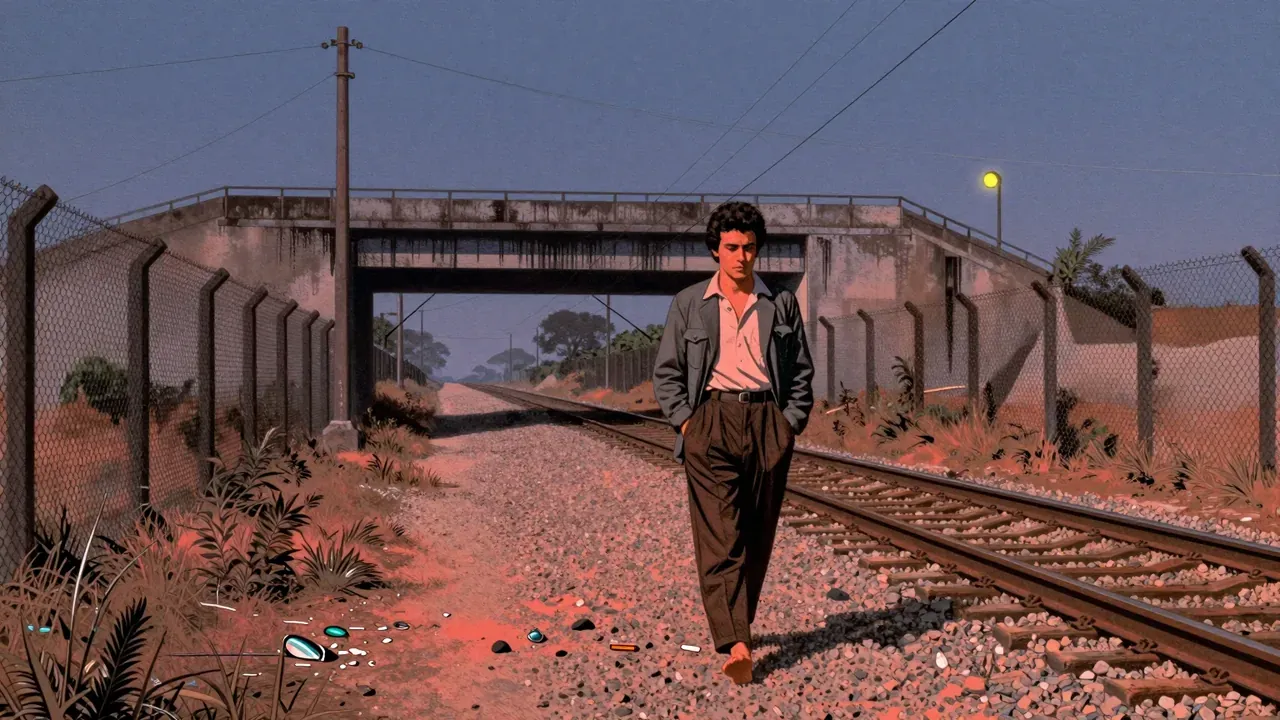
What lands is the film’s refusal to aestheticise suffering. The reformatory sequences — glue-sniffing, sexual coercion, arbitrary punishment — are shot without reaction shots or musical cues to guide feeling. The camera watches, then holds, then cuts away before resolution. This restraint makes the violence more legible as routine, not spectacle. The casting of non-professionals whose lived experience overlaps with their roles — including several former street children — produces a consistency of gesture and speech that resists theatricality. When Pixote sucks at Sueli’s breast and she recoils, the moment works not because it is shocking, but because it is understated: her flinch is slight, his hand remains still, the silence lasts just long enough to register both need and revulsion. The film’s strongest passages are those where language drops away entirely: the train-line walk at the end, the beach scenes where children swim while adults negotiate deals offshore, the long take of Pixote staring at a mirror after stabbing Débora. These are not symbolic moments but observational ones — the film trusts the image to carry weight without explanation. (157 words)
What does not
What does not land is the film’s attempt to sustain thematic coherence across its full runtime. The shift from FEBEM to Rio introduces new characters — Cristal, Débora, the American client — whose functions feel schematic rather than inevitable. Dito’s arc, particularly his sudden attachment to Sueli and subsequent death, lacks the grounding given to Pixote’s earlier experiences; his motivation reads as plot necessity rather than character logic. The cocaine deal sequence relies on coincidence — the group happens upon a showgirl who happens to cheat them — and the resulting escalation feels less like consequence and more like narrative compression. Some scenes, especially those involving adult sex work, risk flattening complex economies into shorthand: Sueli’s illness is mentioned but never shown, her abortion history left vague, her agency obscured by the group’s collective dependence on her. The film’s documentary impulse occasionally falters when it leans on genre conventions — the robbery gone wrong, the accidental shooting — without fully integrating them into its own logic of cause and effect. These moments do not break immersion so much as dilute the film’s central claim: that nothing here is exceptional, only repeated. (156 words)
The themes that matter
The themes that matter are not poverty or crime in the abstract, but the erosion of relational possibility. Pixote seeks care — from Chico, from Lilica, from Dito, from Sueli — and each attempt is met with indifference, transaction, or violence. The film shows how institutions do not merely fail children; they train them to expect no reciprocity, no protection, no continuity of self. Glue sniffing is not addiction as pathology but as temporary suspension — a way to stop feeling the weight of being watched, used, or forgotten. The title’s ‘law of the weakest’ is not irony but description: the film charts how power operates not through hierarchy alone, but through the systematic withdrawal of witness. No adult in the film intervenes meaningfully — not the guards, not the pimps, not the police, not even the clients who pay for sex or drugs. The absence of moral framing is itself thematic: there is no outside perspective from which to judge, only the accumulated evidence of what happens when no one is held to account. The final railway walk is not despair made visible, but the logical endpoint of a world where survival requires erasing the self before others can. (155 words)
Who should watch it, and who should not
This film is for viewers who accept that some realities resist interpretation, and who do not require narrative resolution to feel engaged. It suits those accustomed to neorealist pacing, unvarnished performances, and stories that withhold emotional signposting. It is not for viewers who rely on character arcs, moral clarity, or tonal relief — there is no levity, no irony, no counterpoint to the film’s gravity. Those who find documentary-style acting emotionally distant, or who expect cinematic craft to heighten rather than recede, will likely disengage. Parents of young children may find its depiction of child exploitation distressing not because it is sensationalised, but because it is so matter-of-fact. Critics who value formal innovation over social observation — or who associate ‘realism’ with authenticity rather than method — may regard its approach as underdeveloped. A viewer who values catharsis, redemption, or even basic narrative cohesion would reasonably reject it. That verdict would not be mistaken, only incompatible with the film’s design: Pixote does not ask to be liked, only witnessed. (158 words)
Is it worth your evening
Yes, it is worth your evening — if you are prepared to sit with its duration, its silences, its refusal to offer comfort or explanation. Its 128 minutes are not paced for ease but for accumulation: each scene adds another layer of evidence, not argument. The film earns its weight not through intensity but through persistence — it does not shout, it repeats. Its value lies in how little it asks of the viewer beyond attention, and how much it gives back in return: a precise, unsentimental record of how systems grind down the unrepresented. Those who find it unremitting have not misread it; they have registered its purpose. To call it ‘difficult’ is accurate, but incomplete — its difficulty is structural, not stylistic. It demands no special knowledge, only willingness to meet it on its own terms: as testimony, not entertainment. Anyone who believes cinema can function as ethical documentation — not illustration — will find it indispensable. Its endurance in critical esteem since 1980 is not nostalgia, but confirmation: few films hold this line so steadily. (159 words)