filmbriefs
Newest

All briefs

2035 briefs · 26452 min · 385–480 on page 5 of 22
13:00

For All Mankind

Al Reinert · 1989

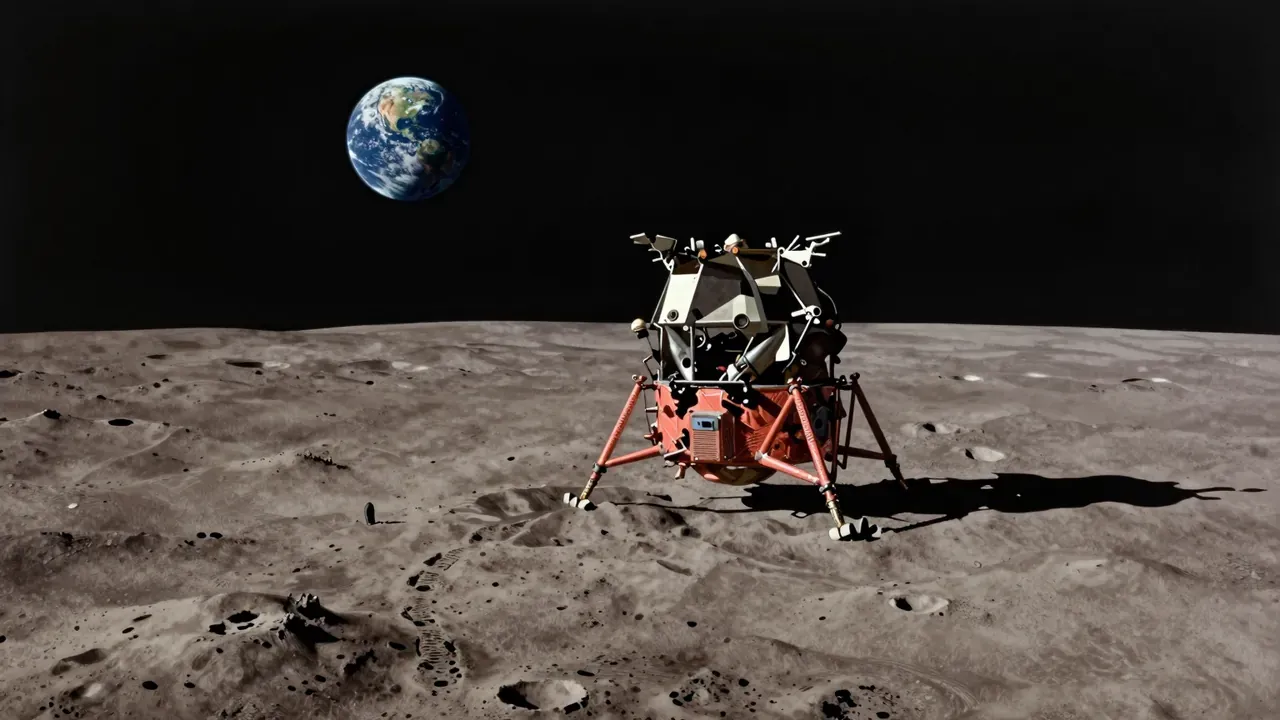
Al Reinert’s 1989 documentary For All Mankind assembles six million feet of NASA film into a single, continuous lunar mission, using astronauts’ interview voices and Brian Eno’s ambient score to evoke the physical and psychological experience of spaceflight — prioritising sensation over explanation, silence over speech, and scale over story.
13:00

Forbidden Games

René Clément · 1952

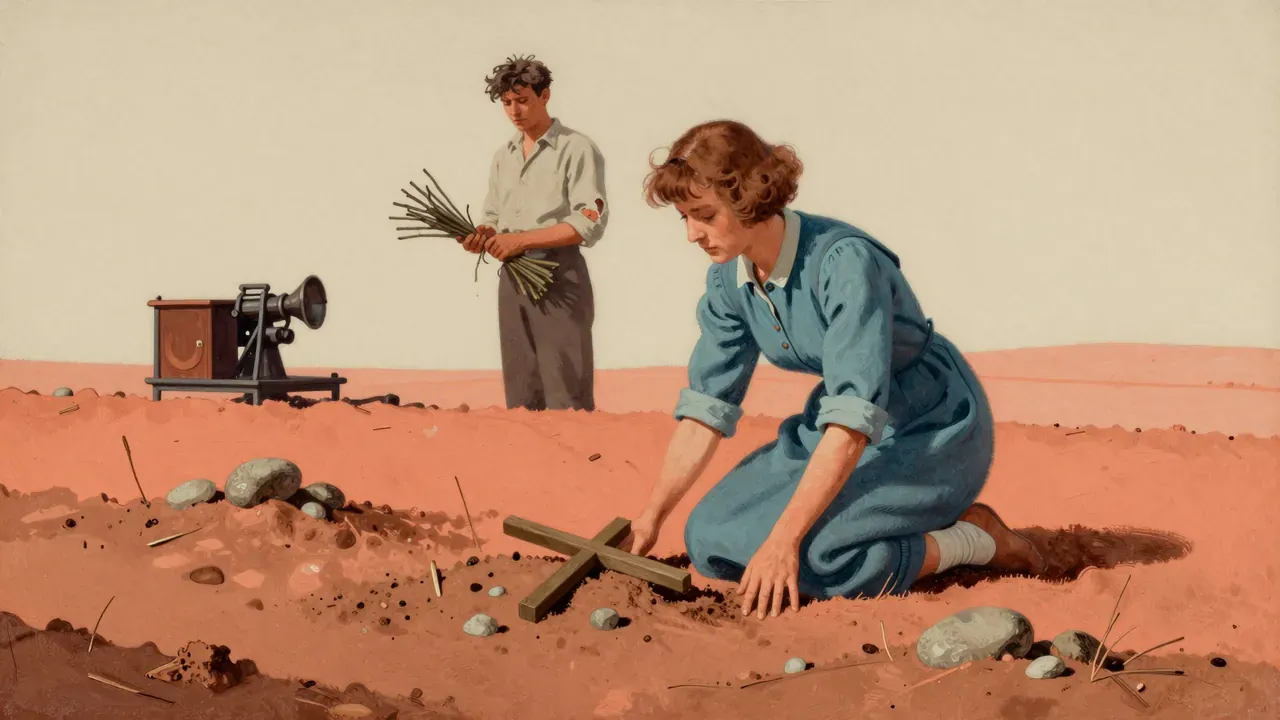
Set in June 1940 during the fall of France, Forbidden Games follows orphaned five-year-old Paulette as she is taken in by a peasant family and forms a quiet bond with their son Michel. Together they build a secret cemetery for dead animals using stolen crosses, enacting grief through ritual rather than speech. Directed by René Clément with restrained precision, the film observes childhood trauma without sentimentality, relying on Brigitte Fossey’s extraordinary performance and Robert Juillard’s understated cinematography. It won the Golden Lion at Venice, a BAFTA, and an Academy Honorary Award.

13:00

Foreign Correspondent

Alfred Hitchcock · 1940

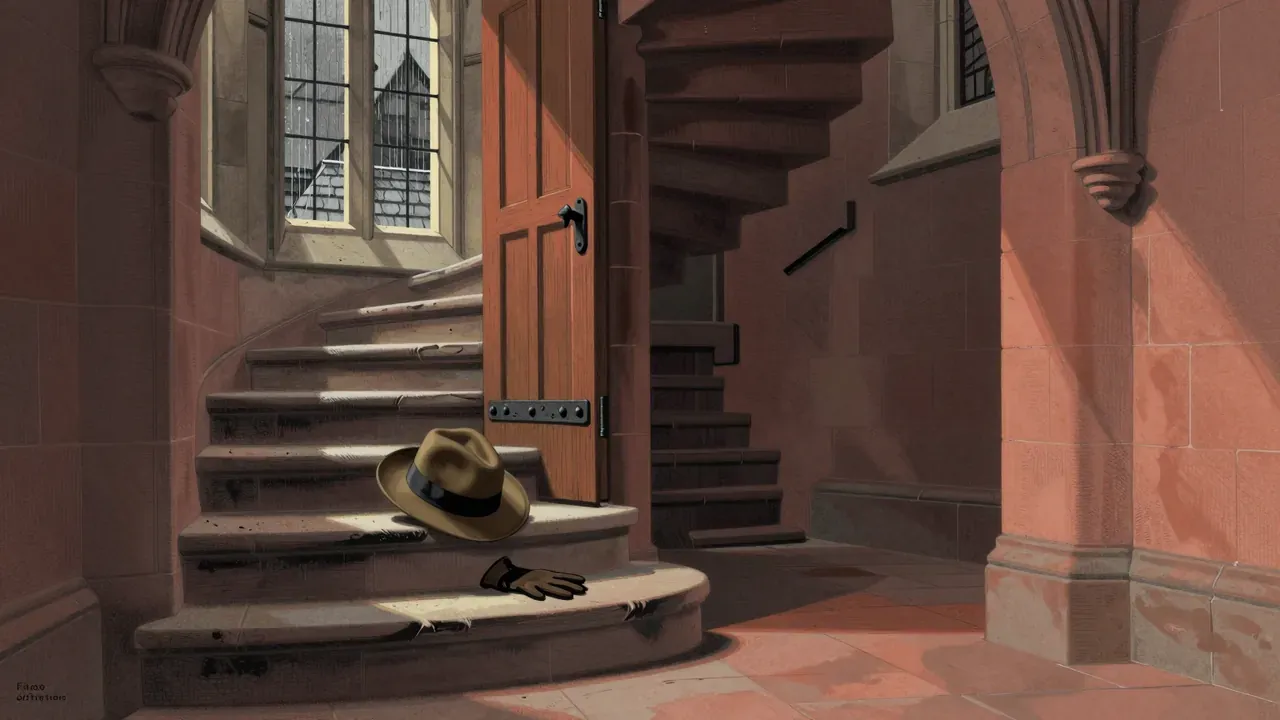
Alfred Hitchcock’s 1940 thriller follows an American reporter uncovering a fascist conspiracy in pre-war Europe. Made under urgent political conditions and reshaped mid-production to mirror real-world events, it prioritises procedural tension and moral clarity over psychological depth or historical fidelity. Its strengths lie in set-piece choreography, studio-crafted suspense, and a prescient final sequence set in a besieged radio station.

13:00

Forty Guns

Samuel Fuller · 1957

Samuel Fuller’s 1957 Forty Guns is a lean, black-and-white Western filmed in CinemaScope, starring Barbara Stanwyck as Jessica Drummond, a landowner who rules Tombstone with forty hired guns. Griff Bonnell (Barry Sullivan) arrives to enforce federal law, not settle scores — and finds himself negotiating not with outlaws but with systems: debt, inheritance, jurisdiction. Fuller’s direction is precise, Joseph F. Biroc’s cinematography exploits width for irony not spectacle, and the film’s moral architecture refuses easy binaries. It is less about taming the frontier than transferring authority — from family to state, from whip to warrant.

13:00

Fox and His Friends

Rainer Werner Fassbinder · 1975

Rainer Werner Fassbinder’s 1975 drama follows Franz ‘Fox’ Bieberkopf, a working-class gay man who wins the lottery and enters the orbit of Eugen, the elegant, calculating son of an industrialist. As Fox funds Eugen’s failing business and lifestyle, his generosity is absorbed, his manners corrected, his autonomy erased — until he is discarded, penniless and alone. Shot by Michael Ballhaus and scored by Peer Raben, the film treats affection as a commodity with expiry dates, and class as a grammar no amount of love can rewrite.

13:00

Frances Ha

Noah Baumbach · 2012

Frances Ha (2012) follows Frances, a 27-year-old dancer in New York, as her career stalls and her closest friendship frays. Shot in black-and-white on consumer-grade equipment, it favours observational detail over plot, using Gerwig’s performance and Baumbach’s direction to chart emotional shifts across apartments, cities and roles — from Brooklyn to Sacramento to Paris to Washington Heights. Its themes centre on friendship as infrastructure, class as daily friction, and identity as something folded, not fixed.

13:00

Frankenstein

Guillermo del Toro · 2025

Guillermo del Toro’s 2025 Frankenstein reimagines Mary Shelley’s novel as a morally dense, visually austere drama centred on Victor Frankenstein (Oscar Isaac) and his Creature (Jacob Elordi). Shot by Dan Laustsen and scored by Alexandre Desplat, it trades genre thrills for theological gravity, emphasising responsibility, language, and embodied consequence. Though its pacing falters mid-film and some supporting roles lack depth, its production design, performances, and thematic coherence make it a singular, sombre achievement—less monster movie than sacred rite.

13:00

Freaks

Tod Browning · 1932

Tod Browning’s 1932 Freaks, cut from 90 to 64 minutes after hostile test screenings, tells of a trapeze artist who marries a dwarf performer to steal his inheritance — only to face the collective retribution of his carnival community. Starring real sideshow performers including Harry Earles, Daisy and Violet Hilton, Schlitzie, and Johnny Eck, it inverts horror’s moral grammar, treating disability not as spectacle but as social identity. Though compromised by studio edits and constrained by its era’s limits, its formal restraint and ethical clarity have secured its status as a landmark of compassionate, uncompromising cinema.

13:00

French Cancan

Jean Renoir · 1955

Jean Renoir’s 1955 French Cancan follows nightclub owner Henri Danglard as he transforms a Montmartre dance hall into the Moulin Rouge, betting everything on the revival of the cancan. Starring Jean Gabin and Françoise Arnoul, it is a musical comedy-drama less concerned with plot than with the textures of creation: rehearsal, construction, rivalry, and collective euphoria. Shot in colour at Joinville Studios with art direction by Max Douy and cinematography by Michel Kelber, it evokes Impressionist painting without imitation. Though uneven in emotional payoff, it remains a singular testament to Renoir’s belief in cinema as a space for presence, not just meaning.

13:00

From the Life of the Marionettes

Ingmar Bergman · 1980

Ingmar Bergman’s 1980 German-language television film reimagines the troubled couple from Scenes from a Marriage as Peter and Katarina Egermann, a Munich-based pair whose emotional disintegration culminates in Peter’s murder of a prostitute. Shot in black and white by Sven Nykvist, with a dissonant score by Rolf Alexander Wilhelm, the film unfolds through clinical interrogations and restrained performances. It is less a crime drama than a psychological case study — austere, unsentimental, and formally exacting.

13:00

Frownland

Ronald Bronstein · 2007

Ronald Bronstein’s 2007 debut follows Keith, a socially overwhelmed door-to-door salesman in New York, over three days of escalating disconnection. Shot on a minimal crew and budget, it uses relentless close-ups, fragmented editing, and Dore Mann’s physically exacting performance to immerse the viewer in sustained psychological exposure—without exposition, score, or narrative relief.

13:00

Funny Games

Michael Haneke · 1997

Michael Haneke’s 1997 Austrian drama Funny Games uses the skeleton of a home-invasion thriller to dissect how cinema conditions viewers to tolerate, anticipate and even desire violence. With clinical precision, static camerawork and metafictional interruptions, it implicates the spectator in its own brutality — not through gore, but through duration, expectation and refusal.

13:00

Game of Death

Bruce Lee, Robert Clouse, Sammo Hung · 1978

Game of Death (1978) is a re-edited, partially reshot version of Bruce Lee’s unfinished 1972 film, built around three surviving fight sequences he choreographed and filmed. Directed by Robert Clouse and Sammo Hung, it grafts a new revenge plot onto Lee’s original pagoda-ascent concept, using doubles and newly shot scenes to bridge gaps. Though commercially successful and culturally influential — especially for Lee’s yellow jumpsuit and the Abdul-Jabbar fight — it sacrifices narrative coherence and thematic depth for continuity. Its power resides entirely in Lee’s physical presence and choreographic intelligence, not in its story.
13:00

Gate of Flesh

Seijun Suzuki · 1964

Seijun Suzuki’s 1964 Nikkatsu drama follows a group of sex workers enforcing rigid communal rules in a bombed-out Tokyo building. When a wounded ex-soldier arrives, their fragile order fractures. Shot on a rushed schedule with deliberately artificial sets, the film uses formal restraint and allegorical structure to critique the continuity of militarised social control under Occupation. Performances are muted, editing jarring, and the ending offers no resolution — only repetition.

13:00

Gates of Heaven

Errol Morris · 1978

Errol Morris’s 1978 debut is an unnarrated documentary about pet cemeteries in California, built entirely from interviews with entrepreneurs, mourners and bystanders. Shot on a shoestring budget with three fired cinematographers before settling on Ned Burgess, it avoids irony, exposition and music, letting speech — hesitant, repetitive, earnest — carry philosophical weight. Its structure divides two competing businesses, revealing not satire or sentiment but a sustained inquiry into how people articulate meaning around death, care and failure.

13:00

General Della Rovere

Roberto Rossellini · 1959

Roberto Rossellini’s 1959 drama follows a conman hired by Nazi occupiers to impersonate a dead Resistance general inside a Milan prison. As he inhabits the role among real prisoners, his performance hardens into conviction — not through revelation, but through repeated, quiet acts of solidarity. Shot in German by Italian filmmakers, with Vittorio De Sica in a career-defining turn, it is a restrained, morally exacting portrait of identity forged in extremity.

13:00

General Idi Amin Dada: A Self Portrait

Barbet Schroeder · 1974

Barbet Schroeder’s 1974 documentary follows Idi Amin across military drills, cabinet meetings, and staged spectacles, all filmed with Amin’s full cooperation and direction. Shot by Néstor Almendros, it presents Amin’s self-mythology without commentary, letting his rhetoric, gestures, and contradictions accumulate as evidence. Though stripped of historical context or moral framing, its rigour lies in sustained observation — a portrait not of a man, but of power performing itself.

13:00

Genocide

Kazui Nihonmatsu · 1968

Genocide (1968), directed by Kazui Nihonmatsu for Shochiku, is a science fiction horror film set on a fictional Japanese archipelago where weaponised insects emerge in the wake of a crashed H-bomb. Blending Cold War paranoia, post-nuclear trauma, and ecological unease, it follows biologist Dr. Nagumo, islander Yukari, and American soldiers as they confront biological invasion, espionage, and the looming threat of nuclear cover-up. Shot by Shizuo Hirase with a sparse score by Shunsuke Kikuchi, it is austere in execution and ambitious in theme — Shochiku’s final horror release, and a singularly uneasy artefact of its time.

13:00

George Washington

David Gordon Green · 2000

David Gordon Green’s 2000 debut is a slow, sun-baked coming-of-age drama set in a decaying North Carolina town. Following a group of preteens — including a boy whose skull never hardened — it traces the aftermath of an accidental death not through plot, but through lingering glances, ambient sound, and Tim Orr’s grain-heavy cinematography. Made for $42,000 with local non-actors, it trades exposition for texture, and resolution for resonance.

13:00

Germany, Year Zero

Roberto Rossellini · 1948

Roberto Rossellini’s 1948 drama follows twelve-year-old Edmund Köhler in ruined Berlin, where hunger, ideological debris, and adult failure converge on a single child’s conscience. Shot partly on location and partly in Rome studios, it uses non-professional actors and restrained craft to trace a quiet, logical descent into moral collapse — ending not with outcry, but with silence and a jump from rubble.

13:00

Gertrud

Carl Theodor Dreyer · 1964

Carl Theodor Dreyer’s final film, Gertrud (1964), adapts Hjalmar Söderberg’s 1906 play into a rigorous, dialogue-driven drama about a woman who chooses absolute fidelity to her idea of love over every form of compromise. Shot in static, prolonged takes, with minimal music and muted visuals, it follows Gertrud Kanning from marital rupture through successive failed attachments to a solitary, unrepentant old age. Its power lies in its refusal to dramatise or explain—only to present, hold, and trust the viewer to attend.

13:00

Gervaise

René Clément · 1956

René Clément’s 1956 Gervaise adapts Émile Zola’s L’Assommoir with forensic restraint, following Maria Schell’s laundress through a decade of incremental collapse in mid-nineteenth-century Paris. Shot by Robert Juillard and scored sparingly by Georges Auric, it locates tragedy not in grand gestures but in the weight of wet linen, the silence after a slammed door, the slow emptying of a shopfront. Its power lies in accumulation, not revelation.

13:00

Ghidorah, the Three-Headed Monster

Ishirō Honda · 1964

Ghidorah, the Three-Headed Monster (1964) is Toho’s fifth Godzilla film and the first to stage a three-monster alliance against an extraterrestrial threat. Directed by Ishirō Honda with special effects by Eiji Tsuburaya, it follows a Venusian prophetess who warns Earth of King Ghidorah’s arrival, prompting Godzilla, Rodan, and Mothra to set aside rivalry. Built on recycled suits, hand-crafted miniatures, and Akira Ifukube’s score, it privileges ritual over exposition and collective stance over individual heroism. Though human subplots are thin and Ghidorah’s suit proved technically taxing, its vision of reluctant solidarity remains singular in the franchise.

13:00

Ghost Dog: The Way of the Samurai

Jim Jarmusch · 1999

Ghost Dog: The Way of the Samurai (1999) follows a Black hitman in New Jersey who lives by the samurai code of Hagakure while working for an Italian-American crime family. Directed by Jim Jarmusch and scored by RZA, it unfolds with deliberate stillness, using Robby Müller’s restrained cinematography and Forest Whitaker’s physically precise performance to sustain a world where ritual, silence, and cross-cultural synthesis are structural facts, not themes to be explained.

13:00

Ghost World

Terry Zwigoff · 2001

Ghost World (2001), directed by Terry Zwigoff and co-written with Daniel Clowes, follows Enid and Rebecca through the hollow summer after high school. Shot by Affonso Beato with deliberate oversaturation and lingering takes, it renders adolescent disaffection as structural fact rather than passing mood. Thora Birch’s performance anchors a film that values silence over exposition, texture over plot, and ambiguity over resolution.

13:00

Gilda

Charles Vidor · 1946

A 1946 Columbia Pictures drama starring Rita Hayworth and Glenn Ford, directed by Charles Vidor. Set in an artificial Buenos Aires, it traces the toxic, circular relationship between a gambler, his boss’s wife, and the boss himself — all rendered in high-contrast black-and-white, with precise performances and deliberate pacing. Though framed as noir, its concerns are psychological and performative, not procedural.

13:00

Gimme Shelter

Charlotte Zwerin, Albert Maysles, David Maysles · 1970

Gimme Shelter is a 1970 Direct Cinema documentary following the Rolling Stones’ 1969 US tour to its violent end at the Altamont Free Concert. Shot by Albert and David Maysles with Charlotte Zwerin’s editing, it records studio sessions, concerts, negotiations and the fatal stabbing of Meredith Hunter — without voiceover, interviews or moral framing. Its power lies in its unblinking chronology and refusal to resolve what it witnesses.

13:00

Girlfight

Karyn Kusama · 2000

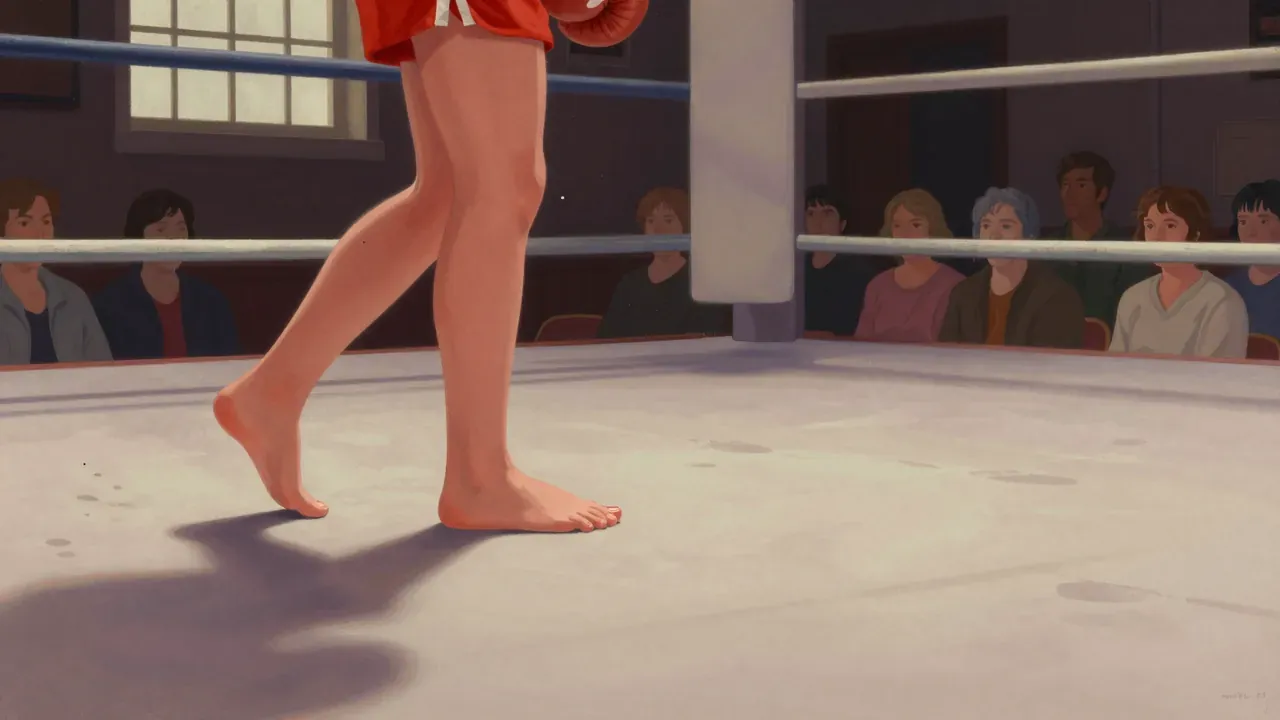
Girlfight (2000), Karyn Kusama’s debut, follows Diana Guzman, a Brooklyn teenager who takes up boxing to channel her rage and claim autonomy in a hostile environment. Shot in 24 days on a $1 million budget, it stars Michelle Rodriguez in her first role, trained rigorously at Gleason’s Gym. The film avoids sports-movie clichés, focusing instead on physical discipline, gendered constraint, and quiet, hard-won agency. It won Sundance’s Grand Jury and Directing Prizes, and remains a benchmark for grounded, unsentimental female-led drama.

13:00

Girlfriends

Claudia Weill · 1978

Claudia Weill’s 1978 debut follows Susan Weinblatt, a Jewish photographer in Manhattan, as her life shifts after her best friend and roommate moves out to marry. Shot over a year on a shoestring budget, the film traces Susan’s struggles with freelance work, romantic missteps, and the slow build toward her first gallery show — all rendered with documentary-like precision, naturalistic performances, and a refusal to resolve its central tensions. It won the Toronto People’s Choice Award and was named one of the National Board of Review’s Top Ten Films of 1978.

13:00

Girls of the Night

Kinuyo Tanaka · 1961

Kinuyo Tanaka’s 1961 drama follows Kuniko, a woman repeatedly released from a reformatory after Japan’s Prostitution Prevention Law, as she seeks work and dignity across domestic service, factory labour, and horticulture — only to be rejected each time her history becomes known. With Chisako Hara in a performance of quiet endurance, and Asakazu Nakai’s unadorned cinematography, the film charts the quiet mechanics of social exclusion, not as cruelty but as routine. It ends not with resolution but relocation: Kuniko working as an ama in Bōsō.

13:00

Godland

Hlynur Pálmason · 2022

Set in late-19th-century Iceland, Godland follows a Danish priest sent to build a church in a remote settlement. His inability to speak Icelandic, his failing health, and the indifference of the land gradually dismantle his authority and certainty. Shot in stark wet-plate-inspired visuals, the film renders colonial encounter as slow sensory erosion — of language, theology, and bodily endurance — rather than political confrontation.

13:00

God's Country

Louis Malle · 1985

A 1985 PBS documentary by Louis Malle, filmed across six years in Glencoe, Minnesota, capturing the quiet unraveling of a farming community amid the mid-1980s agricultural crisis. Shot and edited with deliberate restraint, it observes residents’ daily lives, conversations, and surroundings without narration or exposition — offering texture over analysis, continuity over climax.

13:00

Gods of the Plague

Rainer Werner Fassbinder, Michael Fengler · 1969

Gods of the Plague is Rainer Werner Fassbinder’s 1970 black-and-white drama, co-directed with Michael Fengler and shot in Munich and Dingolfing. It follows ex-convict Franz Walsch as he re-enters Munich’s criminal underworld, navigating ambiguous relationships with two women and a friend implicated in his brother’s death. Stylised through static compositions, minimal dialogue, and high-contrast monochrome cinematography by Dietrich Lohmann, the film treats noir not as genre but as structure to be exposed and exhausted. Its themes centre on mediated identity, erotic ambiguity, and the futility of narrative resolution. Though critically respected for its formal control and ensemble discipline, its austerity makes it demanding — rewarding for those attuned to Fassbinder’s early methods, less so for viewers seeking emotional or narrative engagement.

13:00

Godzilla

Ishirō Honda · 1954

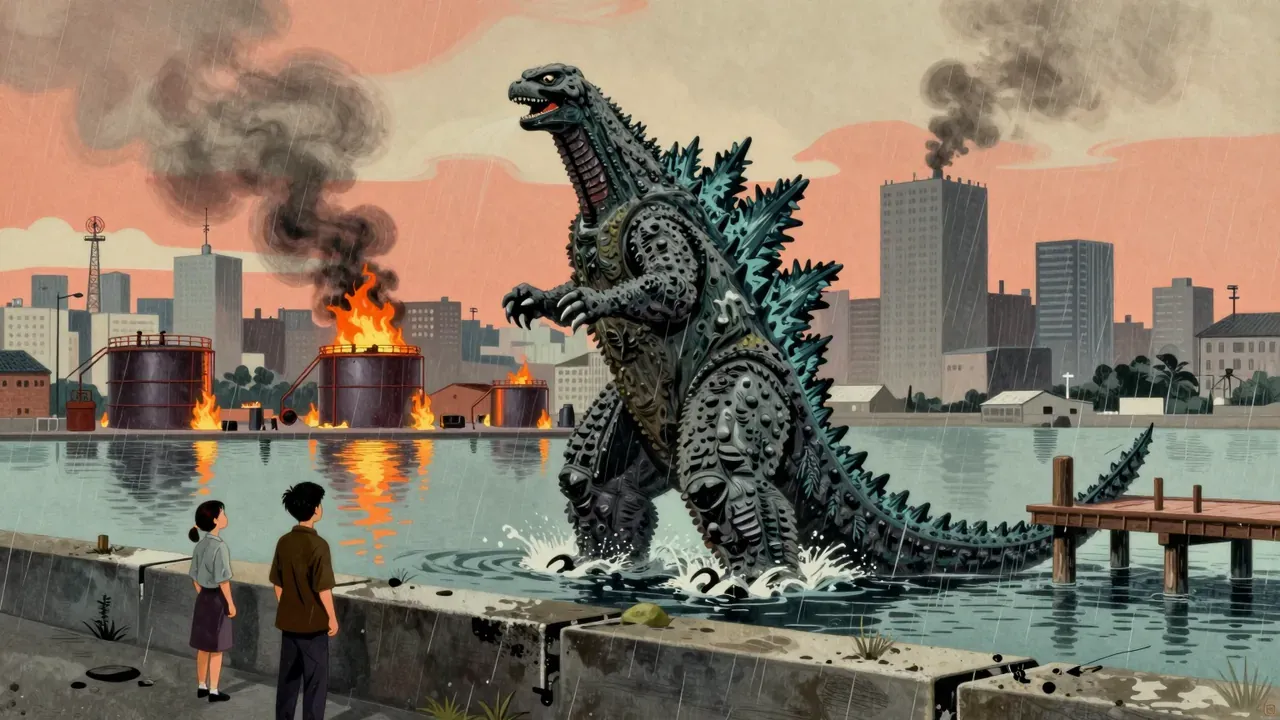
Godzilla (1954) is Toho’s foundational kaiju film, directed by Ishirō Honda and conceived after the Daigo Fukuryū Maru incident. It follows scientists and officials responding to a prehistoric creature mutated by hydrogen bomb tests. Shot in black-and-white with pioneering suitmation effects, its tone is sober, almost documentary-like. The film avoids monster-movie tropes in favour of bureaucratic realism, scientific debate, and quiet devastation. Though its pacing and formal restraint challenge modern expectations, its thematic urgency — on nuclear consequence, institutional failure, and irreversible change — remains undimmed.

13:00

Godzilla Raids Again

Motoyoshi Oda · 1955

Toho’s 1955 follow-up to Godzilla is a lean, effects-driven kaiju film directed by Motoyoshi Oda under tight deadlines. It introduces Anguirus in a destructive Osaka showdown, prioritising spectacle and procedural urgency over the moral weight of its predecessor. With Haruo Nakajima in the Godzilla suit and Eiji Tsuburaya refining his special-effects techniques — including variable camera speeds and outdoor ice sets — the film functions as both a commercial necessity and a technical bridge to the franchise’s expansive future.

13:00

Godzilla vs. Biollante

Kazuki Ōmori · 1989

Godzilla vs. Biollante (1989) is the second Heisei-era Godzilla film, directed and written by Kazuki Ōmori. It follows corporate and military efforts to weaponise Godzilla’s cells, resulting in Biollante — a creature born from the fusion of those cells with human and plant DNA. Starring Kenpachirō Satsuma and Megumi Odaka, it departs from nuclear allegory toward biotech ethics, using grounded special effects, deliberate pacing, and Koichi Sugiyama’s score to explore inheritance, loss, and the instability of life’s boundaries.

13:00

Godzilla vs. Gigan

Jun Fukuda · 1972

Godzilla vs. Gigan (1972) is Jun Fukuda’s brisk, brightly coloured course correction for Toho’s flagship kaiju series after the experimental Godzilla vs. Hedorah. With Haruo Nakajima’s final performance as Godzilla, the introduction of Takayoshi Mizuki’s sharply designed Gigan, and heavy use of stock footage and Ifukube’s recycled themes, the film prioritises rhythm and recognisability over novelty or depth. Its Nebulan aliens operate through a theme-park front and monster-control tapes, delivering straightforward, physically emphatic battles — including Godzilla’s first on-screen bleeding. It is a work of genre maintenance, best appreciated by those fluent in Shōwa-era kaiju grammar.

13:00

Godzilla vs. Hedorah

Yoshimitsu Banno · 1971

Godzilla vs. Hedorah (1971), directed by Yoshimitsu Banno, recasts Godzilla as an ecological corrector confronting Hedorah — a monster born from industrial pollution. Shot in 35 days on a tight budget, it blends live action, animation, and stop-motion to deliver a blunt, child-facing warning about smog, acid rain, and systemic toxicity. Though criticised on release for tonal inconsistency and the infamous flying-Godzilla sequence, it has since gained stature as a singular, ideologically committed entry in the franchise — less entertainment than intervention.

13:00

Godzilla vs. Mechagodzilla

Jun Fukuda · 1974

Toho’s 1974 Godzilla film pits the King of the Monsters against a space-titanium mecha controlled by ape-like aliens from the Third Planet of the Black Hole. Framed by an ancient Okinawan prophecy and centred on the ritual awakening of guardian deity King Caesar, it balances suitmation spectacle with attempts at mythic structure. Though hampered by thin character work and underdeveloped lore, its monster battles are precisely staged, Masaru Sato’s score is distinctive, and its place in the Shōwa era makes it a thoughtful pivot — less jokey than its predecessor, more invested in continuity and consequence.

13:00

Godzilla vs. Megalon

Jun Fukuda · 1973

A 1973 Toho kaiju film, Godzilla vs. Megalon introduces Jet Jaguar amid a thin plot involving undersea aliens, recycled effects footage, and a famously clumsy Godzilla suit. Made quickly to replace a cancelled project, it leans into juvenile adventure tone and mechanical spectacle over thematic depth. Its enduring appeal lies less in quality than in transparency — every constraint, every shortcut, every act of faith in rubber and wire is on display.

13:00

Godzilla vs. the Sea Monster

Jun Fukuda · 1966

Godzilla vs. the Sea Monster (1966) is Toho’s pragmatic pivot: a South Seas island replaces Tokyo, Ebirah replaces Kong, and Masaru Sato replaces Akira Ifukube. Directed by Jun Fukuda with effects by Sadamasa Arikawa, it relies on repurposed suits, aquarium shots, and a script that never fully sheds its abandoned premise. Its strengths are tactile — Nakajima’s submerged performance, Yamada’s flat daylight, Sato’s light score — not thematic. It is a document of constraint, not conviction.

13:00

Goke, Body Snatcher from Hell

Hajime Satō · 1968

Goke, Body Snatcher from Hell (1968), directed by Hajime Satō, follows survivors of a plane crash on a deserted island who are hunted by a vampiric alien entity. With minimal exposition and stark visuals, it charts their rapid moral collapse under pressure — betrayals, sacrifices and self-preservation escalate until only two remain, walking across a dead world beneath an orbital fleet. Shunsuke Kikuchi’s score and practical effects reinforce its clinical, allegorical tone.

13:00

Gomorrah

Matteo Garrone · 2008

Matteo Garrone’s 2008 film adapts Roberto Saviano’s non-fiction book into a five-thread portrait of the Camorra’s reach across Naples and Caserta. It follows a timid middleman, a teenage recruit, a waste-management graduate, a tailor, and two deluded wannabes — none heroic, none redeemed. Shot with documentary restraint by Marco Onorato and edited without flourish by Marco Spoletini, it treats crime as infrastructure: logistical, banal, and woven into fashion, toxic dumping, and housing estates. It won the Cannes Grand Prix and seven David di Donatello awards.

13:00

Good Morning

Yasujirō Ozu · 1959

Yasujirō Ozu’s 1959 colour comedy follows two brothers who stop speaking to protest their parents’ refusal to buy a television. Set in a Tokyo suburb, the film traces how their silence ripples through the neighbourhood, exposing the fragility of gossip, the labour of politeness, and the quiet absurdity of adult consensus — all observed with Ozu’s characteristic stillness and dry precision.

13:00

Graduation

Cristian Mungiu · 2016

A Transylvanian doctor tries to fix his daughter’s exam results after she is assaulted, triggering a slow collapse of professional, marital and paternal certainties. Directed by Cristian Mungiu, the film observes moral compromise as a series of quiet, irreversible steps — not grand betrayals, but small accommodations made in the name of love, duty, or survival.

13:00

Gray's Anatomy

Steven Soderbergh · 1996

Spalding Gray’s 1996 monologue film, directed by Steven Soderbergh, documents his diagnosis with macular pucker and his turn toward alternative treatments. Filmed in ten days with minimal staging, it relies entirely on Gray’s voice, syntax, and timing. Elliot Davis’s restrained cinematography and Cliff Martinez’s sparse score support rather than interpret. The film balances wit and vulnerability without resolving into either satire or sermon — though its final passages strain under the weight of their own metaphysical drift.

13:00

Green for Danger

Sidney Gilliat · 1946

Green for Danger (1946) is a British mystery set in a rural wartime hospital, where two deaths and a near-fatal incident draw Inspector Cockrill into a tightly wound investigation. Adapted by Christianna Brand from her own novel and directed by Sidney Gilliat, it balances procedural rigour with dry wit, using anaesthetic equipment, Blitz-era constraints, and staff psychology to build suspense. Wilkie Cooper’s cinematography and William Alwyn’s score reinforce its controlled, atmospheric tone.

13:00

Grey Gardens

Albert Maysles, David Maysles, Ellen Horde · 1975

A 1975 direct-cinema documentary by Albert and David Maysles, Ellen Hovde and Muffie Meyer, Grey Gardens observes Edith ‘Big Edie’ Beale and her daughter ‘Little Edie’ Bouvier Beale in their decaying East Hampton home. Filmed over several months in 1974, it offers no narration, no external context, and no judgment — only sustained, intimate observation of two women performing dignity amid squalor, memory amid decay, and selfhood amid erasure.

13:00

Grisbi

Jacques Becker · 1954

Jacques Becker’s 1954 heist film follows ageing Parisian gangster Max le Menteur as his control over his crew, his lover, and his own stamina begins to slip. Shot in muted tones by Pierre Montazel and edited with deliberate calm by Marguerite Renoir, it treats crime as backdrop to a study in endurance, habit, and quiet decline. Jean Gabin’s performance is restrained, anchored in physical detail rather than declaration.

13:00

Gummo

Harmony Korine · 1997

Harmony Korine’s 1997 debut is an experimental collage of life in a tornado-ravaged Midwestern town, shot in Nashville with non-actors, fragmented formats, and zero narrative scaffolding. It privileges texture over story, presence over psychology, and ambiguity over judgment — landing as a singular, abrasive, and deeply felt portrait of adolescence and poverty on the American periphery.

13:00

Hairspray

John Waters · 1988

John Waters’s 1988 romantic comedy reimagines 1962 Baltimore as a stage for joyful, noisy resistance. Tracy Turnblad, a plus-size teen, fights to integrate a local TV dance show — and in doing so, exposes segregation as farcical, fragile, and beatable. With Ricki Lake, Divine, Ruth Brown, and Debbie Harry, it balances satire and sincerity, using music, dance, and outrageous costume to argue that liberation is loud, embodied, and unapologetically fun.

13:00

Half a Loaf of Kung Fu

Chi-Hwa Chen · 1978

Half a Loaf of Kung Fu (1978) is Jackie Chan’s early experiment in kung fu slapstick: a bumbling acrobat named Jiang stumbles through a series of misadventures — spying on a witch, collecting bounties on corpses, apprenticing to a beggar — all while trying, and mostly failing, to learn kung fu. Directed by Chi-Hwa Chen and written by Chan, it parodies the genre’s gravitas with physical comedy, episodic plotting, and a refusal to treat mastery as earned rather than stumbled upon.

13:00

Hamlet

Laurence Olivier · 1948

Laurence Olivier’s 1948 Hamlet is a tightly focused, black-and-white adaptation that cuts over half the play to centre Hamlet’s paralysed will and moral uncertainty. Shot by Desmond Dickinson with deep focus and scored by William Walton, it uses sound design, editing, and performance to render interiority as physical fact. Though controversial among purists for its omissions — including Fortinbras and Rosencrantz and Guildenstern — it won Best Picture and Best Actor at the 1949 Oscars, and remains a landmark of Shakespearean cinema for its formal rigour and psychological intensity.

13:00

Hands Over the City

Francesco Rosi · 1963

Francesco Rosi’s 1963 Golden Lion winner follows Neapolitan developer and councillor Edoardo Nottola as he leverages public office for private real-estate gain—until a building collapse triggers an official inquiry. Shot in stark, observational style by Gianni Di Venanzo and written with journalistic rigour, the film avoids psychology and spectacle in favour of committee rooms, permits, and quiet complicity. Rod Steiger and Carlo Fermariello anchor a cast that includes non-professionals, reinforcing its documentary texture. It is a film about how power consolidates not in crises but in paperwork.

13:00

Happy Together

Wong Kar-wai · 1997

Happy Together (1997) follows two Hong Kong men whose turbulent relationship fractures during a trip to Argentina. Directed by Wong Kar-wai and shot by Christopher Doyle, it uses saturated, grainy imagery, South American music, and elliptical structure to explore memory, displacement, and the quiet aftermath of love. Tony Leung and Leslie Cheung anchor the film with restrained, physically precise performances. It is less a story about reconciliation than about learning to live alongside absence.

13:00

Harakiri

Masaki Kobayashi · 1962

Masaki Kobayashi’s 1962 jidaigeki follows rōnin Tsugumo Hanshirō as he requests seppuku at the Iyi clan’s estate — not to die, but to force a reckoning with their hypocrisy. Through precise framing, restrained performance, and a narrative structured like a legal deposition, the film exposes how bushido functions as bureaucratic cover for cruelty. Tatsuya Nakadai anchors the film with implacable gravity; Yoshio Miyajima’s cinematography and Tōru Takemitsu’s score deepen its moral austerity. It remains a landmark of ethical cinema, less concerned with honour than with who bears the cost when honour becomes theatre.

13:00

Harlan County, USA

Barbara Kopple · 1976

Barbara Kopple’s 1976 documentary follows the Brookside Strike in Harlan County, Kentucky: a year-long dispute between coal miners and Duke Power-owned Eastover Coal. Filmed over four years with no narration, it places viewers among strikers, their families, and union organisers, using only direct testimony, observational footage, and folk music rooted in the community. It won the Academy Award for Best Documentary and was preserved in the US National Film Registry.

13:00

Harold and Maude

Hal Ashby · 1971

Hal Ashby’s 1971 film follows Harold Chasen, a young man obsessed with staging his own death, and Maude, a 79-year-old woman who lives with irreverent joy in a railroad car. Their relationship unfolds across San Francisco locations — cemeteries, ruins, hospitals, and highways — to a soundtrack by Cat Stevens. Written by Colin Higgins, it balances black comedy, romance, and existential reflection without resolving its central tension. Initially unsuccessful, it gained cult status and was preserved in the National Film Registry in 1997.

13:00

Häxan

Benjamin Christensen · 1922

A 1922 Swedish-Danish silent film directed by Benjamin Christensen, Häxan blends documentary exposition and dramatised medieval vignettes to argue that witch-hunts stemmed from misdiagnosed mental and neurological conditions. Shot in Denmark with meticulous period detail, it uses restrained cinematography, functional special effects, and a deliberate pace to trace a line from superstition to early psychiatry. Though censored on release for its depictions of torture and nudity, it endures as a landmark essay film — rigorous, unsettling, and structurally innovative.

13:00

Head

Bob Rafelson · 1968

A 1968 satirical musical directed by Bob Rafelson and written by Jack Nicholson, Head uses The Monkees as raw material to dissect celebrity, media construction, and narrative coherence. With non-linear editing, meta-commentary, and deliberate tonal rupture, it rejects conventional storytelling in favour of structural critique — exposing how pop culture manufactures meaning by assembling fragments. Shot across Los Angeles, Palm Springs, Alaska, and The Bahamas, its craft serves its argument: every cut, lyric, and cameo functions as evidence in a case against authorship, authenticity, and audience expectation.

13:00

Heart of a Dog

Laurie Anderson · 2015

Laurie Anderson’s 2015 essay-film Heart of a Dog reflects on the death of her dog Lolabelle, weaving personal memory, Buddhist bardo teachings, and reflections on post-9/11 New York into a meditative, non-linear structure. Composed, scored, and narrated by Anderson, it favours restraint over exposition, silence over score, and association over argument — offering not answers but a sustained mode of attention.

13:00

Hearts and Minds

Peter Davis · 1974

Hearts and Minds (1974), directed by Peter Davis, is a fiercely focused documentary about the Vietnam War that builds its argument through juxtaposition rather than narration. Shot by Richard Pearce and edited by Lynzee Klingman, it assembles interviews with American officials, veterans, and Vietnamese civilians into a sustained critique of US assumptions about race, power, and civilisation. Winning the 1975 Academy Award for Best Documentary, it remains polarising: praised for its moral urgency and condemned for its selectivity. Its enduring significance lies not in balance, but in its unflinching exposure of how language enables violence—and how footage, once recorded, outlives intention.

13:00

Heaven Can Wait

Ernst Lubitsch · 1943

Ernst Lubitsch’s 1943 Heaven Can Wait follows Henry Van Cleve, a New York heir who, upon arriving at the reception area of Hell, recounts his life to prove he belongs there. Framed as a wry, non-chronological character study, the film uses fantasy not for spectacle but for structure—tracing seventy years of privilege, marriage, and quiet moral drift with precision, irony, and deep affection for its characters’ limitations.

13:00

Heaven's Gate

Michael Cimino · 1980

Michael Cimino’s 1980 Western Heaven’s Gate, starring Kris Kristofferson and Christopher Walken, is a visually sumptuous but narratively austere epic loosely based on the Johnson County War. Shot by Vilmos Zsigmond and scored by David Mansfield, it attempts to render class conflict as landscape and duration. Though reviled on release for its cost and length, later reappraisals treat it as a landmark of directorial conviction — flawed, forbidding, and formally uncompromising.

13:00

Hedwig and the Angry Inch

John Cameron Mitchell · 2001

John Cameron Mitchell’s 2001 film adapts his stage musical as a mythic, musically charged portrait of Hedwig Robinson: an East German trans woman, rock frontwoman, and reluctant philosopher. Shot with gritty immediacy by Frankie DeMarco and scored by Stephen Trask, it moves between roadside gigs and fractured memory, using Plato, punk, and botched surgery to explore origin, theft, and the violence of translation. Though its metaphysical finale falters, its performances, craft, and thematic rigour make it a durable arthouse landmark.

13:00

Hell's Angels

Howard Hughes, James Whale, Edmund Goulding · 1930

A 1930 American war film directed by Howard Hughes, James Whale, and Edmund Goulding, Hell’s Angels follows two British brothers in the Royal Flying Corps during the First World War. Originally shot silent, it was converted to sound mid-production, replacing lead actress Greta Nissen with Jean Harlow. Its aerial combat sequences — filmed with over 130 pilots, multiple fatalities, and Hughes’s own crash — remain landmark achievements in early sound and stunt coordination. Though narratively uneven and thematically thin, its technical ambition and material history make it a singular artifact of Hollywood’s transitional decade.

13:00

Henry V

Laurence Olivier · 1944

Laurence Olivier’s 1944 Henry V is a British government-backed film designed to bolster morale during the Second World War. Shot in Technicolor on location in Ireland and at Denham Studios, it blends miniature models, medieval manuscript aesthetics, and naturalistic battle scenes to recast Shakespeare’s play as a unifying national myth. Olivier stars, directs, and co-writes, omitting Henry’s harsher actions to foreground leadership, language, and legacy. Its craft — in cinematography, costume, editing and Walton’s score — is exacting and intentional. Though simplified in ethics, it remains a landmark of cinematic adaptation and wartime culture.

13:00

Here Comes Mr. Jordan

Alexander Hall · 1941

Here Comes Mr. Jordan (1941) follows boxer Joe Pendleton, mistakenly taken to Heaven before his time, who must inhabit a new body on Earth to complete his life. Directed by Alexander Hall and written by Sidney Buchman and Seton I. Miller, the film balances fantasy, romance, and comedy with precise structure and restrained performances. Its strength lies in treating the afterlife as bureaucratic infrastructure and grounding ethical choices in tangible action — restitution, not revelation. Though its final act softens its earlier rigour, the film remains a masterclass in economical, character-led storytelling.

13:00

Here's Your Life

Jan Troell · 1966

Jan Troell’s 1966 debut follows Olof Persson across a succession of working-class jobs in early-twentieth-century northern Sweden. Adapted from Eyvind Johnson’s semi-autobiographical novel, it charts his slow, unspectacular formation through labour, reading, politics and fleeting relationships—never through crisis or revelation, but through accumulation, repetition and quiet observation.

13:00

High Art

Lisa Cholodenko · 1998

Lisa Cholodenko’s 1998 debut follows Syd, a young magazine editor drawn into the orbit of Lucy, a reclusive photographer whose fame and heroin dependency unsettle Syd’s orderly life. Shot by Tami Reiker and anchored by Ally Sheedy’s restrained performance, the film traces the blurring of professional and personal boundaries in New York’s art world—with precision, restraint, and no easy answers.

13:00

High Sierra

Raoul Walsh · 1941

High Sierra (1941), directed by Raoul Walsh and starring Humphrey Bogart and Ida Lupino, follows ageing gangster Roy Earle as he leads a jewel heist in California’s Sierra Nevada, then flees into the mountains. Adapted by John Huston and W. R. Burnett from Burnett’s novel, it uses location shooting, restrained performances, and unshowy craft to trace a quiet, physical descent — not toward redemption, but toward an ending already written in Roy’s body and the landscape.

13:00

His Girl Friday

Howard Hawks · 1940

Howard Hawks’s 1940 comedy His Girl Friday recasts The Front Page as a battle of wits between ex-spouses Walter Burns and Hildy Johnson, a newspaper editor and reporter whose professional rivalry reignites as a romantic one. Shot at breakneck speed with overlapping dialogue, it privileges competence over sentiment and friction over harmony. Though formally dazzling and historically influential, it sidesteps the racial and ethical weight of its source material, treating injustice as backdrop rather than subject.

13:00

History Is Made at Night

Frank Borzage · 1937

Frank Borzage’s 1937 romance stars Jean Arthur and Charles Boyer as lovers separated by deceit, class, and a shipwreck. Written by Gene Towne and shot by Gregg Toland, it moves from Parisian farce to transatlantic pursuit to maritime disaster — all held together by emotional sincerity rather than plot logic. Its strengths are in performance, composition, and moral clarity; its weaknesses lie in tonal inconsistency and contrived early turns. It is a film of conviction, not compromise.

13:00

Hobson's Choice

David Lean · 1954

David Lean’s 1954 adaptation of Harold Brighouse’s play follows Maggie Hobson as she marries bootmaker Will Mossop to escape her tyrannical father’s household, then builds a rival business with him in 1880 Salford. Grounded in precise performance and restrained craft, it treats class, literacy, and domestic labour as material forces — not metaphors — and locates dignity in incremental, negotiated change.

13:00

Holiday

George Cukor · 1938

George Cukor’s 1938 Holiday adapts Philip Barry’s play into a precise, unhurried romantic comedy about Johnny Case, a self-made banker who plans to retire at thirty, and Linda Seton, the restless daughter of a banking dynasty. Set in a gilded Park Avenue mansion, it tests whether personal integrity can survive assimilation into inherited privilege. Katharine Hepburn and Cary Grant anchor a literate, understated performance style; Franz Planer’s cinematography and Otto Meyer’s editing sustain quiet rhythm over speed. Though rooted in the stage, it resists theatrical artifice, trusting dialogue and gesture over exposition. Nominated for Best Art Direction, it holds a 100% Tomatometer score but was not a box-office success — a film that rewards attention, not immersion.

13:00

Hollywood Shuffle

Robert Townsend · 1987

Hollywood Shuffle is a 1987 semi-autobiographical satire directed by Robert Townsend, following Bobby Taylor as he navigates Hollywood’s demand for stereotypical Black roles. Shot on a $100,000 budget over two and a half years, it uses vignettes, parodies, and daydreams to expose how race is commodified in casting, writing, and performance. Though praised for its sharp humour and technical ingenuity, it draws criticism for reproducing sexist and homophobic stereotypes it otherwise critiques. The film ends not with success but with quiet recalibration — Bobby filming a US Postal Service PSA.

13:00

Homework

Abbas Kiarostami · 1989

Homework (1989) is Abbas Kiarostami’s 16mm documentary filmed at a Tehran primary school, composed almost entirely of interviews with pupils and two fathers about the practice of assigning homework. With no narration, music or illustrative footage, it foregrounds unscripted speech — hesitant, contradictory, revealing — to expose the gap between educational policy and domestic reality in late-1980s Iran.

13:00

Homicide

David Mamet · 1991

David Mamet’s 1991 crime drama follows a Jewish homicide detective pulled from a high-profile manhunt into the investigation of an elderly woman’s killing — a case that unravels his assumptions about identity, loyalty, and belonging. With Joe Mantegna, William H. Macy, and Ving Rhames, and shot by Roger Deakins, it trades procedural clarity for psychological precision, using police work as scaffolding for a stark, unsentimental study of assimilation, moral drift, and the cost of choosing between competing claims on the self.

13:00

Hoop Dreams

Steve James · 1994

Hoop Dreams follows William Gates and Arthur Agee, two Black Chicago teenagers, over five years as they navigate high school basketball, family instability, injury, and college recruitment. Shot over 250 hours and edited down from more than ten hours of footage, it avoids narration, score-driven emotion, or didactic framing. Its power lies in duration, restraint, and the quiet accumulation of ordinary consequence.

13:00

Hopscotch

Ronald Neame · 1980

Hopscotch (1980) is a low-key, Mozart-scored spy comedy starring Walter Matthau as Miles Kendig, a CIA veteran who retaliates against forced retirement by writing and publishing an explosive memoir — mailing chapters to rival intelligence agencies across Europe and the US. Directed by Ronald Neame and adapted by Bryan Forbes and Brian Garfield, it trades thrills for procedural wit, treating espionage as bureaucratic farce rather than mortal peril. Its pleasures lie in Matthau’s dry authority, Arthur Ibbetson’s unshowy camerawork, and Ian Fraser’s precisely deployed classical score.

13:00

Hôtel du Nord

Marcel Carné · 1938

Marcel Carné’s 1938 Hôtel du Nord is a cornerstone of poetic realism: a slow-burning drama set in a working-class Paris hotel, where suicide, romance, and criminal threat unfold amid Bastille Day revelry. Anchored by Arletty and Louis Jouvet, and shaped by Jean Aurenche and Henri Jeanson’s dialogue, it privileges mood, texture, and moral ambiguity over exposition or resolution.

13:00

Hôtel Monterey

Chantal Akerman · 1972

Chantal Akerman’s 1972 debut feature is a silent, sixty-five-minute documentary shot in fixed long takes inside New York’s Hotel Monterey. With Babette Mangolte’s precise cinematography, it maps the building’s corridors, rooms and roof without narration, music or commentary — treating architecture as a sequence of visual propositions about time, space and perception.

13:00

Hour of the Wolf

Ingmar Bergman · 1968

Ingmar Bergman’s 1968 Hour of the Wolf is a psychological horror film starring Max von Sydow and Liv Ullmann as a painter and his wife isolated on a Swedish island. As his visions intensify and his sleep fails, the line between hallucination and reality dissolves. Shot by Sven Nykvist on Fårö and Hovs Hallar, it uses stark naturalism to frame surreal imagery, with Johann Sebastian Bach and Lars Johan Werle on the soundtrack. It explores artistic collapse, intimacy under strain, and the unreliability of perception — not as metaphor, but as lived condition.

13:00

House

Nobuhiko Obayashi · 1977

Nobuhiko Obayashi’s 1977 House is a Japanese comedy horror film about seven schoolgirls devoured one by one in a sentient, surreal country house. Made with handmade effects, a rock soundtrack by Godiego, and non-professional actors, it rejects narrative logic in favour of associative, childlike imagery rooted in Obayashi’s daughter’s fears and his own Hiroshima memories. Though dismissed on release, it has since gained cult status for its audacious form and emotional precision.

13:00

House of Games

David Mamet · 1987

David Mamet’s 1987 directorial debut is a neo-noir thriller about a psychiatrist drawn into a world of confidence tricks. Lindsay Crouse plays Margaret Ford, whose clinical detachment unravels as she learns the grammar of deception from con man Mike Mancuso (Joe Mantegna). Structured like a series of escalating cons, the film traces her shift from observer to participant to perpetrator — culminating not in redemption but in quiet, irreversible moral collapse. Shot with tight framing and sparse scoring, it privileges precision over psychology, logic over catharsis.

13:00

House Party

Reginald Hudlin · 1990

House Party (1990) is a low-budget teen comedy directed by Reginald Hudlin, following Kid and Play as they throw a house party in South Central Los Angeles. Built around a single chaotic night, it uses hip hop aesthetics — scratching, freestyling, dance-offs — as structural devices rather than decoration. With naturalistic cinematography by Peter Deming and a jazz-funk-hip hop score by Lenny White, it prioritises physicality, vernacular rhythm and communal joy over plot mechanics. Though some subplots falter and caricature occasionally intrudes, its consistency, specificity and warmth have secured its status as a culturally significant cult classic.

13:00

How to Get Ahead in Advertising

Bruce Robinson · 1989

Bruce Robinson’s 1989 black comedy follows an ad executive whose nervous breakdown produces a sentient boil — his conscience made manifest. Starring Richard E. Grant, Rachel Ward and Richard Wilson, it is a strident, visually restrained assault on Thatcher-era consumerism, built on repetition, rhetorical fury and practical-effects grotesquerie. Its power lies in its refusal to soften its argument — or its imagery.

13:00

Hud

Martin Ritt · 1963

Hud (1963), directed by Martin Ritt and starring Paul Newman, is a stark, black-and-white drama set on a Texas ranch during a foot-and-mouth outbreak. It follows the corrosive rivalry between cynical son Hud and principled father Homer, with grandson Lonnie caught between them. James Wong Howe’s austere cinematography and Elmer Bernstein’s sparse score serve a screenplay that treats amorality as fact, not flaw. It won three Academy Awards and endures for its unblinking restraint.

13:00

Humain, trop humain

Louis Malle, René Vautier · 1973

Humain, trop humain (1973) is a French observational documentary co-directed by Louis Malle and René Vautier, filmed inside a Citroën car plant. With no narration, interviews, or music, it records the rhythms of assembly-line work — shifts, tools, gestures, pauses — over 73 minutes. Its power lies in sustained attention, not argument.

13:00

Humanité

Bruno Dumont · 1999

Bruno Dumont’s 1999 Humanité follows a withdrawn French police lieutenant investigating the rape and murder of an eleven-year-old girl in rural Bailleul. Shot in natural light with minimal dialogue, it treats the case not as a puzzle but as a rupture in the fabric of daily life — observed with clinical patience, emotional restraint, and profound physical specificity. Emmanuel Schotté and Séverine Caneele deliver unadorned, deeply felt performances; Yves Cape’s cinematography grounds every moment in tangible reality. The film won the Grand Prix at Cannes and remains a defining work of late-20th-century arthouse realism.

13:00

Hunger

Steve McQueen · 2008

Steve McQueen’s 2008 debut dramatises the 1981 IRA hunger strike in Maze Prison, focusing on Bobby Sands’s final weeks. Shot in stark, immersive style by Sean Bobbitt and edited by Joe Walker, it privileges physical detail over exposition, using long takes, minimal dialogue, and unflinching attention to the body’s decay and resilience. Michael Fassbender lost significant weight for the role. The film premiered at Cannes, winning the Caméra d’Or, and received widespread critical acclaim for its formal rigour and moral gravity.

13:00

I Am Cuba

Mikhail Kalatozov · 1964

I Am Cuba (1964) is a Soviet-Cuban co-production directed by Mikhail Kalatozov, presenting four interwoven stories of Cuban life before the Revolution. Shot in stark black and white with groundbreaking long takes and extreme wide-angle lenses by Sergey Urusevsky, it traces dispossession, resistance, and political awakening through the lives of a prostitute, a sugar farmer, student activists, and a reluctant rebel. Though initially dismissed in both Havana and Moscow for its perceived detachment and ideological ambiguity, it was rediscovered in the 1990s and acclaimed for its formal daring and political gravity.

13:00

I Am Curious (Blue)

Vilgot Sjöman · 1968

I Am Curious (Blue) is Vilgot Sjöman’s 1968 companion to Yellow, recutting and retoning the same material into a colder, more fragmented inquiry. Starring Lena Nyman as a version of herself, it follows her sexual and political reckoning across Stockholm and rural Sweden, using documentary interludes, staged debates and bodily realism — notably a scabies outbreak — to test the limits of nonviolence, meritocracy and personal authenticity. Peter Wester’s underlit cinematography and Bengt Ernryd’s sparse score reinforce its sombre, unsentimental tone.

13:00

I Am Curious (Yellow)

Vilgot Sjöman · 1967

I Am Curious (Yellow) is Vilgot Sjöman’s 1967 Swedish art film starring Lena Nyman as a politically engaged theatre student conducting street interviews while navigating a fraught relationship and family history. Shot in naturalistic style by Peter Wester and edited with deliberate fragmentation by Wic’ Kjellin, it blends documentary impulse with autobiographical exposure. Notorious for its nudity and legal battles over obscenity, its real subject is the entanglement of ideology and intimacy — how class, race and war live in the body and the bedroom. Though uneven and dated in places, it remains a singular document of 1960s political cinema’s ambition to make thought visible, tactile and unresolved.
13:00

I Am Waiting

Koreyoshi Kurahara · 1957

Directed by Koreyoshi Kurahara and released in 1957, I Am Waiting follows a disgraced boxer and a failing cabaret singer as they shelter together in a Tokyo restaurant, evading gangsters and their own pasts. Written by Shintarō Ishihara and starring Yūjirō Ishihara and Mie Kitahara, it is a tightly wound drama of quiet desperation, built on withheld information, atmospheric tension, and the weight of unspoken histories. Part of Nikkatsu’s early noir wave, it trades plot mechanics for psychological compression and visual restraint.

13:00

I, Daniel Blake

Ken Loach · 2016

Ken Loach’s 2016 drama follows a Newcastle joiner denied benefits after a heart attack, and a single mother navigating homelessness and sanctions. Built from real testimonies and shot with documentary restraint, it charts how digital mandates, punitive rules, and institutional indifference corrode health, time, and dignity. Winning the Palme d’Or, it remains a stark, unsentimental record of austerity’s human toll.