filmbriefs
Newest

All briefs

2035 briefs · 26452 min · 865–960 on page 10 of 22
13:00

Punch-Drunk Love

Paul Thomas Anderson · 2002

Paul Thomas Anderson’s 2002 film stars Adam Sandler as Barry Egan, a socially anxious novelty-plunger entrepreneur in Los Angeles whose life fractures and reforms around an unexpected romance with Emily Watson’s Lena. Shot in 95 tightly controlled minutes, it uses Jon Brion’s dissonant score, Jeremy Blake’s abstract interludes, and a meticulously restrained performance from Sandler to explore loneliness, familial pressure, and love as destabilising force — not resolution.
13:00

Purple Noon

René Clément · 1960

René Clément’s 1960 crime thriller adapts Patricia Highsmith’s The Talented Mr. Ripley with surgical precision: Alain Delon’s Tom Ripley murders and assumes the identity of wealthy playboy Philippe Greenleaf (Maurice Ronet) during a sun-drenched Italian summer. Shot by Henri Decaë and written by Clément and Paul Gégauff, the film treats identity as forgery, class as costume, and murder as logistics—not morality. Its power lies in restraint, rhythm, and the unnerving ease of its central deception.

13:00

Putney Swope

Robert Downey Sr. · 1969

Putney Swope (1969), written and directed by Robert Downey Sr., follows Arnold Johnson as Putney Swope, the sole Black board member who accidentally becomes head of an ad agency. Renaming it Truth and Soul, Inc., he fires the white staff, bans harmful clients, and commissions surreal, colour-saturated commercials — all while being voiced by Downey himself. The film’s low-budget aesthetic, jagged editing, and deadpan absurdity target advertising, corporate liberalism, and racial tokenism. Though uneven in pacing and reliant on period-specific references, its structural rigour and thematic persistence earned it preservation in the US National Film Registry.

13:00

Pygmalion

Anthony Asquith, Leslie Howard · 1938

Pygmalion (1938) adapts George Bernard Shaw’s play with exacting fidelity, starring Wendy Hiller as Eliza Doolittle and Leslie Howard as Professor Higgins. Directed by Anthony Asquith and Howard, it charts Eliza’s linguistic transformation and its social consequences, preserving the play’s sharp class critique and ambiguous ending. Shot by Harry Stradling and edited by David Lean, it prioritises dialogue, diction, and moral precision over spectacle or sentiment. It won the Academy Award for Best Adapted Screenplay and remains a benchmark for literary adaptation.

13:00

Quadrille

Sacha Guitry · 1938

A 1938 French comedy written and directed by Sacha Guitry, Quadrille follows a Paris newspaper editor whose carefully balanced domestic life unravels when an American film star arrives at his hotel. Staged with clockwork timing and performed with understated wit, it treats romance and professional life as interchangeable roles in a refined, self-contained dance.

13:00

Quadrophenia

Franc Roddam · 1979

Quadrophenia (1979), directed by Franc Roddam, adapts The Who’s 1973 rock opera into a naturalistic British teen drama set in 1964–65. Starring Phil Daniels as Jimmy Cooper, a disillusioned London mod, it traces his descent through amphetamine use, scooter culture, dance-hall rivalry, and violent clashes with rockers — culminating in the Brighton bank holiday riots. Shot entirely on location except for one studio scene, it relies on physical performance, Brian Tufano’s unvarnished cinematography, and Pete Townshend’s sparingly used score. Not a musical, not nostalgic, it renders subculture as lived infrastructure — transport, stimulants, dress, and dance — all underpinned by class constraint and adolescent uncertainty.

13:00

Quai des Orfèvres

Henri-Georges Clouzot · 1947

Henri-Georges Clouzot’s 1947 Quai des Orfèvres follows Inspector Antoine’s investigation into the murder of a lecherous businessman, against the backdrop of a rationed, anxious Paris. Built on memory rather than fidelity to its source novel, it centres Jenny Lamour — an ambitious performer — and her jealous husband, weaving class, gender and institutional procedure into its procedural spine. With Louis Jouvet, Suzy Delair and Bernard Blier, it avoids noir theatrics in favour of psychological precision and social texture.

13:00

Querelle

Rainer Werner Fassbinder · 1982

Rainer Werner Fassbinder’s 1982 Querelle is a highly stylised, studio-bound adaptation of Jean Genet’s novel, starring Brad Davis as a murderous sailor navigating a closed world of erotic power games. Shot in lurid expressionist colour, it privileges symbolic repetition and artificial lighting over narrative logic or psychological realism. Though divisive, it stands as Fassbinder’s most uncompromising formal statement — a film less about story than about the weight of gesture, colour, and silence.

13:00

Ratcatcher

Lynne Ramsay · 1999

Lynne Ramsay’s 1999 debut follows James Gillespie, a Glaswegian boy haunted by an accidental death amid the grime and quiet desperation of a 1970s council estate. Shot with tactile precision and edited with deliberate slowness, the film privileges sensory experience over exposition, rendering poverty, grief, and nascent tenderness through image, sound, and restrained performance — not psychology or plot.

13:00

Raven's End

Bo Widerberg · 1963

Bo Widerberg’s 1963 debut Raven’s End follows Anders, a working-class teenager in 1930s Malmö, as he writes a novel about his tenement block, faces rejection from a Stockholm publisher, and leaves home after his girlfriend becomes pregnant. Shot on location in a soon-to-be-demolished building, it uses restrained performances, natural light, and sparse sound to render aspiration, shame, and quiet departure without sentiment or resolution.
13:00

Read My Lips

Jacques Audiard · 2001

Read My Lips (2001), directed by Jacques Audiard, follows Carla Behm, a nearly deaf secretary in a Paris construction firm, and Paul Angeli, an ex-convict on parole, as they form an uneasy alliance that blurs professional, criminal, and personal boundaries. Shot with restraint by Mathieu Vadepied and scored sparsely by Alexandre Desplat, the film anchors its suspense in physical detail and acoustic limitation rather than plot mechanics. Emmanuelle Devos won the César for Best Actress for her understated, embodied performance.

13:00

Real Life

Albert Brooks · 1979

Albert Brooks’ 1979 directorial debut is a dry, structural satire in which a filmmaker embeds himself with the Yeager family to document 'real life' for a year. Using helmet-mounted cameras and clinical oversight, the project unravels as intrusion replaces observation, ethics erode, and the family withdraws. The film’s strength lies in its precise, unblinking exposure of power imbalances in media — not its jokes.

13:00

Red Beard

Akira Kurosawa · 1965

Akira Kurosawa’s 1965 drama follows a privileged young doctor’s moral education under the stern but compassionate mentorship of Red Beard, a rural clinic director in Edo-era Japan. Through patient vignettes—including a rescued brothel girl and a grieving townsman—the film traces quiet, hard-won shifts in perception, responsibility, and care. Shot in black-and-white with meticulous historical detail, it is Kurosawa’s last film with Toshirō Mifune and his most sustained meditation on humanism as daily practice.

13:00

Red River

Howard Hawks, Arthur Rosson · 1948

A 1948 Western following Thomas Dunson’s cattle drive from Texas to Kansas, and the slow, inevitable rupture between him and his adopted son Matt. Built on restraint and duration, it treats authority, succession and landscape as interlocking forces — not as myth, but as gruelling, embodied work.

13:00

Redes

Fred Zinnemann, Emilio Gómez Muriel · 1936

A 1936 Mexican fiction film shot on location in Alvarado, Redes depicts fishermen resisting exploitation through collective action. Directed by Fred Zinnemann and Emilio Gómez Muriel, written by John Dos Passos, and scored by Silvestre Revueltas, it uses non-professional actors, Paul Strand’s stark cinematography, and a politically grounded script to render poverty as material condition rather than moral allegory. Though its narrative scaffolding is thin, its formal coherence — in image, sound, and rhythm — makes it a singular work of interwar cinematic socialism.

13:00

Rembrandt

Alexander Korda · 1936

Alexander Korda’s 1936 biographical film follows Rembrandt van Rijn across two decades of personal and financial decline, anchored by Charles Laughton’s physically precise performance and Georges Périnal’s shadow-drenched cinematography. Eschewing Hollywood plot mechanics, it renders grief, debt, exile, and quiet resilience through mood, gesture, and composition — not exposition or climax.

13:00

Repo Man

Alex Cox · 1984

Alex Cox’s 1984 debut follows a disillusioned punk (Emilio Estevez) who joins a car repossession agency in Los Angeles, only to become entangled in a surreal chase for a radioactive Chevrolet Malibu linked to extraterrestrials. Shot on location by Robby Müller and scored by Tito Larriva and punk bands including Black Flag and Iggy Pop, the film uses deadpan absurdity to dissect Reagan-era consumerism, bureaucracy, and Cold War anxiety. It has endured as a cult object for its texture, not its plot.

13:00

Repulsion

Roman Polanski · 1965

Roman Polanski’s 1965 psychological horror follows Carol Ledoux, a withdrawn Belgian manicurist in London, as she descends into acute dissociation while left alone in her sister’s flat. Shot in black and white on a modest budget, the film uses tight framing, amplified diegetic sound, and meticulous pacing to replicate the texture of perceptual collapse — cracks in walls, hands emerging from plaster, time stretching and warping. Catherine Deneuve’s restrained performance anchors a film that refuses exposition, causality, or resolution. It is a study in claustrophobia, not of space alone, but of consciousness under pressure.
13:00

Resurrection

Bi Gan · 2025

Bi Gan’s Resurrection is a 156-minute Mandarin-language science fiction film structured around the six Buddhist senses. Starring Jackson Yee as a dying ‘Deliriant’ who relives a century across four dreams, aided by Shu Qi’s enigmatic guide, it uses formal techniques — long takes, double exposure, stop motion — to explore dreaming as forbidden ritual. Shot by Dong Jingsong and scored by M83, it premiered at Cannes 2025, winning the Prix Spécial, and was released theatrically in China and France late that year. Its ambition is liturgical: to make cinema itself the site of resurrection.

13:00

Revanche

Götz Spielmann · 2008

A Viennese ex-convict and a Ukrainian sex worker plan a bank robbery that ends in tragedy. He retreats to his grandfather’s remote farm; a local policeman involved in the shooting unravels nearby. Their lives intersect quietly, without confrontation, across a landscape where guilt, grief and chance settle like dust. Directed by Götz Spielmann, Revanche is a restrained, morally complex Austrian arthouse film shot in the Waldviertel region.

13:00

Richard III

Laurence Olivier · 1955

Laurence Olivier’s 1955 Richard III is a Technicolor, 161-minute British drama adapting Shakespeare with material from Henry VI, Part 3. Olivier directs, produces and stars, supported by Ralph Richardson, Claire Bloom and John Gielgud. Otto Heller’s cinematography and William Walton’s score reinforce the film’s theatrical intensity. Though heavily cut for pace and focus, it remains a landmark in Shakespearean adaptation — acclaimed at release, awarded five major prizes, and later reappraised as Olivier’s finest screen Shakespeare.

13:00

Ride in the Whirlwind

Monte Hellman · 1966

Made back-to-back with The Shooting in the Utah desert for under $75,000, Ride in the Whirlwind is Monte Hellman’s austere 1966 western, written and co-produced by Jack Nicholson. Two cowboys become fugitives after a case of mistaken identity, hunted by a vigilante posse across barren terrain. With minimal dialogue, sparse scoring and deliberate pacing, it strips the genre to its procedural bones — asking not who is guilty, but how guilt is assigned, enforced and endured.

13:00

Ride Lonesome

Budd Boetticher · 1959

Ride Lonesome (1959), directed by Budd Boetticher and starring Randolph Scott, is the fourth of the Ranown Westerns — a tightly constructed, Eastmancolor CinemaScope film shot on location in Lone Pine. Bounty hunter Ben Brigade captures a wanted man, then becomes entangled with outlaws and a widow at a besieged swing station, all while drawing closer to a confrontation with the killer of his wife. With a lean script by Burt Kennedy and disciplined craft from cinematographer Charles Lawton Jr. and editor Jerome Thoms, it sustains tension through restraint, silence, and unblinking moral arithmetic.

13:00

Ride the Pink Horse

Robert Montgomery · 1947

Robert Montgomery’s 1947 adaptation of Dorothy B. Hughes’ novel relocates film noir from urban decay to the fiesta-drenched towns of northern New Mexico. A wounded veteran named Gagin arrives to blackmail a mobster for his friend’s death, but finds himself dependent on local people — Pancho, Pila, and others — whose loyalties and languages he does not share. Shot by Russell Metty and anchored by Thomas Gomez’s restrained performance, the film treats place as moral terrain and refuses easy resolution.
13:00

Ride with the Devil

Ang Lee · 1999

Ang Lee’s 1999 film Ride with the Devil follows young Missouri bushwhackers during the Civil War, adapting Daniel Woodrell’s novel with deliberate slowness and minimal exposition. Shot by Frederick Elmes and written by James Schamus, it foregrounds domestic endurance over battlefield drama, treating violence as rupture rather than climax. Its themes — loyalty, freedom, gendered labour, and the weight of time — emerge through gesture and silence, not speech. Though commercially overlooked and structurally demanding, it remains a singular, unhurried portrait of war’s human residue.

13:00

Riot in Cell Block 11

Don Siegel · 1954

Don Siegel’s 1954 drama, shot on location at Folsom State Prison, follows a meticulously planned inmate uprising against inhumane conditions. With Neville Brand and Emile Meyer leading a cast that includes real ex-convict Leo Gordon, the film sustains tension through procedural realism—not action, but negotiation, delay, and bureaucratic betrayal. Its downbeat ending refuses catharsis, insisting instead on the fragility of reform within entrenched systems.

13:00

Risky Business

Paul Brickman · 1983

Risky Business (1983), written and directed by Paul Brickman, follows Chicago high school senior Joel Goodson during a week alone in his affluent Glencoe home. What begins as hedonistic freedom spirals into a series of escalating transactions—sexual, financial, logistical—culminating in a brothel-party business venture. Tom Cruise and Rebecca De Mornay anchor a tightly constructed satire about class, performance, and deferred consequence, shot by Bruce Surtees and Reynaldo Villalobos, scored by Tangerine Dream. Though some supporting elements feel dated or underdeveloped, its structural rigour and thematic clarity sustain its reputation as a defining American comedy-drama of the 1980s.

13:00

Robinson Crusoe on Mars

Byron Haskin · 1964

Robinson Crusoe on Mars (1964) relocates Defoe’s castaway tale to a scientifically plausible Mars — one with thin air, hidden water, and mineral oxygen. Commander Draper survives alone, then with a monkey and finally with Friday, a fellow captive. Shot in Death Valley by Winton Hoch and directed by Byron Haskin, it favours procedural realism over spectacle, trusting silence, scale, and incremental discovery. Its strengths lie in tactile survival logic and visual consistency; its weaknesses are a rushed finale and underdeveloped alien context. It remains a singular, unhurried vision of isolation and reciprocity in space.

13:00

RoboCop

Paul Verhoeven · 1987

A 1987 science-fiction action film directed by Paul Verhoeven, set in a bankrupt, corporatised Detroit. After police officer Alex Murphy is killed and rebuilt as the cyborg law enforcer RoboCop, he begins to recover fragments of his past while enforcing the directives of the megacorporation Omni Consumer Products. Written by Edward Neumeier and Michael Miner, it uses stylised violence, satirical media interludes, and practical effects to interrogate identity, surveillance, and late-capitalist governance.

13:00

Rolling Thunder Revue: A Bob Dylan Story by Martin Scorsese

Martin Scorsese · 2019

Rolling Thunder Revue is a hybrid concert film and constructed documentary, built from restored 1975 tour footage shot by Dylan for Renaldo and Clara, intercut with contemporary interviews — some real, some fictionalised. Directed by Martin Scorsese and produced by Jeff Rosen, it deliberately obscures the line between fact and invention, inviting the viewer to question memory, myth, and the ethics of archival storytelling. Released by Netflix in 2019, it foregrounds performance over biography and texture over testimony.

13:00

Roma

Federico Fellini · 1972

Federico Fellini’s 1972 Roma is a semi-autobiographical, episodic portrait of the city as living archive. Alternating between the director’s youth in Fascist-era Rome and his present-day filming in the early 1970s, it builds meaning through texture, juxtaposition, and sustained observation rather than narrative. Giuseppe Rotunno’s cinematography, Nino Rota’s score, and Danilo Donati’s production design render Rome tactile and layered — ancient, sacred, vulgar, and resilient. Though uneven in pacing and occasionally opaque in intent, it remains a singular achievement in cinematic essay-making: a city remembered not as fact, but as feeling.

13:00

Roman Polanski: Odd Man Out

Carol Reed · 1947

Odd Man Out (1947), directed by Carol Reed and starring James Mason, follows a wounded Irish nationalist as he staggers through Belfast over a single night, pursued by police and abandoned by comrades. Adapted from F. L. Green’s novel, it avoids naming the IRA or debating ideology, focusing instead on Johnny McQueen’s physical and moral dissolution. Robert Krasker’s chiaroscuro cinematography, William Alwyn’s restrained score, and R. C. Sherriff’s lean script build tension through proximity and silence. Though lauded on release and awarded BAFTA’s first Best British Film prize, its political reticence and slow pacing divide modern viewers. It remains a masterclass in atmospheric realism and embodied performance.
13:00

Rome, Open City

Roberto Rossellini · 1945

Rome, Open City (1945) is a foundational Italian neorealist war drama directed by Roberto Rossellini, shot in Rome months after Nazi withdrawal using salvaged film stock and largely non-professional performers. Set during the German occupation in 1944, it follows a Resistance fighter, a Catholic priest, and civilians navigating betrayal, sacrifice and moral compromise. Its raw aesthetic—uneven lighting, abrupt edits, sparse score—emerges from material constraint, not stylistic choice. Though structurally uneven and morally uncompromising, it remains essential for its unflinching portrayal of collective endurance under occupation.

13:00

Romeo and Juliet

Franco Zeffirelli · 1968

Franco Zeffirelli’s 1968 adaptation casts teenage actors Leonard Whiting and Olivia Hussey as Romeo and Juliet, filming on authentic Italian locations with period-accurate design. Trimmed for emotional directness and shot by Pasqualino De Santis, it prioritises tactile realism over rhetorical flourish. Though structurally simplified and sometimes tonally uneven, its sincerity, craft and commitment to adolescent authenticity have sustained its relevance for over fifty years.

13:00

Room 666

Wim Wenders · 1982

Room 666 is a 1982 documentary by Wim Wenders, filmed in a single hotel room during the Cannes Film Festival. Fourteen directors — including Godard, Fassbinder, Spielberg, and Antonioni — each answer the same question about cinema’s future, recorded in uninterrupted takes. Shot by Agnès Godard on 16 mm, with music by Bernard Herrmann, the film offers no commentary, only testimony.

13:00

Room 999

Lubna Playoust · 2023

Room 999 (2023) is a French documentary directed by Lubna Playoust, filmed in a single hotel room with thirteen international filmmakers — including Cronenberg, Wenders, Farhadi and Ramsay — speaking freely over one day. Shot by Marine Atlan and scored by Pierre Rousseau, it offers no narration, no subtitles for overlapping dialogue, no biographical context. Its rigour lies in restraint: fixed framing, natural light, unedited duration. It captures conversation not as argument but as collective thinking-in-motion — hesitant, contradictory, embodied. A film about presence, not position.

13:00

Rosemary's Baby

Roman Polanski · 1968

Roman Polanski’s 1968 adaptation of Ira Levin’s novel follows Mia Farrow as Rosemary Woodhouse, a young wife who suspects her neighbours and husband are conspiring over her pregnancy. Shot with clinical precision by William A. Fraker and edited with unobtrusive rigour, the film sustains tension through accumulation — not revelation. Its power lies in what remains unsaid, unconfirmed, and unchallenged: a portrait of gaslighting as architecture, paranoia as logic, and horror as domestic routine.

13:00

Rosetta

Luc Dardenne, Jean-Pierre Dardenne · 1999

A 1999 Belgian drama following Rosetta, a teenager living in a caravan park with her alcoholic mother, as she pursues employment with desperate, unrelenting focus. Shot in handheld realism by Alain Marcoen and anchored by Émilie Dequenne’s tightly coiled performance, the film treats work not as aspiration but as the sole condition for dignity. It won the Palme d’Or and Best Actress at Cannes, and remains a landmark of social-realist cinema.

13:00

Rouge

Stanley Kwan · 1987

Stanley Kwan’s 1987 romantic drama Rouge follows Fleur, a 1930s courtesan who returns from the afterlife to find her lover Chan, presumed dead after their joint suicide pact. Instead, she discovers he survived, married, failed, and now lives in obscurity. Anchored by Anita Mui’s restrained performance and Bill Wong’s understated cinematography, the film measures time not in years but in unkept promises, social constraint, and the quiet persistence of grief.

13:00

Round Midnight

Bertrand Tavernier · 1986

Bertrand Tavernier’s 1986 film follows American saxophonist Dale Turner (Dexter Gordon) as he seeks refuge from addiction in 1950s Paris, aided by a devoted French graphic designer (François Cluzet). Built around live jazz performances and anchored by Gordon’s restrained, deeply embodied performance, the film avoids biopic clichés to explore endurance, care, and the untranslatable language of music. Shot in Paris and New York, with a score by Herbie Hancock, it won the Academy Award for Best Original Score and was named one of the year’s top ten films by the National Board of Review.

13:00

Rumble Fish

Francis Ford Coppola · 1983

Francis Ford Coppola’s 1983 adaptation of S. E. Hinton’s novel is a formally rigorous, high-contrast black-and-white fable about adolescent longing, imitation, and time. Starring Matt Dillon and Mickey Rourke, it treats Rusty James’s worship of his enigmatic brother as a ritual rather than a relationship — sustained by Stephen H. Burum’s expressionist cinematography and Stewart Copeland’s percussive, location-recorded score.

13:00

Rushmore

Wes Anderson · 1998

A 1998 comedy-drama directed by Wes Anderson, Rushmore follows Max Fischer, a hyperactive scholarship student at a Houston prep school, and Herman Blume, a disillusioned industrialist, as they form an uneasy alliance over their shared affection for a teacher. Stylised and precise, it treats adolescence and middle age as parallel states of reinvention, anchored by Jason Schwartzman’s debut performance and Bill Murray’s career-redefining turn.

13:00

Rusty Knife

Toshio Masuda · 1958

A 1958 Nikkatsu crime drama starring Yūjirō Ishihara as an ex-convict resisting vengeance while a district attorney pursues the same syndicate. Directed by Toshio Masuda with tight, low-key noir aesthetics and a script by Shintarō Ishihara, it foregrounds moral exhaustion over action, ambiguity over catharsis.

13:00

Ryuichi Sakamoto | Opus

Neo Sora · 2024

Ryuichi Sakamoto | Opus documents the composer’s final solo piano concert in late 2022, filmed in real time with no interviews, narration or archival material. Directed by Neo Sora and shot by Bill Kirstein, it presents the performance with rigorous stillness—static frames, neutral light, unbroken duration. The film treats Sakamoto’s frailty and focus not as narrative elements but as acoustic and physical facts within the same field as the piano’s resonance. It is a concert film stripped of context, asking only for attention to duration, gesture and decay.

13:00

Safe

Todd Haynes · 1995

Todd Haynes’ 1995 arthouse drama follows Carol White, a Los Angeles housewife whose unexplained physical collapse leads her from suburban sterility to a desert wellness commune. With Julianne Moore in her first lead role, the film uses rigorous formal distance — static framing, muted colour, sparse sound — to trace how environments, language, and care systems pathologise rather than heal. It offers no diagnosis, no resolution, and no comfort — only an unblinking portrait of suffocation as social fact.

13:00

Safety Last!

Fred C. Newmeyer, Sam Taylor · 1923

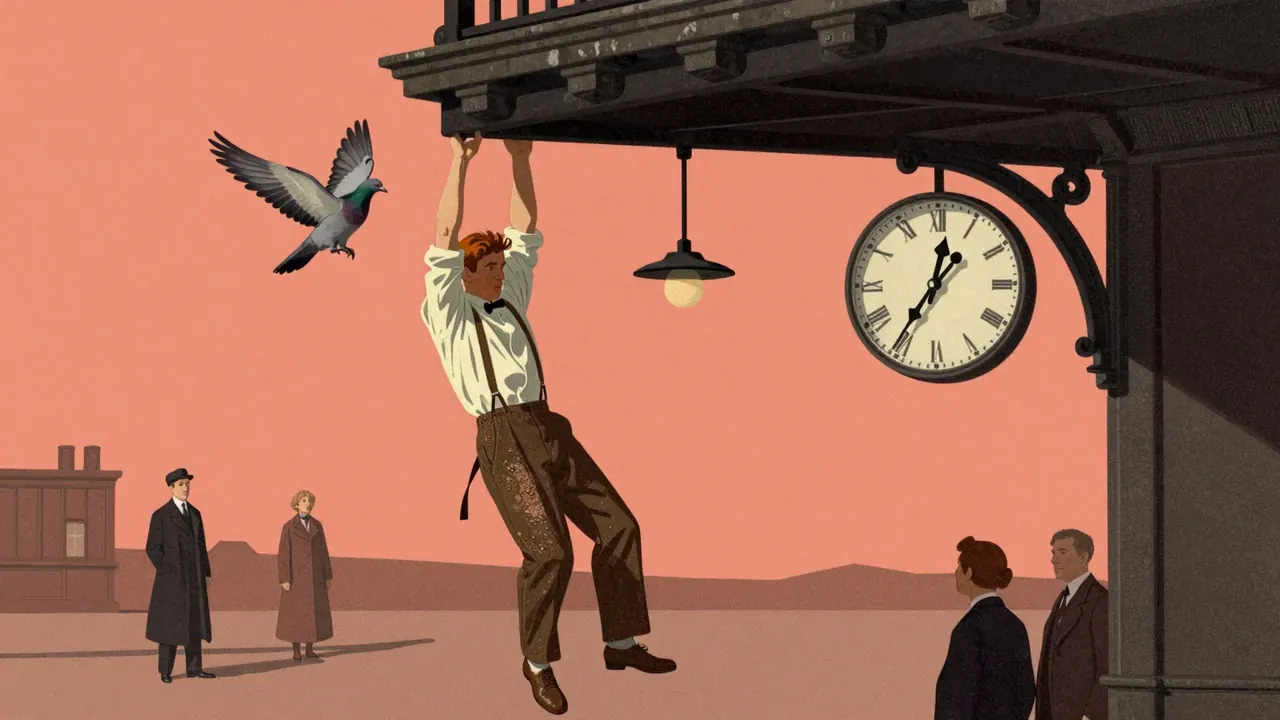
A 1923 silent romantic comedy starring Harold Lloyd, Safety Last! follows a young man’s desperate attempts to appear successful in 1920s Los Angeles so he can marry his girlfriend. When a publicity stunt goes awry, he must scale a skyscraper — culminating in the iconic clock-face sequence. Directed by Fred C. Newmeyer and Sam Taylor for Hal Roach Studios, it balances slapstick with narrative rigour, using physical comedy to explore ambition, class, and endurance.

13:00

Saint Omer

Alice Diop · 2022

Alice Diop’s debut fiction film reconstructs a French murder trial not to explain but to inhabit — following a pregnant novelist who attends the case of a Senegalese woman accused of killing her infant. Shot in austere, observant style, it treats law, motherhood, and migration as overlapping fields of unspoken pressure, refusing resolution in favour of sustained, ethically weighted attention.

13:00

Salaam Bombay!

Mira Nair · 1988

Mira Nair’s 1988 debut follows Krishna, a runaway boy who lands in Bombay’s Falkland Road slums and red-light district. Played by non-professional street children, the film renders their daily survival—tea-stall work, drug-running, petty theft—with documentary rigour and fictional discipline. Shot on location, edited for duration over pace, and scored sparingly by L. Subramaniam, it refuses uplift or explanation. Its power lies in accumulation, not climax; its ethics in restraint, not advocacy.

13:00

Salesman

Albert Maysles, David Maysles · 1969

Salesman (1969) is a direct cinema documentary by Albert and David Maysles and Charlotte Zwerin, following four door-to-door Bible salesmen across the US. It focuses on Paul Brennan, a middle-aged Catholic struggling to meet quotas, capturing pitch meetings, motel stays, and customer encounters with minimal intervention. Shot on location with visible equipment and unscripted sound, it avoids narration, exposition, or moral framing. Its power lies in sustained observation, physical detail, and ethical restraint — not in argument, but in accumulation.

13:00

Salò, or the 120 Days of Sodom

Pier Paolo Pasolini · 1975

Pasolini’s final film transposes de Sade’s novel to Mussolini’s puppet republic in 1944, depicting four fascist libertines who subject eighteen teenagers to escalating physical, sexual and psychological violation over four months. Structured like Dante’s Inferno and shot with forensic restraint by Tonino Delli Colli, it treats cruelty as bureaucracy and the body as commodity. Its themes — power, nihilism, fascism, consumerism — are rendered without ornament or release. Controversial on release and banned in several countries, it remains a demanding, unflinching inquiry into authority unmoored from consequence.

13:00

Salvatore Giuliano

Francesco Rosi · 1962

Francesco Rosi’s 1962 docudrama reconstructs the life and death of Sicilian bandit Salvatore Giuliano not as myth or biography, but as a forensic inquiry into institutional complicity. Shot on location in Sicily with non-professional actors, it uses fragmented chronology, courtroom transcripts and contradictory testimony to expose how power operates across Mafia, carabinieri and judiciary. Giuliano appears only fleetingly — dead, distant, obscured — while figures like his betrayer Pisciotta and judges presiding over rigged trials occupy the frame. The film’s rigour lies in its refusal to narrativise, opting instead for procedural clarity and structural irony.

13:00

Samaritan Zatoichi

Kenji Misumi · 1968

Released in December 1968 and directed by Kenji Misumi, Samaritan Zatoichi is the twelfth instalment in Daiei’s long-running series. Starring Shintarō Katsu as the blind masseur-swordsman, it follows his intervention in a rural town exploited by a yakuza gang. Less concerned with action than with ethical presence, the film uses restraint — in pacing, performance and composition — to explore endurance, reciprocity and the weight of unspoken complicity. Cinematographer Kazuo Miyagawa frames scenes with quiet clarity, and the script avoids exposition in favour of implication. Though some character arcs remain underdeveloped, the film’s cumulative power resides in its unwavering commitment to stillness as moral grammar.

13:00

Sambizanga

Sarah Maldoror · 1972

Sarah Maldoror’s 1972 Sambizanga follows Maria’s search for her arrested husband Domingos across Luanda’s colonial prisons, intercut with his silent detention and death. Shot in the Congo with non-professional actors linked to African liberation movements, it adapts José Luandino Vieira’s novella into a stark, unsentimental record of early Angolan resistance — where political force resides in persistence, not proclamation.

13:00

Samurai I: Musashi Miyamoto

Hiroshi Inagaki · 1954

Hiroshi Inagaki’s 1954 Samurai I: Musashi Miyamoto follows the transformation of the unruly Takezo into the disciplined swordsman Musashi Miyamoto. Adapted from Eiji Yoshikawa’s novel, it charts his journey through exile, imprisonment, and moral education in early Tokugawa Japan. With Toshirō Mifune in a physically commanding, psychologically restrained performance, the film privileges restraint over action, silence over exposition, and accumulation over epiphany. Shot in Eastman Color by Toho, it won a Special Academy Award in 1955 and remains a cornerstone of Japanese cinematic craft.

13:00

Samurai II: Duel at Ichijoji Temple

Hiroshi Inagaki, Jun Fukuda · 1955

Samurai II: Duel at Ichijoji Temple (1955), directed by Hiroshi Inagaki and Jun Fukuda, is the second part of Toho’s Samurai Trilogy. Starring Toshirō Mifune as Miyamoto Musashi, it follows his path from provincial fighter to disciplined swordsman through a series of duels, betrayals, and quiet reckonings in Kyoto and its surrounds. Adapted from Eiji Yoshikawa’s novel, it foregrounds ethical growth over spectacle — emphasising waiting, withdrawal, and sparing life as acts of mastery. Ikuma Dan’s score, Kisaku Itō’s production design, and Tokuho Azuma and Yoshio Sugino’s choreography support a vision of jidaigeki grounded in physical truth and moral ambiguity.

13:00

Samurai III: Duel at Ganryu Island

Hiroshi Inagaki · 1956

Hiroshi Inagaki’s 1956 Samurai III: Duel at Ganryu Island concludes his trilogy with deliberate slowness, following Miyamoto Musashi’s year-long retreat before his fateful duel with Sasaki Kojirō. Shot in Eastmancolor by Kazuo Yamada and starring Toshirō Mifune, it privileges stillness over action, moral weight over spectacle, and quiet mourning over triumph. Its strength is structural and tonal: every performance, cut, and musical phrase serves a single, unwavering register of gravity and restraint.

13:00

Samurai Rebellion

Masaki Kobayashi · 1967

Masaki Kobayashi’s 1967 jidaigeki follows a loyal samurai whose adherence to protocol forces him into open revolt against his daimyo. Based on Yasuhiko Takiguchi’s short story and scripted by Shinobu Hashimoto, the film traces how rigid hierarchy turns love, parenthood, and honour into liabilities. With Toshirō Mifune and Tatsuya Nakadai, Kazuo Yamada’s restrained cinematography and Tōru Takemitsu’s sparse, traditional score deepen its austerity. It won Best Film at Kinema Junpo and Mainichi, and the FIPRESCI Prize at Venice.

13:00

Samurai Spy

Masahiro Shinoda · 1965

Masahiro Shinoda’s 1965 Samurai Spy follows ninja spy Sasuke Sarutobi amid the unstable truce after Sekigahara. Drawn reluctantly into a web of double agents working for Tokugawa and Toyotomi factions, Sasuke navigates shifting loyalties, unverifiable identities, and pervasive distrust. With restrained performances, Kazuo Miyagawa’s chiaroscuro cinematography, and Tōru Takemitsu’s sparse, haunting score, the film builds tension through ambiguity rather than action. It is less a tale of heroic infiltration than a study in exhaustion, institutional compromise, and the quiet collapse of certainty in the service of power.

13:00

Sanders of the River

Zoltan Korda · 1935

Sanders of the River (1935) is a British colonial drama directed by Zoltán Korda, starring Leslie Banks and Paul Robeson. Set in Nigeria, it portrays imperial administration as benevolent and necessary, centring Commissioner Sanders as a stabilising force among fractious tribes. Though technically accomplished and commercially successful, it was condemned by Robeson, Nigerian officials, and anti-colonial thinkers for its pro-imperial message and cultural distortions. Its legacy rests less on artistic merit than on its stark documentation of how empire narrated itself — and how collaborators came to reject that narration.

13:00

Sans Soleil

Chris Marker · 1983

Sans Soleil (1983) is Chris Marker’s 100-minute French essay-film, structured around letters from a fictional cameraman and narrated by Florence Delay. Shot on silent 16mm and edited with found footage from Japan, Guinea-Bissau, Iceland and Paris, it explores memory’s fragility through juxtaposition, colourisation and Moog-scored stillness — not as documentary exposition but as a sustained, self-aware meditation on what images remember and forget.

13:00

Sanshiro Sugata

Akira Kurosawa · 1943

Akira Kurosawa’s 1943 debut adapts Tsuneo Tomita’s novel about a young judo student’s moral and physical education in Meiji-era Tokyo. Made under wartime censorship, it foregrounds cinematic control — wipes, weather, slow motion — over didacticism. Its power lies in quiet accumulation: the pond vigil, the measured matches, the unspoken parting. Though some characters remain schematic and its politics underdeveloped, its focus on discipline as self-erasure remains potent. Restored footage has deepened, but not altered, its austere coherence.

13:00

Sanshiro Sugata Part II

Akira Kurosawa · 1945

Made in early 1945 for Toho, Sanshiro Sugata Part II follows Sanshiro Sugata’s training under judo’s founder, culminating in a symbolic boxing match against an American sailor. Directed and edited by Akira Kurosawa, with cinematography by Takeo Itō and music by Seiichi Suzuki, the film departs from the spiritual focus of its predecessor to assert judo’s moral and physical supremacy amid Japan’s wartime collapse. Its fights are tightly structured, its ideology unambiguous, its landscape functional rather than lyrical. It is less a character study than a controlled rehearsal of triumph — historically revealing, aesthetically restrained.

13:00

Sansho the Bailiff

Kenji Mizoguchi · 1954

Kenji Mizoguchi’s 1954 jidai-geki follows two siblings sold into slavery after their father’s exile. Anchored by Kazuo Miyagawa’s deep-focus long takes and Fumio Hayasaka’s sparse score, it traces Zushiō’s moral fracture and slow reassembly around his father’s injunction: 'Without mercy, man is like a beast.' Its power resides in physical precision — a statuette’s grooves, a lake’s surface, a mother’s blind fingers — not exposition or catharsis.

13:00

Sapphire

Basil Dearden · 1959

A 1959 British crime drama in which police investigate the murder of a light-skinned Black woman who passed as white, using the procedural format to expose everyday racism in post-war London. Directed by Basil Dearden from a script by Janet Green, it balances genre conventions with social observation, winning Best British Film at the 1960 BAFTAs and an Edgar Award for its screenplay.

13:00

Saraband

Ingmar Bergman · 2003

Saraband (2003) is Ingmar Bergman’s last film — a quiet, formally restrained drama revisiting Marianne and Johan from Scenes from a Marriage, now in their seventies. Set in Sweden and structured around ten acts, it traces intergenerational tension through Johan’s troubled relationship with his son Henrik and granddaughter Karin, while Marianne reflects on love, loss, and the persistence of feeling across time. Shot for television by Sveriges Television, it features Liv Ullmann and Erland Josephson reprising their roles, with music drawn exclusively from Bach’s Cello Suites.

13:00

Satyricon

Federico Fellini · 1969

Federico Fellini’s 1969 Satyricon is a hallucinatory, episodic reimagining of Petronius’s fragmented Roman satire. Shot on studio sets and Italian locations by Giuseppe Rotunno, it follows Encolpius (Martin Potter) through a surreal, decaying empire — brothels, banquets, pirate ships, deserts — where power is performative, desire transactional, and narrative secondary to texture and tone. Nino Rota’s score and Danilo Donati’s production design anchor its visceral, dreamlike logic.

13:00

Saving Face

Alice Wu · 2004

Alice Wu’s 2004 debut follows Wilhelmina Pang, a Chinese American surgeon in New York, as she navigates her closeted relationship with dancer Vivian Shing and her mother Hwei-Lan’s unexpected pregnancy. Filmed on location in Flushing, Queens, and performed in English and Mandarin, it treats intergenerational tension, queer identity, and cultural expectation with lightness and precision. Though criticised for underdeveloped professional detail and predictable structure, its strength lies in understated performances, authentic bilingualism, and a vision of change that accumulates in glances, pauses, and small, unheralded choices.

13:00

Sawdust and Tinsel

Ingmar Bergman · 1953

Ingmar Bergman’s 1953 drama follows a struggling travelling circus in early-twentieth-century Scania. Ringmaster Albert Johansson and his mistress Anne confront financial ruin, marital rupture, and public humiliation, while clown Frost endures private shame. Shot by Sven Nykvist and Hilding Bladh in muted, unadorned compositions, the film treats the circus not as spectacle but as a site of embodied vulnerability — where dignity is performed, not possessed, and endurance replaces resolution.
13:00

Scandal

Akira Kurosawa · 1950

A painter and a singer sue a tabloid for fabricating their romance, but the case becomes secondary to their lawyer’s moral collapse under financial pressure. Set in postwar Tokyo, Scandal pivots from social critique to intimate tragedy, anchored by Takashi Shimura’s performance as a man whose conscience frays in silence. Kurosawa’s direction is plain and precise; Fumio Hayasaka’s score uses irony to deepen unease. The film’s power lies not in its courtroom climax, but in the weight of unspoken guilt, a sick child’s breath, and torn posters fading on a city wall.

13:00

Scanners

David Cronenberg · 1981

David Cronenberg’s 1981 Canadian sci-fi thriller follows Cameron Vale, a scanner with uncontrollable telepathic abilities, as he is recruited by security firm ConSec to stop Darryl Revok, a rogue scanner waging psychic war. Shot in Montreal with industrial precision, the film uses its infamous head explosion not as shock for shock’s sake but as the logical endpoint of a world where minds have no boundaries. Its themes of cognitive permeability, pharmaceutical control, and corporate co-option of human evolution remain starkly relevant.

13:00

Schizopolis

Steven Soderbergh · 1996

Steven Soderbergh’s 1996 experimental comedy Schizopolis uses fractured narrative, invented speech, and role-swapping to dissect communication, identity, and social scripting. Shot in Baton Rouge on a $250,000 budget, it follows three overlapping perspectives — office worker Fletcher Munson, dentist Dr. Korchek, and exterminator Elmo Oxygen — all played by Soderbergh and his collaborators. With no traditional credits and a deliberately alienating style, it tests the limits of audience patience and narrative coherence.

13:00

Seconds

John Frankenheimer · 1966

John Frankenheimer’s 1966 film follows a disillusioned banker who undergoes surgical transformation to become a younger artist—only to find his new life as hollow as the old. Shot in stark black-and-white by James Wong Howe, with a dissonant score by Jerry Goldsmith, it uses speculative premise to examine alienation, memory, and the cost of reinvention in mid-century America.

13:00

Secret Honor

Robert Altman · 1984

Robert Altman’s 1984 film Secret Honor confines itself to one room and one performer: Philip Baker Hall as Richard Nixon, delivering a furious, fragmented, self-justifying monologue in the aftermath of resignation. Adapted from Donald Freed and Arnold M. Stone’s play, it rejects historical reconstruction in favour of psychological immersion — tracking how power, paranoia and self-deception reshape language and memory. Pierre Mignot’s restrained cinematography and George Burt’s minimal score serve Hall’s physically precise, verbally dense performance. It is arthouse drama of rare focus and endurance.

13:00

Secret Sunshine

Lee Chang-dong · 2007

Lee Chang-dong’s 2007 drama follows Shin-ae, a widow who moves to her late husband’s hometown with her young son, only to endure his abduction and murder. As she cycles through denial, faith, rage and self-harm, the film refuses catharsis or symbolism, anchoring itself instead in Jeon Do-yeon’s restrained, physically precise performance and a world rendered in muted, unvarnished detail. Shot in Miryang, South Korea, it treats trauma not as narrative engine but as lived, untranslatable condition.

13:00

Secrets & Lies

Mike Leigh · 1996

Mike Leigh’s 1996 drama follows Cynthia Purley, a white factory worker in South East London, as she confronts the return of Hortense, her Black daughter given up for adoption decades earlier. Their reunion destabilises Cynthia’s already fragile family: her resentful daughter Roxanne, her photographer brother Maurice, and his depressed wife Monica. Shot in natural light with long takes and deeply observed performances, the film maps the quiet damage of withheld truths, the physical grammar of shame, and the tentative, unheroic work of connection.

13:00

Secrets of Women

Ingmar Bergman · 1952

Ingmar Bergman’s 1952 drama Secrets of Women unfolds across three interwoven stories told by women waiting for their husbands. Shot in crisp black-and-white by Gunnar Fischer, it observes marital tension, concealed pregnancy, and marital farce with quiet precision — avoiding grand statements in favour of subtle shifts in tone, glance, and silence.

13:00

Seduced and Abandoned

Pietro Germi · 1964

Pietro Germi’s 1964 film Seduced and Abandoned uses dark procedural satire to examine Sicilian customs around forced marriage, statutory rape and legal 'honour repair'. Set in Sciacca, it follows fifteen-year-old Agnese Ascalone as her family, the Califanos and the courts negotiate her future through staged kidnappings, legal loopholes and public shaming. With Stefania Sandrelli and Saro Urzì, and written by Germi, Incrocci, Scarpelli and Vincenzoni, it is formally rigorous, morally unsentimental and structurally relentless.

13:00

Sennan Asbestos Disaster

Kazuo Hara · 2016

Kazuo Hara’s 2016 documentary Sennan Asbestos Disaster observes survivors of industrial asbestos exposure in Osaka over many years. With no narration, score, or archival inserts, it tracks legal battles, medical decline, and daily endurance — treating latency, embodiment, and institutional slowness as its core subjects.

13:00

Sentimental Value

Joachim Trier · 2025

Joachim Trier’s 2025 drama Sentimental Value follows sisters Nora and Agnes as their estranged father Gustav returns to Oslo to film a project rooted in their grandmother’s wartime trauma. With Renate Reinsve, Stellan Skarsgård and Inga Ibsdotter Lilleaas, it traces how grief, ambition and memory circulate through performance, architecture and silence—without offering catharsis or easy resolution.
13:00

Sex, Lies, and Videotape

Steven Soderbergh · 1989

Steven Soderbergh’s 1989 debut is a tightly controlled drama set in Baton Rouge, following a married couple, the wife’s sister, and a visiting friend whose videotaped interviews about female sexuality unsettle their relationships. Shot on a $1.2m budget, with deliberate pacing, flat natural lighting by Walt Lloyd, and a sparse Cliff Martinez score, it builds tension through understatement. It won the Palme d’Or, launched the 1990s US indie wave, and remains a benchmark for psychological realism — not as catharsis, but as sustained, uncomfortable attention.
13:00

Shadows in Paradise

Aki Kaurismäki · 1986

Aki Kaurismäki’s 1986 debut feature follows Ilona, a supermarket checkout clerk, and Nikander, a garbage collector, as they form a tentative bond amid Finland’s muted urban landscape. Shot with flat, natural light by Timo Salminen and edited with metronomic precision by Raija Talvio, the film unfolds in unhurried, symmetrical scenes, trusting silence and repetition to convey emotional depth. Its power lies in what it omits: exposition, psychology, music, and narrative urgency. Starring Matti Pellonpää and Kati Outinen, it is the first of Kaurismäki’s Proletariat Trilogy — a study of dignity in routine, and connection in quiet.

13:00

Shadows of Forgotten Ancestors

Sergei Parajanov · 1964

Shadows of Forgotten Ancestors (1964) is Sergei Parajanov’s visually dense, folk-infused adaptation of Mykhailo Kotsiubynskyi’s novella. Set in the Carpathian Mountains, it follows Ivan Mykolaichuk’s Ivan through love, loss, and spectral return, using saturated colour, ritualised movement, and Myroslav Skoryk’s folk-orchestral score to evoke a Hutsul worldview. Shot in Ukrainian and the Hutsul dialect at Dovzhenko Film Studios, it resists Soviet linguistic assimilation and prioritises embodied tradition over psychological exposition. Though demanding in its formal rigour, it remains a landmark of Ukrainian arthouse cinema.
13:00

Shaft

Gordon Parks · 1971

A 1971 crime thriller directed by Gordon Parks, Shaft stars Richard Roundtree as a Black private investigator navigating Harlem and Manhattan to rescue a mobster’s daughter from the Italian mafia. Built on Ernest Tidyman’s novel and shaped by Isaac Hayes’ Grammy-winning score, it uses lean plotting, location realism, and deliberate casting to assert Black agency within a Hollywood genre. Its significance lies less in thematic depth than in its structural intervention: who directs, scores, edits, and occupies the frame — and on what terms.

13:00

Shallow Grave

Danny Boyle · 1994

Danny Boyle’s 1994 debut follows three Edinburgh flatmates who conceal the death of a mysterious new tenant and keep his suitcase of cash — only to fracture under paranoia, betrayal and violence. Shot in Glasgow on a £1 million budget, it’s a tightly wound crime thriller built on escalating consequences, not character revelation.
13:00

Shame

Ingmar Bergman · 1968

Ingmar Bergman’s 1968 Shame follows violinist-turned-farmer couple Jan and Eva Rosenberg as civil war invades their isolated Swedish island life. With no named factions or ideologies, the film traces how violence corrodes language, intimacy, and moral coherence — not through spectacle, but through withheld gestures, miniature war effects, and Sven Nykvist’s bleached, claustrophobic cinematography. Liv Ullmann and Max von Sydow perform with devastating restraint, embodying shame not as emotion but as structural failure.

13:00

Shampoo

Hal Ashby · 1975

Shampoo (1975), directed by Hal Ashby and co-written by Warren Beatty and Robert Towne, follows a Beverly Hills hairdresser across Election Day 1968 as he navigates overlapping affairs, professional frustration, and the quiet hypocrisies of his social circle. Shot by László Kovács and scored with period-appropriate music by Paul Simon and others, it uses romantic comedy structure to dissect sexual politics, class, and the erosion of public attention. Though commercially successful and awarded an Oscar for Lee Grant’s supporting performance, its satire remains understated, its pacing deliberate, its conclusions ambiguous.
13:00

Shanghai Express

Josef von Sternberg · 1932

Shanghai Express (1932) is a tightly wound pre-Code drama set aboard a train commandeered by a warlord during China’s civil war. Directed by Josef von Sternberg and starring Marlene Dietrich and Anna May Wong, it uses stark black-and-white cinematography and precise performances to explore reputation, agency, and colonial blindness. Though visually commanding and thematically sharp on gender and performance, its portrayal of China relies on stereotype and omission. It remains a landmark of studio-era craft — compelling, coherent, and compromised.

13:00

Shoah

Claude Lanzmann · 1985

A nine-hour French documentary directed by Claude Lanzmann, released in 1985. Made over eleven years, it contains no archival footage, no narration, no music — only interviews with survivors, perpetrators and bystanders, filmed on location at former death camps in Poland. Its method is durational, forensic and ethically uncompromising: testimony is left untranslated where necessary, interpreters’ voices remain audible, silence is preserved, and geography is matched to memory. It does not explain the Holocaust but locates it in speech, space and procedure.

13:00

Shock Corridor

Samuel Fuller · 1963

Samuel Fuller’s 1963 film noir follows a journalist who fakes insanity to investigate a murder inside a psychiatric hospital. Using stark cinematography, jagged editing and allegorical patient characters, it frames Cold War anxieties — racism, militarism, nuclear fear — as contagious pathologies. Though made on a shoestring budget and tight schedule, its formal rigour and political bite earned it preservation in the US National Film Registry.

13:00

Shoeshine

Vittorio De Sica · 1946

Shoeshine follows two Roman shoeshine boys drawn into a con, arrested, and sent to a juvenile reformatory where their friendship unravels under pressure. Directed by Vittorio De Sica in 1946, it uses non-professional actors, on-location shooting, and a spare, unsentimental script to depict how poverty and institutional failure corrode loyalty between children. Its power lies in restraint: no music swells, no speeches explain, no ending offers solace. It is a foundational work of Italian neorealism and the first film to win the Academy Award for Best International Feature Film.

13:00

Short Cuts

Robert Altman · 1993

Robert Altman’s 1993 ensemble film adapts nine Raymond Carver stories and a poem into a sprawling, interwoven portrait of Los Angeles life. With twenty-two principal characters, it builds meaning not through plot but through proximity, repetition and quiet rupture — helicopters spraying for medflies, overlapping phone calls, accidental collisions. Walt Lloyd’s flat, naturalistic cinematography and Geraldine Peroni’s associative editing sustain a rhythm of accumulation rather than climax. Though some subplots thin out and certain motifs repeat without deepening, its power lies in its unwavering attention to the texture of ordinary disconnection — grief dispersed, attention frayed, empathy deferred. It is arthouse cinema at its most patient and exacting.

13:00

Show Boat

James Whale · 1936

James Whale’s 1936 Show Boat is a rigorously faithful adaptation of the Kern–Hammerstein musical, starring Irene Dunne and Paul Robeson. Shot by John J. Mescall and edited by Bernard W. Burton, it preserves the original’s multi-decade structure, racial themes, and theatrical grammar — even adding three new songs to deepen character rather than modernise. Though some late edits weaken its temporal arc, its integrity, restraint, and historical precision make it a singular artifact in Hollywood’s musical canon.

13:00

Sid and Nancy

Alex Cox · 1986

A 1986 British biographical drama directed by Alex Cox, Sid and Nancy traces the final years of Sex Pistols bassist Sid Vicious and his girlfriend Nancy Spungen. Starring Gary Oldman and Chloe Webb, it depicts their descent into heroin addiction across London and New York, filmed by Roger Deakins in a tightly framed, high-contrast style. Though critically praised and now cult-acclaimed, it failed to recoup its $4 million budget. The film avoids myth-making, opting instead for visceral, unvarnished observation of mutual erosion — with no redemption, explanation, or narrative distance.

13:00

Simon of the Desert

Luis Buñuel · 1965

Luis Buñuel’s 1965 Simon of the Desert follows a sixth-century ascetic who lives atop a pillar in the Syrian desert — until Satan transports him to a 1960s New York nightclub. Shot by Gabriel Figueroa in the Samalayuca Dune Fields and edited with surgical restraint, the film uses Claudio Brook’s still, weary Simón to dissect the fragility of spiritual authority, the absurdity of purity, and the quiet violence of being watched. At 45 minutes, it is both complete and unresolved — a dry, precise, and deeply unsettling work of surrealist satire.

13:00

Sing a Song of Sex

Nagisa Ōshima · 1967

Sing a Song of Sex (1967), directed by Nagisa Ōshima, follows four Tokyo high school seniors over a single day—February 11, 1967—as they drift between exams, fantasies, drinking, and competitive singing. Structured as a musical collage rather than a linear narrative, it centres on the shunka folk song Yosakoi Bushi and explores frustrated male desire, generational disaffection, and the submerged Korean roots of Japanese identity. With improvised performances, overlapping sound design, and deliberate narrative gaps, it treats song as both archive and weapon.

13:00

Sisters

Brian De Palma · 1972

Brian De Palma’s 1972 Sisters is a psychological horror film about a reporter who witnesses a murder committed by a woman with a hidden, violent twin. Shot on location in Staten Island and scored by Bernard Herrmann, it uses split screens, long takes and clinical framing to explore perception, media saturation and the erasure of women’s testimony. Margot Kidder plays dual roles with unsettling restraint; Jennifer Salt anchors the film as the increasingly isolated witness. Though low-budget, it is tightly constructed and thematically precise.