filmbriefs
Newest

All briefs

2035 briefs · 26452 min · 1153–1248 on page 13 of 22
13:00

The Lady Vanishes

Alfred Hitchcock · 1938

Alfred Hitchcock’s 1938 *The Lady Vanishes* follows a young woman who discovers her fellow passenger has vanished — and that no one else remembers her. Set aboard a train crossing a fictional Balkan country, the film uses wit, tight plotting and psychological precision to explore trust, testimony and the fragility of shared reality. Produced by Edward Black for Gainsborough Pictures, it remains a benchmark of British suspense.
13:00

The Last Command

Josef von Sternberg · 1928

The Last Command (1928), directed by Josef von Sternberg and starring Emil Jannings, follows a fallen Russian grand duke reduced to working as a Hollywood extra. When cast to play his former self, memory and reality blur, culminating in a fatal breakdown on set. Shot in five weeks with Bert Glennon’s precise cinematography, it is a tightly wound study of identity, power, and performance — awarded the first Best Actor Oscar and preserved in the US National Film Registry.

13:00

The Last Days of Disco

Whit Stillman · 1998

Whit Stillman’s 1998 drama follows a group of Ivy League graduates navigating Manhattan’s early-1980s club scene. Built on extended dialogue rather than plot, it examines how class, ideology, and self-presentation shape relationships in a world where moral certainty masks uncertainty. With flat lighting, restrained editing, and performances tuned to verbal nuance, it offers a dry, observant portrait of privilege in transition — one that rewards attention to subtext over spectacle.

13:00

The Last Emperor

Bernardo Bertolucci · 1987

Bernardo Bertolucci’s 1987 epic traces the life of Puyi, last Emperor of China, from infant coronation in the Forbidden City to political re-education in a Communist prison. Shot on location in Beijing with unprecedented access, it uses scale, silence and ritual to explore how systems — imperial, colonial, fascist, communist — inscribe themselves on a single body. John Lone stars, supported by Joan Chen, Peter O'Toole and a cast of thousands. Vittorio Storaro’s cinematography and Ryuichi Sakamoto’s score anchor its formal rigour. It won nine Academy Awards, including Best Picture and Best Director.

13:00

The Last Metro

François Truffaut · 1980

François Truffaut’s 1980 drama The Last Metro follows a Paris theatre company in 1942, where Marion Steiner (Catherine Deneuve) runs performances while hiding her Jewish husband Lucas (Heinz Bennent) in the cellar. Young actor Bernard Granger (Gérard Depardieu) becomes entangled in both the production and the Resistance. Shot by Néstor Almendros and scored by Georges Delerue, the film treats occupation not as backdrop but as condition — shaping light, dialogue, timing and moral choice. It won ten César Awards, including Best Film, Director and Actor/Actress.

13:00

The Last Picture Show

Peter Bogdanovich · 1971

Peter Bogdanovich’s 1971 black-and-white coming-of-age drama follows two high school seniors in a dying Texas town between 1951 and 1952. Adapted from Larry McMurtry’s novel, it trades plot for atmosphere, using restrained performances, flat naturalistic lighting, and diegetic 1950s country music to evoke the slow erosion of community, certainty, and youth. Though praised for its supporting turns — Ben Johnson and Cloris Leachman won Oscars — its structural looseness around the female lead and deliberate pacing divide viewers. It remains a landmark of American arthouse realism.

13:00

The Last Temptation of Christ

Martin Scorsese · 1988

Martin Scorsese’s 1988 adaptation of Nikos Kazantzakis’s novel imagines Jesus not as divine certainty but as a man besieged by doubt, desire, and exhaustion. Willem Dafoe stars in a performance defined by physical and vocal restraint, supported by Michael Ballhaus’s muted cinematography and Peter Gabriel’s world-music score. Shot in Morocco on a $7m budget, it avoids spectacle in favour of psychological texture — from the dusty realism of Nazareth to the hallucinatory austerity of the desert. Controversial on release for its humanisation of Christ, it endures as a rare studio film that treats spiritual struggle with existential seriousness, not dogma.

13:00

The Last Wave

Peter Weir · 1977

Peter Weir’s 1977 film follows Sydney solicitor David Burton as he defends four Aboriginal men accused of murder — and finds his grip on reality loosening amid inexplicable weather, prophetic dreams and encounters with Dreamtime logic. Shot in Adelaide and Sydney by Russell Boyd, it sustains a mood of ontological unease without resorting to exposition or resolution.

13:00

The Law of the Border

Lütfi Ömer Akad · 1966

The Law of the Border (1966), directed by Lütfi Ömer Akad and written by Yılmaz Güney, follows Hidir, a smuggler in eastern Turkey striving to send his son to school. Set against a stark landscape and a rigid social hierarchy, the film grounds its drama in material reality — poverty, geography, and institutional neglect — rather than individual vice. Its social realism marked a turning point in Turkish cinema, rejecting studio artifice for location shooting, restrained performances, and a focus on systemic forces. Restored from a single surviving print, its technical imperfections underscore its historical fragility.

13:00

The League of Gentlemen

Basil Dearden · 1960

Basil Dearden’s 1960 heist film assembles seven disgraced former army officers to rob a London bank. Built on Bryan Forbes’ script and anchored by Jack Hawkins, it prizes procedural precision over psychological depth, dry irony over moral judgement, and ensemble cohesion over individual revelation. Its strengths lie in tightly orchestrated set-pieces and consistent tone; its limits in underdeveloped characters and withheld emotional stakes.

13:00

The Learning Tree

Gordon Parks · 1969

Gordon Parks’ 1969 debut feature, adapted from his own novel, follows Newt Winger’s adolescence in 1920s Kansas. Shot on location in Fort Scott with Burnett Guffey, it renders Black interiority through restraint: moral choices accumulate without resolution, violence lingers without spectacle, and dignity is shown as daily practice. Its historical significance—as the first film by a Black director for a major studio—is matched by its formal composure and thematic weight.

13:00

The Life and Death of Colonel Blimp

Michael Powell, Emeric Pressburger · 1943

A British Home Guard general is captured during a training exercise, triggering a decades-spanning flashback that charts his evolution from Boer War hero to wartime relic. Directed by Powell and Pressburger in 1943, it uses Technicolor, layered performance and deliberate pacing to examine honour, time and institutional inertia — not as abstractions, but as lived, embodied conditions.

13:00

The Life Aquatic with Steve Zissou

Wes Anderson · 2004

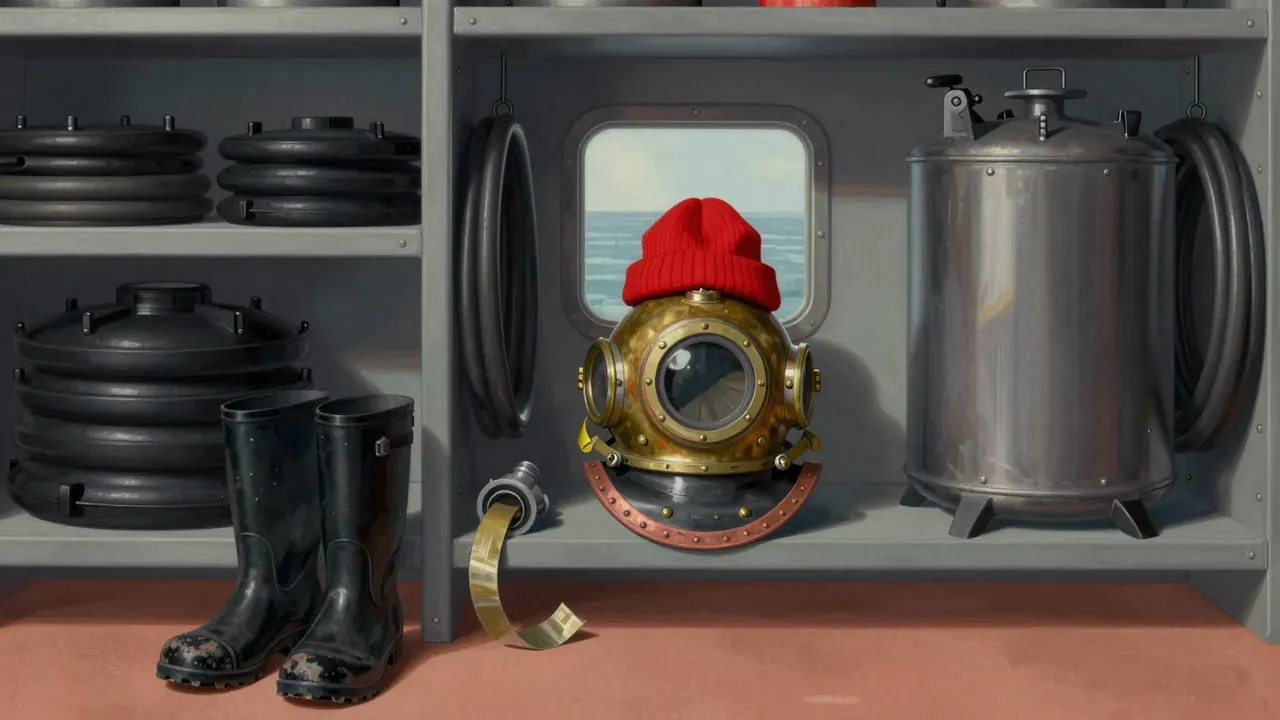
Wes Anderson’s 2004 film follows oceanographer Steve Zissou on a quixotic quest for revenge against a mythical shark. Stylised to the point of abstraction, it uses symmetry, deadpan delivery, and invented marine life to explore grief, paternal fantasy, and the erosion of authority. Though box-office unsuccessful and critically divided on release, it has since accrued a devoted following for its unwavering formal discipline and muted emotional resonance.

13:00

The Life of Oharu

Kenji Mizoguchi · 1952

Kenji Mizoguchi’s 1952 film follows Oharu, a noblewoman whose life disintegrates after a forbidden romance, forcing her through successive roles — concubine, courtesan, servant, wife, nun, prostitute — each ending in expulsion. Adapted from Ihara Saikaku, it uses long takes, restrained performance, and sparse design to trace how Edo-period Japan’s hierarchies erase women not with violence but with quiet, repeated exclusion.

13:00

The Living Magoroku

Keisuke Kinoshita · 1943

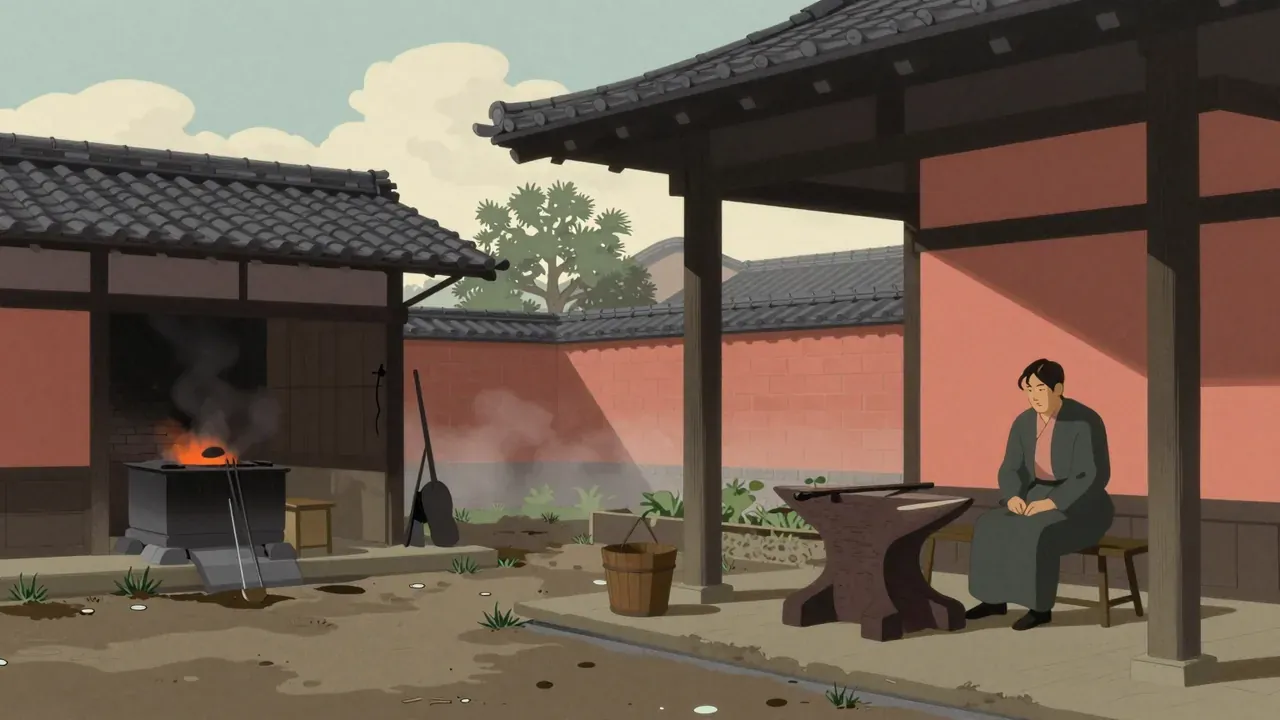
Keisuke Kinoshita’s 1943 film The Living Magoroku is a tightly controlled drama set in a traditional swordsmith’s workshop during wartime Japan. With no credited cast or composer, it relies on gesture, duration, and compositional restraint to explore transmission, duty, and the ethics of making. Its power lies in what it omits—psychological exposition, overt politics, dramatic climax—as much as in what it shows: the physical labour of preserving form under constraint.

13:00

The Living Skeleton

Kōki Matsuno · 1968

The Living Skeleton (1968), directed by Kōki Matsuno for Shochiku, follows a woman haunted by her vanished twin and a submerged wreck off a coastal village. Shot in stark monochrome, it builds unease through underwater skeletons, fog-bound ships, and Catholic ritual — not gore or exposition. Its power lies in texture, repetition, and the sea as keeper of buried history.

13:00

The Long Day Closes

Terence Davies · 1992

Terence Davies’ 1992 film is a lyrical, formally rigorous evocation of childhood in 1950s Liverpool. Built from fragments — light, music, silence, gesture — it avoids plot in favour of sustained mood, using Michael Coulter’s restrained cinematography and a carefully curated soundtrack to render memory as sensory experience rather than narrative.

13:00

The Long Good Friday

John Mackenzie · 1980

Set over one Easter weekend in 1980, The Long Good Friday follows London gangster Harold Shand as his plans to redevelop the Docklands and attract American investment unravel amid coordinated attacks. Directed by John Mackenzie and written by Barrie Keeffe, the film uses tight framing, restrained performances, and real London locations to chart the collapse of authority — not through violence, but through the sudden withdrawal of trust, information, and time.

13:00

The Lost Honour of Katharina Blum

Volker Schlöndorff, Margarethe von Trotta · 1975

Adapted from Heinrich Böll’s novel and co-directed by Volker Schlöndorff and Margarethe von Trotta, The Lost Honour of Katharina Blum follows a young woman’s rapid public undoing after a single night spent with a wanted man. Anchored by Angela Winkler’s tightly controlled performance and Jost Vacano’s unsentimental camerawork, the film dissects how tabloid logic, police presumption, and judicial passivity converge to erase a person without ever needing to convict her. It is a rigorously constructed, morally unblinking work — less concerned with guilt or innocence than with the speed and ease with which institutions revoke standing.

13:00

The Love Parade

Ernst Lubitsch · 1929

Ernst Lubitsch’s 1929 debut sound film stars Maurice Chevalier and Jeanette MacDonald as a queen and her reluctant consort in the fictional kingdom of Sylvania. Built on a French stage farce, it uses operetta conventions, witty dialogue, and Victor Schertzinger’s songs to explore power, gender, and the performance of authority. Though technically inventive and tonally assured, its satire is limited by its hollow setting and reliance on archetype over depth. A landmark of early Hollywood musical craftsmanship — elegant, intelligent, and knowingly artificial.

13:00

The Love That Remains

Hlynur Pálmason · 2025

Set over one year in Iceland, The Love That Remains follows a family adjusting to separation with quiet, unsentimental attention. Directed and shot on 35 mm by Hlynur Pálmason, it stars Saga Garðarsdóttir and Sverrir Guðnason as parents navigating shared custody, their children absorbing the shift in atmosphere more than in words. With no score-driven emotion or narrative climax, it builds meaning through repetition, texture, and the accumulated weight of small gestures.

13:00

The Lovers

Louis Malle · 1958

Louis Malle’s 1958 drama follows Jeanne Tournier, a woman adrift in bourgeois marriage near Dijon, whose life pivots during one night spent with a younger man. Adapted from an 1876 short story, the film avoids moral framing or psychological exposition, relying instead on Jeanne Moreau’s restrained performance, Henri Decaë’s naturalistic cinematography, and a tightly contained structure. It won the Grand Jury Prize at Venice and later played a pivotal role in US obscenity law. Its strength lies in its tactful realism and unwavering focus on the physical and temporal texture of choice.

13:00

The Lower Depths

Akira Kurosawa · 1957

Akira Kurosawa’s 1957 adaptation of Gorky’s play relocates the action to Edo Japan and strips away theatrical artifice to create a claustrophobic, ensemble-driven portrait of a tenement’s inhabitants. With Toshirō Mifune, Isuzu Yamada and Kyōko Kagawa, it sustains a tone of moral exhaustion rather than uplift, treating poverty as an environment that reshapes language, loyalty and selfhood. Shot in extended takes with minimal editing, it privileges texture over plot and ambiguity over resolution.

13:00

The Lure

Agnieszka Smoczyńska · 2015

Agnieszka Smoczyńska’s 2015 debut is a Polish musical horror film set in a 1980s Warsaw nightclub, following two sirens who perform, love, and devour. Blending gothic metal, bodily realism, and Andersen’s fable, it literalises female adolescence, immigration, and assimilation — with tails removed, voices lost, and hearts consumed. Produced by Warsaw Documentary Film Studio, scored by Ballady i Romanse, and shot by Jakub Kijowski.

13:00

The Magic Flute

Ingmar Bergman · 1975

Ingmar Bergman’s 1975 film of Mozart’s The Magic Flute is a meticulous recreation of an eighteenth-century theatrical experience, shot in studio with a replica of the Drottningholm Palace Theatre. Using pre-recorded music and mimed performance, it foregrounds stagecraft, audience presence, and symbolic clarity over psychological realism or cinematic flourish. Its power lies in fidelity to ritual, not narrative.

13:00

The Magician

Ingmar Bergman · 1958

Ingmar Bergman’s 1958 The Magician follows a travelling troupe of performers led by mute magician Albert Vogler, whose claims of supernatural ability provoke suspicion in a Swedish village. Through layered deceptions, an autopsy gone awry, and a final royal summons, the film examines belief, authority, and the blurred line between fraud and revelation — all rendered in Gunnar Fischer’s muted, reflective cinematography and sustained by Max von Sydow’s physically restrained performance.

13:00

The Magnificent Ambersons

Orson Welles · 1942

Orson Welles’s 1942 adaptation of Booth Tarkington’s novel traces the slow collapse of a wealthy Midwestern family amid industrial change. Though RKO cut over forty minutes and reshot the ending — destroying the excised footage — the surviving film remains a landmark of restrained, atmospheric storytelling, anchored by Agnes Moorehead’s performance and Stanley Cortez’s cinematography. Its power lies in what it implies, not what it states.

13:00

The Making of Fanny and Alexander

Ingmar Bergman · 1986

Ingmar Bergman’s 1984 documentary records the making of his 1982 film Fanny and Alexander with clinical precision: no narration, no interviews, no context — just rehearsals, fittings, lighting tests and editorial decisions as they happened. Photographed by Arne Carlsson and edited by Lena Åberg, it treats filmmaking as iterative craft, not artistic revelation.

13:00

The Makioka Sisters

Kon Ichikawa · 1983

Kon Ichikawa’s 1983 adaptation of Jun’ichirō Tanizaki’s novel follows the Makioka sisters — Tsuruko, Sachiko, Yukiko, and Taeko — as they navigate marriage negotiations, familial duty, and quiet personal rebellion in pre-war Osaka and Kyoto. Shot with deliberate stillness and seasonal precision, the film prioritises atmosphere over plot, restraint over revelation, and social texture over psychological exposition. Its power lies in accumulation: in glances, silences, and the slow erosion of old hierarchies. Not for those seeking narrative urgency, but essential for viewers attuned to the eloquence of the unsaid.

13:00

The Man in Grey

Leslie Arliss · 1943

The Man in Grey (1943), directed by Leslie Arliss for Gainsborough Pictures, is a dual-timeline period drama adapting Eleanor Smith’s novel. In 1943 London, a Wren and an RAF pilot visit an auction; the event triggers a flashback to the early 1800s, where Clarissa Rohan’s loyalty to the ambitious, bitter Hesther Shaw sets in motion a chain of betrayal, coercion, and vengeance. Margaret Lockwood, James Mason, Phyllis Calvert, and Stewart Granger lead a cast defined by stark moral contrasts, supported by Arthur Crabtree’s expressive cinematography and a tightly wound studio aesthetic. It inaugurated the Gainsborough melodramas — escapist, emotionally direct, and formally assured.

13:00

The Man Who Fell to Earth

Nicolas Roeg · 1976

Nicolas Roeg’s 1976 adaptation of Walter Tevis’s novel follows Thomas Jerome Newton (David Bowie), an alien who lands in New Mexico to secure water for his drought-ravaged planet. Using advanced knowledge, he amasses wealth and builds a rocket — but becomes entangled in human relationships, addiction, and surveillance. Shot by Anthony B. Richmond in New Mexico, with a fragmented, atmospheric score by John Phillips, the film treats estrangement as perceptual, not biological. Its power lies in cumulative mood, not plot mechanics.

13:00

The Man Who Knew Too Much

Alfred Hitchcock · 1934

Alfred Hitchcock’s 1934 British thriller follows a couple who uncover an assassination plot while on holiday in Switzerland, then race to stop it in London — all without police help. Built on tight pacing, precise editing, and Arthur Benjamin’s Storm Clouds Cantata, it prioritises cause-and-effect over psychology, domestic stakes over geopolitical spectacle. Though leaner and less polished than Hitchcock’s later work, its structural rigour and unwavering focus make it a masterclass in economical suspense.
13:00

The Manchurian Candidate

John Frankenheimer · 1962

John Frankenheimer’s 1962 adaptation of Richard Condon’s novel follows Korean War veteran Raymond Shaw, a decorated hero secretly programmed as a communist assassin. Through meticulous craft — Lionel Lindon’s controlled cinematography, Ferris Webster’s taut editing, Angela Lansbury’s chilling performance — the film maps how ideology operates inside families, institutions and minds. It is less a warning about foreign threats than a demonstration of how obedience is taught, memory overwritten, and power disguised as normalcy.

13:00

The Marriage of Maria Braun

Rainer Werner Fassbinder · 1979

Rainer Werner Fassbinder’s 1979 drama follows Maria Braun from her wartime wedding through fifteen years of survival, ambition, and moral compromise in postwar West Germany. Hanna Schygulla’s restrained performance anchors a film that charts national recovery through private sacrifice — loyalty weaponised, love instrumentalised, and agency steadily dissolved. Shot by Michael Ballhaus and scored by Peer Raben, it is the first of Fassbinder’s BRD Trilogy.

13:00

The Masseurs and a Woman

Hiroshi Shimizu · 1938

Hiroshi Shimizu’s 1938 film follows blind masseurs arriving at a rural spa town, where fleeting encounters — with a mysterious woman, a guest named Shintarō, and the rhythms of temporary community — unfold with quiet precision. Made by Shochiku in its Ōfuna style, it prioritises observation over exposition, tactile detail over dialogue, and duration over plot.

13:00

The Match Factory Girl

Aki Kaurismäki · 1990

Aki Kaurismäki’s 1990 film follows Iris, a lonely Finnish factory worker whose quiet endurance of poverty, familial exploitation, and sexual dismissal culminates in a series of methodical, unsentimental acts of retribution. Shot in stark, static compositions and performed with near-total emotional restraint, it is the final chapter of Kaurismäki’s Proletariat Trilogy — a study in how dignity erodes when every door is closed, and every gesture is transactional.

13:00

The Men Who Tread on the Tiger's Tail

Akira Kurosawa · 1945

Akira Kurosawa’s 1945 film adapts a classical Japanese tale of disguise and deception at a border checkpoint. Made under severe wartime constraints — one set, minimal lighting, a script written overnight — it pits the solemnity of Noh theatre against the irreverent commentary of a low-status porter. Denjirō Ōkōchi’s Benkei anchors the ritual; Ken’ichi Enomoto’s porter destabilises it. The film is a study in economy, tension, and the performative nature of authority — austere, precise, and deeply intentional.

13:00

The Merchant of Four Seasons

Rainer Werner Fassbinder · 1972

Rainer Werner Fassbinder’s 1972 film follows Hans Epp, a Munich fruit peddler in the 1950s, as his marriage, health, and sense of self steadily collapse under familial disdain, class prejudice, and his own inertia. Shot with restrained precision by Dietrich Lohmann and performed with unadorned gravity by Hans Hirschmüller and Irm Hermann, it treats despair as routine, not crisis.

13:00

The Mikado

Victor Schertzinger · 1939

The Mikado (1939) is a British Technicolor film adaptation of Gilbert and Sullivan’s 1885 comic opera, starring Martyn Green and members of the D’Oyly Carte Opera Company. Directed by Victor Schertzinger and produced by Geoffrey Toye, it preserves the original music and libretto with minimal alteration, using the London Symphony Orchestra and Marcel Vertès’s vivid art direction. Its strength lies in vocal precision and ensemble discipline; its limitation is its adherence to stage convention over cinematic language. It offers no cultural critique of its Japanese setting, treating it as decorative backdrop. A document of a performing tradition, not a reinterpretation.

13:00

The Milky Way

Luis Buñuel · 1969

Luis Buñuel’s 1969 film follows two French vagrants walking the Camino de Santiago, encountering historical Christian heresies, doctrinal disputes, and theological contradictions staged with documentary precision and surrealist detachment. Shot in straightforward colour by Christian Matras and written by Buñuel and Jean-Claude Carrière, it treats dogma as performance, time as collapse, and pilgrimage as recursion — not redemption.

13:00

The Model Couple

William Klein · 1977

William Klein’s 1977 film follows a 'model couple' subjected to relentless observation in a state-run experiment designed to engineer future society. With deadpan performances, sterile cinematography, and a score that veers between lounge jazz and electronic unease, it satirises surveillance capitalism, bureaucratic theatre, and media-driven reality before those terms existed — not through prophecy, but through forensic mimicry of their logic.

13:00

The Moment of Truth

Francesco Rosi · 1965

Francesco Rosi’s 1965 drama follows Miguel Romero, a young man from rural poverty who abandons farming for bullfighting in search of dignity and recognition. Shot with restrained realism by Di Venanzo, De Santis and Parolin, and performed largely by real bullfighters including Miguelín himself, the film avoids mythmaking in favour of procedural observation — tracing how ritual, class and visibility reshape identity. Linda Christian appears as an ambiguous outsider. Its themes centre on substitution, erasure and the cost of becoming legible in a hierarchical world.

13:00

The Moon Has Risen

Kinuyo Tanaka · 1955

Kinuyo Tanaka’s 1955 film, scripted by Yasujirō Ozu and shot by Shigeyoshi Mine, follows Setsuko as she quietly engineers a romance between her older sister Ayako and a former suitor. Set in Nara, it unfolds across domestic spaces with restrained pacing, gentle performances, and a focus on unspoken feeling. Though structurally loose around some supporting characters, its strength lies in emotional precision and tonal consistency.

13:00

The Most Beautiful

Akira Kurosawa · 1944

Akira Kurosawa’s 1944 film The Most Beautiful follows young women working at a Japanese optics factory during the Second World War. Shot on location with a semidocumentary approach, it depicts their collective effort to meet production targets, their dormitory life, and the personal costs of unwavering dedication. Though commissioned as propaganda, its austerity and focus on physical and emotional strain lend it an unexpected gravity — less a celebration of sacrifice than a quiet record of its weight.

13:00

The Most Dangerous Game

Irving Pichel, Ernest B. Schoedsack · 1932

The Most Dangerous Game (1932) adapts Richard Connell’s short story with surgical fidelity: a shipwrecked hunter becomes prey to a Russian aristocrat who hunts humans for sport. Shot on the same jungle sets as King Kong, it uses tight pacing, Max Steiner’s leitmotif-driven score, and Leslie Banks’s chillingly controlled performance to sustain dread without gore or exposition. Its themes — predation, civilisation’s fragility, and the boredom of mastery — land through structure, not speech. At 63 minutes, it is lean, logical, and enduring.

13:00

The Mother and the Whore

Jean Eustache · 1973

Jean Eustache’s 1973 debut is a 217-minute French arthouse drama following three Parisians — an unemployed intellectual, his partner and her rival — through conversations, silences and small betrayals. Shot in real locations with no musical score, it builds meaning through accumulation of speech and gesture rather than plot. Though labelled a comedy, its tone is unsparing and its structure anti-dramatic. It won the Grand Prix at Cannes and has since been canonised as a pinnacle of post-New Wave realism.

13:00

The Mystic

Tod Browning · 1925

Tod Browning’s 1925 silent drama The Mystic follows a Hungarian carnival troupe recruited to run a fraudulent spiritualist act in New York. With Aileen Pringle and Conway Tearle, it explores belief as craft and deception as labour — avoiding horror tropes for moral ambiguity, slow pacing, and quiet performances. Shot by Ira H. Morgan and edited by Frank Sullivan, it sustains tension through restraint, not revelation. A surviving print was restored by Criterion in 2023 with a new score by Dean Hurley.

13:00

The Naked Island

Kaneto Shindō · 1960

Kaneto Shindō’s 1960 film follows a family surviving alone on a remote island in Japan’s Seto Inland Sea, carrying water daily to grow crops. With almost no spoken dialogue, it relies on repetition, physical exertion and Kiyomi Kuroda’s restrained cinematography to convey endurance, grief and routine. Though its agricultural premise is factually flawed, its austere method remains compelling: a rigorous, unsentimental portrait of persistence.

13:00

The Naked Kiss

Samuel Fuller · 1964

Samuel Fuller’s 1964 film follows Kelly, a former prostitute who seeks refuge in a small American town, becomes a nurse, and falls in love with its wealthiest man — only to discover his predatory abuse of children. When she kills him, she must fight to prove her account in a system that prefers silence to scandal. Shot by Stanley Cortez and starring Constance Towers, it is a lean, unsentimental examination of power, exposure, and the limits of social forgiveness.

13:00

The Naked Prey

Cornel Wilde · 1966

Cornel Wilde’s 1966 survival film follows a safari guide stripped naked and hunted across the South African veldt after his expedition offends a local tribe. Shot on location with minimal dialogue and a documentary sensibility, it sustains tension through rhythm, terrain, and endurance rather than character or exposition. Its reputation has grown for formal rigour and visceral immediacy, though its colonial framing remains contested.

13:00

The New Land

Jan Troell · 1972

Jan Troell’s 1972 epic The New Land completes his adaptation of Vilhelm Moberg’s emigration novels, following Swedish settlers in 1850s Minnesota as they clear land, raise children, suffer loss, and confront violence — including the Dakota War of 1862. Shot concurrently with its predecessor The Emigrants, it shares the same cast, crew, and patient, tactile realism. At 204 minutes, it unfolds with deliberate slowness, trusting duration over drama. Though acclaimed for its performances and craft, its portrayal of Indigenous people remains framed entirely through settler consciousness — a limitation neither disguised nor addressed.

13:00

The New World

Terrence Malick · 2006

Terrence Malick’s 2006 biographical film follows Pocahontas, John Smith and John Rolfe across the founding of Jamestown, the forests of Tsenacommacah and the courts of Jacobean London. Shot by Emmanuel Lubezki and scored partly by James Horner, it privileges sensory immersion over exposition, using reconstructed Powhatan language, natural light and elliptical editing to evoke the moral and perceptual instability of early colonial encounter. Though its final act falters in narrative cohesion, its sustained tonal discipline and commitment to ambiguity make it a singular achievement in arthouse cinema.

13:00

The Night of the Hunter

Charles Laughton · 1955

Charles Laughton’s 1955 film adapts Davis Grubb’s novel into a Southern Gothic fable starring Robert Mitchum as a murderous preacher pursuing two children for hidden money. Shot by Stanley Cortez with expressionist lighting and deliberate pacing, it favours symbolic repetition over psychological realism. Though poorly received on release, it is now regarded as a landmark of arthouse thriller cinema.

13:00

The Night Porter

Liliana Cavani · 1974

Liliana Cavani’s 1974 art film stars Dirk Bogarde and Charlotte Rampling as a former SS officer and a concentration camp survivor who reunite in postwar Vienna. Set almost entirely in a grand but decaying hotel, it explores power, memory, and eroticised dependency through restrained performances, Alfio Contini’s underlit cinematography, and Franco Arcalli’s elliptical editing. It avoids exposition and historical context, focusing instead on behavioural recurrence and moral ambiguity.

13:00

The Only Son

Yasujirō Ozu · 1936

Yasujirō Ozu’s 1936 debut sound feature follows a widow who sacrifices everything to educate her son, only to visit him thirteen years later and find him struggling in Tokyo. With minimal dialogue, fixed camera positions, and profound stillness, the film traces the emotional arithmetic of filial duty, poverty, and quiet endurance — culminating in a final image of private grief that refuses explanation.

13:00

The Organizer

Mario Monicelli · 1963

Set in 1890s Turin, Mario Monicelli’s The Organizer follows textile workers organising their first strike, aided—and complicated—by a fugitive labour activist. Shot in black-and-white by Giuseppe Rotunno, it balances social gravity with commedia all’italiana’s tonal elasticity, refusing heroic framing in favour of accumulated detail: fatigue, hesitation, shared bread, and quiet persistence. Its power lies in restraint, not rhetoric.

13:00

The Other Side of Hope

Aki Kaurismäki · 2017

In Helsinki, a Finnish shirt salesman buys a failing restaurant just as a Syrian asylum-seeker arrives, having stowed away on a cargo ship. Their paths cross when the man offers shelter and work. With minimal dialogue and deliberate pacing, the film traces small acts of solidarity — forged papers, a smuggled reunion, a shared meal — against a backdrop of bureaucratic indifference and casual racism. Directed by Aki Kaurismäki, it is a restrained, humane drama about persistence, not resolution.

13:00

The Others

Alejandro Amenábar · 2001

Set in 1945 Jersey, The Others follows Grace Stewart, a devout mother shielding her photosensitive children in a remote manor. When new servants arrive, strange occurrences mount — whispers, moving objects, unseen figures — until Grace uncovers a truth far more unsettling than ghosts. Directed and written by Alejandro Amenábar, it relies on atmosphere, performance and precise craft rather than shock or spectacle.

13:00

The Palm Beach Story

Preston Sturges · 1942

Preston Sturges’ 1942 romantic comedy follows a woman who leaves her broke husband to seek fortune, only to become entangled with a millionaire and his eccentric club. Written, directed, and produced under the studio system, it sustains a high-wire tone of social satire through rapid dialogue, precise editing, and unwavering commitment to its own absurd rules.

13:00

The Parallax View

Alan J. Pakula · 1974

The Parallax View (1974) follows journalist Joe Frady as he investigates a string of deaths linked to the assassination of a US senator — only to find himself drawn into the recruitment pipeline of the shadowy Parallax Corporation. Directed by Alan J. Pakula and shot by Gordon Willis, it is a tightly wound, visually austere thriller whose power lies in its procedural rigour and refusal to grant its protagonist redemption or revelation.

13:00

The Passion of Anna

Ingmar Bergman · 1969

Set on Fårö in 1969, Ingmar Bergman’s The Passion of Anna traces the slow collapse of four isolated people — Andreas, Anna, Eva, and Elis — bound by grief, deception, and unspoken violence. Shot by Sven Nykvist and performed with austere precision by Max von Sydow and Liv Ullmann, it uses fractured chronology, direct-to-camera interviews, and recurring images of cruelty to examine how moral failure migrates through relationships. Not a sequel but a companion to Shame, it offers no catharsis — only stark articulation.

13:00

The Phantom of Liberty

Luis Buñuel · 1974

Luis Buñuel’s 1974 surrealist film stitches together unrelated episodes — a firing squad in Toledo, a Parisian dinner around toilets, a missing girl no one sees — linked only by chance and recurring motifs. With Edmond Richard’s unadorned cinematography and Hélène Plemiannikov’s elliptical editing, it dismantles narrative, decorum and causality to expose the arbitrariness of social order. A late-career distillation of Buñuel’s belief that liberty is illusory, governed not by will but by accident and impulse.
13:00

The Philadelphia Story

George Cukor · 1940

George Cukor’s 1940 romantic comedy adapts Philip Barry’s play with surgical fidelity, following Katharine Hepburn’s Tracy Lord as she navigates remarriage, journalism, and self-reckoning within Philadelphia high society. Written by Donald Ogden Stewart, shot by Joseph Ruttenberg, and performed with precise wit by Hepburn, Cary Grant, and James Stewart, it exemplifies the ‘comedy of remarriage’ genre — elegant, verbally dense, and emotionally contained. Though insulated from broader social forces, its focus on performance, privilege, and self-knowledge remains quietly radical in its restraint.

13:00

The Piano Teacher

Michael Haneke · 2001

Michael Haneke’s 2001 adaptation of Elfriede Jelinek’s novel follows Erika Kohut, a repressed piano professor in Vienna whose rigid control over herself and others unravels when she fixates on a younger student. Starring Isabelle Huppert and shot by Christian Berger, it is a formally austere, emotionally unsparing study of power, class and the body as archive of constraint.

13:00

The Player

Robert Altman · 1992

Robert Altman’s 1992 film follows studio executive Griffin Mill, who kills a screenwriter he wrongly believes is threatening him. Set against the backdrop of Los Angeles studio culture, the film uses deadpan performance, long takes and layered cameos to dissect how narrative logic, professional survival and moral evasion intertwine in the film industry.

13:00

The Pleasures of the Flesh

Nagisa Ōshima · 1965

Directed by Nagisa Ōshima and released in 1965, The Pleasures of the Flesh follows a university graduate’s gradual withdrawal from responsibility, relationships, and self. Starring Katsuo Nakamura and Toshiko Higuchi, and scored by Joji Yuasa, it uses restraint, duration, and environmental texture to chart a descent that feels less like tragedy than quiet attrition. It belongs to Ōshima’s early, formally disciplined period — observational, unsentimental, and resistant to interpretation.

13:00

The Pornographers

Shohei Imamura · 1966

Shohei Imamura’s 1966 film follows Subuyan Ogata, a small-time pornographer in post-war Osaka, living in a crowded house with his landlady Haru, her daughter Keiko and others. Based on Akiyuki Nosaka’s novel, it uses deadpan observation and unvarnished detail to explore desire, exploitation and ritual as inseparable parts of daily life. Shinsaku Himeda’s restrained cinematography and Shoichi Ozawa’s understated performance anchor a film that refuses moral framing in favour of anthropological clarity.
13:00

The Prince of Tides

Barbra Streisand · 1991

Barbra Streisand’s 1991 adaptation of Pat Conroy’s novel follows South Carolina teacher Tom Wingo (Nick Nolte) as he travels to New York to help his suicidal twin sister, guided by psychiatrist Susan Lowenstein (Streisand). Through therapy sessions and flashbacks, buried family trauma surfaces — violence, repression, and the long shadow of the Lowcountry. Though the film foregrounds romance over the novel’s sibling-centred depth, its power lies in restrained performances, Stephen Goldblatt’s naturalistic cinematography, and its unwavering focus on how silence shapes identity.

13:00

The Princess Bride

Rob Reiner · 1987

Rob Reiner’s 1987 adaptation of William Goldman’s novel frames a swashbuckling romance as a grandfather’s bedtime story. With precise performances, Adrian Biddle’s understated cinematography, and Mark Knopfler’s acoustic score, it balances earnest adventure and gentle parody — landing its themes of fidelity and craft without irony or condescension.

13:00

The Private Life of Don Juan

Alexander Korda · 1934

Alexander Korda’s 1934 film stars Douglas Fairbanks, aged 51, as an ageing Don Juan returning to Seville only to discover his name has become a public fiction. Adapted from Henry Bataille’s play by Frederick Lonsdale, it uses irony, restraint, and studio-era craft to explore reputation, ageing, and the quiet persistence of self amid erasure. Georges Périnal’s cinematography and Ernst Toch’s music support a tone of wry melancholy, anchored by Fairbanks’s physically diminished but emotionally precise performance.

13:00

The Private Life of Henry VIII

Alexander Korda · 1933

The Private Life of Henry VIII (1933) is a British biographical drama directed by Alexander Korda and starring Charles Laughton as the ageing king. Structured as a series of vignettes covering five of his six marriages, it avoids religious and political context in favour of intimate, darkly comic portraiture. Shot by Georges Périnal and written by Arthur Wimperis and Lajos Bíró, it won Laughton the Academy Award for Best Actor — the first foreign winner in that category. Though historically selective and stylistically restrained, it endures as a masterclass in performance-led storytelling.

13:00

The Proud Valley

Pen Tennyson · 1940

The Proud Valley (1940) follows Paul Robeson as an African American sailor who joins a Welsh mining community, finding kinship in labour and song. Filmed on location before the outbreak of WWII, it was re-cut to soften its socialist ending — yet retains its emotional and political force through understated performances, choral texture, and unvarnished depictions of industrial life. Directed by Pen Tennyson for Ealing Studios, it remains Robeson’s favourite film and a rare British drama centred on Black dignity, cross-racial solidarity, and collective endurance.

13:00

The Red Balloon

Albert Lamorisse · 1956

Albert Lamorisse’s 1956 French short The Red Balloon follows five-year-old Pascal as he forms a quiet, wordless bond with a sentient red balloon in the Ménilmontant district of Paris. Shot on location with natural light and minimal intervention, it relies on observation, texture and spatial choreography rather than narrative or dialogue. Though often described as poetic or symbolic, its power lies in its literal fidelity — to place, to childhood scale, to the physics of air and rubber. It won the Palme d’Or for short films and an Academy Award for Best Original Screenplay — the only short ever to receive that honour.

13:00

The Red Head

Julien Duvivier · 1932

Julien Duvivier’s 1932 adaptation of Jules Renard’s Poil de carotte is a restrained, psychologically precise portrait of a red-haired boy navigating emotional neglect in a rigid bourgeois household. Robert Lynen’s performance anchors the film, supported by Harry Baur and Catherine Fonteney as his emotionally distant parents. Maurice Monniot’s cinematography and Alexandre Tansman’s sparse score serve the film’s commitment to understatement. Though occasionally undermined by didactic framing and technical limitations of early sound, it remains a masterclass in showing rather than telling — and in treating childhood as lived duration, not narrative arc.

13:00

The Return of the Prodigal Son

Evald Schorm · 1966

Evald Schorm’s 1966 drama follows a young doctor’s return to his provincial hometown, where professional duty, personal history, and unspoken ethical compromises converge. Shot with restrained precision by František Uldrich and performed with understated intensity by Jan Kačer and Jana Brejchová, the film builds its force through accumulation rather than climax — in glances, pauses, and the physical texture of everyday institutions. It belongs to the Czech New Wave not through formal experiment but through its unwavering commitment to moral ambiguity as atmosphere.

13:00

The Right Stuff

Philip Kaufman · 1983

Philip Kaufman’s 1983 film adapts Tom Wolfe’s book into a sprawling, visually precise account of American test pilots and Mercury astronauts. Shot across California locations including Edwards Air Force Base and Hamilton AFB, it contrasts Chuck Yeager’s solitary mastery with the seven astronauts’ managed ascent into orbit. Caleb Deschanel’s cinematography, Bill Conti’s score, and Glenn Farr’s editing sustain its 184-minute runtime through texture and rhythm rather than plot velocity. Though criticised for historical compressions — particularly around Gus Grissom — it endures as a meditation on visibility, endurance, and the cost of turning courage into spectacle.

13:00

The Rise of Catherine the Great

Paul Czinner · 1934

The Rise of Catherine the Great (1934) is a UK-produced biographical drama directed by Paul Czinner and produced by Alexander Korda. Starring Elisabeth Bergner as Catherine, Douglas Fairbanks Jr. as Grand Duke Peter, and Flora Robson as Empress Elizabeth, it adapts a 1912 Hungarian play to trace Catherine’s path from German princess to Russian empress. Shot by Georges Périnal with music by Ernst Toch, the film privileges interiority over action, restraint over spectacle, and performance over exposition.

13:00

The Rite

Ingmar Bergman · 1969

Ingmar Bergman’s 1969 television film The Rite confines three actors and a judge to a single office, where questions of obscenity give way to deeper reckonings of guilt, desire, and performance. Shot by Sven Nykvist in stark, unbroken takes, it relies on vocal nuance and spatial tension rather than plot. Gunnar Björnstrand, Anders Ek, and Ingrid Thulin navigate layered relationships under Erik Hell’s implacable scrutiny — until the line between witness and participant dissolves.

13:00

The River

Jean Renoir · 1951

Jean Renoir’s 1951 Technicolor drama, adapted from Rumer Godden’s novel, follows Harriet, an English teenager in colonial Bengal, as she navigates first love, sibling rivalry, and sudden loss. Shot on location in Calcutta with non-professional actors and muted, reflective cinematography by Claude Renoir, the film unfolds in unhurried, poetic episodes centred on the river as both setting and silent witness. Its power lies in restraint: in what is withheld, observed, and allowed to linger.

13:00

The Rock

Michael Bay · 1996

The Rock is a 1996 action thriller directed by Michael Bay, set on Alcatraz Island, where a rogue Marine general threatens San Francisco with VX gas. An FBI chemist and a retired SAS operative must infiltrate the prison to disarm the rockets. Anchored by Sean Connery and Nicolas Cage, it prioritises spatial logic, procedural detail and moral calibration over political complexity or stylistic experimentation.

13:00

The Rose

Mark Rydell · 1979

The Rose (1979), directed by Mark Rydell, stars Bette Midler as Mary Rose Foster, a self-destructive rock diva loosely inspired by Janis Joplin. Shot by Vilmos Zsigmond and scored by Paul A. Rothchild, it traces her final months amid touring, addiction, and a fraught relationship with her manager and a soldier-lover. The film avoids biographical literalism in favour of emotional precision, anchoring its drama in Midler’s live performances and the tactile realism of its late-1960s milieu. Nominated for four Academy Awards, it remains a singular entry in the musical-drama canon — unsentimental, unrelenting, and deeply embodied.

13:00

The Royal Tenenbaums

Wes Anderson · 2001

Wes Anderson’s 2001 black comedy-drama follows the Tenenbaum siblings — child prodigies now adrift — as their estranged father Royal (Gene Hackman) returns with a fabricated illness. Shot across 250 stylised sets in and around New York, it uses symmetrical framing, deliberate pacing, and a baroque score to explore stasis, inherited grief, and the quiet persistence of love beneath formal distance.

13:00

The Ruling Class

Peter Medak · 1972

Peter Medak’s 1972 adaptation of Peter Barnes’s play stars Peter O'Toole as Jack Gurney, a paranoid schizophrenic who inherits a peerage and cycles between believing he is Christ and Jack the Ripper. Set against the decaying grandeur of Harlaxton Manor, the film uses theatrical staging, sharp dialogue and O'Toole’s ferocious performance to dissect class, psychiatry and institutional power. Though divisive on release, it endures as a formally bold, morally uncompromising satire.

13:00

The Runner

Amir Naderi · 1984

Amir Naderi’s 1984 Iranian drama follows Amiro, an orphan surviving alone in Abadan, as he cycles through menial jobs — collecting bottles, selling ice, mending shoes — while fixating on ships and planes as distant, unreachable horizons. Shot in sun-bleached natural light with minimal dialogue and no score, the film anchors its realism in physical detail: the weight of ice, the burn of sun, the rhythm of running. Its power lies in sustained attention to endurance as routine, not metaphor.

13:00

The Scarlet Empress

Josef von Sternberg · 1934

Josef von Sternberg’s 1934 The Scarlet Empress stars Marlene Dietrich as Catherine the Great, but discards historical fidelity for baroque expressionism — grotesque sculpture, candlelit gloom, and rhythmic, ritualistic pacing. Bert Glennon’s cinematography and Max Steiner’s score reinforce a vision of imperial power as oppressive theatre. Though dramatically uneven and narratively elliptical, it remains a landmark of studio-era stylistic audacity, prioritising atmosphere over exposition and iconography over psychology.

13:00

The Secret Agent

Kleber Mendonça Filho · 2025

Kleber Mendonça Filho’s The Secret Agent is a Portuguese-language historical political thriller set in Recife during Brazil’s military dictatorship. Starring Wagner Moura as Armando, a former professor evading persecution, it traces his movements through carnival crowds, bureaucratic offices and dissident networks—all while a severed leg found in a shark becomes a media smokescreen for state violence. Shot on location with 1970s-inspired cinematography and edited for procedural realism, the film prioritises texture over exposition, embedding its politics in infrastructure, sound and silence.

13:00

The Secret of the Grain

Abdellatif Kechiche · 2007

Abdellatif Kechiche’s 2007 drama follows Slimane Beiji, a Maghrebi shipyard worker in Sète, as he attempts to convert a derelict boat into a couscous restaurant for his extended Franco-Arab family. With no score, minimal exposition, and scenes that run long enough to feel lived-in, the film traces the rhythms of domestic labour, bureaucratic delay, and intergenerational care — culminating in a gala night derailed by absence, miscommunication, and a stolen motorbike.

13:00

The Serpent's Egg

Ingmar Bergman · 1977

Set in 1923 Berlin, Ingmar Bergman’s The Serpent’s Egg follows Abel Rosenberg, a broken trapeze artist drawn into a world of medical experimentation, prostitution, and state surveillance. Shot in Munich with Sven Nykvist, it is a deliberately oppressive drama about the moral erosion preceding fascism — technically assured but narratively opaque, admired by some for its austerity, dismissed by others as shapeless and detached.

13:00

The Servant

Joseph Losey · 1963

Joseph Losey’s 1963 adaptation of Robin Maugham’s novella, scripted by Harold Pinter, charts the slow, chilling inversion of power between a wealthy Londoner and his manservant. Shot at Elstree Studios by Douglas Slocombe and edited by Reginald Mills, it uses minimal dialogue, precise framing, and psychological tension to dissect British class structures without exposition or judgment.

13:00

The Seventh Continent

Michael Haneke · 1989

Michael Haneke’s 1989 debut follows an Austrian family over three years as they live, then methodically erase, their middle-class existence. Using repetition, silence, and clinical precision, the film charts their descent not into madness but into consistency — culminating in a planned, passionless suicide. Its power lies in what it refuses: explanation, empathy, relief.

13:00

The Seventh Victim

Mark Robson · 1943

The Seventh Victim (1943) is a Val Lewton-produced RKO horror film directed by Mark Robson, following a young woman’s search for her missing sister in New York City, which leads her to a secretive Satanic cult called the Palladists. Shot in 24 days with restrained performances, Nicholas Musuraca’s shadow-heavy cinematography, and Roy Webb’s dissonant score, it sustains unease through implication and omission. Four scenes were cut in post-production, leaving narrative gaps that critics have long noted. Though commercially unsuccessful on release, it gained stature as a moody, morally ambiguous precursor to modern psychological horror.

13:00

The Shape of Water

Guillermo del Toro · 2017

Set in 1962 Baltimore, The Shape of Water follows Elisa, a mute cleaner at a high-security lab, who forms a bond with an amphibious creature slated for dissection. Directed by Guillermo del Toro and co-written with Vanessa Taylor, the film uses period realism and lush, water-saturated visuals to frame a tender, politically charged romance. Sally Hawkins and Doug Jones lead a cast that includes Michael Shannon, Octavia Spencer and Richard Jenkins. Dan Laustsen’s cinematography and Alexandre Desplat’s Oscar-winning score deepen its immersive, tactile world. Though its pacing and symbolic density divide viewers, its emotional conviction and formal coherence make it a singular achievement in romantic fantasy.

13:00

The Shooting

Monte Hellman · 1966

Monte Hellman’s 1966 low-budget Western The Shooting follows two men and a mysterious woman across the Utah desert, trailed by a black-clad gunman. With no exposition, minimal music, and cinematography shot entirely in available light, it sustains a mood of unresolved tension. Written by Carole Eastman (as Adrien Joyce), it stars Warren Oates, Millie Perkins, Will Hutchins, and Jack Nicholson, and was produced by Hellman and Nicholson for $75,000. Though initially ignored by US distributors, it found arthouse success in Paris and remains a touchstone of minimalist, existential Western filmmaking.

13:00

The Shop Around the Corner

Ernst Lubitsch · 1940

Ernst Lubitsch’s 1940 MGM film follows two Budapest shop clerks who feud at work while falling in love through anonymous letters. Shot in sequence with deliberate pacing, it trusts silence, gesture, and understated performance over plot mechanics. Though its reliance on coincidence weakens some turns, its fidelity to emotional realism and quiet dignity of ordinary life remains deeply affecting.

13:00

The Shop on Main Street

Ján Kadár, Elmar Klos · 1965

Set in a Slovak town during WWII, The Shop on Main Street follows a carpenter assigned to take over a Jewish widow’s haberdashery under the Aryanization programme. His growing, ineffectual bond with her exposes the slow corrosion of conscience under bureaucratic antisemitism. Made in 1965 at Barrandov Studios, directed by Ján Kadár and Elmar Klos, it won the Academy Award for Best International Feature Film.

13:00

The Shout

Jerzy Skolimowski · 1978

Jerzy Skolimowski’s 1978 adaptation of Robert Graves’s short story is a formally rigorous British horror film set on the North Devon coast. Alan Bates plays Crossley, a mysterious drifter who claims to wield a lethal 'terror shout'; John Hurt and Susannah York play the composer and wife whose secluded life he disrupts. Shot by Mike Molloy and scored by Tony Banks, it sustains psychological unease through precise sound design, muted natural light, and restrained performances — winning the Grand Prix at Cannes but dividing critics over its enigmatic conclusion.