What it is trying to do
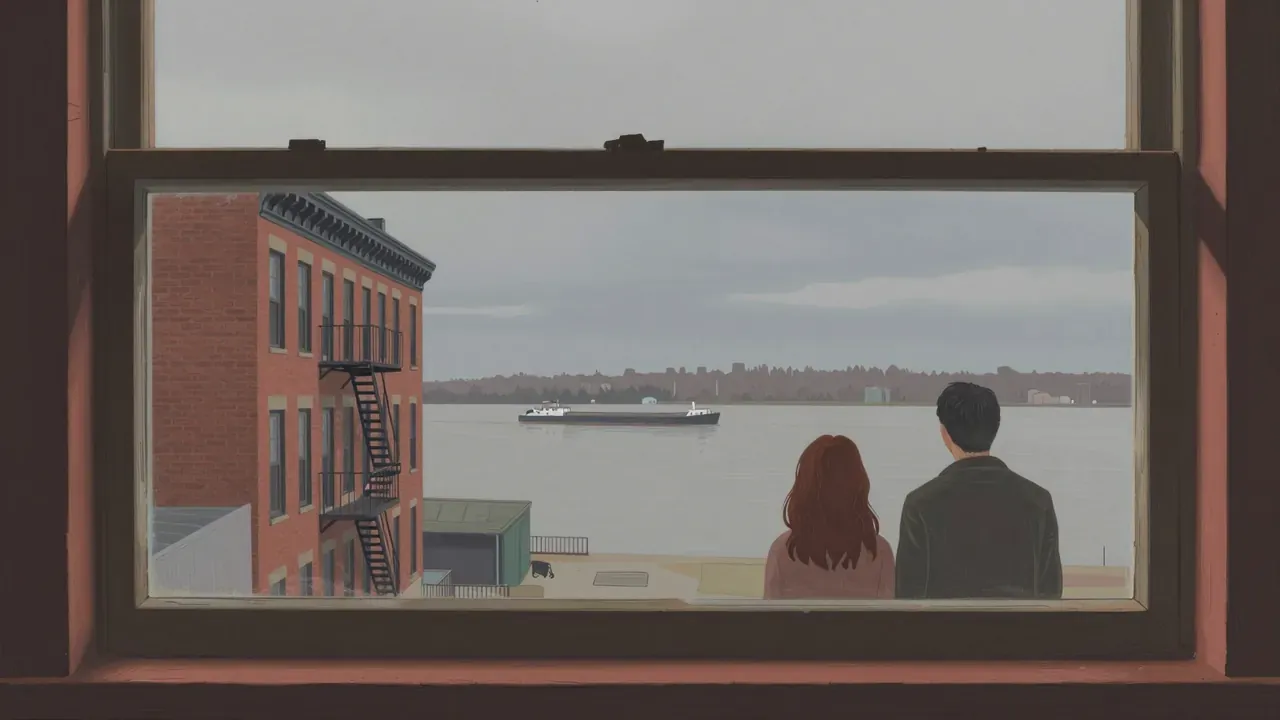
Personal Shopper is a supernatural thriller that tests the boundary between psychological realism and metaphysical uncertainty. It follows Maureen, an American in Paris working as a personal shopper for a celebrity, while waiting for proof her dead twin brother has crossed over. Olivier Assayas does not treat the afterlife as settled fact nor as metaphor alone; he sustains ambiguity across narrative, image, and sound, refusing to resolve whether the phenomena Maureen experiences are grief hallucinations, paranormal events, or manipulations by the living. The film’s ambition lies in its structural patience: it withholds exposition, avoids genre signposting, and treats digital communication — texts, video calls, hotel key drops — as the new haunted house. It asks whether belief in spirits is compatible with disbelief in self, and whether mourning can become a form of possession. Its formal discipline — long takes, muted colour, sparse dialogue — serves this inquiry, not atmosphere for its own sake. It is not a ghost story with rules, but a study of attention under duress: what we listen for, what we mistake for signal, and how silence becomes charged when expectation is high.
How it works
The story unfolds through Maureen’s restrained movements and withheld reactions, anchored by Kristen Stewart’s performance: minimal inflection, deliberate pauses, eyes scanning rooms before her body enters them. Yorick Le Saux’s cinematography keeps interiors cool and shallow, often framing Maureen in doorways or behind glass, visually reinforcing her status as observer rather than participant. Marion Monnier’s editing avoids conventional suspense rhythms; cuts land on empty corridors or paused screens, letting duration do the work. Sound design is precise — a single tap, a delayed echo, the hum of a phone left charging — never overdubbed or heightened. The script gives little backstory, no flashbacks, no voiceover explanation; motivation stays embedded in gesture and repetition. Supporting actors are cast for presence, not exposition: Lars Eidinger’s Ingo speaks in clipped sentences, Nora Waldstätten’s Lara offers quiet pragmatism, Anders Danielsen Lie’s Gary appears only via screen, his face blurred by bandwidth. There are no jump scares, no score swells; tension builds from Maureen’s refusal to name what she sees, and the camera’s refusal to confirm it.
What lands
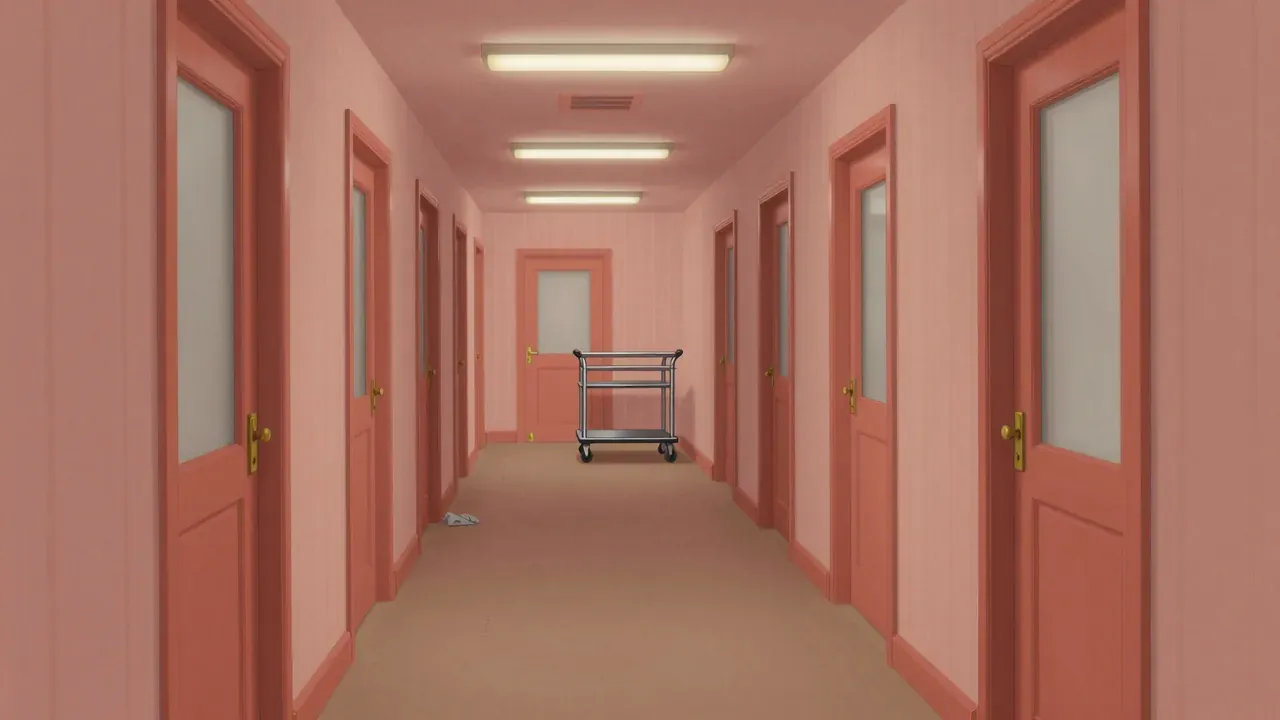
What lands is the cumulative weight of Maureen’s isolation — geographic, linguistic, emotional — and the film’s fidelity to her perceptual reality. Stewart’s physical stillness makes each small deviation meaningful: a held breath before opening a door, a glance at a phone screen that lingers half a second too long. The hotel sequence works because it refuses to show the entity directly; instead, doors open and close unattended, elevators descend without riders, and the camera tracks empty hallways with clinical patience. The final scene in Oman lands not as revelation but as quiet exhaustion: the single thump answers neither ‘yes’ nor ‘no’ definitively, but confirms Maureen’s question — ‘Is it just me?’ — has no stable answer. The film’s restraint pays off in moments where ambiguity feels earned, not evasive: the shattered glass in the garden, the blood on Kyra’s bed discovered mid-movement, the jewellery reappearing without explanation. These are not plot points but sensory impressions, lodged in memory because they resist interpretation.
What does not
What does not land is the murder subplot’s functional thinness. Ingo’s confession arrives off-screen, delivered by Lara in a café with no dramatic build-up or moral reckoning; it reads as narrative scaffolding, not consequence. The police interrogation feels perfunctory, its procedural logic abandoned the moment Maureen walks out. Some viewers will find the pacing uneven — long stretches devoted to Maureen riding her motorcycle or scrolling through messages, where the stakes remain internalised to the point of opacity. The film’s resistance to exposition may read as evasion where it intends suspension: the pact with Lewis is stated once, never elaborated; the genetic heart condition is named but not contextualised. The text-message antagonist lacks texture beyond provocation, and the film declines to clarify whether the messages are sent by Ingo, Lara, or someone else — a choice that deepens mystery for some, frustrates others. The ending’s refusal to anchor meaning may feel like withdrawal rather than resolution to those expecting psychological closure or genre payoff.
The themes that matter
The themes that matter are grief as deferred action, identity as unstable ground, and perception as contested territory. Maureen’s job — selecting clothes, managing appearances, inhabiting another woman’s life — mirrors her struggle to distinguish her own desires from inherited expectations, real loss from imagined signals. The film treats fashion not as vanity but as a language of self-erasure and substitution: wearing Kyra’s dress is both transgression and ritual. Digital communication functions as séance technology — texts arrive like spirit raps, video calls flatten intimacy into latency and pixelation. The twin motif is structural: Lewis is absent but omnipresent, his death a void around which every scene orbits. The film interrogates what remains when belief systems collapse — religious, romantic, even grammatical — leaving only the body, the screen, and the persistent, unanswerable question of who is watching whom. It is less about ghosts than about the haunting persistence of absence, and how we fill it with noise, ritual, or silence.
Who should watch it, and who should not
This is for viewers who tolerate extended ambiguity, value performance over plot mechanics, and find unease more compelling than explanation. It suits those accustomed to arthouse pacing, attuned to shifts in light and sound as narrative devices, and willing to sit with unresolved questions. It is not for viewers who require clear cause-and-effect, moral clarity, or genre conventions fulfilled — the thriller elements are present but subordinated to mood and character study. Those who expect horror to deliver catharsis, or crime to yield justice, will leave unsatisfied. The film assumes familiarity with Assayas’s earlier work, particularly Clouds of Sils Maria, where Stewart similarly played a woman mediating between visibility and erasure. A viewer who finds slow cinema indulgent, or who needs narrative signposts, will likely disengage before the hotel sequence. Its appeal rests on patience, not persuasion — and patience is not neutral: it presumes a certain cultural literacy, time, and quiet space most commercial releases do not demand.
Is it worth your evening
Yes, it is worth your evening — if you accept its terms. It demands attention but repays it with sustained, intelligent unease and a performance of rare economy. Its 105 minutes pass without filler, each scene calibrated to deepen Maureen’s interiority rather than advance external stakes. Those who dislike it tend to cite its refusal to explain itself — critics at Cannes booed the first screening, though the official premiere drew a 4½-minute ovation — suggesting the verdict hinges on tolerance for uncertainty, not quality. A tighter murder subplot or clearer delineation between real and imagined threats would shift the balance for some, but the film’s power lies precisely in its resistance to such clarifications. It is not a film to be solved, but inhabited. If you watch it expecting resolution, you will feel short-changed. If you watch it as a portrait of waiting — for love, for proof, for release — it holds steady, exact, and quietly devastating.