The Lion Dance as Law
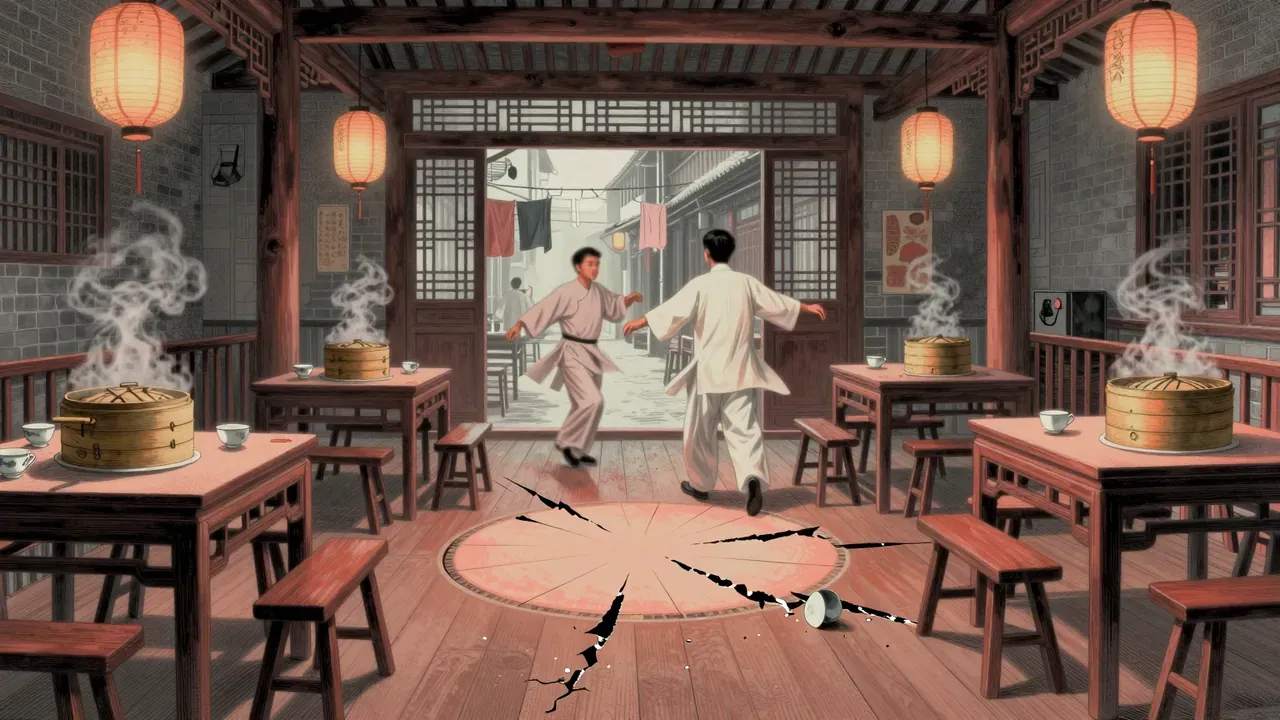
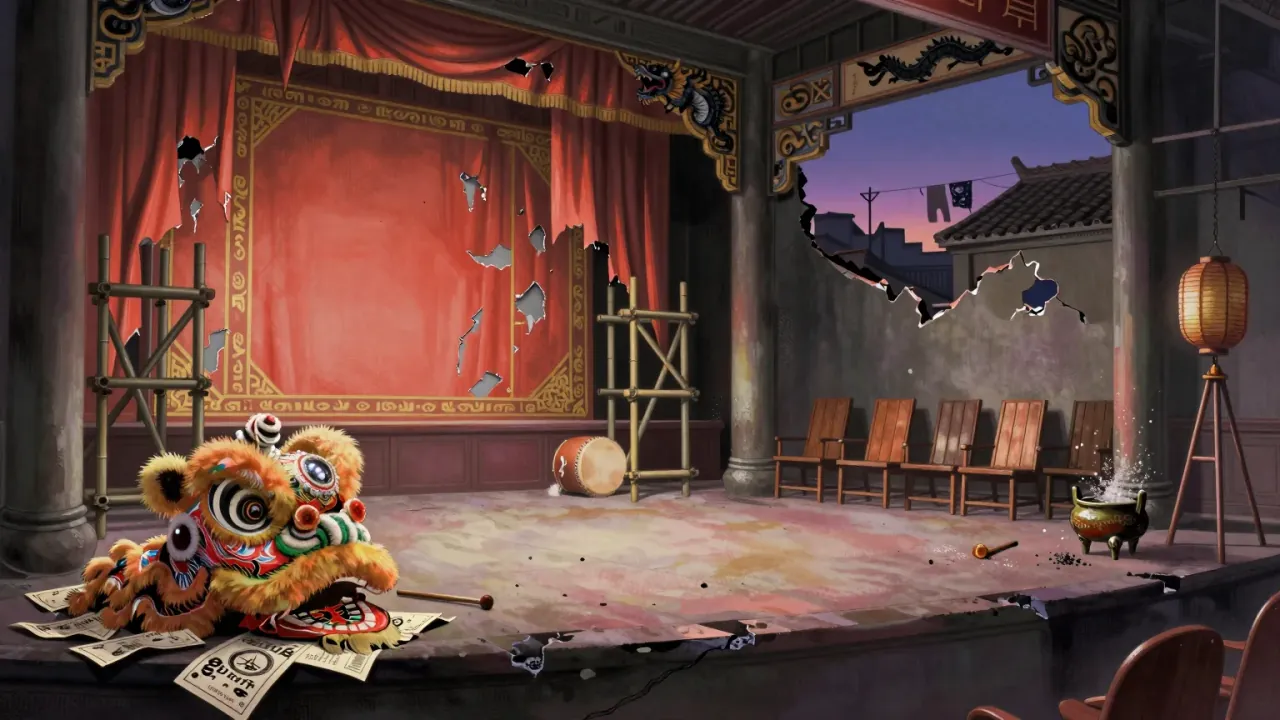
Once Upon a Time in China III is the third entry in Tsui Hark’s Wong Fei-hung series, set in late Qing-dynasty Beijing and built around a lion dance competition commissioned by Empress Dowager Cixi and Li Hongzhang to assert cultural sovereignty amid foreign encroachment. It is trying to sustain the trilogy’s balance of martial spectacle, historical allegory, and moral clarity — positioning Wong Fei-hung not as a lone hero but as a conduit for collective dignity, discipline, and ethical conduct in crisis. The film frames martial arts as civic practice: lion dancing is ritual, diplomacy, resistance, and pedagogy all at once. Unlike its predecessors, it moves the action from southern Guangdong to the imperial capital, narrowing the geography to intensify political stakes — the contest becomes a microcosm of national fragmentation, where rival troupes brawl before the judges even take their seats. It attempts no reinvention; rather, it deepens the series’ preoccupation with how tradition holds or fractures under pressure, using choreographed movement, period detail, and intercultural friction as structural elements, not backdrop.
The Weight of Restraint
The story follows Wong Fei-hung’s journey to Beijing, his father’s injury, Leung Foon’s impulsive entry into the lion competition, Clubfoot’s redemption arc, and 13th Aunt’s discovery of a Russian-led assassination plot. Jet Li performs with restrained physical authority — his fight choreography favours precision over flash, especially in the scaffold climax, where spatial awareness and timing dominate. Rosamund Kwan gives 13th Aunt quiet agency: her camera, her education, her bilingual fluency are narrative tools, not character quirks. Andrew Lau’s cinematography keeps daylight crisp and interiors warm, avoiding the chiaroscuro of Western period films; Marco Mak’s editing sustains momentum without rushing exposition. Tsui Hark’s script tightens dialogue to functional brevity, letting action carry thematic weight — the train station handshake, the crushed legs, the tossed medal. There are no soliloquies, no flashbacks, no dream sequences. Every scene serves either character alignment, tactical escalation, or ideological contrast — between Chiu Tin-bak’s ambition and Wong’s stewardship, between Tomanovsky’s colonial condescension and 13th Aunt’s calibrated neutrality.
Thirty-Five Seconds of Bamboo
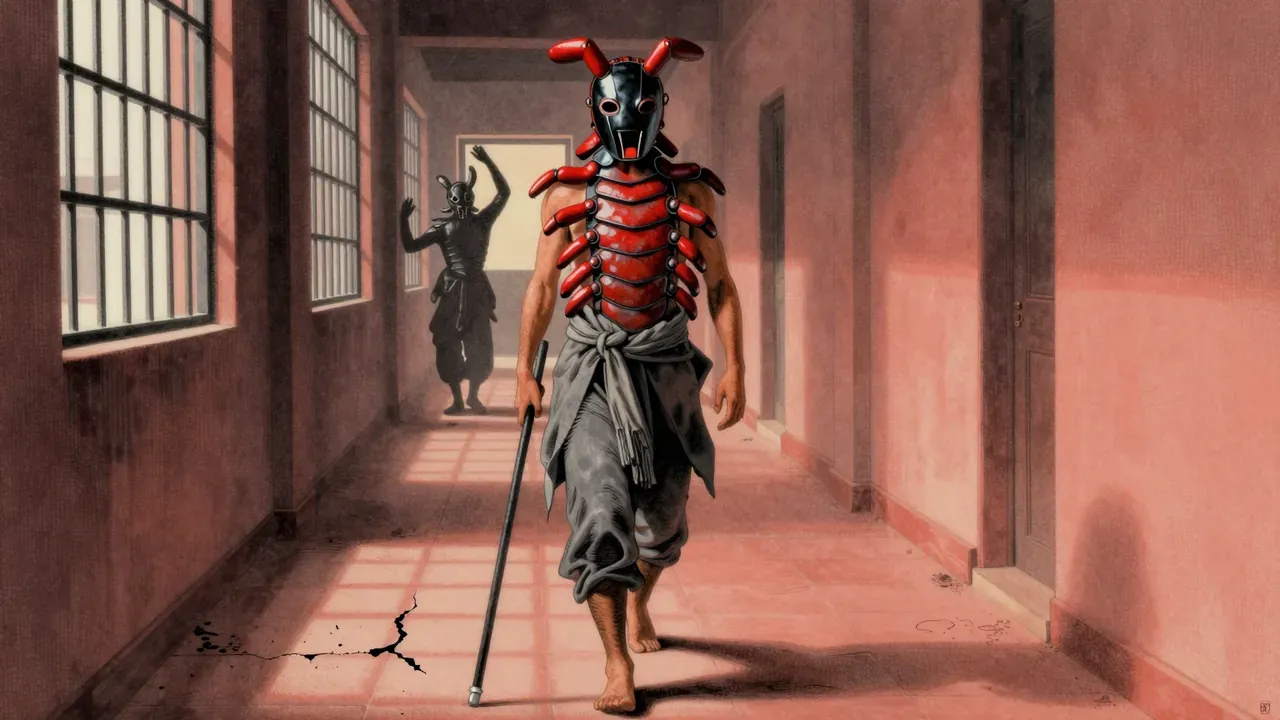
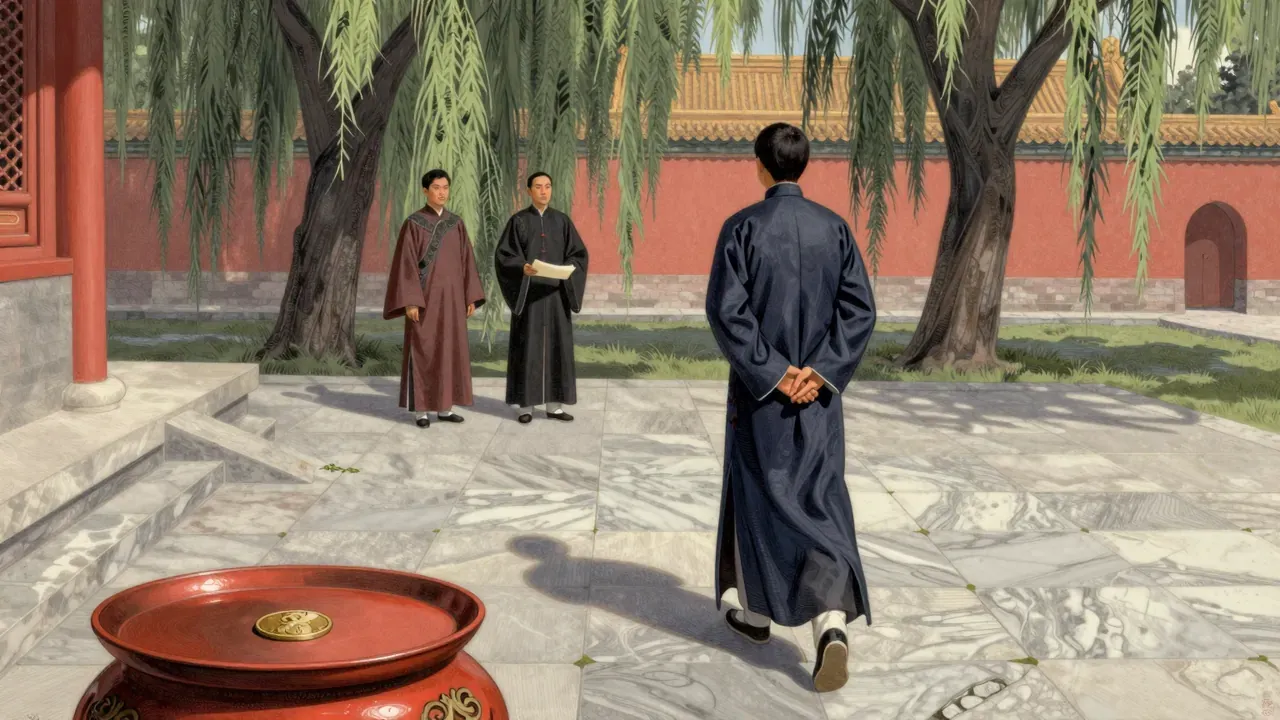
What lands is the scaffold sequence: thirty-five uninterrupted seconds of Wong, Leung, and Clubfoot ascending while fending off attackers across shifting levels of bamboo scaffolding, each step recalibrating balance, distance, and intent. It is choreographed as cumulative logic, not spectacle — every dodge, grab, and pivot answers the one before. Clubfoot’s conversion also lands: his weeping is not sentimental but physiological, a bodily surrender to care after abandonment, made credible by Hung Yan-yan’s performance and the absence of music or close-up. The film’s refusal to let Wong win cleanly lands too — he secures the gold medal only to reject it, calling the victory hollow because the contest exposed disunity, not unity. That moment does not hinge on speechifying but on posture: Wong turns, walks, and the frame holds empty space behind him. The lion masks themselves land as design: heavy, lacquered, expressive in stillness, then terrifyingly mobile when wielded. Their weight matters — actors strain visibly, and that strain signals authenticity, not limitation.
The Unmoored Plotline
What does not land is the Russian conspiracy subplot. Tomanovsky’s motivation remains opaque beyond generic imperialist menace; his classmate history with 13th Aunt is established but never dramatised as tension — it sits inert, a biographical footnote rather than relational friction. The assassination plot resolves off-screen: he is shot by fellow Russians who declare him a Japanese spy, a contrivance that dissolves the film’s earlier attention to geopolitical nuance. The Mandarin-dubbed opening of the Paragon VHS version disrupts tonal continuity, and though not part of the theatrical cut, its existence points to a broader issue — the film’s pacing stutters in the middle act, where exposition about association politics and rival lineages accumulates without rhythmic variation. Chiu Tin-bak’s villainy lacks texture: he schemes, hires thugs, wears a large mask, but his worldview is never articulated. He opposes Wong not ideologically but territorially, making his defeat feel procedural rather than resonant. The train journey itself — meant to signal transition — feels truncated, its duration unearned by what unfolds within it.
Ritual as Infrastructure
The themes that matter are stewardship versus ownership, visibility versus surveillance, and ritual as infrastructure. Wong does not claim mastery over lion dancing; he upholds its standards, teaches its ethics, and intervenes only when its integrity is weaponised. 13th Aunt’s camera is not a prop but a thematic hinge: it records truth, enables exposure, and yet remains embedded in unequal power — given by a diplomat, used against him. The lion dance is not folklore but civic architecture: rules, ranks, judging panels, and sanctioned venues structure communal life as surely as law or taxation. Colonialism here is not only military or economic but epistemic — Tomanovsky assumes his worldview is universal, misreading 13th Aunt’s reserve as deference, Wong’s restraint as ignorance. The film treats pride not as emotion but as practice: it is sustained through daily discipline, intergenerational transmission, and refusal to conflate spectacle with substance. Even the medal’s rejection is not nihilism but calibration — a refusal to let symbolic victory paper over material fracture.
Who This Film Trusts
It is for viewers who value martial arts cinema as choreographic language first and genre second, who follow action not for speed but for cause-and-effect logic, and who expect historical setting to shape behaviour rather than decorate it. It is for those accustomed to Tsui Hark’s layered framing and Andrew Lau’s unshowy lighting, and for anyone attentive to how costume, mask, and posture convey ideology. It is not for viewers who require psychological exposition, linear cause-and-effect plotting, or villains with articulated worldviews. Those expecting the romantic or comic warmth of the first film, or the tighter political focus of the second, may find this instalment less cohesive. Anyone put off by Cantonese-language delivery without dubbing, or by the absence of English subtitles in original theatrical prints, will be excluded by distribution choices, not the film itself. A viewer who values thematic resolution over narrative closure may find it satisfying; one who demands tidy endings will not.
The Version You Choose
Yes, it is worth your evening — provided you watch the Hong Kong theatrical cut, not the Mandarin-dubbed VHS or the truncated English export version titled The Invincible Shaolin. Its ninety-minute runtime moves with purpose, its action sequences are legible and consequential, and its central performances avoid caricature. It rewards attention to gesture, silence, and spatial composition. Those who dismiss it as ‘just another kung fu film’ miss how precisely it uses genre conventions to articulate ideas about legitimacy, inheritance, and public virtue. Critics who gave it 2.5 out of 5 likely expected broader emotional range or more explicit political critique; the film offers neither, choosing instead stoic clarity. A different verdict would follow if the Russian subplot were integrated with the lion competition’s internal politics, or if Chiu Tin-bak’s motives were anchored in a specific grievance — say, land seizure or educational exclusion — rather than abstract rivalry.