filmbriefs
Newest

All briefs

2035 briefs · 26452 min · 193–288 on page 3 of 22
13:00

Caesar and Cleopatra

Gabriel Pascal · 1945

Gabriel Pascal’s 1945 Technicolor film adapts George Bernard Shaw’s 1901 play with near-verbatim fidelity. Starring Vivien Leigh and Claude Rains, it follows Cleopatra’s tutelage under Caesar during the Siege of Alexandria. Lavish in scale but restrained in execution, it privileges dialogue, idea and historical procedure over spectacle or sentiment. Though a financial failure on release, it endures as a rare example of British studio craft applying philosophical seriousness to ancient subject matter.
13:00

Cairo Station

Youssef Chahine · 1958

Youssef Chahine’s 1958 Cairo Station is a tightly wound drama set in Cairo’s main train station, following Qinawi — a lame newspaper seller whose obsession with a cold-drink vendor curdles into violence amid a backdrop of union organising and urban anonymity. Shot in Egyptian Arabic with neorealist restraint and noir-inflected tension, it treats environment as psychology made visible. Though initially controversial in Egypt, it has since been recognised as a landmark of Arab and world cinema.

13:00

Calcutta

Louis Malle · 1969

Louis Malle’s 1969 documentary Calcutta observes the city over 105 minutes without narration, interviews, or explanatory text. Shot on location in 1967–68, it relies on long takes, ambient sound, and unmediated access to street life, ritual, and labour. Its method is observational, its stance unflinching but unjudging. It offers no synthesis — only duration, texture, and the quiet insistence of the real.

13:00

Cameraperson

Kirsten Johnson · 2016

Cameraperson is a 2016 documentary assembled by cinematographer Kirsten Johnson from unused footage shot over twenty-five years on assignments across fifteen countries. Without narration or score, it constructs a self-portrait through lingering, unvarnished moments — births, courtrooms, landscapes, faces — revealing the ethics, labour and quiet persistence of looking. Directed and shot by Johnson, edited by Nels Bangerter, and produced by Abigail Disney, Johnson and Gini Reticker, it premiered at Sundance and won Sheffield Doc/Fest’s top prize.

13:00

Canal

Andrzej Wajda · 1957

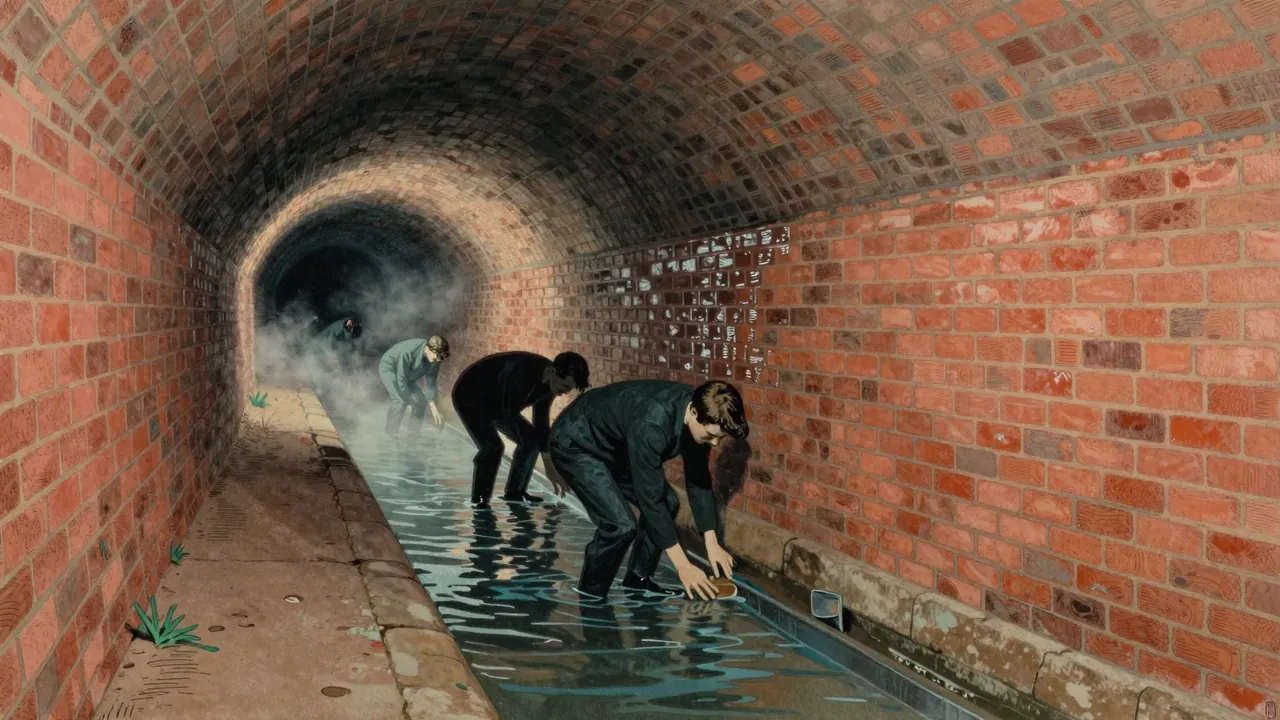
Andrzej Wajda’s 1957 film Canal follows a group of Polish Home Army fighters and civilians retreating through Warsaw’s sewers during the final days of the 1944 uprising. Adapted by veteran Jerzy Stefan Stawiński and shot by Jerzy Lipman, it uses tight framing, low light, and minimal music to render exhaustion, disorientation, and the erosion of command. There are no speeches, no flashbacks, no explanations — only movement, hesitation, and collapse. It is a war film without battle scenes, a drama without catharsis, and a landmark of Polish cinema for its unflinching formal rigour.

13:00

Canoa: A Shameful Memory

Felipe Cazals · 1976

Felipe Cazals’s 1976 Mexican drama reconstructs the 1968 San Miguel Canoa massacre, where five university employees were lynched after a local priest branded them communists. Shot in documentary style in the actual town, with Alex Phillips Jr.’s restrained cinematography and Enrique Lucero’s chillingly calm performance as the priest, the film traces how fear, faith, and state rhetoric coalesce into mob violence — not as exception, but as logical outcome.

13:00

Capricious Summer

Jiří Menzel · 1968

Jiří Menzel’s 1968 Czechoslovak comedy follows three middle-aged men — a bathhouse owner, a retired artillery major and a local canon — over three rainy summer days at an abandoned resort. Their routines are disrupted by the arrival of a touring tightrope walker and his assistant, prompting a series of small, overlapping seductions, humiliations and quiet reconciliations. Shot in soft colour by Jaromír Šofr and performed with understated precision, the film treats desire, ageing and social ritual as weather systems — persistent, unpredictable, ultimately indifferent to individual will.

13:00

Captain Blood

Michael Curtiz · 1935

Michael Curtiz’s 1935 swashbuckler launched Errol Flynn as a star and redefined Hollywood adventure cinema. Adapted from Rafael Sabatini’s novel by Casey Robinson, it follows Irish doctor Peter Blood, unjustly enslaved and turned pirate, whose moral rigour and tactical brilliance make him both outlaw and redeemer. Shot largely on sound stages with a symphonic Korngold score, it prioritises narrative economy, physical authenticity, and ethical coherence over historical nuance or psychological complexity. Its enduring power lies in its unwavering commitment to craft as conscience.

13:00

Carl Th. Dreyer: My Metier

Torben Skjødt Jensen · 1995

Torben Skjødt Jensen’s 1995 documentary examines Carl Theodor Dreyer’s filmmaking practice through interviews with collaborators, archival material, and voiceover readings of his notes. It focuses on method — rehearsal, lighting, editing, negotiation — rather than biography or interpretation, assuming prior knowledge of Dreyer’s major works.

13:00

Carlos

Olivier Assayas · 2010

Olivier Assayas’s 2010 French drama Carlos traces the operational life of Ilich Ramírez Sánchez across three decades and multiple continents. Shot in English with multilingual dialogue, it avoids moral framing in favour of procedural fidelity: safe houses, intercepted signals, bureaucratic friction, and the slow decay of ideological certainty. Édgar Ramírez leads a large international cast; editing and cinematography privilege duration and texture over exposition. At 338 minutes, it demands sustained attention but repays it with historical granularity and structural rigour.

13:00

Carmen

Carlos Saura · 1983

Carlos Saura’s 1983 Carmen follows a troupe of dancers rehearsing a flamenco adaptation of Bizet’s opera, as their off-stage relationships mirror the opera’s fatal arc. Shot in Spain by Teodoro Escamilla and scored by Paco de Lucía, the film blurs rehearsal and reality, using movement and music — not dialogue — to trace obsession, rivalry and violence. It won the BAFTA for Best Film Not in the English Language and was nominated for an Oscar.

13:00

Carnival of Souls

Herk Harvey · 1962

Carnival of Souls (1962), directed by Herk Harvey, follows organist Mary Henry as her grip on reality loosens after a car accident. Shot on location in Kansas and Utah for $33,000, it uses stark black-and-white cinematography, Gene Moore’s eerie organ score, and deliberate pacing to build psychological unease. With no gore, few close-ups, and minimal dialogue, it relies on atmosphere, reflection, and liminal spaces — especially the derelict Saltair Pavilion — to evoke dislocation and ontological doubt. Though overlooked on release, it gained cult status for its formal rigour and sustained mood. The 84-minute director’s cut is considered definitive.

13:00

Cartesius

Roberto Rossellini · 1974

Roberto Rossellini’s 1974 biographical film Cartesius follows René Descartes’ intellectual discipline across 152 minutes of restrained, daylight-lit scenes. Starring Ugo Cardea and scored by Mario Nascimbene, it treats philosophy as embodied practice — writing, walking, pausing, revising — rather than as doctrine or drama. Produced by Renzo Rossellini, it belongs to Rossellini’s late pedagogical phase, prioritising method over myth.

13:00

Casque d'Or

Jacques Becker · 1952

Jacques Becker’s 1952 drama follows Marie and Manda, lovers caught in the violent hierarchies of Belle Époque Paris. Shot with precise, unadorned realism, it avoids moralising or spectacle, instead anchoring emotion in gesture, setting, and consequence. Simone Signoret and Serge Reggiani deliver performances of quiet intensity, supported by Robert Lefebvre’s understated cinematography and Marguerite Renoir’s taut editing. Its final sequence — Marie watching Manda’s execution from a hotel window — remains one of cinema’s most devastating uses of spatial restraint.

13:00

Cat People

Jacques Tourneur · 1942

Cat People (1942) is a low-budget RKO horror film directed by Jacques Tourneur and produced by Val Lewton. It follows Irena Dubrovna, a Serbian woman who fears she is descended from a tribe of cat-worshipping people who transform into panthers when aroused. Shot in stark black-and-white by Nicholas Musuraca, with a sparse, unsettling score by Roy Webb, the film builds dread through suggestion rather than spectacle. Its psychological depth, formal restraint and thematic rigour have secured its place as a landmark of atmospheric horror.

13:00

Caught by the Tides

Jia Zhangke · 2024

Caught by the Tides is a 2024 Chinese drama directed by Jia Zhangke, constructed from footage shot between 1999 and 2024 — including material from Unknown Pleasures, Still Life, and Ash Is Purest White — and centred on Zhao Tao’s character Qiao Qiao across two decades of social and personal change. It premiered in competition for the Palme d’Or at Cannes.

13:00

Ceddo

Ousmane Sembène · 1977

Ousmane Sembène’s 1977 Ceddo is a Senegalese historical drama set in a pre-colonial West African village torn between animist tradition, Islam, Christianity, and the slave trade. When the ceddo — the outsiders — abduct the king’s daughter to protest forced conversion, the conflict escalates into violence, conversion, and regicide. Shot in French with Wolof cultural grammar, the film refuses exposition, moral simplification, or sentimental resolution. Its power lies in its formal rigour, political clarity, and unwavering centreing of African epistemic autonomy.

13:00

Celine and Julie Go Boating

Jacques Rivette · 1974

Jacques Rivette’s 1974 film follows two women who enter a looping, magical-realist narrative housed in a Paris mansion, gradually learning its rhythms and rewriting its ending. Built on repetition, collaboration and patient observation, it models fiction as a space to inhabit rather than interpret.

13:00

Certain Women

Kelly Reichardt · 2016

Kelly Reichardt’s 2016 triptych adapts three Maile Meloy stories set in Montana, following a lawyer, a builder’s wife and a ranch hand as they navigate quiet crises of agency, expectation and connection. Shot by Christopher Blauvelt and edited by Reichardt, it uses precise framing, location sound and deliberate pacing to explore how law, geography and gender shape ordinary lives — without exposition, score or resolution.

13:00

César

Marcel Pagnol · 1936

Marcel Pagnol’s 1936 César closes his Marseille Trilogy with Raimu, Pierre Fresnay, and Orane Demazis returning as César, Marius, and Fanny. Twenty years after Marius sailed away, his son Césariot learns the truth of his paternity — and sets in motion a slow, socially intricate reckoning. Set entirely in and around Marseille, the film favours conversational rhythm over plot mechanics, regional texture over spectacle, and moral ambiguity over resolution. Its 168-minute runtime demands patience, but repays it with layered performances and a deeply felt sense of place and consequence.

13:00

Chafed Elbows

Robert Downey Sr. · 1966

Robert Downey Sr.’s 1966 underground comedy Chafed Elbows uses still photography, post-dubbed dialogue, and radical role doubling to dismantle narrative cinema from within. Shot for $12,000, mostly on 35mm stills developed at Walgreens, it follows Walter Dinsmore’s hallucinatory day at the 1964 World’s Fair — a sequence of grotesque, satirical episodes held together by rhythm and repetition rather than logic. Though technically crude and structurally fractured, it remains a pivotal work of American experimental film: abrasive, intelligent, and deliberately unsustainable as entertainment.

13:00

Chains

Raffaello Matarazzo · 1950

Raffaello Matarazzo’s 1950 Italian melodrama Chains follows mechanic Guglielmo Aniello, his wife Rosa, and the returned ex-fiancé Emilio whose blackmail threatens their marriage and family. Shot by Carlo Montuori and edited by Mario Serandrei, it builds tension through restraint — in performance, framing, and narrative economy — culminating in a courtroom verdict that affirms legality over morality. Though maligned by neorealist critics, its commercial success and inclusion in Italy’s ‘100 films to be saved’ list attest to its cultural resonance.

13:00

Chan Is Missing

Wayne Wang · 1982

Wayne Wang’s 1982 debut is a black-and-white arthouse comedy-drama structured as a search for a missing Chinatown taxi broker. As two men interview locals, each offers a contradictory portrait of him — revealing not Chan, but the fractured, polyglot reality of Chinese American life. Shot on location with non-professionals, it privileges ambiguity over exposition, sound over subtitle, and absence over answer.

13:00

Charade

Stanley Donen · 1963

Stanley Donen’s 1963 Charade pairs Cary Grant and Audrey Hepburn in a Paris-set romantic thriller about stolen wartime gold, shifting identities and a widow who inherits confusion. Written by Peter Stone and shot by Charles Lang, it balances suspense, banter and visual clarity without overreaching. Its strengths lie in structure, performance and tone; its limits in psychological depth and thematic ambition. It remains a masterclass in mid-century studio craft.

13:00

Chasing Amy

Kevin Smith · 1997

Kevin Smith’s third feature follows comic artist Holden McNeil as he falls for lesbian writer Alyssa Jones, fracturing his lifelong friendship with Banky Edwards. Shot on a $250,000 budget in New York, the film uses talk, not spectacle, to explore jealousy, sexual history, and the limits of empathy. It won Independent Spirit Awards for Best Screenplay and Best Supporting Male (Jason Lee), and remains a defining — if contested — entry in 90s American indie cinema.

13:00

Che Part 2: Guerrilla

Steven Soderbergh · 2008

Che Part 2: Guerrilla follows Ernesto Guevara’s 1965–67 Bolivian campaign as a procedural collapse: dwindling supplies, failed communications, eroding morale, and mounting isolation. Directed by Steven Soderbergh and starring Benicio del Toro, it avoids mythmaking in favour of granular, unsentimental chronology — treating revolution as logistics, not legend.

13:00

Children of Paradise

Marcel Carné · 1945

Marcel Carné’s 1945 French romantic drama, written by Jacques Prévert and shot under Nazi occupation, follows courtesan Garance and the four men — mime, actor, criminal, aristocrat — who love her in 1830s Paris. Its 190-minute span balances theatrical grandeur with psychological restraint, using deep-focus cinematography, meticulous production design, and Arletty’s commanding stillness to explore love as asymmetry, art as resistance, and performance as identity.

13:00

Chilly Scenes of Winter

Joan Micklin Silver · 1979

Joan Micklin Silver’s 1979 adaptation of Ann Beattie’s novel follows Charles Richardson, a Salt Lake City civil servant clinging to a failed relationship. Shot with quiet precision and performed with unshowy realism, it charts his slow, uneventful withdrawal from obsession — not through epiphany, but through accumulated small choices. Two versions exist: the original 1979 cut ends with reconciliation; the 1982 re-release concludes with quiet resignation. Neither offers catharsis. Both insist on the dignity of ordinary endurance.

13:00

Chimes at Midnight

Orson Welles · 1965

Orson Welles’s 1965 Chimes at Midnight condenses five Shakespeare plays into a stark, tactile drama centred on Sir John Falstaff and Prince Hal. Shot in Spain on a tight budget, it privileges physical presence and moral ambiguity over narrative fluency or sonic consistency. Its enduring power lies in Welles’s performance, Edmond Richard’s muted cinematography, and a vision of kingship as betrayal dressed as duty.

13:00

Choose Me

Alan Rudolph · 1984

Alan Rudolph’s Choose Me is a 1984 romantic comedy-drama set in a neon-lit Los Angeles bar, where a drifter, a bar owner, and a radio host orbit each other in a cycle of concealment and confession. Shot in three weeks on a modest budget, it favours mood and gesture over exposition, with performances that withhold as much as they reveal. Its themes—self-deception, persona, and urban isolation—are sustained through Jan Kiesser’s dusky cinematography and Phil Woods’ smoky score. Though structurally loose and emotionally elusive, it coheres as a singular, unhurried tone poem about choosing, again and again, without certainty.

13:00

Chop Shop

Ramin Bahrani · 2007

Chop Shop follows twelve-year-old Ale as he works, saves, and schemes in Willets Point, Queens — a scrap-metal district where auto repair shops double as homes and survival is measured in hubcaps, candy bars, and stolen DVDs. Directed by Ramin Bahrani with non-professional actors and handheld digital footage, it is a neorealist portrait of resourcefulness without recourse, ambition without infrastructure, and care without safety nets.

13:00

Christ Stopped at Eboli

Francesco Rosi · 1979

Francesco Rosi’s 1979 adaptation of Carlo Levi’s memoir follows a Turin intellectual exiled to rural Basilicata under Fascism. Shot on location in crumbling villages, it renders poverty, superstition and resilience without sentiment or exposition. Gian Maria Volonté plays Levi as observer first, healer second, and the film’s power lies in its patient, unsparing gaze—not on suffering, but on what power ignores.

13:00

Christiane F.

Uli Edel · 1981

Christiane F. (1981) is a West German drama adapted from a real teenager’s account of heroin addiction in 1970s West Berlin. Directed by Uli Edel and shot with non-professional actors on location, it charts Christiane’s descent from bored 13-year-old to dependent user over two years, using unflinching realism, restrained performances, and a grey, grounded visual style. It omits her full biography — beginning and ending abruptly — and makes no claim to diagnosis or resolution. David Bowie appears in concert footage and contributes to the soundtrack, but his role is atmospheric, not symbolic.

13:00

Chronicle of the Years of Fire

Mohammed Lakhdar-Hamina · 1975

Chronicle of the Years of Fire (1975), directed by Mohammed Lakhdar-Hamina, follows Ahmed, an Algerian peasant, across seventeen years leading to the 1954 uprising against French rule. Structured in six chapters, it charts the slow, embodied formation of national consciousness under colonialism — through drought, conscription, broken promises and massacre. Shot by Marcello Gatti and scored by Philippe Arthuys, it favours duration over drama, collective experience over individual psychology. It won the Palme d’Or at Cannes and remains a landmark of postcolonial cinema.

13:00

Circus Angel

Albert Lamorisse · 1965

Albert Lamorisse’s 1965 Circus Angel follows a burglar who joins a travelling circus to evade arrest but continues stealing in his spare time, all while navigating its fragile community and tentative romance. Shot in France with a restrained, observational style, it uses fantasy not as spectacle but as a lens for ethical ambiguity and transient belonging. Though its loose structure and muted romance divide opinion, its visual cohesion and tonal discipline make it a distinctive, unhurried work of mid-century arthouse cinema.

13:00

Claire's Knee

Éric Rohmer · 1970

Éric Rohmer’s 1970 film follows diplomat Jérôme during a summer stay at Lake Annecy, where his interactions with two teenage girls — Laura and Claire — expose the gap between his stated principles and his unspoken desires. Shot in luminous colour by Néstor Almendros, the film unfolds through measured dialogue and subtle physical detail, treating moral life as a series of minor, reversible decisions. It is the fifth of Rohmer’s Six Moral Tales, and won the Louis Delluc Prize, the National Board of Review Award for Best Foreign Language Film, and the National Society of Film Critics Award for Best Film.

13:00

Classe tous risques

Claude Sautet · 1960

Claude Sautet’s 1960 crime film follows a fugitive gangster who returns to Paris with his sons, seeking help from former associates now settled into bourgeois comfort. As old loyalties fray and new alliances prove fragile, his attempt to secure a future ends in isolation and inevitability. Shot with restraint by Ghislain Cloquet and scored with quiet melancholy by Georges Delerue, it is a study in moral erosion, not spectacle.

13:00

Claudine

John Berry, John Berry · 1974

A 1974 drama set in Harlem, Claudine follows Claudine Price, a single Black mother of six who works as a housekeeper while relying on welfare. When she begins dating Rupert, a cheerful garbage collector, their relationship is tested by poverty, bureaucratic constraints, her children’s resistance, and systemic pressures. Directed by John Berry and written by Tina Pine, the film grounds its social observation in specific place and unvarnished performance—Diahann Carroll and James Earl Jones anchor a portrait of endurance, interdependence, and quiet dignity.

13:00

Clean, Shaven

Lodge Kerrigan · 1994

Lodge Kerrigan’s 1994 debut Clean, Shaven follows Peter Winter (Peter Greene), a man recently released from a psychiatric institution, as he navigates a hostile world while searching for his daughter. Shot on 16mm with fragmented editing, dissonant sound design and tightly constrained perspective, the film immerses the viewer in a subjective experience of schizophrenia — avoiding diagnosis, exposition or moral framing. Its power lies in sustained formal discipline, not plot resolution.
13:00

Cléo from 5 to 7

Agnès Varda · 1962

Agnès Varda’s 1962 French New Wave drama follows singer Cléo Victoire across 90 minutes of real time in Paris as she awaits biopsy results. Shot in natural light with minimal score, it centres Corinne Marchand’s physically precise performance and treats dread, identity, and connection as textures to be observed, not resolved. Structurally rigorous and emotionally unhurried, it remains a landmark of feminist, humanist filmmaking.

13:00

Close-Up

Abbas Kiarostami · 1990

Close-Up (1990) is Abbas Kiarostami’s reconstruction of a real 1980s Tehran fraud case: Hossein Sabzian, a print-shop worker, posed as filmmaker Mohsen Makhmalbaf to gain entry into a family’s home, promising them roles in a film. With full participation from Sabzian, the Ahankhah family, the journalist who exposed him, the judge, and Makhmalbaf himself, Kiarostami films their trial and re-enactments of key events — all playing themselves. The film treats identity, cinema, and justice not as abstractions but as lived, contingent acts of attention and consent.

13:00

Cloud

Kiyoshi Kurosawa · 2024

A Japanese factory worker abandons his job to run an online resale business, only to be hunted down by disgruntled suppliers and customers after his operations expand and isolate him. When a former assistant intervenes violently, the survivor finds himself bound not to redemption but to deeper complicity — suggesting the system consumes even those who escape it.

13:00

Clouds of Sils Maria

Olivier Assayas · 2014

Olivier Assayas’s 2014 drama follows Juliette Binoche as an established actress cast opposite a young starlet in a revival of a play that made her famous two decades earlier. Shot on 35mm in Switzerland, Germany and Italy, it traces her psychological recalibration alongside her American assistant (Kristen Stewart) against the backdrop of the Alps and the Maloja Snake — both weather phenomenon and metaphor. The film explores performance, time, and shifting power between women, with restrained craft and deliberate ambiguity.
13:00

Cluny Brown

Ernst Lubitsch · 1946

Ernst Lubitsch’s 1946 Cluny Brown follows a gifted London plumber’s niece who disrupts British high society with her practicality, honesty, and uncanny knack for fixing pipes — and people. Set in 1938, it pairs Jennifer Jones and Charles Boyer in a gently barbed satire of class, exile, and the politics of domestic competence, anchored by Joseph LaShelle’s restrained cinematography and Samuel Hoffenstein’s economical script.

13:00

C'mon C'mon

Mike Mills · 2021

Mike Mills’ 2021 drama follows radio journalist Johnny (Joaquin Phoenix) as he temporarily cares for his nine-year-old nephew Jesse (Woody Norman) while his sister tends to her husband’s mental health crisis. Shot in black-and-white across multiple US cities, the film centres on quiet exchanges, authentic child interviews, and the slow recalibration of fractured family bonds — all held together by Robbie Ryan’s textured cinematography and a restrained Dessner score.

13:00

Code Unknown

Michael Haneke · 2000

Michael Haneke’s Code Unknown (2000) assembles intersecting lives in Paris, Romania and rural France through unedited long takes and strict perspective shifts. Juliette Binoche plays Anne, an actress whose professional command of emotion contrasts with her passivity amid real suffering — a neighbour’s screaming child, a deported homeless woman, her boyfriend’s war trauma. The film refuses exposition or resolution, using structure itself to examine translation, jurisdiction and silence as political conditions. Shot by Jürgen Jürges and edited by Prochaska, Hartusch and Muse, it sustains discomfort without catharsis.

13:00

Cold War

Paweł Pawlikowski · 2018

Set across Poland, East Berlin, Paris and Yugoslavia between the late 1940s and early 1960s, Cold War follows the obsessive, cyclical relationship between Wiktor, a composer, and Zula, a singer, as they repeatedly reunite and part under political and personal pressure. Shot in stark black-and-white by Łukasz Żal and directed by Paweł Pawlikowski, the film uses elliptical storytelling, restrained performances and a jazz-inflected score to explore love as compulsion, exile as identity, and endurance as quiet surrender.

13:00

Cold Water

Olivier Assayas · 1994

Olivier Assayas’s 1994 drama Cold Water follows two French teenagers—Christine and Gilles—as they flee unstable homes and converge at an all-night party in an abandoned country house. Set in the early 1970s and scored entirely with period American rock, the film immerses itself in the physicality of youth: smoke, sweat, vinyl crackle, and unspoken understanding. Shot by Denis Lenoir and edited by Luc Barnier, it favours duration and texture over exposition. Though its ending falters in abstraction, its middle section remains a masterclass in atmospheric storytelling—quietly political, deeply sensory, and resolutely unsentimental.

13:00

Color Adjustment

Marlon Riggs · 1992

Marlon Riggs’s 1992 documentary examines four decades of African American representation on US prime-time television, tracing how sitcoms and variety shows absorbed racial conflict into safe, marketable formats. Narrated by Ruby Dee and built from archival clips, interviews with performers and producers, and cultural criticism, it argues that inclusion was conditional — granted only when it reinforced, rather than challenged, dominant myths of the American family and dream.

13:00

Colossal Youth

Pedro Costa · 2006

Pedro Costa’s 2006 Colossal Youth is a DV-shot, static-take meditation on ageing, memory and displacement in Lisbon’s Fontainhas district. Starring non-professional Cape Verdean residents — especially the 75-year-old Ventura — it blends documentary observation with scripted recitation, refusing narrative clarity in favour of durational presence. Shot in high-contrast interiors and stark new housing blocks, it explores the aftermath of Portugal’s Carnation Revolution through quiet encounters, repeated phrases and sustained silences.

13:00

Comanche Station

Budd Boetticher, Randolph Scott · 1960

A retired Texas Ranger tracks a Comanche raiding party to rescue a woman abducted years earlier. Joined by two morally divergent men, he crosses hostile terrain toward an uncertain settlement — all in 74 taut, unadorned minutes. Directed by Budd Boetticher and starring Randolph Scott, it is the penultimate film of the Ranown cycle: lean, taciturn, and resolutely uninterested in explaining itself.

13:00

Come on Children

Allan King · 1973

Allan King’s 1973 documentary observes Toronto teenagers living unsupervised on a rural Ontario farm for ten weeks. Filmed in early 1971 with no script, no narration beyond a brief opening statement, and no adult presence, it tracks their self-organisation, conflicts and quiet routines. Its power lies in sustained observation, not interpretation — a demanding, unsentimental portrait of adolescence as lived practice rather than developmental phase.

13:00

Compensation

Zeinabu irene Davis · 2000

Compensation is a 1999 independent film directed by Zeinabu irene Davis, telling parallel love stories—one in 1910 Chicago, the other in the 1990s—between deaf women and hearing men. Shot in black-and-white silent-film style for the past and with open captions for the present, it draws on Paul Laurence Dunbar’s 1906 poem and foregrounds ASL, Chicago’s geography, and the social realities of tuberculosis and AIDS. Restored in 4K by Criterion and UCLA, it premiered at Sundance 2000 and entered the National Film Registry in 2024.

13:00

Confessions of a Cheat

Sacha Guitry · 1936

Sacha Guitry’s 1936 Confessions of a Cheat tells the life story of a man who cheats his way through childhood, war, love and gambling — all narrated in voiceover by Guitry himself, who speaks every line of dialogue. Structured as a café-bound memoir, it uses formal restraint to examine dishonesty as habit, not sin. Adapted from Guitry’s own novel, it privileges narrative control over emotional display, and ends not with repentance but with quiet professional reinvention.

13:00

Contempt

Jean-Luc Godard · 1963

Jean-Luc Godard’s 1963 Contempt adapts Moravia’s novel into a self-aware drama about a playwright whose marriage unravels during the fraught production of a film version of the Odyssey. Shot in Rome and Capri, it stars Brigitte Bardot and Michel Piccoli, with Fritz Lang playing himself. The film interrogates authorship, fidelity, and the commodification of art — using form, colour, and silence as its primary arguments.

13:00

Cooley High

Michael Schultz · 1975

Set in 1964 Chicago, Cooley High follows two Black high school seniors navigating friendship, romance, and impending adulthood in the final weeks before graduation. Written by Eric Monte and directed by Michael Schultz, it balances light-hearted moments — skipping class, betting on love, dancing to Motown — with sudden, unvarnished tragedy. Shot on location in and around Cabrini–Green, it avoids stereotype, opting instead for behavioural realism and quiet specificity. Its legacy rests on its humane focus, its influence on later Black cinema, and its preservation in the US National Film Registry.

13:00

Corridors of Blood

Robert Day · 1958

Corridors of Blood (1958) is a British horror-drama starring Boris Karloff as Dr. Thomas Bolton, an 1840s surgeon whose pioneering work with anaesthetic gases leads to professional ruin, addiction, and entanglement with criminals. Directed by Robert Day and shot by Geoffrey Faithfull, it trades gothic excess for moral austerity, using tight framing, chiaroscuro lighting, and Karloff’s restrained performance to trace a downward spiral rooted in cause and effect. Though hampered by repetitive plotting and thin characterisation in places, it remains a coherent, atmospheric study of scientific vocation undone by human frailty.

13:00

Coup de Grâce

Volker Schlöndorff · 1976

Volker Schlöndorff’s 1976 Coup de Grâce, adapted from Marguerite Yourcenar’s novel and co-written by Margarethe von Trotta, relocates the story from Erich von Lhomond’s first-person account to Sophie von Reval’s silent, searching presence. Set in a Latvian chateau during the 1919 Freikorps campaign, it uses black-and-white cinematography, elliptical editing and muted performances to examine desire, trauma and ideological vacancy amid collapsing empires. Not a conventional war film, it holds violence at a distance and finds its force in omission, restraint and unresolved tension.

13:00

Coup de Torchon

Bertrand Tavernier · 1981

Bertrand Tavernier’s 1981 adaptation of Jim Thompson’s Pop. 1280 relocates the story to French West Africa in 1938, following a lethargic, humiliated police chief who begins murdering local figures to assert control. Starring Philippe Noiret and Isabelle Huppert, it is a satirical neo-noir dark comedy that treats violence as bureaucratic procedure and colonialism as ambient condition — dry, exact, and morally unflinching.

13:00

Crash

David Cronenberg · 1996

David Cronenberg’s 1996 adaptation of J.G. Ballard’s novel follows a television producer drawn into a subculture obsessed with the erotic potential of car crashes. Shot with clinical precision by Peter Suschitzky and scored with mechanical restraint by Howard Shore, the film treats trauma, technology and desire as interlocking systems — not metaphors, but conditions. Its performances are muted, its pacing deliberate, its conclusions withheld. It remains a polarising, formally exacting work of arthouse cinema.

13:00

Crazed Fruit

Kō Nakahira · 1956

Crazed Fruit (1956), directed by Kō Nakahira and written by Shintarō Ishihara, follows two brothers whose rivalry over a woman escalates to fatal violence on Japan’s summer coast. Stylised and restrained, it uses heat, water, and motor noise as narrative forces, avoiding psychology in favour of physical and rhythmic inevitability. Its power lies in what it omits: explanation, redemption, or moral framing.

13:00

Cría Cuervos

Carlos Saura · 1976

Cría Cuervos (1976), directed by Carlos Saura, follows eight-year-old Ana in the months after her father’s death and her mother’s earlier passing. Set in Madrid during the final days of Franco’s rule, the film moves through memory, fantasy and present-tense reality without clear demarcation. Ana Torrent’s performance anchors a study of childhood consciousness under pressure: guilt, care, silence and imagined agency all coexist in a large, quiet house. Teodoro Escamilla’s restrained cinematography and Federico Mompou’s sparse piano score deepen its atmosphere of suspended time. Though it won the Grand Prix at Cannes, its power lies not in pronouncement but in persistence — in what it refuses to name.

13:00

Crisis

Ingmar Bergman · 1946

Ingmar Bergman’s 1946 debut Crisis adapts a Danish radio play into a tightly plotted Swedish drama about an 18-year-old girl torn between her stern foster mother and her glamorous, compromised biological mother. Shot in studio-bound naturalism by Oscar Rosander, it traces Nelly’s journey from village innocence to urban disillusionment and back — not as psychological evolution but as a series of ethically weighted decisions. Its strength lies in structural rigour and moral specificity; its weakness in underdeveloped psychology and tonal uncertainty in the city sequences.

13:00

Cronos

Guillermo del Toro · 1992

Guillermo del Toro’s 1992 debut follows an elderly antique dealer who discovers a 460-year-old alchemical device that reverses ageing at the cost of bloodlust and physical decay. As he grapples with renewed youth, moral compromise, and encroaching monstrosity, a dying industrialist and his violent nephew pursue the device. Shot in Mexico in Spanish, the film balances gothic horror with Catholic solemnity and familial tenderness — all without recourse to exposition or excess.

13:00

Crossing Delancey

Joan Micklin Silver · 1988

Crossing Delancey (1988), directed by Joan Micklin Silver and adapted by Susan Sandler from her play, follows Isabelle Grossman — a New York bookseller torn between literary aspiration and familial expectation — as she navigates a matchmaker’s introduction to Sam Posner, a pickle merchant. Set against the Lower East Side’s Orthodox Jewish community, the film charts quiet emotional recalibrations rather than grand transformations, anchored by Amy Irving’s restrained performance and Reizl Bozyk’s luminous final screen role.

13:00

Cruel Gun Story

Takumi Furukawa · 1964

Takumi Furukawa’s 1964 Cruel Gun Story follows ex-convict Joji Togawa as he leads a heist for a yakuza boss, only to be betrayed and drawn into escalating violence. Starring Joe Shishido and Chieko Matsubara, it is a tightly wound crime film grounded in moral exhaustion rather than glamour or catharsis — its power lies in its restraint, its downfall in its late departure from that discipline.

13:00

Cruel Story of Youth

Nagisa Ōshima · 1960

Nagisa Ōshima’s 1960 debut Cruel Story of Youth follows two Tokyo teenagers whose relationship unravels through coercion, petty crime, and illegal abortion. Shot on location with hand-held cameras and stark, uninflected performances, it rejects moral framing in favour of structural realism — showing how class, gender, and political neglect shape intimacy. Though controversial on release, it helped define Japan’s New Wave and remains a rigorous, unsentimental study of youth as condition rather than stage.

13:00

Crumb

Terry Zwigoff · 1994

Terry Zwigoff’s 1994 documentary follows cartoonist R. Crumb and his two brothers over nine years, using long, unadorned takes to trace how childhood trauma echoes through adult lives. Shot by Maryse Alberti and edited by Victor Livingston, it avoids narration, score, or exposition, building its argument through repetition, silence, and sustained attention. It won the Sundance Grand Jury Prize and widespread critical acclaim, though its ethical stance toward vulnerable subjects remains contested.

13:00

Cul-de-sac

Roman Polanski · 1966

Roman Polanski’s 1966 Cul-de-sac follows two injured American gangsters who take refuge in a remote Northumberland castle owned by a brittle Englishman and his French wife. Trapped by the tide and their own unraveling composure, the four characters enact a series of increasingly absurd rituals — a beachside wake, a forced dinner party, a futile escape attempt — until all pretence collapses. Shot on location at Lindisfarne Castle, the film uses geography, silence, and precise performance to explore alienation, failed masculinity, and the fragility of domestic order. It won the Golden Bear at Berlin in 1966.

13:00

Cure

Kiyoshi Kurosawa · 1997

A Tokyo detective investigates a string of motiveless murders linked by an 'X' carved into victims and a mysterious man with apparent amnesia. As he traces each killer to the same enigmatic figure, his own grip on memory, motive, and agency begins to fray. Kiyoshi Kurosawa’s 1997 film treats hypnosis as ambient infection, building dread through repetition, restraint, and the slow erosion of certainty — not through gore or jump-scares, but through the unnerving plausibility of suggestion.

13:00

Daddy Longlegs

Josh Safdie, Benny Safdie · 2009

Daddy Longlegs (2009) follows Lenny, a divorced Manhattan projectionist, during his annual two-week custody of his sons Sage and Frey. Shot on digital video with non-professional performers and minimal score, it observes his chaotic, often reckless parenting — from impromptu road trips to drugging the boys to avoid leaving them alone — without moral framing or psychological exposition. Directed by Josh and Benny Safdie and written by Benny Safdie and Ronald Bronstein, it is a rigorously unsentimental study of adult failure witnessed by children.

13:00

Daguerréotypes

Agnès Varda · 1975

Made in 1975 on Paris’s Rue Daguerre, Agnès Varda’s Daguerréotypes is a quietly radical documentary composed of static portraits of local shopkeepers and residents, all filmed within ninety metres of her home. Each subject answers three questions about origin and arrival, their responses left unedited and unframed by commentary. Nurith Aviv and William Lubtchansky’s cinematography is unobtrusive and naturalistic; Varda’s direction is resolutely local, anti-extractive, and typologically curious. The film treats the street as both subject and limit—offering not analysis, but sustained attention.

13:00

Dance, Girl, Dance

Dorothy Arzner · 1940

Dorothy Arzner’s 1940 RKO drama follows two dancers — a ballerina and a burlesque performer — navigating patronage, poverty, and prejudice in Depression-era America. Structured around contrasting performance worlds, it foregrounds labour over glamour, material constraint over romantic fantasy, and direct address over emotional exposition. Though commercially unsuccessful on release, its formal rigour and ethical clarity have secured its place as a landmark of early feminist cinema.

13:00

Danton

Andrzej Wajda · 1983

Andrzej Wajda’s 1983 Danton, starring Gérard Depardieu and Wojciech Pszoniak, dramatises the final weeks of Georges Danton during the Reign of Terror. Adapted from Stanisława Przybyszewska’s play, it avoids historical literalism in favour of stark political psychology — showing how revolutionary ideals curdle into bureaucratic violence. Shot in muted tones by Igor Luther, edited with deliberate gravity by Halina Prugar-Ketling, and scored sparingly by Jean Prodromidès, it rests on two towering, mutually corrosive performances. Though occasionally opaque in its plotting, its moral precision and formal restraint make it a defining arthouse drama of the Cold War era.

13:00

David Golder

Julien Duvivier · 1930

Julien Duvivier’s 1930 adaptation of Irène Némirovsky’s David Golder stars Harry Baur as a dying Jewish financier whose wealth cannot insulate him from betrayal or bodily failure. Shot by Georges Périnal with deliberate claustrophobia and scored sparingly by Walter Goehr, the film sustains moral and psychological pressure through performance, framing, and silence — not spectacle or sentiment. Its rigour is uncompromising: no catharsis, no exposition, no relief. A landmark of early French sound cinema and a precise study of transactional identity.

13:00

David Lynch: The Art Life

Jon Nguyen, Rick Barnes, Olivia Neergaard-Holm · 2016

David Lynch: The Art Life is a 2016 documentary shot over four years, composed entirely of Lynch’s voice (recorded across twenty conversations) and footage of him painting, sketching and caring for his infant daughter at home. Archival photographs punctuate his recollections of childhood in the American West, art school in Boston and Philadelphia, and the early days of his filmmaking career in Los Angeles. Directed by Jon Nguyen, Rick Barnes and Olivia Neergaard-Holm, it avoids commentary, context or interpretation — offering not a life story but a sustained, quiet immersion in Lynch’s sensory memory and daily practice.

13:00

Day for Night

François Truffaut · 1973

François Truffaut’s 1973 film Day for Night chronicles the chaotic, tender, and stubbornly ordinary making of a forgettable melodrama. Shot in Nice on a repurposed Paris street set, it follows director Ferrand (Truffaut) and his international cast and crew through accidents, affairs, and technical hiccups. With Pierre-William Glenn’s unshowy cinematography and Georges Delerue’s restrained score, it privileges process over personality and collective resilience over individual revelation. It won the 1974 Academy Award for Best International Feature Film.

13:00

Day of Wrath

Carl Theodor Dreyer · 1943

Carl Theodor Dreyer’s 1943 Danish drama, set in 1623, follows Anne, a young woman married to an elderly pastor, as she navigates suspicion, forbidden desire and the violent logic of witch trials. Made under Nazi occupation, it uses extreme restraint—of movement, music, editing—to expose how authority, faith and family conspire to erase individual conscience.

13:00

Days of Being Wild

Wong Kar-wai · 1990

Wong Kar-wai’s 1990 romantic drama follows drifting young people in 1960 Hong Kong — a playboy searching for his birth mother, a ticket seller holding onto a lost moment, a policeman turning to the sea — bound not by plot but by shared unease. Christopher Doyle’s cinematography, Chan Ming-Diy’s score, and a cast including Leslie Cheung and Maggie Cheung build a world of suspended time and unfulfilled desire. It is the first in an informal trilogy, and the foundation of Wong’s singular style.

13:00

Days of Heaven

Terrence Malick · 1978

Terrence Malick’s 1978 period drama follows migrant workers in 1916 Texas who entangle themselves in deception and desire on a wealthy farmer’s estate. Shot almost entirely in magic hour by Néstor Almendros, it prioritises image and atmosphere over narrative exposition. Linda Manz’s improvised narration anchors its elliptical structure. Though commercially modest, it won the Academy Award for Best Cinematography and has since been canonised for its painterly realism and meditative pacing.

13:00

Dazed and Confused

Richard Linklater · 1993

Richard Linklater’s 1993 ensemble comedy follows a group of Texas teenagers on the last day of school in 1976. With no central plot or protagonist, it builds meaning through accumulation: hazing rituals, car cruises, pool-hall loitering, and overlapping conversations. Shot on location in Austin with an ensemble of then-unknown actors, it prioritises texture over narrative, using Lee Daniel’s naturalistic cinematography, Alan Silvestri’s diegetic-heavy score, and improvised performances to evoke adolescent stasis rather than growth. Though commercially muted on release, it has since become a defining cult film of the 1990s.

13:00

Dead Man

Jim Jarmusch · 1995

Dead Man (1995) is Jim Jarmusch’s monochrome acid western starring Johnny Depp as a fatally wounded accountant guided west by Gary Farmer’s enigmatic Native American spirit-guide Nobody. Shot by Robby Müller and scored by Neil Young, it rejects narrative convention in favour of ritual, silence, and poetic logic — foregrounding Indigenous epistemology, untranslated Cree and Blackfoot dialogue, and a vision of landscape as sentient participant. Though critically divisive on release, it has since been reassessed as a singular, austere meditation on mortality, colonialism, and perception.

13:00

Dead Ringers

David Cronenberg · 1988

David Cronenberg’s 1988 film follows identical twin gynecologists Elliot and Beverly Mantle as their shared professional and personal life fractures under drug dependency, ethical collapse, and blurred identity. Jeremy Irons plays both roles with uncanny precision, supported by Peter Suschitzky’s austere cinematography and Howard Shore’s unnerving score. Based loosely on the Marcus twins and adapted from Bari Wood’s novel, it is a tightly controlled psychological drama that prioritises behavioural realism over exposition, clinical space over emotional catharsis, and structural inevitability over narrative surprise.

13:00

Death by Hanging

Nagisa Ōshima · 1968

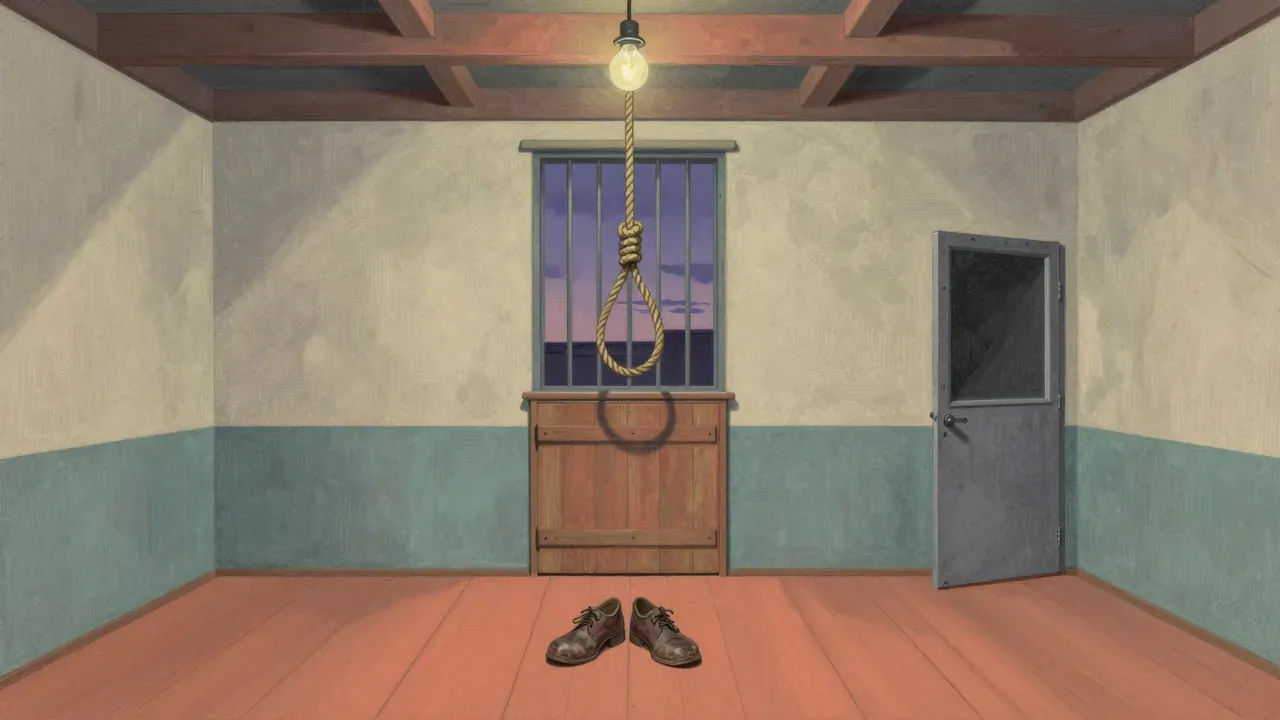
Nagisa Ōshima’s 1968 film follows the botched hanging of an ethnic Korean man known only as R. When he survives but loses his memory, prison officials attempt to reconstruct his past — and his guilt — through increasingly absurd re-enactments. Using Brechtian techniques, stark staging and deliberate artifice, the film interrogates the death penalty not as a moral question but as a mechanism of racial and political control.

13:00

Death of a Cyclist

Juan Antonio Bardem · 1955

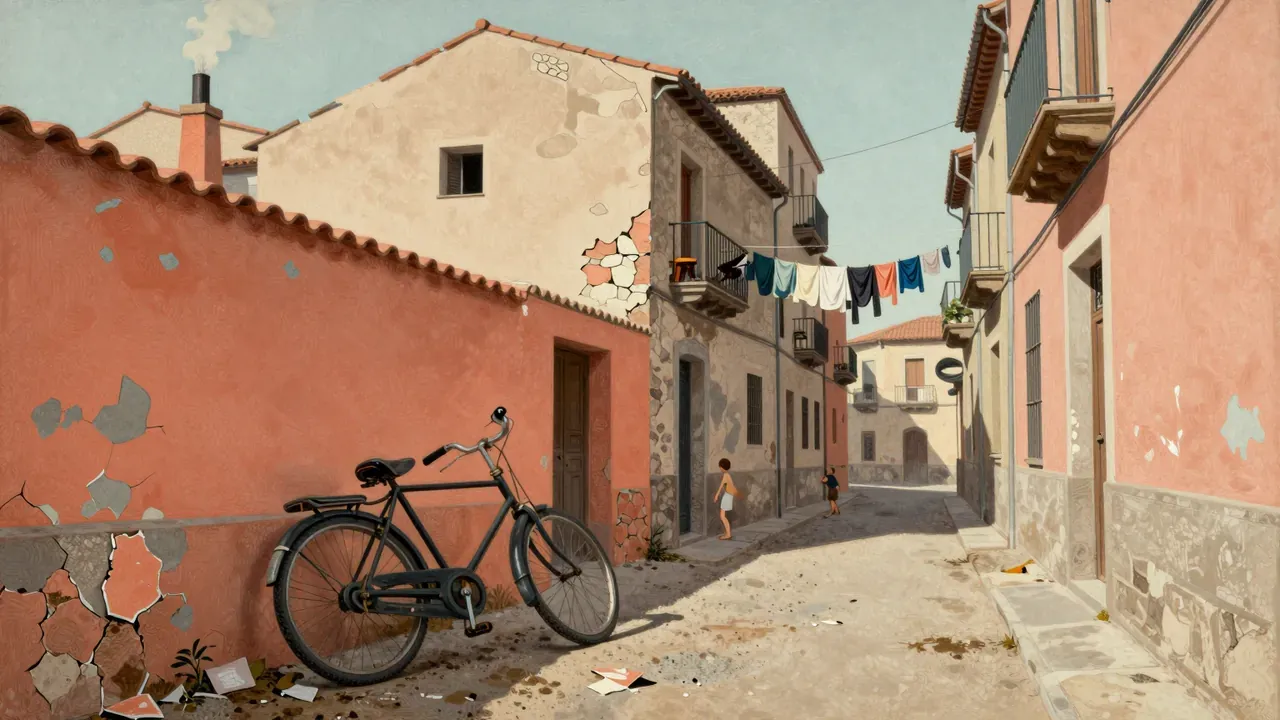
Juan Antonio Bardem’s 1955 Spanish drama follows a wealthy married woman and her academic lover after they strike and abandon a cyclist. As guilt and paranoia fracture their relationship, the film maps the moral geography of Franco-era Madrid — contrasting bourgeois insulation with working-class reality through precise editing, restrained performances, and Alfredo Fraile’s stark cinematography. It won the FIPRESCI Prize at Cannes and remains a landmark of socially engaged arthouse cinema.

13:00

Decision at Sundown

Budd Boetticher · 1957

Decision at Sundown (1957), directed by Budd Boetticher and starring Randolph Scott, follows a man seeking vengeance in a small Western town — only to have his certainty unravel over a single day. With Burnett Guffey’s stark cinematography and Charles Lang’s tightly coiled script, the film builds tension through dialogue and silence rather than action, culminating not in a showdown but in a quiet, bitter withdrawal. Part of the Boetticher–Scott cycle, it stands apart for its psychological austerity and moral ambiguity.

13:00

Deep Cover

Bill Duke · 1992

A Cincinnati police officer goes undercover in Los Angeles to dismantle a drug cartel, only to discover his mission is entangled with State Department interests protecting a South American politician. Directed by Bill Duke and starring Laurence Fishburne and Jeff Goldblum, the 1992 neo-noir sustains a tone of institutional weariness, using voice-over, Bojan Bazelli’s shadowed cinematography, and Michel Colombier’s score to trace the slow dissolution of professional conviction. Its strength lies in moral texture, not plot mechanics.

13:00

Deep Crimson

Arturo Ripstein · 1996

Arturo Ripstein’s 1996 Deep Crimson transposes the Lonely Hearts Killers’ crimes to Mexico, following Coral Fabre and Nicolás Estrella as their lonely-hearts scam hardens into serial murder. With no psychological exposition or moral framing, the film charts their descent through ritualised acts, understated performances, and a stark visual style. It won eight Ariel Awards and Sundance Honorable Mention, and was Mexico’s Oscar submission.

13:00

Defending Your Life

Albert Brooks · 1991

Albert Brooks’ 1991 romantic comedy-fantasy follows a recently deceased advertising executive navigating Judgment City, a bureaucratic afterlife where souls are tried on their capacity to overcome fear. With Shirley MacLaine, Rip Torn, and Lee Grant, it blends dry wit, tender romance, and existential inquiry — using the trial format to explore courage not as heroism but as daily, quiet choice.

13:00

Demon Pond

Masahiro Shinoda · 1979

Masahiro Shinoda’s Demon Pond adapts Izumi Kyōka’s 1913 play into a formally rigorous Japanese fantasy. Set in 1930s rural Japan, it follows a schoolteacher caught in a village’s pact with a dragon god — a covenant enforced by daily bell-ringing. When drought drives the villagers to sacrifice the rumoured sorceress Yuri (Tamasaburo Bando, in a dual role), ritual fractures, unleashing flood and transformation. Shot by Masao Kosugi, scored by Isao Tomita with Moog-Debussy-Mussorgsky hybrids, and featuring optical composites by Nobuo Yajima, the film sustains a precise balance between kabuki abstraction and cinematic naturalism.

13:00

Desert Hearts

Donna Deitch · 1985

A 1985 romance set in 1959 Reno, Desert Hearts follows a reserved English professor who, while awaiting a divorce, falls in love with a free-spirited sculptor. Directed by Donna Deitch and adapted from Jane Rule’s novel, it treats lesbian desire with narrative gravity, visual restraint, and emotional authenticity — avoiding both sensationalism and didacticism. Its power lies in quiet accumulation: glances, silences, gestures — all anchored by Helen Shaver and Patricia Charbonneau’s restrained, deeply felt performances.

13:00

Design for Living

Ernst Lubitsch, Ben Hecht · 1933

Ernst Lubitsch and Ben Hecht’s 1933 romantic comedy adapts Noël Coward’s play into a buoyant, Depression-era farce about a woman living with two men who love her. Starring Fredric March, Gary Cooper and Miriam Hopkins, it trades Coward’s epigrams for physical charm and situational humour, using swift editing, uncluttered cinematography and effortless performances to sustain its risqué premise without scandal. Though structurally loose and verbally thin, it remains a rare, coherent vision of non-monogamy as joyful improvisation — not transgression.

13:00

Désiré

Sacha Guitry · 1937

Sacha Guitry’s 1937 Désiré is a tightly wound Parisian comedy in which an actress’s growing fixation on her valet destabilises her relationship with a government minister. Set almost entirely in three interior spaces, it relies on precise dialogue, restrained performances — especially by Arletty and Jacqueline Delubac — and a still, observational camera. It explores class, service, and the erotic charge of being truly seen, without recourse to plot twists or moralising.

13:00

Desperate Living

John Waters · 1977

John Waters’ 1977 Desperate Living is the third and most formally controlled entry in his Trash Trilogy: a black comedy set in Mortville, a shantytown exile colony ruled by a fascist queen. Made without Divine and shot on scavenged sets in rural Maryland, it trades shock for sustained tone — using deadpan performances, flimsy production design, and bureaucratic absurdity to dissect power, gender, and class. Its cult status rests not on laughter, but on its unwavering commitment to a world where cruelty wears a clipboard and revolution smells of roasting pork.

13:00

Destroy All Monsters

Ishirō Honda · 1968

Destroy All Monsters (1968), directed by Ishirō Honda, assembles Toho’s entire kaiju roster under the control of the Kilaak aliens, using Monsterland as a narrative hub. With Akira Ifukube’s score and Sadamasa Arikawa’s practical effects, it stages a global monster mobilisation culminating in a choreographed battle at Mount Fuji. Structurally ambitious but emotionally sparse, it prioritises systemic logic over character depth — a Cold War parable rendered in rubber suits and balsa-wood spaceships.

13:00

Destry Rides Again

George Marshall · 1939

Destry Rides Again (1939) is a Universal Pictures Western comedy directed by George Marshall, starring James Stewart and Marlene Dietrich. It follows a gunless sheriff who restores order in the corrupt town of Bottleneck not through force but through patience, wit, and carefully orchestrated social pressure. Written by Henry Myers and Gertrude Purcell, it subverts genre expectations with dry humour, deliberate pacing, and character-driven irony—most notably in Dietrich’s iconic turn as the saloon singer Frenchy. Though loosely based on Max Brand’s novel, the film bears little resemblance to earlier adaptations and stands as a singular blend of Western structure and comedic timing.