filmbriefs
Newest

All briefs

2035 briefs · 26452 min · 97–192 on page 2 of 22
13:00

Arabian Nights

Pier Paolo Pasolini · 1974

Pier Paolo Pasolini’s 1974 Arabian Nights is the final film of his ‘Trilogy of Life’, adapting fragments from the One Thousand and One Nights across real locations in Yemen, Iran, Ethiopia and Nepal. It abandons the frame narrative to focus on bodily pleasure, poetic recitation and episodic storytelling, using non-professional actors, long takes and Ennio Morricone’s sparse score. Though formally daring and visually rich, its resistance to psychology and narrative cohesion divides viewers. It won the Cannes Grand Prix in 1974.
13:00

Ariel

Aki Kaurismäki · 1988

Aki Kaurismäki’s 1988 drama follows a displaced Finnish miner, Taisto Kasurinen, as he drifts from Lapland to Helsinki, surviving eviction, robbery, imprisonment, and finally a bank heist — all with deadpan reserve and minimal dialogue. Shot by Timo Salminen in muted tones and edited with deliberate stillness, the film treats economic abandonment as atmosphere rather than crisis, and resilience as routine rather than triumph.
13:00

Armageddon

Michael Bay · 1998

A 1998 American action film directed by Michael Bay, Armageddon follows a team of oil drillers recruited by NASA to destroy a Texas-sized asteroid hurtling toward Earth. With a $140 million budget and an ensemble cast including Bruce Willis, Ben Affleck and Liv Tyler, it prioritises emotional clarity, physical craft and relentless momentum over scientific plausibility or psychological nuance. Though critically divided, it became the highest-grossing film of 1998 and remains a benchmark for large-scale, character-driven spectacle.

13:00

Army

Keisuke Kinoshita · 1944

Keisuke Kinoshita’s 1944 Army follows three generations of a Japanese family as militarism seeps into domestic life. Chishū Ryū and Kinuyo Tanaka play parents shaping their son for service, culminating in a wordless, censored final scene where Tanaka’s character runs alongside her departing son — an act of love deemed unpatriotic. Made under strict wartime oversight at Shochiku, the film’s power lies in what it omits, delays, or shows without commentary.

13:00

Army of Shadows

Jean-Pierre Melville · 1969

Jean-Pierre Melville’s 1969 Army of Shadows is a stark, procedural drama about French Resistance operatives during Nazi occupation. Based on Joseph Kessel’s memoir, it follows Philippe Gerbier and his cell as they navigate safe houses, betrayals, failed rescues, and grim moral calculations — all rendered with clinical precision, minimal score, and unvarnished performances. Released to indifference in 1969, it was rediscovered and acclaimed after its 2006 restoration.

13:00

Arsenic and Old Lace

Frank Capra · 1944

Frank Capra’s 1944 adaptation of Joseph Kesselring’s play is a tightly wound black comedy set over one Halloween day in a Brooklyn house where two elderly sisters poison lonely bachelors, their delusional nephew buries the bodies, and their theatre-critic nephew tries to contain the chaos. Starring Cary Grant, Josephine Hull and Raymond Massey, it prioritises rhythmic precision over emotional depth, using studio-era craft to sustain a high-wire act of escalating absurdity.

13:00

As Long as You've Got Your Health

Pierre Étaix · 1966

Pierre Étaix’s 1966 anthology comedy As Long as You’ve Got Your Health presents four self-contained sketches—on insomnia, cinema queues, psychiatric consultation, and forest visits—unified by deadpan timing, restrained performances, and Jean Boffety’s unobtrusive cinematography. Written by Jean-Claude Carrière and edited with surgical calm, it observes urban alienation and bureaucratic fatigue not through satire but through repetition and pause. Its humour is physical, its themes implicit, its pace deliberate.

13:00

As Tears Go By

Wong Kar-wai · 1988

Wong Kar-wai’s 1988 debut follows Wah, a Mong Kok triad enforcer, as he tries to manage his volatile friend Fly while growing close to his cousin Ngor, who visits from Lantau Island. Shot in naturalistic tones by Andrew Lau and edited with deliberate slowness by William Chang, the film grounds crime-drama tropes in quiet consequence rather than spectacle. Its power lies in restraint: in Andy Lau’s muted performance, Maggie Cheung’s understated presence, and the unforced contrast between urban claustrophobia and island stillness. Though structurally uneven in its second half, it establishes Wong’s enduring concerns — time, loyalty, and the geography of longing.

13:00

Ashes and Diamonds

Andrzej Wajda · 1958

Andrzej Wajda’s 1958 drama Ashes and Diamonds compresses Poland’s postwar reckoning into a single rain-dampened day. Former Home Army soldier Maciek Chełmicki hesitates before carrying out an assassination order — not out of doubt about his cause, but from a growing awareness of time, mortality and connection. Shot in stark, intimate compositions by Jerzy Wójcik and anchored by Zbigniew Cybulski’s defining performance, it treats ideology as atmosphere rather than argument, and history as something felt in the body before it is understood in the mind.

13:00

Au revoir les enfants

Louis Malle · 1987

Louis Malle’s 1987 autobiographical drama follows eleven-year-old Julien at a Catholic boarding school in occupied France, where the arrival of three new pupils reveals a secret: one is Jewish, hidden under a false name. As Julien forms a fragile friendship with Jean Bonnet — real name Kippelstein — he witnesses the slow collapse of safety, culminating in a Gestapo raid that takes Jean, two other boys, and their protector, the headmaster Père Jean. Shot with quiet precision by Renato Berta and performed with unshowy authenticity, the film rests its power on accumulation, not climax: in glances, silences, and the unbearable ordinariness of betrayal.

13:00

Autumn Sonata

Ingmar Bergman · 1978

Ingmar Bergman’s 1978 drama centres on pianist Charlotte and her daughter Eva, who invite her to their rural Swedish home after seven years apart. Over two days, suppressed grief, resentment, and guilt surface in a series of tightly framed confrontations. Shot by Sven Nykvist in muted tones, with Chopin’s Prelude No. 2 as its only musical motif, the film sustains emotional intensity through stillness, silence, and the physical proximity of Ingrid Bergman and Liv Ullmann. It is Bergman’s last theatrically released film and Ingrid Bergman’s final screen role.

13:00

Autumn Tale

Éric Rohmer · 1998

Éric Rohmer’s 1998 Autumn Tale, the final chapter of his Tales of the Four Seasons, follows a widowed winemaker in the Rhône Valley as her friends orchestrate quiet, conflicting attempts to reintroduce her to love. Shot with calm precision by Diane Baratier and performed with understated rigour by Béatrice Romand and Marie Rivière, it locates emotional truth in hesitation, miscommunication, and the slow realignment of intention. Its power lies in restraint: no grand declarations, no dramatic reversals—just the fragile, earned possibility of connection, harvested like grapes at the right moment.

13:00

Baal

Volker Schlöndorff · 1970

Volker Schlöndorff’s 1970 adaptation of Brecht’s Baal transposes the 1923 play into late-1960s West Germany, starring Rainer Werner Fassbinder in the title role. Shot in vivid, expressionistic colour by Dietrich Lohmann and scored sparsely by Klaus Doldinger, it refuses psychological exposition or moral framing. Instead, it holds Baal — a self-destructive, charismatic, violently entitled poet — in unrelenting focus, exposing the social machinery that enables his ‘genius’. Long suppressed and recently restored, it remains a rigorous, uncomfortable, and formally exacting work.

13:00

Babo 73

Robert Downey Sr. · 1964

Babo 73 is a 1964 American underground comedy directed by Robert Downey Sr., presenting a surreal, non-narrative campaign for a fictional presidential candidate named Babo. Shot on 16mm in black and white, it uses repetition, deadpan delivery, and jagged editing to dissect the performative emptiness of political theatre. With no score, minimal dialogue, and no character development, it operates as a formal experiment in anti-rhetoric—less satire than structural diagnosis.

13:00

Baby Boy

John Singleton · 2001

John Singleton’s 2001 crime drama follows Joseph 'Jody' Summers, a 20-year-old South Central LA resident navigating fatherhood, fractured relationships, and the quiet pressure to grow up. Anchored by Tyrese Gibson’s layered performance and grounded in domestic realism, the film traces Jody’s incremental shift from evasion to accountability — not through grand gestures, but through repeated, often awkward choices. Its power lies in specificity, restraint, and its refusal to separate personal failure from structural constraint.

13:00

Bad Timing

Nicolas Roeg · 1980

Nicolas Roeg’s 1980 psychological thriller Bad Timing follows an inspector’s investigation into a woman’s suicide attempt, using non-linear editing and restrained cinematography to dissect the obsessive, destructive relationship between a psychoanalyst and his lover. Set in Vienna and shot by Anthony B. Richmond, it stars Art Garfunkel and Theresa Russell, with Harvey Keitel as the investigator. Adapted by Yale Udoff from an Italian story, the film was controversial on release — rejected by its UK distributor and X-rated in the US — yet won the Toronto International Film Festival People’s Choice Award. Its formal rigour and emotional austerity have secured its status as an arthouse landmark.

13:00

Badlands

Terrence Malick · 1973

Terrence Malick’s 1973 debut is a stylised, time-suspended retelling of the Starkweather–Fugate killings, starring Martin Sheen and Sissy Spacek. Shot on a $300,000 budget in Colorado, it uses sparse dialogue, hypnotic repetition, and Tak Fujimoto’s flat, wide compositions to construct a fairy-tale logic around murder and flight. Holly’s detached narration, Orff’s Gassenhauer, and the vast, indifferent landscape all serve a single vision: human action as pattern, not pathology.

13:00

Ballad of a Soldier

Grigori Chukhrai · 1959

Grigori Chukhrai’s 1959 drama follows a young Red Army soldier granted six days’ leave to repair his mother’s roof. En route, he meets soldiers and civilians, exchanges small gifts and confidences, and falls tentatively in love. Set during the Second World War but resolutely unconcerned with combat, the film locates heroism in endurance, love in gesture, and memory in quiet fidelity. Shot by Vladimir Nikolayev and Era Savelyeva, scored by Mikhail Ziv, and anchored by debut performances from Vladimir Ivashov and Zhanna Prokhorenko, it remains a benchmark of poetic restraint.

13:00

Bamboozled

Spike Lee · 2000

Spike Lee’s 2000 film Bamboozled follows a Black television writer who creates a modern minstrel show as a cynical ploy to get fired—only to see it become a hit. Shot partly on Mini DV and partly on Super 16, it blends satire, drama and documentary-style montage to confront the persistence of racist imagery in American media. Though critically divisive on release, it has since been reappraised for its prescience and added to the National Film Registry.

13:00

Barcelona

Whit Stillman · 1994

Whit Stillman’s 1994 romantic comedy follows two American cousins — a salesman and a naval officer — navigating love, language, and ideology in post-Franco Barcelona. Written and directed by Stillman, it forms the second part of his 'Doomed Bourgeois in Love' trilogy. With Taylor Nichols, Chris Eigeman, and Mira Sorvino, the film uses precise dialogue, deliberate pacing, and understated performances to explore miscommunication across cultures, classes, and generations.

13:00

Barnvagnen

Bo Widerberg · 1963

Bo Widerberg’s 1963 Swedish drama Barnvagnen follows a young father’s first months in a Stockholm apartment, using restrained performance, Jan Troell’s naturalistic cinematography, and Jan Johansson’s sparse piano score to observe the uneventful gravity of early care. It avoids narrative escalation, psychological exposition, or symbolic framing — instead building meaning through duration, acoustic detail, and the physical presence of domestic objects.

13:00

Basquiat

Julian Schnabel · 1996

Julian Schnabel’s 1996 directorial debut is a biographical film about Jean-Michel Basquiat, starring Jeffrey Wright and David Bowie as Warhol. Made without access to Basquiat’s actual artwork, it relies on stylistic approximation and a self-reflexive script co-written by Schnabel and Lech Majewski. The film traces Basquiat’s rapid ascent and decline in 1980s New York, foregrounding his relationship with Warhol and his struggle with addiction. Its strength lies in texture and restraint; its limitation, in the narrowing of Basquiat’s voice, politics and heritage to fit Schnabel’s personal elegy.

13:00

Baxter, Vera Baxter

Marguerite Duras · 1977

Baxter, Vera Baxter (1977) is a French arthouse drama written and directed by Marguerite Duras. Set largely in a rented seaside villa, it follows Vera Baxter as she receives two visitors and recounts fragments of her marriage. With Delphine Seyrig, Noëlle Châtelet, and Claudine Gabay, the film uses stillness, repetition, and architectural framing to explore existential exhaustion, bourgeois entrapment, and the silent circuits of duty. Carlos d’Alessio’s sparse score and unhurried editing reinforce its austere tone.

13:00

Bay of Angels

Jacques Demy · 1963

Jacques Demy’s 1963 black-and-white drama follows a young bank clerk and a compulsive gambler through the casinos of Nice and Monte Carlo. Built around Jeanne Moreau’s tightly coiled performance and Michel Legrand’s percussive score, it studies addiction as rhythm, not pathology — where money is incidental, and the real stakes are time, attention, and the diminishing space between decisions.

13:00

Beasts of No Nation

Cary Joji Fukunaga · 2015

Beasts of No Nation (2015) follows Agu, a West African boy forced into a rebel militia during civil war. Directed and written by Cary Joji Fukunaga, it adapts Uzodinma Iweala’s novel with fidelity to its Krio-inflected voice and narrow psychological focus. Abraham Attah stars alongside Idris Elba as the charismatic, violent Commandant. Shot in Ghana, edited with deliberate duration, and scored with restrained unease, the film avoids spectacle in favour of sustained, intimate horror. It premiered at Venice, where Attah won the Marcello Mastroianni Award, and marked Netflix’s first global feature release.

13:00

Beau Travail

Claire Denis · 1999

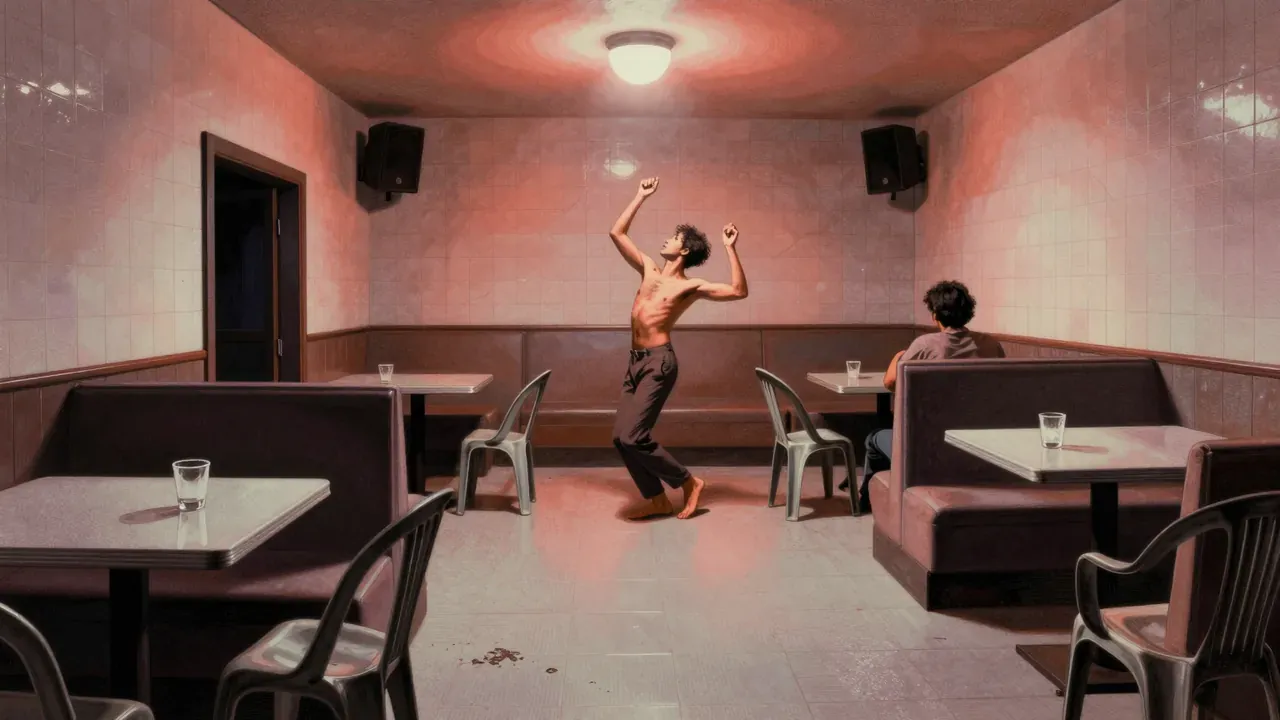
Claire Denis’s 1999 arthouse drama relocates Herman Melville’s Billy Budd to the French Foreign Legion in Djibouti, tracing Adjudant-Chef Galoup’s psychological unravelling as he fixates on a new recruit. Shot by Agnès Godard and edited by Nelly Quettier, it relies on physicality, repetition and withheld motivation to explore power, masculinity and colonial space — culminating in a solitary, ecstatic nightclub dance that resolves nothing but everything.

13:00

Bed and Board

François Truffaut · 1970

François Truffaut’s 1970 film follows Antoine Doinel and Christine as newlyweds navigating Parisian domestic life: a cramped apartment, a faltering job, the birth of their son, and Antoine’s brief, hollow affair with a Japanese woman. Shot by Néstor Almendros with restrained naturalism, it avoids moralising or climax, instead observing the textures of habit, compromise, and quiet endurance. It is the fourth in Truffaut’s Doinel cycle and stands apart for its unblinking, unsentimental portrayal of marriage as daily practice rather than emotional event.

13:00

Before Midnight

Richard Linklater · 2013

Before Midnight (2013), directed by Richard Linklater and co-written by Linklater, Ethan Hawke, and Julie Delpy, follows Jesse and Céline nine years after Before Sunset as they vacation in Greece with their twin daughters. Structured around three extended conversations — in a car, at dinner, and in a hotel room — the film examines the quiet tensions of long-term partnership, parental compromise, and the erosion and endurance of love. Shot in 15 days on the Peloponnese coast, it relies on performance, writing, and restraint rather than plot or spectacle. It received universal critical acclaim and was nominated for Best Adapted Screenplay at the Academy Awards.

13:00

Before Sunrise

Richard Linklater · 1995

Two strangers meet on a train, disembark in Vienna, and spend twelve hours walking the city, talking, hesitating, revealing, and connecting. There is no plot beyond that; no music swells, no camera lingers on faces for effect, no external drama intrudes. What remains is the texture of real conversation, the weight of time passing, and the quiet ache of something meaningful that cannot last.

13:00

Before Sunset

Richard Linklater · 2004

Before Sunset (2004), directed by Richard Linklater and written by Linklater, Ethan Hawke, and Julie Delpy, follows Jesse and Céline as they reunite in Paris nine years after their first meeting in Vienna. Shot in real time across 77 minutes, the film unfolds in a single afternoon across Parisian locations—from Shakespeare & Company to Céline’s apartment—with no flashbacks or narrative shortcuts. Lee Daniel’s Steadicam cinematography, Sandra Adair’s seamless editing, and Julie Delpy’s acoustic score support a performance-driven portrait of ageing, memory, and the fragile persistence of connection. It was nominated for an Academy Award for Best Adapted Screenplay.

13:00

Before the Rain

Milcho Manchevski · 1994

Before the Rain (1994) is Milcho Manchevski’s debut feature: a non-linear Macedonian drama structured in three interlocking parts — WORDS, FACES, PICTURES — that begin and end at the same moment. Shot by Manuel Teran and scored by Anastasia, it traces cycles of silence, misrecognition, and reprisal across Macedonia and London. Its formal rigour and ethical austerity have made it a touchstone of post-Yugoslav cinema — and a test of how much meaning a film can hold without explanation.

13:00

Beginners

Mike Mills · 2010

A graphic designer in early-2000s Los Angeles navigates a fragile new relationship while reflecting on his recently deceased father’s late-in-life coming out and four-year journey as an openly gay man. Interwoven flashbacks and restrained performances anchor a film about inherited emotional patterns, the weight of unspoken things, and love as sustained attention rather than resolution.

13:00

Being John Malkovich

Spike Jonze · 1999

Being John Malkovich (1999) is a surrealist comedy-drama written by Charlie Kaufman and directed by Spike Jonze. A down-on-his-luck puppeteer discovers a portal into actor John Malkovich’s mind, sparking a chain of ethical and existential complications among his wife, co-worker, and employer. With precise writing, restrained performances, and a singular conceptual rigour, it explores identity, desire, and control without resorting to explanation or sentiment.

13:00

Being There

Hal Ashby · 1979

Hal Ashby’s 1979 adaptation of Jerzy Kosiński’s novel follows Chauncey Gardiner, a sheltered gardener mistaken for a sage after stepping into Washington society. Peter Sellers delivers a performance of radical stillness, while the film’s craft — cinematography, editing, score — enforces a tone of calm, unblinking observation. It is satire without ridicule, comedy without punchlines, and a portrait of meaning-making as collective fiction.

13:00

Benny's Video

Michael Haneke · 1992

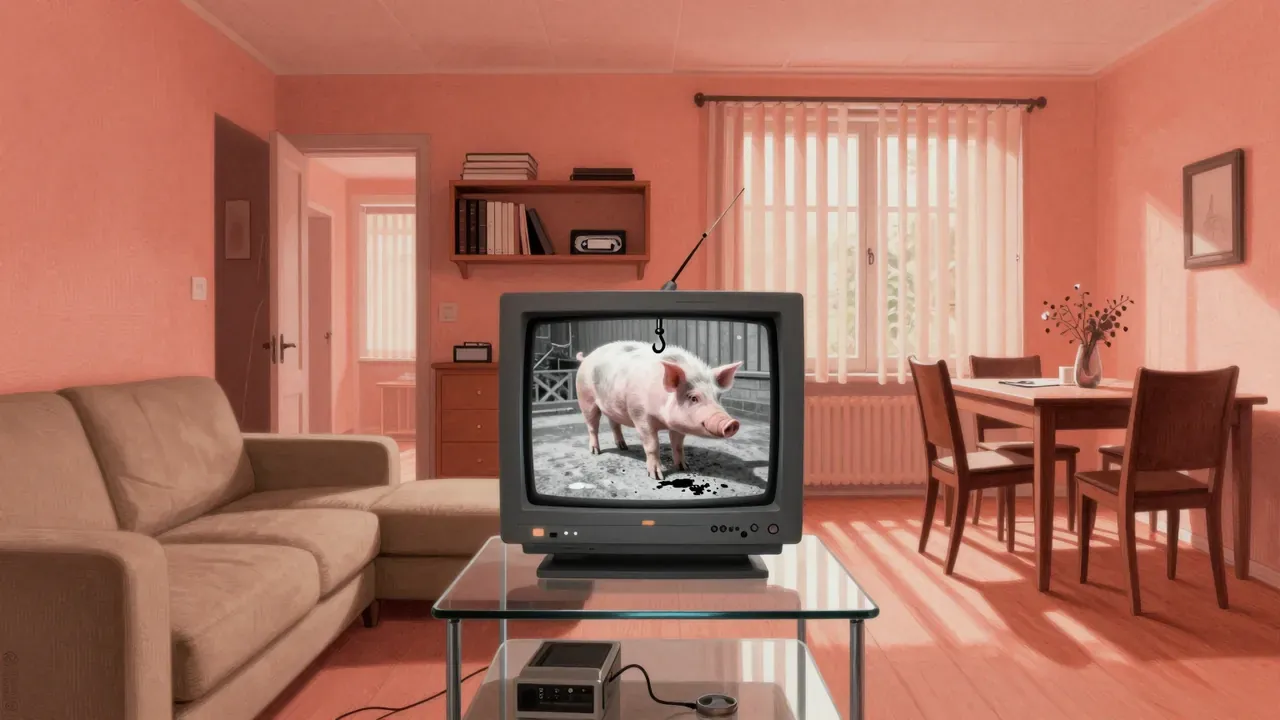
Michael Haneke’s 1992 Austrian horror film follows Benny, a Vienna teenager obsessed with video recording, whose emotionally detached parents enable his fixation. After filming a pig’s slaughter, he invites a girl to his home, kills her on camera, and proceeds with chilling normalcy — cleaning, socialising, travelling — while his parents dispose of the body. The film uses static camerawork, diegetic sound, and layered recordings to dissect how media saturation erodes moral response, treating violence not as rupture but as data.

13:00

Berlin Alexanderplatz

Rainer Werner Fassbinder · 1980

Rainer Werner Fassbinder’s 1980 fourteen-part television adaptation of Alfred Döblin’s novel traces Franz Biberkopf’s failed attempts at honest living in late-Weimar Berlin. Shot by Xaver Schwarzenberger, scored by Peer Raben, and edited by Juliane Lorenz, it treats the city as a system of pressures — economic, legal, sexual — that wear down individual agency. With a cast including Barbara Sukowa, Gottfried John, and Hanna Schygulla, it avoids psychological exposition in favour of documentary texture, rhythmic repetition, and moral density. At 894 minutes, it asks for time not as concession but as condition.

13:00

Betty Blue

Jean-Jacques Beineix · 1986

A 1986 French psychological drama directed by Jean-Jacques Beineix, Betty Blue follows Zorg, a handyman and aspiring writer, and Betty, a volatile 19-year-old, as their passionate relationship unravels across coastal, urban and provincial France. Shot by Jean-François Robin and scored by Gabriel Yared, it renders emotional extremity through saturated visuals, rhythmic editing and physical performance — prioritising mood and texture over exposition or diagnosis.

13:00

Beware of a Holy Whore

Rainer Werner Fassbinder · 1971

Rainer Werner Fassbinder’s 1971 drama Beware of a Holy Whore stages the slow disintegration of a film crew stranded in a Spanish hotel, awaiting production that never begins in earnest. Shot by Michael Ballhaus and edited by Fassbinder and Thea Eymèsz, it uses repetition, confinement and unresolved tension to explore self-deception, dependency and the violence of creative collaboration.

13:00

Beyond the Hills

Cristian Mungiu · 2012

Beyond the Hills (2012), directed by Cristian Mungiu, follows two orphaned Romanian women — one newly professed at an Orthodox convent, the other arriving from Germany seeking reunion — as their bond unravels under the weight of doctrine, isolation, and escalating restraint. Based on real events surrounding the 2005 Tanacu exorcism, it unfolds with clinical restraint: long takes, muted sound, no score, and performances that withhold explanation. The film builds not to revelation but to consequence — a death that arrives not with fanfare, but as the logical endpoint of unchallenged assumptions.

13:00

Beyond the Law

Norman Mailer · 1968

Norman Mailer’s 1968 film is a self-financed, largely unscripted experiment set over one night in a Manhattan police station, following detectives and suspects through interrogations, lineups, and personal fallout. Shot with three crews over four nights, it uses improvisation to probe the psychological and ethical continuities between law enforcement and criminality — a theme Mailer pursued across his writing. Though technically rough and narratively diffuse, its rawness serves its purpose: to show power not as policy but as habit, posture, and proximity.

13:00

Beyond the Valley of the Dolls

Russ Meyer · 1970

Beyond the Valley of the Dolls (1970) is a Russ Meyer–Roger Ebert collaboration: a knowingly excessive, tonally unstable parody of Valley of the Dolls and Hollywood itself. Made quickly on the Fox lot, it blends teen melodrama, rock musical, exploitation thriller and moral fable — all delivered with poker-faced solemnity. Its cult status rests on its deliberate incoherence, not despite it.

13:00

Big Deal on Madonna Street

Mario Monicelli · 1958

Big Deal on Madonna Street (1958) is an Italian heist comedy directed by Mario Monicelli, following a group of Rome-based petty criminals attempting—unsuccessfully—to burgle a pawn shop through a shared wall. Shot on location with harsh, naturalistic lighting by Gianni Di Venanzo and scored with restrained jazz by Piero Umiliani, it parodies both neorealist gravity and crime-thriller solemnity by applying their formal rigour to characters who lack the means to succeed. The film’s humour arises from procedural fidelity, not absurdity: every setback follows logically from material constraint, linguistic mismatch or spatial miscalculation. Though nominated for an Academy Award and listed among Italy’s 100 essential films, its appeal lies in its precision, not its polish.

13:00

Bigger Than Life

Nicholas Ray · 1956

Nicholas Ray’s 1956 drama follows schoolteacher Ed Avery, whose recovery from a rare illness via cortisone treatment triggers a psychological unraveling that fractures his marriage, terrifies his son, and exposes the brittle ideologies underpinning Eisenhower-era domestic life. James Mason stars and produced; Joseph MacDonald’s CinemaScope cinematography turns suburban interiors into psychological pressure chambers.

13:00

Billy Liar

John Schlesinger · 1963

A 1963 British tragicomedy starring Tom Courtenay as Billy Fisher, a young undertaker’s clerk in Yorkshire whose elaborate fantasies of ruling the imaginary nation of Ambrosia mask his inability to act on real desire. Directed by John Schlesinger and adapted by Willis Hall from Keith Waterhouse’s novel, it uses real locations in Bradford and Denys Coop’s CinemaScope photography to anchor its surrealism in social reality. The film ends not with escape but with Billy stepping off a train to London—and walking home alone.

13:00

Bim

Albert Lamorisse · 1950

A forty-five-minute French drama from 1950, written by Jacques Prévert and Albert Lamorisse and directed by Lamorisse. It follows a boy in rural France whose life is structured around his dog — until the dog disappears. With no score, minimal dialogue, and deliberate pacing, the film traces grief through gesture, silence, and the persistence of routine.

13:00

Birth

Jonathan Glazer · 2004

Jonathan Glazer’s 2004 film Birth follows Anna, a woman who becomes convinced that her deceased husband has been reborn in a ten-year-old boy. Shot in New York with Haris Savides, scored by Alexandre Desplat, and anchored by Nicole Kidman’s restrained performance, it is a psychological mystery that sustains ambiguity as principle. It does not confirm or deny the boy’s claim, instead focusing on the weight of Anna’s belief, the erosion of shared reality among those around her, and the quiet devastation of love that refuses to expire. Polarising on release, it has since gained recognition for its formal rigour and emotional precision.

13:00

Bitter Rice

Giuseppe De Santis · 1949

Giuseppe De Santis’s 1949 Bitter Rice follows two thieves hiding among female rice workers in Piedmont, blending neorealist location shooting with melodramatic collapse. Silvana Mangano’s debut performance anchors a film preoccupied with labour, legality, and the corrosive allure of American cultural imports — all rendered in Otello Martelli’s stark, waterlogged visuals.

13:00

Black Girl

Ousmane Sembène · 1966

Ousmane Sembène’s 1966 feature debut follows Diouana, a young Senegalese woman who moves to France to work for a French couple, only to find her identity stripped away by isolation, linguistic erasure, and routine condescension. Shot in Senegal with a minimal crew and dubbed dialogue, the film uses stark visual contrast and elliptical editing to trace the psychological toll of colonial labour. Its power lies in restraint: no score, no exposition, no redemption—just the quiet accumulation of small violences, culminating in an act of final autonomy. Widely regarded as the first Sub-Saharan African feature by an African filmmaker to gain international attention, it remains a foundational text of anti-colonial cinema.

13:00

Black God, White Devil

Glauber Rocha · 1964

Glauber Rocha’s 1964 Black God, White Devil is a foundational Cinema Novo film set in Brazil’s drought-ravaged sertão. It follows a ranch hand and his wife as they flee, convert, join bandits, and flee again — never escaping cycles of violence sanctified by religion or revolution. Shot in stark black and white, edited by Rocha himself, and scored by Sérgio Ricardo, it treats myth and history as inseparable, and endurance as the only authentic political act.

13:00

Black is... Black Ain't

Marlon Riggs · 1994

Marlon Riggs’s final film is a sprawling, urgent essay on Black identity in America, built from hundreds of unmediated testimonies, performances by Bill T. Jones and Essex Hemphill, and commentary from Angela Davis, bell hooks, and Cornel West. Framed by Riggs’s own illness and unfinished work, it treats Blackness not as a fixed category but as a contested, embodied, intersectional practice—resisting homogenisation, patriarchy, homophobia, and colourism while insisting on solidarity without uniformity.

13:00

Black Moon

Louis Malle · 1975

Louis Malle’s 1975 Black Moon is a self-contained, English-language French fantasy filmed at his Dordogne estate. Cathryn Harrison plays Lily, a young woman fleeing gendered violence who stumbles into a decaying château inhabited by talking animals, resurrected elders, telepathic siblings and a judging unicorn. Shot by Sven Nykvist with deliberate under-lighting and edited for hypnotic slowness, it rejects narrative logic in favour of sustained mood and symbolic recurrence. Though divisive, it won César Awards for cinematography and sound.

13:00

Black River

Masaki Kobayashi · 1957

Masaki Kobayashi’s 1957 drama Black River follows a university student and a waitress in a Tokyo district shadowed by a US military base. When she is raped by a local gangster and forced into a coercive relationship, and when both are evicted as part of a development scheme, their fragile bond culminates in an act of desperate, unsentimental violence. Shot with stark realism and performed with restrained intensity, the film treats systemic oppression as atmosphere rather than argument.

13:00

Black Sun

Koreyoshi Kurahara · 1964

Black Sun (1964), directed by Koreyoshi Kurahara for Nikkatsu, follows Akira, a young Japanese thief, and Gill, an injured African-American soldier, as they move silently toward the sea after a violent encounter. Shot in high-contrast monochrome, with sparse music by Toshiro Mayuzumi and Max Roach, it uses jazz records, ruined architecture, and deliberate pacing to explore connection without translation. Its themes centre on embodied difference, failed communication, and freedom as ascent rather than arrival.

13:00

Blaise Pascal

Roberto Rossellini · 1972

Roberto Rossellini’s 1972 biographical film follows Blaise Pascal’s intellectual and spiritual path from scientific prodigy to Jansenist recluse. Starring Pierre Arditi and shot by Mario Fioretti, it prioritises fidelity to Pascal’s writings over dramatic convention, using restrained performance, flat natural lighting, and sparse music to render ideas as embodied acts. It lands most strongly as a study of intellectual exhaustion and the physical cost of certainty — but falters in situating Pascal’s ideas within their historical and political consequences.

13:00

Blast of Silence

Allen Baron · 1961

Blast of Silence is a 1961 American neo-noir crime film written, directed by, and starring Allen Baron. Set over Christmas week in New York City, it follows Frankie Bono, a hitman returning to his hometown to carry out a contract killing. Shot on location without permits and scored with stark minimalism, the film leans on atmosphere, silence, and moral ambiguity rather than plot mechanics. Its narration — written by blacklisted Waldo Salt and voiced uncredited by Lionel Stander — adds a layer of literary distance. Though modest in budget and scope, it endures as a precise, unsparing study of alienation and consequence.

13:00

Blind Chance

Krzysztof Kieślowski · 1987

Krzysztof Kieślowski’s 1987 film follows Witek (Bogusław Linda) through three divergent lives, each triggered by how he navigates a single encounter at Łódź Fabryczna station. In one, he joins the Communist Party; in another, he joins the anti-Communist resistance; in the third, he retreats into apolitical domesticity. Shot with procedural restraint by Krzysztof Pakulski and edited with mathematical parity by Elżbieta Kurkowska, the film treats political identity as emergent from physical circumstance — not philosophy, but timing, surface, and sequence.

13:00

Blithe Spirit

David Lean · 1945

David Lean’s 1945 Blithe Spirit adapts Noël Coward’s stage comedy with formal care and muted energy. Shot in Technicolor by Ronald Neame, it preserves the play’s wit and structure while adding exterior scenes and a controversial new ending. Margaret Rutherford’s Madame Arcati anchors the film, but Rex Harrison and Kay Hammond struggle to translate their stage roles to screen. The film’s strength lies in its textures — domestic detail, vocal rhythm, restrained visual effects — not in narrative drive or emotional revelation. Though commercially disappointing in 1945, it endures as a document of mid-century British craft and constraint.

13:00

Blonde Venus

Josef von Sternberg · 1932

Blonde Venus (1932), directed by Josef von Sternberg and starring Marlene Dietrich, follows a chemist’s wife who returns to the cabaret stage to fund her husband’s life-saving treatment, then descends into flight, poverty, and arrest before a fragile reconciliation. Its power lies not in plot but in Dietrich’s commanding presence, Bert Glennon’s high-contrast cinematography, and a formal insistence on dignity amid degradation — all within the constrained moral universe of pre-Code Hollywood.

13:00

Blood for Dracula

Paul Morrissey, Antonio Margheriti · 1974

Blood for Dracula (1974) is a co-credited Paul Morrissey–Antonio Margheriti splatter film starring Udo Kier as a dying Count Dracula who travels to pre-Fascist Italy seeking virgin blood, only to find sexual candour, Marxist rhetoric, and aristocratic bankruptcy instead. Shot in France with an English-speaking cast, it uses gothic tropes to dissect legitimacy, scarcity, and ideological exhaustion. Luigi Kuveiller’s underlit cinematography and Claudio Gizzi’s sparse score reinforce its clinical tone. Though released as Andy Warhol’s Dracula, Warhol’s involvement was nominal. The film opened to mixed reviews and remains a singular artefact of 1970s arthouse-horror hybridity.

13:00

Blood Wedding

Carlos Saura · 1981

Carlos Saura’s 1981 Blood Wedding is a rigorously stripped-back flamenco staging of Federico García Lorca’s play, performed by Antonio Gades and company in a bare studio. With no sets, minimal props, and no spoken dialogue, it translates Lorca’s themes of blood, honour, and fate into choreography, percussion, and sustained physical presence. Teodoro Escamilla’s cinematography observes without embellishment; the film begins and ends with the dancers preparing — foregrounding labour, discipline, and collective authorship.

13:00

Blow Out

Brian De Palma · 1981

Brian De Palma’s 1981 crime thriller follows a Philadelphia sound technician who records a fatal car crash, then uncovers evidence of assassination in the audio. With John Travolta, Nancy Allen, and John Lithgow, it uses split screens, long takes, and meticulous sound design to explore how truth is assembled from fragments—and why it so often goes unheard.

13:00

Blow Up My Town

Chantal Akerman · 1968

Blow Up My Town is a 13-minute Belgian short film directed by and starring Chantal Akerman, released in 1968. Filmed in French in a single domestic interior with no edits or soundtrack, it follows a solitary woman performing mundane kitchen tasks before an off-screen explosion ends the film. It belongs to Akerman’s early structuralist period, sharing concerns with time, repetition, and the charged ordinariness of domestic space. Though obscure and formally austere, it functions as a precise calibration of attention — less a story than a sustained observation of how routine holds latent force.

13:00

Blue Heron

Sophy Romvari · 2025

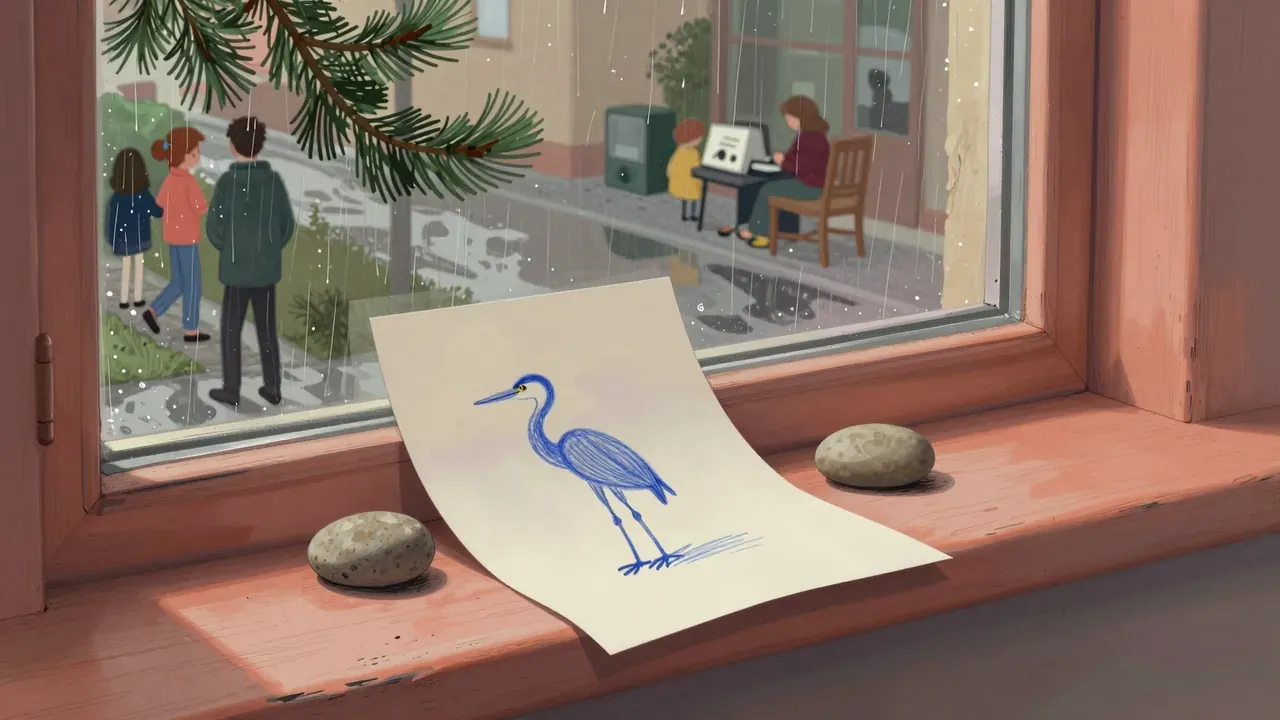
Blue Heron is Sophy Romvari’s semi-autobiographical debut feature, following a Hungarian immigrant family’s move to Vancouver Island in the late 1990s amid their eldest son’s escalating behavioural crisis. Told through overlapping timelines and anchored by Eylul Guven and Amy Zimmer as young and adult Sasha, it uses restrained performances, Maya Bankovic’s hushed cinematography, and a layered soundscape to explore how childhood perception absorbs trauma without comprehension. Released in 2025 after festival acclaim, it prioritises sensory fidelity over exposition, rendering memory as atmosphere rather than narrative.

13:00

Blue Is the Warmest Colour

Abdellatif Kechiche · 2013

Abdellatif Kechiche’s 2013 drama follows Adèle Exarchopoulos as a young woman navigating desire, class, and vocation across a decade. Adapted from Jul Maroh’s graphic novel, it uses extreme length, close-up cinematography, and unvarnished performance to chart intimacy as physical labour and identity as accumulated habit — though its focus remains resolutely, sometimes problematically, on Adèle’s perspective.

13:00

Boat People

Ann Hui · 1982

Ann Hui’s 1982 docudrama, shot on Hainan Island with PRC permission, follows a Japanese photojournalist witnessing life in post-war Vietnam. Built from interviews with Vietnamese refugees, it renders systemic coercion through restrained performances, unvarnished cinematography, and a structure that contrasts staged propaganda with lived hardship. It won Best Film at the 1983 Hong Kong Film Awards and remains a landmark of Hong Kong New Wave realism.

13:00

Bob le flambeur

Jean-Pierre Melville · 1956

Jean-Pierre Melville’s 1956 heist film follows ageing gambler Bob as he plans a raid on a Deauville casino. Shot on location in Paris and Deauville by Henri Decaë, it moves with unhurried precision, treating criminality as habit rather than transgression. Its influence on the French New Wave stems less from innovation than from its disciplined use of space, silence, and repetition. Roger Duchesne anchors the film with quiet authority; the heist fails not through chaos but through Bob’s fatal, human lapse — losing track of time at the roulette table. A film of tone over twist, form over function.

13:00

Body and Soul

Oscar Micheaux · 1925

Oscar Micheaux’s 1925 silent drama Body and Soul stars Paul Robeson in his film debut as a criminal posing as a preacher in a Black Southern town. After two re-edits forced by New York censors, the surviving five-reel version tells a morally charged story of deception, violation, and a dream-framed reckoning. Though technically rudimentary and narratively fractured, it remains a landmark of African-American independent cinema — selected for the National Film Registry in 2019 for its cultural and historical significance.

13:00

Body Heat

Lawrence Kasdan · 1981

A 1981 neo-noir thriller set in sweltering south Florida, Body Heat follows a small-time lawyer drawn into a lethal affair with a wealthy man’s wife. Written and directed by Lawrence Kasdan, it updates classic noir fatalism with 1980s sexual frankness and structural rigour. Its power lies in atmosphere, implication, and the slow, inevitable collapse of illusion — forged wills, assumed identities, and withheld truths all converge in a climax that reframes everything that came before.

13:00

Bogeyman

G. Aravindan · 1979

G. Aravindan’s 1979 Bogeyman (Kummatty) is a lyrical Malayalam fantasy following a boy named Chindan whose encounter with a wandering masked man blurs the line between folklore and lived reality. Shot by Shaji N. Karun and scored by M. G. Radhakrishnan, it unfolds in unhurried, observational rhythms across a Kerala village, culminating in literal transformation — children become animals, one remains a dog, and only witnessing restores him. Awarded Kerala’s Best Children’s Film, it resists explanation in favour of sensory fidelity and quiet moral weight.

13:00

Border Radio

Allison Anders · 1987

Border Radio is a low-budget 1987 American road movie directed by Allison Anders, documenting the fraying edges of West Coast punk and cowpunk culture. Following unpaid musicians who rob a club and flee toward Mexico, the film prioritises texture over plot, using non-professional performers and diegetic music to evoke a specific time and place — not as nostalgia, but as lived, unvarnished reality.

13:00

Borderline

Kenneth Macpherson · 1930

Borderline (1930), written and directed by Kenneth Macpherson, is a silent British-Swiss drama starring Paul and Eslanda Robeson and H.D. Set in a Swiss guesthouse, it traces an interracial love triangle amid local hostility, using Eisensteinian montage and Pabst-influenced psychological framing. Restored in 2006 and again in 2010 with new soundtracks, it remains a demanding, formally rigorous work — less concerned with storytelling than with how cinema constructs meaning around race, gender, and social boundary-making.

13:00

Born in Flames

Lizzie Borden · 1983

Born in Flames (1983), directed and produced by Lizzie Borden, is a low-budget science fiction drama set in an alternate socialist-democratic United States ten years after revolution. It follows intersecting feminist groups — pirate radio collectives, a radical newspaper, and a militant Women’s Army — as they confront state-backed sexism, racism and classism. Shot on location in New York with non-professional performers and fragmented, urgent editing, it rejects narrative polish in favour of political precision. Its themes remain starkly relevant: media control, reproductive labour, surveillance, and the necessity of coalition across difference.

13:00

Bottle Rocket

Wes Anderson · 1996

Wes Anderson’s 1996 debut follows three Texas friends attempting increasingly ill-conceived robberies, not for money or thrills but to inhabit roles — planner, accomplice, driver — that confer identity and connection. Shot with flat, frontal precision by Robert Yeoman and scored with wry minimalism by Mark Mothersbaugh, it treats ambition, failure, and affection with equal, unblinking calm.

13:00

Boudu Saved from Drowning

Jean Renoir · 1932

Jean Renoir’s 1932 Boudu Saved from Drowning follows a Paris bookseller who rescues a suicidal tramp and tries to assimilate him into middle-class life. Starring Michel Simon, the film uses precise staging, behavioural realism and dry wit to dissect the contradictions of respectability — not by arguing against it, but by letting its rituals collapse under the weight of an unassimilable presence.

13:00

Bound

Lilly Wachowski · 1996

A 1996 neo-noir crime thriller directed by Lilly Wachowski, Bound follows two women — a gun moll and an ex-convict — who conspire to steal Mafia money from the man who controls them. Shot on a tight budget, it uses confined spaces, deliberate pacing and tactile visual motifs to anchor a story about agency, enclosure and erotic autonomy. Its craft is precise, its politics implicit, its impact cumulative.

13:00

Bowling for Columbine

Michael Moore · 2002

Michael Moore’s 2002 documentary uses the Columbine massacre as a lens to examine America’s relationship with guns, fear, and violence. Through staged interventions, selective interviews, and associative editing, it builds a case against cultural complacency — not by proving single causes, but by exposing patterns of denial, profit, and performance. It won the Academy Award for Best Documentary and remains a touchstone for debates about advocacy filmmaking.

13:00

Boy Meets Girl

Leos Carax · 1984

Leos Carax’s 1984 debut is a black-and-white French drama following Alex, a jaded aspiring filmmaker, and Mireille, a woman teetering on self-erasure, as their paths intersect in a heat-struck Paris. Built on eavesdropping, misdirection, and withheld emotion, it privileges texture over trajectory—using tight framing, sparse sound, and restrained performances to evoke post-adolescent stasis. Though structurally reliant on coincidence and stylistically indebted to the French New Wave, its emotional precision and formal control mark an unmistakable arrival.

13:00

Boyhood

Richard Linklater · 2014

Richard Linklater’s Boyhood (2014) follows Mason Evans Jr. from age six to eighteen, filmed annually over twelve years with the same cast. Eschewing conventional plot, it traces quiet shifts in family, place, and self amid the unremarkable flow of daily life. Patricia Arquette won an Oscar for her grounded, evolving portrayal of Mason’s mother. Shot on 35mm film, edited with patient restraint, and scored with minimal intervention, the film treats time as material rather than metric — a structural experiment that succeeds as portraiture precisely because it refuses to dramatise.

13:00

Boyz n the Hood

John Singleton · 1991

Boyz n the Hood follows Tre Styles from age ten to seventeen as he navigates fatherhood, friendship, and fatal consequences in South Central Los Angeles. Written and directed by John Singleton at twenty-three, it uses linear storytelling, naturalistic performance, and location shooting to ground its depiction of environment as education. The film avoids sensationalism, treating gang culture, policing, and aspiration with equal sobriety. Its power lies in accumulation: small gestures, repeated silences, and the weight of ordinary days.

13:00

Brand upon the Brain!

Guy Maddin · 2006

Guy Maddin’s 2006 silent-film pastiche follows a man revisiting his childhood home — a lighthouse-orphanage — triggering twelve chapters of repressed memory. Filled with Freudian horror, surreal ritual, and maternal vampirism, it uses stylised performance, intertitles, and Jason Staczek’s score to build a world where trauma repeats like a scratched record. Narrated on screen by Isabella Rossellini, it is arthouse cinema at its most formally committed and emotionally raw.

13:00

Brazil

Terry Gilliam · 1985

A 1985 dystopian satire directed by Terry Gilliam, Brazil follows Sam Lowry, a low-ranking bureaucrat in a decaying, anachronistic state, as he navigates absurd administrative logic, misfiled arrest warrants, and increasingly unstable fantasies. With Jonathan Pryce, Robert De Niro, Katherine Helmond and Michael Palin, it uses retro-futurist design, black comedy and Kafkaesque structure to dissect technocracy, surveillance and institutional incompetence — not as future threats, but as present habits dressed in tweed and duct tape.

13:00

Breaker Morant

Bruce Beresford · 1980

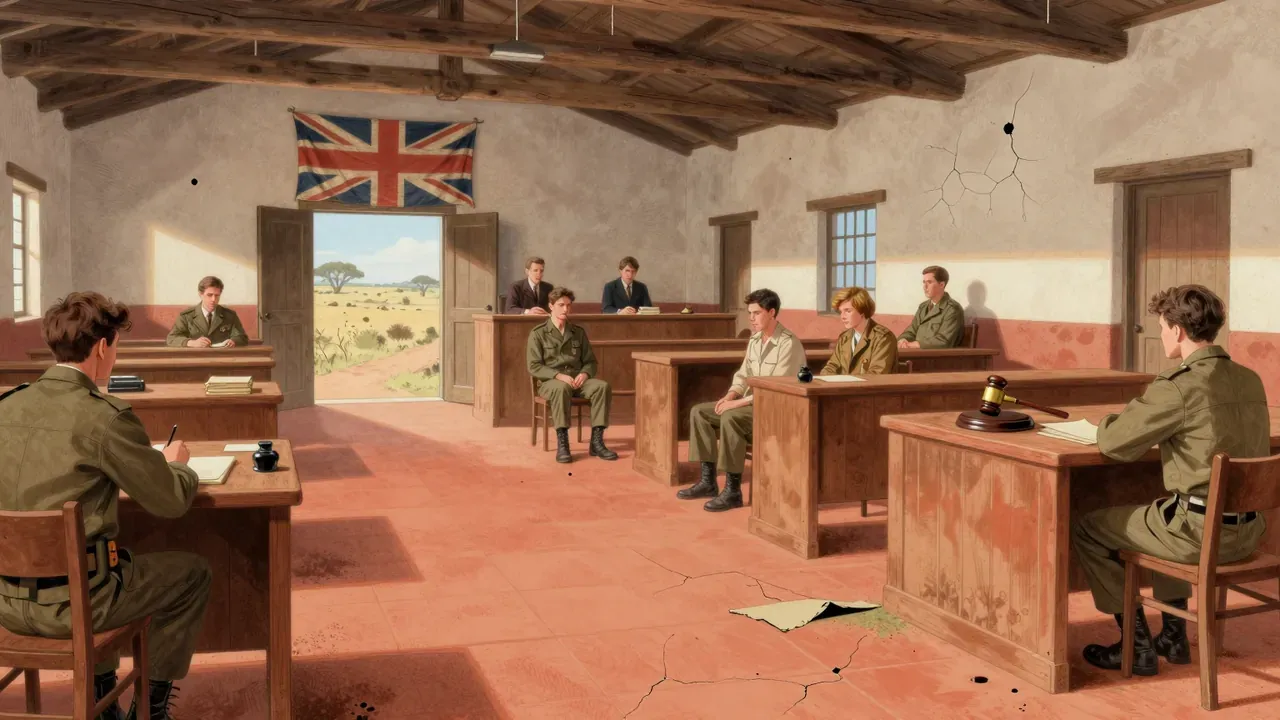
Breaker Morant (1980), directed by Bruce Beresford, dramatises the 1902 court martial of three Australian lieutenants accused of war crimes in the Boer War. Structured around courtroom testimony and fragmented flashbacks, it foregrounds procedural injustice over moral verdict, using restrained craft to expose how military justice serves political ends. Adapted from Kenneth G. Ross’s play, it won ten Australian Film Institute Awards and remains a benchmark of Australian cinema’s engagement with colonial accountability.

13:00

Breaking the Waves

Lars von Trier · 1996

Breaking the Waves (1996), directed by Lars von Trier, follows Bess McNeill, a devout young woman in the Scottish Highlands, whose literal interpretation of love and faith leads her to increasingly harrowing acts of self-sacrifice after her husband is paralysed. Shot on location in Scotland and in Danish studios, with Robby Müller’s handheld cinematography and Emily Watson’s breakthrough performance, it is a morally uncompromising drama about belief, gender, and communal judgment—neither a Dogme 95 film nor a conventional religious parable, but something starker and more enduring.

13:00

Breaktime

Abbas Kiarostami · 1972

Breaktime (1972) is Abbas Kiarostami’s fourteen-minute observational drama, shot during an actual school break in Tehran. With no script, no score and no intervention, it records children’s unstructured movement and interaction in static, natural-light frames. Made early in his career for Kanun, it exemplifies his commitment to unvarnished presence over narrative artifice.

13:00

Brief Encounter

David Lean · 1945

David Lean’s 1945 adaptation of Noël Coward’s Still Life follows Laura Jesson and Alec Harvey, two married strangers whose brief, chaste affair unfolds over Thursdays in a Lancashire railway station. Shot in stark black-and-white by Robert Krasker, scored with Rachmaninoff’s Second Piano Concerto, and performed with extraordinary restraint by Celia Johnson and Trevor Howard, it renders love not as liberation but as quiet crisis — a collision of feeling and duty that resolves not in triumph or tragedy, but in return.

13:00

Brief Encounters

Kira Muratova · 1967

Brief Encounters (1967) follows two women unknowingly in love with the same geologist in Odessa. Nadya, newly arrived from the village, falls for his charm and wanderlust; Valya, his long-term partner, endures his absences with quiet rigour. When Nadya takes work as Valya’s maid, they live under one roof without ever naming their shared attachment. Directed by Kira Muratova, the film builds emotional weight through restraint — minimal dialogue, precise framing, and the physical labour of waiting — culminating not in confrontation, but in Nadya’s silent departure.

13:00

Bringing Up Baby

Howard Hawks · 1938

Bringing Up Baby (1938), directed by Howard Hawks, pairs Katharine Hepburn and Cary Grant in a relentless romantic comedy about a paleontologist undone by a scatterbrained heiress and her leopard. Written by Dudley Nichols and Hagar Wilde, it trades emotional exposition for escalating absurdity, using precise performance, tight editing and rhythmic dialogue to sustain a world where logic collapses on cue. Though commercially modest on release, it is now regarded as a pinnacle of screwball form.

13:00

Brink of Life

Ingmar Bergman · 1958

Ingmar Bergman’s 1958 hospital drama observes three pregnant women — one miscarrying, one facing an unwanted pregnancy, one enduring a stillbirth — within the unadorned confines of a Swedish maternity ward. Shot with clinical precision by Max Wilén and written by Ulla Isaksson, it trades psychological exposition for procedural realism, letting silence, duration and restraint carry its moral weight.

13:00

Broadcast News

James L. Brooks · 1987

Broadcast News (1987), written and directed by James L. Brooks, follows a Washington, D.C. television news producer torn between a brilliant but socially inept reporter and a telegenic but intellectually shallow anchor. Set against the shifting ethics of 1980s network news, it uses workplace realism, precise performances, and understated craft to explore ambition, integrity, and the quiet costs of professional excellence.

13:00

Brute Force

Jules Dassin · 1947

Brute Force (1947) is a tightly wound crime drama set inside Westgate Prison, where Capt. Munsey’s sadistic enforcement and Warden Barnes’ passivity create a powder keg. When Joe Collins organises an escape, the system responds not with reform but with annihilation. Directed by Jules Dassin and written by Richard Brooks, it uses noir’s visual austerity and moral severity to mount a sustained critique of punitive justice — not as aberration, but as design.

13:00

Buchanan Rides Alone

Budd Boetticher, Harry Joe Brown · 1958

Buchanan Rides Alone (1958) is a tightly wound Western starring Randolph Scott as a lone drifter caught in a corrupt border town run by the Agry family. Directed by Budd Boetticher and Harry Joe Brown, written by Charles Lang, and shot by Lucien Ballard, it uses sparse dialogue, confined spaces, and deliberate pacing to explore jurisdiction, consent, and quiet resistance. At 78 minutes, it prioritises behavioural precision over plot escalation, anchoring its themes in posture, framing, and silence.

13:00

Buck and the Preacher

Sidney Poitier · 1972

Sidney Poitier’s 1972 directorial debut Buck and the Preacher recasts the Western around the Exoduster movement: Buck (Poitier) leads freed people westward, negotiates with Native Americans for safe passage, and allies with the sharp-tongued Reverend Rutherford (Harry Belafonte) to evade white marauders. Shot in Mexico and Kenya, with cinematography by Alex Phillips Jr. and music by Benny Carter, it balances action with quiet realism — prioritising collective survival over individual legend. Though its villains lack nuance and some plot devices feel functional, its commitment to Black self-determination, material history, and genre reclamation remains potent.

13:00

Buena Vista Social Club

Wim Wenders · 1999

Wim Wenders’ 1999 documentary follows Cuban musicians — many in their eighties — as they record, rehearse and perform internationally. Shot in Havana, Amsterdam and New York, it relies on direct observation, unhurried interviews and full concert sequences. Jörg Widmer’s cinematography and Brian Johnson’s editing serve the music’s internal logic, not narrative urgency. The film avoids historical exposition or political critique, focusing instead on gesture, memory and ensemble discipline. It is a portrait of endurance rooted in daily practice, not myth.

13:00

Bull Durham

Ron Shelton · 1988

Ron Shelton’s 1988 romantic comedy follows a veteran catcher, a rookie pitcher, and a baseball-obsessed teacher in the Durham Bulls minor-league team. Grounded in precise detail and unhurried pacing, it explores mentorship, obsolescence, and the rituals that give shape to transient lives — all without resorting to sentiment or spectacle.

13:00

Burden of Dreams

Les Blank · 1982

Les Blank’s 1982 documentary Burden of Dreams observes the gruelling, near-failed production of Werner Herzog’s Fitzcarraldo in the Peruvian jungle. Shot on location over several months, it captures exhaustion, ambition, and the jungle’s indifference — without narration, music, or editorial judgement. It remains a landmark of observational documentary craft.

13:00

Burroughs: The Movie

Howard Brookner · 1983

Howard Brookner’s 1983 documentary Burroughs: The Movie is the only film made with William S. Burroughs’ full participation during his lifetime. Shot over five years with Tom DiCillo and sound by Jim Jarmusch, it traces Burroughs’ life through interviews, location footage, and quiet observation—no narration, no re-enactments, no interpretive framing. The film premiered at the 1983 New York Film Festival and aired as part of BBC Arena. Restored in 2012, it remains a rare, unvarnished portrait of a writer whose life and work resist easy summary.