filmbriefs
Newest

All briefs

2035 briefs · 26452 min · 961–1056 on page 11 of 22
13:00

Sisters of the Gion

Kenji Mizoguchi · 1936

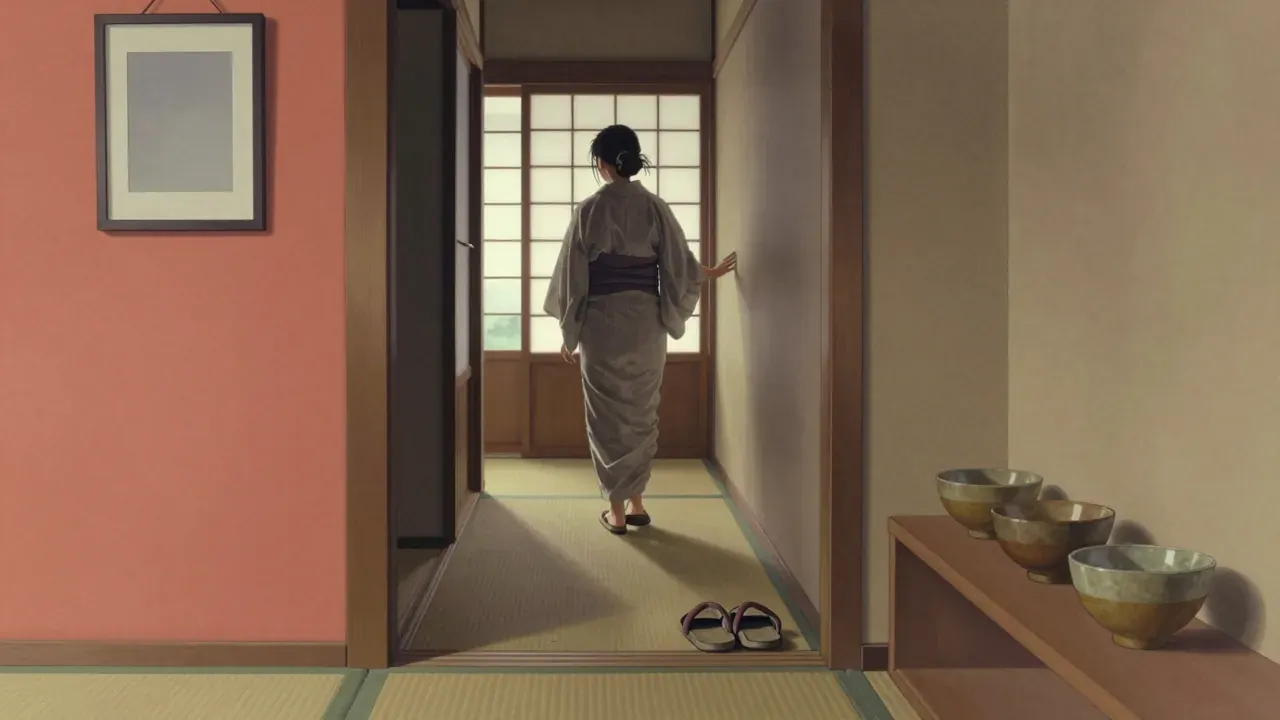
Kenji Mizoguchi’s 1936 Sisters of the Gion follows two geisha sisters in Kyoto’s Gion district whose opposing strategies for survival — one rooted in loyalty, the other in calculation — both collapse under economic and social pressure. Shot in restrained black-and-white by Minoru Miki, it uses long takes, precise blocking and sparse dialogue to trace how patronage, class and gender function as interlocking systems of control. Adapted from Aleksandr Kuprin’s Yama: The Pit, it forms a diptych with Osaka Elegy and marks Mizoguchi’s artistic maturity.
13:00

Slacker

Richard Linklater · 1991

Richard Linklater’s 1991 debut is a loose chain of vignettes following eccentric, under-30 Austinites over a single day. Shot on 16mm with a $23,000 budget, it moves from character to character without resolution, using muted cinematography by Lee Daniel and sparse scoring by Georges Delerue. It rejects traditional narrative in favour of observational density, capturing a mood of intellectual drift and quiet disaffection. Though divisive in pacing and structure, it became a landmark of American arthouse cinema and entered the National Film Registry in 2012.

13:00

Smiles of a Summer Night

Ingmar Bergman · 1955

Set over one Midsummer Night in early-twentieth-century Sweden, Ingmar Bergman’s Smiles of a Summer Night traces shifting affections among lawyers, actresses, counts and servants. Shot by Gunnar Fischer and scored by Erik Nordgren, it balances theatrical structure with emotional nuance, using wit and restraint rather than exposition or psychology to resolve its tangles. It is a film about how love negotiates time, class and habit — not revelation, but recalibration.

13:00

Smithereens

Susan Seidelman · 1982

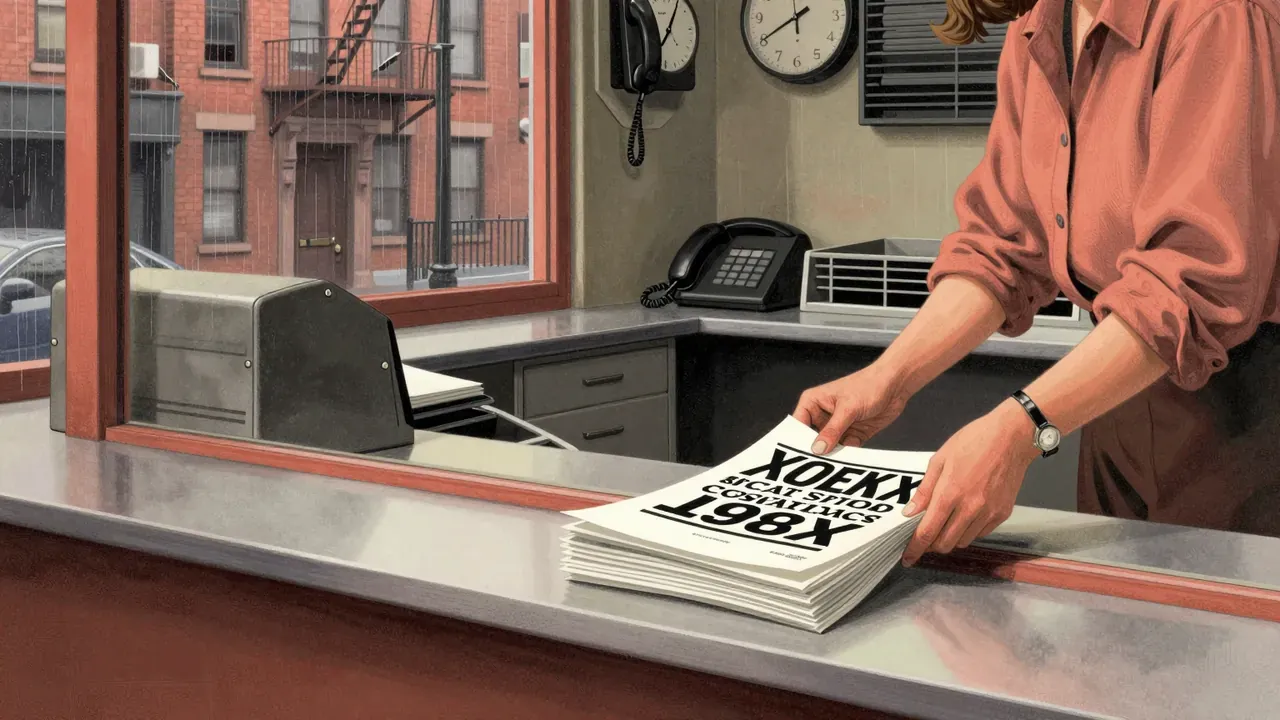
Susan Seidelman’s 1982 debut follows Wren, a young woman from New Jersey adrift in New York’s fading punk scene, as she prints fliers, mugs strangers, and cycles through men in pursuit of a life she cannot name. Shot in stark black-and-white, it observes her not with judgement or irony, but with forensic calm — treating identity as a series of transactions, not revelations.

13:00

Smooth Talk

Joyce Chopra · 1985

Smooth Talk (1985), directed by Joyce Chopra and adapted by Tom Cole from Joyce Carol Oates’s short story, follows fifteen-year-old Connie Wyatt over a single summer week in northern California. Laura Dern stars as Connie, whose restless self-discovery collides with the predatory attention of Arnold Friend (Treat Williams). Shot by James Glennon and scored by Russ Kunkel, the film avoids melodrama in favour of psychological precision, building tension through proximity, tone, and withheld reaction. It won the Sundance Grand Jury Prize in 1986 and was restored by Criterion in 2020.

13:00

So Can I

Abbas Kiarostami · 1975

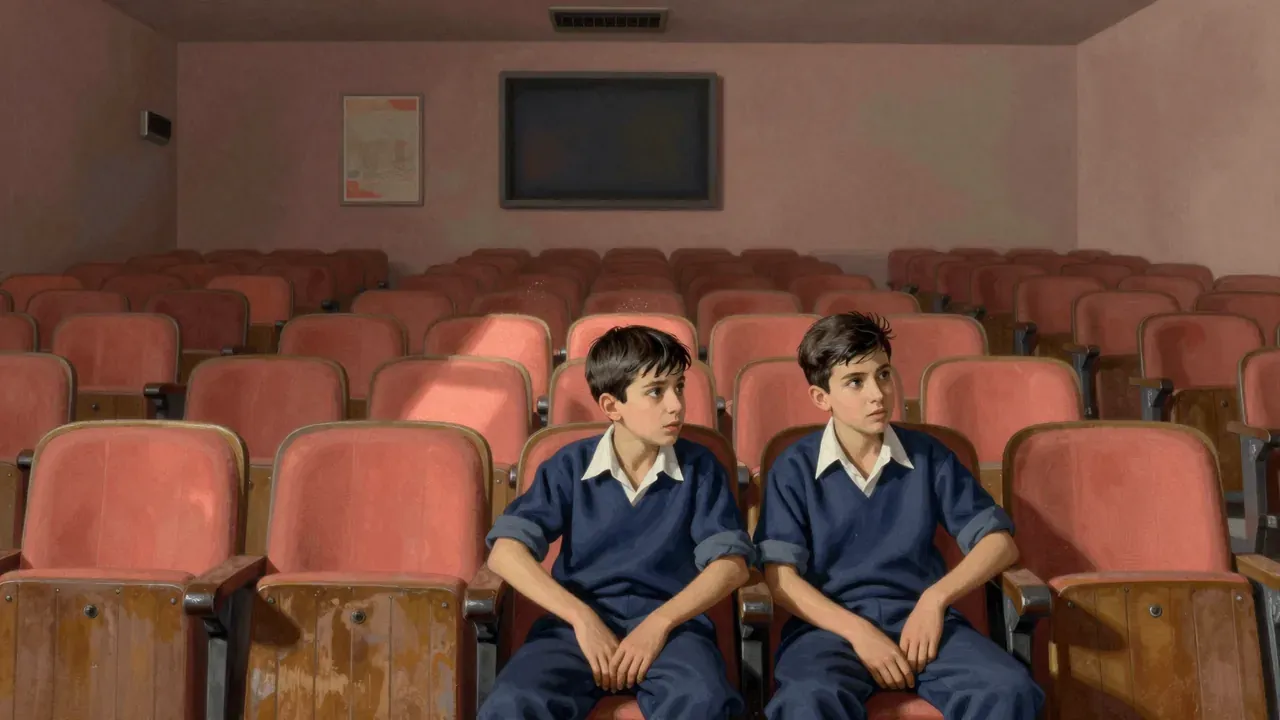
So Can I (1975) is a seventeen-minute Iranian short by Abbas Kiarostami, following two boys watching an educational cartoon. One boy repeatedly asserts 'So can I' in response to animals’ actions—until birds fly across the screen, and he falls silent. The film ends with an aeroplane circling overhead. Made for Kanun, it treats childhood cognition with formal rigour: no narration, no adult presence, no resolution—only repetition, silence, and a single, resonant visual rupture.

13:00

Soleil Ô

Med Hondo · 1967

Soleil Ô (1970) is a French-Mauritanian essay-film written and directed by Med Hondo. Shot in 1967 and released after its 1970 Cannes premiere, it follows a Black West African man arriving in Paris in search of Gaulish ancestry — a premise that exposes the absurdity of colonial logic. Blending documentary, musical, and absurdist elements, it critiques institutional racism, linguistic erasure, and bureaucratic violence. François Catonné’s cinematography and George Anderson’s score reinforce its fractured, argumentative form. Restored in 2017, it remains a rigorous, unsentimental work of decolonial cinema.

13:00

Sólo Con Tu Pareja

Alfonso Cuarón · 1991

Alfonso Cuarón’s 1991 debut Sólo Con Tu Pareja is a tightly wound Mexican romantic comedy about a womanising ad man falsely diagnosed with AIDS, whose ensuing suicide pact with a disillusioned flight attendant becomes an accidental path to emotional honesty. Shot by Emmanuel Lubezki and edited by him too, it balances farce, satire, and quiet realism across 94 minutes in Mexico City. Though it won Ariel Awards and international festival acclaim, it was delayed for domestic release until 1993. Its strength lies in formal control and moral unsentimentality — not in likable characters or tidy resolutions.

13:00

Solution

Abbas Kiarostami · 1978

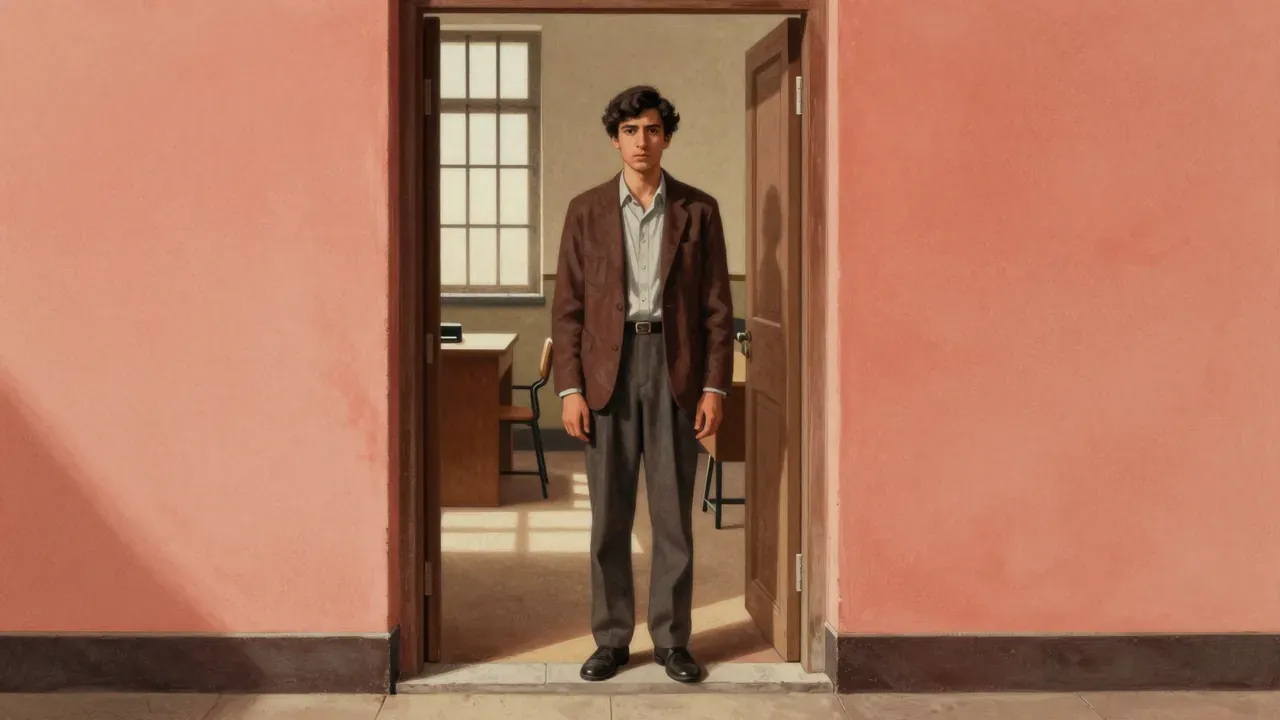
Solution (1978) is Abbas Kiarostami’s austere, observational drama set in a single institutional interior. With no score, no exposition, and minimal dialogue, it tracks a young man’s encounter with bureaucratic procedure. Its power lies in duration, repetition, and withheld meaning — not as evasion, but as method. A key early work in Iranian New Wave cinema, it rewards attention not with narrative payoff but with perceptual recalibration.

13:00

Some Like It Hot

Billy Wilder · 1959

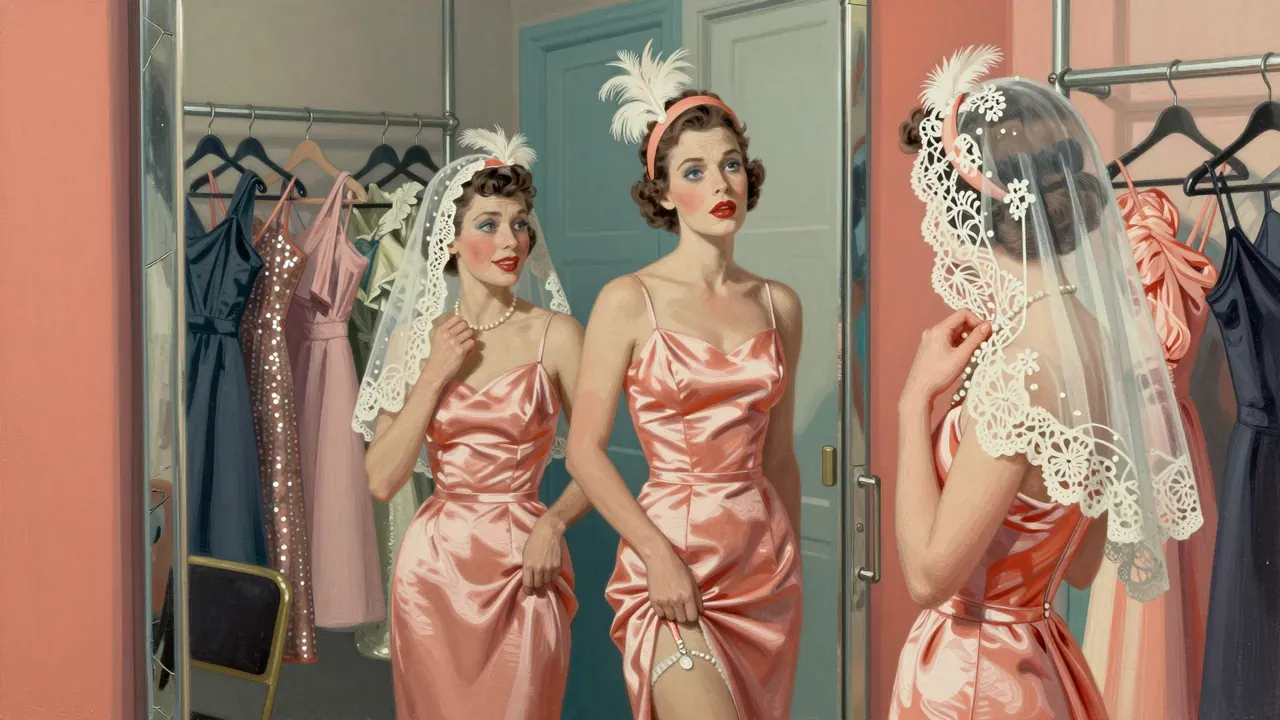
Some Like It Hot is a 1959 Prohibition-era romantic comedy about two musicians who dress as women to escape gangsters, join an all-female band, and fall for its lead singer. Directed by Billy Wilder and starring Marilyn Monroe, Tony Curtis and Jack Lemmon, it uses disguise as both plot device and thematic lens, sustaining laughter through precise timing, physical performance and escalating absurdity. Shot in black and white after colour tests failed, it balances crime, romance and farce without resolving their tensions — and remains effective not as nostalgia, but as engineered comedy.

13:00

Son of Godzilla

Jun Fukuda · 1967

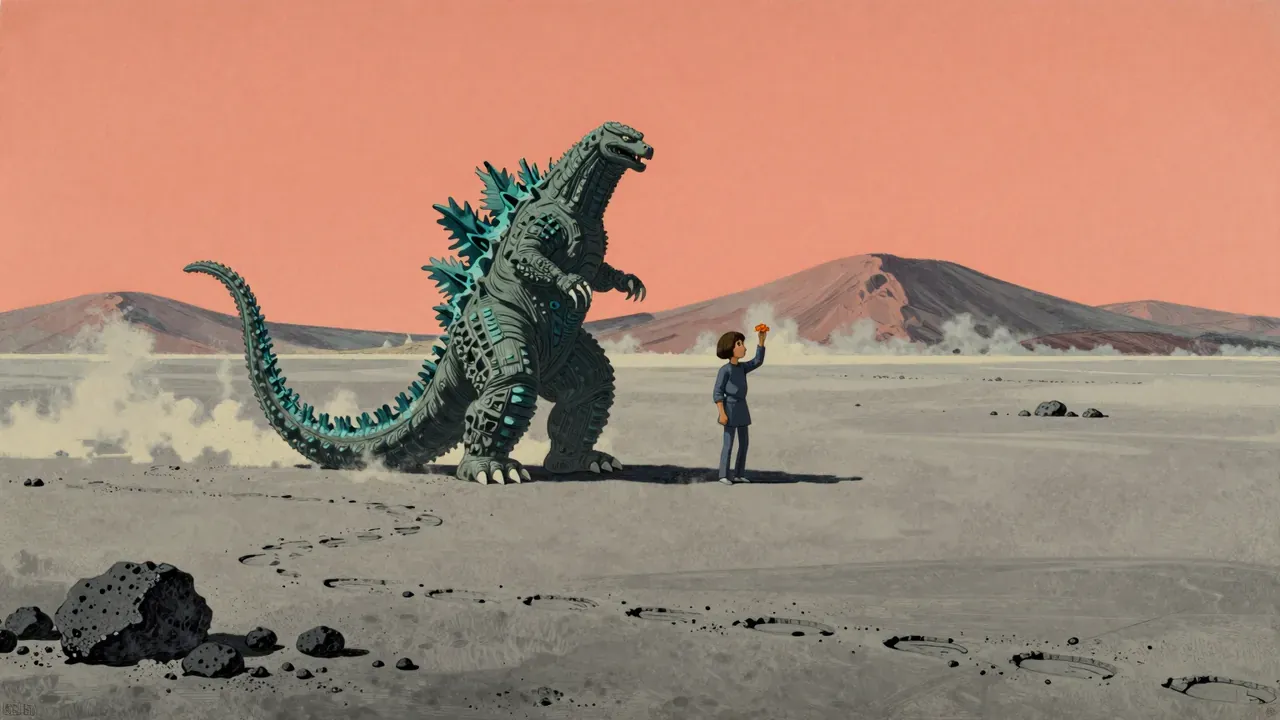
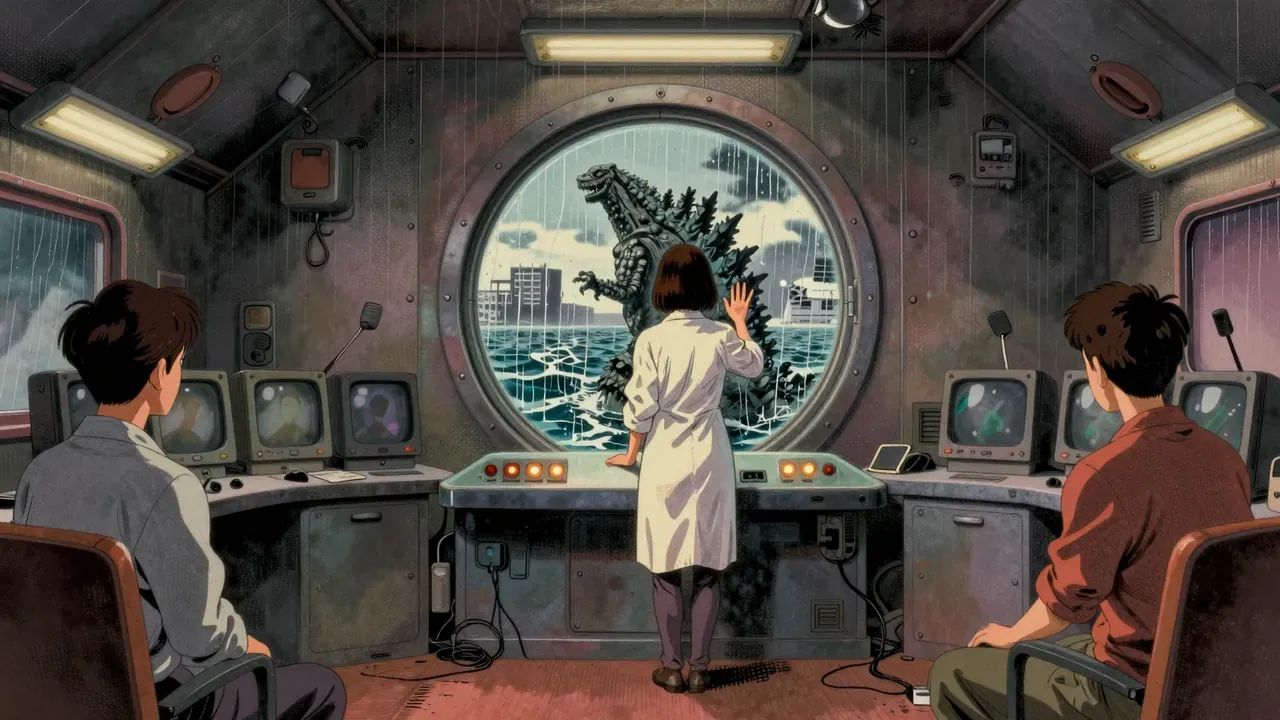
Son of Godzilla (1967) is Toho’s eighth kaiju film and the first to introduce Minilla, Godzilla’s infant son. Directed by Jun Fukuda on a reduced budget, it shifts focus from nuclear anxiety to familial bonding and juvenile spectacle. Filmed in Guam and Japan, it features marionette Kamacuras, a giant spider named Kumonga, and a deliberately oversized Godzilla suit to convey paternal stature. Marchan the Dwarf performs Minilla, whose design draws from contemporary manga. Though critics were divided and the film underperformed in the US, it remains a distinctive artefact of Shōwa-era genre filmmaking — tactile, economical, and quietly committed to its own small-scale logic.

13:00

Sorcerer

William Friedkin · 1977

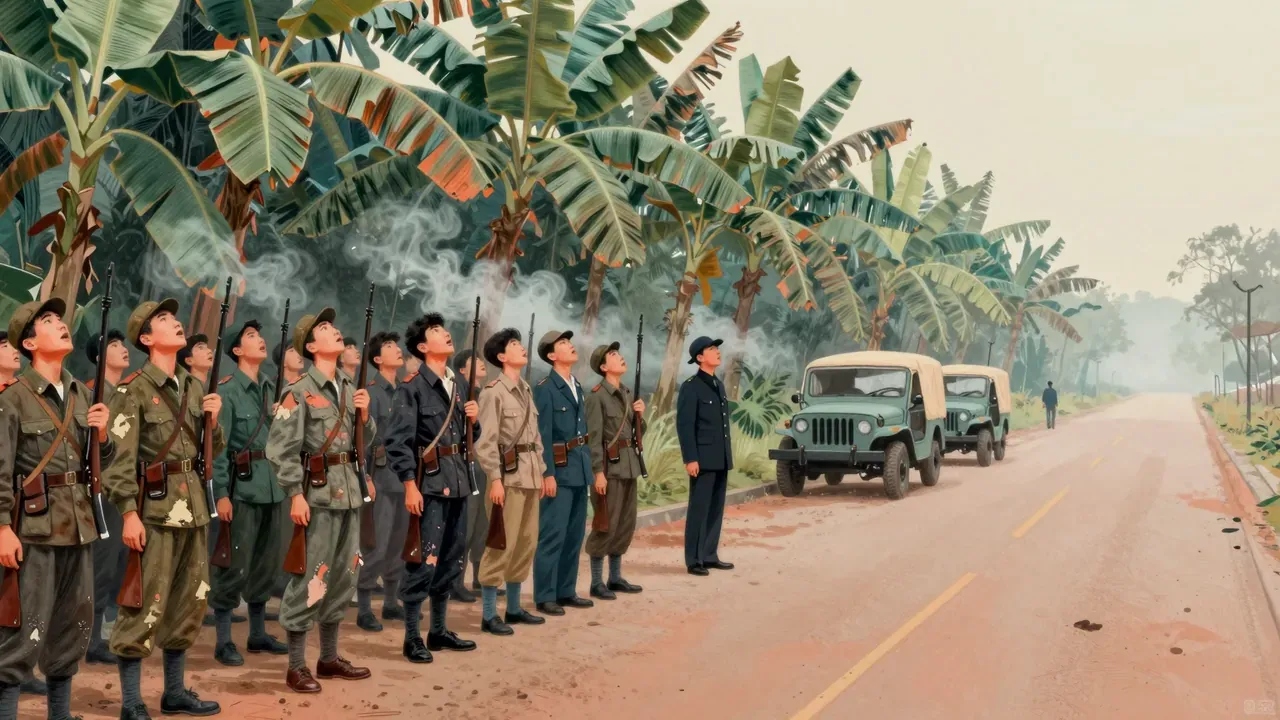
William Friedkin’s 1977 Sorcerer adapts Georges Arnaud’s novel as a stark, tactile thriller about four fugitives transporting volatile nitroglycerin across a jungle road. Shot in the Dominican Republic with documentary rigour, it trades psychological exposition for procedural realism — trucks, terrain, and time as the true protagonists. Though a box-office failure on release, it has since been reappraised as a masterwork of sustained tension and formal discipline.

13:00

Sound of Metal

Darius Marder · 2019

Sound of Metal follows a metal drummer who loses his hearing and enters a deaf-run recovery community. Rejecting cure narratives, it charts his slow adaptation to silence, language, and stillness — not as loss, but as reorientation. Riz Ahmed’s performance and Nicolas Becker’s sound design anchor a film built on restraint, repetition, and tactile detail.

13:00

Spartacus

Stanley Kubrick · 1960

Stanley Kubrick’s 1960 Spartacus adapts Howard Fast’s novel via Dalton Trumbo’s blacklisted script, telling the story of a slave revolt not as myth but as moral architecture. Kirk Douglas stars as Spartacus, with Laurence Olivier, Peter Ustinov, and Jean Simmons in key roles. Shot across California locations including Hearst Castle and Wildwood Park, its Oscar-winning art direction and cinematography render Rome as a study in hierarchy — accent, space, and light all coded by class. Though structurally uneven and romantically thin, its enduring power lies in its deliberate, collective gaze and the historic courage of its authorship.

13:00

Speedy

Ted Wilde · 1928

Harold Lloyd’s 1928 silent comedy Speedy follows a quick-witted New Yorker who defends his girlfriend’s grandfather’s horse-drawn streetcar line from corporate takeover. Shot on location in New York City and Coney Island, it combines romantic comedy, civic satire, and elaborate stunts — including a cross-Manhattan chase — all anchored by Lloyd’s energetic, grounded performance. It was Lloyd’s last silent film and survives in both silent and sound-on-film versions.

13:00

Spellbound

Alfred Hitchcock · 1945

Alfred Hitchcock’s 1945 thriller Spellbound stars Ingrid Bergman and Gregory Peck as psychiatrists entangled in a mystery of identity, memory, and repression. Made for Selznick International Pictures, it uses Freudian concepts as narrative architecture, anchored by Miklós Rózsa’s theremin-scored score and a famously truncated Dalí-designed dream sequence. Though its clinical framework feels period-specific, its formal discipline and psychological clarity remain compelling.

13:00

Spiritual Kung Fu

Lo Wei · 1978

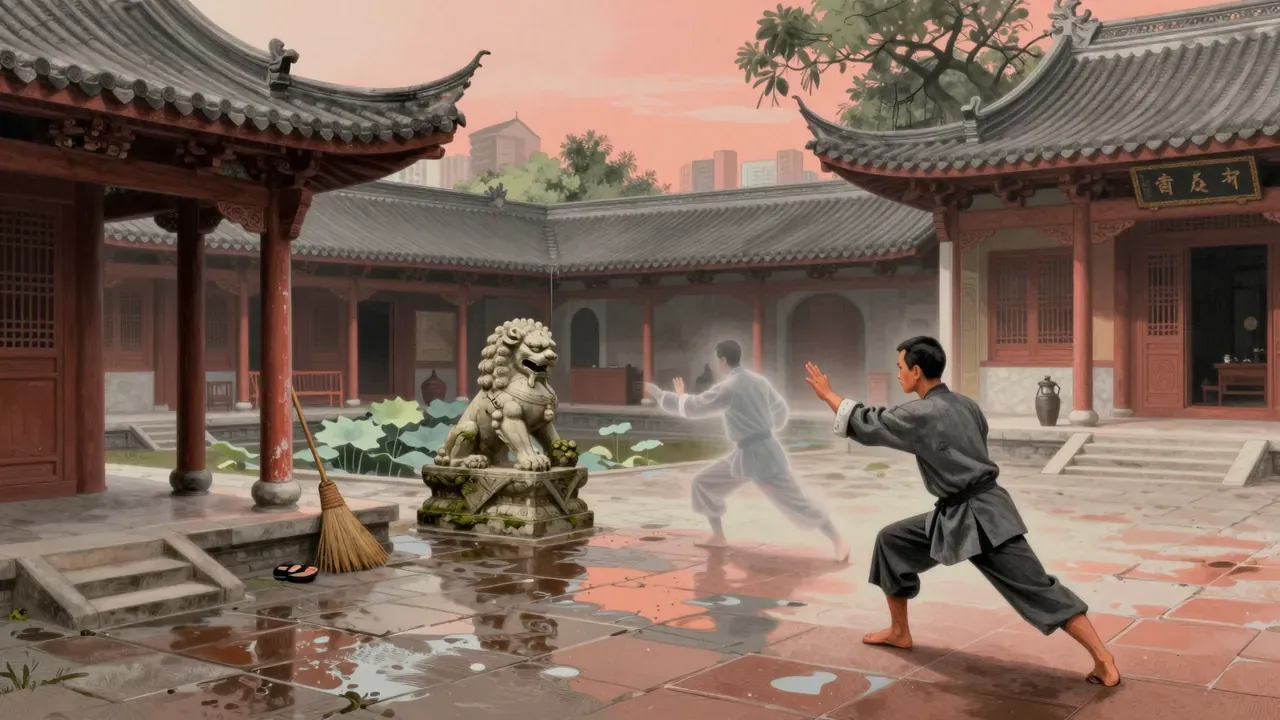
Spiritual Kung Fu (1978) is a Lo Wei-directed Hong Kong martial arts comedy starring Jackie Chan as Yi-lang, a quick-witted Shaolin student who learns the Five Style Fists from five spectral masters. Made early in 1978 but shelved due to budget constraints, it was released late that year after Chan’s breakout success in Snake in the Eagle’s Shadow. The film blends slapstick, modest special effects, and clear, varied fight choreography — with Yuen Biao uncredited as one of the ghostly instructors. Its strengths lie in Chan’s timing and the functional integration of animal-style kung fu; its weaknesses are thin motivation and underdeveloped lore. It is a transitional work — technically assured, thematically light, and structurally coherent.

13:00

Stagecoach

John Ford · 1939

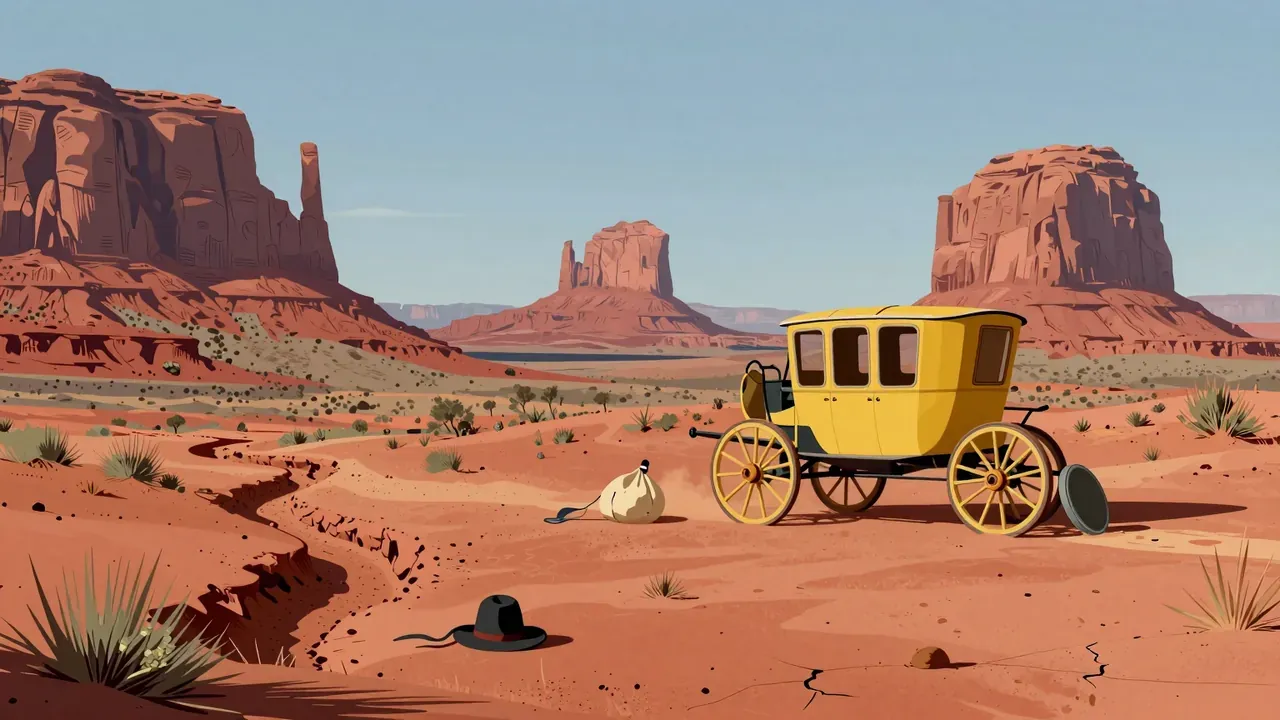
John Ford’s 1939 Stagecoach adapts Ernest Haycox’s short story into a tightly wound Western about nine strangers travelling by stagecoach from Arizona to New Mexico. Trapped together by geography and danger, their prejudices and pretensions erode under shared risk — culminating in childbirth, battle, and quiet acts of grace. Shot in Monument Valley, it launched John Wayne’s stardom and redefined the Western as a vehicle for moral and social inquiry. Its formal rigour remains unmatched; its omissions, particularly regarding Apache people, remain consequential.

13:00

State of Siege

Costa-Gavras · 1972

Costa-Gavras’s State of Siege (1972) dramatises the kidnapping and execution of a US official by Uruguayan guerrillas, using the real-life Dan Mitrione case as a framework to examine Cold War counterinsurgency, torture training, and the bureaucratic laundering of violence. Shot in Chile under Allende, it stars Yves Montand and employs rigorous structure, restrained performance, and precise craft to mount a sustained argument about power, language, and continuity.

13:00

Still Walking

Hirokazu Koreeda · 2008

Hirokazu Koreeda’s 2008 film follows the Yokoyama family over one day as they gather to mark the twelfth anniversary of their eldest son’s death. Built on restrained performances, unhurried pacing and naturalistic detail, it traces the quiet tensions between duty and desire, memory and erasure, love and resentment — all without raising its voice or breaking its rhythm.

13:00

Stolen Kisses

François Truffaut · 1968

François Truffaut’s 1968 romantic comedy returns to Jean-Pierre Léaud’s Antoine Doinel as a young man navigating love, work, and self-deception in Paris. Discharged from the army, he cycles through jobs — night clerk, private detective, TV repairman — while drifting between Christine Darbon and Fabienne Tabard. With Denys Clerval’s unshowy cinematography and Antoine Duhamel’s wistful score, the film traces how intimacy forms not through grand gestures but accumulated small returns: unanswered letters, staged breakdowns, silent proposals. It is the third in Truffaut’s five-film Doinel cycle, rooted in behavioural realism and quiet persistence.

13:00

Stormy Waters

Jean Grémillon · 1941

Stormy Waters (1941), directed by Jean Grémillon, follows tugboat captain André Laurent as his devotion to salvage work strains his marriage and draws him into a fraught relationship with a woman he rescues at sea. Shot on location in Brittany and at Billancourt Studios, it blends poetic realism with maritime procedural, anchored by Jean Gabin’s restrained performance and Armand Thirard’s atmospheric cinematography.

13:00

Story of a Prostitute

Seijun Suzuki · 1965

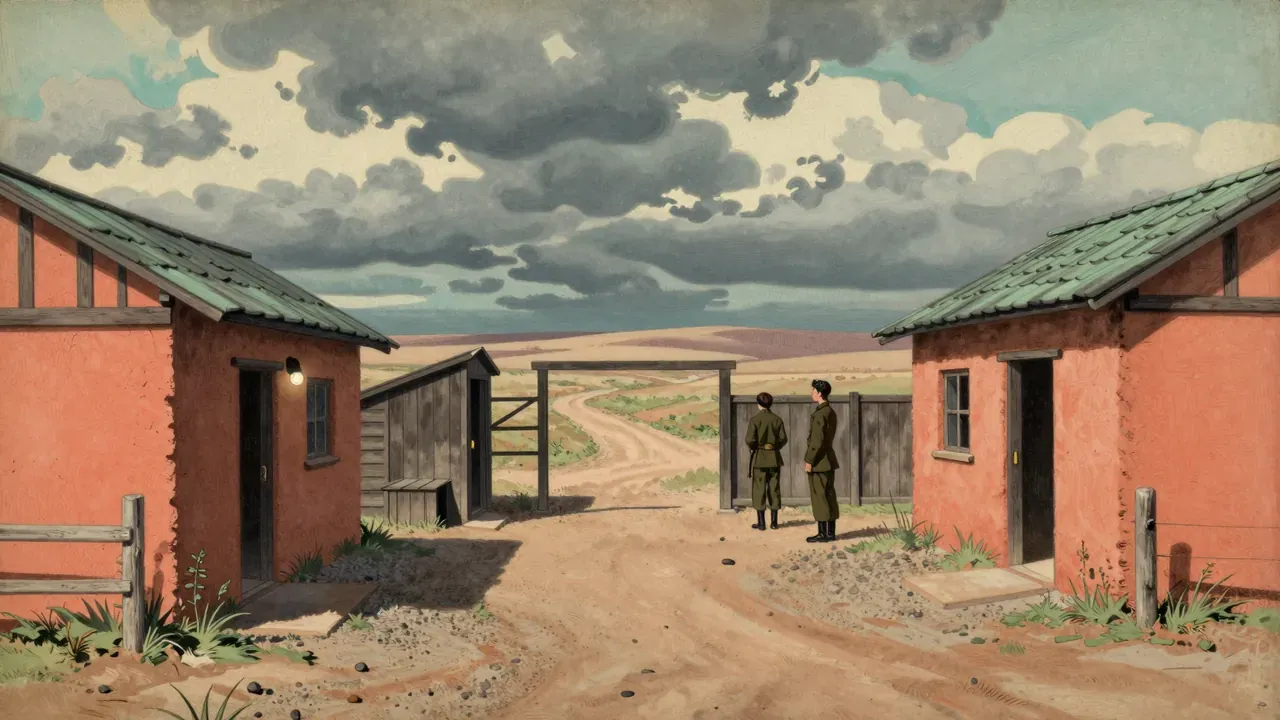
Seijun Suzuki’s 1965 Story of a Prostitute follows Harumi, a prostitute who moves to a Japanese military outpost in Manchuria during the Sino-Japanese War. There, she forms a forbidden bond with an officer’s aide while enduring the casual brutality of the chain of command. Shot with stark realism and deliberate restraint, the film rejects heroic mythmaking in favour of behavioural truth — exposing the absurdity, exhaustion and moral erosion embedded in imperial military life. Based on Taijiro Tamura’s story and informed by Suzuki’s own wartime service, it remains a singular, unsettling portrait of power, complicity and quiet defiance.

13:00

Stowaway in the Sky

Albert Lamorisse · 1960

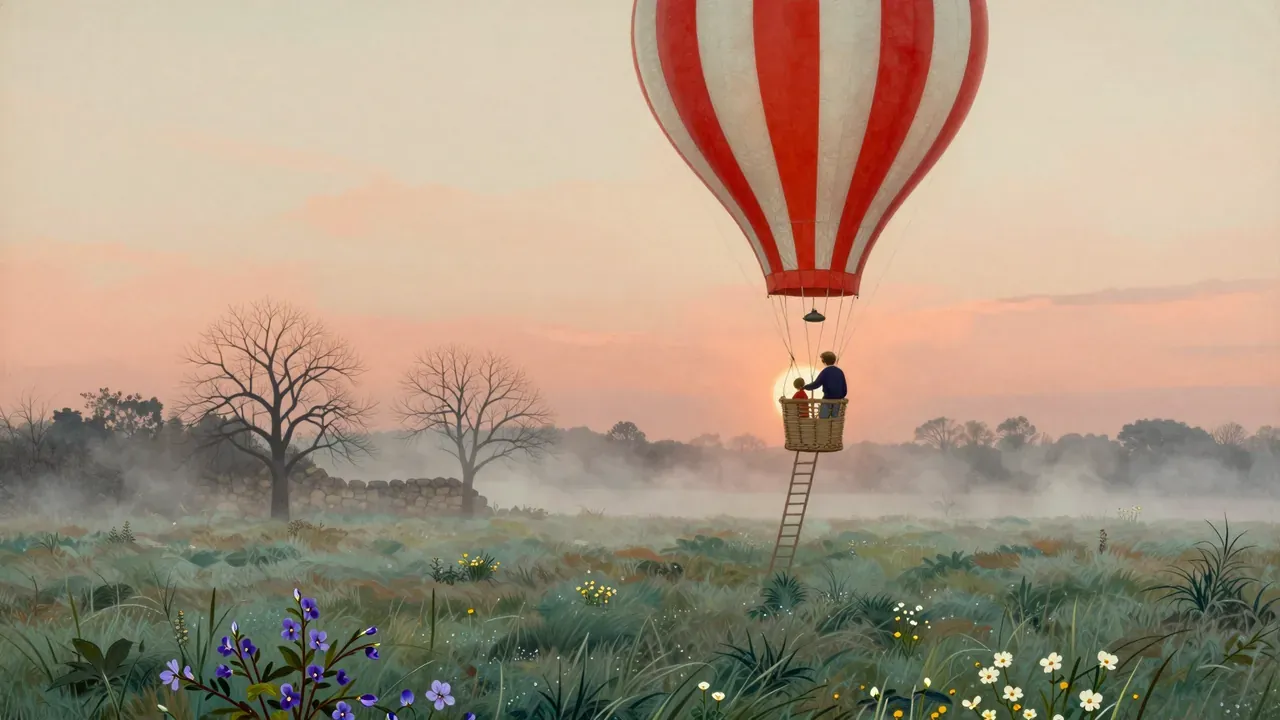
Albert Lamorisse’s 1960 film Stowaway in the Sky blends documentary footage and staged flight to follow a ten-year-old boy drifting over France in his grandfather’s balloon. Shot in Eastman Color and Dyaliscope, it privileges observation over narrative, using silence, wide shots and unhurried editing to recast landscape as texture and altitude as perspective. Maurice Fellous’s cinematography and Jean Prodromidès’s score sustain its gentle, airborne logic — one that values wonder without condescension, and drift without destination.

13:00

Stranger Than Paradise

Jim Jarmusch · 1984

Jim Jarmusch’s 1984 debut is a black-and-white, three-act film built from fixed long takes and two-second blackouts. It follows Willie, his cousin Eva, and his friend Eddie across Brooklyn, Cleveland, and Florida — not as a journey of discovery, but as a study in duration, repetition, and the quiet absurdity of routine. With minimal dialogue, no score, and no conventional coverage, it asks the viewer to attend to stillness itself.

13:00

Straw Dogs

Sam Peckinpah · 1971

Straw Dogs (1971), directed by Sam Peckinpah, follows an American mathematician and his wife who retreat to a Cornish farmhouse, only to face escalating hostility from locals culminating in a violent siege. Adapted from Gordon M. Williams’s novel, the film strips away moral framing to examine the erosion of pacifism under sustained provocation. Shot by John Coquillon and scored by Jerry Fielding, it relies on meticulous realism, rhythmic editing and restrained performances — particularly Dustin Hoffman’s and Susan George’s — to build dread. Its themes of territoriality, masculinity and civilised self-deception remain urgent, though its handling of agency and motivation continues to divide viewers.

13:00

Street of Shame

Kenji Mizoguchi, Yasuzō Masumura · 1956

Street of Shame (1956), Kenji Mizoguchi’s last film, follows five women working in a Tokyo brothel as Japan debates abolishing licensed prostitution. With restrained performances, Kazuo Miyagawa’s unemphatic cinematography, and Masashige Narusawa’s faithful adaptation of Yoshiko Shibaki’s novel, it treats prostitution not as moral failure but as labour embedded in debt, family duty, and social exclusion. The film ends not with liberation but with continuity: a young maid begins her first day as a prostitute. Its power lies in its refusal to dramatise change — or to pretend it is imminent.

13:00

Street Without End

Mikio Naruse · 1934

Street Without End (1934), Mikio Naruse’s final silent film, follows Tokyo waitress Sugiko as she navigates competing paths — marriage into wealth, stardom in film, or return to work — all shaped by rigid class boundaries and unspoken expectations. With restrained performances and precise, shallow-focus cinematography, it observes rather than judges, finding tension in stillness and consequence in repetition.

13:00

Streetwise

Martin Bell · 1984

A 1984 documentary by Martin Bell, shot by Mary Ellen Mark, following homeless teenagers in Seattle over one autumn. It observes without commentary, centres Erin Blackwell (‘Tiny’) and eight peers, and avoids exposition, score, or narration. Funded by Willie Nelson, nominated for an Oscar, it endures for its restraint and intimacy — not as advocacy, but as sustained, ethically complex witness.

13:00

Stromboli

Roberto Rossellini · 1950

Roberto Rossellini’s 1950 Stromboli stars Ingrid Bergman as a displaced Lithuanian woman who marries to escape an internment camp, only to confront harsh isolation on the volcanic island of Stromboli. Shot on location with non-professional actors and pared-down craft, it is a foundational neorealist work that treats landscape, silence, and endurance as primary dramatic tools — less a story about a woman than an inquiry into what happens when identity is stripped back to breath, rock, and sky.

13:00

Sullivan's Travels

Preston Sturges · 1942

Preston Sturges’s 1942 comedy follows a Hollywood director who abandons frivolous hits to make a serious film about poverty — then tries, and fails, to live as a tramp to gather material. His journey leads him instead to a Southern chain gang, where he discovers laughter’s unvarnished power among the condemned. With Joel McCrea and Veronica Lake, and shot by John F. Seitz, it balances screwball pacing with sober observation — less a critique of Hollywood than a defence of comedy’s quiet seriousness.

13:00

Summer Hours

Olivier Assayas · 2008

Summer Hours follows three siblings negotiating the fate of their late mother’s country house and its art-filled contents. As they choose between preservation, sale, and donation to the Musée d'Orsay, the film traces how objects hold meaning only as long as they remain embedded in shared life — and how easily that meaning unravels across distance, time, and bureaucracy.

13:00

Summer Interlude

Ingmar Bergman · 1951

Ingmar Bergman’s 1951 drama follows a ballerina who, during a tense rehearsal day, receives the diary of her first love — a young man who died thirteen years earlier after a diving accident. Returning to the island where they met, she revisits that summer not to grieve anew, but to rediscover the physical ease and emotional openness she buried beneath professional discipline and adult reserve. Shot on location at Dalarö with restrained cinematography by Gunnar Fischer, the film balances memory and immediacy, loss and renewal, without recourse to exposition or sentiment. It marks Bergman’s turn toward psychological intimacy and formal precision — not as intellectual exercise, but as embodied experience.

13:00

Summer with Monika

Ingmar Bergman · 1953

Ingmar Bergman’s 1953 drama follows Harry and Monika, two working-class Swedes who flee Stockholm for a summer in the archipelago, only to return changed. Harriet Andersson’s breakout performance anchors a film that observes desire, disillusionment, and the quiet violence of ordinary time — without explanation, without judgment, and without recourse to myth.

13:00

Sunday, Bloody Sunday

John Schlesinger · 1971

Sunday, Bloody Sunday (1971) follows a love triangle in London between a gay Jewish doctor, a divorced recruitment consultant, and a younger bisexual sculptor. Directed by John Schlesinger and written by Penelope Gilliatt and David Sherwin, it avoids moralising or melodrama, instead holding its characters’ contradictions in steady, unsentimental focus. Glenda Jackson and Peter Finch deliver restrained, deeply felt performances; Billy Williams and David Harcourt’s cinematography grounds the story in quiet realism. Though structurally austere and emotionally reserved, the film remains a landmark for its mature treatment of sexuality, identity, and the quiet costs of openness.

13:00

Sundays and Cybele

Serge Bourguignon · 1962

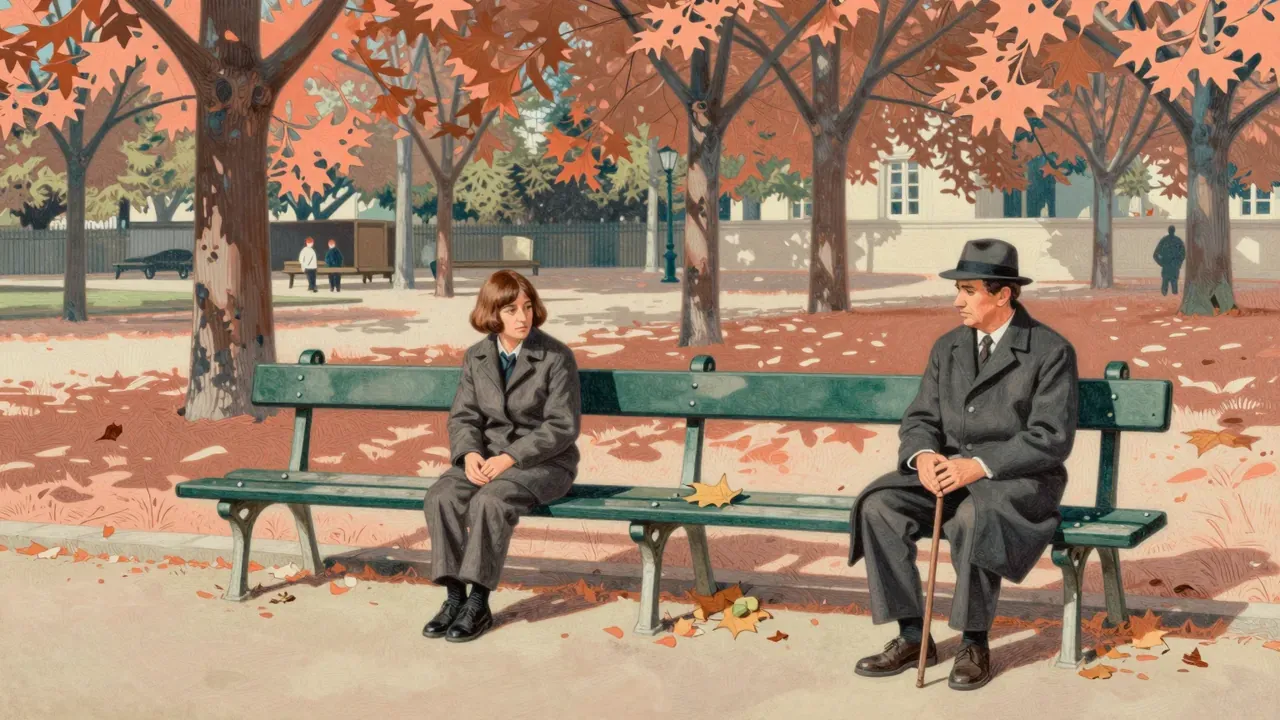
Sundays and Cybele (1962), directed by Serge Bourguignon, follows Pierre, a psychologically wounded French Indochina War veteran, and Cybèle, an eleven-year-old girl abandoned by her family and confined to a Parisian boarding school. Their Sunday meetings in Ville-d’Avray form a fragile, wordless bond — tender, unorthodox, and ultimately unsustainable. Shot by Henri Decaë and scored by Maurice Jarre, the film avoids exposition and moral framing, trusting gesture, rhythm and absence to convey grief, legibility and the limits of care. It won the 1963 Academy Award for Best International Feature Film.

13:00

Suzanne's Career

Éric Rohmer · 1963

Éric Rohmer’s 1963 film follows two Parisian students — the timid Bertrand and the brash Guillaume — as they encounter Suzanne, a working woman studying Italian at night. Guillaume seduces and discards her; Bertrand watches, judges, and gradually finds his certainties undermined when Suzanne moves on — not in defeat, but in quiet self-determination. Shot in black-and-white with non-professional actors, it is the second of Rohmer’s Six Moral Tales: a precise, unsentimental study of self-deception, class, and the asymmetry of moral attention.

13:00

Sweet Movie

Dušan Makavejev · 1974

Dušan Makavejev’s 1974 Sweet Movie is a formally rigorous, politically charged art film split between two women — a Canadian beauty queen and a communist sailor — whose bodies become battlegrounds for competing systems of control. Shot in France, Canada and West Germany, it uses surreal juxtaposition, taboo imagery and real archival footage to dissect the failures of both capitalism and state socialism. Controversial on release and banned in multiple countries, it remains a demanding, uncompromising work that prioritises dialectical tension over narrative resolution.

13:00

Sweet Sweetback's Baadasssss Song

Melvin Van Peebles · 1971

Melvin Van Peebles’ 1971 independent film follows a Black performer fleeing police after intervening in an act of brutality. Made outside studio systems, with Van Peebles writing, directing, editing, scoring, producing, and starring, it uses rapid montage, percussive music by Earth, Wind & Fire, and raw physical performance to assert Black autonomy. Its influence on blaxploitation and independent Black cinema is widely acknowledged, and it was added to the US National Film Registry in 2020.

13:00

Sweetie

Jane Campion · 1989

Jane Campion’s 1989 black comedy drama follows Kay, a superstitious factory worker, as her erratic sister Dawn returns home and unravels the fragile order of their dysfunctional Australian family. Shot in Sydney on a low budget, the film uses physical performance, jagged editing, and oppressive domestic spaces to explore inheritance, containment, and the violence of care — not as psychology but as atmosphere.

13:00

Sword of the Beast

Hideo Gosha · 1965

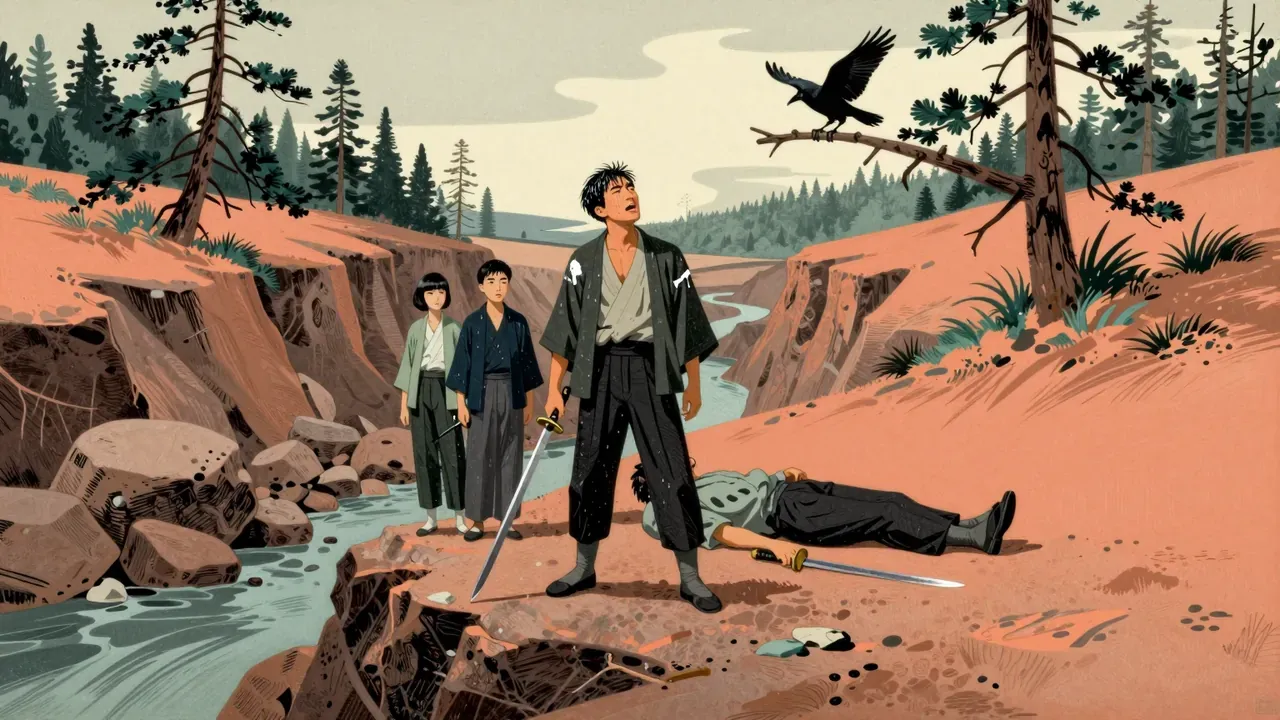
Set in 1857 Japan, Sword of the Beast follows Gennosuke, a samurai fugitive manipulated into killing his clan’s counsellor. On the run, he joins a farmer poaching gold from the shōgun’s mountain, where he encounters another samurai and his wife — also stealing gold, also doomed by their clan. As loyalties fracture and betrayals mirror one another, Gennosuke chooses solidarity over survival, culminating in a terse, consequential battle. Directed by Hideo Gosha, the film is spare, morally exacting, and resolutely unromantic about honour, duty, or redemption.

13:00

Sylvie et le fantôme

Claude Autant-Lara · 1946

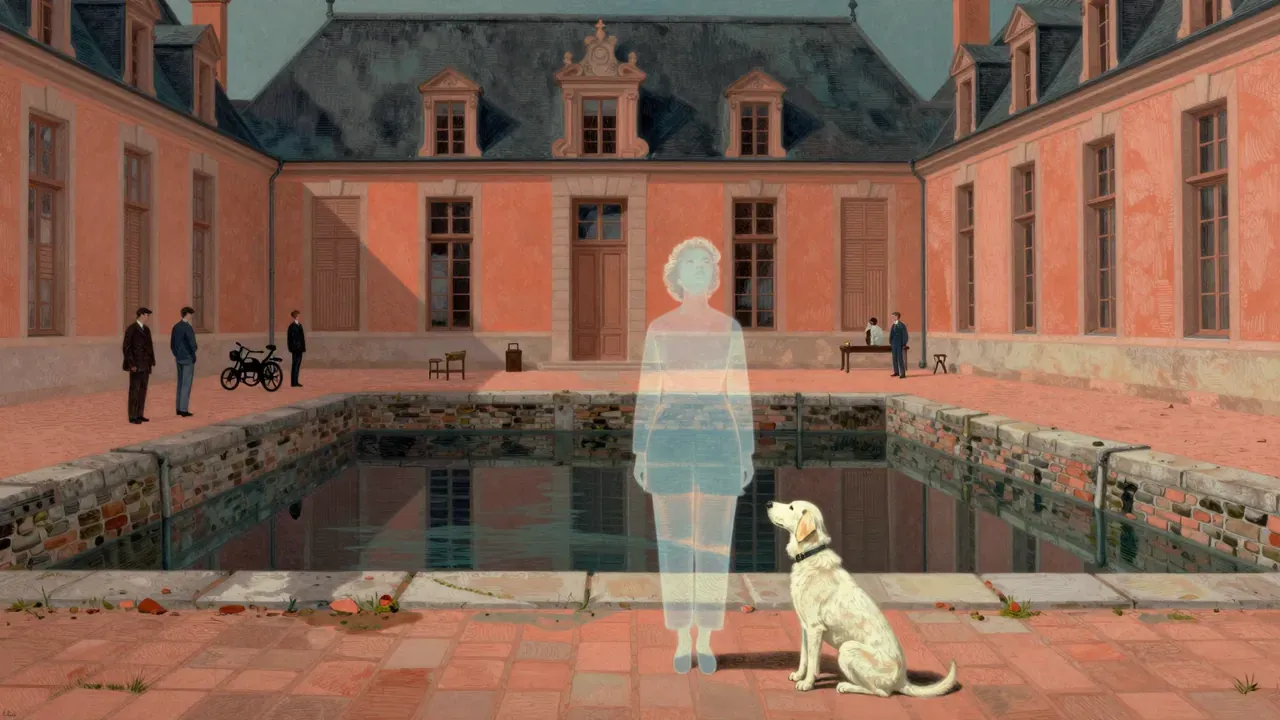
Sylvie et le fantôme (1946), directed by Claude Autant-Lara, follows a sixteen-year-old girl in a decaying château who believes in the ghost of a long-dead lover concealed behind a portrait. When the painting is sold, the ghost emerges — played by Jacques Tati — and becomes entangled in a tender, comedic web of mistaken identities, amateur hauntings, and adolescent longing. Shot with optical ingenuity at Saint-Maurice Studios, the film balances fantasy and realism through understated performances, elegant set design, and a script that treats belief as a collaborative act rather than a metaphysical claim.

13:00

Taipei Story

Edward Yang · 1984

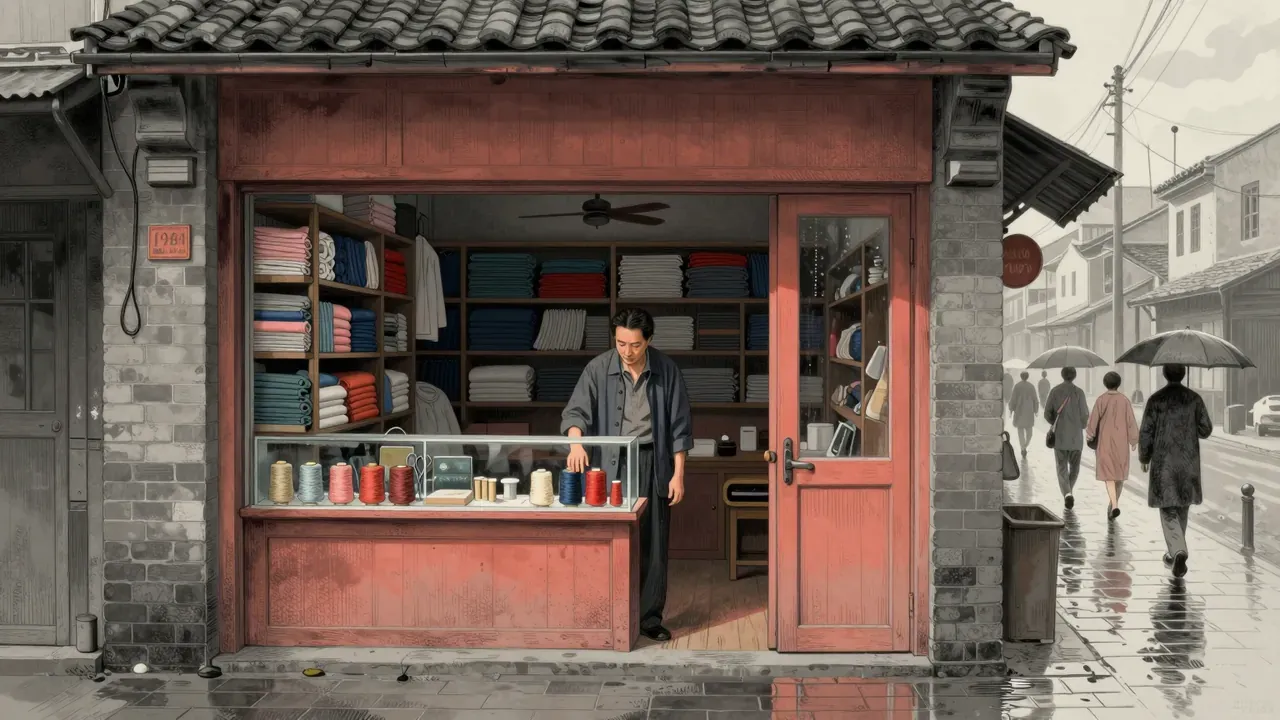
Edward Yang’s 1984 Taipei Story observes the quiet dissolution of a childhood bond between Ah-chen, an office worker planning emigration, and Ah-lung, a cloth-shop owner rooted in memory and habit. Set against Taipei’s rapid modernisation, the film uses duration, restraint, and precise framing to trace how structural change fractures intimacy. Co-written with Hou Hsiao-hsien — who stars — it avoids melodrama in favour of accumulated detail: a withheld glance, an unlit cigarette, an empty mountain road. Restored in 4K in 2017, it remains a cornerstone of New Taiwanese Cinema.

13:00

Take Aim at the Police Van

Seijun Suzuki · 1960

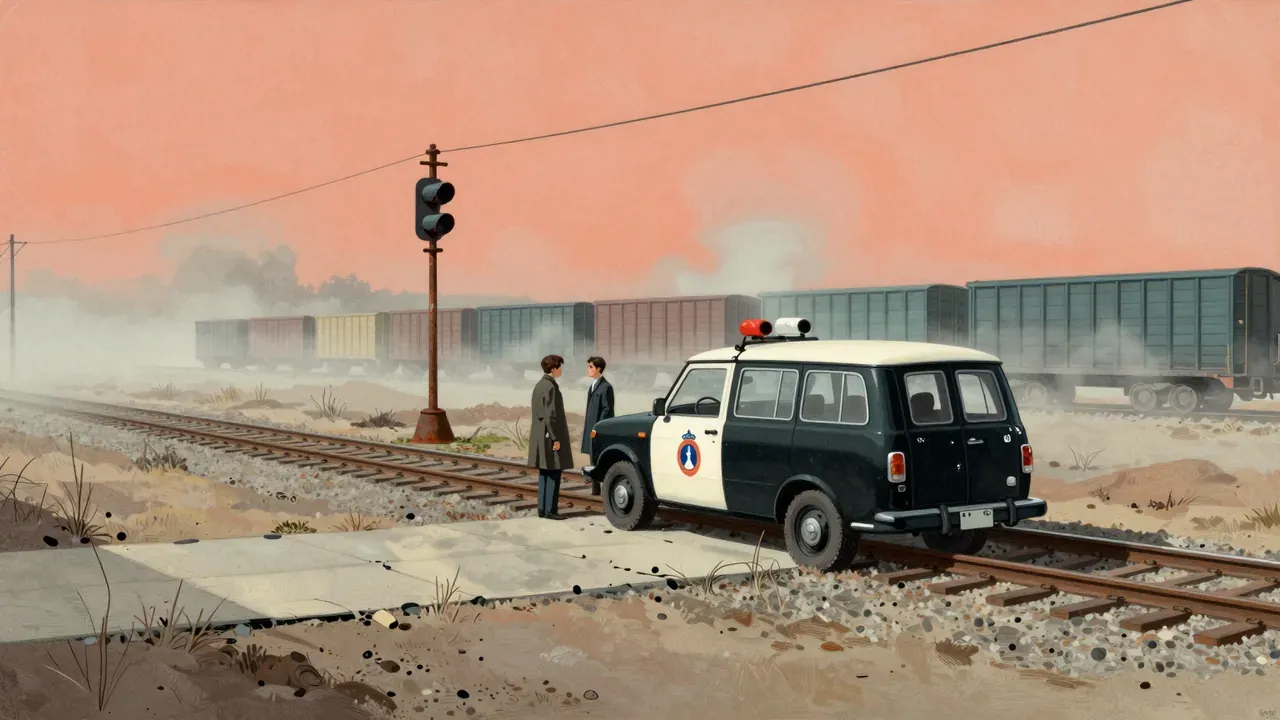
Take Aim at the Police Van is a 1960 Japanese action thriller directed by Seijun Suzuki for Nikkatsu. Built around the ambush of a police van transporting a prisoner, it deploys tight framing, high-contrast monochrome cinematography by Kazuo Miyagawa, and a lean script by Shinichi Sekizawa to sustain relentless forward motion. Starring Michitaro Mizushima, Misako Watanabe, and Shinsuke Ashida, it exemplifies Nikkatsu’s ‘borderless’ studio strategy — genre stripped of local specificity, yet anchored in Tokyo’s post-war textures. Its strength lies in formal discipline, not character depth or thematic elaboration.

13:00

Take Out

Sean Baker, Shih-Ching Tsou · 2004

Take Out (2004) follows Ming Ding, an undocumented Chinese deliveryman in Upper Manhattan, over a single day as he races to repay a smuggling debt. Shot on digital video for $3,000 during actual operating hours in a working take-out restaurant, the film uses social realism and cinema vérité techniques to render the physical and temporal weight of debt bondage. With minimal dialogue, no score, and a cast mixing professionals and non-actors, it sustains focus on labour, invisibility, and quiet endurance — not as metaphor, but as daily fact.

13:00

Tampopo

Jūzō Itami · 1985

Tampopo (1985), written and directed by Jūzō Itami, follows a widowed ramen-shop owner mentored by a trucker in her quest for culinary excellence. Framed as a 'noodle western', it interweaves this central story with vignettes exploring food, class, and desire across 1980s Tokyo. Shot on location with natural light by Masaki Tamura and edited by Akira Suzuki, it favours observation over exposition, craft over climax, and quiet resonance over narrative resolution.

13:00

Targets

Peter Bogdanovich · 1968

Peter Bogdanovich’s 1968 debut Targets pairs Boris Karloff’s retiring horror icon Byron Orlok with Tim O’Kelly’s motiveless killer Bobby Thompson. Shot guerilla-style in Los Angeles on a shoestring budget, it uses stark cinematography, restrained editing, and deliberate juxtaposition to ask how fiction holds up against televised atrocity — all without recourse to psychology, exposition, or catharsis.

13:00

Teorema

Pier Paolo Pasolini · 1968

Pier Paolo Pasolini’s 1968 Teorema is a rigorously structured allegory in which a mysterious visitor disrupts an upper-class Milanese family, triggering identical psychological ruptures in each member. Shot by Giuseppe Ruzzolini and scored by Ennio Morricone, it proceeds like a mathematical theorem — with premises, operations, and irreversible conclusions — rather than a conventional drama. Its power lies in formal discipline, not emotional appeal.

13:00

Terminal Station

Vittorio De Sica · 1953

Terminal Station (1953) is Vittorio De Sica’s English-language drama set entirely in Rome’s Termini station, following an American woman torn between her husband and an Italian lover. Produced by David O. Selznick and plagued by creative conflict, it exists in two versions — an 89-minute Italian cut and a 72-minute American recut titled Indiscretion of an American Wife. Shot on location with restrained performances and atmospheric cinematography, it prioritises place and pause over plot, exposing tensions between neorealism and Hollywood convention. Though nominated at Cannes and for an Oscar, it divided critics and performers alike.

13:00

Terror of Mechagodzilla

Ishirō Honda · 1975

Terror of Mechagodzilla (1975), directed by Ishirō Honda and written by Yukiko Takayama, is the fifteenth Godzilla film and the last of the Shōwa era. It follows Interpol agents confronting a reclusive scientist, his cyborg daughter Katsura, and the rebuilt Mechagodzilla 2 — all converging in a Tokyo battle with Godzilla and the newly awakened Titanosaurus. With a tight 83-minute runtime, functional performances, and Teruyoshi Nakano’s tactile special effects, it trades spectacle for narrative compression and bodily stakes. Akira Ifukube’s score and Yoshitami Kuroiwa’s editing sustain urgency, while themes of technological possession and paternal control anchor its modest ambitions. Released by Toho, it remains the franchise’s least financially successful entry.

13:00

Tess

Roman Polanski · 1979

Roman Polanski’s 1979 Tess adapts Thomas Hardy’s novel with rigorous visual fidelity and unhurried pacing. Shot in northern France by Ghislain Cloquet and the late Geoffrey Unsworth, it renders late-Victorian rural life as a system of material constraint, not romantic backdrop. Nastassja Kinski’s restrained performance anchors a film that prizes texture over exposition, endurance over agency, and consequence over catharsis. It won three Academy Awards — for cinematography, costume design, and production design — and remains Polanski’s most formally controlled, morally unvarnished work.

13:00

Testament

Lynne Littman · 1983

Testament (1983) follows Carol Wetherly and her family in a Northern California suburb after a nuclear attack. With no special effects, no named antagonists and no grand speeches, it charts the erosion of domestic life — from school plays to backyard burials — as infrastructure fails and radiation sickness takes hold. Made for PBS and released theatrically by Paramount, it relies on Jane Alexander’s restrained performance, Steven Poster’s naturalistic cinematography and James Horner’s sparse score to anchor nuclear dread in intimate, unremarkable detail.

13:00

Testament of Orpheus

Jean Cocteau · 1960

Testament of Orpheus (1960) is Jean Cocteau’s black-and-white fantasy film starring himself as an 18th-century poet moving through a mythic France. With cameos from Picasso, Marais, Brynner and others, it forms the third part of his Orphic Trilogy. Structured as a series of symbolic vignettes rather than a narrative, it reflects on mortality, authorship and artistic legacy through repetition, doubling and formal restraint. Georges Auric composed the score; Marie-Josèphe Yoyotte edited it. It is an essay-film in cinematic form — elliptical, self-referential, and addressed to those already familiar with Cocteau’s work.

13:00

That Hamilton Woman

Alexander Korda · 1941

That Hamilton Woman (1941) is a black-and-white historical drama directed by Alexander Korda, starring Vivien Leigh and Laurence Olivier as Emma Hamilton and Horatio Nelson. Made in Hollywood during British exile, it uses the Napoleonic Wars as allegory for Britain’s resistance to Nazi Germany. The film follows Emma’s rise from courtesan to national symbol and her tragic decline, framed by Nelson’s principled defiance and ultimate sacrifice at Trafalgar. Crafted with restraint and moral clarity, it prioritises thematic weight over psychological nuance or visual spectacle.

13:00

That Night's Wife

Yasujirō Ozu · 1930

That Night’s Wife (1930), Yasujirō Ozu’s early Shochiku silent, confines its entire action to a single night in a Tokyo apartment. A father robs a bank to pay for his daughter’s life-saving medicine; a detective tracks him home; the wife disarms the law, then helps her husband flee—only for him to return at dawn and surrender. Shot by Hideo Shigehara and co-written by Ozu and Kōgo Noda, it is a study in compressed ethics, where silence, stillness and domestic detail carry the full weight of choice.

13:00

The Adventures of Baron Munchausen

Terry Gilliam · 1988

Terry Gilliam’s 1988 fantasy follows the ageing Baron Munchausen as he reassembles his legendary crew to rescue a besieged city—not with weapons, but with stories. Shot on practical sets with elaborate costumes and in-camera effects, it privileges tactile invention over narrative efficiency. Though its box office failure and production turmoil are well documented, the film endures as a singular argument for imagination as an act of defiance against literalism, bureaucracy and time itself.

13:00

The Age of Innocence

Martin Scorsese · 1993

Martin Scorsese’s 1993 adaptation of Edith Wharton’s novel follows Newland Archer, a New York lawyer caught between dutiful engagement to May Welland and forbidden attraction to her unconventional cousin Ellen Olenska. Set in the rigidly codified world of 1870s Gilded Age society, the film uses meticulous craft — Michael Ballhaus’s measured cinematography, Thelma Schoonmaker’s unhurried editing, Elmer Bernstein’s sparse score — to render emotional repression as physical fact. It is a romance without consummation, a drama without outbursts, and a period piece that treats etiquette as ideology.

13:00

The American Friend

Wim Wenders · 1977

Wim Wenders’ 1977 adaptation of Patricia Highsmith’s Ripley’s Game stars Bruno Ganz as a terminally ill picture framer drawn into murder by Dennis Hopper’s enigmatic American, Tom Ripley. Shot in Hamburg and Paris by Robby Müller, with a sparse score by Jürgen Knieper, the film treats the thriller form as a vessel for existential portraiture — prioritising texture, hesitation, and linguistic nuance over plot mechanics. Its power lies in accumulation, not revelation.

13:00

The American Soldier

Rainer Werner Fassbinder · 1970

Rainer Werner Fassbinder’s 1970 drama The American Soldier follows Ricky, a German-American Vietnam veteran turned contract killer working for renegade Munich police. Shot in stark, frontal compositions by Dietrich Lohmann and edited with metronomic restraint by Thea Eymèsz, the film strips away psychology and suspense to expose the administrative logic of violence. Its themes — complicity, procedural detachment, language as control — are enacted, not explained. A demanding, formally rigorous work from Fassbinder’s early arthouse period.

13:00

The Ascent

Larisa Shepitko · 1977

Larisa Shepitko’s 1977 film The Ascent adapts Vasil Bykaŭ’s novel Sotnikov into a stark, black-and-white study of endurance and betrayal among Soviet partisans in Nazi-occupied Belarus. Starring Anatoly Solonitsyn and Boris Plotnikov, it follows two men captured after a failed mission, charting their divergent responses to torture and moral pressure. Shot in brutal winter conditions, with a dissonant score by Alfred Schnittke, the film rejects narrative convention in favour of sustained, embodied tension. It won the Golden Bear at Berlin and remains Shepitko’s final completed work.

13:00

The Atomic Submarine

Spencer Gordon Bennet · 1959

The Atomic Submarine (1959) is a low-budget American sci-fi film following the USS Tigershark as it hunts an extraterrestrial underwater saucer near the North Pole. Directed by Spencer Gordon Bennet and written by Orville H. Hampton, it centres on a moral and tactical clash between a career submariner and a pacifist scientist, culminating in a biologically grounded alien threat and a technically inventive resolution. Shot in six days with stock footage and minimal sets, it prioritises conceptual cohesion over visual grandeur.

13:00

The Awful Truth

Leo McCarey · 1937

Leo McCarey’s 1937 screwball comedy stars Cary Grant and Irene Dunne as a divorcing couple whose competitive courtship reveals they still love each other. Built on Viña Delmar and Sidney Buchman’s script, it replaces moralising with behavioural precision, using dog custody hearings, nightclub sabotage and society-party sabotage to expose the gap between social performance and private feeling. Joseph Walker’s cinematography and Al Clark’s editing sustain its tight, unhurried rhythm. Though some supporting elements feel thin and its class framework dated, its central performances and structural clarity remain benchmarks of studio-era comedy.

13:00

The Bad Sleep Well

Akira Kurosawa · 1960

Akira Kurosawa’s 1960 drama follows a man who marries into a corrupt Japanese corporation to expose the men responsible for his father’s suicide. Built on Hamlet’s spine but rooted in postwar Tokyo’s bureaucracy, it uses meticulous staging, restrained performances and a deliberate pace to dissect how power evades accountability. Though its opening sequences are masterful, its conclusion trades catharsis for quiet despair — a choice that clarifies its theme but tests the viewer’s stamina.

13:00

The Baker's Wife

Marcel Pagnol · 1938

Marcel Pagnol’s 1938 film follows a Provençal baker whose wife runs off with a shepherd, halting bread production and forcing feuding villagers to cooperate in her retrieval. Adapted from Jean Giono, it foregrounds communal pragmatism over individual psychology, using Raimu’s grounded performance and Vincent Scotto’s restrained music to explore forgiveness as daily practice, not spiritual breakthrough.

13:00

The Bakery Girl of Monceau

Éric Rohmer · 1962

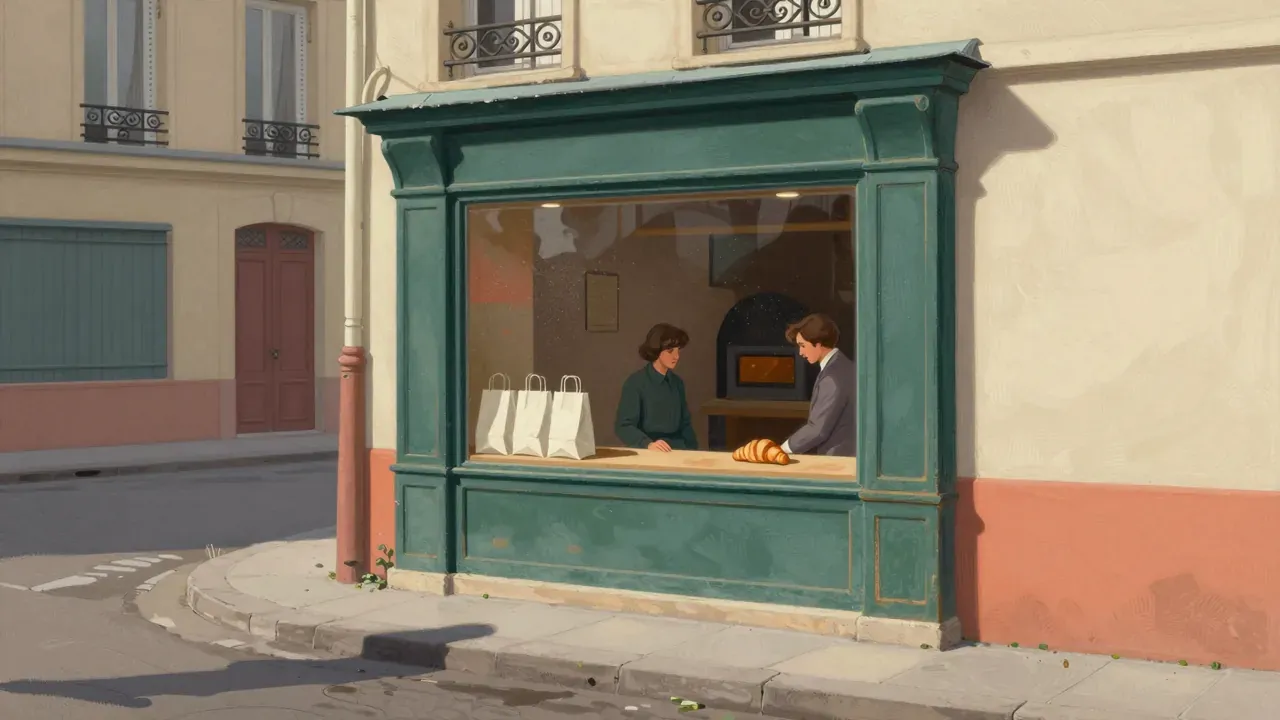
Éric Rohmer’s 1962 short The Bakery Girl of Monceau is the first of his Six Moral Tales: a 22-minute study in male subjectivity, told via voice-over narration over static, location-shot images of Paris. A law student pursues one woman, distracts himself with another, then returns to the first — all while constructing a story in which his choices appear inevitable, noble, and coherent. There is no music, no on-set sound, no psychological exposition beyond the narrator’s own account. Its power lies in the precision of its restraint.

13:00

The Ballad of Gregorio Cortez

Robert Milton Young · 1982

Robert Milton Young’s 1982 biographical Western follows Gregorio Cortez, a Mexican-American farmer wrongly accused after a fatal misunderstanding in 1901 Texas. Starring Edward James Olmos and shot on authentic locations—including the real Gonzales courthouse—the film unfolds with documentary restraint, charting twelve years of trials and imprisonment. Its strength lies in structural clarity and historical fidelity; its limitation, in emotional distance. Preserved by the Library of Congress in 2022, it is a rigorous, unsentimental account of jurisdictional violence on the US-Mexico border.

13:00

The Ballad of Narayama

Keisuke Kinoshita · 1958

Keisuke Kinoshita’s 1958 adaptation of Shichirō Fukazawa’s story presents the fictional practice of ubasute — abandoning elders on Mount Narayama — not as barbarism but as a disciplined, communal rite. Stylised like kabuki theatre, with stark black-and-white cinematography by Tatsuo Suzuki and a restrained, chant-like score by Ichirō Saitō, the film follows Orin (Kinuyo Tanaka) in her final month before ascent. Its power lies in formal unity and moral austerity, refusing psychology or judgement in favour of ritual precision. Though divisive at Venice in 1958, it has since been recognised as a landmark of Japanese arthouse cinema.

13:00

The Bank Dick

Edward F. Cline · 1940

Directed by Edward F. Cline and written by W. C. Fields under a pseudonym, The Bank Dick (1940) follows Egbert Sousé, a chronically intoxicated Lompoc resident who stumbles into bank security work after foiling a robbery by accident. Built around Fields’s signature blend of verbal evasion, physical timing and moral indifference, the film favours set-piece gags over narrative cohesion. Milton Krasner’s straightforward cinematography and Arthur Hilton’s clean editing serve the performance without embellishment. Though its plot contrivances and thin supporting roles show strain, its endurance lies in Fields’s unyielding command of comic causality — a masterclass in how to be funny without ever trying to be liked.

13:00

The Baron of Arizona

Samuel Fuller · 1950

Samuel Fuller’s 1950 film tells the true-ish story of James Reavis, a conman who forged documents to claim the Arizona Territory as his personal fiefdom. Starring Vincent Price as the fastidious fraudster, it unfolds as a procedural drama of paper, precedent, and institutional hesitation — less a Western than a forensic study of how authority is manufactured, authenticated, and eventually unmade.

13:00

The Beaches of Agnès

Agnès Varda · 2008

The Beaches of Agnès is a 2008 French documentary essay directed by Agnès Varda, in which she revisits places, people and objects from her life to mark her eightieth birthday. Using mirrors on beaches, stills, home movies, and everyday artefacts, she builds a portrait that privileges texture over timeline, presence over exposition. Shot and edited with Hélène Louvart and Marie-Josèphe Yoyotte, with music by Joanna Bruzdowicz, it won the César Award for Best Documentary in 2009.

13:00

The Beales of Grey Gardens

Albert Maysles, David Maysles · 2006

Assembled from footage shot for the 1975 documentary Grey Gardens but left unused for over thirty years, The Beales of Grey Gardens (2006) offers a slower, denser immersion in the East Hampton home of ‘Big’ and ‘Little’ Edie Beale. Directed by Albert and David Maysles and edited by Ian Markiewicz, it deepens rather than reinterprets the original — showing more of the mother-daughter dynamic, their caretaker Jerry, friend Lois Wright, and the ever-present cats, including the origin of the famous hallway fire. With no narration or context, it trusts observation over exposition.

13:00

The Beast

Bertrand Bonello · 2023

Bertrand Bonello’s The Beast follows Gabrielle across three lifetimes — 1910 Paris, 2014 Los Angeles, and 2044, where AI mandates emotional purification — to trace how dread and desire recur as physiological patterns, not psychological choices. Léa Seydoux and George MacKay anchor a formally precise, emotionally austere film that refuses catharsis in favour of cumulative resonance.

13:00

The Beat That My Heart Skipped

Jacques Audiard · 2005

Jacques Audiard’s 2005 drama follows Thomas Seyr, a Parisian real estate enforcer who attempts to rebuild his life around concert piano after his mother’s death and his father’s murder. Romain Duris trained intensively for the role, playing his own piano sequences. The film reframes the 1978 American original Fingers through French social realism, emphasising physical discipline, linguistic barriers, and the uneasy continuity between violence and artistry.

13:00

The Big Boss

Lo Wei · 1971

Bruce Lee’s 1971 debut for Golden Harvest, filmed in rural Thailand, establishes his screen persona through disciplined physicality rather than dialogue or psychology. Directed by Lo Wei with functional clarity, it tells a simple revenge story among Chinese migrant workers, using sparse settings and extended fight sequences to foreground Lee’s stamina, timing and presence. Its strengths lie in authenticity of effort and historical significance as the catalyst for Hong Kong’s martial arts boom — not in narrative depth or thematic elaboration.

13:00

The Big Chill

Lawrence Kasdan · 1983

The Big Chill follows eight former University of Michigan students reuniting in Beaufort, South Carolina, after the suicide of their friend Alex. Over a weekend, conversations, silences, and a soul-heavy soundtrack reveal how their 1960s idealism has settled into early-1980s compromises — in love, work, and self-understanding. Directed by Lawrence Kasdan and shot by John Bailey, it relies on ensemble performance and atmospheric craft rather than plot mechanics. Though its portrait of baby boomer disillusionment remains culturally resonant, its structural gaps and tonal consistency divide opinion. Selected for the National Film Registry in 2025, it endures as a study in emotional realism over narrative resolution.

13:00

The Bitter Tears of Petra von Kant

Rainer Werner Fassbinder · 1972

Rainer Werner Fassbinder’s 1972 chamber drama confines itself to one Bremen apartment, tracing the rise and collapse of fashion designer Petra von Kant’s obsessive relationship with younger woman Karin Thimm. With an all-female cast and static, theatrical staging, it uses repetition, framing and silence to dissect codependency, class, and the violence of care — not as psychology, but as architecture.

13:00

The Black Stallion

Carroll Ballard · 1979

Carroll Ballard’s 1979 adaptation of Walter Farley’s novel follows a boy shipwrecked with a wild black stallion, their bond forged in silence and survival on a deserted island, then tested in the high-stakes world of American horse racing. Shot by Caleb Deschanel and scored by Carmine Coppola, it favours duration, texture, and restraint over exposition or sentiment.

13:00

The Blade

Tsui Hark · 1995

Tsui Hark’s 1995 The Blade is a deliberately abrasive, tactile reworking of the one-armed swordsman trope. Vincent Zhao plays a blacksmith who loses his arm seeking vengeance, then remakes himself — and his broken sword — through embodied trial rather than tradition. Shot with frenetic close-ups and saturated gels, edited with jagged urgency, and scored with percussive austerity, it prioritises physical truth over narrative clarity. Though structurally loose in places and narratively opaque at times, its power lies in its insistence on weight, friction, and the quiet dignity of walking away.
13:00

The Blob

Irvin Yeaworth · 1958

The Blob is a concise, location-bound science fiction horror film from 1958, directed by Irvin Yeaworth and starring Steve McQueen in his first leading role. It follows a gelatinous extraterrestrial organism that crashes to Earth near a Pennsylvania town, consumes people, grows larger, and is ultimately contained — not destroyed — by extreme cold. Made on a modest budget with practical effects and regional filming, it prioritises escalation, spatial logic, and collective response over psychology or allegory. Its enduring appeal lies in its structural rigour, tonal consistency, and refusal to over-explain.

13:00

The Blood of a Poet

Jean Cocteau · 1932

Jean Cocteau’s 1932 debut feature is a 55-minute avant-garde fantasy structured in four discontinuous sections. An artist sketches a mouth that migrates to his palm, then to a statue’s lips; he passes through a mirror into a hotel where he is instructed to shoot himself; a marble snowball kills a boy; a card game unfolds over the corpse while a guardian angel absorbs him and departs. Shot by Georges Périnal, scored by Georges Auric, and narrated by Cocteau, it avoids psychology and narrative logic in favour of symbolic recurrence and formal rigour. Financed by Charles de Noailles, it was delayed over fears of blasphemy and remains the first part of Cocteau’s Orphic Trilogy.

13:00

The Bohemian Life

Aki Kaurismäki · 1992

Aki Kaurismäki’s 1992 French-language drama relocates Murger’s bohemian Paris to the late twentieth century, following a poet, painter and composer as they share rent, meals and misfortune. Shot in black-and-white with static frames and minimal scoring, it treats artistic survival, migration and mortality with unwavering restraint. Matti Pellonpää and André Wilms won European Film Awards for their understated performances.

13:00

The Bread and Alley

Abbas Kiarostami · 1970

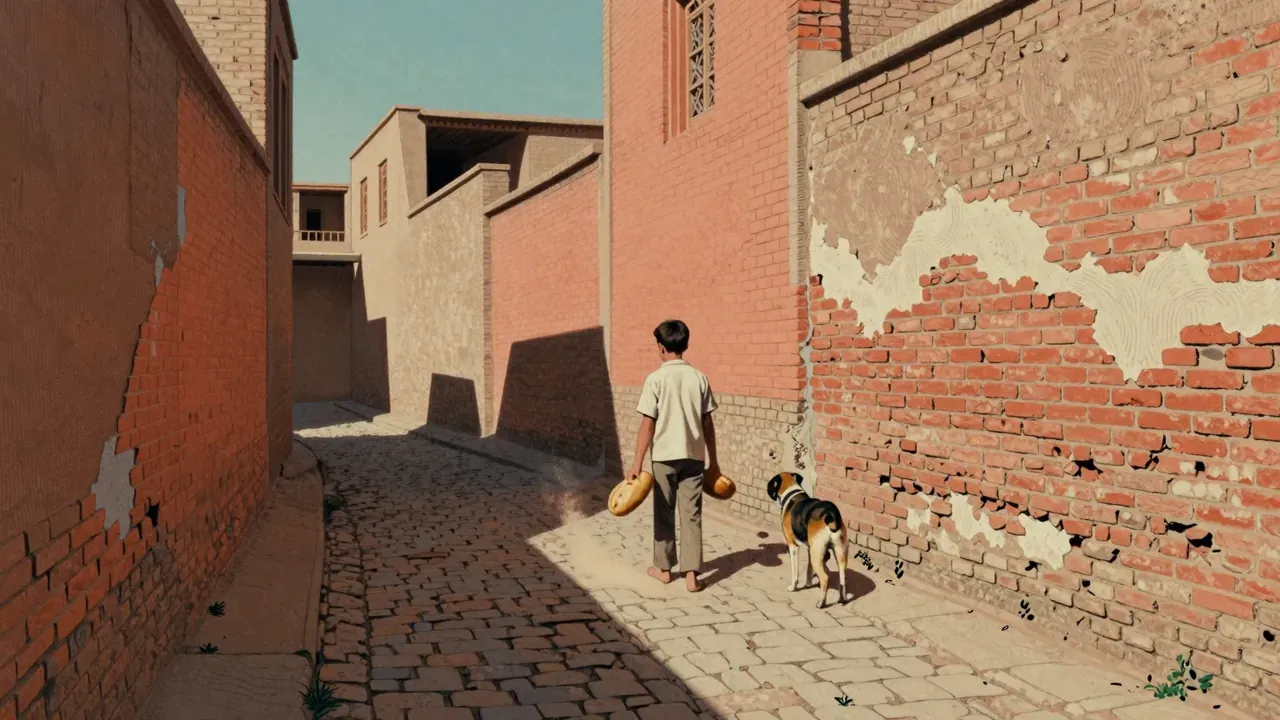
Abbas Kiarostami’s 1970 debut is a ten-minute black-and-white Persian-language short set in a Tehran alley. A boy carrying bread is blocked by a barking dog, improvises a way past, and is followed home by the same animal — only for a second boy with yogurt to trigger the same bark moments later. Shot in static, unadorned takes, it offers no exposition, no score, no close-ups, and no moral framing. Its power lies in its exactness: a study in singular decisions, shared space, and the fragility of cause-and-effect.

13:00

The Breakfast Club

John Hughes · 1985

John Hughes’ 1985 drama confines five high school students to a single library for a Saturday detention. With no subplots, no flashbacks, and minimal camera movement, it builds intimacy through duration, silence, and incremental confession. Thomas Del Ruth’s flat lighting and Dede Allen’s patient editing keep focus on performance and gesture. Its power lies in specificity — not universality — and its endurance rests on emotional precision, not narrative momentum.

13:00

The Breaking Point

Michael Curtiz · 1950

Michael Curtiz’s 1950 adaptation of To Have and Have Not stars John Garfield as Harry Morgan, a struggling fishing-boat captain drawn into smuggling and armed robbery to save his family. Shot by Ted McCord in Newport Beach, the film strips away noir glamour to focus on economic pressure, moral compromise, and bodily consequence. Patricia Neal plays his wife Lucy; Phyllis Thaxter is Leona Charles. Ranald MacDougall’s script moves with procedural rigour, and Howard Jackson’s score remains subdued. It ends not with resolution but with Harry critically wounded, his fate left open.

13:00

The Bridge

Bernhard Wicki · 1959

A 1959 West German war drama following seven teenage boys drafted into the Volkssturm during the final days of World War II. Assigned to defend a strategically irrelevant bridge near their hometown, they hold their position without orders, without support, and ultimately without survival. Directed by Bernhard Wicki from a novel by Gregor Dorfmeister, the film avoids rhetoric in favour of stark cause-and-effect, using restrained performances, muted cinematography, and deliberate pacing to convey the futility and horror of ideological surrender to youth.

13:00

The Brood

David Cronenberg · 1979

David Cronenberg’s 1979 body horror film follows a man investigating brutal murders tied to his ex-wife’s experimental therapy. Conceived amid Cronenberg’s own custody battle, it externalises psychological rupture as literal, parthenogenetic offspring — dwarf-like creatures born from suppressed rage. Shot in Toronto with clinical restraint, it privileges coherence over catharsis, using flat lighting, sparse scoring, and unadorned performances to sustain dread. Its power lies in its refusal to explain, reassure, or resolve.

13:00

The Browning Version

Anthony Asquith · 1951

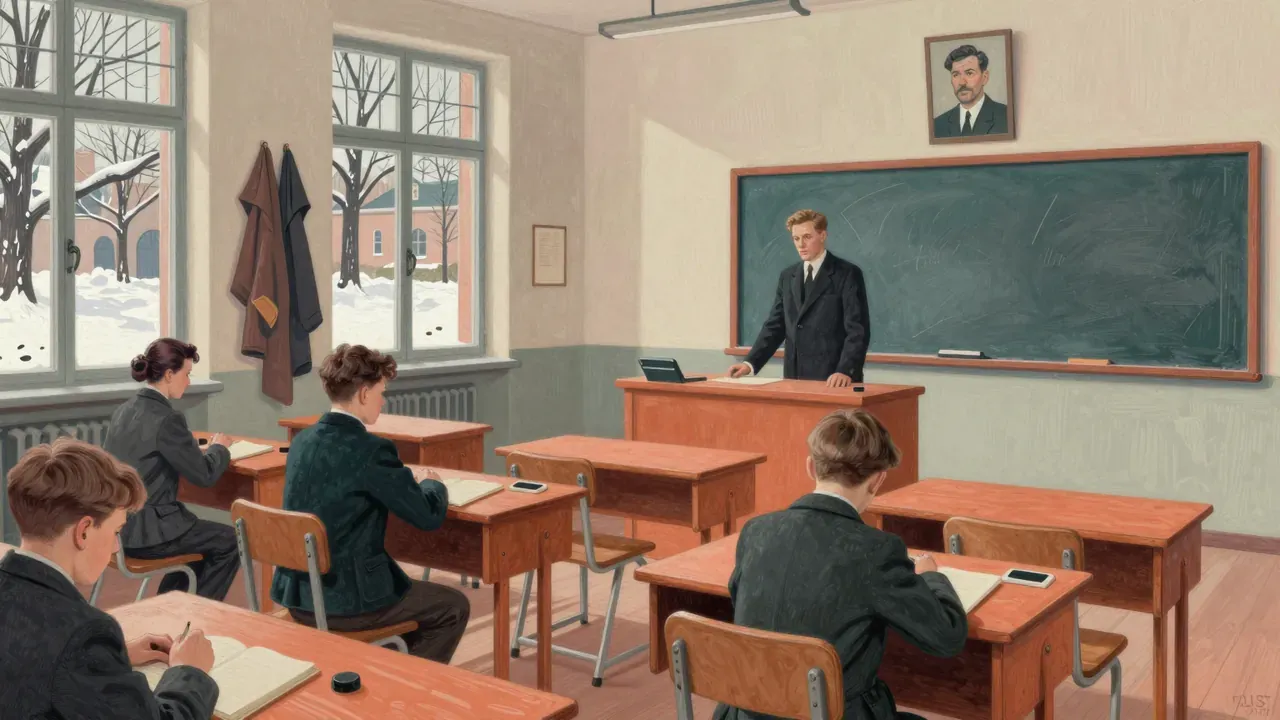
Anthony Asquith’s 1951 adaptation of Terence Rattigan’s play follows classics teacher Andrew Crocker-Harris through his final day at a Dorset boarding school. Ill, estranged, and denied a pension, he endures professional obsolescence and marital betrayal — until a student’s unexpected gift cracks open his carefully maintained composure. Shot at Pinewood with exteriors at Sherborne School, the film relies on Michael Redgrave’s contained performance, Desmond Dickinson’s muted cinematography and Arnold Bax’s sparse score to trace the slow, dignified unravelling of a man who has spent his life translating others’ emotions, never his own.

13:00

The Burmese Harp

Kon Ichikawa · 1956

Kon Ichikawa’s 1956 drama follows Japanese soldiers in Burma at the end of World War II, narrowing to one man’s solitary mission to bury the dead and become a Buddhist monk. Adapted from Michio Takeyama’s novel by Natto Wada, it uses monochrome restraint, deliberate pacing and Akira Ifukube’s haunting score to explore grief, duty and spiritual transformation — not as transcendence, but as daily labour.

13:00

The Cameraman

Edward Sedgwick, Buster Keaton · 1928

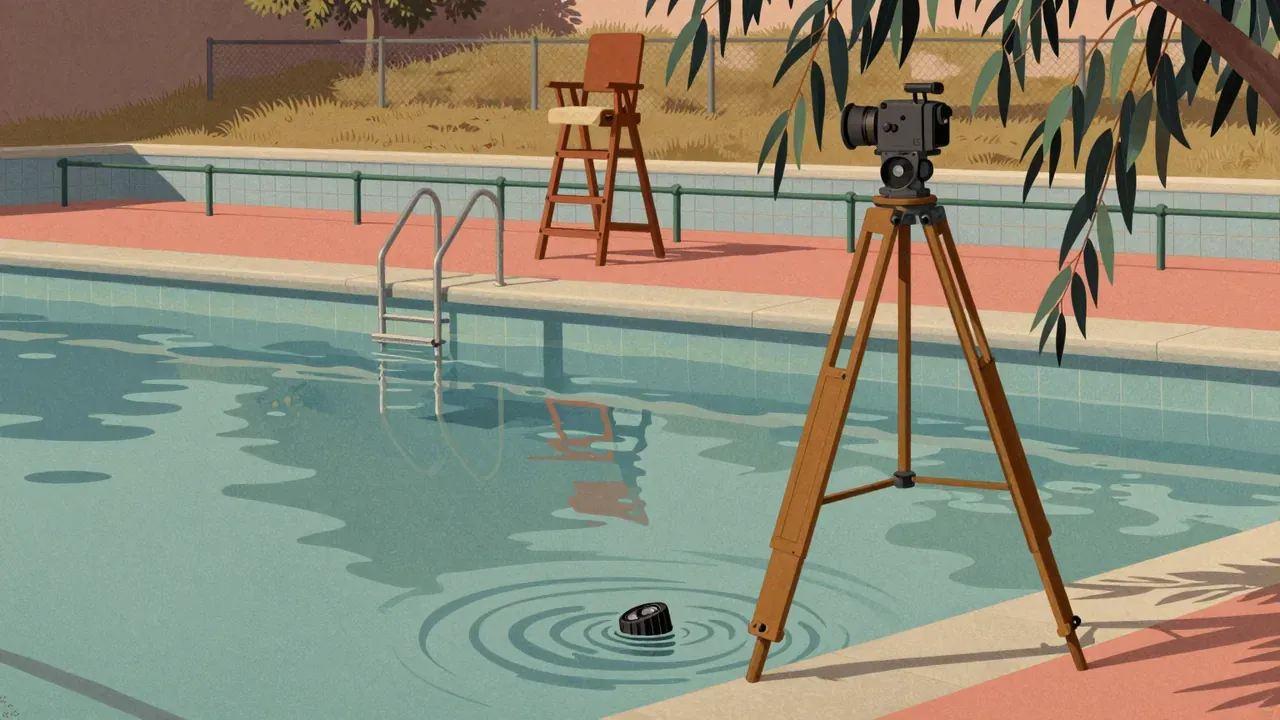
Buster Keaton’s 1928 MGM debut follows a tintype photographer who buys a film camera to impress a newsreel secretary, then stumbles into real danger filming a Tong War in Chinatown. With Elgin Lessley’s crisp cinematography and Hugh Wynn’s taut editing, it builds comedy from spatial logic and cumulative consequence — not quips or sentiment. Though made under tightening studio control, it remains one of Keaton’s most lucid, tightly constructed films.

13:00

The Canterbury Tales

Pier Paolo Pasolini · 1972

Pier Paolo Pasolini’s 1972 film adapts eight of Chaucer’s tales as a vibrant, painterly, and deliberately anachronistic re-creation of medieval England. Shot in England with English dialogue later dubbed into Italian, it features a mix of British actors and non-professionals, and draws visual inspiration from Bosch, Bruegel, and Antonello da Messina. The film foregrounds bodily experience, class conflict, and clerical hypocrisy, rejecting literary fidelity in favour of ideological and sensual immediacy.

13:00

The Celebration

Thomas Vinterberg · 1998

Thomas Vinterberg’s 1998 debut, the first Dogme 95 film, follows a Danish family’s birthday gathering where a son publicly accuses his father of childhood sexual abuse. Shot on Mini-DV with no artificial lighting or post-sync sound, it uses radical formal restraint to focus on performance, gesture and the banality of complicity. The film won the Cannes Jury Prize and numerous Nordic and European awards.
13:00

The Chess Game of the Wind

Mohammad Reza Aslani · 1976

Mohammad Reza Aslani’s 1976 Persian-language drama unfolds over nine days in a Qajar-era Tehran mansion following the death of its matriarch. Paralysed heiress Aghdas, her stepfather Hadji Amoo, and the household staff circle one another in a tightening web of inheritance, deception, and suppressed desire. Shot by Houshang Baharlou in deep chiaroscuro and edited with precise, rhythmic restraint, the film uses architecture, light, and silence as primary narrative tools. Rediscovered in 2014 and restored for a 2020 re-release, it stands as a singular achievement of Iranian arthouse cinema—dense, deliberate, and unflinchingly austere.

13:00

The Children Are Watching Us

Vittorio De Sica · 1944

Vittorio De Sica’s 1944 drama follows young Pricò as he observes his mother’s repeated departures and his father’s silent collapse. Shot by Romolo Garroni with austere precision and scored sparingly by Renzo Rossellini, it treats childhood not as innocence but as unblinking witness. There are no villains, no explanations — only cause, effect, and the unbearable clarity of a child’s gaze.

13:00

The Choice

Idrissa Ouédraogo · 1986

Idrissa Ouédraogo’s 1986 debut, shot in Mooré in rural Burkina Faso, follows a peasant family navigating pregnancy, death, banishment, and reconciliation. Its quiet, observational style resists moral framing, instead anchoring drama in agricultural labour, kinship duty, and the stark contrast between village and city. Though structurally uneven — particularly in its handling of an urban subplot — it remains a rigorous, humane study of constraint as social condition.
13:00

The Chorus

Abbas Kiarostami · 1982

The Chorus (1982) is Abbas Kiarostami’s early Iranian short film in Persian, observing a group of children in a single location with fixed framing and minimal intervention. It explores collective presence through duration, repetition, and silence — not narrative or psychology — making it a foundational work of observational, arthouse drama.

13:00

The Circus

Charlie Chaplin · 1928

Charlie Chaplin’s 1928 silent comedy follows the Little Tramp’s accidental rise and quiet fall within a struggling circus. Hired for his unintentional chaos, he becomes indispensable — then obsolete — in a film that treats performance as labour, laughter as accident, and solitude as structural inevitability. Shot and edited by Chaplin, with music he composed, it is both a technical masterclass and a quiet self-portrait made at the dawn of sound.