The shape of longing
Brief Encounters is a Soviet-era romantic comedy-drama that attempts to map the quiet dissonance between idealism and endurance in women’s emotional lives. It does not pursue farce or satire, nor does it treat love as a narrative problem to be solved. Instead, it holds two parallel attachments — one youthful and untested, the other long-suffering and institutionally anchored — in sustained, unsentimental proximity. Muratova’s direction treats the domestic sphere not as backdrop but as contested terrain: a flat in Odessa becomes a stage for deferred desire, misaligned timetables, and the physical labour of waiting. The film avoids psychological exposition; motivation remains implied through gesture, silence, and spatial arrangement. Its ambition lies in structural restraint: no voiceover, no flashbacks, no explanatory dialogue. It asks the viewer to register emotional weight not through confession but through duration — how long a woman stands at a window, how many times she sets and clears a table, how the light shifts across a corridor wall over several days. This is not realism as documentation, but realism as accumulation.
The architecture of absence
The story unfolds in alternating, non-parallel chapters — Nadya’s arrival in the city, her work at the tea house, her infatuation with Maksim; then Valya’s solitary routines, her telephone calls, her preparations for his return. Gennadi Karyuk’s cinematography keeps interiors softly lit but never warm, favouring medium shots that frame characters within doorways or behind glass partitions, reinforcing separation even in shared space. Vladimir Vysotsky’s Maksim appears only intermittently, always in motion — arriving by train, tuning his guitar, packing his geologist’s kit — his charm undercut by absence rather than undermined by it. Nina Ruslanova’s Nadya moves with hesitant physicality: her hands linger on teacups, her gaze drops when spoken to, her departure is wordless and unannounced. Kira Muratova’s Valya is tightly coiled, her authority expressed through precise gestures — adjusting a curtain, folding laundry, arranging cutlery — all performed with a gravity that refuses melodrama. Oleg Karavaychuk’s score uses sparse piano motifs, recurring like half-remembered phrases, never underscoring emotion but marking time’s passage.
The grammar of stillness
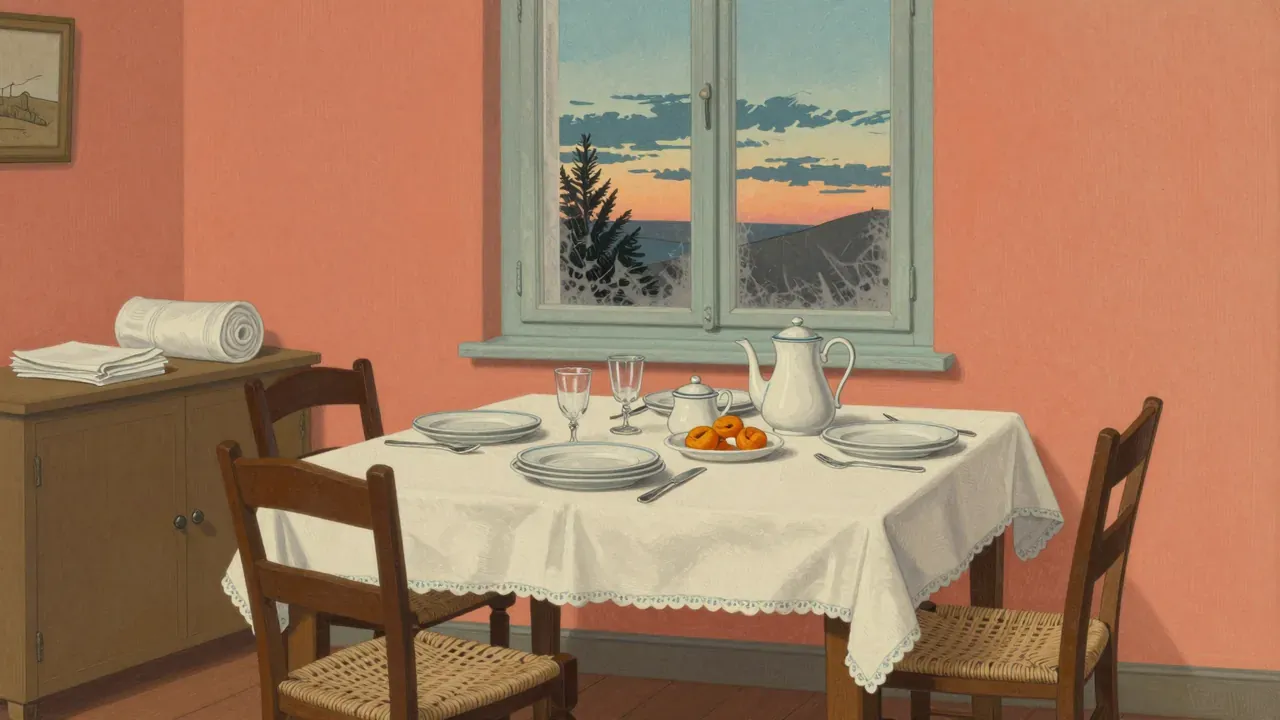
What lands is the film’s refusal to resolve its central tension through confrontation or revelation. The moment Nadya lays the festive table for Maksim’s return — not for herself, but for Valya — carries no irony, no bitterness, no resignation. It lands because it is enacted without commentary: the act itself is the argument. The editing, too, lands — cuts are held just long enough to register fatigue, hesitation, or unspoken recognition, never so long as to invite interpretation. Ruslanova’s performance lands in small shifts: the way her breath catches when Maksim first speaks to her, the slight slackening of her shoulders when she realises Valya has no idea who she is. Muratova’s own performance lands in stillness — Valya’s face rarely opens, yet her exhaustion is legible in the set of her jaw, the tightness around her eyes after a phone call ends abruptly. The film’s structure lands because it mirrors lived experience: love is not a single event but a series of arrivals and absences, seen from different rooms, heard through different walls, felt at different speeds.
The man who walks through rooms
What does not land is the framing of Maksim as an object of affection rather than a character with interiority. He remains a cipher — charming, mobile, musically gifted — but his motivations, contradictions, and vulnerabilities are withheld, not suggested. This is not ambiguity by design, but omission: the script gives him no private scene, no monologue, no moment of doubt or reflection. As a result, his relationships feel lopsided — not unequal by circumstance, but structurally unbalanced. The hairdresser, manicurist, and fortune-telling neighbour appear in vignettes that promise social texture but deliver little beyond local colour; their presence feels decorative rather than dialectical. Some transitions between Nadya’s and Valya’s storylines lack tonal continuity — a shift from bustling tea-house energy to Valya’s hushed flat can feel abrupt rather than deliberate. The film’s resistance to exposition works against itself in one key instance: we never learn why Nadya leaves the tea house, or why Valya hires a stranger as a maid without reference or interview. These gaps read less as ellipsis and more as underwritten logic.
The weight of ordinary things
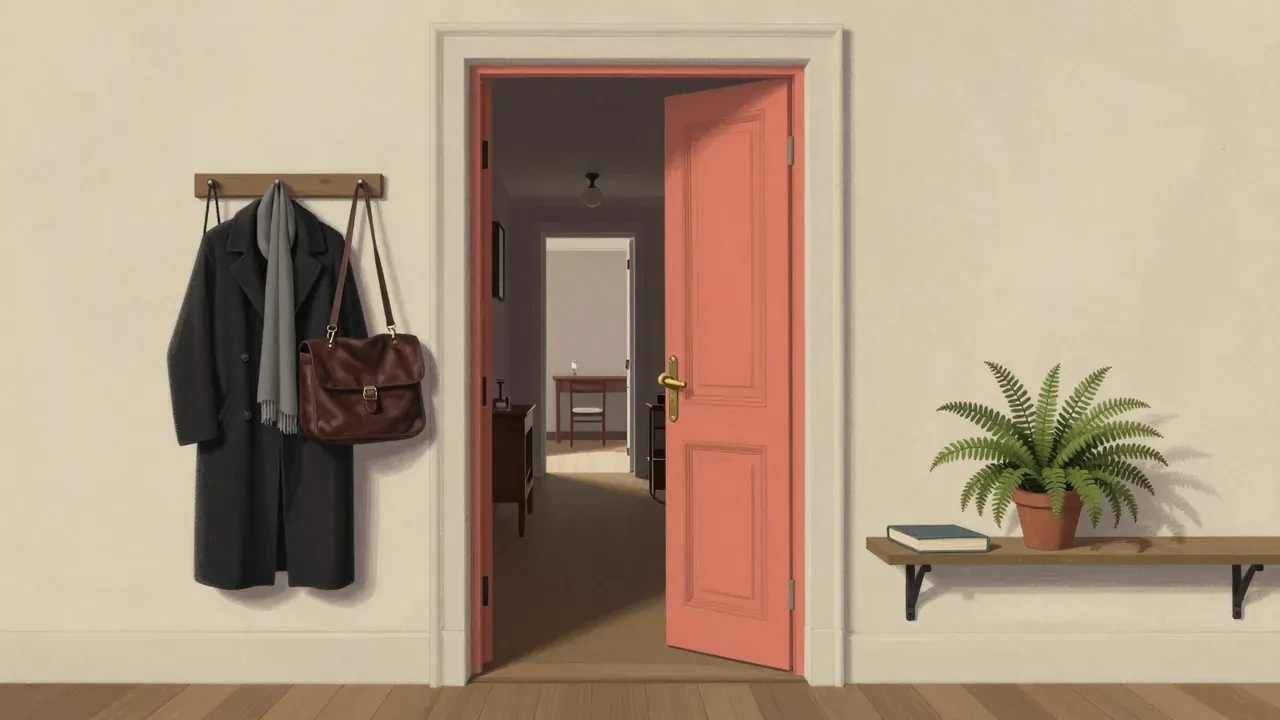
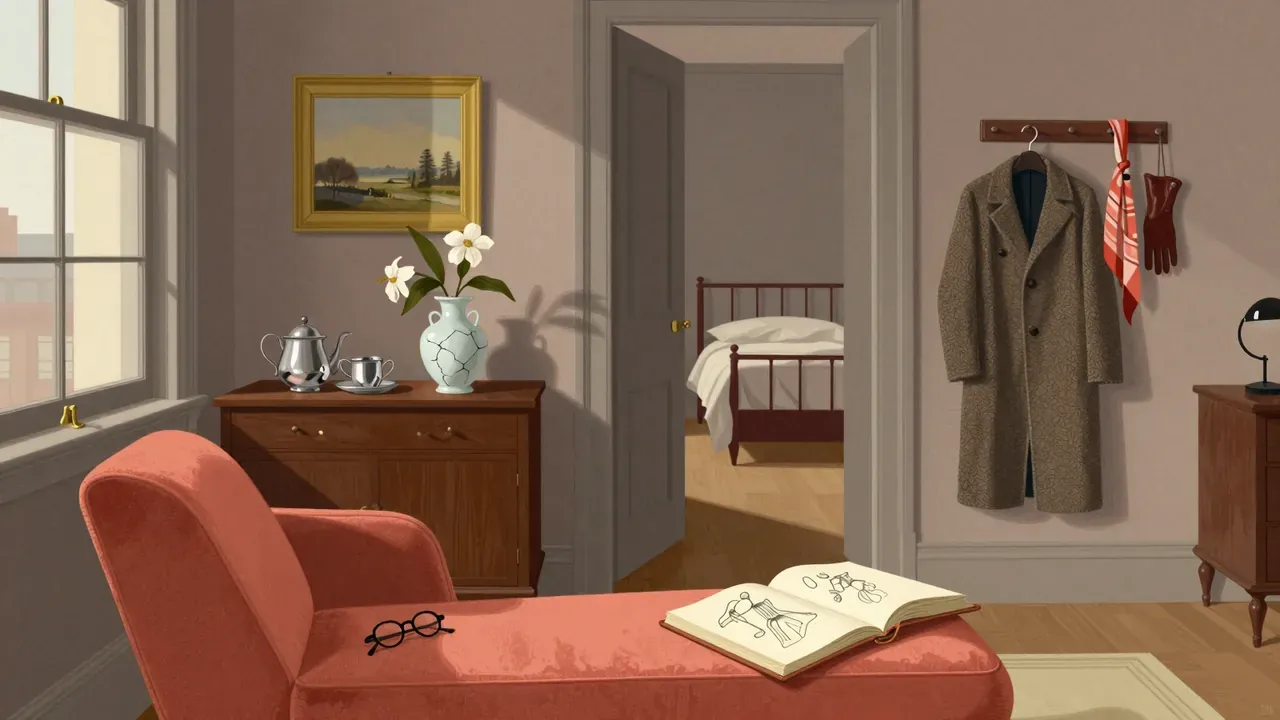
The themes that matter are endurance as gendered labour, the asymmetry of emotional investment, and the quiet violence of routine. The film treats waiting not as passivity but as sustained action — Valya’s life is measured in prepared meals, cleaned floors, and unanswered calls. Nadya’s arc is not about gaining agency but recognising its limits: her decision to leave is not triumphant but calibrated, a withdrawal from a structure she cannot enter. Class surfaces not through dialogue but through spatial hierarchy — Nadya sleeps in a narrow room off the kitchen, while Valya occupies the main bedroom; their shared meals happen at separate times, with different utensils. Time itself is thematic: geological time (Maksim’s expeditions), bureaucratic time (Valya’s council work), and subjective time (Nadya’s first weeks in the city) run at incompatible speeds, making mutual understanding structurally impossible. The film also treats domestic space as ideological — not neutral shelter, but a site where power, memory, and expectation are physically arranged and rearranged daily.
The threshold you do not cross
This film is for viewers who value compositional precision over exposition, who find emotional resonance in withheld information, and who accept that some relationships exist only in the negative space between people. It rewards attention to rhythm, repetition, and the weight of unspoken decisions. It is not for those who require narrative propulsion, clear moral frameworks, or psychological closure — the film offers none of these. Those expecting Vysotsky to dominate the screen will be disappointed; his role is deliberately peripheral. Viewers accustomed to Western romantic structures may find the ending unsatisfying not because it is ambiguous, but because it refuses catharsis entirely. A viewer who values character-driven drama but insists on biographical plausibility may balk at the unexplained hiring of Nadya or the absence of any conversation between the two women about Maksim. Change the film’s commitment to silence and spatial logic, and it becomes another kind of story — but then it would not be this one.
The light before departure
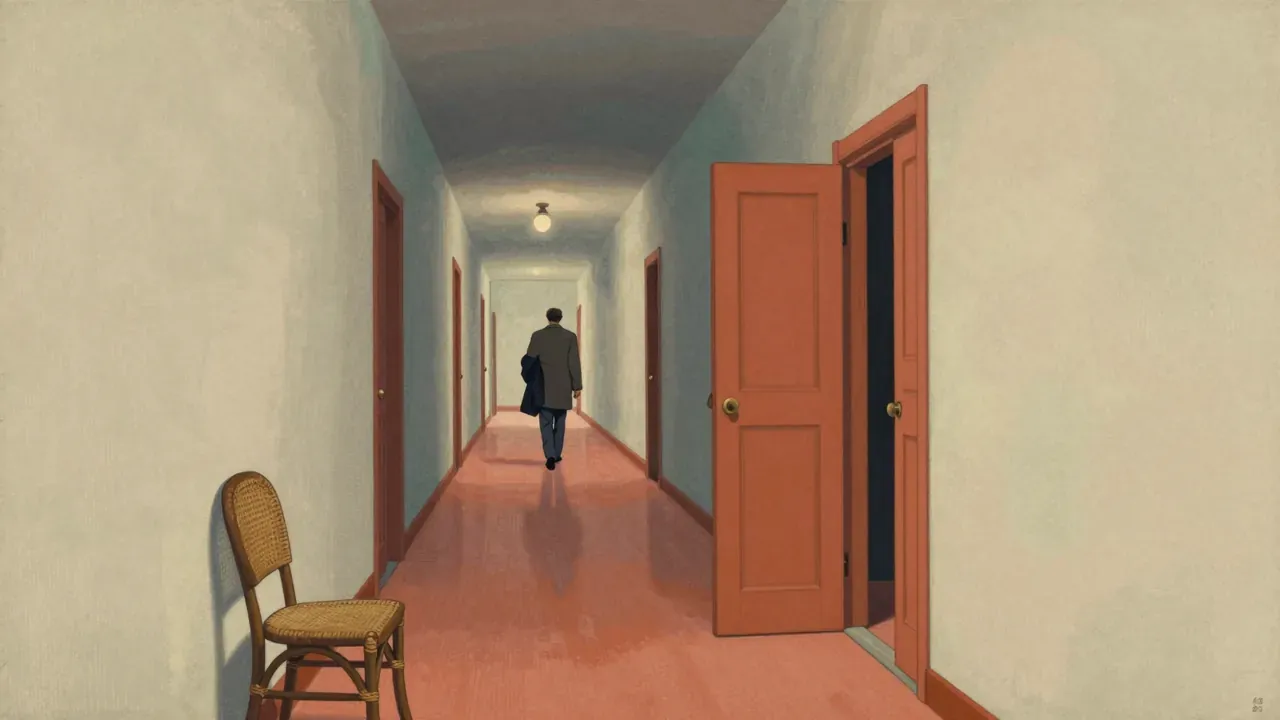
Yes, it is worth your evening — provided you watch it without expectation of resolution or reward. Its ninety-six minutes unfold with the quiet insistence of a clock ticking inside a closed room: steady, unemphatic, impossible to ignore. It demands nothing but attention to what is shown, not what is said — a rare discipline in cinema, especially in 1967. Those who find meaning in restraint, in the cumulative effect of repeated gestures, in the dignity of unremarkable choices, will leave with something solid: not a feeling, but a calibration. Others may feel stranded, mistaking economy for emptiness. That disagreement is legitimate — the film does not court universal appeal. But its value lies precisely in its refusal to translate its terms. Watch it once for the structure, again for the silences, and a third time for the way the light falls across Valya’s hallway on the morning Nadya leaves. That final image stays because it says everything the film chooses not to name.