Three Runs, One Platform
Blind Chance is a structural experiment in narrative determinism: three parallel lives for the same man, each pivoting on a single physical interaction at Łódź Fabryczna station. Krzysztof Kieślowski does not ask whether history is shaped by ideology, faith or indifference — he shows how all three emerge from the same nervous system reacting to spilled beer, a delayed breath, a stumble. The film’s ambition is not psychological realism but moral cartography: mapping how political identity forms not through choice alone, but through sequence, timing and proximity. It treats Poland’s 1980s as a pressure chamber where every decision compresses into a binary — join, resist, withdraw — yet refuses to assign virtue or blame to any path. The structure is its thesis: no version of Witek is authorial fantasy or ideal type; each is legible, contingent, and equally unmoored from control. This is not a film about fate versus free will so much as about the narrow bandwidth within which either concept can meaningfully operate. Kieślowski builds no mythology around chance — he films it as weather: ambient, unremarkable, decisive. (158 words)
The Look of It
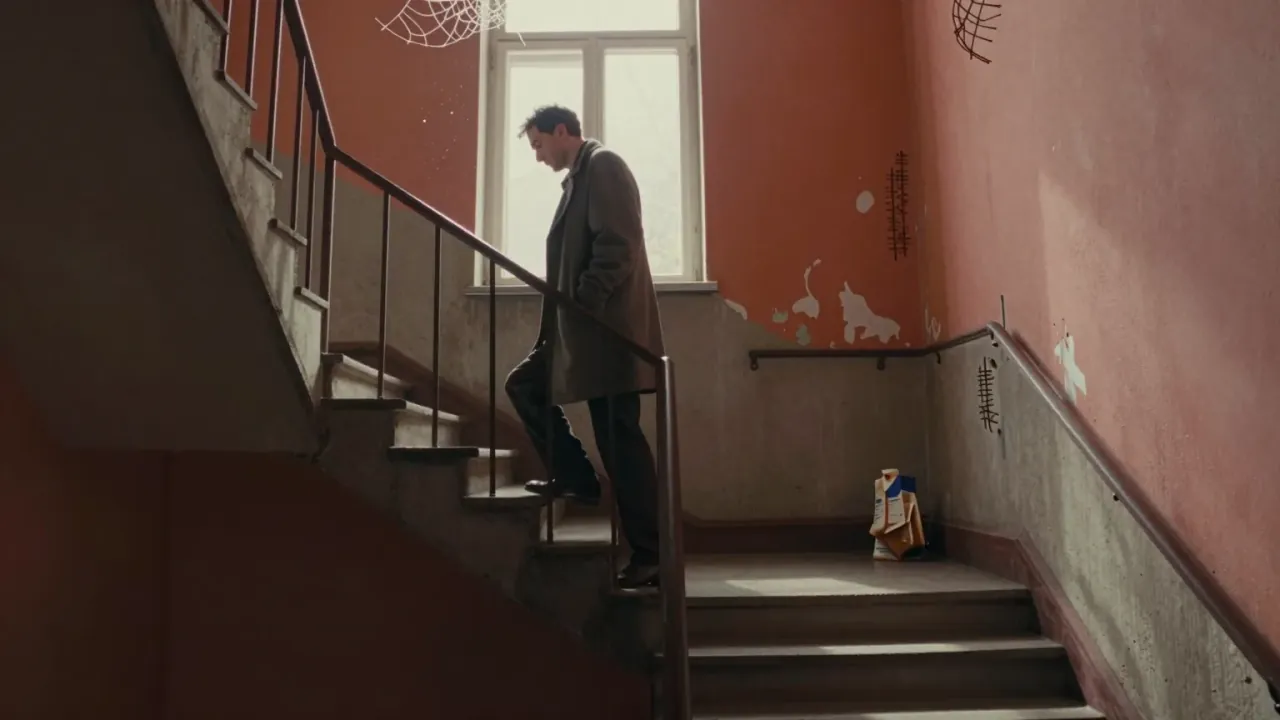
The film unfolds in three cleanly separated acts, each anchored by Bogusław Linda’s tightly coiled physicality: shoulders hunched, jaw set, eyes scanning for exits. Krzysztof Pakulski’s cinematography avoids flourish — tracking shots follow Witek’s run with documentary restraint, interiors lit with flat, functional neutrality. Wojciech Kilar’s score enters only at precise emotional thresholds: a low cello pulse when Witek sees Czuszka again; silence stretched thin before the airport explosion. Elżbieta Kurkowska’s editing sustains rhythmic parity across versions — same shot lengths, same pauses, same cuts to black — making divergence feel procedural, not dramatic. Performances are calibrated to social function: Tadeusz Łomnicki’s Werner speaks in cadenced party jargon; Adam Ferency’s priest delivers scripture without inflection; Monika Gozdzik’s Olga moves with quiet, unperformed ease. There is no ‘breakout’ moment, no soliloquy — character emerges through bureaucratic encounters, hospital corridors, passport interviews. Even the crucifix and the party badge appear as props in institutional space, not symbols. The craft serves repetition, not revelation. (159 words)
What Lands
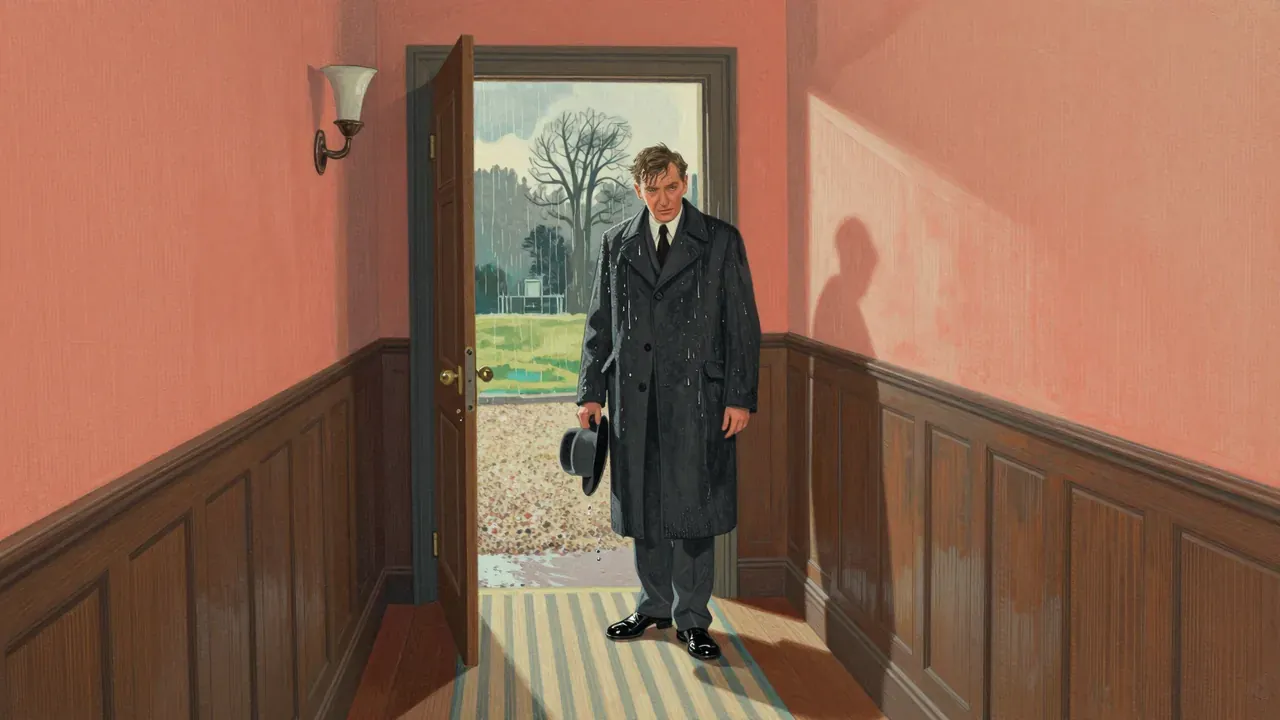
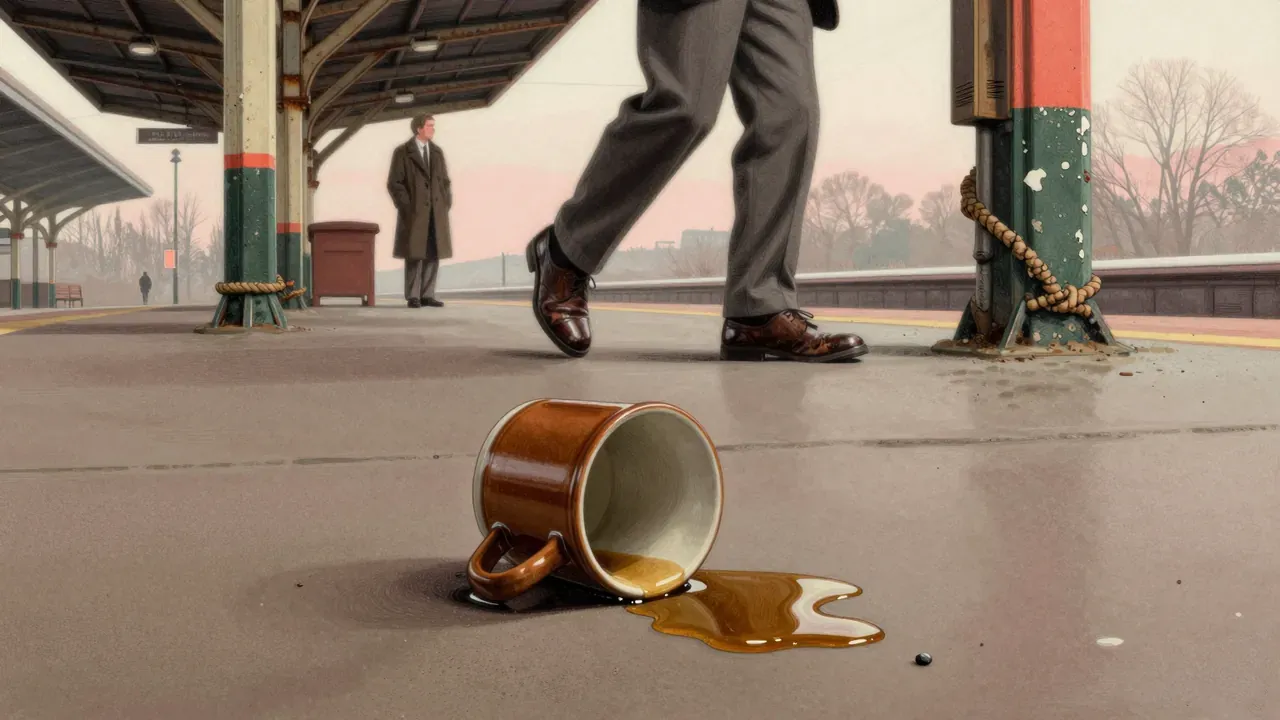
What lands is the cumulative weight of small, irreversible turns: the mug slipping from the drinker’s hand, the guard arriving two seconds earlier or later, the glance held a beat too long on Olga’s face. These are not plot devices but tactile facts — filmed with the patience of someone noting rainfall on pavement. The film’s power resides in its refusal to let any outcome feel like destiny: the Communist Witek is neither caricature nor convert, just a man who signs a form after a walk in the park; the baptised Witek does not find God in epiphany but in the ritual’s texture — water, candlelight, damp wool. The final explosion is not irony but arithmetic: a plane that taxis, lifts, then fails — a mechanical event, not a moral verdict. Even the hospital floor, where a bleeding person is dragged early on, reappears in all three versions, unchanged, indifferent. That consistency — of place, of light, of institutional surfaces — makes the variations in human conduct feel both fragile and inevitable. The film lands because it treats consequence as physics, not metaphor. (157 words)
Where It Stumbles
What does not land is the third scenario’s emotional resolution. Witek’s apolitical life — marriage, pregnancy, Libya lectures — functions as structural counterweight but lacks the textural friction of the other two. His refusal to sign the petition feels less like conviction than absence; his comfort in the aeroplane seat reads as narrative exhaustion rather than earned peace. The film gives him no ideological vocabulary, no internal contradiction — only a steady, unexamined course. This flattens the triptych’s symmetry: the first two paths generate tension through collision — with party doctrine, with underground secrecy — while the third generates none. The abortion of Witek’s medical vocation after his father’s death is introduced but never revisited; his teaching feels procedural, not redemptive. Likewise, the framing device — Witek screaming ‘No!’ on a plane — remains unanchored, its origin unclear until the end, and even then, its psychological logic stays opaque. The film’s rigour works against itself here: by refusing exposition, it leaves this version emotionally under-specified. (156 words)
The Weight of Surfaces
The themes that matter are not freedom or ideology in the abstract, but the material conditions under which belief takes shape: the width of a railway platform, the duration of a train’s dwell time, the soundproofing of a hospital corridor, the ink on a party application form. Blind Chance treats politics as infrastructure — something you walk through, submit to, or evade, but rarely choose. It insists that humanism is not a stance but a habit: the way Witek apologises to the beer drinker, the way he holds Olga’s hand in the hospital lift, the way he looks away from a policeman’s notebook. Religion appears not as doctrine but as embodied practice — baptismal water, the weight of a rosary, the smell of incense in a basement chapel. Even the Communist Party’s authority is shown through mundane mechanics: filing cabinets, intercom systems, the rhythm of a committee meeting. The film’s central question is not ‘what should one believe?’ but ‘what can one do, given the door that just closed behind you?’ Its humanism is architectural: built from thresholds, surfaces, and the seconds between one action and the next. (159 words)
Who It Is For
This film is for viewers who treat narrative as a tool for testing ideas, not delivering catharsis — those who find tension in repetition, clarity in restraint, and moral weight in bureaucratic detail. It rewards attention to continuity: the same bench, the same streetlamp, the same hospital gurney across all three timelines. It is not for those who require psychological exposition, emotional escalation, or narrative closure — the film offers none of these. A viewer expecting character arcs or thematic resolution will find its repetitions frustrating, its endings abrupt. Someone who values strong visual metaphors over procedural fidelity may find Pakulski’s camerawork too literal. Those drawn to Kieślowski’s later work for its spiritual resonance may be unsettled by Blind Chance’s dry, almost forensic tone. Its value lies in its refusal to flatter the audience’s desire for meaning — it presents consequence as neutral, not instructive. Change the film’s pacing or add voiceover explanation, and it becomes a different proposition entirely. (159 words)
Is It Worth Your Evening?
Yes, it is worth your evening — but only if you accept its terms: no guidance, no emphasis, no reward for loyalty beyond the slow accumulation of pattern. It demands ninety minutes of undivided attention, not as entertainment but as calibration: a chance to reset expectations about how film constructs consequence. Its power is cumulative, not immediate — the third viewing reveals what the first obscures. Those who dislike ambiguity or prefer emotional signposting will leave unsatisfied, and rightly so; this is not a failure of the film but a mismatch of contract. Its restoration as part of Martin Scorsese’s Polish Cinema series is justified: it is a foundational text for understanding how Eastern European cinema treated history not as backdrop but as architecture. Skip it if you need narrative propulsion or moral clarity. Stay for its precision — how a single frame, held two seconds longer, alters everything. (158 words)