The structure of obsession
Bad Timing is a psychological thriller built around an investigation into a woman’s suicide attempt, but its real subject is the anatomy of obsession — how two people lock into a feedback loop of desire, dependency and mutual destruction. Nicolas Roeg does not treat the affair between Alex, a psychoanalyst, and Milena, a depressive American in Vienna, as a narrative to be resolved but as a condition to be anatomised. The film’s structure mirrors clinical dissection: Inspector Netusil’s procedural framing device gives way to jagged, non-chronological fragments — flashbacks within flashbacks, repetitions with slight variations, abrupt cuts that sever cause from effect. This is not ambiguity for its own sake; it is method. Roeg and writer Yale Udoff adapt Costanzo Costantini’s Italian story not as a romance or tragedy but as a case study in eros as pathology. The title signals its central thesis: timing is not incidental but constitutive — every gesture, every silence, every sexual encounter lands at the precise moment it destabilises one more boundary. The film refuses catharsis because its characters are not moving toward resolution but deeper into stasis.
The look of it
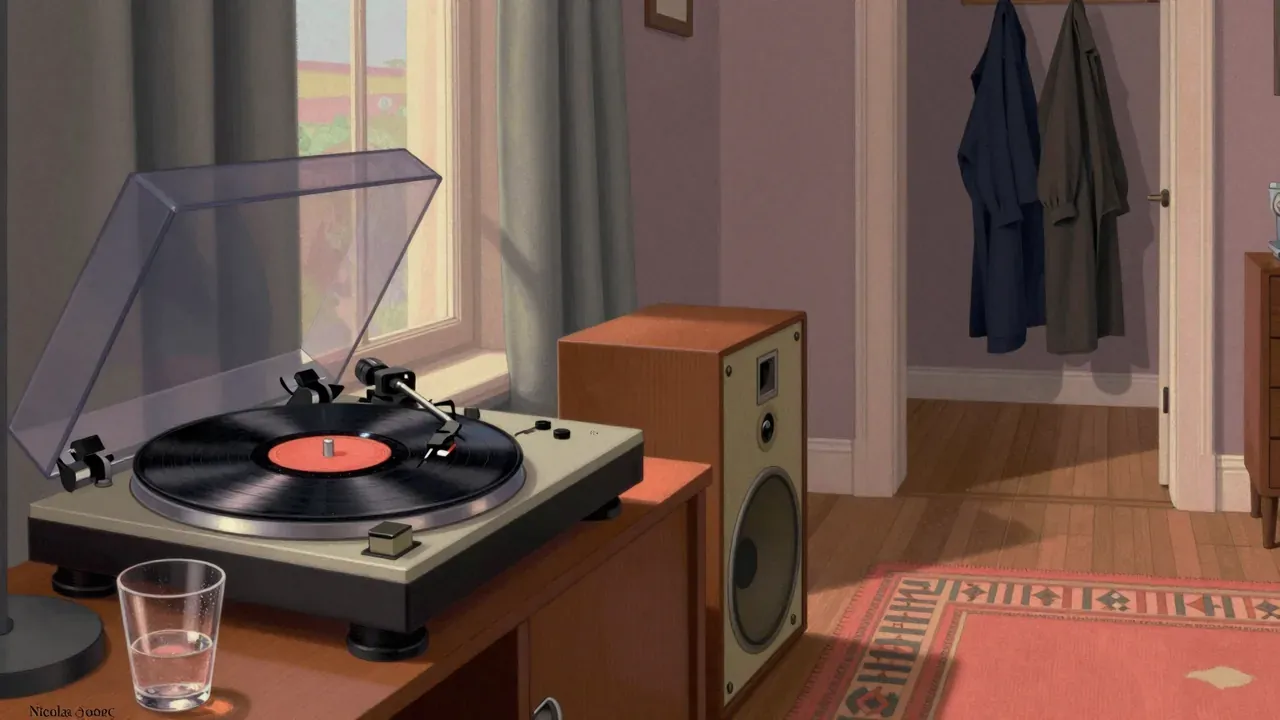
The story unfolds through Tony Lawson’s editing, which fractures chronology without obscuring logic — scenes recur with altered emphasis, dialogue overlaps across time zones, and visual motifs (a red coat, a hospital corridor, a record player) anchor meaning across discontinuities. Anthony B. Richmond’s cinematography keeps Vienna’s interiors muted and grainy, favouring tight close-ups on eyes and hands rather than establishing shots; light falls unevenly, often from below or behind, turning faces into half-shadowed masks. Art Garfunkel’s performance is physically committed and emotionally unguarded, his Alex oscillating between clinical detachment and raw need; Theresa Russell matches him with a tightly coiled vulnerability, her Milena never pitiable but always precarious. Harvey Keitel grounds the periphery as the inspector, his quiet persistence contrasting the leads’ volatility. Richard Hartley’s score avoids melody in favour of percussive unease and sparse piano phrases, while the soundtrack’s curated selections — Billie Holiday, Tom Waits, Keith Jarrett — function less as mood-setting than as temporal markers, each song anchoring a specific emotional register in the film’s fractured timeline.
The weight of the body
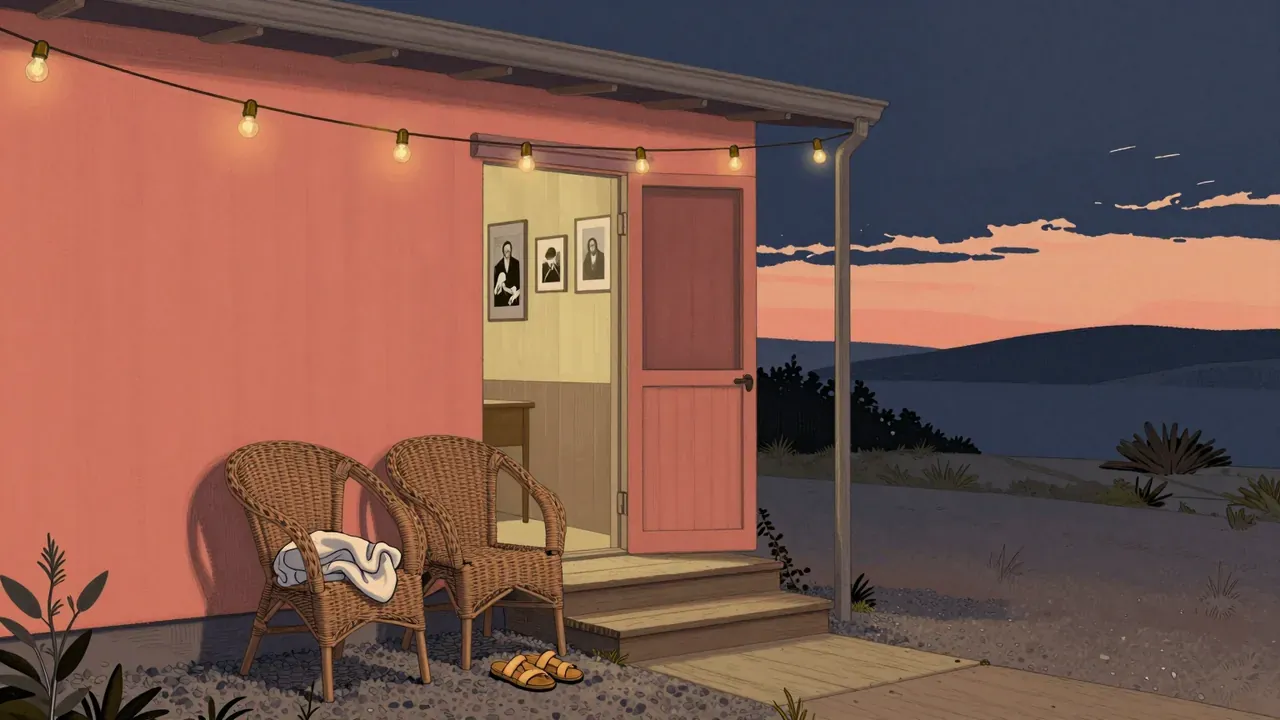
What lands is the film’s unflinching attention to physicality: the weight of a hand on a thigh, the exhaustion in a blink, the way breath catches before speech. Roeg films sex not as release but as negotiation — tense, asymmetrical, often wordless, shot in tight frames that exclude context and force focus onto micro-expressions. The editing makes time feel viscous and reversible; a cut from a hospital bed to a dance floor does not confuse but clarifies — both are sites of surrender. Denholm Elliott’s brief turn as Alex’s colleague carries quiet authority, his measured delivery underscoring the professional facade Alex cannot sustain. The film’s Vienna is not picturesque but functional: tram lines, concrete stairwells, narrow apartments with peeling paint — a city that contains but does not comfort. Even the music choices land precisely: ‘An Invitation to the Blues’ arrives not as background but as diagnosis, its title naming what the characters refuse to articulate. These elements cohere into something rare: a film about intimacy that never flinches from its discomfort, its imbalance, its exhaustion.
Where the frame slips
What does not land is the script’s occasional over-reliance on exposition disguised as insight — Alex’s psychoanalytic monologues sometimes read like lecture notes rather than lived thought, their cadence too polished against the film’s otherwise ragged texture. The Morocco and New York interludes feel structurally extraneous, inserted to widen the geographical frame without deepening the psychological one. Daniel Massey and Ania Marson appear in roles that serve thematic symmetry more than dramatic necessity, their characters functioning as mirrors rather than agents. The film’s resistance to explanation can tip into opacity: a repeated image of a broken clock gains resonance only in retrospect, and some viewers will find its refusal to clarify motive or moral stance frustrating rather than rigorous. The X rating it received in the US was not solely for nudity but for its sustained tone of emotional claustrophobia — a quality that works dramatically but may alienate those seeking narrative propulsion or psychological closure. Its formal ambition occasionally outpaces its emotional scaffolding.
The city as symptom
The themes that matter are not love or lust but timing, containment, and the illusion of control. Roeg treats the human body as a site of contested sovereignty — Milena’s self-harm, Alex’s compulsive touching, Netusil’s methodical note-taking all register as attempts to impose order on chaos. The film interrogates how language fails intimacy: conversations loop, misunderstandings compound, apologies arrive too late or too early. It also examines the ethics of observation — Netusil watches, Alex analyses, Roeg films, and the audience watches them watching. There is no neutral gaze here; every act of looking alters what is seen. The recurring motif of medical instruments — stethoscopes, scalpels, hospital gurneys — underscores the film’s central metaphor: love as diagnosis, as intervention, as incision. Its critique of psychoanalysis is implicit but persistent: the discipline offers vocabulary but no cure, maps but no exit. The film’s Vienna is not a setting but a condition — cold, precise, indifferent — and its architecture reflects the characters’ internal rigidity.
Who it is for
This film is for viewers who value formal precision over narrative ease, who find tension in unresolved rhythms and meaning in repetition. It rewards patience with structural intelligence and emotional honesty, not plot twists or character arcs. Those who rely on clear moral signposting or empathetic identification will likely resist it — Alex is neither hero nor villain, Milena neither victim nor agent, and Netusil’s investigation yields no verdict, only accumulation. Anyone unsettled by prolonged depictions of psychological distress, coercive dynamics, or clinical detachment should approach cautiously. Its cult following stems from audiences who recognise its rigour: it does not ask to be liked but to be reckoned with. A viewer who values clarity over complexity, or catharsis over complicity, would find it unrewarding. Its endurance lies not in accessibility but in its refusal to simplify what it observes.
What it costs to watch
Yes, it is worth your evening — provided you watch it whole, undistracted, and accept its terms. Its 122 minutes pass with unnerving slowness, yet nothing feels wasted; every cut, every pause, every recurrence serves the film’s central inquiry. It repays rewatching not because it hides clues but because it recalibrates perception: second-time viewing reveals how much is withheld, how little is explained, how much is held in the space between frames. Those who expect entertainment or emotional relief will leave exhausted; those open to being unsettled, challenged, even implicated, will find it singular. Its power lies in its restraint — no score swells, no camera lingers for pity, no character is granted redemption. To call it ‘difficult’ mistakes its discipline for obscurity. It is demanding, yes, but never dishonest. Its worth is not in what it gives but in what it refuses to give — and why.