The look of it
Au revoir les enfants is Louis Malle’s autobiographical drama about a French Catholic boarding school in winter 1943–44, where a boy named Julien Quentin discovers that one of his new classmates is Jewish and hidden under a false name. It is not a film about the Holocaust as spectacle or historical survey, but about moral proximity: how innocence narrows when confronted with complicity, betrayal, and quiet courage. Malle does not reconstruct the war; he reconstructs memory — its gaps, its sensory anchors (cold corridors, piano keys, steam rising from soup), and its unresolvable weight. The film avoids exposition, symbolism, or editorialising. Its aim is forensic tenderness: to show how a child registers injustice without yet having the language for it, and how adult failure and grace appear in the same frame — in the way Père Jean folds his hands before the Gestapo, or how Julien’s mother speaks of Jews while ordering foie gras. It is an act of witness, not argument.
The shape of the story
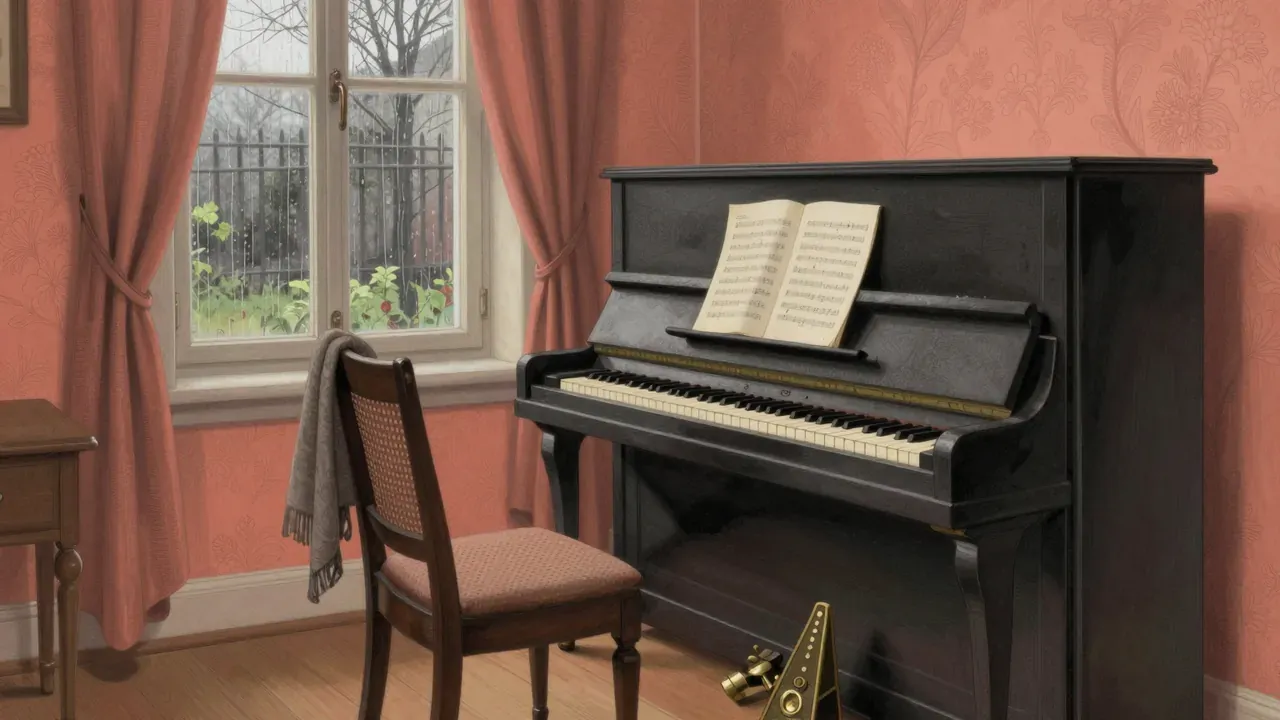
The story unfolds with minimal incident and maximum implication: three new boys arrive; Julien notices Jean’s kippah; Joseph the kitchen hand betrays them; the Gestapo come on a grey January morning. Gaspard Manesse’s performance as Julien is uninflected and precise — no precocity, no sentimentality, just watchful stillness. Raphaël Fejtő as Jean conveys dignity through restraint, never pleading or explaining. Renato Berta’s cinematography uses natural light and shallow focus to keep faces half in shadow, especially indoors; the Carmelite school’s stone walls absorb sound and light alike. Emmanuelle Castro’s editing avoids rhythm for its own sake — cuts land where attention shifts, not where emotion demands emphasis. Franz Schubert’s music appears only diegetically: Jean plays the Impromptu in E-flat on the school piano, and that single piece carries all the film’s unspoken yearning. There are no score swells, no flashbacks, no voiceover until the final minute.
What stays with you
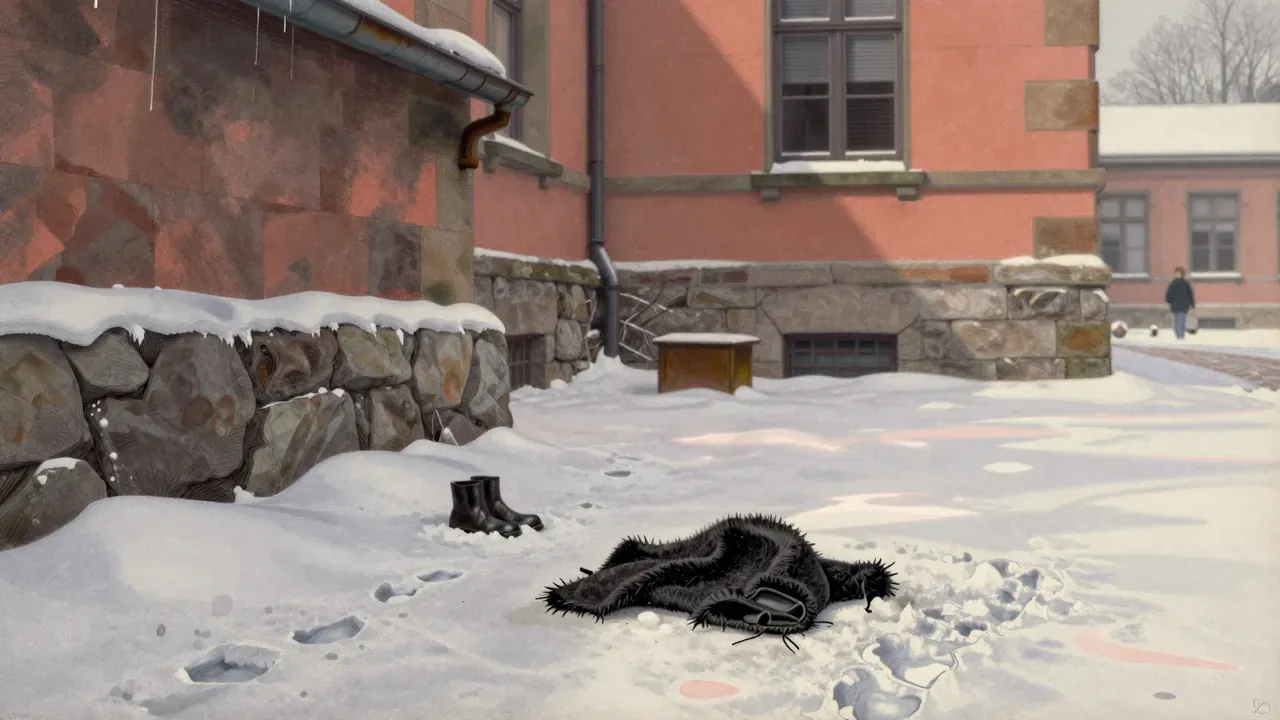
What lands is the accumulation of small, irreversible choices: Julien’s glance that gives Jean away; Joseph’s shrug when accused; Madame Quentin’s offhand remark about Léon Blum. These are not dramatic pivots but quiet fractures in the surface of normal life — and they land because Malle refuses to isolate them for emphasis. The classroom scenes feel lived-in, not staged: boys fidget, teachers sigh, chalk dust hangs in slanted light. The film’s moral gravity comes not from what happens at the end, but from how little changes in the days before — how routine persists even as danger tightens. The final courtyard sequence works because it is not heightened: the children call out ‘Au revoir’ without weeping or shouting, and Père Jean replies with calm authority. That restraint makes the moment unbearable. The film’s power lies in its refusal to make suffering illustrative — it simply shows what it looked like, sounded like, felt like to be eleven and present.
Where it slips
What does not land is the framing device: the adult Julien’s voiceover epilogue, which names Auschwitz and Mauthausen with clinical finality. It contradicts the film’s otherwise immersive present-tense logic, turning memory into testimony and undercutting the ambiguity that sustains the earlier scenes. The brief appearance of Irène Jacob as Mlle Davenne feels underwritten — her role as a sympathetic teacher lacks the texture given to others, and her presence adds little to the central dynamic between Julien, Jean, and Père Jean. The subplot involving Julien’s brother François calling the Milice ‘Collabos’ introduces political context but does so abruptly, without grounding in character or consequence. These moments do not fail technically; they falter tonally, inserting exposition where the film has trained us to read meaning in silence, posture, or a withheld glance. They are not errors of craft but of confidence — as if Malle briefly doubted whether the audience would grasp what he had already shown.
What it’s really about
The themes that matter are not grand abstractions but embodied contradictions: safety and concealment, discipline and compassion, privilege and ignorance. The school is both sanctuary and prison — its rules protect some boys while making others invisible. Julien’s class position matters more than his age: his mother’s restaurant table is a stage where antisemitism performs itself as polite opinion. The film treats religion not as doctrine but as practice — Père Jean’s faith is visible in how he listens, how he fires Joseph without humiliation, how he walks across the courtyard with his head up. Childhood here is not innocence lost but perception sharpened: Julien learns not that evil exists, but that it wears ordinary clothes, speaks in bureaucratic tones, and waits in the kitchen. The film’s deepest concern is with moral adjacency — how close one must stand to see what is being done, and how much courage it takes to remain in that position when others look away.
Who it’s for
It is for viewers who accept that moral clarity rarely arrives in speeches or climaxes, but in glances, silences, and the weight of a shared book passed between two boys. It is for those who value composition over commentary, and who trust that a scene of boys washing dishes can carry more tension than a chase. It is not for viewers who require narrative propulsion, psychological explanation, or redemption arcs — there is no catharsis, no justice, no reckoning beyond memory. Those who expect historical films to clarify rather than complicate may find its reticence frustrating. Anyone needing explicit moral signposting — a villain’s monologue, a hero’s defiant speech — will leave unrewarded. The film assumes patience, attention, and tolerance for unresolved grief. Its verdict on human behaviour is implicit, not delivered. To ask for more would be to misunderstand its method: it does not tell you what to feel. It shows you what was seen, and leaves the rest to you.
Is it worth your evening?
Yes, it is worth your evening — not as relief or diversion, but as recalibration. Its 105 minutes pass without hurry, yet leave time altered: afterwards, ordinary sounds seem louder, pauses longer, gestures more legible. It earns this not by scale but by fidelity — to a specific winter, a specific school, a specific boy’s unformed conscience. Some will argue it is too restrained, too quiet, too unwilling to indict or uplift. But its power lies precisely in that refusal: it offers no lesson, only evidence. If you believe cinema can hold space for memory without exploiting it, if you trust that a single sustained shot of a boy’s face as a door closes behind his friend can contain an entire moral universe, then this film repays every minute. It does not ask for your agreement. It asks for your attention — and gives back, in return, something harder to name: recognition.