The look of it
Blood for Dracula is a 1974 English-language splatter film co-credited to Paul Morrissey and Antonio Margheriti, though Morrissey directed all principal scenes and Margheriti’s involvement was limited to reshoots with two actors under contractual obligation. It attempts a satirical gothic horror: Count Dracula, weakened by the scarcity of virgins in Transylvania, travels to pre-Fascist Italy seeking untainted blood, only to find moral hypocrisy, sexual candour, and ideological rigidity where he expected piety and purity. The film leans into irony rather than dread — its vampire is frail, bureaucratic, almost clerical in his desperation, and its setting is a decaying aristocratic estate where Marxist rhetoric and Catholic dogma collide without resolution. It is not a reworking of Stoker but a deadpan parody of genre expectations, using the vampire myth as a scalpel to dissect class, faith, and biological determinism. Its tone sits between clinical farce and Grand Guignol grotesquerie, sustained by deliberate pacing and visual austerity. It presumes familiarity with both Hammer horror conventions and Warhol Factory aesthetics, though it abandons both in favour of something drier, more literal, and less seductive.
How the story moves
The story follows Dracula’s arrival at the di Fiore estate, his mistaken belief in the daughters’ virginity, and his physical collapse upon drinking their ‘tainted’ blood — a narrative pivot that treats vampirism as metabolic dependency rather than supernatural power. Udo Kier plays Dracula with clipped diction and brittle posture; Joe Dallesandro’s Mario Balato delivers Marxist monologues with uninflected sincerity, never winking. Vittorio De Sica, as the Marchese, improvises lines on set, lending his scenes a dissonant naturalism against the stylised artifice elsewhere. Luigi Kuveiller’s cinematography keeps interiors dim and grainy, avoiding chiaroscuro drama in favour of flat, documentary-like exposure. Claudio Gizzi’s score is sparse, mostly strings and prepared piano, underscoring silence more than action. Editing by Jed Johnson and Franca Silvi alternates between languid takes and abrupt cuts during violence — notably in the final staking, which lands with blunt, unceremonious finality. There is no suspense built around revelation; the audience knows the girls are not virgins before Dracula does, making his decline a matter of arithmetic, not fate.
What holds steady
What lands is the film’s sustained tonal control: its refusal to indulge either eroticism or terror, treating sex and death as equally mundane transactions. The scene where Mario rapes Perla is shot without music, without close-ups, without reaction shots — it registers not as shock but as grim logistical necessity within the film’s internal logic. The Marchese’s financial desperation feels real because it is stated plainly, not dramatised; his daughters’ marriages are discussed like livestock contracts. Even the gore — arterial spray, blackened veins, a slow-motion blood-drink — avoids stylisation, presented as physiological fact. The casting works precisely because it resists type: De Sica, a neorealist icon, plays decadence without caricature; Kier’s Dracula is neither charismatic nor monstrous but clinically exhausted. The film’s humour emerges from this consistency: the absurdity lies not in what happens, but in how little anyone reacts. When Dracula collapses after tasting Esmeralda’s blood, the silence that follows is funnier than any punchline.
Where the logic frays
What does not land is the structural reliance on plot mechanics that the film itself undermines. Once Dracula’s weakness is established, his continued presence on the estate requires him to behave irrationally — yet the script offers no psychological or ideological motive beyond hunger, and hunger has already failed him. The Marxist subplot remains inert: Mario’s politics are asserted but never tested, his rape of Perla contradicts his stated beliefs without consequence or reflection. Roman Polanski’s tavern cameo adds nothing but name recognition, and his presence feels like an inside joke with no punchline. The Italian legal controversy over Margheriti’s credit — while historically significant — leaves no trace in the film’s texture; it is a production footnote, not a creative tension. The finale, in which Mario kills both Dracula and Esmeralda then assumes stewardship of the estate, arrives without emotional or thematic preparation. It reads less like resolution and more like a script page ending abruptly, leaving character arcs unresolved and ideological claims unexamined.
What it’s really about
The themes that matter are scarcity, legitimacy, and the collapse of inherited authority. Dracula’s need for virgin blood is a metaphor for a system requiring uncontaminated inputs — whether ideological (pure doctrine), economic (unfettered capital), or biological (unbroken lineage) — and failing when reality proves impure. The di Fiore estate functions as micro-Italy: bankrupt, hierarchical, clinging to titles while its foundations rot. Mario’s Marxism is performative until it becomes instrumental; his rape of Perla is framed not as perversion but as preemptive defence — a brutal assertion of agency in a world where all other structures have failed. The film questions what constitutes authenticity: Is virginity biological fact or social fiction? Is aristocracy valid if it cannot reproduce itself? Is revolution possible if its agents replicate the violence they oppose? These are not resolved, but held in suspension — the film’s most consistent idea is that systems decay not through malice but through irrelevance, and that replacement rarely arrives with clarity, only with exhaustion and opportunism.
Who it’s for
It is for viewers who value dry satire over visceral horror, who can sit with long silences and unexplained motivations, and who find intellectual rigour in formal restraint. It rewards attention to framing, pacing, and subtextual contradiction — not jump scares or narrative momentum. It is not for those expecting coherent political commentary, emotional catharsis, or even consistent genre logic; its Marxism is decorative, its gothic trappings functional. Anyone seeking lush period detail, romantic tension, or moral clarity will leave frustrated. Those who admire early 1970s European genre hybrids — particularly films that treat ideology as costume — may find its austerity compelling. A viewer who disliked Flesh for Frankenstein for its tonal shifts may prefer Blood for Dracula’s flatter affect, but one who valued that film’s baroque energy will likely find this too detached. Its appeal narrows with each rewatch: it gains precision but loses ambiguity, and ambiguity is where its best ideas live.
Why it stays with you
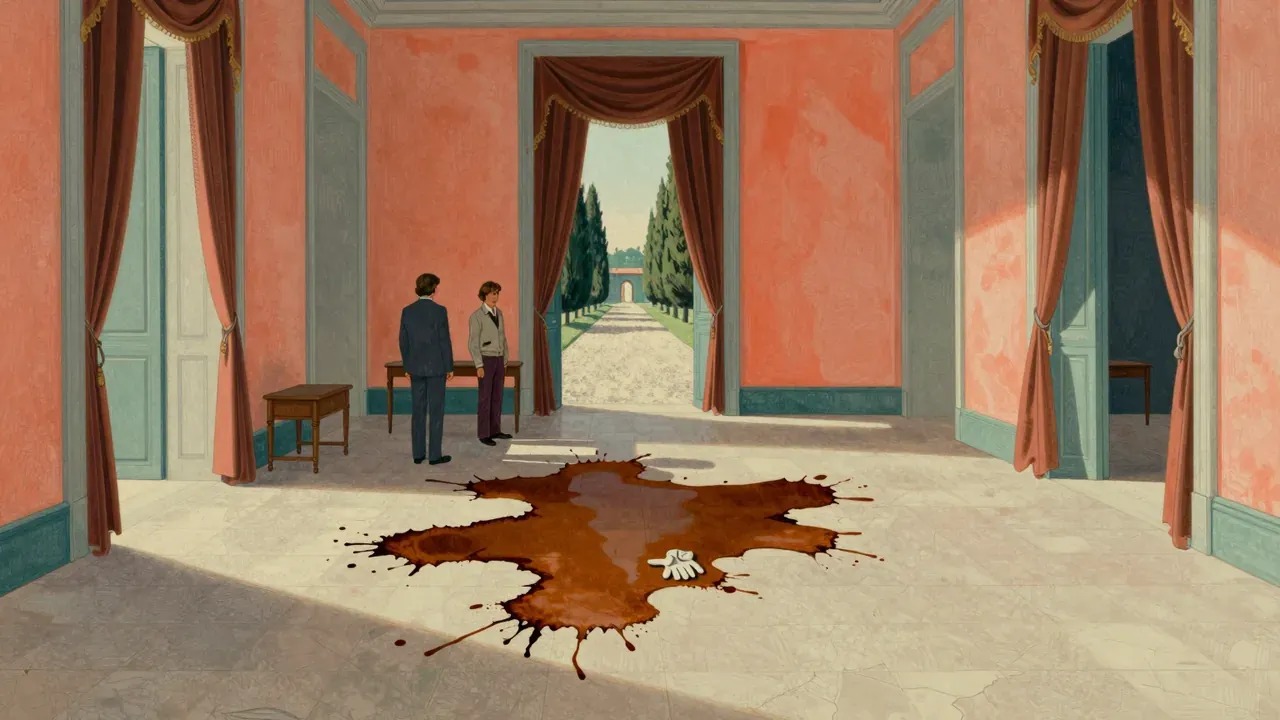
Yes, it is worth your evening — provided you watch it as a conceptual object rather than a story. Its 100 minutes pass without hurry, but never waste time: every shot serves its thesis about decay, depletion, and the banality of evil. It repays close viewing not for hidden meaning but for its disciplined execution — the way Kuveiller holds on a bloodstain drying on marble, or how De Sica’s hands tremble slightly when signing a marriage contract. Those who dismiss it as ‘sickening junk’, as the Los Angeles Times did, mistake its lack of ornament for lack of intent. Its flaws are structural, not careless: the weak third act stems from refusing to compromise its central irony. A tighter edit or a clearer ideological through-line would improve it, but neither would make it more truthful to its own vision. It remains valuable precisely because it is uncompromisingly odd — a vampire film that fears neither boredom nor disbelief.