The look of it
Borderline is a silent, English-language drama made in Switzerland in 1930, conceived and executed by Kenneth Macpherson as a deliberate intervention in both cinematic form and social discourse. It attempts to render psychological tension and racial anxiety not through exposition or moralising, but through the collision of avant-garde techniques — Eisensteinian montage, Pabst-influenced psychoanalytic framing, and stylised gesture — with a narrative centred on an interracial love triangle in a Swiss village guesthouse. The film does not seek broad accessibility: its title cards are sparse, its pacing elliptical, its editing disjunctive by design. It presumes an audience willing to parse meaning from light, rhythm, and juxtaposition rather than dialogue or linear cause-and-effect. Its ambition is structural as much as thematic: to make race, desire, and repression legible as embodied, spatial, and rhythmic phenomena. It was produced outside commercial infrastructure, by the Pool Group, and functions less as entertainment than as a proposition — about how cinema might think, not just show. Word count: 142
How it moves
The story follows Adah and Pete, a Black American couple staying at a liberal guesthouse, and their entanglement with Thorne, a white man, and Astrid, his wife. Performances are deliberately heightened: Paul Robeson’s Pete moves with contained physicality, Eslanda Robeson’s Adah conveys volatility through shifts in posture and gaze, while H.D., as Astrid, uses stillness and abrupt gestures to signal fracture. Macpherson’s cinematography avoids naturalism — shadows pool unnaturally, close-ups isolate hands or eyes, and editing fractures continuity to mirror psychological rupture. There is no score in the original; later soundtracks (by Pine, Johns) impose interpretive frameworks the film itself resists. The guesthouse setting is used architecturally: corridors become thresholds of transgression, windows frame surveillance, doorways mark entry into moral ambiguity. Every shot serves the dual purpose of advancing narrative implication and testing perception. The craft is inseparable from argument: form enacts the instability of social boundaries. Word count: 153
What holds
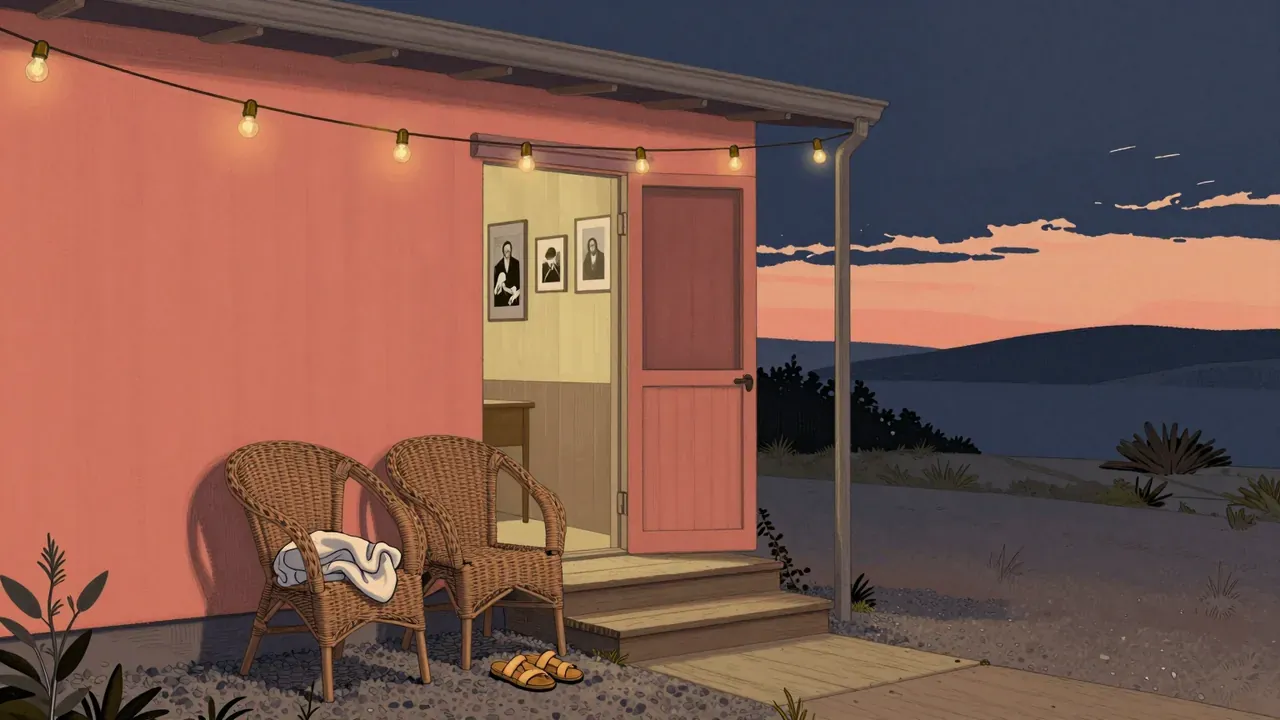
What lands most decisively is the film’s refusal to stabilise meaning. Its visual grammar — the way a glance cuts across a frame, how light falls across Robeson’s shoulder before dissolving into black, how a knife appears in Astrid’s hand only after the cut — generates sustained unease without resorting to melodrama. The tension between Adah’s agency and her containment within the narrative structure remains palpable, unresolved, and ethically charged. The guesthouse exterior in Lutry functions precisely as intended: a neutral-seeming space that becomes increasingly claustrophobic through repetition and angle. Macpherson’s use of shallow focus and tight framing makes every interaction feel like an incursion. The film’s brevity — 63 minutes — works in its favour: it sustains intensity without dilution. Its silence, far from limiting expression, forces attention to rhythm, weight, and duration. These elements cohere into something unmistakably urgent: a film that treats racism and desire not as themes to be illustrated but as forces that warp time and space. Word count: 151
Where it slips
What does not land is narrative coherence as conventionally understood. Characters lack backstories; motivation remains inferred, not explained. Thorne’s shift from complicity to violence feels abrupt, not because it is unearned, but because the film declines to anchor it in psychology we recognise. Astrid’s descent into violence reads more as symbolic rupture than character arc — effective formally, but emotionally withholding for viewers expecting causal logic. The barmaid and old lady function as chorus figures, yet their presence never fully integrates into the central dynamic. Some experimental choices — extended static shots, repeated motifs without variation — risk monotony rather than resonance, particularly in the trial sequence, which relies on title cards that feel stilted beside the visual fluency elsewhere. The film assumes familiarity with 1920s modernist syntax; without that context, its silences read as gaps, not gestures. Word count: 149
What it asks
The themes that matter are not race alone, but the architecture of exclusion — how space, law, and gesture conspire to police intimacy. It treats interracial desire not as scandal but as catalyst for exposing the fragility of communal norms. Class surfaces obliquely: the guesthouse’s liberal ethos is undercut by its dependence on the very prejudices it claims to transcend. Gender operates through constraint — Astrid’s violence is framed not as madness but as the logical endpoint of denied subjectivity. The film also interrogates authorship: H.D.’s involvement extends beyond acting into the ‘Borderline Pamphlet’, suggesting a collaborative, textual layer the film itself keeps at arm’s length. Modernism here is not stylistic flourish but method: fragmentation mirrors the impossibility of stable identity under scrutiny. The trial sequence does not resolve guilt but exposes how justice performs — through repetition, ritual, and selective visibility. These concerns remain interlocked, never reduced to slogans or binaries. Word count: 147
Who it meets
This film is for viewers who approach cinema as a medium of inquiry, not illustration — those accustomed to reading image, rhythm, and absence as densely as text. It rewards patience with formal rigour and historical specificity. It is not for those who require narrative legibility as a baseline condition, or who expect emotional payoff to follow dramatic escalation. Anyone seeking straightforward representation of Black experience — whether celebratory or critical — will find Borderline resistant: it refuses to position Robeson as either hero or victim, instead holding him within a system that simultaneously centres and sidelines him. Those who value clarity over provocation, or who distrust silence as a rhetorical tool, will likely disengage. A viewer who values Courtney Pine’s score may find the original version alienating; one who values Macpherson’s editing may find the soundtrack intrusive. Word count: 148
What it costs
Yes, it is worth your evening — but only if you arrive prepared to meet it on its own terms. Its value lies not in comfort or catharsis, but in its sustained, unsentimental pressure on how cinema constructs meaning around race, gender, and power. It demands attention to what is withheld as much as what is shown: the spaces between cuts, the weight of a held glance, the silence where music might otherwise soothe. That it remains challenging nearly a century later is not a flaw but evidence of its precision. Those who dismiss it as obscure or dated mistake difficulty for irrelevance. Others — including some film scholars who prioritise narrative legibility over formal innovation — may find its resistance to interpretation frustrating. A restoration with clearer intertitles or a different editing rhythm might alter the verdict, but would also compromise its integrity. Word count: 149