The premise
Buck and the Preacher is a 1972 Western made by Black artists for Black audiences, set in the Kansas Territory shortly after the Civil War. It tells of Buck, a former soldier guiding wagon trains of freed people westward — an act of self-determination framed as migration, not myth. Sidney Poitier directed it as his first feature, stepping in after dismissing the original director for failing to grasp what he called ‘important ethnic qualities’. The film’s aim is structural: to occupy the Western genre with Black agency, to replace the lone white sheriff or cavalryman with a Black leader negotiating land access, food, and safety not through conquest but through payment and mutual agreement with Native Americans. It treats the Exoduster movement not as backdrop but as plot engine, and insists on the continuity between Reconstruction-era violence and mid-century civil rights struggle. Its ambition is not revisionist spectacle but foundational reclamation — to make a Western where Black people are neither sidekicks nor exceptions, but the central, organising force of the frontier.
The look of it
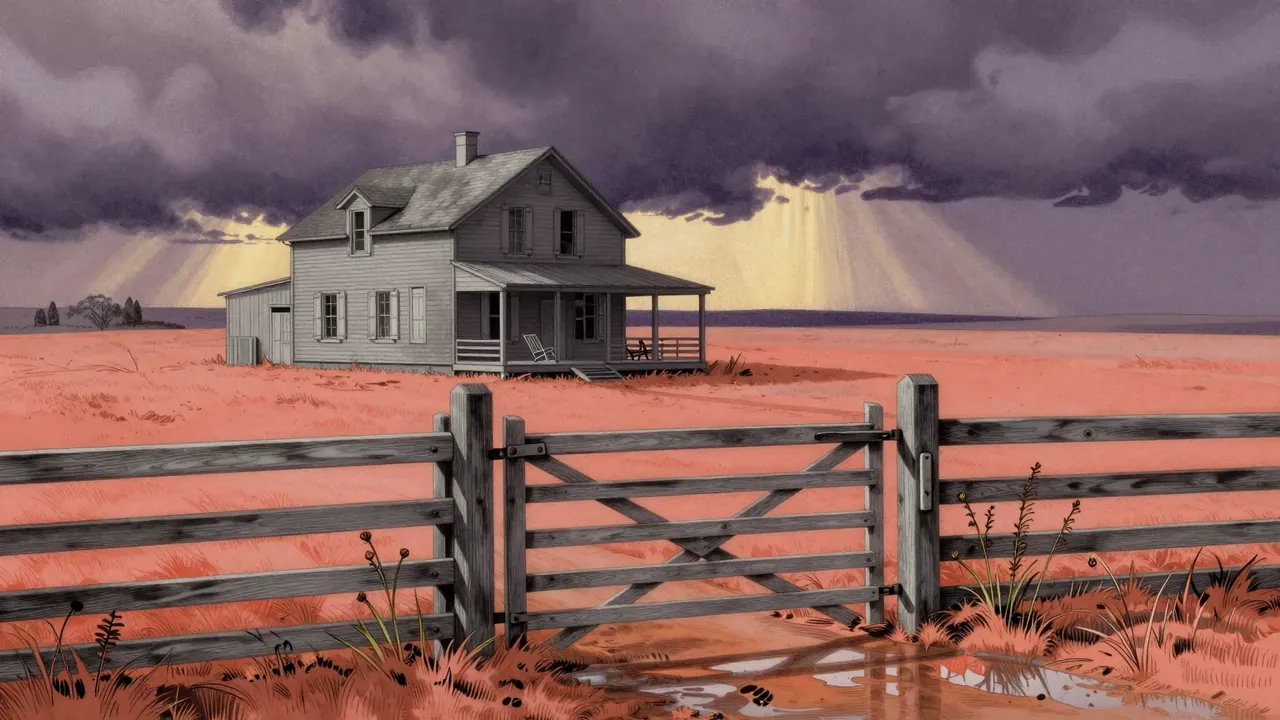
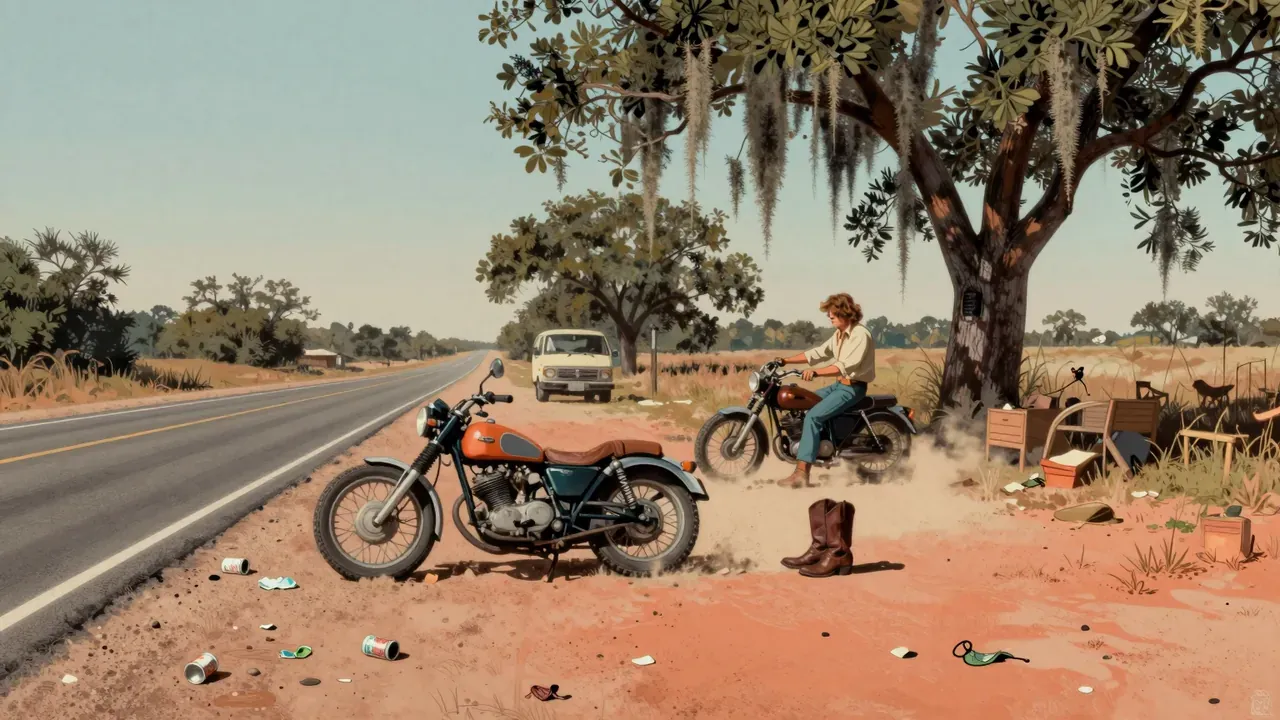
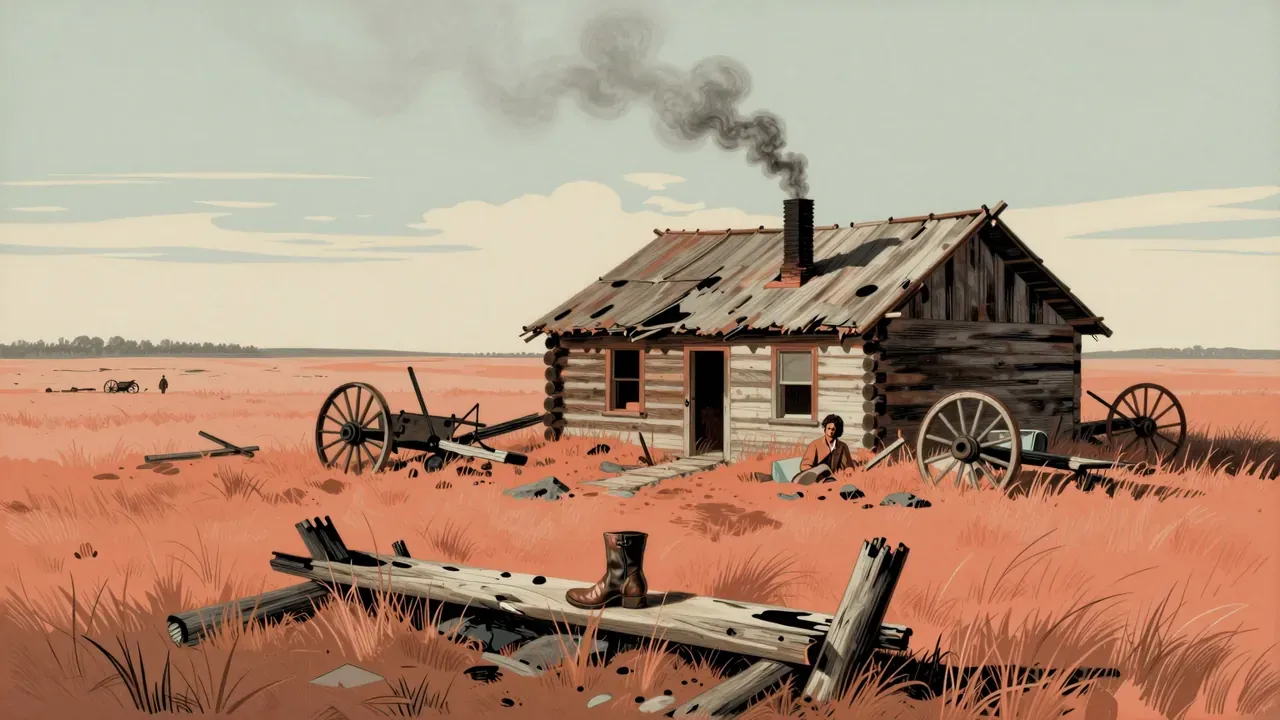
The story follows Buck’s journey with a group of freed people, their evasion of white marauders hired by Louisiana planters, and his uneasy alliance with the itinerant Reverend Willis Oaks Rutherford, played by Harry Belafonte. Ernest Kinoy’s script moves briskly, threading action — ambushes, bank robberies, brothel confrontations — with moments of quiet negotiation and moral calculation. Poitier’s performance is restrained, grounded, his physicality calibrated to endurance rather than swagger. Belafonte’s preacher is all motion and voice, shifting between sly mimicry and sudden sincerity; Ruby Dee’s Ruth is steady, watchful, her authority unspoken but unassailable. Alex Phillips Jr.’s cinematography, shot partly in Durango and Kenya, favours wide plains and low horizons, keeping faces lit without overexposing the dust or heat. Benny Carter’s score blends blues motifs with orchestral restraint, avoiding both period pastiche and blaxploitation fanfare. Pembroke J. Herring’s editing sustains momentum without sacrificing clarity — cuts land cleanly, never hurried, never vague.
What sticks
What lands most firmly is the film’s refusal to outsource its moral centre. Buck’s leadership is practical, not prophetic; his decisions are tactical, not symbolic. When he pays Native Americans for safe passage and buffalo hunting rights, the transaction is shown without romanticism or apology — a matter of mutual interest, not noble concession. The scenes of communal preparation — packing wagons, tending children, sharing rations — carry weight because they are rendered as labour, not tableau. Belafonte’s preacher does not steal the film so much as recalibrate it: his improvisational sermon before the marauders works not as trickery but as calibrated performance, exposing how easily prejudice can be manipulated when it is already performing itself. The film’s visual grammar avoids the high-contrast chiaroscuro common to 1970s Westerns; instead, Phillips keeps daylight flat and honest, letting sweat, dirt, and fatigue register plainly. This is not a film about triumphal arrival, but about the sustained, unglamorous work of getting somewhere — and that work feels real.
Where it slips
What does not land is the film’s occasional drift into schematic contrast. The white marauders, led by Deshay, remain functionally anonymous — less characters than vectors of threat, their motivations flattened to greed and inherited grievance. Their violence is consequential but rarely contextualised beyond the script’s own framing, leaving little room for ambiguity or historical texture. Some plot turns rely on coincidence — Buck stumbling upon the preacher just after escaping his burning home — and while such conveniences serve pace, they dilute the otherwise grounded cause-and-effect logic. The bank robbery sequence, though narratively necessary, feels tonally abrupt, its mechanics underserved by setup or consequence. There is also a tension between the film’s commitment to realism — the worn clothes, the limited ammunition, the slow travel — and its reliance on genre shorthand: the brothel ambush, the last-stand shootout. These do not break immersion so much as sit slightly apart from it, like scenes drafted for a different, more stylised film. The film never quite resolves whether it wants to inhabit the Western or dismantle it — and at times, it tries to do both without fully committing to either.
What it’s really about
The themes that matter are those rooted in material survival: land access, collective security, intergroup negotiation, and the cost of autonomy. The film treats sharecropping not as economic detail but as structural violence — a continuation of bondage by other means — and positions Kansas not as promised land but as contested ground requiring constant vigilance. Its portrayal of African American–Native American relations is rare for its time: transactional, wary, but unpatronising — no noble savage tropes, no forced alliance, just two displaced groups navigating overlapping claims. The preacher’s arc is less about redemption than recalibration: he shifts from self-preservation to shared purpose not through conversion but through witnessed consequence. The film’s civil rights resonance is not allegorical but architectural — it builds its world using the same legal voids, enforcement failures, and extrajudicial terror that shaped 1960s activism. It refuses the idea that racism is aberrant; instead, it shows how systems persist, adapt, and are resisted not by singular heroes but by networks of care, cunning, and quiet consensus.
Who it’s for
This film is for viewers who approach genre not as comfort but as terrain to be remapped — those interested in how form carries ideology, and how Black filmmakers in the early 1970s tested Hollywood conventions from within. It rewards attention to craft choices: Phillips’s lighting, Herring’s pacing, Carter’s scoring. It is not for those seeking polished narrative closure or psychological depth in every role — the marauders, for instance, are deliberately thin, and the film makes no effort to humanise them. Nor is it for viewers who require contemporary pacing or digital-era continuity; its rhythm is deliberate, its exposition economical but not accelerated. Some may find its blend of humour and gravity uneven, particularly Belafonte’s broader moments against Poitier’s stillness. Those expecting either pure blaxploitation energy or classical Western grandeur will misread its tone. Its value lies in its hybrid stance — neither satire nor solemnity, but something steadier: a working document of Black cinematic self-assertion.
Is it worth your evening
Yes, it is worth your evening — not as escapism, but as orientation. At 102 minutes, it moves with purpose and leaves space for reflection, never rushing its stakes or overstating its conclusions. Its power accumulates in accumulation: the repeated image of wagons moving west, the gradual tightening of alliances, the quiet transfer of authority from Buck to the group. You will not leave exhilarated, but clarified — aware of how much was excluded from the Western before this, and how much remains to be reclaimed. Those who dismiss it as dated miss its rigour: this is not nostalgia, but infrastructure. Critics who found it ‘breezy’ or ‘foolish’ were likely measuring it against genres it was never trying to replicate. A viewer who values historical specificity over spectacle, collective action over individual triumph, and craft over flash will find it resonant. Its worth is not in perfection, but in precedent — and in the quiet confidence of its making.