The look of it
Betty Blue is a French psychological drama from 1986, adapted by Jean-Jacques Beineix from Philippe Djian’s novel 37°2 le matin. It attempts to trace the arc of an intense, destabilising love affair not as romance but as psychic erosion — charting how passion, creative aspiration and mental collapse intertwine in a young woman’s unraveling. The film does not seek realism in behaviour or consequence; instead, it treats emotional extremity as its own logic, using heightened visual language and rhythmic editing to sustain a mood of feverish intimacy. Its ambition lies in rendering subjective experience — Betty’s volatility, Zorg’s devotion, the slow corrosion of coherence — as physical fact: in light, sound, gesture, rupture. It is not interested in diagnosis or social context, nor in moral framing of violence or self-destruction. What matters is fidelity to a particular inner weather: one where tenderness and terror occupy the same breath, and where love becomes indistinguishable from possession, care from control, and creation from complicity. The film’s structure follows this logic too — episodic, associative, escalating in intensity rather than exposition.
The places it moves through
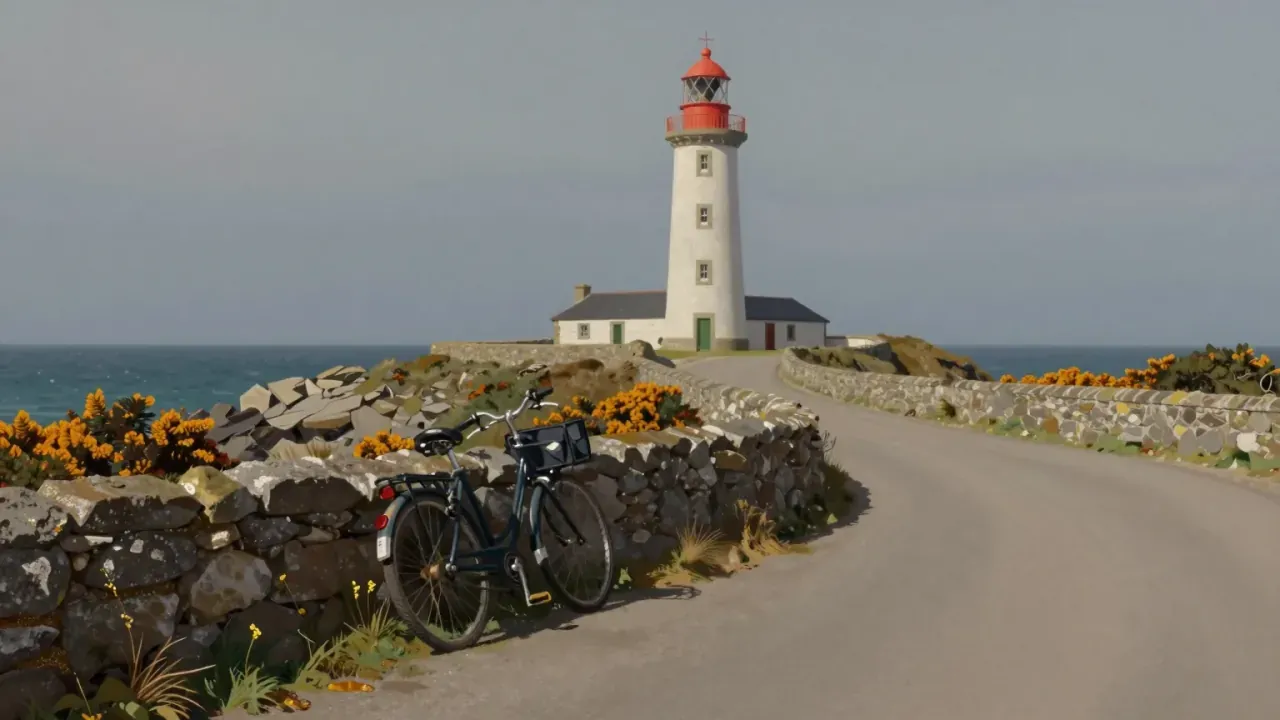
The story unfolds across three distinct geographical zones — coastal Gruissan, suburban Paris, and provincial Marvejols — each marked by shifts in tone, colour, and pacing. Jean-François Robin’s cinematography favours saturated blues and ochres, with tight close-ups on hands, eyes and mouths, and lingering shots of bodies in motion or stillness. Gabriel Yared’s score pulses with synth textures and melancholy piano motifs that swell and recede like breath. Monique Prim’s editing sustains rhythm through repetition — of gestures, lines, silences — rather than narrative efficiency. Jean-Hugues Anglade plays Zorg with watchful restraint, his face often passive while his body tenses; Béatrice Dalle’s Betty is all kinetic release — laughter, screaming, sudden stillness — her performance calibrated to feel less like acting than involuntary discharge. Supporting actors — Vincent Lindon, Dominique Pinon, Gérard Darmon — inhabit their roles with grounded specificity, anchoring the film’s more operatic turns in lived-in texture. The craft serves the central duality: beauty as both lure and warning.
The shape of her breaking
What lands most firmly is the film’s sensory conviction — the way it makes desire, exhaustion and dread physically palpable. The early beach sequences achieve a rare fusion of eroticism and unease: sunlight glinting off wet skin, sand grinding under bare feet, the low thrum of cicadas beneath whispered arguments. Betty’s outbursts never feel performative; they land with the weight of inevitability, as if her body has simply run out of containment. Zorg’s quiet descent — from observer to accomplice to executioner — accumulates without fanfare, his final act feeling less like choice than exhaustion of alternatives. The hospital scenes avoid melodrama through clinical framing: white walls, muffled voices, the flat tone of medical authority. Even the cat — a recurring motif — functions not as whimsy but as a silent witness to disintegration, its presence underscoring the absence of human reciprocity. The film’s refusal to explain Betty’s breakdown, or to pathologise it through dialogue, gives it a chilling authenticity: madness here is not spectacle, but silence punctuated by noise.
The quiet turning
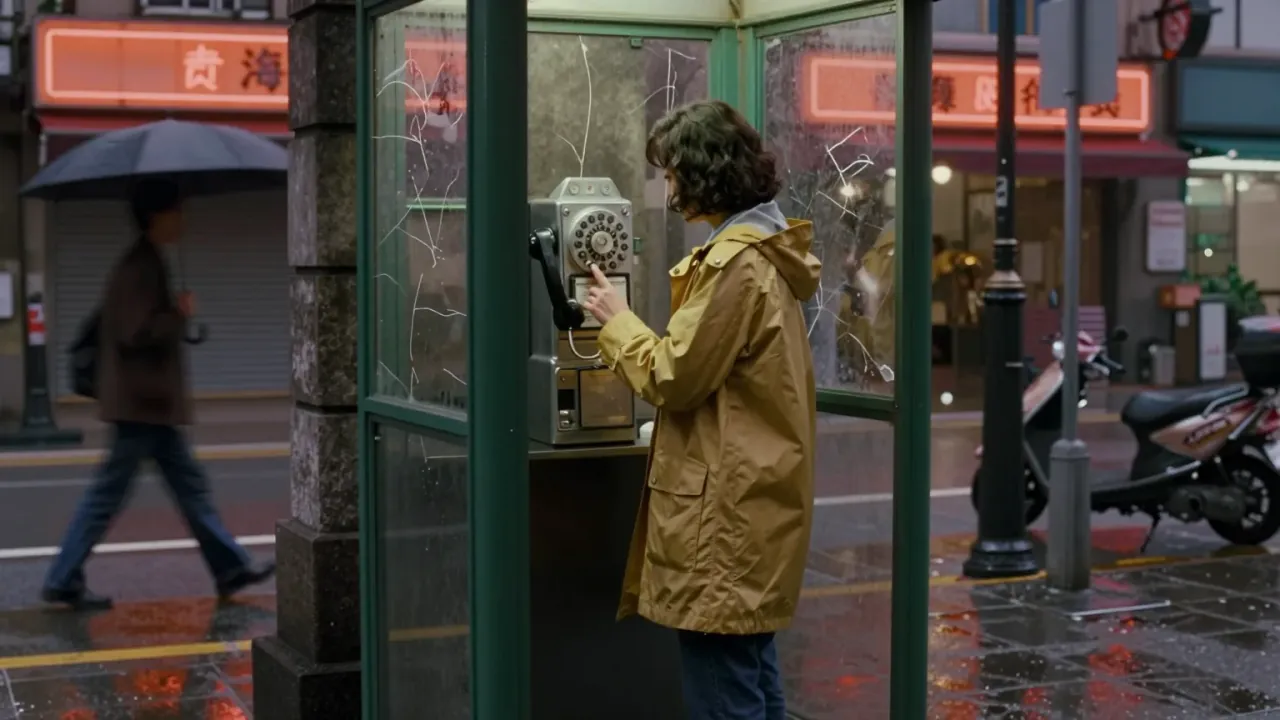
What does not land is the film’s occasional drift into stylisation for its own sake — moments where visual flourish overrides psychological continuity. A slow-motion shot of Betty running through town after punching glass feels less like character revelation than directorial signature. Some transitions between locations lack emotional or narrative hinge, relying instead on music or colour shift to carry meaning. The pizzeria sequence, though vivid, introduces Eddy and Lisa’s circle without establishing stakes beyond surface conviviality; their eventual marginalisation feels abrupt rather than earned. The armoured van robbery — a pivotal plot turn — arrives with little build-up in motive or method, functioning more as symbolic rupture than credible action. Likewise, Betty’s abduction of the child reads less as symptom than contrivance, its resolution rushed and emotionally unearned. These passages do not undermine the film’s power, but they do expose its reliance on mood over causality — a choice that works when sustained, but falters when logic is needed to bridge leaps.
What holds and what lets go
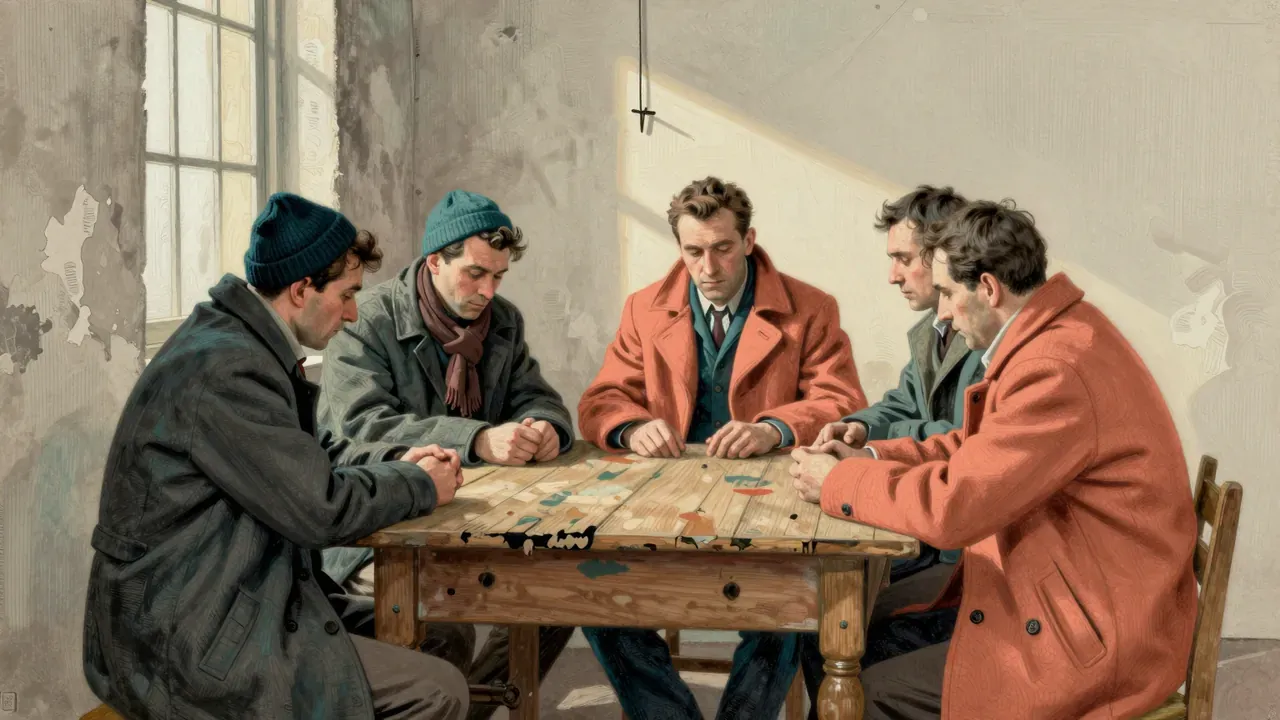
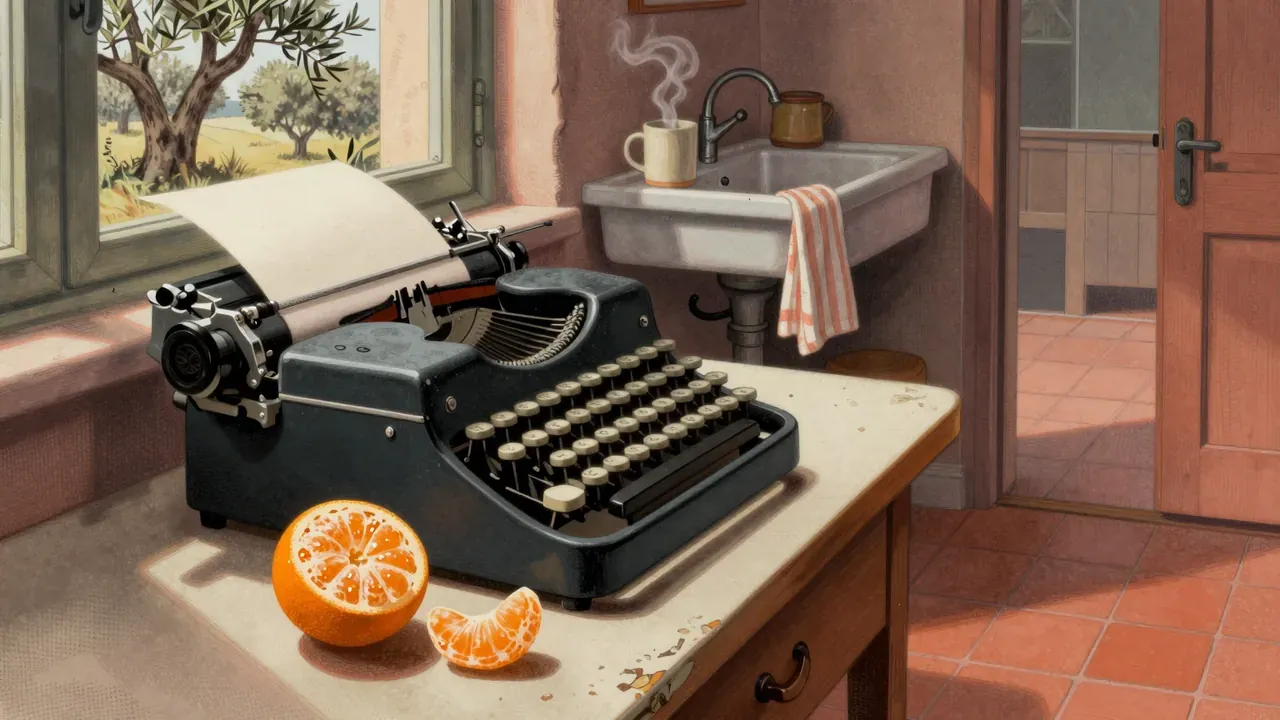
The themes that matter are love as dependency, creativity as vulnerability, and sanity as a fragile consensus. The film treats writing not as vocation but as lifeline — Zorg’s manuscript is both proof of worth and bait for destruction. Betty’s belief in him is absolute, then conditional, then annihilating; her reading of his work becomes the first and last moment of mutual understanding. Mental health appears not as medical condition but as social threshold: once Betty crosses it — smashing glass, slashing faces, hearing voices — she is no longer legible to those around her, including Zorg. The provincial interlude reveals how easily ‘normal’ life depends on mutual performance: Bob and Annie’s marital friction, the grocer’s quiet desperation, the piano shop’s inherited silence — all suggest that stability is maintained by collective agreement to ignore what does not fit. Motherhood, too, is framed not as fulfilment but as existential test: the false pregnancy triggers not hope but collapse, exposing how deeply Betty ties identity to biological function.
How it asks to be watched
This film is for viewers who value atmosphere over exposition, who accept ambiguity as ethical stance rather than narrative failure, and who can sit with discomfort without demanding resolution. It rewards attention to texture — the grain of film stock, the timbre of a sigh, the weight of a pause — and tolerates longueurs that serve mood rather than plot. It is not for those who require psychological plausibility, clear moral frameworks or narrative closure. Viewers expecting a conventional romance or thriller will find its rhythms alienating; those seeking clinical insight into mental illness may object to its poetic licence. The film assumes familiarity with French arthouse conventions of the mid-1980s — its pacing, its use of music, its resistance to exposition — and offers no hand-holding. A viewer who values cause-and-effect storytelling, or who finds prolonged depictions of distress ethically questionable without contextual grounding, would likely reject its methods. That verdict would change only if the film were re-cut to foreground social context or diagnostic clarity — neither of which it intends.
What stays after the credits
Yes, it is worth your evening — but only if you arrive prepared to surrender to its logic rather than interrogate it. Its 116 minutes move with the inevitability of a dream: images accrue meaning through recurrence, not explanation; emotion builds through duration, not escalation. The Blu-ray releases include both cuts, but the original theatrical version remains the tighter, more focused statement — the director’s cut expands Betty’s breakdown at the cost of Zorg’s quiet agency, diluting the central tension between devotion and erasure. To watch it is to submit to a particular kind of gravity: one that pulls not toward answers, but deeper into the question of what love looks like when it stops being reciprocal and becomes ritual. It is not a film to be solved, but inhabited — and its resonance lingers not in plot points, but in the afterimage of Betty’s laugh, Zorg’s stare, the sound of glass hitting sand. That resonance justifies the time, provided the viewer meets the film on its own terms.