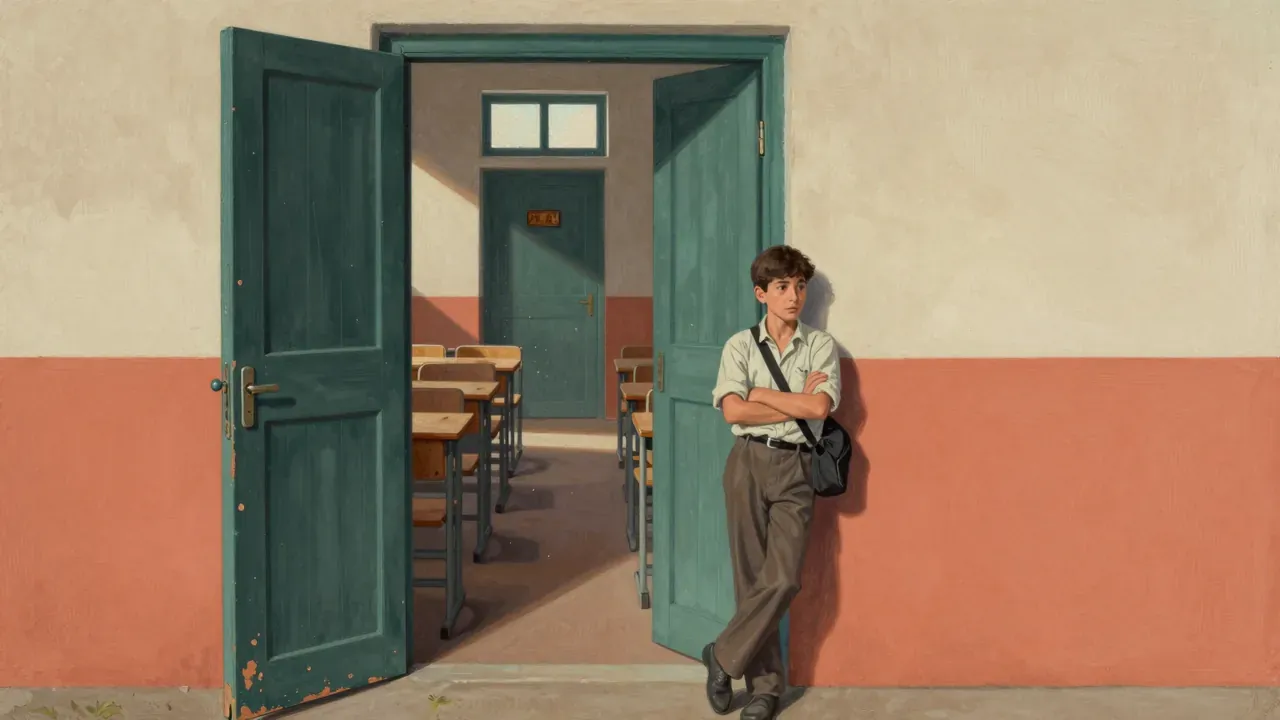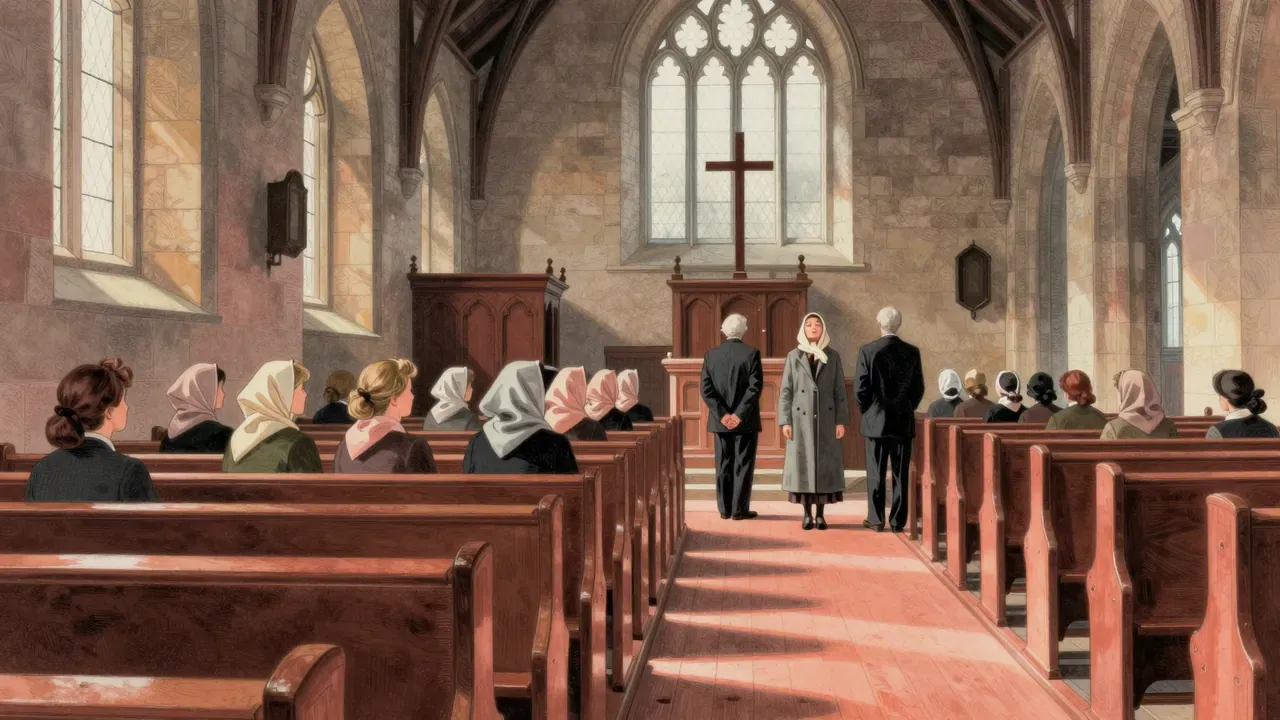
The Wedding
Breaking the Waves is a 1996 Danish-led international drama, directed by Lars von Trier and produced by Zentropa, that sets out to test the limits of spiritual conviction through extremity of action. It locates itself in the early 1970s Scottish Highlands—not as documentary realism but as a mythic, emotionally heightened terrain where faith, desire and communal judgment collide. Though made just after von Trier co-founded Dogme 95, the film deliberately breaches its rules: interiors were shot on soundstages in Lyngby; music is post-dubbed, often conspicuously so; computer graphics appear in the epilogue. Its ambition is not stylistic purity but moral provocation: to stage a religious narrative without miracles, relying instead on the visible, physical cost of belief. The film’s structure—seven titled chapters plus an epilogue—frames Bess McNeill’s arc as both liturgical progression and psychological descent. It treats Calvinist doctrine not as backdrop but as active, suffocating force, shaping every decision she makes. This is not a film about mental illness as diagnosis, but about how doctrine interprets behaviour, assigns sin, and withholds grace. (152 words)
The First Night
The story follows Bess McNeill, played by Emily Watson in her feature debut, from marriage to self-annihilation in service of her paralysed husband Jan. Stellan Skarsgård plays Jan with restrained gravity, his physical stillness anchoring the film’s escalating intensity. Robby Müller’s handheld Super35mm cinematography gives the image a grainy, immediate texture, especially in the Scottish exteriors—the Isle of Skye graveyard, Lochailort church, Morar beach—while studio interiors retain a deliberate artificiality. Anders Refn’s editing sustains rhythm across the long runtime, using chapter breaks to reset tone rather than pace. The soundtrack—a curated sequence of early 1970s rock and folk—functions as emotional punctuation, not illustration. Watson’s performance avoids mannerism; her voice, posture and gaze convey Bess’s literal-minded piety and growing dissociation without signalling ‘madness’. Von Trier and Peter Asmussen’s script does not explain Bess’s past treatment for mental distress, nor define her condition—it presents her logic as internally consistent, even when it horrifies. The film’s craft serves this refusal of interpretation: what matters is not why Bess believes, but what she does because she does. (158 words)
The Accident
What lands is the unbearable sincerity of Bess’s conviction. Her prayers are not rhetorical; they are spoken aloud, addressed directly, and treated by the film as operative within her world. The moment she kneels in the churchyard and tells God, ‘I’ll do anything’, carries weight because the camera holds her face without irony or cutaway. Watson’s performance grounds the film’s extremity: her flinching at touch, her forced smiles during sexual encounters, her quiet insistence on being heard—even when no one listens—make her agency legible, not passive. The Scottish locations, shot with muted natural light and wind-scoured textures, reinforce the austerity of her world. The chapter titles—‘The Wedding’, ‘The First Night’, ‘The Accident’—function like biblical verses: simple, declarative, unadorned. Even the epilogue’s shift into magical realism—the bells in the sky—does not feel like a break from realism but a release from its constraints, earned by the preceding accumulation of sacrifice. The film’s most effective moments are those where language fails: Bess’s silence after excommunication, Jan’s slow blink in hospital, the muffled thud of a body hitting deck in the derelict ship. These are not gestures toward meaning but meaning itself, rendered physically. (154 words)
The Request
What does not land is the film’s occasional reliance on symbolic shorthand that borders on didacticism. The repeated use of church bells—as absence, then imagined presence—risks flattening into motif rather than mystery. Some supporting characters remain functionally allegorical: Dodo as pragmatic conscience, the elders as doctrinal rigidity, the sailors as anonymous male violence—none develop beyond their role in Bess’s trial. The film’s moral architecture is so tightly wound around Bess’s subjectivity that other perspectives feel deliberately flattened, which works thematically but narrows dramatic range. The final image of Jan burying Bess at sea gains power from its restraint, yet the radar screen sequence—where crewmen confirm ‘no contacts’ before revealing the bells—introduces a technical literalism that jars against the earlier ambiguity. A viewer attuned to theological nuance may find the Free Scottish Presbyterian portrayal reductive: its theology is presented as monolithic condemnation, with no internal dissent or pastoral complexity. And while the film resists diagnosing Bess, its framing of her ‘simplicity’ risks conflating neurodivergence, trauma response and religious fervour without distinction—something the script never interrogates, only deploys. (156 words)
The Expulsion
The themes that matter are sacrifice as misrecognised love, the violence of orthodoxy, and the body as site of theological negotiation. Bess’s sexual debasement is not framed as degradation per se, but as a literal enactment of ‘giving all’, modelled on Christ’s suffering—except here, the suffering is hers alone, and the salvation she seeks is earthly, not eternal. The film treats prayer not as petition but as covenant: when she asks God to bring Jan home, and he returns broken, she reads it as divine instruction, not accident. This collapses the distance between intention and consequence, making faith inseparable from responsibility. The community’s expulsion of Bess exposes how doctrine functions socially—not as personal guidance but as boundary maintenance. Her final act is not madness but fidelity to a logic the film has spent two hours establishing. The film also interrogates gendered expectation: Bess’s ‘childlike’ speech and manner are read as incapacity, yet her endurance exceeds everyone else’s. Her death is not defeat but completion of a vow—and the substitution of sand for her body in the coffin is not deception but the first collective act of mercy the film allows. These are not abstract ideas but lived pressures, made tangible in gesture, silence, and weathered stone. (157 words)
The Ship
This film is for viewers who accept that moral seriousness need not be solemn, and that extremity can clarify rather than obscure. It suits those accustomed to slow, embodied storytelling—people who watch films for how characters occupy space, not just what they say. It rewards attention to texture: the grit in Watson’s voice, the weight of a pause, the way light falls on a wet road in Mallaig harbour. It is not for viewers who require psychological exposition, narrative symmetry or redemptive closure. Those who find religious frameworks alien or oppressive may experience the film as claustrophobic rather than clarifying. Some will reject its premise outright—that love could demand such self-erasure—and see Bess not as faithful but as failed. That reading is valid, but the film does not invite debate on whether her actions are ‘right’; it asks whether we recognise the grammar of devotion when it speaks in flesh, not doctrine. A viewer who needs clear authorial judgement on Bess’s choices will leave unsettled—not because the film is ambiguous, but because it refuses to judge her on terms outside her own. (152 words)
The Funeral
Yes, it is worth your evening—if you have ninety minutes to give without reservation, and if you accept that some films exist not to entertain but to recalibrate attention. Its 152-minute runtime demands stamina, but the pacing is deliberate, not indulgent: each chapter earns its length through accumulation of detail and emotional weight. The film’s power resides in its refusal to look away—from Bess’s face during violation, from Jan’s paralysis, from the elders’ cold certainty. Those who find its subject matter triggering will rightly avoid it; its depiction of sexual coercion and bodily harm is unsparing, never aestheticised but never softened. Critics who praised it in 1996 (Cannes Grand Prix, European Film Award for Best Film) responded to its formal control and moral urgency—not its comfort. A viewer expecting catharsis or resolution will be disappointed. But if you seek a film that treats belief as physical fact, and love as action with irreversible consequence, then Breaking the Waves remains singular in its commitment. Its value lies not in likability, but in its unblinking gaze. (153 words)