The shape of memory
Blue Heron is a semi-autobiographical drama about memory’s unreliability, built around the relocation of a Hungarian immigrant family to Vancouver Island in the late 1990s and the destabilising effect of their eldest son’s behavioural deterioration. It is not a linear account of trauma but an attempt to reconstruct how childhood perception fractures under pressure — how grief, language loss, and parental silence coalesce into a sensory archive rather than a coherent narrative. Sophy Romvari uses her own background as structural scaffolding, not biographical shorthand: the film’s form mirrors the way memory operates — elliptical, associative, prone to gaps and overlays. It treats recollection not as retrieval but as reassembly, privileging mood and texture over exposition. The central device — adult Sasha (Amy Zimmer) observing, interrupting, or dissolving into scenes from her eight-year-old self (Eylul Guven) — is less flashback than palimpsest. This is not a film about what happened so much as how the mind holds, distorts, and sometimes abandons what it cannot process. Its ambition lies in making that instability palpable, not resolving it. (158 words)
The rhythm of recall
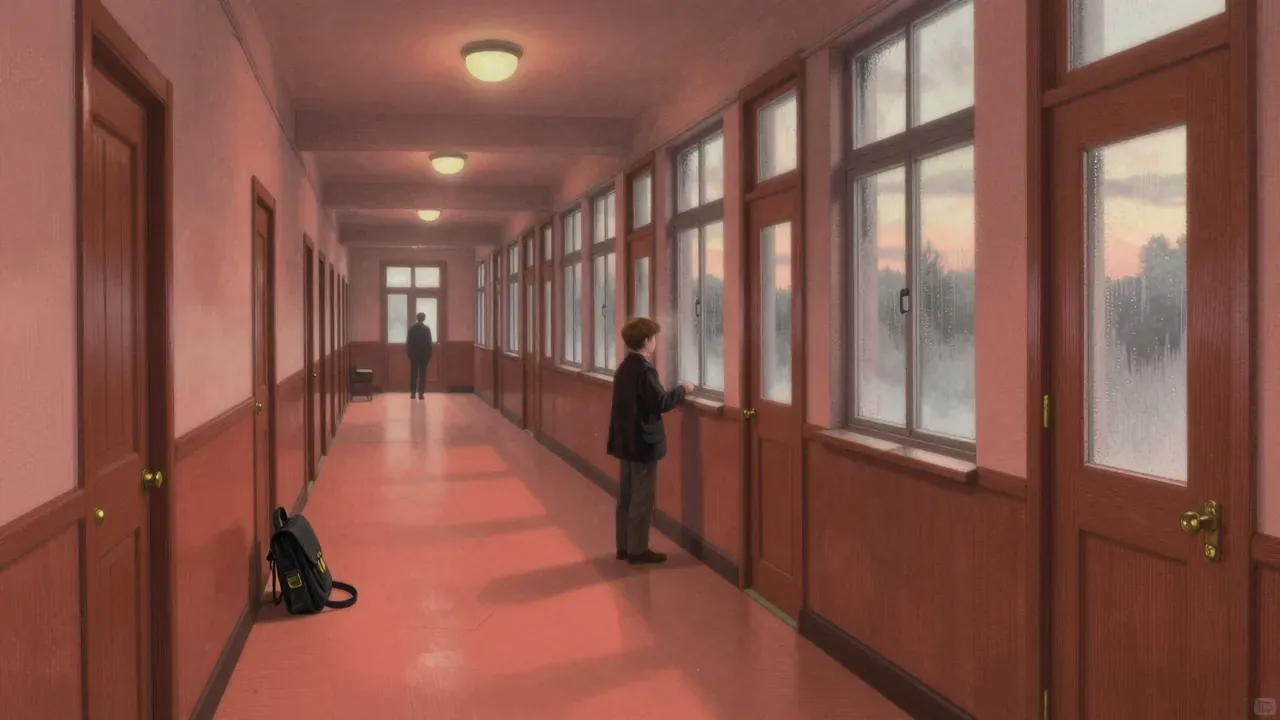
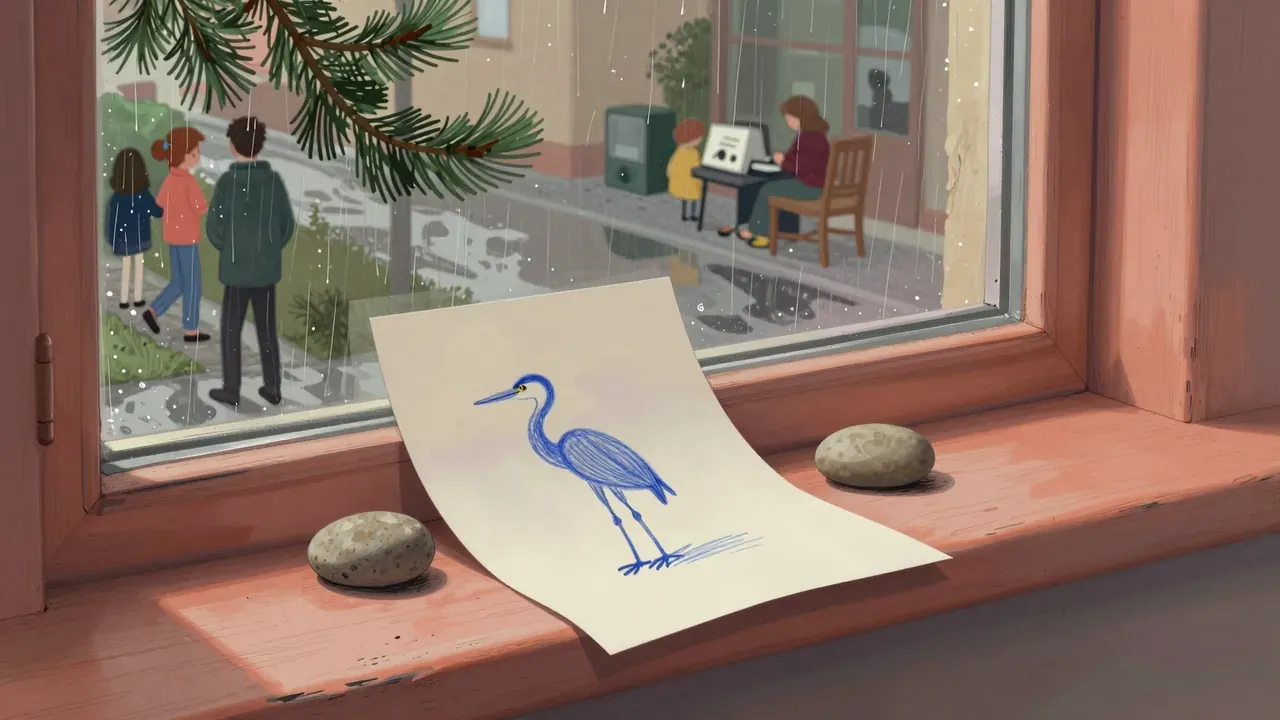
The story unfolds across shifting temporal layers without voiceover or exposition, relying instead on Maya Bankovic’s cinematography — soft focus, shallow depth, natural light diffused through rain-streaked windows and coastal mist — to sustain ambiguity. Performances avoid psychological signposting: Ádám Tompa and Iringó Réti play the parents with quiet exhaustion, their gestures economical, their silences weighted but never theatrical; Edik Beddoes’ Jeremy registers as physical unease before menace, his volatility conveyed through framing and duration rather than dialogue. Eylul Guven’s Sasha observes more than she interprets, her face often held in medium close-up while sound design — wind, distant traffic, muffled Hungarian speech — drifts in and out of sync. Blitz//Berlin’s score is sparse, using prepared piano and field recordings to blur diegetic and non-diegetic space. Editing by Romvari and Róbert Koltai avoids continuity logic, favouring rhythmic juxtaposition: a slammed door cuts to a heron taking flight; a child’s drawing dissolves into rain on glass. The craft serves restraint, not flourish. (159 words)
The weight of silence
What lands is the film’s tactile fidelity to childhood disorientation — the way time dilates in waiting rooms, how adult conversations become low-frequency hums, how landscape feels both vast and claustrophobic when you lack the language to name it. The recurring motif of the blue heron — glimpsed once, then again, then not at all — works precisely because it refuses symbolism: it is simply there, like memory itself, unexplained and unrepeatable. The domestic interiors, shot with muted greens and greys, feel lived-in and slightly off-kilter, reinforcing the sense of a world recalibrating around unseen stress. Amy Zimmer’s adult Sasha does not narrate but haunts, her presence a quiet counterpoint to Guven’s watchful stillness — a pairing that avoids generational contrast in favour of shared perceptual residue. The film’s emotional weight accrues not through plot turns but through accumulation: a repeated gesture, a half-remembered phrase, the way light falls across a hallway at 4 p.m. on a November afternoon. These are not moments of revelation but of recognition — small, cumulative, and deeply felt. (157 words)
The edges of knowing
What does not land is the film’s resistance to grounding its central crisis in social or institutional context. Jeremy’s behaviour is presented as an internal rupture, but the film offers no sense of how schools, healthcare, or immigration support systems respond — or fail to respond — to such strain. This omission risks aestheticising distress, turning systemic neglect into atmospheric texture. Similarly, the Hungarian-English language barrier is evoked through fragmented dialogue and subtitles that vanish mid-sentence, yet the film never explores how translation itself becomes a site of misrecognition between parent and child. The adult Sasha’s retrospective gaze remains passive; she watches but rarely interrogates, and the film declines to clarify whether her distance is protective, unresolved, or simply the limit of what memory can hold. Some viewers may find this refusal of explanation frustrating rather than resonant — a choice that privileges mood over moral or political clarity, and one that leaves certain tensions unresolved not as ambiguity but as absence. (156 words)
The language of arrival
The themes that matter are memory’s fallibility, the labour of assimilation without erasure, and the quiet violence of parental helplessness. It treats immigration not as arrival but as ongoing recalibration — of language, of expectation, of care. The film’s preoccupation with perception extends beyond individual psychology to questions of cultural legibility: what gets translated, what gets lost, what gets mistaken for indifference. Grief here is not event-based but ambient, woven into routine — the folded laundry, the unopened letters, the way a mother’s hands tremble slightly while stirring tea. Childhood is rendered not as innocence but as acute, unmediated reception: Sasha absorbs tone, temperature, hesitation, before she grasps meaning. The film also engages with time not as sequence but as sediment — past and present coexist without hierarchy, layered like geological strata. There is no redemption arc, no cathartic confrontation, only the slow, uneven work of holding contradictory truths: love and fear, safety and threat, belonging and displacement. These are not abstract ideas but embodied conditions, registered in posture, pacing, and pause. (159 words)
The contract of attention
This film is for viewers who value formal precision over narrative resolution, who find emotional resonance in restraint, and who accept that some wounds resist articulation. It suits those accustomed to arthouse syntax — ellipsis, repetition, tonal drift — and who do not require character motivation to be legible in conventional terms. It is not for viewers who rely on exposition, causal logic, or psychological exposition to orient themselves; nor for those seeking social critique with clear targets or solutions. Parents of neurodivergent children may find its clinical distance alienating, while others may read that same distance as ethical caution. Those expecting a ‘Hungarian-Canadian immigrant story’ as cultural portrait will find the film too interior, too fractured. Its power depends on tolerance for uncertainty — not as evasion, but as fidelity to how memory actually functions. A viewer who demands closure, or who reads ambiguity as indecision, will leave unsatisfied. (158 words)
The release of breath
Yes, it is worth your evening — but only if you arrive prepared to sit with slowness, silence, and unresolved tension. It asks for attention not as vigilance but as receptivity: to shifts in light, to pauses in speech, to the weight of a glance held a beat too long. Its ninety-one minutes pass without urgency, yet accumulate a quiet density that lingers after the credits. It is not demanding in the way of plot complexity, but in its insistence on emotional granularity — every frame calibrated to evoke, not explain. Those who mistake stillness for emptiness will misread it; those who mistake ambiguity for obscurity will miss its rigour. It rewards patience not with answers but with heightened perception — of how memory breathes, how grief settles in the body, how place holds history without speaking it aloud. To dismiss it as ‘too slight’ is to misunderstand its architecture: it is slender by design, not deficit. (159 words)