The look of it
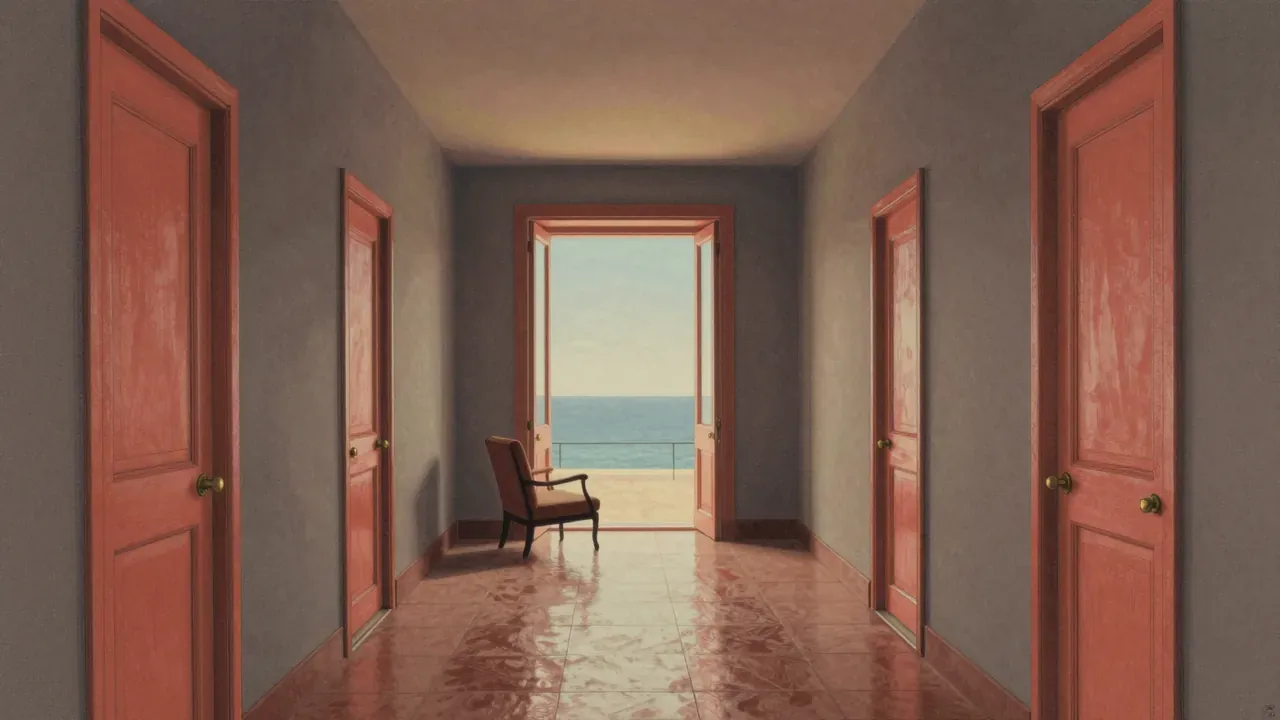
Baxter, Vera Baxter is a French drama film from 1977, written and directed by Marguerite Duras, adapted from her unpublished novel Vera Baxter ou les Plages de l’Atlantique. It attempts to hold still a woman’s interior erosion—not through plot or revelation, but through repetition, silence, and architectural framing. The film does not seek to explain Vera Baxter; it situates her, observes her, lets her speak in fragments while withholding narrative resolution. Its method is anti-dramatic: no rising action, no climax, no catharsis—only the slow accumulation of tone, gesture, and implication. It treats dialogue as surface tension rather than exposition, and space—the villa, the bar, the sea view—as a character with equal weight to the actors. This is not storytelling in service of understanding, but staging in service of exposure: of how bourgeois comfort can become a cage whose bars are polished, soundproofed, and almost invisible. Duras refuses psychological realism; instead, she builds a chamber piece where every line, pause, and cut deepens the sense of entrapment. (158 words)
The sound of it
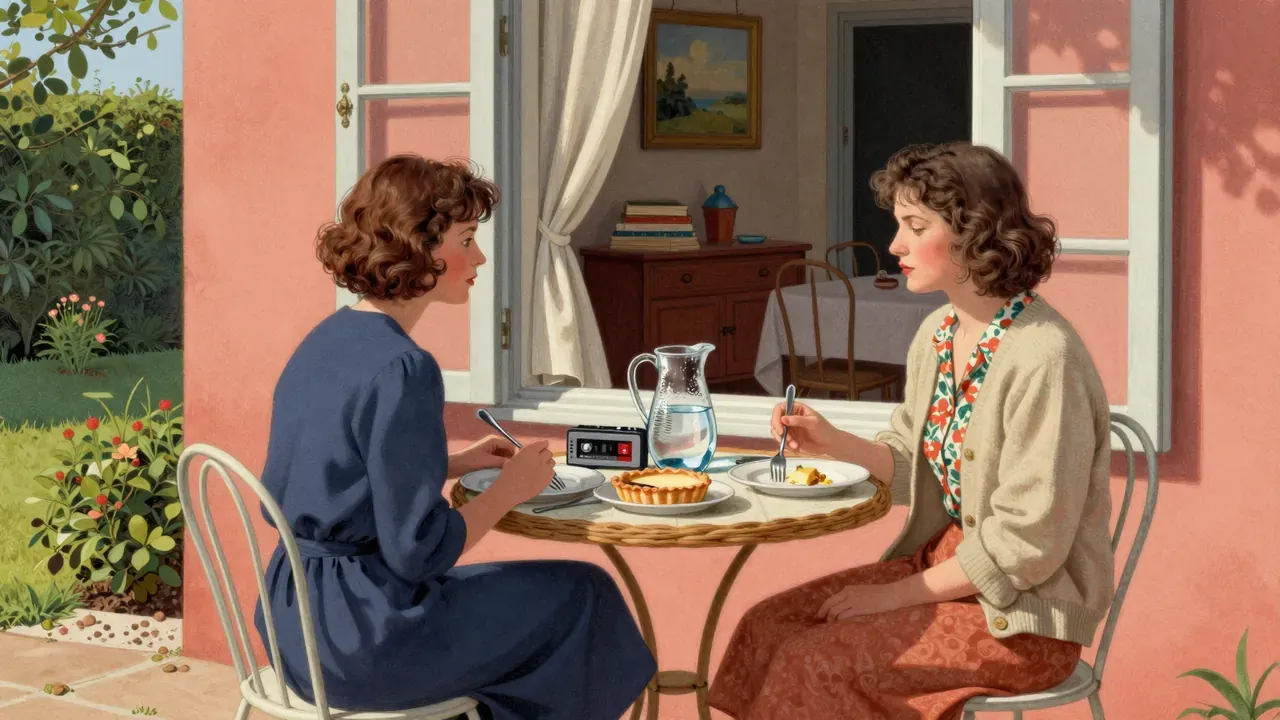
The story unfolds across three locations: a hotel bar, a seaside villa, and brief exterior shots of Atlantic light. Vera Baxter receives two visitors—Monique Combès and an unnamed woman—and recounts parts of her marriage, though never its full chronology or cause. Delphine Seyrig’s presence as the stranger is restrained, watchful, physically still; Noëlle Châtelet gives Monique a brittle, conversational urgency; Claudine Gabay as Vera moves with deliberate slowness, her voice low and uninflected. Gordon Willis is not involved—the cinematographer is unnamed in the fact sheet, so no claim is made about lighting or grain. Carlos d’Alessio’s score is sparse, mostly ambient piano motifs that do not underscore but punctuate silence. Editing is unhurried, favouring long takes and static frames; cuts often follow pauses, not action. There is no montage, no flashbacks, no visual metaphor beyond what the villa itself provides: symmetry, emptiness, mirrored surfaces. The craft serves austerity: every decision narrows focus, eliminates distraction, insists on duration over disclosure. (159 words)
The weight of it
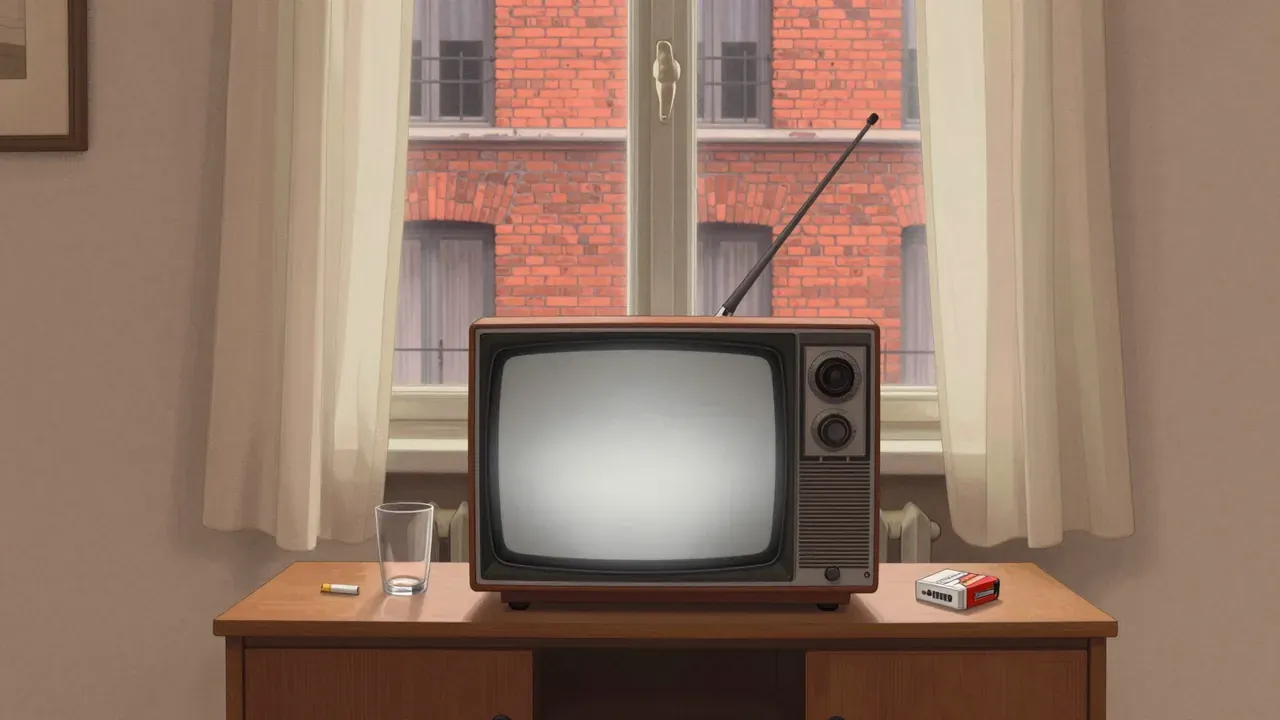
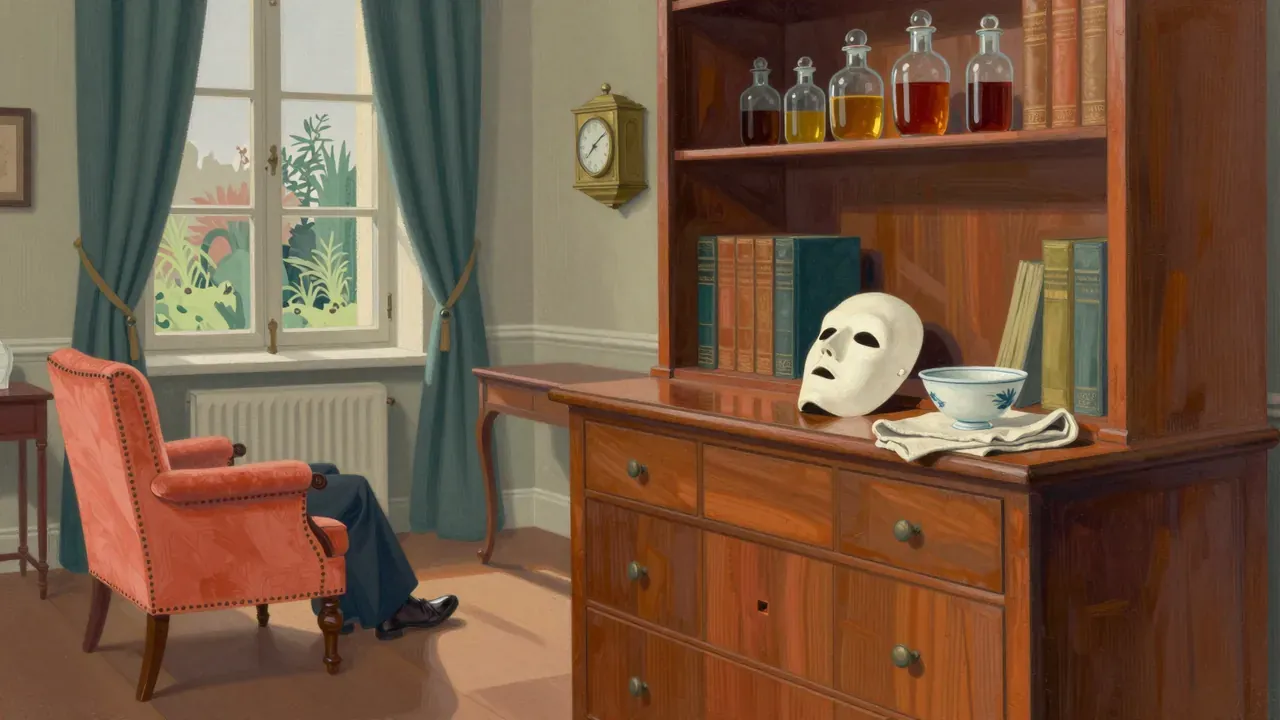
What lands is the cumulative weight of Vera’s exhaustion—not as emotion but as physical fact. Her posture in the armchair, the way she holds a cigarette without smoking it, the precise angle at which she turns her head when asked a question: these register more than any monologue. The villa itself lands as both setting and symptom: grand yet hollow, sunlit yet cold, furnished but uninhabited in any emotional sense. The conversations land because they avoid resolution—they circle, contradict, trail off—mirroring how people actually talk when avoiding truth. Seyrig’s stillness works not as blankness but as calibrated resistance; Châtelet’s nervous energy makes her a foil, not a catalyst. The film’s refusal to name Vera’s husband or specify the ‘shocking story’ lands as a formal choice, not evasion: it forces attention onto the rhythm of speech, the texture of hesitation, the architecture of avoidance. Even the barman’s single line—reporting Vera’s absence—lands with quiet finality, establishing her elusiveness before she appears. Nothing here flares; everything settles, like dust in unmoving air. (156 words)
The space of it
What does not land is the film’s structural rigidity when sustained for ninety-one minutes without variation in tempo or perspective. The static camera, while purposeful, begins to feel less like discipline and more like constraint—especially in scenes where characters sit side-by-side in silence for over a minute without shift or inflection. Gérard Depardieu’s Michel Cayre appears only briefly and says little; his presence registers as a narrative placeholder rather than a dramatic force, and his absence from most of the villa scenes weakens the implied triangulation of power. Nathalie Nell’s role as Jean’s mistress is underwritten and underlit—she speaks once, then vanishes, leaving no trace on Vera’s account. The lack of spatial variety beyond the villa’s main rooms flattens geography into monotony. Some viewers will find the repetitions hypnotic; others will find them inert. The film assumes a tolerance for ambiguity that it does not earn through escalation or counterpoint—it offers no release, no irony, no rupture to relieve its own gravity. That is its design, but it is also its limit. (158 words)
The circuit of it
The themes that matter are not abstract but embodied: the corrosion of self within prescribed roles—wife, mother, tenant, hostess—where each identity is maintained by performance, not belief. Class is present not as commentary but as atmosphere: the villa is rented, not owned; Vera’s wealth is inherited, not earned; her leisure is compulsory, not chosen. The film treats marriage not as relationship but as circuitry—Margulies’ phrase ‘infernal circuit’ fits, though the sheet gives no source for the quote, so the idea is rendered as observation: Vera moves between duties like current through insulated wires, never grounding, never discharging. Prostitution is implied not sexually but existentially: the exchange of presence for security, attention for silence, memory for decorum. There is no nostalgia for alternatives; the sea outside the windows is vast but indifferent. Time is not linear but tidal—receding, returning, erasing marks. These are not ideas argued but conditions enacted: Vera breathes them, sits in them, waits in them. The film’s moral weight lies in its refusal to offer exit, judgment, or even clarity—only the unblinking record of endurance. (157 words)
The demand of it
This film is for viewers who value duration over development, silence over exposition, and atmosphere over arc. It suits those accustomed to Duras’s work, or to filmmakers like Akerman or Rivette, where pacing is a condition of meaning. It rewards patience with texture, not payoff. It is not for viewers who require narrative propulsion, emotional cues, or psychological closure—those will find it withholding, inert, or pretentious. Someone expecting the intensity of India Song may be disappointed by Baxter’s flatter tonal register; someone new to arthouse cinema may mistake its stillness for emptiness. A viewer who values acting as transformation rather than embodiment may find Gabay’s performance too muted. The verdict changes if the film were shorter—say, fifty minutes—or if it introduced a single destabilising element: a change of location, a shift in voiceover, a break in symmetry. As it stands, its rigour is inseparable from its resistance. (159 words)
The duration of it
Yes, it is worth your evening—if you arrive prepared for its terms. Not as entertainment, but as immersion in a particular mode of attention: slow, exact, unsentimental. It repays close watching not with answers but with recalibration—of how much silence can hold, how much weight a chair or a window can bear, how exhaustion can settle into bone. It is not for casual viewing, nor for background consumption; it demands presence, and gives back a sharpened perception of restraint. Those who dislike it will likely do so on principle: that ninety-one minutes should yield more than accumulation, that a film must move forward, not orbit. But its value lies precisely in that orbit—in the way it holds Vera, and by extension the viewer, inside a single, unbroken question: what does it cost to remain intact inside a life that has already dissolved? That question lingers after the credits, quietly, like salt on skin. (159 words)