The shape of absence
Ballad of a Soldier is a Soviet drama set during the Second World War but deliberately uninterested in combat as spectacle or ideology. It follows nineteen-year-old Private Alyosha Skvortsov on a six-day leave granted after he disables two German tanks—not out of valour, but instinct—and asks only to repair his mother’s roof. The film’s aim is not to depict war’s machinery but its human residue: how love persists, shifts, and strains under displacement, rationing, and uncertainty. It treats the front line as off-screen context, anchoring itself instead in train stations, freight cars, village courtyards, and cramped apartments. Chukhrai and Ezhov structure it as a series of encounters—each brief, each weighted—where soldiers and civilians exchange small tokens (soap, water, silence) and larger unspoken truths. There is no grand speech, no battlefield epiphany; the film’s moral architecture rests on gestures: carrying a suitcase, returning soap, waiting at a station. Its ambition is lyrical restraint: to make the ordinary feel sacred without declaring it so. (158 words)
The look of it
The story unfolds in episodic, almost folkloric progression, held together by Alyosha’s quiet persistence and the film’s unhurried rhythm. Vladimir Ivashov, nineteen and untrained, gives a performance built on stillness and listening—his face registers fatigue before resolve, hesitation before kindness. Zhanna Prokhorenko matches him with a Shura whose fear softens gradually, not through dialogue but through shared glances and physical proximity in the freight car. Vladimir Nikolayev and Era Savelyeva’s cinematography avoids contrast for effect: light falls evenly, even in mud or rain, and interiors are neither gloomy nor warm—they simply exist. Mikhail Ziv’s score is spare, using piano and strings only where silence would overstate. Editing avoids cuts that emphasise emotion; dissolves linger just long enough to suggest time passing, not feeling swelling. The film’s craft lies in what it omits: no battle footage, no propaganda slogans, no close-ups of medals or maps. Even the uniform anachronism—shoulder boards worn in 1942—is functional, not symbolic: it serves recognition, not realism. (159 words)
What the hands do
What lands is the cumulative weight of minor choices made with care. Alyosha returning the soap to Pavlov’s father—not out of duty, but because the gesture has become its own logic—feels earned, not sentimental. The moment Shura waits at the station after the train leaves without Alyosha works because the film has spent ten minutes establishing how rare such certainty is: she has no fiancé, no plan, only trust in someone she met hours earlier. The final reunion with his mother lasts less than two minutes, yet carries the full measure of absence—the way she touches his sleeve, the way he looks at the roof she’s patched with scrap wood. These moments land because they are never framed as climactic; they arrive without musical cue or slow motion, trusting the audience to hold their significance. The film’s emotional register is low, consistent, and deeply unsentimental: grief is in the opening voiceover, not in tears; love is in shared water, not declarations. Even the ending—a simple voiceover stating Alyosha will be remembered only as ‘a Russian soldier’—lands because it refuses consolation, offering only quiet dignity in place of myth. (157 words)
Where the road thins
What does not land is the framing device: the middle-aged woman walking the road at the start and end, her son unnamed, his death uncontextualised beyond ‘buried in a foreign land’. It functions as a bookend but adds no thematic pressure—it is ornamental, not structural. Similarly, the subplot involving Pavlov’s wife feels abrupt: her infidelity is revealed, then dismissed, with no interiority given to her circumstances or choices. The film sidesteps her perspective entirely, reducing her to a plot hinge rather than a person. A few encounters verge on schematic: Vasya’s arc from despair to acceptance happens too neatly, his wife’s welcome too untroubled given prior strain. The lieutenant’s sudden leniency toward stowaways lacks grounding—he shifts from ‘beast’ to benevolent without transition, serving narrative convenience over character logic. These moments do not break the film, but they sit uneasily beside its otherwise patient attention to cause and consequence. They suggest where Chukhrai prioritised flow over friction—where the ballad smooths over the rough edges real life would leave. (156 words)
The weight of waiting
The themes that matter are endurance without heroism, love as practice not proclamation, and memory as quiet stewardship rather than commemoration. The film treats wartime sacrifice not as exceptional but as continuous: Alyosha’s journey is less about surviving danger than sustaining connection across broken infrastructure—rail lines, roads, relationships. His mother’s vow to wait is not passive hope but active maintenance: she patches the roof, tends the garden, keeps the stove lit. Love appears in three registers—romantic (Alyosha and Shura), marital (Vasya and his wife, Pavlov and Liza), and filial (Alyosha and his mother)—and each is shown as labour, not feeling: carrying weight, delivering soap, holding silence. The film’s deepest theme is anonymity as dignity: Alyosha is never promoted, never named in dispatches, never photographed. His value lies in what he does, not what he represents. That final voiceover—‘he will always be remembered simply as a Russian soldier’—is not erasure but distillation: a refusal to inflate the individual into symbol, and a commitment to holding him as he was: present, kind, transient. (159 words)
Who it asks to stay
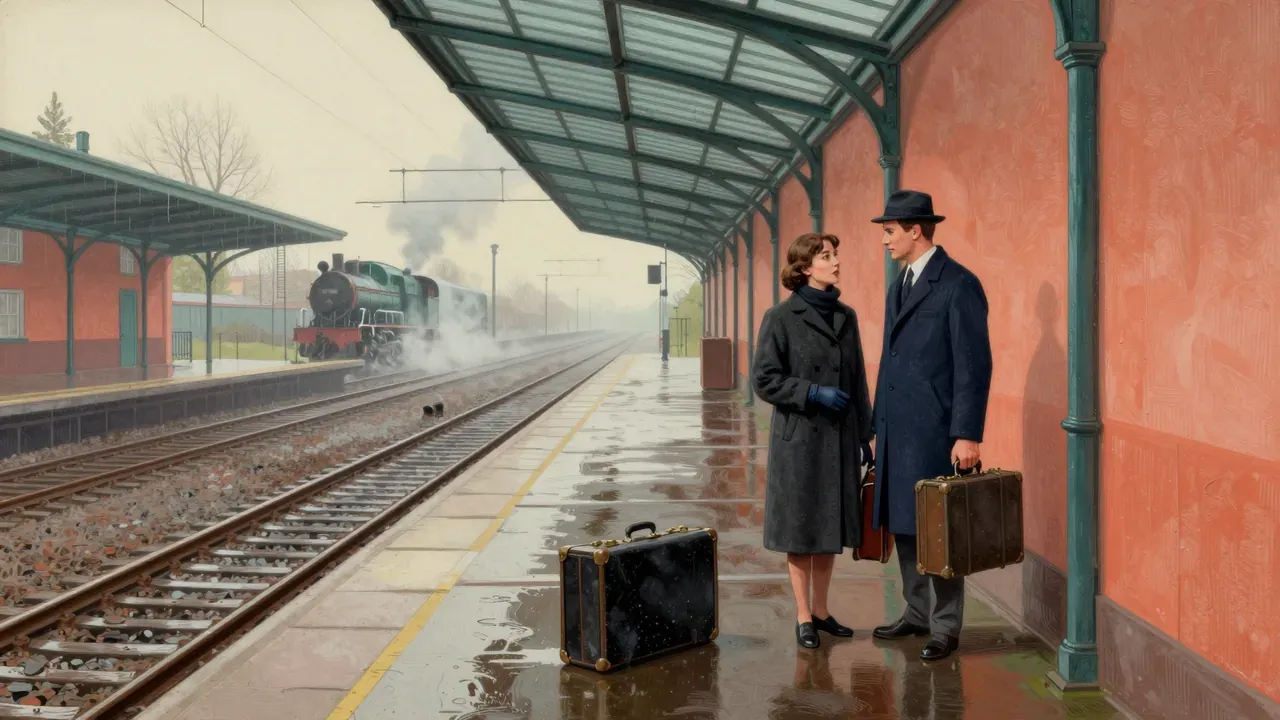
This film is for viewers who trust slowness as a mode of attention, who find resonance in understatement, and who do not require explanation to feel meaning. It rewards patience with texture: the sound of rain on a tin roof, the weight of a bar of soap in a palm, the way light falls across a railway platform at dusk. It is not for those who need narrative propulsion, psychological exposition, or moral clarity—there are no villains, no debates, no turning points disguised as revelations. Some will find its restraint indistinguishable from emptiness; others may mistake its lack of irony for naivety. Those expecting a war film will be disappointed: the front is absent, the politics implied but never argued. Its pacing assumes a viewer willing to sit with ambiguity—to accept that Shura’s lie is neither betrayal nor confession, but simply how people protect themselves when love arrives unannounced. To dislike it is not to misread it, but to prefer different terms of engagement. (159 words)
The time it takes
Yes, it is worth your evening—provided you watch it whole, undistracted, and without expectation of payoff. Its eighty-eight minutes accumulate like sediment: no single scene shouts, but together they form something durable and tender. It earns its reputation not through scale or technique but through fidelity—to youth without condescension, to loss without melodrama, to love as a series of small, reversible decisions. Those who find it slight likely expect cinema to argue, persuade, or dazzle; Ballad of a Soldier offers none of those. It asks only that you notice how people hold space for one another when the world is falling apart—and that is work enough. A viewer who watches it on a screen while scrolling will miss its pulse; one who lets its rhythm settle will feel its gravity long after the credits. Its value lies not in what it says, but in how quietly it insists on the worth of ordinary presence. (158 words)