The look of it
Black Is… Black Ain’t is a documentary essay that refuses singularity. It does not seek to define Blackness but to dismantle the premise that it can or should be defined at all. Marlon Riggs frames the project as an act of resistance—not against whiteness alone, but against internal policing: the gatekeeping within Black institutions, families, churches and movements that excludes those deemed insufficiently authentic—too queer, too light-skinned, too academic, too rural, too effeminate, too Northern, too Southern. The film’s ambition is structural as well as thematic: it treats identity not as a fixed property but as a contested, relational, embodied practice. Riggs anchors this not in abstraction but in lived speech—hundreds of voices, recorded across the US, speaking without mediation, often mid-sentence, overlapping, correcting themselves, laughing, pausing. It is less a survey than a gathering; less argument than accumulation. The film insists on multiplicity not as ornament but as condition—non-negotiable, unassimilable, and already present. (158 words)
The way it speaks
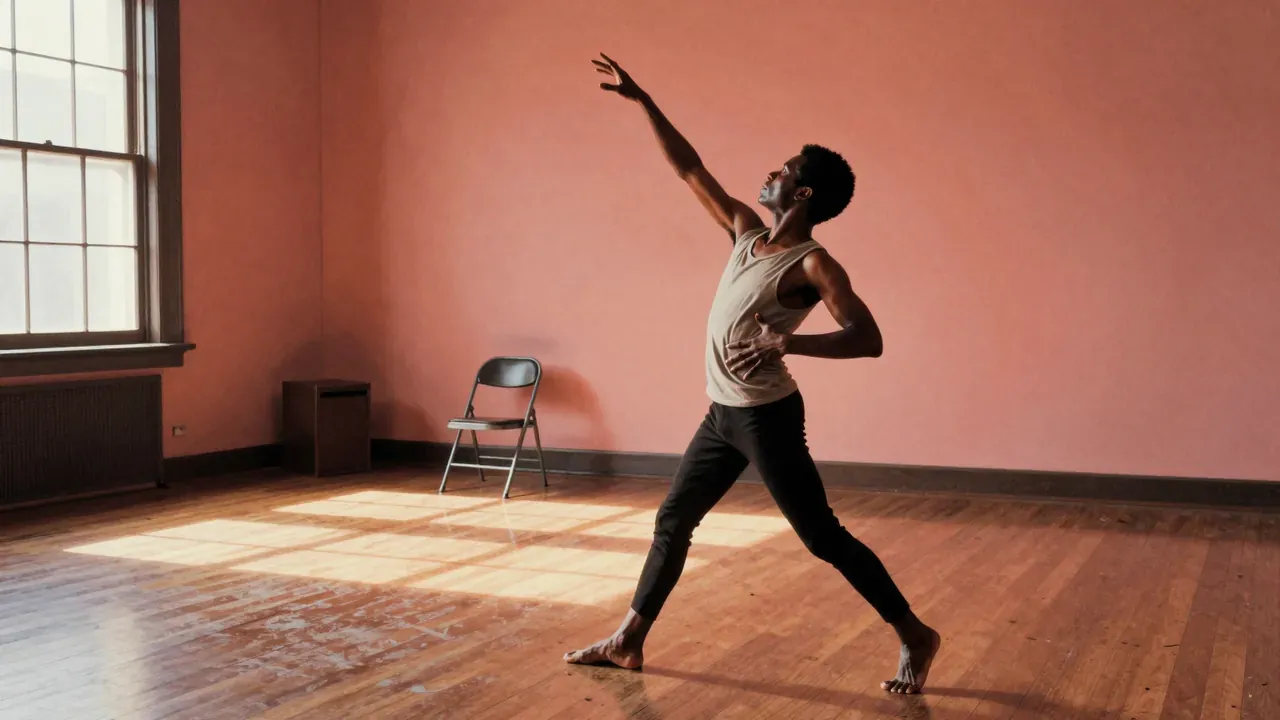
The film works through juxtaposition, rhythm, and refusal of hierarchy. There are no voiceover explanations, no chapter headings, no archival footage imposed with authoritative captions. Instead, Riggs cuts between a grandmother stirring gumbo in Oakland, a gay man in Mississippi describing how his church called him ‘a walking sin’, a young woman in Detroit explaining why she wears her hair natural, and Cornel West in a studio chair dissecting respectability politics—each given equal duration and tonal weight. Gordon Willis did not shoot this; Riggs and his crew used available light, handheld cameras, and direct sound, favouring intimacy over polish. Bill T. Jones’s choreography appears not as interlude but as counterpoint—bodies folding, reaching, resisting gravity while voices speak of constraint. Essex Hemphill’s poems are recited live, sometimes off-mic, their cadence left rough. The editing by Christiane Badgley—completed after Riggs’s death—holds silences longer than expected, lets interviews drift into ambient noise, allows contradictions to sit unresolved. This is not vérité but signifying: a form that honours opacity, trusts the viewer to hold dissonance, and treats craft as ethical labour. (159 words)
Where it hits home
What lands is the sheer density of recognition. Not every speaker is equally articulate, nor every moment polished—but the film’s power lies in its refusal to curate for coherence. A teenager in Harlem describing how her mother told her ‘you talk white’ lands with the same force as Angela Davis analysing patriarchal discipline in Black nationalist organising. The gumbo metaphor works because it is shown, not explained: close-ups of okra, smoked sausage, filé, rice, scallions—all distinct, all necessary, none dominant. The hospital scenes with Riggs do not sentimentalise; they ground the urgency in bodily fact. When a lesbian elder in Atlanta says, ‘I was never asked to leave the church—I just stopped going,’ the line carries weight because it follows three others saying similar things, each in different accents, ages, regions. The film lands where it trusts testimony over translation, presence over representation. It avoids the trap of ‘giving voice’ by refusing to frame any voice as exceptional. Every speaker is already speaking; the film simply removes the barrier to hearing them. That consistency of stance—across eighty-seven minutes—is rare, and it holds. (157 words)
Where it simmers too long
What does not land is the attempt to stretch the gumbo metaphor into structural logic. The film’s middle third introduces too many parallel threads—colourism, Afrocentrism, Caribbean migration, diasporic linguistics—without sufficient connective tissue. Some sequences feel like annotated lists rather than arguments: a series of brief clips on skin tone, then hair texture, then regional dialects, each introduced with the same visual motif but lacking cumulative pressure. The absence of a guiding chronology or geographic anchor means certain passages blur: a segment on Black conservatism in the South sits beside one on Black socialism in Chicago with no transition beyond a dissolve. Riggs’s own voice, though vital, is fragmented—hospital footage, voiceover fragments, home-video inserts—and never coheres into a sustained authorial thread. The film’s resistance to synthesis becomes, in places, a resistance to shape. It is not that these topics are unworthy of inclusion, but that the editing chooses breadth over resonance in stretches where depth would have sharpened the impact. The result is not confusion, but fatigue: a sense that the film’s generosity begins to outpace its architecture. (156 words)
What it keeps returning to
The themes that matter are exclusion enacted by the excluded, and time as scarcity. The film returns repeatedly to moments where Black people police Blackness—not as reaction to racism but as internalised discipline: men enforcing heteronormativity, light-skinned elders dismissing dark-skinned youth, nationalists dismissing diasporic identities, churches expelling queer members, families disowning trans children. These are not framed as aberrations but as patterns, repeated across generations and geographies. Equally urgent is the theme of mortality—not as metaphor but as material condition. Riggs films himself in hospice care, not to evoke pathos but to mark time: this film is being made under deadline, and its incompleteness is part of its truth. That tension—between the need to document and the impossibility of finishing—infuses every interview, every edit, every silence. The film treats Black identity not as heritage but as inheritance: something passed down, contested, modified, sometimes refused. Its central claim is not that Blackness is diverse, but that diversity is the only condition under which Blackness persists—neither as essence nor performance, but as ongoing negotiation among the living. (159 words)
Who it’s speaking to
It is for anyone who has ever been told they are ‘not Black enough’—and for anyone who has ever said it. It is for students of American history who need primary testimony beyond textbooks, for educators building syllabi on race and gender, for LGBTQ+ audiences seeking documentation that does not treat queerness as add-on but as constitutive. It is not for viewers who require narrative resolution, linear argument, or aesthetic uniformity. Those who expect documentaries to clarify rather than complicate will find it frustrating. Those who mistake consensus for truth will resist its embrace of contradiction. It is also not for audiences unfamiliar with the basic contours of US racial history: the film assumes knowledge of Jim Crow, the Civil Rights Movement, the rise of Black nationalism, and the AIDS crisis—it names them but does not define them. A viewer without that context may grasp the emotion but miss the specificity. That is not a flaw in the film but a boundary: it speaks from within a community, not at it. (158 words)
What it asks of you
Yes, it is worth your evening—provided you watch it whole, without pause, and without expectation of closure. Its value lies not in answers but in the rigour of its questioning, the integrity of its form, and the weight of its unfinishedness. It repays attention not because it rewards comprehension but because it demands engagement with discomfort: with contradiction, with silence, with voices that do not align. Those who prefer polished, explanatory non-fiction will find it diffuse; those who value testimony over translation will find it essential. Nothing would change this verdict except shortening the runtime: cutting twenty minutes would sacrifice the very accumulation that makes its argument persuasive. Its length is its method. To call it ‘slow’ mistakes patience for slowness. It moves at the pace of listening—and that pace, in 1994 and now, remains radical. (158 words)