What it is made of
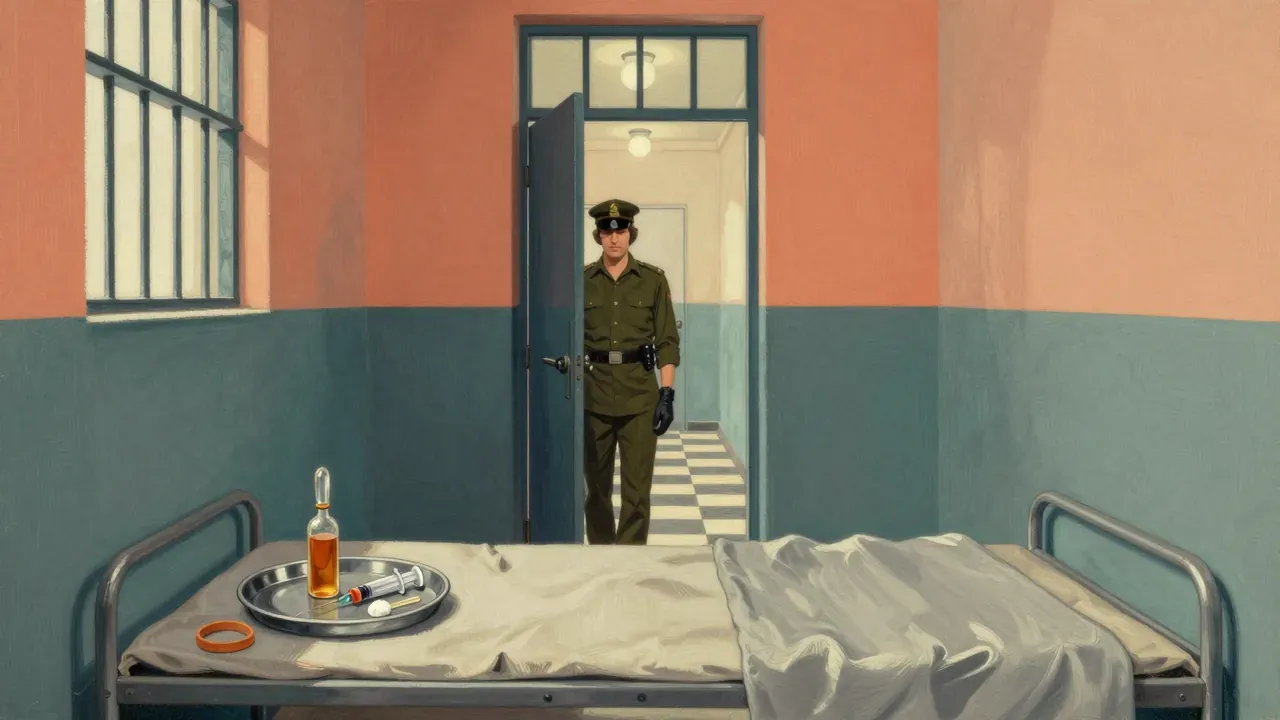
Z is a political thriller built from real events: the 1963 assassination of Greek politician Grigoris Lambrakis and the cover-up that followed, culminating in the 1967 military coup. Costa-Gavras does not disguise the source — the film’s title is the Greek graffiti slogan ‘Zei’ (‘He lives’), scrawled in protest after Lambrakis’s death — nor does he soften its intent. It is an act of forensic dramatisation: to reconstruct how state violence hides behind bureaucratic language, how institutions absorb dissent, and how justice unravels when power refuses accountability. The film treats its Mediterranean setting as a composite — Algiers stands in for Thessaloniki, French actors speak French, but the legal procedures, police hierarchies and political slogans are drawn from Greek court records and press reports. Its aim is not ambiguity but clarity: to show the mechanics of authoritarianism as they operate in daylight, with officials quoting statutes while arranging murders. It assumes the viewer knows little about Greece but trusts them to follow cause and effect across institutional layers — magistrate, prosecutor, general, journalist, witness — each step narrowing the gap between official story and physical fact. Word count: 158
How it moves
The plot moves with procedural rigour: a deputy is clubbed from a truck; the autopsy contradicts the police report; a magistrate insists on evidence; witnesses recant or vanish; indictments are filed then voided. Raoul Coutard’s cinematography uses handheld urgency without sacrificing compositional control — crowd scenes feel dense but legible, interrogation rooms are lit with flat, unflattering precision. Jean-Louis Trintignant plays the magistrate with quiet persistence, never raising his voice, his authority rooted in procedural memory rather than charisma. Yves Montand and Irene Papas appear briefly but decisively — Montand as the murdered deputy, Papas as his widow, both embodying presence cut short. Jacques Perrin’s photojournalist operates as the film’s nervous system, linking testimony, image and consequence. Françoise Bonnot’s editing stitches action to implication: a cut from a hospital bed to a banquet photo confirms collusion before dialogue does. Mikis Theodorakis’s score — bouzouki-led, rhythmic, mournful — underscores moral weight without melodrama. There are no flashbacks, no dream sequences: time flows forward, irreversible. Word count: 159
Where it hits
What lands is the accumulation of small betrayals — the General’s lie about the drunk driver, the attorney general’s polite sabotage of the investigation, the family pressuring a dying man to stay silent. These are not grand speeches but administrative acts: a phone call, a signed order, a withheld document. The film’s power comes from how ordinary they feel. The courtroom sequence where the magistrate presents the banquet photo is not cathartic but chilling — the evidence is undeniable, yet the response is silence, then transfer. The epilogue lands hardest: not with outrage but with bureaucratic exhaustion — officers reprimanded, assassins jailed briefly, journalists imprisoned, the letter ‘Z’ banned. This is not tragedy as fate but as policy. The film’s rhythm — clipped sentences, abrupt cuts, recurring motifs like the truck’s engine or the ticking clock — makes inevitability feel tactile. Even the music, though lyrical, avoids uplift: ‘Café Rock’ pulses like a failing heart. The viewer does not cheer the magistrate’s diligence; they register its futility as structural, not personal. Word count: 157
Where it slips
What does not land is the attempt to humanise the antagonists beyond function. The Deputy Minister’s marital squabbles and adulteries — included, per Costa-Gavras, to show he is ‘simply a man’ — sit uneasily beside the film’s otherwise unsentimental treatment of power. They dilute the focus without deepening motive. Similarly, the CROC acronym feels over-explained, its full name delivered twice as if the audience needs reminding it is fictionalised. The film’s Algerian locations, while practical, occasionally jar: the Hotel St. Georges lacks the civic weight of a Greek ministry building, and the Théâtre des Champs-Élysées ballet scene floats free of narrative purpose. Some stylistic parallels to the Zapruder film — rapid cuts during the assassination — are effective but risk misdirection, since Costa-Gavras has stated the footage was not available to him. The film’s moral clarity is its strength, but its occasional insistence on illustrating ideology as disease (the General comparing -isms to mildew) veers into didacticism, breaking the documentary-like restraint that otherwise holds it together. Word count: 159
What it keeps saying
The themes that matter are institutional complicity, the fragility of evidence, and the difference between legal process and justice. Z treats law not as neutral framework but as terrain — contested, manipulated, abandoned. The magistrate follows procedure precisely, yet each correct step is met with a counter-move: witness intimidation, jurisdictional interference, media suppression. The film shows how truth becomes unstable not through doubt but through overload — too many documents, too many versions, too many officials denying knowledge. It also examines the role of the image: the photojournalist’s camera captures what words cannot, yet those photographs are suppressed, misfiled, or used selectively. The ban on the letter ‘Z’ in the epilogue is not symbolic flourish but literal erasure — language itself weaponised against memory. The film’s enduring relevance lies here: not in its Greek specificity but in its demonstration that authoritarianism rarely announces itself with uniforms and salutes; it arrives in memos, transfers, and quietly amended autopsy reports. Word count: 158
Who it is for
This film is for viewers who value precision over pace, who follow procedural logic as closely as character arcs, and who expect political films to treat systems — not just individuals — as agents. It suits those familiar with mid-century European history or willing to engage with its context without exposition. It is not for viewers who require moral resolution, emotional release, or protagonists who prevail. Those who prefer psychological interiority over institutional analysis will find its characters functional rather than intimate. Anyone expecting suspense built on mystery — who did it, where is the body — will be disappointed: the murder happens early, the perpetrators are named, and the question is not guilt but consequence. A viewer who values narrative closure above all would reject its epilogue as defeatist. But that verdict depends on whether one sees justice as outcome or as practice — and Z insists they are not the same. Word count: 159
What it leaves
Yes, it is worth your evening — not as entertainment but as calibration. Its 127 minutes do not pass lightly, but they accumulate weight: each scene tightens the link between rhetoric and violence, between paper and pain. You leave not with catharsis but with a sharper eye for euphemism, for the gap between a press release and a wound. It repays attention because its craft serves argument: Coutard’s framing, Bonnot’s cuts, Theodorakis’s score — all deny distraction. That said, it demands stamina. A viewer fatigued by moral ambiguity may mistake its clarity for simplicity; someone seeking hope may read its ending as nihilism, though it is more accurately diagnosis. Its value lies in how little it asks you to believe — only to observe, compare, and connect. If you have watched recent documentaries on judicial capture or press suppression, Z will feel less like history than field notes. Word count: 159