The premise
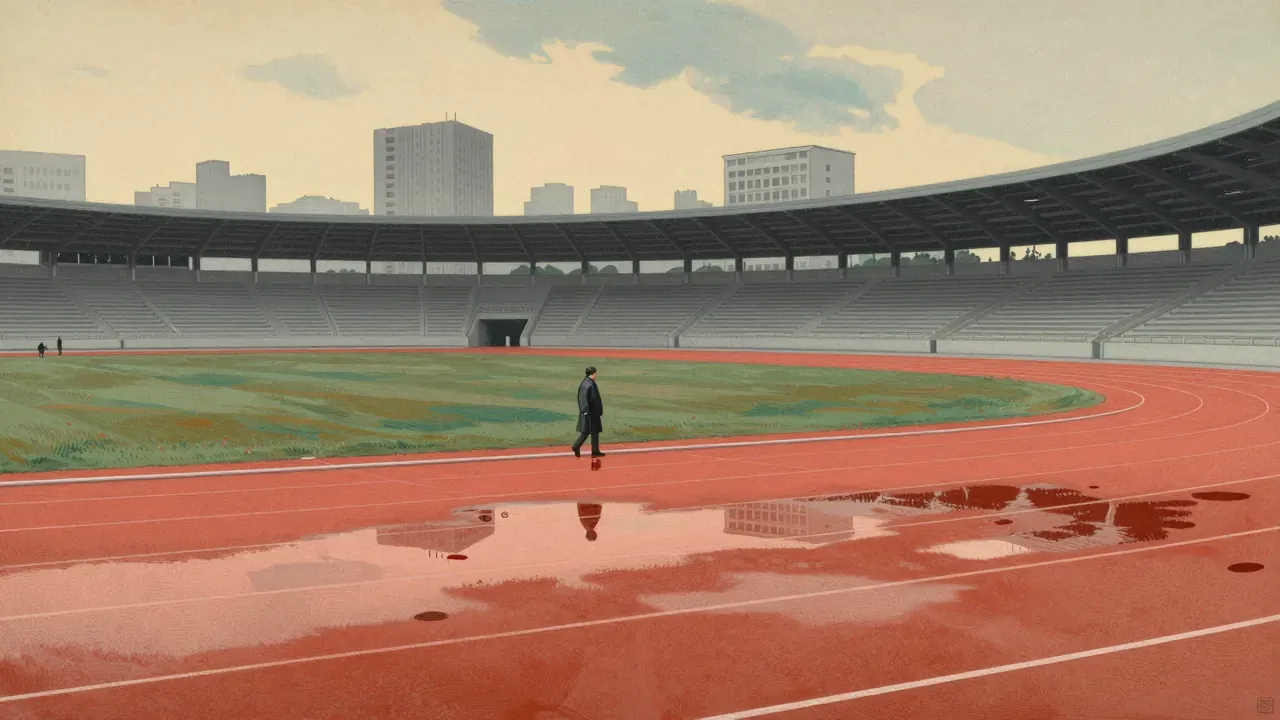
Visions of Eight is a documentary anthology commissioned to interpret the 1972 Munich Olympics through eight distinct directorial visions. It does not aim to chronicle the Games in sequence or comprehensively, nor does it function as official record or sports journalism. Instead, each segment selects a single athletic discipline or emotional register — pole vault, decathlon, women’s competition, loss — and treats it as a formal or psychological subject. The film’s ambition is structural and conceptual: to fracture the monolithic spectacle of the Olympics into subjective, stylistically divergent fragments, thereby questioning how heroism, endurance and failure are framed by image and editing. It assumes the viewer already knows the Games’ broad contours — including their violent interruption — and asks them to attend instead to how meaning is constructed across lenses, rhythms and silences. The project was conceived before the Munich massacre but released after it, and that temporal gap shapes its unresolved tension between celebration and commemoration.
The look of it
The film works as a mosaic of craft choices rather than a unified narrative. Each director brings a different visual grammar: Kon Ichikawa’s The Fastest uses extreme slow motion and tight framing to isolate sprinters’ biomechanics; Miloš Forman’s The Decathlon favours handheld immediacy and unvarnished interviews; Claude Lelouch’s The Losers lingers on physical collapse and incoherent speech. Alan Hume’s cinematography anchors Ichikawa’s segment, while Arthur Wooster and Walter Lassally shape Schlesinger’s and Penn’s respectively — their contrasting approaches visible in grain, focus and movement. Dede Allen’s editing, particularly in Penn’s segment, imposes rhythmic disorientation to mirror athletic strain. Henry Mancini’s score is restrained, often absent, allowing ambient sound or silence to dominate. There are no performers in the conventional sense, yet the athletes become involuntary actors in each director’s aesthetic experiment — their bodies measured, slowed, isolated or obscured according to the segment’s governing idea.
What holds up
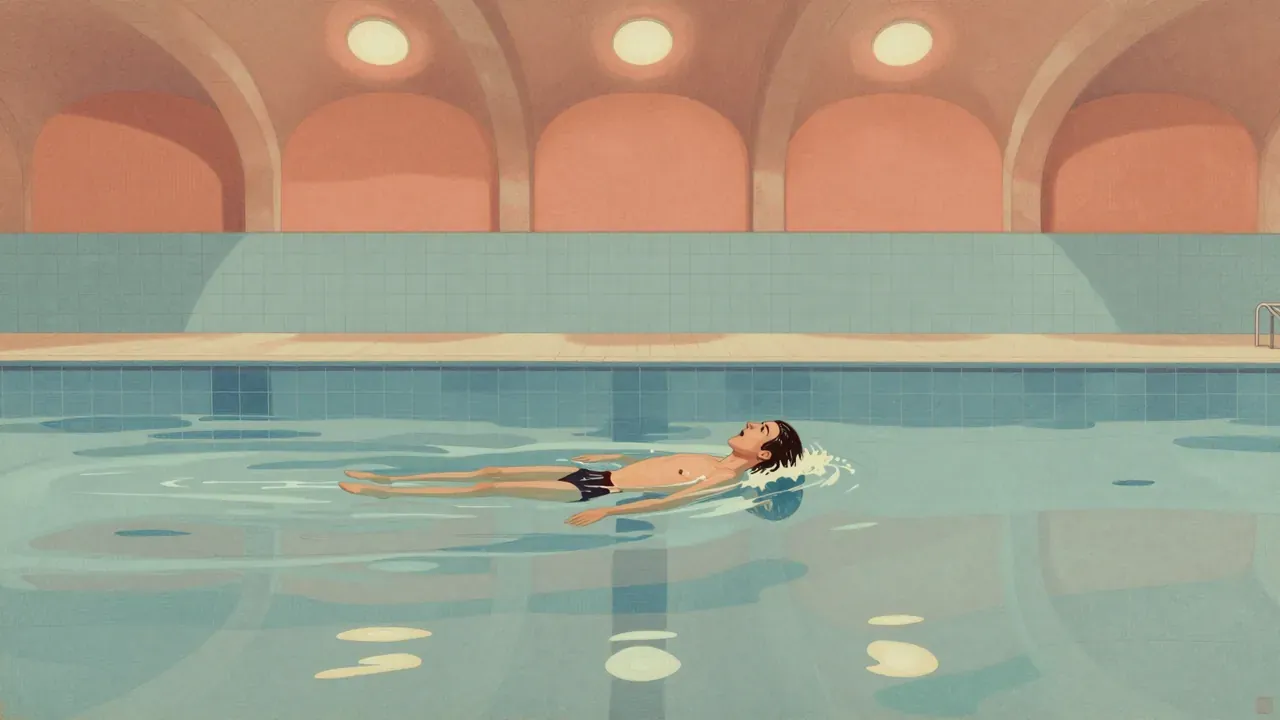
What lands most firmly is the film’s refusal to flatten Olympic experience into triumphal cliché. Penn’s pole vault segment succeeds by treating sport as embodied labour: the blurred, silent ascent followed by sudden clarity makes physical effort legible as both fragile and precise. Lelouch’s focus on injury and disorientation — wrestlers grimacing mid-fall, swimmers treading water after defeat — offers a rare counterpoint to Riefenstahl-style mythmaking. Ichikawa’s attention to micro-gestures — a sprinter’s jaw tightening, fingers gripping the track — conveys intensity without commentary. The cumulative effect of eight perspectives is neither seamless nor harmonious, but it does produce moments where form and subject align with quiet authority: the weight of exhaustion in a decathlete’s pause, the eerie stillness after a vault, the way silence thickens around an athlete who has just lost. These are not illustrative shots; they are sustained observations that ask the viewer to recalibrate their attention.
Where it breaks
What does not cohere is the film’s relationship to the Munich massacre. Only Schlesinger’s segment directly acknowledges it, and even then obliquely — through tone, pacing and absence — rather than exposition or testimony. The other seven segments proceed as if the event had not occurred, creating a jarring discontinuity between the film’s stated context and its visual execution. This is not a failure of taste but of structure: the anthology format permits evasion, and several directors choose abstraction over reckoning. Some segments feel underdeveloped as standalone essays — Pfleghar’s The Women, for instance, relies on familiar tropes of feminine grace without interrogating them — while others, like Ozerov’s The Beginning, remain cryptic without supplementary knowledge of Soviet cinematic conventions. The English-language narration, written by David Hughes, is functional but rarely incisive, often stating the obvious rather than deepening interpretation.
What it’s really about
The themes that matter are endurance as process rather than outcome, the instability of victory, and the ethics of spectatorship. The film repeatedly undermines the idea of athletic achievement as self-evident or transcendent: success is shown as contingent on timing, luck, physiology and pain management; failure is rendered not as absence but as physical presence — trembling limbs, choked breath, bewildered eyes. There is also a quiet interrogation of scale: how a global event fractures into individual perception, and how cameras mediate that fracture. The contrast between Penn’s anatomical focus and Lelouch’s emphasis on collapse suggests competing models of human capacity — one analytical, one empathetic. Underlying all this is a Cold War subtext, barely spoken but structurally present: eight directors from six countries (including West Germany, Japan, Czechoslovakia, France, Sweden and the US) interpreting a Games held in divided Germany, with the Soviet bloc’s participation itself a political act. The film does not resolve these tensions; it holds them in suspension.
Who it’s for
This film is for viewers who value formal curiosity over narrative convenience, and who approach documentaries as exercises in perspective rather than sources of information. It rewards patience with slow reveals, attention to editing rhythm, and tolerance for ambiguity — especially around historical context. Those who expect clear exposition, chronological coherence or moral resolution will find it frustrating. It is not for casual viewers seeking Olympic highlights or biographical insight into athletes; nor is it for those who require explicit engagement with trauma, given its uneven treatment of the Munich events. A historian might object to its selective memory, while a sports fan may find its abstraction alienating. What would change the verdict is not more footage or narration, but a tighter editorial framework — one that acknowledges the massacre not as an afterthought but as the condition under which all eight visions must be read.
Is it worth your evening
Yes, it is worth your evening — provided you watch it as a period artefact and formal experiment, not as a definitive Olympic document. Its 110 minutes unfold deliberately, with long takes and minimal exposition, demanding the viewer meet it on its own terms. The Criterion release includes contextual material that helps bridge gaps left by the film itself, but the core work remains compelling in its variety and restraint. It is not uniformly successful — some segments feel tentative or opaque — but the best ones linger: Penn’s pole vault, Forman’s decathlon interviews, Lelouch’s unflinching look at defeat. Anyone willing to sit with uncertainty, to notice how a slow-motion sprint differs from a slow-motion fall, will find substance here. Those expecting drama, explanation or catharsis will leave dissatisfied. Its value lies in what it refuses as much as what it shows: a collective decision, made across national lines, to look closely — even when looking closely means seeing less than you hoped.