The look of it
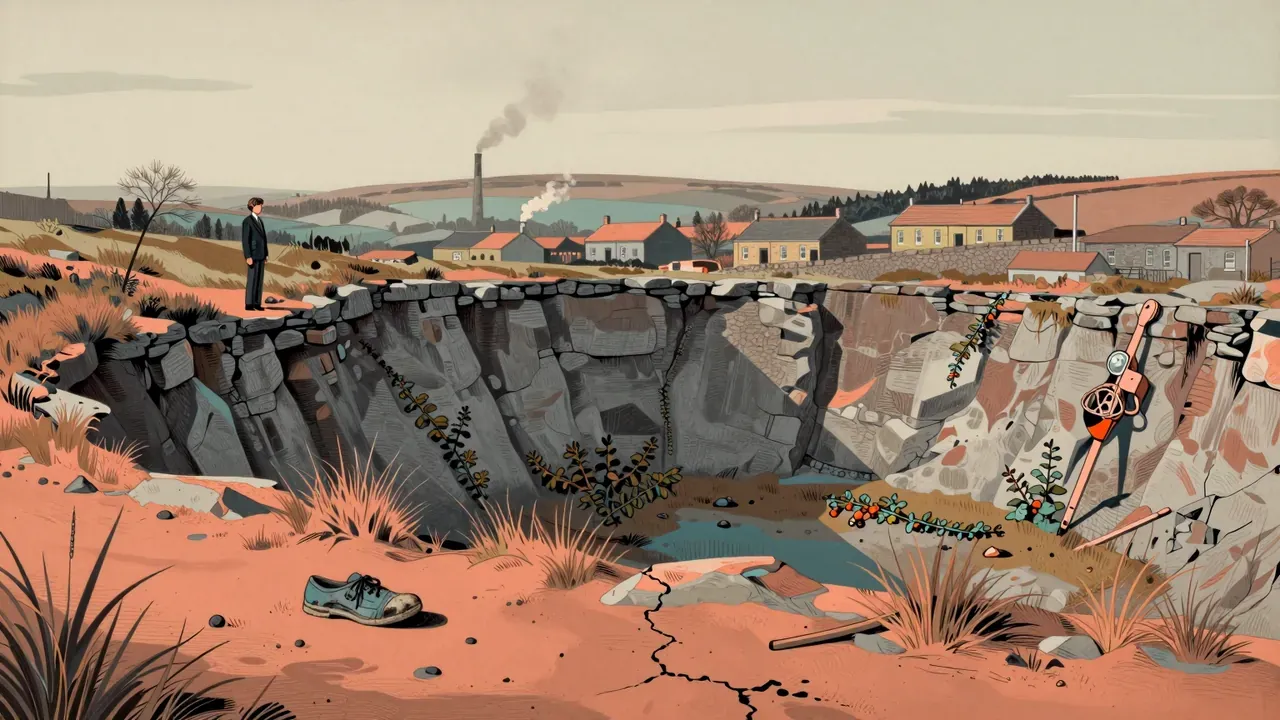
Young Törless is a 1966 German drama adapted from Robert Musil’s 1906 novel, directed by Volker Schlöndorff in his feature debut. It attempts to trace the moral and intellectual awakening of a boy who observes cruelty without participating in it — not as a hero, but as a disengaged witness. The film sets itself against the backdrop of an Austro-Hungarian military academy at the turn of the twentieth century, using that setting not for period spectacle but as a pressure chamber for examining how systems of authority, hierarchy and silence enable abuse. Its aim is neither exposé nor condemnation, but anatomical: to show how cruelty becomes routine, how intellect can be a refuge from feeling, and how withdrawal may be the only available form of resistance. It does not ask whether Törless is good or bad, but whether observation without intervention is complicity — or merely the first step toward something else. The film treats adolescence not as a phase to be outgrown, but as a site where the architecture of adult moral failure is already being assembled.
The boy who watches
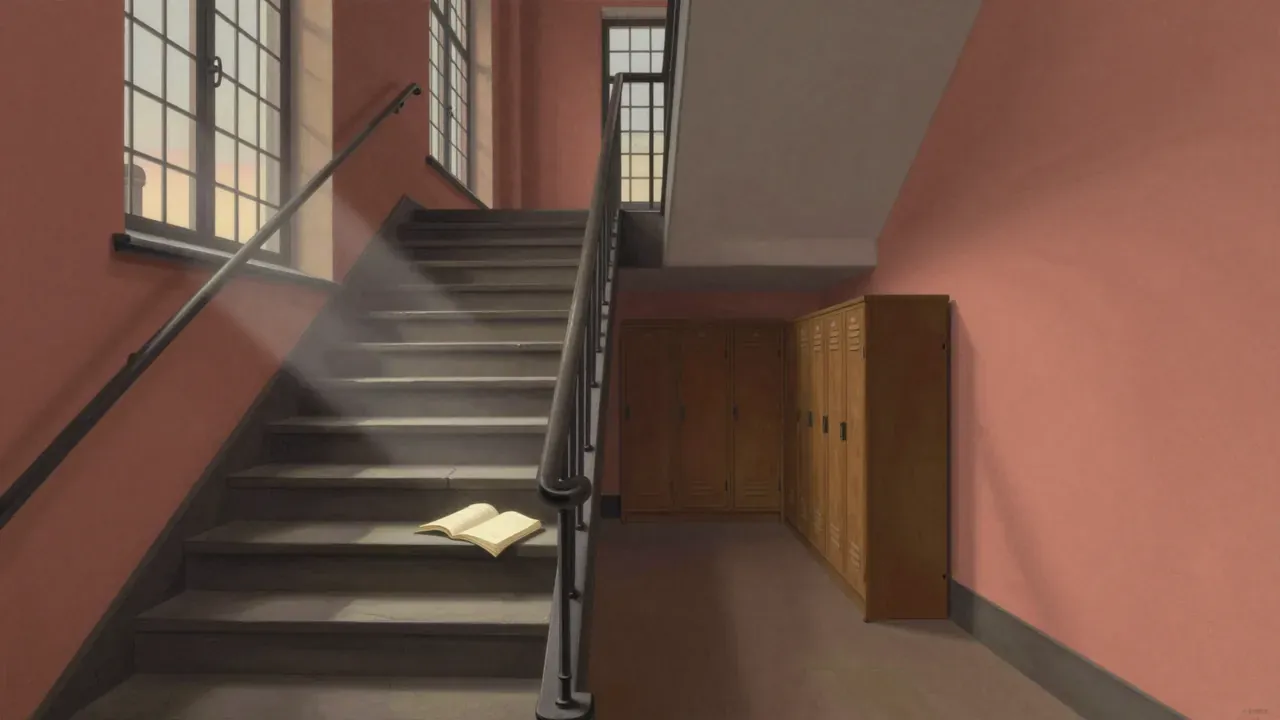
The story follows Thomas Törless’s arrival at the academy and his passive observation of the ritualised torment inflicted on Anselm von Basini by Reiting and Beineberg. Mathieu Carrière plays Törless with a stillness that borders on vacancy — not blankness, but containment. Lotte Ledl and Barbara Steele appear in brief, pivotal roles: Ledl as the maths teacher who deflects questions about imaginary numbers, Steele as Bozena, the prostitute whose quiet dignity contrasts with the boys’ performative brutality. Franz Rath’s cinematography avoids stylisation: interiors are lit with flat, even clarity; exteriors are overcast and unromantic. Hans Werner Henze’s score uses string textures that feel archaic and unsettled, avoiding melody in favour of harmonic suspension. Claus von Boro’s editing moves with deliberation — scenes linger just past comfort, refusing to cut away from discomfort or ambiguity. There are no close-ups to cue emotion, no music swells to underline meaning. The craft holds its breath, letting the script’s cold logic do the work.
The routine of cruelty
What lands is the cumulative weight of unspoken consent. The film makes palpable how institutions sustain themselves not through overt orders but through shared silence — the teachers’ indifference, the students’ mimicry, Törless’s refusal to look away or look closer. The scene where Basini is suspended upside down in the gym is not shocking for its violence but for its banality: the boys treat it like drill practice, the camera stays at mid-distance, the sound design is sparse and dry. The maths lesson about imaginary numbers lands with equal force — not as metaphor, but as structural parallel: both cruelty and abstraction resist intuitive grasp, and both are presented as matters of accepted convention rather than reasoned understanding. The final image of Törless smiling as he leaves with his mother does not read as relief, but as the first flicker of agency in a world that has offered him only roles: victim, perpetrator, or spectator. That ambiguity holds.
What cannot be explained
What does not land is the framing of Bozena’s character. Her presence is narratively necessary — she introduces class, gendered vulnerability and adult failure into the boys’ insulated world — but her scenes lack the same textual density as the academy sequences. Barbara Steele’s performance is restrained and credible, yet the script gives her no interiority beyond what serves Törless’s gaze. Her backstory — pregnancy, abandonment, servitude — arrives as exposition, not integration. Similarly, the film’s period setting remains under-anchored: there are no visual or auditory cues to locate it firmly in the belle époque beyond uniforms and architecture; the political context of the Habsburg decline, which Musil’s novel embeds in every sentence, is muted here. The adaptation narrows the novel’s philosophical sprawl into a tighter psychological study, but in doing so, it loses some of the historical scaffolding that made Musil’s critique systemic rather than individual.
The silence of the teachers
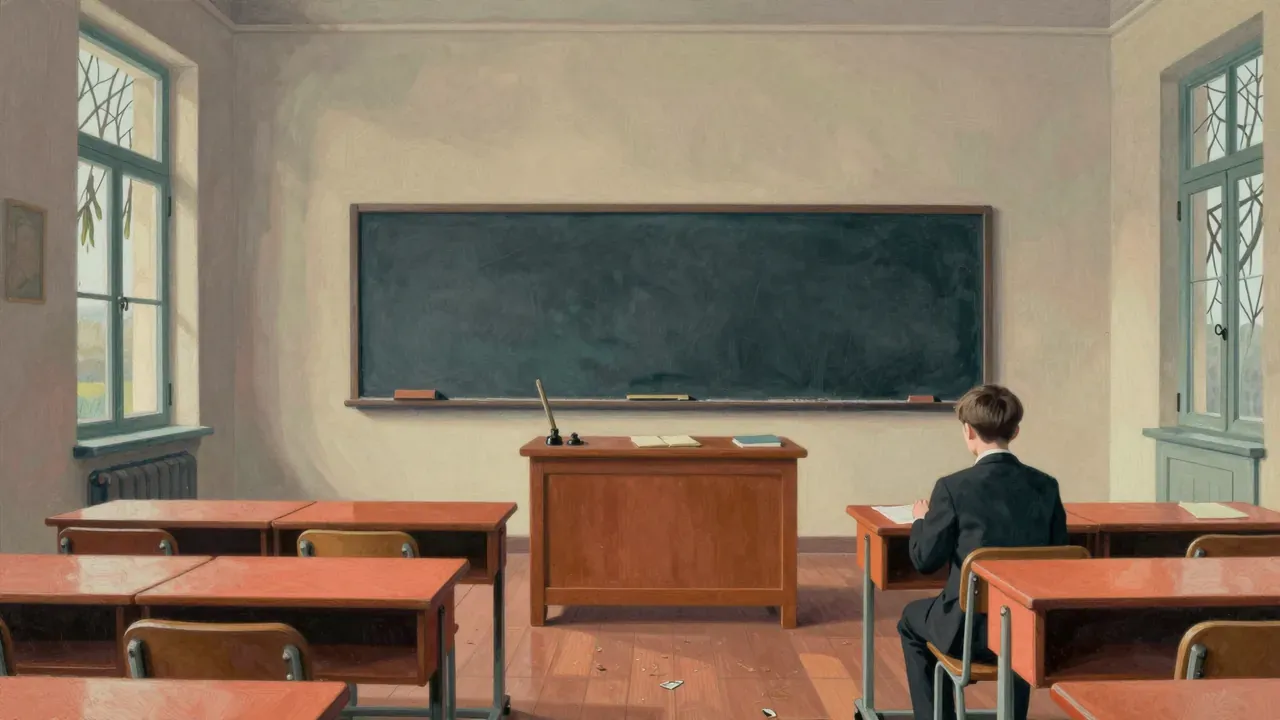
The themes that matter are not cruelty or adolescence in isolation, but the relationship between rationality and moral paralysis. The film treats mathematics not as neutral knowledge but as a language that fails when applied to human behaviour — the teacher’s dismissal of imaginary numbers mirrors the institution’s dismissal of Basini’s suffering. Power is shown not as domination but as delegation: Reiting and Beineberg do not act alone, but with the tacit approval of peers and superiors who refuse to name what they see. The film also probes the limits of witnessing: Törless does not intervene, but neither does he internalise the values of his environment — his departure is not redemption, but disengagement. This is not a film about innocence lost, but about perception sharpened to the point where participation feels impossible. It asks whether clarity without action is wisdom or evasion — and refuses to answer.
The smile at the gate
This film is for viewers who tolerate long silences, distrust emotional signposting, and are willing to sit with unresolved tension for eighty-seven minutes. It suits those familiar with post-war German cinema’s preoccupation with inherited guilt, or with Musil’s work as an exploration of epistemological uncertainty. It is not for viewers who require narrative propulsion, moral resolution or character arcs that move toward growth or catharsis. Those who expect adolescent drama to pivot on rebellion, romance or self-discovery will find it withholding. Some critics have argued that its austerity risks aestheticising trauma — that the clinical distance becomes a kind of complicity. That reading would shift the verdict only if one believed the film’s project was ethical instruction rather than diagnostic observation. It is not a guide to right action; it is a map of how systems make action difficult.
What remains after departure
Yes, it is worth your evening — provided you approach it as a precise, unsentimental instrument rather than a story to be absorbed. Its value lies in its rigour: every shot, line and pause serves the central inquiry into how cruelty becomes habitual, and how intellect can function as both shield and cage. It does not offer solace, insight or even clarity — only a sustained, unblinking look at a mechanism many would rather ignore. Those who find its pace too deliberate or its conclusions too bleak may prefer adaptations with stronger narrative scaffolding. But for anyone interested in how films can model thought itself — not what characters feel, but how they process — Young Törless remains singular. Its power is cumulative, not immediate; its reward is retrospective, not visceral. It earns attention not by demanding it, but by refusing to waste a single frame.