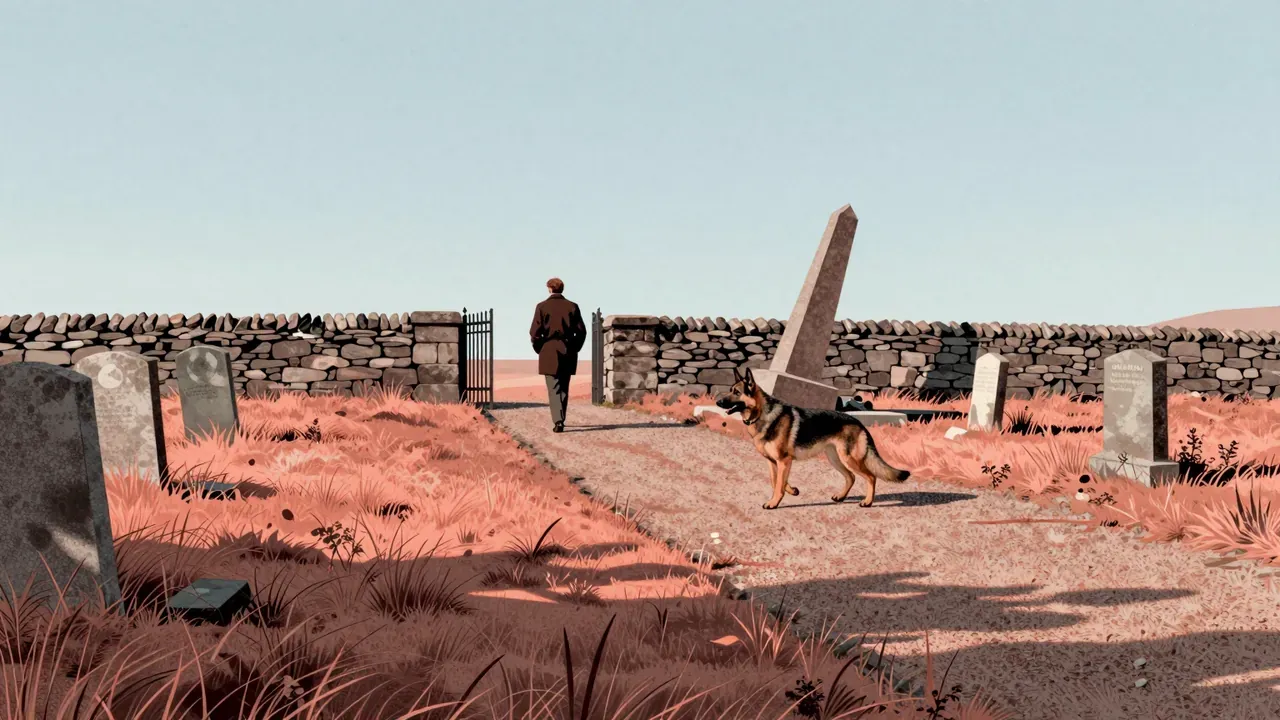
The weight of the notebook
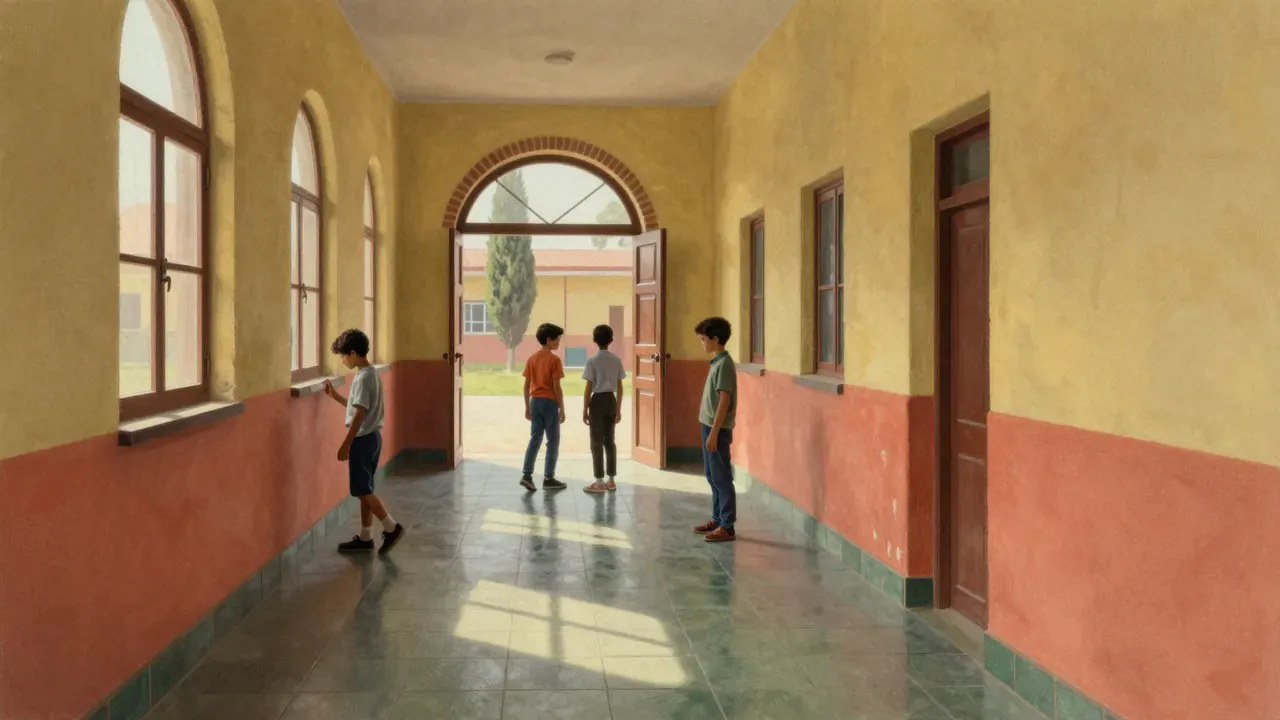
Where Is the Friend’s House? is a quiet, precise film about a child’s moral urgency in a world that does not register it. Abbas Kiarostami sets out not to dramatise childhood innocence but to observe how a single ethical impulse — returning a notebook to prevent a friend’s expulsion — meets the slow, indifferent texture of rural Iranian life in the late 1980s. The film avoids exposition, psychology, and explanation; it treats Ahmad’s mission as self-evident, and the adult world’s failure to assist him not as cruelty but as routine absence of attention. There are no flashbacks, no voiceover, no music beyond diegetic sound. The structure follows the logic of a real search: repetition, misdirection, fatigue, small kindnesses mistaken for answers. Kiarostami does not ask us to empathise with Ahmad so much as to accompany him — to notice what he notices, to pause where he pauses, to accept the weight of a notebook as both object and obligation. This is not allegory dressed as realism; it is realism sharpened into parable by restraint. (158 words)
The sound of real speech
The story unfolds across a single day in Koker and the neighbouring village of Poshteh, mapped through Ahmad’s walking routes, dead ends, and brief encounters. Babak Ahmadpour plays Ahmad with unselfconscious gravity — no performance cues, no gestures designed for the camera. Adults speak past him, over him, or at him without listening; their lines are functional, uninflected, delivered by non-professionals whose faces bear the marks of work and weather. Farhad Saba’s cinematography keeps the frame steady and mid-distance, favouring natural light and shallow depth of field: interiors are dim, exteriors washed in dry, even light. Editing by Kiarostami is rhythmic but unhurried — cuts often follow Ahmad’s gaze, then hold on an empty doorway or a turning path. Sound design is sparse and literal: wind, footsteps, distant goats, a carpenter’s saw. There is no score. The notebook itself becomes the only prop with narrative agency: its blank pages, its smudged ink, its worn cover — all rendered with tactile exactness. Nothing is heightened; everything is placed. (159 words)
The pace of searching
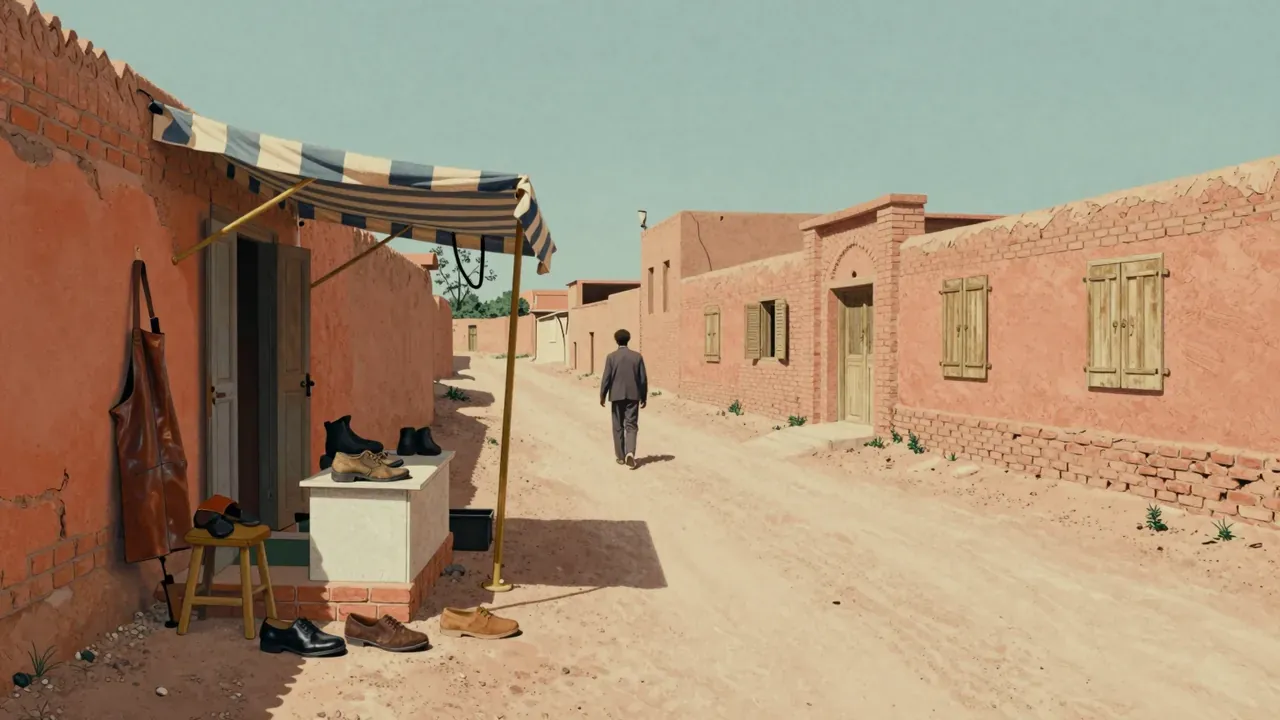
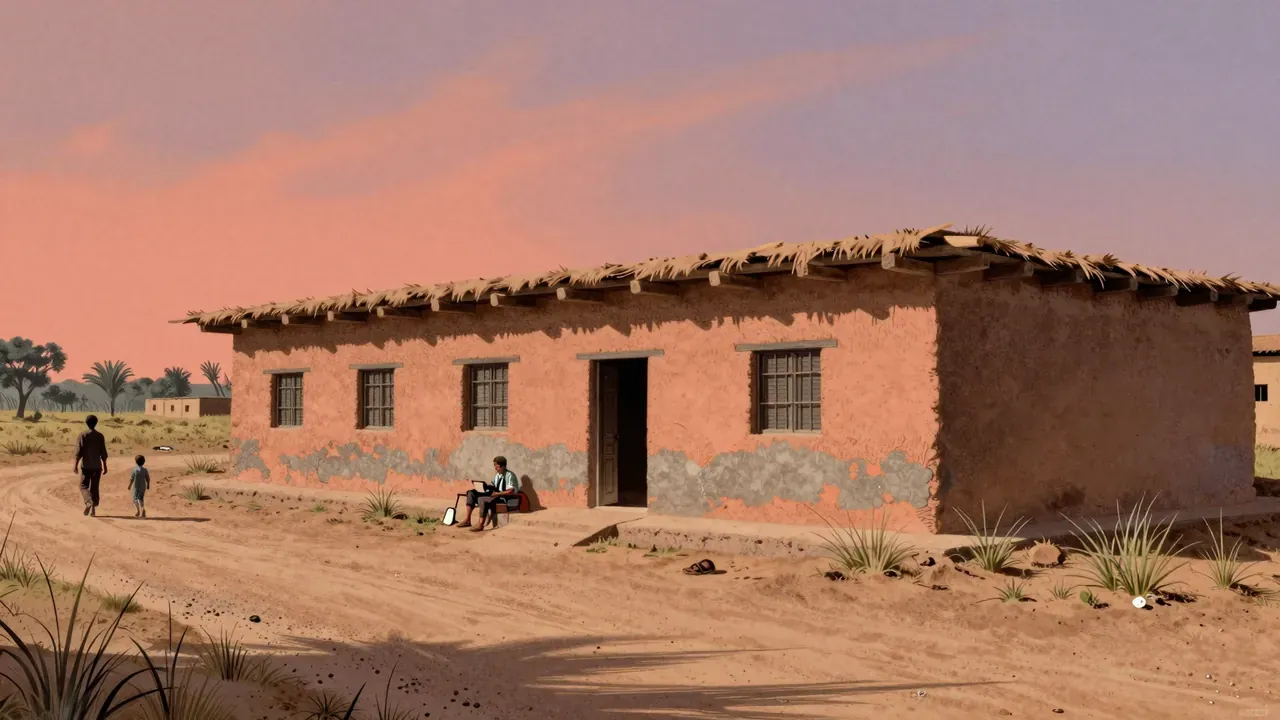
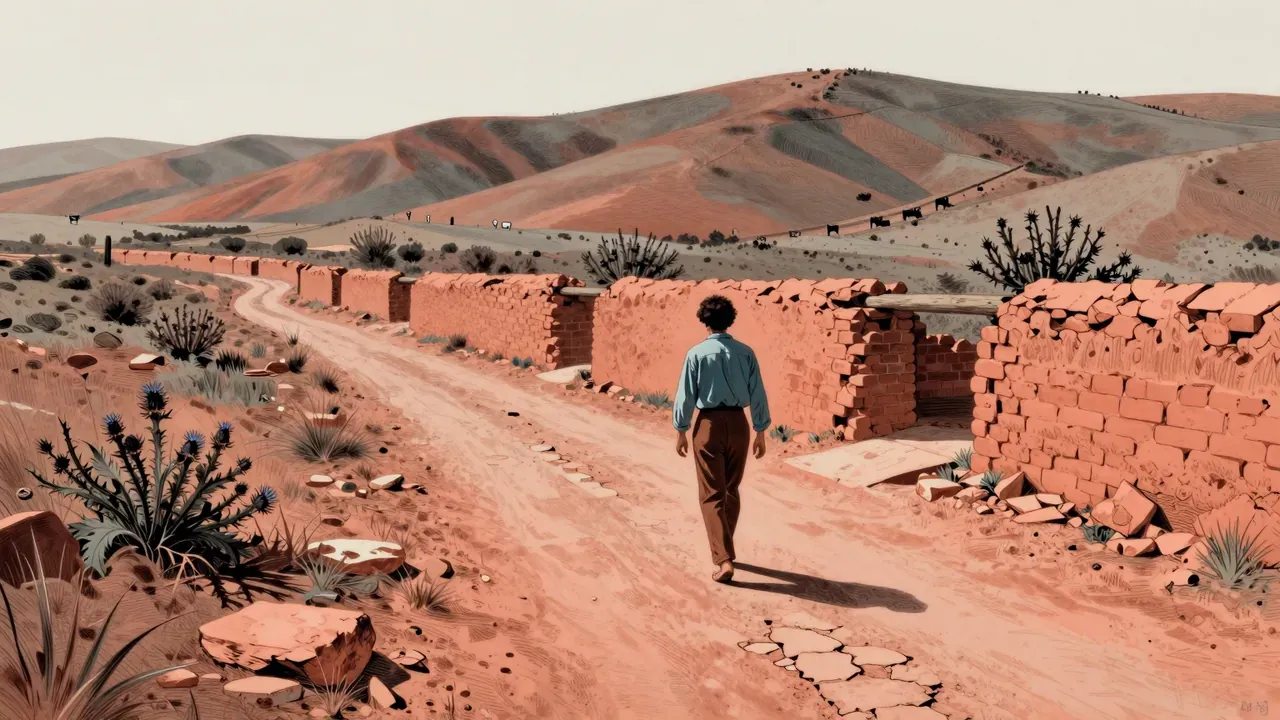
What lands is the cumulative pressure of small refusals. When Ahmad asks a woman selling apples where Reza lives, she glances away while wiping her hands; when he knocks at a door and an old man peers out, the man answers a question he did not hear, then closes the door. These moments do not build to catharsis but to quiet recognition: this is how responsibility circulates — or fails to — in ordinary places. The film’s emotional force comes from the contrast between Ahmad’s fixed purpose and the ambient looseness of adult time. His persistence feels neither heroic nor naive, but necessary — like breathing. The final shot, of Ahmad handing in two notebooks, carries no triumphal music or close-up; the teacher simply nods. That restraint makes the act land with more weight than any climax could. The film also lands in its geography: the hills, stone paths, and mud-brick houses are not backdrop but co-actors, shaping every detour and delay. Kiarostami refuses to flatten the landscape into symbolism; it remains stubbornly itself — uneven, uncooperative, real. (157 words)
The refusal of emphasis
What does not land is the assumption that every viewer will accept the film’s refusal of narrative payoff. Some may find the repetitions tedious — the same questions asked three times, the same alley walked twice, the same unanswered knock. Others may read the adults’ indifference as cultural specificity rather than human universality, and feel distanced rather than implicated. The film offers no explanation for why Reza’s notebook matters so much, no backstory for Ahmad’s sense of duty, no insight into his mother’s authority or the school’s rigour. It assumes the viewer will supply those gaps without prompting — a demand some will meet, others resist. There is also no visual variation to signal tonal shift: no change in colour grade, no shift in framing to mark fatigue or hope. The consistency can read as austerity, even coldness, to viewers accustomed to cues that guide emotional response. And while the child’s perspective is sustained, it is never romanticised — which means there is no comfort in nostalgia, no safety in sentiment. That honesty is the film’s strength, but also its barrier. (159 words)
The shape of the land
The themes that matter are obligation without reward, attention as moral practice, and the quiet violence of being unheard. The film treats literacy not as abstraction but as material fact — ink on paper, a teacher’s red pen, a boy’s careful copying. It treats geography as ethics: the distance between villages is not measured in kilometres but in willingness to cross it. Time is another theme — not clock time but lived time, stretched by uncertainty and compressed by urgency. The notebook embodies continuity: Reza’s handwriting, Ahmad’s tracing of it, the teacher’s approval — all part of the same fragile chain of care. There is also a theme of translation: Ahmad speaks Persian, but many he meets speak dialects or Azerbaijani; meaning slips not through malice but through mutual incomprehension. Yet the film never frames this as tragedy. It suggests that meaning persists in the attempt — in the asking, the walking, the waiting — even when answers do not come. These are not ideas illustrated but rhythms embedded: in the pacing, the silences, the way a shot holds on an empty road after Ahmad has passed. (158 words)
The grammar of obligation
This film is for viewers who value attention over plot, precision over exposition, and duration over revelation. It rewards patience, not interpretation. It suits those familiar with neorealist or observational cinema — Bresson, early Dardenne, certain Ozu sequences — or those willing to adjust their expectations of what constitutes narrative momentum. It is not for viewers who require clear stakes, character arcs, or emotional resolution. Those who rely on music, editing rhythm, or actorly emphasis to orient themselves may feel adrift. Parents expecting a ‘children’s film’ will be surprised: it contains no whimsy, no simplification, no reassurance. Nor is it for those seeking political context — the Iran-Iraq War is absent, ideology unmentioned, religion present only in passing gesture. To watch it expecting commentary on Iranian society is to miss its point: it is about one boy’s fidelity to a small promise, in a place where such fidelity is neither praised nor punished, only witnessed — if at all. (159 words)
The end of the day
Yes, it is worth your evening — provided you give it your full, unmediated attention. It does not ask for much time — eighty-three minutes — but it demands presence: no scrolling, no pausing, no half-listening. Its value lies in how it recalibrates perception: after watching, a dropped pencil, a missed bus, a repeated question may feel newly significant. It is not ‘important’ because of its reputation or its place in film history, but because it models a way of seeing that is rare on screen — patient, unflinching, unadorned. Those who dislike it will likely cite its slowness or its refusal to explain itself; they would prefer a film that tells them what to think. But the verdict does not change if you disagree — it changes only if you watch it distractedly, or expect it to behave like other films. Its worth is not in what it says, but in how it trains the eye and ear to hold still. (159 words)