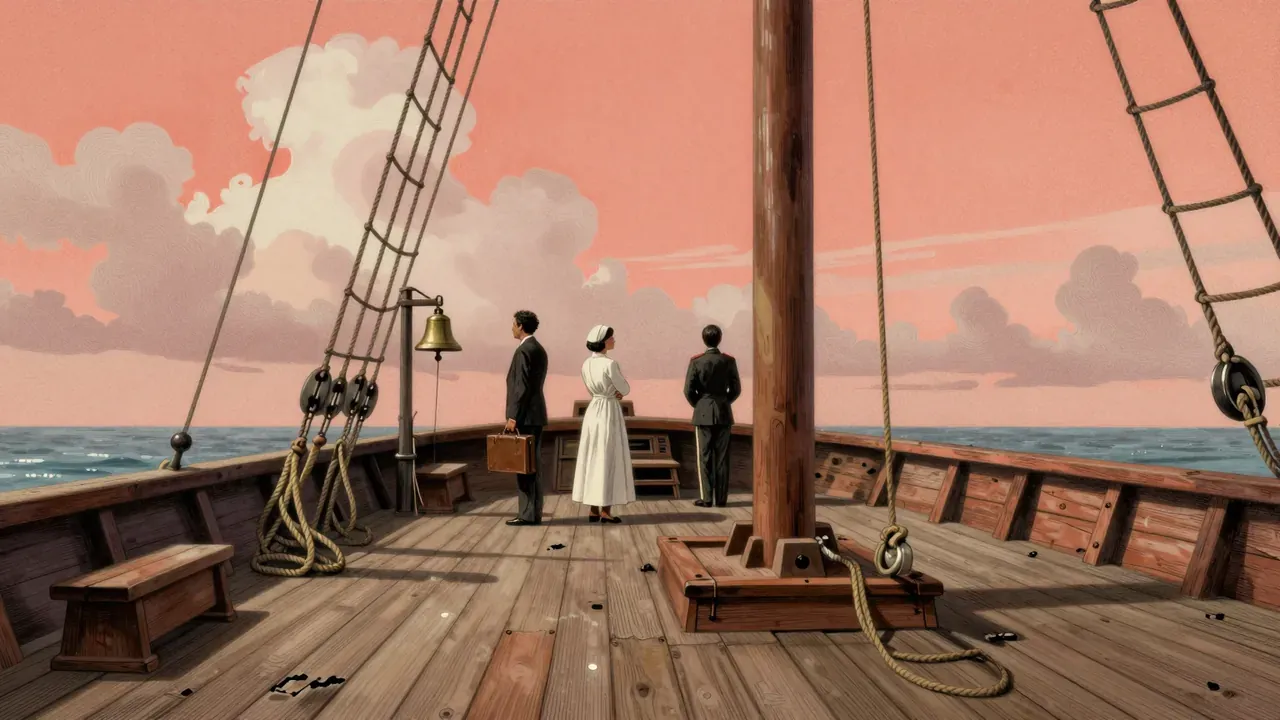
The look of it
Werckmeister Harmonies is a black-and-white Hungarian drama that attempts to render political and metaphysical collapse as physical atmosphere: cold air, fog, slow movement, silence broken by distant shouts or the groan of a whale. It adapts László Krasznahorkai’s 1989 novel The Melancholy of Resistance, but does not dramatise plot so much as accumulate pressure — over thirty-nine long takes, each lasting several minutes, the film holds its gaze on faces, empty streets, and decaying structures while a nameless town unravels. Its aim is not explanation but embodiment: to make the viewer feel the weight of ideological vacancy, the exhaustion of resistance without direction, and the quiet horror of consensus dissolving into mob action. It treats music theory — specifically Andreas Werckmeister’s tuning system — not as technical detail but as a metaphor for compromised order, and positions György Eszter’s failed reformism as parallel to the town’s failed civic life. The film refuses narrative propulsion in favour of durational immersion, asking the viewer to inhabit time rather than move through it. (147 words)
The weight of it
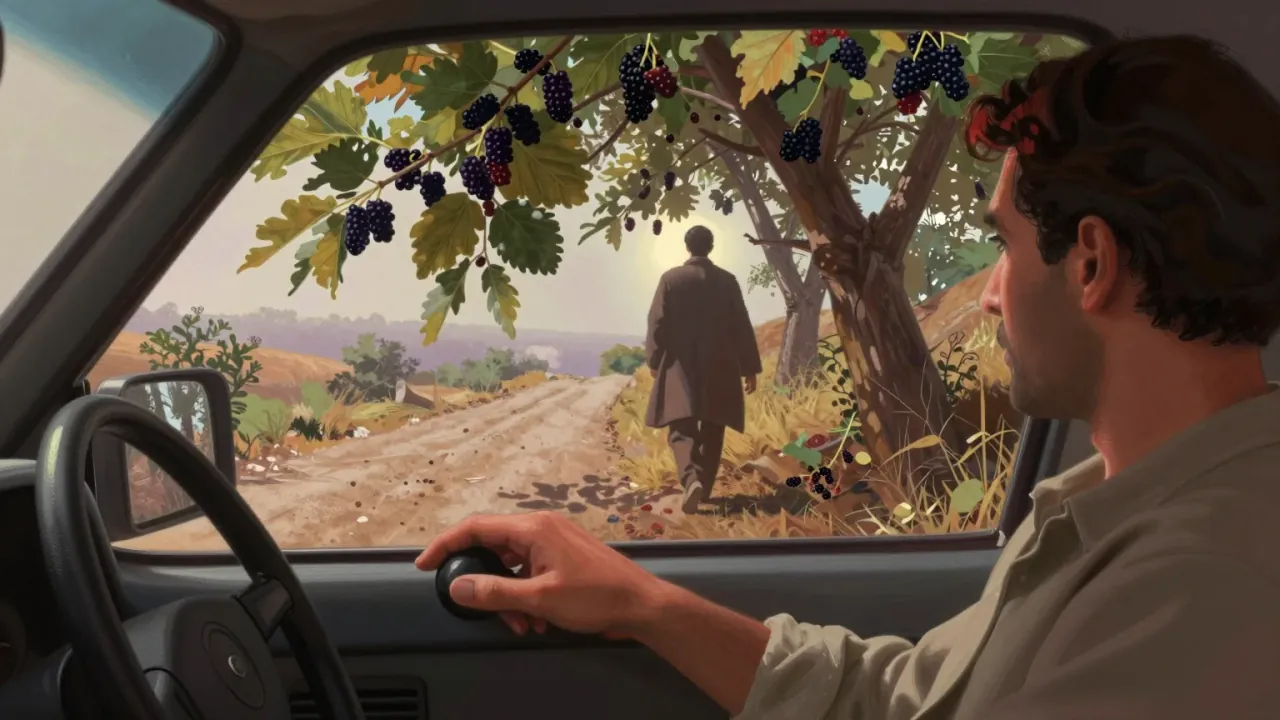
The story unfolds across winter days in an unnamed Hungarian town, following János Valuska and his uncle György Eszter as a circus arrives with a rotting whale and an unseen ‘Prince’. Performances are muted and internalised: Lars Rudolph’s János moves with distracted grace, Peter Fitz’s György speaks in measured, weary cadences, Hanna Schygulla’s Tünde exudes brittle authority. Gábor Medvigy, Robert Tregenza and Miklós Gurbán shoot in deep-focus black-and-white, using wide lenses and gliding camera movements that linger on doorways, stairwells and fogged windows. Ágnes Hranitzky’s editing sustains the film’s rhythm — no cuts within shots, only transitions between them — while Mihály Víg’s sparse, atonal score punctuates silence rather than fills it. Dialogue is sparse and often dubbed; Hungarian voices replace the actors’ originals, adding a layer of slight dislocation. The production’s international financing and protracted shooting schedule (1997–2000) show in its meticulous texture: every surface feels lived-in, every pause deliberate, every gesture weighted by what precedes and follows it. (158 words)
The silence in it
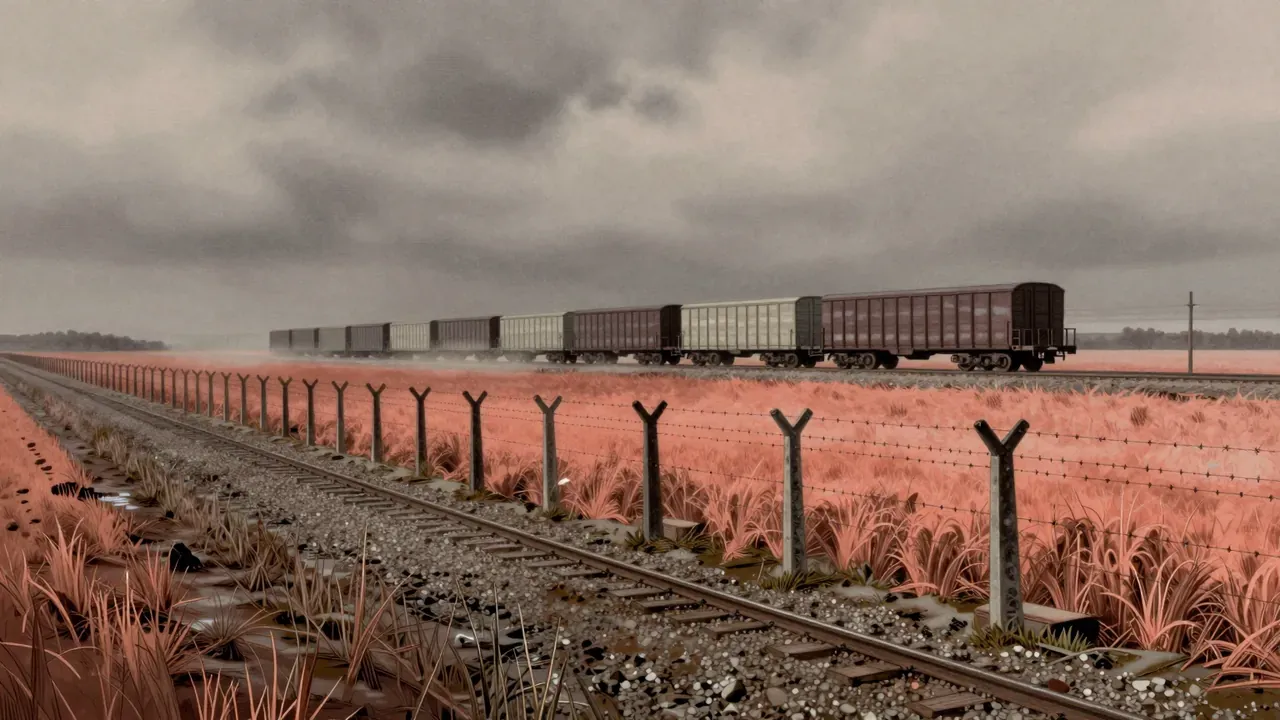
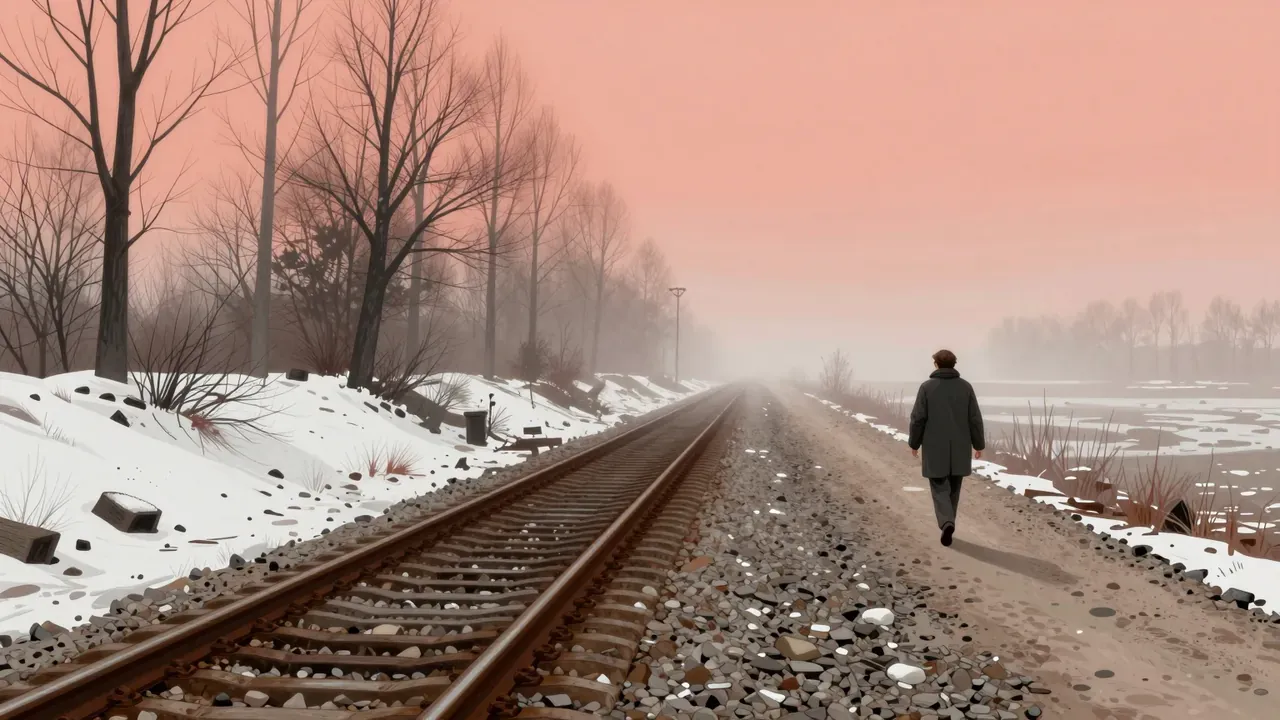
What lands is the film’s oppressive physicality: the chill of unheated rooms, the stench implied by the whale’s carcass, the exhaustion in János’s walk along railway tracks. The thirty-nine-shot structure works not as formal gimmick but as cumulative architecture — each take builds a sense of entrapment, of time thickening like fog. The hospital riot sequence lands with dreadful inevitability, not through shock but through slowness: the mob’s approach is heard before it is seen, their violence deferred until the final, silent withdrawal from the emaciated patient. György’s piano retuning — abandoning his harmonic idealism — lands as a quiet, devastating capitulation. Even minor figures register: Đoko Rosić’s man in western boots, Tamás Wichmann’s sailor-cap figure, Ferenc Kállai’s circus master — all occupy space with the gravity of archetypes rather than characters. The whale itself becomes the film’s central image: not symbolic in any fixed way, but present, rotting, indifferent, a mass of matter against which human meaning repeatedly fails. The ending — György staring into the whale’s eye, then turning away — lands not as resolution but as acknowledgment: the object remains, the fog closes in, and nothing has been repaired. (156 words)
The distance in it
What does not land is the film’s reliance on abstraction when it needs specificity. The political context — late communist Hungary — remains unnamed and unanchored, leaving the ‘Clean Up the Town’ movement and Tünde’s collaboration vague rather than ominous. Some viewers will find the dubbing disruptive, especially where voice and mouth do not match, weakening presence. The monologues on musical theory, though central to György’s character, risk sounding like exposition in search of a listener who shares his obsession — they clarify little for those unfamiliar with Werckmeister, and add little for those who are. The film’s refusal to name the town, era or institutions makes its critique diffuse: it evokes decay but does not locate its cause. Critics who value narrative causality — such as David Sterritt, who praised its conscience-awakening power — may still find its ellipses frustrating rather than resonant. The hospital riot’s aftermath — the diary recounting rape — arrives as text on screen, breaking the film’s visual continuity and feeling tacked-on rather than integrated. And while the 145-minute runtime is justified by its method, some stretches — particularly the extended bar scene early on — test patience without deepening insight. (159 words)
The air of it
The themes that matter are entropy, complicity and the failure of systems — musical, social, political — to hold. The film treats tuning not as physics but as ethics: Werckmeister’s compromise echoes the compromises of late socialism, where ideology persists as ritual without belief. The whale embodies both awe and rot — something vast and ancient, now hollowed out and displayed for spectacle. Mob violence arises not from grievance but from vacancy: the rioters do not know what they oppose, so they oppose everything. This is not fascism as doctrine but as mood — contagious, directionless, exhausting. The mental institution at the end is not punishment but containment: János’s silence is not breakdown but refusal to re-enter a language that has already collapsed. György’s shed, with its retuned piano, marks not resignation but adaptation — living inside broken structures without pretending they work. The fog is neither metaphor nor setting but condition: it blurs boundaries, muffles sound, obscures agency. These are not ideas argued but atmospheres sustained — the film’s politics reside in pacing, framing and duration, not dialogue or plot. (148 words)
The demand of it
This film is for viewers who treat cinema as a medium of duration and attention — those willing to sit with silence, tolerate ambiguity, and accept that meaning accumulates slowly, unevenly, sometimes not at all. It suits readers of Krasznahorkai, students of Eastern European history, and anyone attuned to the aesthetics of decay. It is not for those who require narrative momentum, psychological clarity or emotional catharsis. Viewers who rely on exposition, character arcs or tonal variety will find it impenetrable or inert. Those expecting historical specificity — say, a film about 1989 Hungary — will be frustrated by its refusal to name dates, parties or policies. People who dislike dubbed dialogue or static compositions should avoid it entirely. A viewer who values craft over story, texture over plot, and resonance over resolution may find it essential. But someone seeking entertainment, uplift or even conventional artistry — say, a viewer drawn to Tarr’s earlier Sátántangó — may find Werckmeister Harmonies colder, more withholding, less generous with its rewards. Its demands are absolute: full attention, no shortcuts, no expectation of payoff. (152 words)
The after of it
Yes, it is worth your evening — if you have the stamina for its pace and the willingness to let its weight settle without immediate interpretation. It repays attention not with revelation but with recalibration: after watching, ordinary silences feel heavier, street corners more charged, fog more ominous. Its 145 minutes are not filler but architecture — each shot a brick in a structure meant to be felt, not decoded. Those who dismiss it as pretentious or inert usually expect cinema to explain rather than embody, to move forward rather than deepen in place. A viewer who prefers narrative efficiency, emotional cues or visual variety will rightly find it unrewarding. But for those who believe film can alter perception — not by telling you how to think, but by changing how you inhabit time — it remains singular. Its restoration in 4K (2022) and Criterion/ Curzon releases (2024) confirm its status not as relic but as active, demanding work. Worth your evening? Yes — provided you give it your undivided, unhurried attention. (151 words)