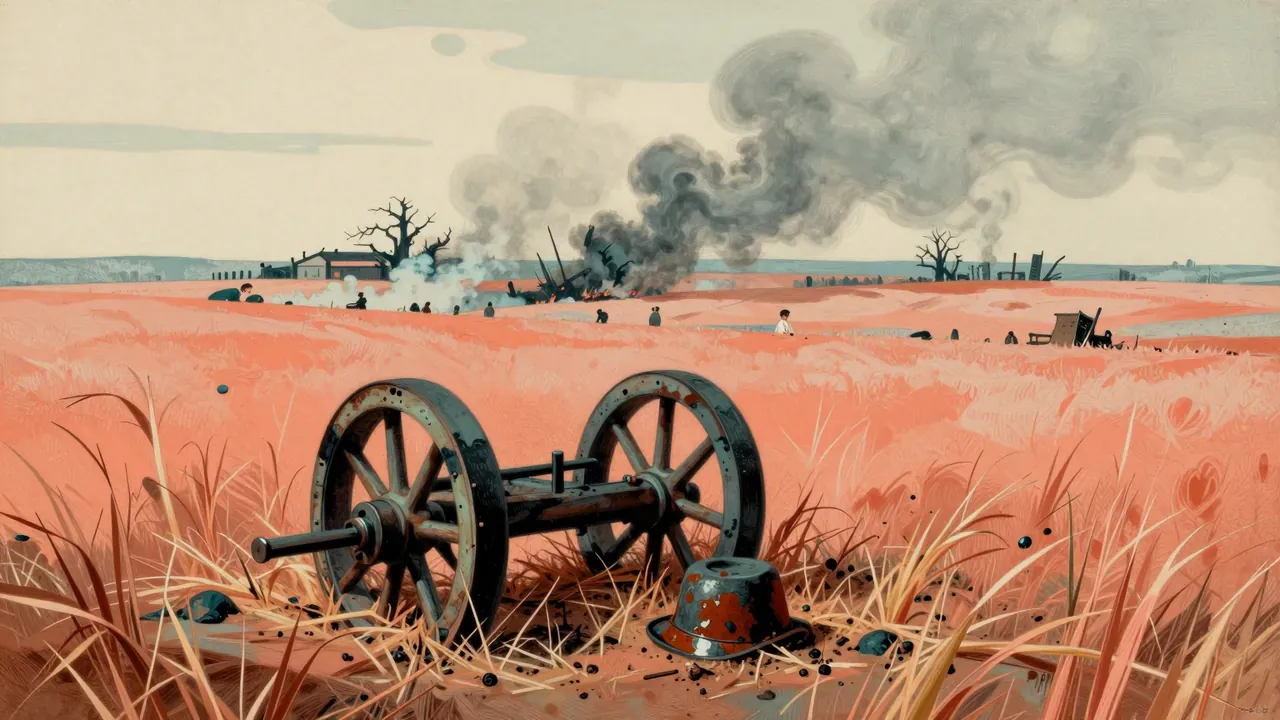
The look of it
Wanda is a 102-minute American independent film from 1970, written and directed by Barbara Loden, who also plays its central character. It attempts to trace the unmoored drift of a woman with no resources—material, emotional, or cognitive—through a landscape of economic decline and social indifference. Set in eastern Pennsylvania’s anthracite region, it avoids exposition, psychology, or redemption arcs; instead, it sustains a flat, observational register, treating Wanda’s passivity not as pathology but as condition. The film does not seek to explain her, nor to indict or pity her, but to hold her in frame long enough for the viewer to register how little agency she has been given—not by plot alone, but by language, posture, lighting, and duration. Its ambition is structural: to make inertia visible, to let silence and repetition accumulate weight, and to refuse the narrative consolations expected of drama. It treats the heist genre not as thriller scaffolding but as incidental machinery—Norman’s crimes are secondary to Wanda’s non-reaction to them. This is not a film about crime, but about what remains when even resistance feels like effort too large to attempt. (158 words)
The shape of time
The story unfolds in episodic, loosely connected vignettes, with minimal cause-and-effect logic: Wanda loses custody, loses work, loses money, loses Norman, loses safety—and each loss registers less than the one before. Barbara Loden’s performance is uninflected, physically slack, her voice low and unmodulated; Michael Higgins as Norman is terse, withholding, never theatricalising menace. There are no professional supporting actors beyond those two—the rest are locals cast on sight, speaking in their own cadences, often without scripted lines. Nicholas Proferes’ 16mm cinematography keeps compositions shallow and static, favouring medium shots that deny expressive close-ups or dramatic angles. Lighting is natural or practical, rarely shaped; interiors are dim, exteriors washed out. Editing is sparse and unemphatic, with cuts held just long enough to unsettle rather than clarify. Dialogue is sparse, often trailing off or left unfinished. Improvisation was not a stylistic choice but a logistical necessity—Loden abandoned the script early, using situations and locations to generate action rather than dialogue. The result is a texture of lived time, not plotted time: scenes breathe, stall, repeat, and end without punctuation. (159 words)
What stays in frame
What lands is the cumulative effect of sustained attention to absence—absence of plan, of speech, of self-advocacy, of consequence. Wanda’s refusal to rise, resist, or even fully register abuse lands with quiet force because it is never dramatised as failure; it is simply how she occupies space. The coal fields, the roadside bars, the Holy Land USA theme park—all feel authentically depleted, not symbolically so. The film’s moral gravity comes not from judging Wanda but from refusing to look away while she is ignored, misread, or used. Her final scene at the roadhouse works precisely because it offers no catharsis: strangers feed her, laugh at her, treat her as harmless background noise, and she accepts it without irony or protest. That moment crystallises the film’s ethical stance—not empathy as feeling, but empathy as endurance of proximity. The restoration’s clarity helps: grain is present but unobtrusive, contrast low, colours muted but legible. The sound design—sparse, diegetic, often muffled—reinforces her perceptual isolation. These choices do not ask for admiration; they ask for patience, and that patience is repaid in slow, accumulating recognition. (157 words)
Where the logic ends
What does not land is any sense of internal logic governing Wanda’s decisions—or lack thereof. Her attachment to Norman is neither eroticised nor psychologised, but its persistence feels less like realism and more like narrative convenience, especially given how little time they spend together. The film’s resistance to motivation leaves some sequences adrift: the mall clothes-shopping interlude, the Holy Land visit, the kidnapping setup—all register as arbitrary rather than inevitable. Norman himself remains opaque in a way that undermines rather than deepens tension; his Evangelical father appears without context, his violence without escalation, his death without aftermath. The improvisational method yields authenticity but sacrifices coherence—some scenes feel like footage preserved for documentary value rather than dramatic function. Critics who found Wanda ‘pointless’ were not wrong in that narrow sense: the film refuses to assign meaning to her trajectory, and that refusal can read as evasion when sustained over 102 minutes. The absence of music, of voiceover, of even a clear temporal rhythm, risks monotony rather than austerity for viewers unprepared for its pace. (159 words)
The ground it walks on
The themes that matter are not those of crime or rebellion but of structural erasure: how poverty, gender, and regional decline converge to produce a subject who cannot be seen as an agent, only as a site of use. Class is rendered not through dialogue but through costume—Wanda’s ill-fitting dresses, Norman’s thrift-store suits, the worn linoleum in every interior. Femininity here is not contested but dissolved: Wanda has no relationship to her body beyond its utility to others. The film treats passivity not as weakness but as rational adaptation to environments offering no viable alternatives. There is no nostalgia for community, no critique of individualism—only the quiet documentation of its collapse. The coal fields are not metaphors; they are workplaces shuttered, towns hollowed, infrastructures rusting. The heist elements serve only to heighten Wanda’s irrelevance to the systems around her: she is not complicit, not resisting, not learning—she is simply carried along, like sediment. The film’s political force lies in its refusal to offer explanation, diagnosis, or hope. It insists that some lives are not stories, and that watching them unfold without narrative compensation is itself an act of attention with moral weight. (158 words)
Who it lets in
This film is for viewers who value durational precision over narrative propulsion, who find resonance in restraint, and who accept that a film may document rather than interpret. It rewards attention to texture, gesture, and silence—not as formal experiments but as ethical commitments. It is not for those who require psychological causality, moral resolution, or even consistent tone. Viewers expecting a heist thriller, a feminist parable, or a character study with arc will leave frustrated, as will those who need emotional cues—music, editing rhythms, or expressive performances—to orient themselves. Some critics at its 1971 release dismissed it as ‘pointless’; that verdict holds if you measure films by conventional stakes. But if you accept that a film may exist to bear witness to forms of existence routinely excluded from narrative economy, then Wanda is essential. Its difficulty is not obscurity—it is fidelity. Those who reject it tend to do so on grounds of affective distance, not craft failure. A tighter edit or clearer motivation would make it more accessible—but also less truthful to its subject. (159 words)
Why it lasts
Yes, it is worth your evening—if you approach it as a document rather than a diversion. Its 102 minutes do not pass quickly, but they do accrue density: each scene adds another layer to the atmosphere of quiet depletion. It demands no special knowledge, only willingness to sit with ambiguity and absence. It is not ‘enjoyable’ in the usual sense, but it is rigorously honest, formally coherent, and historically singular: the only feature written, directed by, and starring a woman in the American independent scene of 1970, made outside all studio and union frameworks. Its restoration and preservation status confirm its significance—not as a curiosity but as a benchmark of what cinema can do when stripped of convention. Those who call it ‘depressing’ mistake its honesty for pessimism. Its value lies in its refusal to flatter the viewer with insight, closure, or even clarity. To watch it is to confront how much narrative cinema relies on agency—and how rare it is to see its deliberate, sustained absence. That confrontation is uncomfortable, but never wasteful. (159 words)