The look of it
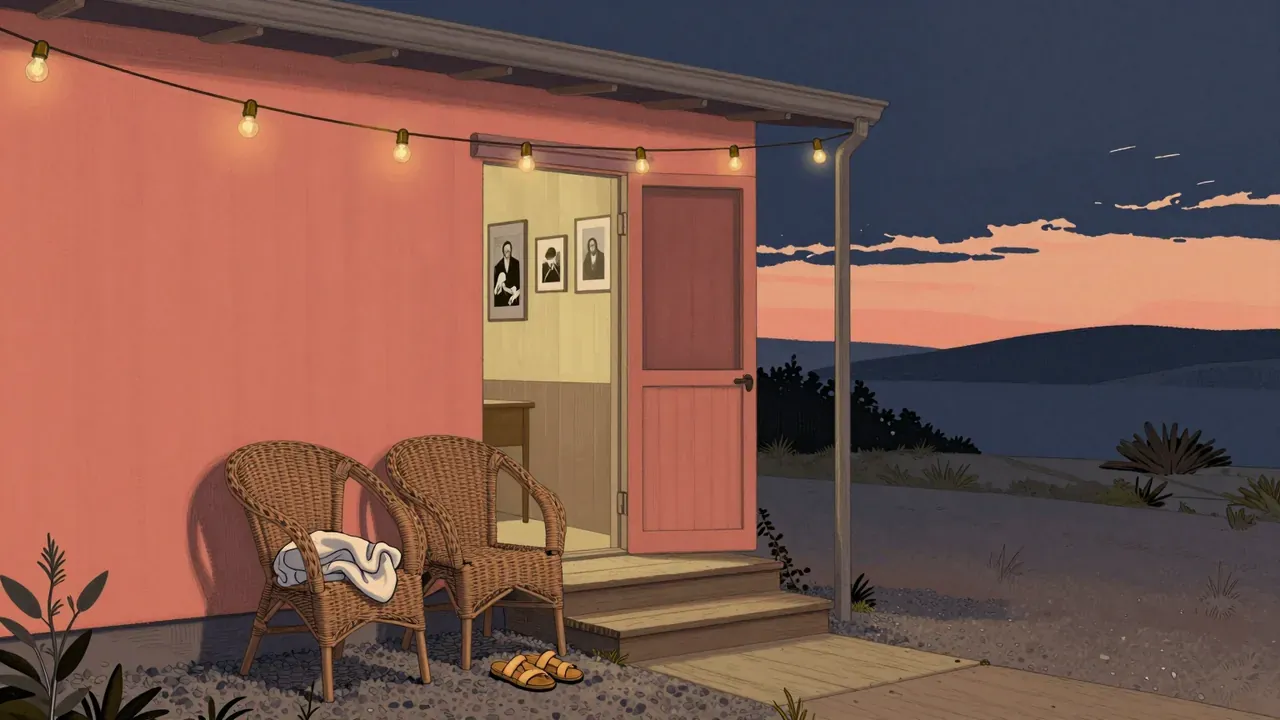
Wings is a Soviet art film from 1966, Larisa Shepitko’s first feature after graduating from VGIK. It attempts a psychological portrait of a woman whose wartime identity as a fighter pilot has calcified into a public myth, while her private life remains emotionally unmoored. The film does not dramatise combat or reconstruct history; instead, it holds stillness and repetition — the bus ride, the school corridor, the museum wall — against flashes of aerial movement and sensory memory. Its ambition is internal: to trace how duty becomes habit, how sacrifice outlives its cause, and how the body remembers flight long after the cockpit has been vacated. It treats the postwar Soviet present not as a setting but as a condition — one in which heroism is honoured but incomprehensible, and where personal time moves slower than historical time. This is not a film about victory or loss in the conventional sense, but about the weight of continuity: how a life lived at altitude leaves its imprint on the ground.
The shape of the story
The story unfolds through quiet accumulations: Nadezhda’s routine, her exchanges with students, her strained talk with Tanya, her visit to the airfield. Maya Bulgakova’s performance anchors every scene — her face registers fatigue before her voice does, her posture shifts between authority and withdrawal without explanation. Zhanna Bolotova as Tanya offers restraint rather than rebellion, making their mutual misreading feel inevitable. Igor Slabnevich’s black-and-white cinematography avoids contrast for its own sake; he keeps faces half in shadow during conversations, lets light pool on instrument panels but not on faces. The wartime footage — Messerschmitt reels spliced with Yak-9 live action — appears only once, in a dream sequence, and feels less like spectacle than physiological echo. Roman Ledenyov’s score is sparse, often absent, returning only when Nadezhda’s pulse quickens. There are no montages of triumph, no speeches to crowds; even the expulsion of Bostryakov lands with bureaucratic finality, not moral gravity.
What stays
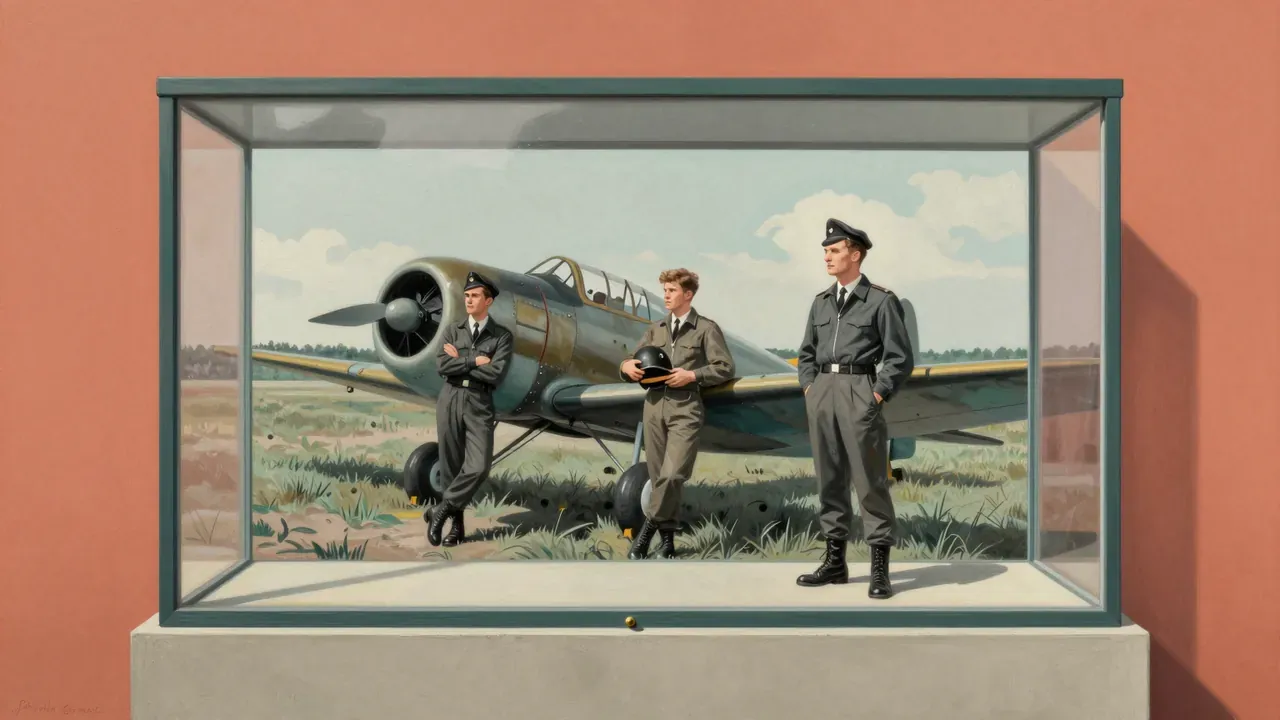
What lands most firmly is the film’s refusal to resolve its central tension: Nadezhda’s competence versus her loneliness, her clarity in the air versus her confusion on land. The moment she sits in the Yak-18, runs her fingers over the controls, and then starts the engine — not as escape, but as re-enactment — carries the full weight of the film’s emotional logic. The museum photograph of Mitya works not because it triggers exposition, but because it interrupts her present so completely that the next shot — her staring blankly at a student’s notebook — feels like a physical drop. The students’ collective plea for Bostryakov’s return lands precisely because it is granted without fanfare, then undercut by his whispered contempt. These moments succeed because they are underplayed, because the film trusts Bulgakova’s stillness and Slabnevich’s framing to hold ambiguity without explanation. The film’s power lies in what remains unsaid between characters, and in how much of Nadezhda’s past lives in her hands, her shoulders, the way she blinks when light catches her eyes.
What slips away
What does not land is the generational conflict as written: Tanya’s adoption is signalled but never substantively tested, and her objections to Nadezhda’s values remain vague, more thematic placeholder than lived friction. The subplot with Pavel the museum director dissolves without consequence — his character functions less as a partner than as a sounding board for Nadezhda’s self-doubt, and his dismissal of marriage as ‘exhibit’-level irony feels grafted on rather than earned. The film’s structure, though deliberate, risks monotony in its middle third: repeated shots of Nadezhda walking corridors or waiting for buses accumulate atmosphere but do not deepen insight after the first two instances. The integration of archival footage, while technically precise, does not cohere formally with the rest of the film — it arrives as illustration rather than extension of Nadezhda’s subjectivity. And the ending, though resonant, depends entirely on Bulgakova’s physical commitment; without it, the taxiing plane would read as gesture, not culmination.
What it’s really about
The themes that matter are ageing as dislocation, duty as self-erasure, and memory as involuntary rehearsal. Wings treats heroism not as a fixed attribute but as a role that persists beyond its context — one that Nadezhda performs daily in her school, even as it hollows her out. The film’s recurring motif is the gap between public expectation and private sensation: the students see a war heroine; Nadezhda feels only the ache in her knees from standing too long. Her flight memories are not nostalgic but somatic — the tilt of the horizon, the vibration in the stick, the sudden silence when an engine cuts. The film also interrogates inheritance: not of property or title, but of silence, of withheld truths, of emotional austerity passed down like a uniform. Even the airfield sequence is less about freedom than about the impossibility of shedding one’s own history — she does not fly away, but repeats the same manoeuvres, in the same order, as if testing whether the body remembers what the mind has buried.
Who it’s for
This film is for viewers who value psychological precision over plot momentum, who find resonance in restrained performances and compositional stillness, and who are comfortable with endings that settle rather than conclude. It rewards attention to gesture, to duration, to the weight of a pause. It is not for those who require narrative propulsion, clear moral stakes, or characters who articulate their inner lives directly. Viewers expecting a war film or a mother-daughter drama will find neither — the war is memory, the family is estranged by design, and the film refuses to translate its silences into exposition. Those who prefer documentary realism over poetic condensation may find the dream sequence jarring, and those who rely on music or editing to shape emotion may feel adrift in its long takes and sparse scoring. A viewer who values craft over catharsis, or who has lived with the quiet burden of being remembered for something they no longer are, will find it urgent.
Whether it’s worth your time
Yes, it is worth your evening — provided you watch it without expectation of resolution or reward beyond attention itself. Its eighty-five minutes unfold at the pace of breath, not event, and its impact accrues slowly, like sediment. It asks for nothing more than that you sit with Nadezhda’s stillness, notice how her hand rests on a desk or how she watches rain slide down a window, and accept that some lives are measured in repetitions, not revelations. Those who find this intolerable — who need forward motion, clear turning points, or emotional pay-off — will leave restless, and that is a fair response, not a failure of the film. The verdict changes only if you require cinema to explain rather than inhabit; if you do, Wings will feel withholding. But if you trust that a glance, a hesitation, a finger tracing a control panel can carry the weight of a lifetime, then it delivers fully — quietly, insistently, without flourish.