The night it takes place
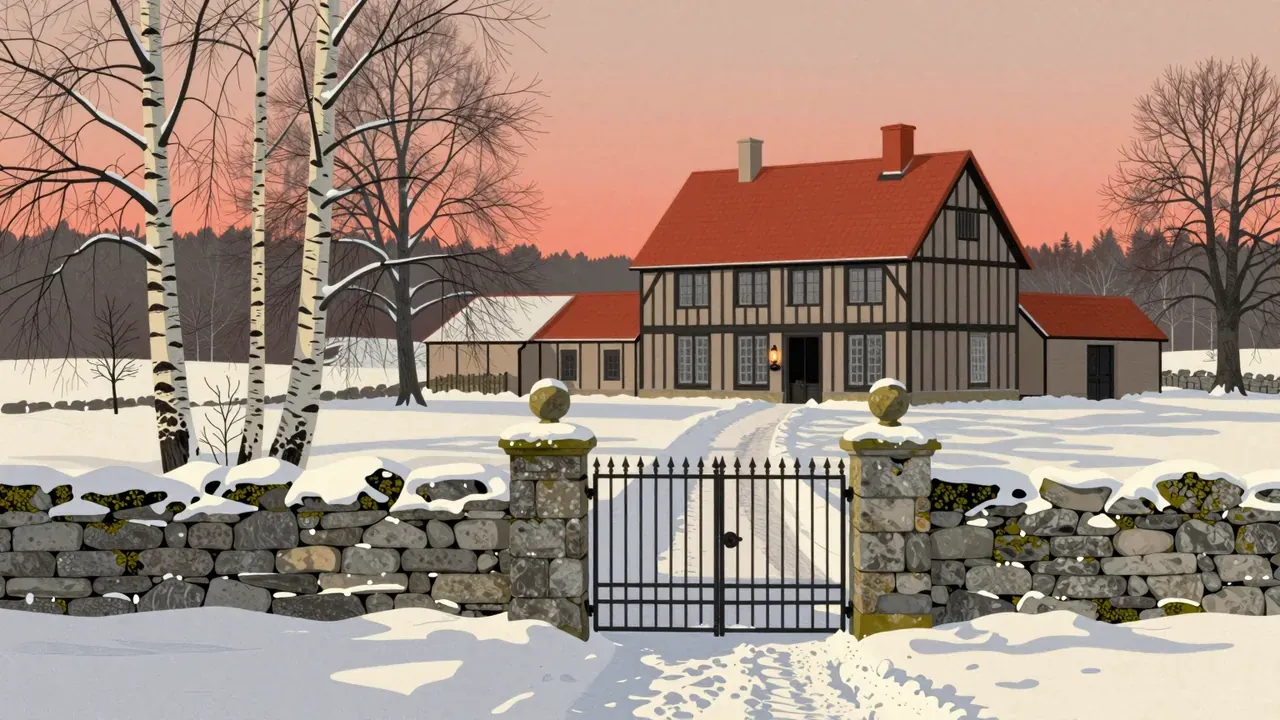
Walpurgis Night is a Swedish domestic drama set in Stockholm during the interwar years, built around a single evening’s gathering at the Borg household on 30 April — Walpurgis Night, a traditional spring festival marking the end of winter. It attempts to use that charged social occasion as a pressure vessel for long-simmering tensions: generational conflict, marital strain, professional disillusionment, and quiet moral compromise. The film does not seek spectacle or plot mechanics but psychological compression — a series of conversations, glances, and silences unfolding across one location and its immediate environs. Its ambition is modest but precise: to register how ordinary people carry unspoken histories into shared space, and how ritual — even a secular, civic one — can briefly expose what daily life conceals. It belongs to the strand of Scandinavian realism that treats interiority as terrain, not ornament. The script by Oscar Rydqvist works within tight dramatic economy, trusting character over incident, and the film’s structure reflects that discipline: no flashbacks, no exposition dumps, no external crises intruding — only the slow accrual of meaning from what is said, withheld, or misheard. (158 words)
How it holds its breath
The story follows Johan Borg, a middle-aged civil servant whose quiet authority begins to fray as his wife Clary hosts a gathering attended by colleagues, family, and old friends — including his former mentor Fredrik Bergström and the younger Lena Bergström, whose presence stirs unresolved feeling. Performances are restrained but calibrated: Lars Hanson holds the frame with physical stillness and vocal reserve, Karin Kavli’s Clary moves with controlled fatigue, Victor Sjöström’s Bergström radiates paternal gravity undercut by frailty, and Ingrid Bergman — twenty years old and in her fourth film — registers Lena’s watchful intelligence and unvoiced yearning without broadening it into gesture. Martin Bodin’s cinematography avoids flourish: lighting is even, shadows soft, compositions balanced but never decorative. Arne Åkermark’s sets feel lived-in rather than symbolic — wallpaper slightly faded, furniture arranged for use, not composition. Eric Bengtson’s score is sparse, mostly piano-based, entering only where dialogue recedes. Oscar Rosander’s editing sustains rhythm without emphasis: cuts are functional, held shots linger just long enough to register hesitation or fatigue. There is no visual metaphor, no musical leitmotif — everything serves the texture of lived time. (159 words)
What stays unsaid
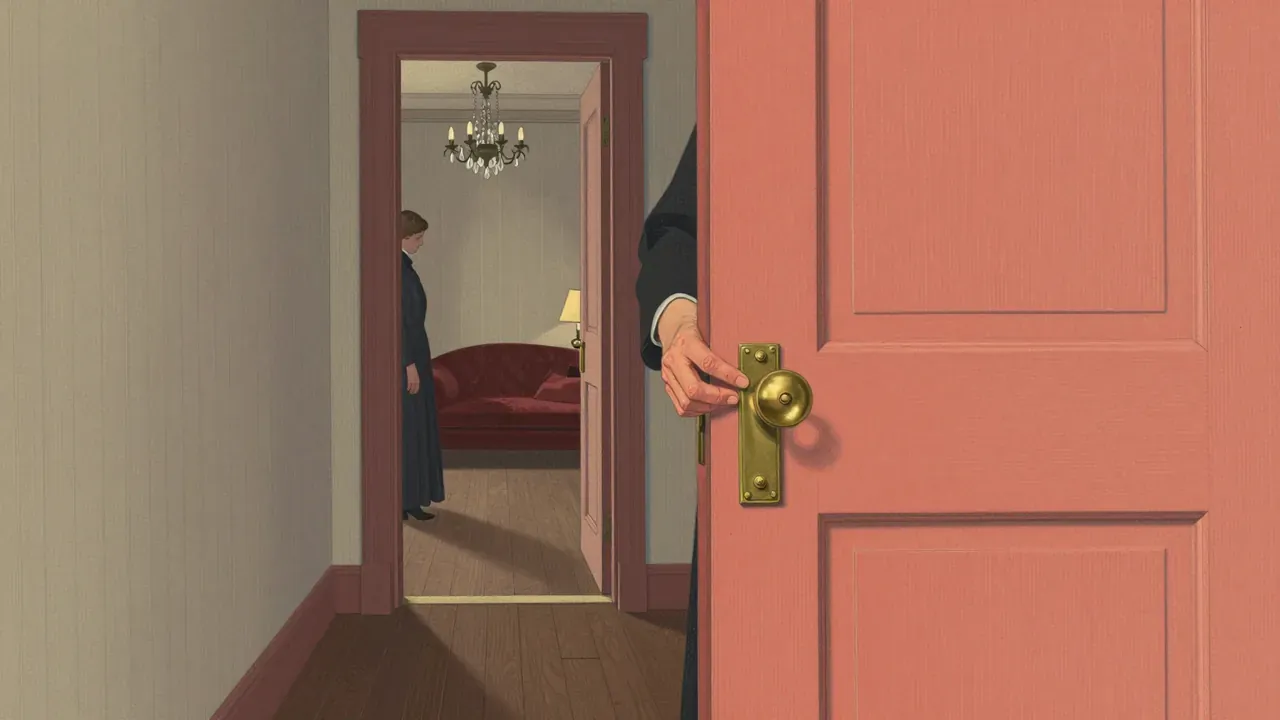
What lands is the accumulation of small, credible human details: the way Clary adjusts her cuff before answering the door; how Johan’s hand hovers over a letter he does not open; the slight pause before Lena agrees to dance, then declines; the way Svensson’s wife watches her husband laugh too loudly at a joke he did not quite hear. These are not ‘moments’ in the theatrical sense but micro-observations, grounded in behaviour rather than intention. The film’s fidelity to social nuance — the weight of silence between married people, the performative ease of professional camaraderie, the polite deflection of personal questions — feels earned, not stylised. Even minor characters register as individuals: Sture Lagerwall’s Svensson carries bureaucratic weariness in his shoulders, Linnéa Hillberg’s nurse speaks with the quiet authority of someone accustomed to managing other people’s distress. The Walpurgis setting works not as backdrop but as structural device: the distant sound of student choirs, the flicker of bonfire light through windows, the gradual shift from daylight to lamplight — all mark time passing without needing clocks or calendars. This is not atmospheric storytelling but temporal storytelling, where duration itself becomes expressive. (157 words)
Where the silence breaks
What does not land is the film’s attempt to imply larger social critique without anchoring it in action or consequence. A few lines about unemployment, a muttered reference to ‘the new office regulations’, and an entrepreneur’s vague complaint about bureaucracy do not cohere into a portrait of economic anxiety — they remain ornamental, like period props. Similarly, the subplot involving Gustav Palm (Erik Berglund) and his ambiguous dealings feels underdeveloped: his motivations are unclear, his impact on the central family minimal, and his scenes lack the psychological density of the rest. The film also struggles with tonal drift in its final third, when a sudden shift toward melodramatic revelation — a confession delivered in near-darkness — arrives without sufficient groundwork. It reads less like inevitability and more like narrative concession, as if the script needed a pivot but lacked the means to earn it. Ingrid Bergman’s Lena, though compelling, is given little agency beyond reaction; her arc ends not with choice but with withdrawal, which feels less like resolution and more like evasion. The film’s restraint, so effective elsewhere, becomes reticence here — withholding not for effect but because the writing has run out of direction. (156 words)
The weight of staying put
The themes that matter are endurance, dignity, and the quiet cost of accommodation. Not grand ideological positions, but the daily labour of maintaining self-respect while accepting limitation — financial, emotional, professional. Johan Borg embodies this: his competence is unquestioned, his influence negligible, his resignation complete but unspoken. The film treats ageing not as decline but as recalibration — Sjöström’s Bergström retains moral clarity even as his body fails, while the younger generation (Bergman, Järrel, Sorbon) navigates expectation without clear models. Class operates not as polemic but as texture: the difference between a civil servant’s flat and an entrepreneur’s office is visible in wallpaper and cutlery, not speech. Ritual matters not for its symbolism but for its function: Walpurgis Night provides a sanctioned container for release, however brief — laughter louder than usual, wine poured more freely, boundaries softened — precisely because the rest of the year demands such strict containment. There is no nostalgia for the past, no utopianism about the future; the film’s moral centre is the present tense, imperfectly held. (152 words)
Who sits with it
This film is for viewers who value behavioural precision over narrative propulsion — those who find tension in a delayed response, meaning in a change of posture, significance in the spacing between sentences. It suits audiences familiar with early Swedish cinema, or with mid-century European realism that trusts the audience to infer rather than explain. It is not for viewers who require clear stakes, escalating conflict, or psychological exposition — those who expect characters to name their feelings or confront each other directly will find the film evasive. Some may object that its pacing feels inert rather than deliberate, its silences empty rather than charged. That reading would be valid if the film were aiming for urgency; it is not. Its pace is part of its argument. A viewer who finds the 1930s Swedish civil service dull will not be converted by this film — nor should it try. But for those willing to sit with its tempo, its rewards are cumulative, not climactic. (159 words)
Why it lasts
Yes, it is worth your evening — provided you approach it as a study in tone and texture, not as a story with a destination. Its seventy-five minutes pass without strain because its rhythms are internal, not imposed: the pacing mirrors the characters’ own sense of time — measured, habitual, occasionally punctured. It repays attention not with revelations but with recalibrations: by the end, a glance between Johan and Clary carries more history than any monologue could. Those who dislike it will likely cite its lack of forward motion — and they would be right, if motion were the point. But the film’s purpose is resonance, not momentum. It assumes the viewer brings patience, not just curiosity. That assumption is its risk and its virtue. A modern viewer expecting streaming-era pacing may grow restless; a viewer attuned to the grammar of 1930s studio realism will find it quietly exacting. Its value lies not in what happens, but in how thoroughly it inhabits what is already there. (159 words)