The look of it
Vernon, Florida is a documentary portrait of a small town in the American South, made by Errol Morris in 1981. It does not argue, explain or diagnose; it presents a sequence of unscripted interviews with residents, filmed in static medium shots, mostly indoors, against plain backgrounds. The film abandons its original premise — an investigation into limb-loss insurance claims — after Morris and his crew faced hostility and threats from locals. What remains is a deliberate, patient accumulation of voices: a man who collects mousetraps, another who trains pigeons to fly in formation, a woman who speaks at length about her late husband’s dentures, a preacher who describes heaven as a place where you can eat all the ice cream you want. The film’s intention is neither exposé nor satire, but observation — a taxonomy of vernacular speech and self-presentation, stripped of context, motive or editorial framing. It treats eccentricity not as pathology or punchline, but as ordinary human variation, spoken aloud in flat light and steady silence. (158 words)
The sound of it
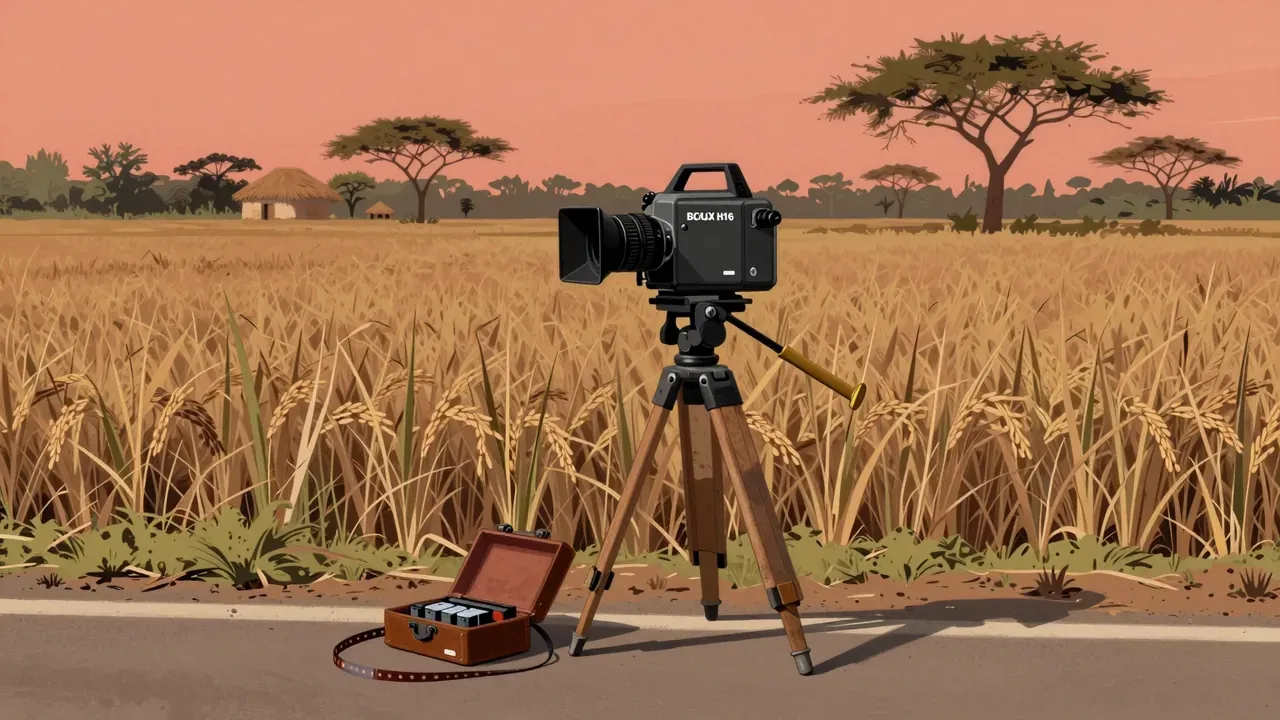
The film works through rigour of form and restraint of method. Morris uses no narration, no music, no cutaways, no establishing shots of Vernon’s streets or signs. Interviews are shot on 16mm with fixed camera positions, minimal lighting, and long takes — often holding past the point where a conventional edit would intervene. Cinematographer Robert Richardson keeps exposure low and contrast narrow, flattening depth without obscuring detail. Sound is recorded direct, with room tone left audible: coughs, chair creaks, distant traffic. Performances are not acted but offered — the subjects speak plainly, sometimes haltingly, rarely performing for the lens. Their delivery is unvarnished, uncorrected, often digressive. Editing is sparse and sequential: one speaker follows another with no thematic bridging, no voiceover explanation, no visual punctuation. This refusal to organise or interpret forces attention onto cadence, hesitation, repetition and idiom — the texture of speech itself becomes the subject. There is no score, no archival footage, no re-enactment. The craft lies in what is withheld, not what is added. (159 words)
The rhythm of it
What lands is the cumulative weight of unmediated presence. The film’s quiet insistence on letting people speak — fully, awkwardly, oddly — produces a rare kind of dignity in its subjects. Their preoccupations — whether training birds, collecting rust, or describing how a dog’s tail wags when it dreams — gain resonance not from irony or condescension, but from duration and neutrality. The absence of commentary invites neither ridicule nor reverence, only attention. A man’s detailed account of how he lost three fingers in a cotton gin carries the same formal weight as a woman’s reverie on the colour of angel wings. This parity, sustained across seventy-eight minutes, slowly recalibrates the viewer’s sense of what counts as meaningful speech. The film lands because it refuses to assign value in advance — it lets meaning accrue slowly, unevenly, in the gaps between sentences and the pauses before answers. Its humour emerges not from setup and punchline, but from the sheer, unedited fact of human particularity held in frame. (157 words)
The shape of it
What does not land is any sense of Vernon as a place — its geography, economy, history or social structure remain absent. The film offers no map, no census data, no explanation of why this town, or why these people, were chosen beyond Morris’s initial, abandoned line of inquiry. Without that anchor, some sequences feel arbitrary, even inert: a monologue about squirrel hunting or the merits of different brands of chewing tobacco may register as tedious rather than revelatory, depending on the viewer’s tolerance for unstructured oral testimony. The refusal to contextualise risks flattening difference into mere quirk, especially when race, class or regional identity go unnamed. A few speakers’ remarks — on disability, religion or bodily autonomy — carry implicit assumptions that go unchallenged, unexamined, unframed. The film’s neutrality is not passive, but active: it chooses not to intervene, and that choice occasionally reads less like respect and more like detachment. Those expecting sociological insight or moral reckoning will find neither. (159 words)
The grain of it
The themes that matter are speech as identity, attention as ethics, and ordinariness as resistance. The film treats language not as a tool for conveying information, but as a habit of being — a way people rehearse themselves into existence. Every pause, correction and digression is part of that rehearsal. Attention, too, is thematic: the film asks the viewer to sit with discomfort, boredom and ambiguity without recourse to explanation or resolution. That demand is ethical in its refusal to reduce people to types or anecdotes. And ordinariness — not as blandness, but as stubborn, unremarkable persistence — runs through every frame. These are people who have not been selected for achievement, trauma or fame, yet insist on their own coherence, their own logic, their own syntax. The film resists the documentary impulse to extract ‘truth’ or ‘message’, preferring instead to hold space for the irreducible fact of someone saying, in their own words, exactly what they mean — even when what they mean is hard to follow, or seems trivial, or contradicts itself. (159 words)
The pace of it
It is for viewers who trust silence, tolerate digression, and find fascination in the rhythms of unpolished speech. It suits those accustomed to essay films, structuralist documentaries or deadpan portraiture — fans of Frederick Wiseman, Jean Rouch’s later work, or early Chantal Akerman. It is not for those who require narrative propulsion, explanatory clarity or emotional payoff. Anyone needing context, analysis or moral orientation will leave frustrated. Those who associate documentary with advocacy, journalism or pedagogy may find it withholding or indifferent. The film assumes patience as a precondition, not a virtue to be rewarded. Its pace is unyielding; its rewards are cumulative, not episodic. A viewer who values efficiency over immersion, or explanation over endurance, will not find it worth their time — and that is not a flaw in the film, but a boundary it draws with care. (159 words)
The weight of it
Yes, it is worth your evening — but only if you arrive prepared to watch without seeking utility. Its value lies in the discipline it demands: to listen without interpreting, to observe without judging, to sit with strangeness without reaching for meaning. It repays attention not with revelation, but with recalibration — a subtle shift in how you hear ordinary speech, how you read facial expression, how you measure significance. Those who expect documentary to inform, persuade or entertain will likely reject it as slight or obscure. But for viewers who accept that some truths reside in tone, hesitation and repetition — not in facts or arguments — it remains singular. Its brevity (78 minutes) makes the commitment modest; its rigour ensures it is never filler. To call it ‘light’ or ‘difficult’ misses the point: it is simply exacting in its terms. (159 words)