The discovery
Vagabond is a French drama from 1985 that sets out to trace the final winter of a young woman who dies alone in a ditch, not as a tragedy of misfortune but as an inquiry into freedom’s material cost. Agnès Varda does not frame Mona Bergeron’s drift as rebellion or breakdown, nor as social critique with solutions; instead, she treats it as a condition — one that resists diagnosis, explanation, or redemption. The film avoids linear cause-and-effect, refusing to pin Mona’s choices to trauma, mental illness, or poverty alone. It asks how a life becomes legible only in its absence, and how others reconstruct it through fragments of memory, bias, and indifference. This is not a portrait built from empathy but from distance: the camera observes, interviews, and cuts away without settling on motive or meaning. Varda’s method is forensic and unsentimental — less about why Mona died than about how little anyone knew her while she lived. The film’s ambition lies in its restraint: it holds space for ambiguity without filling it with interpretation. (158 words)
The witnesses
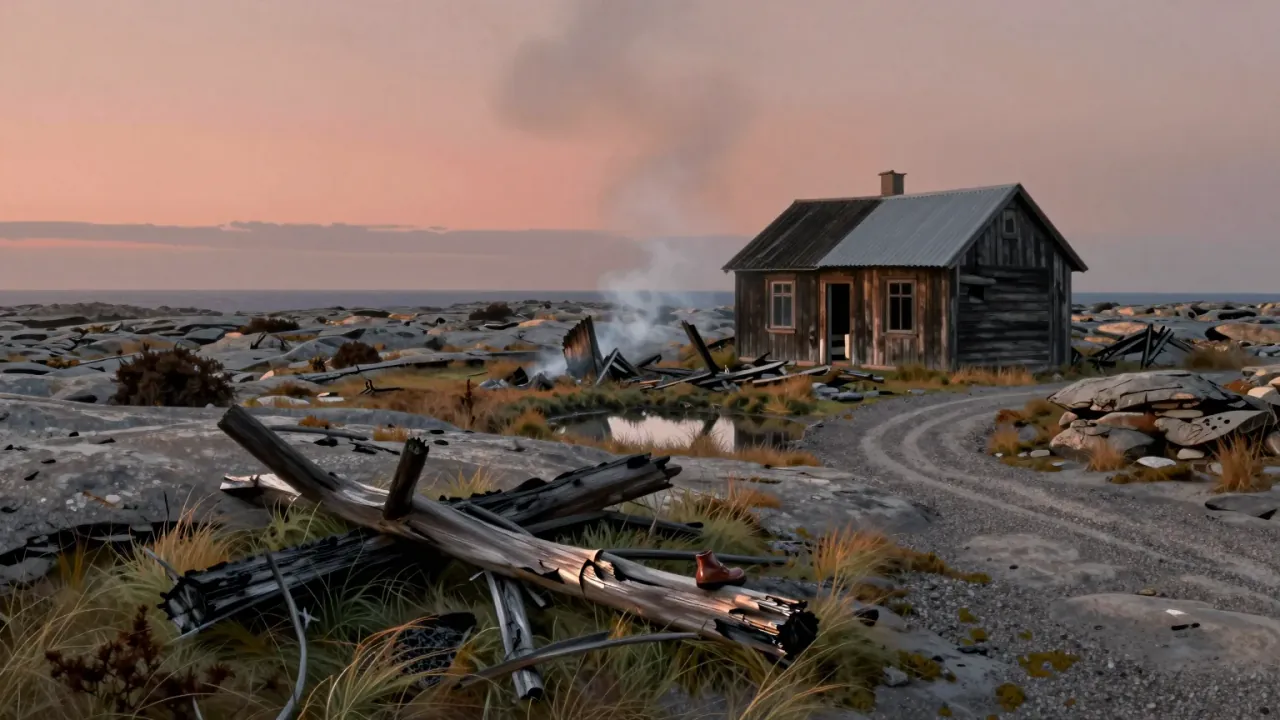
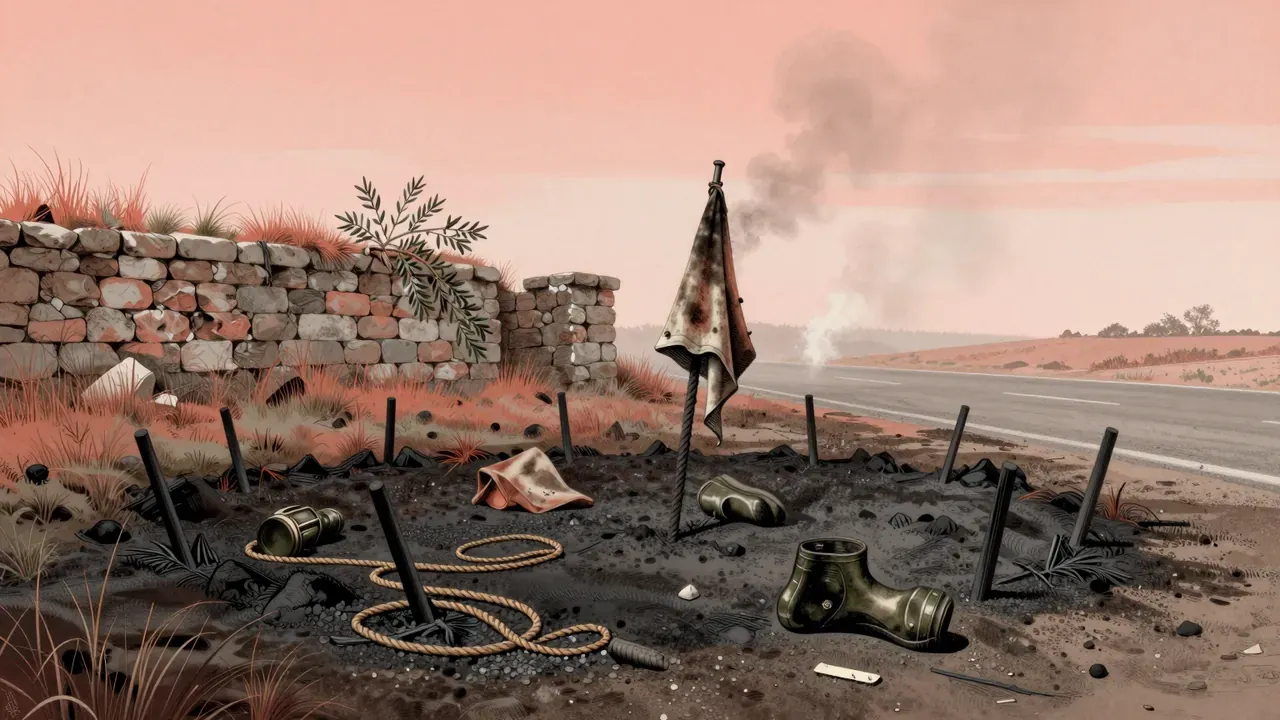
The story unfolds in fractured chronology, anchored by Mona’s corpse and stitched together through testimonies from people who met her briefly — a housekeeper, a vineyard worker, a group of youths — each speaking directly to camera in pseudo-documentary interludes. Sandrine Bonnaire’s performance is physically precise and emotionally withheld: she walks, shivers, smokes, and stares without pleading for understanding. Patrick Blossier’s cinematography keeps the Languedoc landscape austere and unromantic — flat light, muddy fields, bare trees — with no establishing shots to orient the viewer. Varda and Patricia Mazuy’s editing denies continuity: scenes cut mid-gesture, dialogue trails off, key moments go unshown. Joanna Bruzdowicz’s score is sparse and dissonant, rarely underlining emotion. The film’s craft serves its central refusal: to make Mona legible on anyone else’s terms. There are no flashbacks that clarify motive, no voiceover to interpret her silence. Even the fire that destroys her tent is shown only in its aftermath — ash, smoke, and a single boot. Every technical choice reinforces the idea that Mona’s life was not a narrative waiting to be told, but a series of unconnected facts. (159 words)
The cold
What lands is the cumulative weight of physical detail: the slow disintegration of Mona’s boots, the way she wraps herself tighter in her blanket as temperatures drop, the exhaustion in her eyes after sleeping rough for weeks. These are not metaphors but conditions — tangible, unvarnished, repeated until they become undeniable. The interviews land because they are uneven: some speakers recall her with curiosity, others with irritation or pity, one with clinical detachment — none with certainty. This inconsistency feels true, not contrived. The film’s structure, which circles back to the same moments from different angles, never resolves but deepens the sense of incompleteness — not as a flaw, but as fidelity to how memory works. The cold is felt not through music or montage but through duration: long takes of Mona walking, of her hands fumbling with a lighter, of her staring at a distant road. There is no false comfort in rhythm or resolution. The film trusts the audience to sit with discomfort, to notice what is missing — the warmth of shelter, the security of routine, the grammar of belonging — not by naming them, but by showing their absence in every frame. (157 words)
The silence
What does not land is any attempt to read Mona’s interiority as coherent or knowable. Some viewers will find this frustrating — not because the film fails to explain her, but because it refuses to try. The pseudo-documentary format risks flattening its interviewees into types: the academic, the farmer, the addict — and while this is deliberate, it can feel reductive when their testimony offers little beyond surface impression. A few sequences, particularly the harvest festival scene, verge on allegory without earning it: the wine-daubed men feel more like symbolic punctuation than lived encounter. The film’s resistance to psychology may alienate those expecting psychological realism or moral framing — there is no moment where Mona reflects, regrets, or articulates longing beyond a single line about seeking freedom. Her silence is absolute, and while that is the point, it leaves no room for counterpoint or contradiction within her own voice. Some will read this as rigour; others as austerity mistaken for depth. The film does not invite identification, and that exclusion is intentional — but it is also the limit of its method. (156 words)
The choice
The themes that matter are freedom as negation, visibility as erasure, and knowledge as fragmentation. Mona’s ‘freedom’ is defined entirely by what she lacks — roof, law, employer, family, fixed address — not by what she gains. The film treats autonomy not as empowerment but as progressive withdrawal from systems of care, recognition, and accountability. Her invisibility is structural: she is seen only when she disrupts — as a trespasser, a burden, a curiosity — and forgotten the moment she moves on. The interviews expose how little we retain of those we meet fleetingly: memory is selective, self-serving, and often indifferent to truth. Class is present not as rhetoric but as texture — in the difference between the professor’s study and the squat’s damp floor, in who gets to name her and who does not. The film also engages with embodiment as vulnerability: cold, hunger, injury, and fatigue are not metaphors but forces that shape choice — or end it. There is no abstract discussion of poverty or alienation; there is only the body failing, slowly, in real time. (159 words)
The land
This film is for viewers who value precision over persuasion, who find resonance in restraint, and who do not require emotional payoff to feel engaged. It suits those accustomed to arthouse syntax — ellipsis, repetition, unresolved tension — and who trust a filmmaker’s refusal to explain. It is not for those who seek narrative closure, psychological insight, or moral orientation. Anyone needing affirmation that hardship has meaning, or that suffering must yield insight, will leave unsettled — not because the film is obscure, but because it declines to offer the consolations of story. Those who expect character development as growth, or who read silence as mystery rather than refusal, may mistake its stillness for emptiness. A viewer who values catharsis, clear causality, or even basic exposition will find it withholding. But that withholding is the point: the film argues that some lives are not meant to be understood — only witnessed, imperfectly, and then buried in a potter’s field. (158 words)
The ditch
Yes, it is worth your evening — not as entertainment, but as calibration. It recalibrates attention: toward the unremarkable, the unexplained, the unassimilated. Its hundred minutes ask you to hold space for a life that resists summary, and to sit with the discomfort of not knowing — not as a puzzle to solve, but as a condition to acknowledge. It is not demanding in the way of plot or pace, but in its insistence on stillness, repetition, and silence. Those who dismiss it as cold or detached have likely missed its quiet rigour: every shot, edit, and pause is measured. It rewards patience, not decoding. Someone who prefers narrative propulsion or emotional crescendo will find it unrewarding — and that verdict would be valid, not wrong. But for those willing to meet it on its terms, Vagabond offers something rare: a film that treats marginality not as subject, but as method. Its value lies not in what it says, but in how thoroughly it refuses to say too much. (159 words)