The look of it
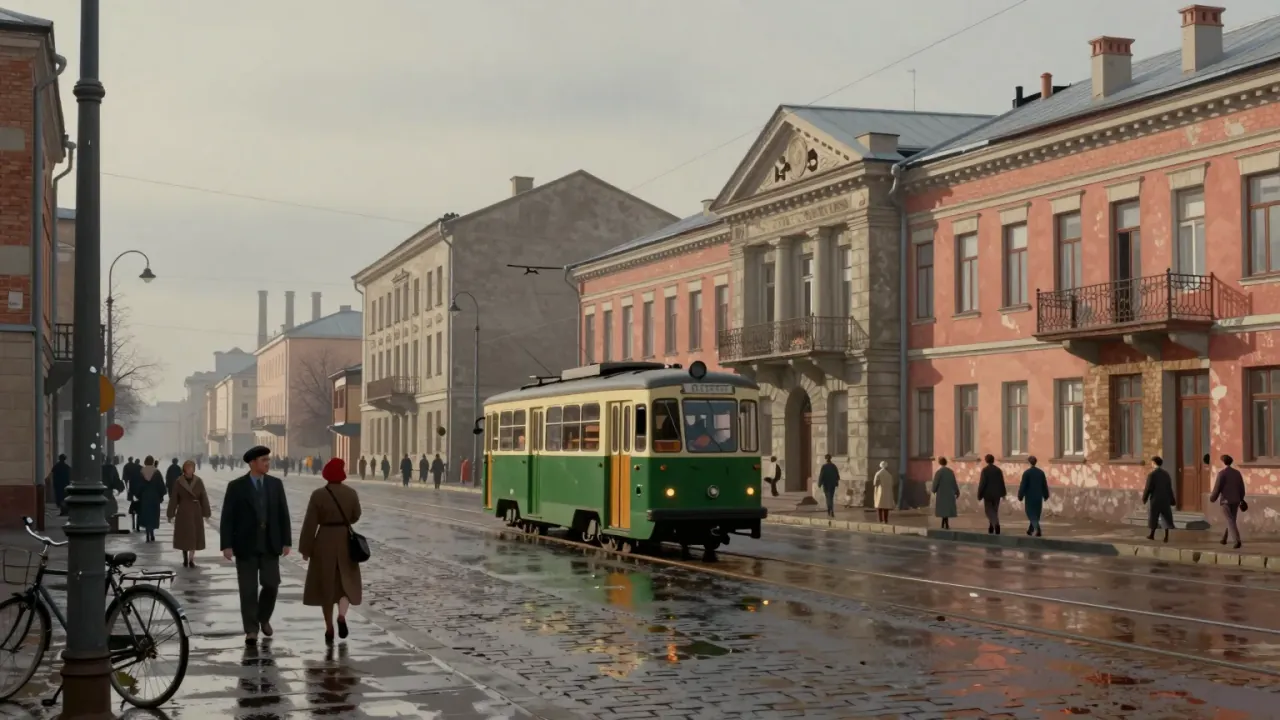
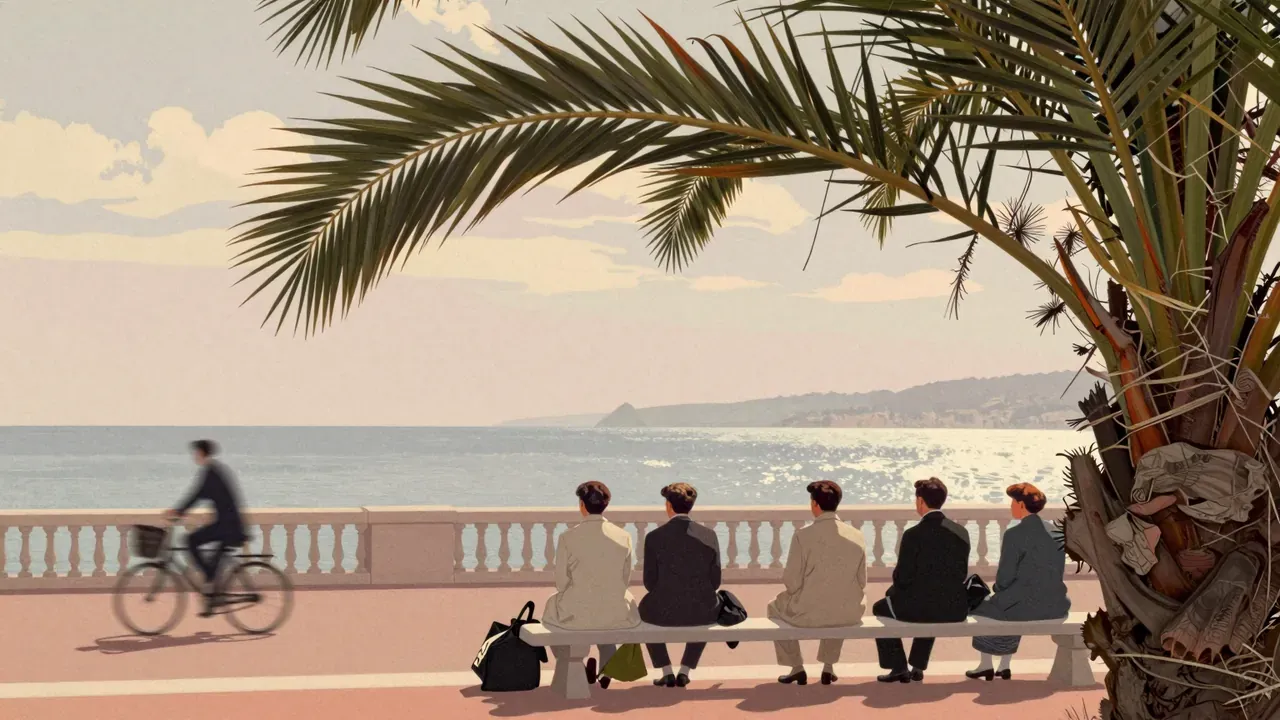
À propos de Nice is a 25-minute silent documentary made in France in 1930, directed by Jean Vigo and shot by Boris Kaufman. It is not a travelogue, nor a survey of civic infrastructure or local history; it is an essay in image and rhythm, assembled to expose social fracture through juxtaposition. Vigo intended the film as a provocation — a visual indictment of bourgeois leisure and working-class endurance in the same city, using Nice not as subject but as specimen. The film’s structure follows no narrative arc but a deliberate, escalating contrast: from aerial views down to palm fronds, then to bodies in motion — the idle rich on the Promenade des Anglais, the labouring poor in narrow streets, children playing barefoot, women hauling water, carnival masks slipping over tired faces. Its method is forensic, its aim polemical. Vigo described it as putting ‘a way of life on trial’, and the film sustains that posture without commentary, without intertitles beyond the title card, without explanation. It assumes the viewer will read the grammar of editing — the cut between a gambler’s hand and a child’s cracked heel — as evidence.
How it holds together
The film works through economy and precision: twenty-five minutes built from fragments shot over months, often with salvaged film stock, edited by Vigo himself. There is no performance in the dramatic sense — only unscripted presence, observed and selected. Kaufman’s cinematography favours low angles, tight framing, and rhythmic pans that turn pedestrian movement into choreography. A sequence of laundry lines becomes a lattice of constraint; a slow pan across casino windows reflects nothing but sky, suggesting vacancy behind glass. Editing is the film’s central craft: Vigo cuts between wealth and want not to moralise but to align them spatially and temporally — a woman scrubbing stone steps appears immediately after a man adjusting cufflinks; factory smokestacks rise just as carnival confetti falls. The absence of music in its original form forces attention onto gesture, texture, duration. Even the aerial shots are functional, not decorative: they establish hierarchy before descending into human scale. Nothing lingers longer than necessary; nothing feels accidental. Every shot serves the argument, and every cut sharpens it.
What sticks
What lands most firmly is the film’s unsentimental clarity of vision. The contrast between the Promenade des Anglais and the old town slums does not rely on exposition — it lands because the images are held long enough for their weight to settle, then cut sharply enough for the dissonance to sting. A sequence where race cars blur past static statues makes time itself feel uneven: speed for some, stasis for others. The carnival section avoids exoticism; masks are worn by locals and tourists alike, and the dancing feels weary rather than euphoric. Even the final shots — men at work in a factory, statues staring blankly — land not as resolution but as continuation: the machinery of class persists. The film’s brevity helps. At 25 minutes, it refuses dilution. There is no filler, no establishing shot that does not reframe perception. Its power lies in restraint: no voiceover, no score, no intertitle beyond the title, no attempt to soften what it shows. That austerity gives the film its authority — it does not ask for sympathy; it presents conditions and trusts the viewer to reckon with them.
Where it pulls back
What does not land is any sustained sense of place beyond its function as a site of contrast. Nice remains abstracted — a stage, not a lived environment. The film avoids local specificity: no names of streets, no landmarks identified, no dialect or custom marked beyond surface gesture. This is deliberate, but it leaves little room for cultural texture or historical nuance. The poverty shown is generic — laundry, bare feet, cramped alleys — and while effective as symbol, it risks flattening real lives into illustration. Similarly, the upper-class scenes verge on caricature: parasols, monocles, languid poses recur without variation, making privilege appear inert rather than active. The editing’s rigour occasionally sacrifices ambiguity — every cut asserts meaning so forcefully that doubt, irony, or contradiction within a single image is rarely permitted. And though the film rejects travelogue, it offers no alternative cartography: no sense of how these zones connect, how people move between them, or what institutions sustain the divide. It diagnoses, but does not map.
What it’s really about
The themes that matter are inequality, spectacle, and the politics of observation. Vigo treats the camera not as neutral eye but as instrument of scrutiny — one that watches both the watched and the watchers. Leisure here is never restful; it is performative, rehearsed, insulated. Work is repetitive, bodily, exposed. The carnival functions as both release and mask: celebration that reveals exhaustion, collective joy that conceals division. Statues recur not as monuments but as dead weight — figures frozen while life strains beneath them. The factory at the end is not industrial progress but continuity: the same rhythms of labour persist whether under sun or smoke. Time itself is stratified: the wealthy inhabit suspended moments — strolling, pausing, gazing — while the poor exist in durational time — hauling, scrubbing, waiting. The film’s enduring concern is not Nice in 1930 but how societies organise visibility: who is seen as worthy of attention, whose labour is rendered invisible, and what kind of looking constitutes critique rather than consumption.
Who it’s for
It is for viewers who value concision, formal rigour, and political documentary that trusts image over exposition — those familiar with early Soviet montage, Dziga Vertov, or later essay films like those of Chris Marker. It is not for those who require narrative scaffolding, character identification, or contextual framing; the film offers none. Nor is it for viewers who expect historical documentary to explain its terms — it presumes knowledge of interwar French society, of the belle époque’s lingering affectations, of how tourism reshaped Mediterranean cities. Someone who finds abstraction alienating, or who reads silence as emptiness rather than density, will find it withholding. A change in verdict would follow a new restoration with original editing notes or production diaries — evidence of Vigo’s specific intent toward individual sequences — but as it stands, its power is inseparable from its opacity. Without that opacity, it would be less urgent, not more clear.
Why it stays with you
Yes, it is worth your evening — not as diversion, but as calibration. Twenty-five minutes is enough to reset your eye: to notice how light falls on skin versus silk, how a wristwatch glints differently from a rusted hinge, how stillness can be louder than motion. It demands attention but repays it with density — each viewing yields new alignments, new tensions in the editing. It is not ‘enjoyable’ in the conventional sense, but it is bracing, precise, and morally unflinching. Those who watch expecting immersion in a world will be disappointed; those watching to understand how film constructs meaning will find few better examples from this period. Its age does not soften its gaze — if anything, the passage of time has sharpened its relevance. To skip it is to miss a foundational text in the documentary essay, one that insists cinema can be both poetic and prosecutorial — and that the two need not be separate.